





How to Clean Removable Dentures Daily

Cleaning your dentures daily is critical for keeping your mouth healthy and extending their lifespan. Here’s what you need to know:
- Rinse after meals: Wash away food particles and bacteria under lukewarm water.
- Brush daily: Use a soft-bristled denture brush with a mild soap or denture cleaner. Avoid regular toothpaste – it’s too abrasive.
- Soak overnight: Store dentures in water or a cleaning solution to keep them hydrated and disinfected.
- Handle with care: Clean over a towel or a sink filled with water to prevent damage if dropped.
- Avoid heat: Hot water can warp dentures, ruining their fit.
Neglecting these steps can lead to bacterial buildup, bad breath, gum irritation, and even infections. Proper cleaning keeps your dentures in good condition and ensures your overall oral health. Let’s break down the tools and techniques for effective denture care.
Cleaning Dentures
Tools You Need for Cleaning Dentures
Taking care of your dentures doesn’t require anything fancy – just a handful of everyday items that you can find at most Australian pharmacies or supermarkets. These tools are essential for keeping your dentures clean, maintaining their durability, and protecting your oral health.
Soft-Bristled Denture Brush
A good denture brush with soft bristles is a must-have. These brushes often come with two heads – one for cleaning smooth surfaces and another for those tricky crevices. If you don’t have a denture brush, a regular soft-bristled toothbrush can work too. Just steer clear of brushes with medium or hard bristles, as they can scratch the acrylic and create tiny spaces where bacteria can hide.
"Using a denture brush gives better friction to clean the denture." – SA Dental, South Australia Health [5]
Denture Cleaning Solutions
Brushing your dentures removes visible debris, but for thorough disinfection, you’ll need a cleaning solution. Effervescent tablets like Steradent or Polident, available in most Australian supermarkets, are great for killing bacteria that brushing might miss. For daily cleaning, mild liquid hand soap or gentle dishwashing liquid works well. Avoid toothpaste – it’s too abrasive and can scratch the acrylic surface, leading to staining and bacteria buildup.
"Do not use toothpaste on your denture as it contains abrasives that can make the acrylic on your denture wear faster and create small porosities in your denture that result in them staining more quickly." – Dr. Serene Ong, Dentist, Genesis Dental [2]
If you’re dealing with tough tartar on full dentures, a 50:50 mix of white vinegar and water can help. However, this solution isn’t suitable for partial dentures with metal parts, as vinegar can corrode the metal. Don’t forget a ventilated storage container for overnight soaking – these are often provided by dentists or can be purchased at your local pharmacy.
Lukewarm Water
Water temperature is critical when cleaning dentures. Always use lukewarm or cool water for rinsing and soaking. Hot or boiling water can warp the denture material, ruining its fit and requiring a replacement. To avoid accidents, place a towel in the sink or fill it with water before handling your dentures. This will cushion them if they’re accidentally dropped.
How to Clean Your Dentures Daily
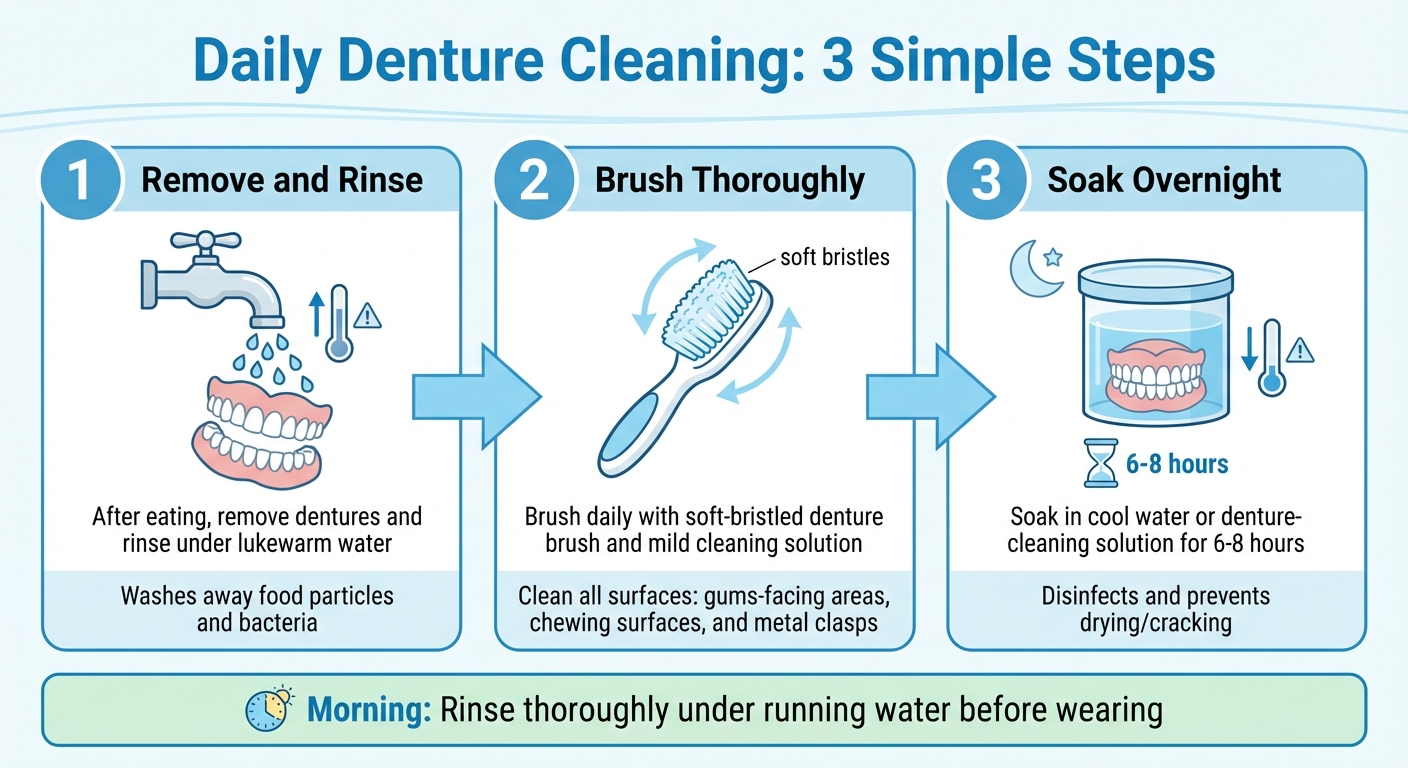
Daily Denture Cleaning Process: 3 Essential Steps
Taking care of your dentures every day not only keeps them in good shape but also helps maintain your oral health. The process is simple: rinse, brush, and soak. Here’s how to make the most of your denture cleaning routine.
Step 1: Remove and Rinse
After eating, take out your dentures and rinse them under lukewarm water. This helps wash away food particles and bacteria before they can lead to odours or infections [1]. Be gentle and hold your dentures securely to avoid dropping or damaging them.
Step 2: Brush Thoroughly
Use a soft-bristled denture brush and a mild cleaning solution to brush your dentures every day [2]. Work in gentle circular motions, making sure to clean all surfaces – especially the parts that touch your gums, the chewing areas, and any metal clasps if you have partial dentures. Be careful with the clasps to avoid bending or damaging them, as that could affect how well your dentures fit [5].
Step 3: Soak Overnight
Before bed, place your dentures in a container filled with cool water or a denture-cleaning solution. This overnight soak helps disinfect them and keeps the material from drying out or cracking [2]. Effervescent cleaning tablets can also be a handy option. In the morning, rinse your dentures thoroughly under running water before wearing them again [5]. Taking your dentures out for 6 to 8 hours each night allows your gums to rest, which can lower the risk of inflammation or fungal infections [2].
sbb-itb-2be92ed
Caring for Full and Partial Dentures
Taking care of full and partial dentures involves different approaches since each type has its own specific needs. Partial dentures, for instance, have delicate metal clasps and connectors that can easily bend or break if mishandled. They also pose a risk of plaque accumulating between the denture and natural teeth, which could lead to decay[3]. On the other hand, full dentures are made entirely of acrylic, with no metal parts, but they cover a larger surface area and require thorough cleaning of all their surfaces. Let’s dive into how to properly care for each type.
Handling Partial Dentures
Partial dentures often have metal components that require extra care. A small-headed, soft-bristled toothbrush is ideal for cleaning around the metal attachments, as it can reach those tight spaces better than a larger denture brush[3]. Pay particular attention to the clasps, brushing gently to avoid bending them. If you find it challenging to hold the denture securely, try using a small cloth for a better grip.
"Never force the partial denture into position by biting down. This could bend or break the clasps." – American Dental Association (ADA)[6]
With partial dentures covered, let’s move on to protecting full dentures, which come with their own set of care instructions.
Protecting Full Dentures
Full dentures are prone to damage from accidental drops, so it’s important to take precautions during cleaning. Always clean them over a folded towel or a sink partially filled with water to soften the impact if they slip from your hands[6]. When not in use, store your dentures in water or a soaking solution to prevent them from drying out, cracking, or losing their shape[6]. These small steps can make a big difference in maintaining their longevity and comfort.
Mistakes to Avoid When Cleaning Dentures
Cleaning dentures might seem straightforward, but certain common mistakes can harm their condition and even affect your oral health. Avoiding these pitfalls is key to keeping your dentures in top shape.
Using Regular Toothpaste
Regular toothpaste isn’t designed for dentures. It often contains abrasive particles that are fine for natural teeth but can damage the surface of dentures. These abrasives can create tiny scratches, which not only weaken the material but also provide a perfect hiding spot for bacteria.
"Regular toothpaste can be too harsh for dentures, leading to surface damage, reduced lifespan, and increased bacterial growth in the micro-scratches."
To avoid this, stick to products specifically made for dentures, like denture paste with the ADA Seal of Acceptance. Alternatively, a mild dish soap can work as a gentle cleaner. Whichever option you choose, make daily cleaning a non-negotiable habit to prevent plaque buildup.
Skipping Daily Cleaning
Neglecting to clean your dentures daily can lead to rapid plaque and bacteria accumulation. Food particles trapped on or under dentures can decay quickly, resulting in unpleasant odours. Over time, this buildup can also harm both your dentures and any remaining natural teeth.
"During the day, dentures can accumulate food debris, bacteria, and plaque – just like regular teeth. Since dentures sit directly on your gums, bacteria can build up between the gumline if dentures aren’t cleaned regularly. This can lead to gum irritation, decay, stains, or infection of your remaining teeth." – Dr. Serene Ong, Dentist, Genesis Dental [2]
To maintain your oral health, brush your dentures at least twice a day and rinse them thoroughly after every meal. These simple steps can make a big difference in keeping your dentures clean and your mouth healthy.
Exposing Dentures to Heat
High temperatures are a no-go for dentures. Hot water can warp the acrylic material, which can ruin the fit and cause discomfort or even irritation.
"Do not use hot or boiling water as it can warp and weaken the dentures." – Dr. Serene Ong, Dentist, Genesis Dental [2]
To preserve their shape, always use lukewarm or cool water when cleaning or soaking your dentures. If they feel loose or uncomfortable after heat exposure, consult your dentist for adjustments. Taking care of their fit is just as important as keeping them clean.
Conclusion
Taking care of your dentures every day is essential for keeping your mouth healthy and ensuring your dentures last. With the right care and regular dental visits, dentures can typically last between 5 and 10 years [7]. These steps build on established guidelines for effective denture maintenance.
Here’s what you need to do: clean your dentures daily using a soft-bristled brush, steer clear of abrasive toothpaste, rinse them after meals, and soak them overnight in lukewarm water or a cleaning solution. These habits not only help prevent bacteria from building up but also minimise the risk of gum irritation, infection, and staining.
"Practicing good oral hygiene with dentures helps prevent staining, inflammation, infection, and gum disease." – Dr. Serene Ong, Dentist, Genesis Dental [2]
Beyond health, well-maintained dentures offer greater comfort and confidence. Did you know that nearly 47% of Australians aged 65 and older wear removable dentures [4]? Those who care for their dentures properly often enjoy a better fit, fresher breath, and the confidence to smile freely.
To avoid damaging your dentures, skip hot water and abrasive products. Gentle handling and regular cleaning will keep them in good shape for years. And don’t forget, even if you have full dentures, your mouth still needs attention. Use a soft brush to clean your gums, tongue, and palate to remove bacteria and support your overall oral health. Stick to these daily habits, and you’ll enjoy both the comfort and functionality of your dentures for the long haul.
FAQs
Why shouldn’t I use regular toothpaste to clean my dentures?
Using regular toothpaste on dentures isn’t a good idea. Why? Because it contains abrasive ingredients that can scratch the surface of your dentures. These tiny scratches can become a breeding ground for bacteria and plaque, which may lead to bad odours or even oral health problems.
To properly care for your dentures, stick to a soft-bristled brush and a cleanser made specifically for dentures. This approach helps keep them clean, prevents damage, and supports your overall oral hygiene.
How can I stop my dentures from losing their shape?
To keep your dentures in good shape, make sure they stay moist whenever they’re not being worn. You can soak them overnight in water or a denture-cleaning solution, ensuring the liquid is at room temperature. Always store them in a container filled with water to prevent drying out. Steer clear of exposing your dentures to hot water, heat, or direct sunlight, as these can distort their shape. Consistent care like this will help preserve their fit and comfort.
How should I clean partial dentures with metal parts?
To keep partial dentures with metal components in good shape, it’s important to follow a consistent care routine. Here’s how you can maintain them daily:
- Remove and rinse: Take your dentures out and rinse them under lukewarm water to wash away any food particles. Avoid using hot water, as it can warp the acrylic or harm the metal components.
- Brush gently: Use a soft-bristle toothbrush with mild liquid soap or a cleanser specifically designed for dentures. Pay extra attention to cleaning the metal clasps and framework carefully. Steer clear of regular toothpaste or abrasive cleaners, as they can scratch the surface.
- Soak and rinse: Place your dentures in a denture-cleaning solution, following the instructions on the product label. After soaking, rinse them thoroughly under running water to eliminate any residue.
- Inspect and store: Check the metal parts for any signs of bending or damage. Pat the dentures dry and store them in a clean, dry container overnight to allow your gums to rest.
If you experience discomfort, notice looseness, or suspect damage, resist the urge to adjust the metal clasps yourself. Instead, visit your dentist or prosthodontist for professional help. Taking proper care of your dentures not only keeps them in good condition but also supports your overall oral health.
Related Blog Posts
- Daily Care Tips for Implants, Bridges, and Dentures
- Deep Cleaning Retainers: Vinegar and Water Tips
- Ultimate Guide To Retainer Cleaning
- Ultimate Guide to Alcohol-Free Retainer Cleaning
Important Notice: Any surgical or invasive procedure carries risks. Before proceeding, you should seek a second opinion from an appropriately qualified health practitioner.
Individual results may vary. The information provided in this article is for educational purposes only and does not constitute medical advice.
Checkout Related Blogs




Get in touch with us
For more information, call us now to start feeling better. Or fill the form below to make appointment
The Latest News from Complete Smiles
How to Clean Clear Plastic Retainers
Checklist for Choosing Wearable Dental Devices
Checklist for Choosing Cloud AI Platforms in Dentistry

Complete Smiles Bella VistaAccepts All Major Health Funds, Including





