





Deep Cleaning Retainers: Vinegar and Water Tips
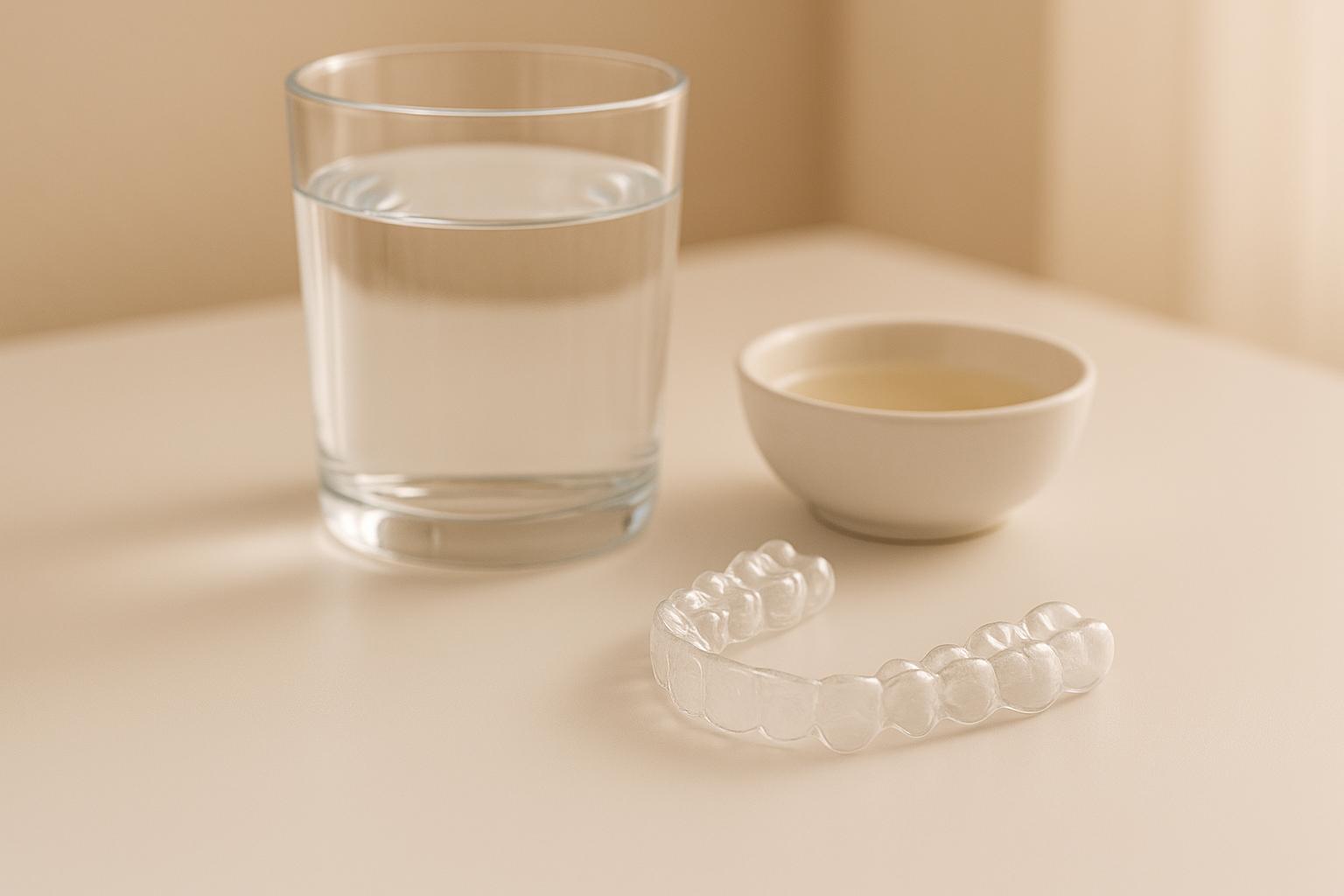
Keeping your retainer clean is essential for your oral health. A simple vinegar and water solution can help remove bacteria, plaque, and odours effectively. Here’s what you need to know:
- Why Clean Your Retainer?
Retainers collect bacteria, food particles, and mineral deposits, which can lead to odours, stains, and even poor fit over time. Regular cleaning prevents these issues. - Vinegar and Water Cleaning
Mix equal parts white vinegar and water (e.g., 100 mL each). Soak your retainer for 15–20 minutes once or twice a week. Rinse thoroughly and brush gently with a soft toothbrush. - Other Tips
Avoid hot water (over 40°C) to prevent warping. Limit vinegar use for retainers with metal parts to avoid corrosion. Pair vinegar cleaning with daily mild soap and water cleaning for best results.
If stains, odours, or buildup persist, consult your dentist. Clinics like Complete Smiles Bella Vista can provide professional care to keep your retainer in top shape.
How to Clean Your Retainer | WebMD

How to Clean Retainers with Vinegar and Water
Give your retainer a thorough clean by using a simple vinegar and water solution. Here’s how to prepare it step by step.
Making the Cleaning Solution
Combine equal parts of white vinegar and water. For instance, mix 100 mL of white vinegar with 100 mL of water to maintain the ideal 1:1 ratio[1][3].
Common Cleaning Problems and Solutions
Cleaning challenges can sometimes be tricky, but they’re not impossible to tackle. Let’s dive into some common issues and how to handle them.
Getting Rid of Stains and Smells
- White Stains
White stains are often caused by mineral buildup from saliva. To remove them, try a simple solution of vinegar and water. It works to break down the residue effectively. - Yellow or Brown Discolouration
Over time, stains from bacteria or food and drink (like coffee or tea) can lead to yellow or brown discolouration. Vinegar, with its mild antimicrobial properties, can help reduce bacteria. However, if the stains persist, it might be time to seek professional advice. - Persistent Odours
If odours linger even after using a vinegar and water solution, it could point to deeper bacterial buildup. This might require professional cleaning to resolve the issue fully.
Protecting Your Retainer from Damage
Once stains and odours are under control, it’s important to focus on proper care to avoid further damage.
- Temperature Awareness
Avoid exposing your retainer to water hotter than 40°C, as high heat can warp plastic retainers. Stick to room temperature or lukewarm water when preparing cleaning solutions. - Gentle Cleaning
Use a soft-bristled toothbrush and clean with gentle, circular strokes. Vigorous scrubbing can damage the material. - Metal Parts Care
If your retainer has metal components, limit their contact with vinegar. Prolonged exposure can lead to corrosion. - Proper Storage
Always rinse your retainer thoroughly and let it air-dry before storing. This prevents moisture buildup, which can encourage bacteria growth and degrade the material.
When to Get Professional Help
If home cleaning doesn’t solve the problem, it’s time to consult a professional. Persistent discolouration, odours, or heavy buildup that doesn’t respond to regular cleaning may require expert attention. Likewise, if your retainer no longer fits properly, causes gum irritation, or feels uncomfortable, a visit to your orthodontist or dentist is essential. Cracks, warping, or broken parts are also clear signs that professional evaluation is needed.
For those in Australia, clinics like Complete Smiles Bella Vista (https://completesmilesbv.com.au) offer comprehensive dental care, including retainer maintenance and replacement. Their expertise can help ensure your retainer stays in top condition, complementing your efforts to keep it clean and functional.
sbb-itb-2be92ed
Pros and Cons of Vinegar and Water Cleaning
Using a vinegar and water solution for cleaning retainers has its upsides and downsides.
Benefits:
The acetic acid in white vinegar can break down plaque, kill bacteria, and eliminate odours effectively [1]. It’s a budget-friendly, natural disinfectant that offers a milder alternative to chemical-based cleaners [1][3][2]. Plus, it’s non-abrasive, so it won’t scratch the surface of your retainer during regular cleaning [4].
Limitations:
However, vinegar has a strong taste and smell that can linger unless rinsed thoroughly [3][4]. Overusing it can weaken or discolour clear retainers, like Essix models [4]. Soaking retainers in acidic solutions for extended periods may damage the material, and those with metal components could even experience corrosion [4]. Because of these risks, experts suggest limiting vinegar-based cleaning to once or twice a week [4].
Cleaning Methods Comparison
Different retainer cleaning methods come with their own advantages and drawbacks. Here’s a comparison to help you decide what works best:
| Cleaning Method | Benefits | Limitations |
|---|---|---|
| Vinegar and Water | Affordable [4] Natural and chemical-free [4] Effective against bacteria, plaque, and odours [4] |
Strong taste and smell may linger [3][4] Can weaken or discolour clear plastic with overuse [4] |
| Commercial Retainer Cleaner | Specifically formulated for retainers [4] Thorough cleaning without material damage [4] |
More expensive than natural alternatives [4] |
| Baking Soda Solution | Non-abrasive [4] Neutralises odours effectively [4] Safe, all-purpose disinfectant [3] May help whiten yellowed retainers [3] |
Requires mixing a paste or soaking solution [4][3] |
| Mild Soap and Water | Gentle and non-scented [4] Avoids harsh chemicals [4] |
Less effective for deep cleaning Regular toothpaste can scratch clear retainers [4] |
| Hydrogen Peroxide Solution | Rapid antibacterial effect [4] Removes stubborn stains effectively [4] |
Shouldn’t be overused [4] May damage beneficial bacteria and acrylic materials [2] |
| Mouthwash | Combats plaque, bacteria, and deposits [3] | Not suitable for thorough cleaning [3] Alcohol content can dry out retainers [3] Ingredients may break down plastic over time [2] |
While vinegar and water are effective for occasional deep cleaning, they shouldn’t be your only method. Pair it with daily cleaning using mild soap and water to keep your retainer in the best condition without overexposing it to acidic solutions.
Summary and Professional Advice
Key Cleaning Points
Keeping your retainer clean is essential for maintaining oral health and ensuring your treatment stays on track. If daily cleaning isn’t cutting it, a simple soak using a 1:1 mix of white vinegar and water can help remove bacteria, plaque, and odours.
The trick with vinegar cleaning is to use it sparingly and correctly. Stick to a 1:1 ratio, limit soaking to 15–20 minutes, and do this no more than once or twice a week. After soaking, rinse the retainer thoroughly and gently brush it with a soft toothbrush.
It’s important to use a combination of cleaning methods. Pair a weekly vinegar soak with daily cleaning using mild, unscented soap and lukewarm water. This routine helps prevent harmful bacteria from building up while keeping your retainer intact. Together, these steps also prepare you for professional evaluations if any issues arise.
When to See a Dentist
Even with a solid cleaning routine at home, professional check-ups are essential. Dentists play a key role in maintaining oral health while you’re wearing a retainer. They can use tools like ultrasonic cleaners and specialised solutions to tackle buildup that home methods can’t handle [10, 13].
If you spot any problems with your retainer – like cracks, warping, broken wires, or if it no longer fits properly – it’s time to see your orthodontist [10, 11, 13]. Fixed retainers, in particular, need extra care during dental cleanings, as they can trap plaque in hard-to-reach spots [5].
For those in the Hills District, Complete Smiles Bella Vista offers comprehensive retainer care. Dr. James Hanna and his team provide tailored treatment plans and ongoing support. Regular check-ups, especially in the first 2–3 years after orthodontic treatment, are highly recommended to monitor progress and address any concerns early [6].
FAQs
How often should I use a vinegar and water solution to clean my retainer without risking damage?
For a deep clean, mix a solution of vinegar and water and soak your retainer in it for 15 to 30 minutes once a week. This method effectively removes buildup without harming the material. However, don’t overdo it – using vinegar too often might weaken your retainer over time.
Once the soaking is done, rinse your retainer thoroughly with lukewarm water to eliminate any lingering vinegar. Alongside this weekly routine, make sure to clean your retainer daily with a soft toothbrush and water to keep it hygienic and fresh.
How can I tell if my retainer needs professional cleaning or replacement despite regular care?
If your retainer shows cracks, chips, or holes, feels loose or doesn’t fit properly, or has a persistent bad odour or taste even after thorough cleaning, it’s likely time to have it checked. Damage caused by biting or chewing is another clear indicator that a replacement might be necessary.
To keep your teeth in good shape and ensure your retainer does its job, reach out to your dentist or orthodontist if you spot any of these problems. Regular check-ups can make all the difference.
Can all types of retainers be cleaned with vinegar and water?
Not every retainer can handle a vinegar and water cleaning solution. Materials like some plastics or acrylics can react poorly to acidity, potentially leading to discolouration or even damage. It’s crucial to review the care instructions provided by the manufacturer or speak with your dentist to confirm whether vinegar is a safe option for your particular retainer.
Related Blog Posts
- Why Retainers Discolour: Causes and Fixes
- Why Retainers Smell and How to Fix It
- Fixed vs Removable Retainers: Key Differences
- Natural Retainer Cleaning: Myths vs. Facts
Important Notice: Any surgical or invasive procedure carries risks. Before proceeding, you should seek a second opinion from an appropriately qualified health practitioner.
Individual results may vary. The information provided in this article is for educational purposes only and does not constitute medical advice.
Checkout Related Blogs




Get in touch with us
For more information, call us now to start feeling better. Or fill the form below to make appointment
The Latest News from Complete Smiles
How to Clean Clear Plastic Retainers
Checklist for Choosing Wearable Dental Devices
Checklist for Choosing Cloud AI Platforms in Dentistry

Complete Smiles Bella VistaAccepts All Major Health Funds, Including





