





Pros and Cons of Dental Bridges and Dentures
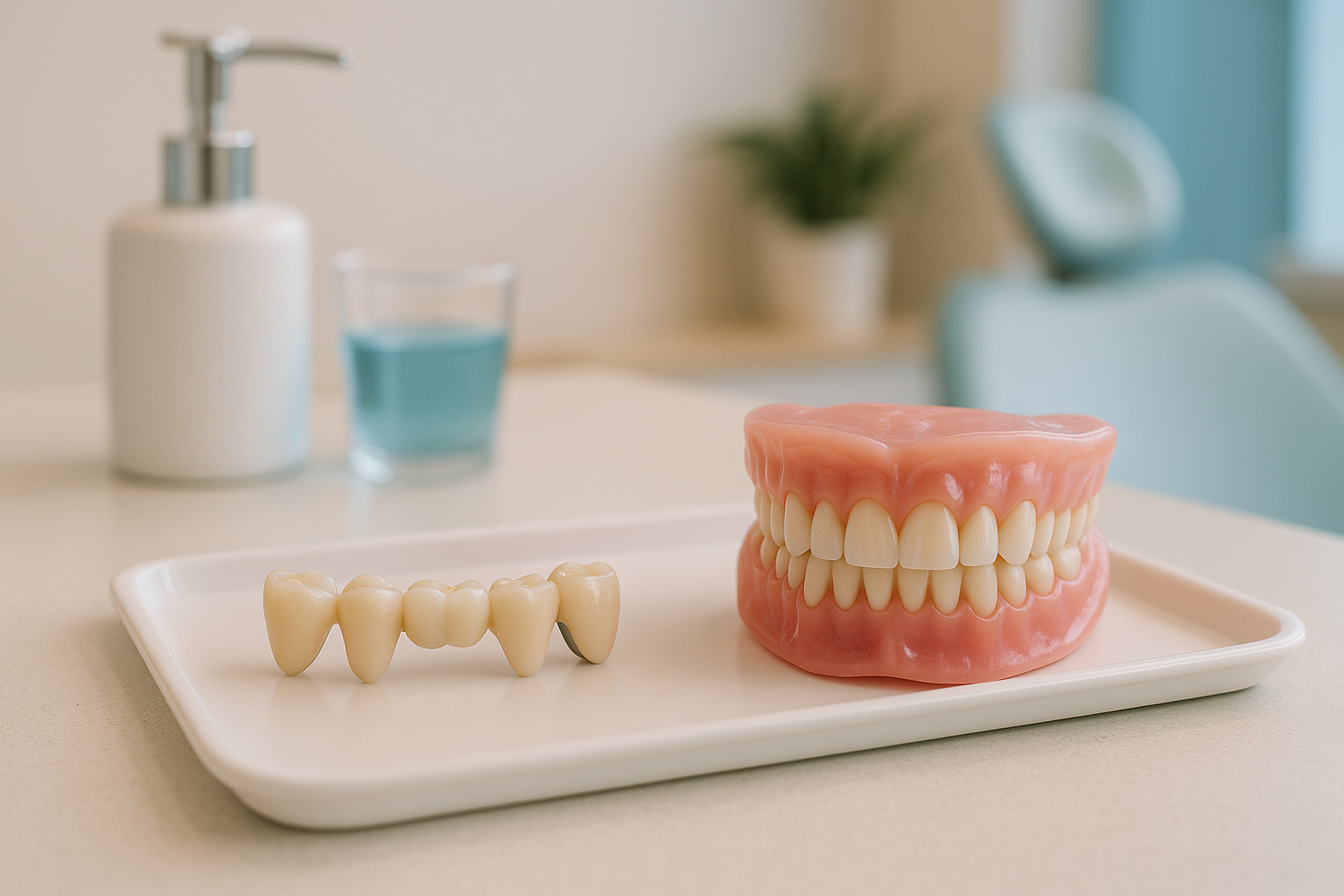
When replacing missing teeth, your main options are dental bridges and dentures. Here’s what you need to know:
- Dental Bridges: Fixed restorations anchored to neighbouring teeth or implants. They last 10–15 years with proper care and feel more like natural teeth. However, they require healthy adjacent teeth for support and diligent cleaning to prevent decay.
- Dentures: Removable appliances for multiple missing teeth. They cost less upfront, are easier to clean, and suit those with bone loss. Dentures need adjustments or replacements every 5–10 years as your mouth changes.
Your choice depends on factors like the number of missing teeth, oral health, and budget. Consult your dentist to determine the best fit for your needs.
Quick Comparison:
| Aspect | Dental Bridges | Dentures |
|---|---|---|
| Durability | 10–15 years | 5–10 years |
| Maintenance | Requires cleaning under the bridge | Daily removal and cleaning |
| Cost | Higher upfront | Lower upfront |
| Suitability | Few missing teeth, healthy adjacent teeth | Multiple missing teeth, bone loss |
Talk to your dentist to explore your options and find the right solution.
Treatment Planning Bridges vs Dentures – The Art and Science – PDP198
1. Dental Bridges
Dental bridges are a type of fixed dental restoration, anchored to neighbouring teeth or implants. Since they are permanently secured, keeping them in good condition requires consistent care.
Maintenance
Taking care of dental bridges means paying close attention to cleaning both around and underneath them to stop plaque from building up and to protect the supporting teeth from decay [1][2]. A solid daily routine includes brushing twice a day with a soft-bristled toothbrush and fluoride toothpaste. To clean under the bridge, tools like floss threaders or interdental brushes are incredibly helpful.
It’s also smart to steer clear of sticky or hard foods, as well as habits like nail biting or teeth grinding. If grinding is an issue, wearing a custom mouthguard can offer protection. And don’t skip regular dental check-ups – since bridges are fixed in place, professional cleanings are crucial [1]. Up next, we’ll dive into dentures and how to care for them.
2. Dentures
Dentures provide a removable option for replacing missing teeth, making cleaning and maintenance more straightforward compared to fixed bridges.
Dentures are prosthetic devices designed to replace missing teeth and surrounding tissues. They serve as an alternative for those who may not opt for fixed bridges.
Maintenance
To keep dentures in good condition, clean them daily. Remove them each night and soak them in water or a cleaning solution. After soaking, use a soft brush with mild soap or a specialised denture cleaner to brush them gently. Don’t forget to brush your gums, tongue, and palate with a soft toothbrush before putting the dentures back in. This helps improve circulation and removes plaque. Regular dental check-ups are essential to ensure your dentures fit well and to monitor your overall oral health.
Cost
Basic acrylic dentures are generally more affordable than bridges or implants, though higher-end options come with a bigger price tag.
It’s worth noting that dentures will likely need adjustments, relines, or even full replacement every 5–10 years as your mouth naturally changes over time. These additional costs should be factored into your budget when considering dentures as a long-term solution.
Durability
With proper care, dentures usually last between 5 and 10 years. Their lifespan depends on factors like material quality, how well they’re maintained, and natural changes in your mouth. Acrylic dentures, for example, might wear down faster than those made from more durable materials, especially if you frequently eat hard foods or grind your teeth.
Be cautious when handling your dentures – dropping them can lead to chips or cracks. Always store them safely when not in use, and avoid exposing them to hot water, as this can cause warping.
Suitability
Dentures are a practical choice for individuals missing multiple or all teeth, especially when bone loss or other factors make implants less viable. They offer solutions tailored to different needs.
- Complete dentures: Replace all teeth in either the upper or lower arch.
- Partial dentures: Fill gaps when some natural teeth remain healthy.
Your jaw shape, gum health, and lifestyle preferences all play a role in determining whether dentures are the best option for you. While some people adjust quickly to wearing dentures, others may need time to get comfortable speaking and eating with them.
sbb-itb-2be92ed
Pros and Cons
Dental bridges typically last between 10 and 15 years, while dentures have a shorter lifespan of around 5 to 10 years. The key difference lies in their structure: dental bridges are fixed in place, whereas dentures are removable and may need periodic adjustments to ensure they fit properly over time.
Here’s a quick comparison of their durability:
| Aspect | Dental Bridges | Dentures |
|---|---|---|
| Durability | 10–15 years | 5–10 years (with adjustments) |
When deciding between the two, it’s essential to weigh these durability factors alongside maintenance needs and costs. These differences in lifespan tie into the maintenance considerations mentioned earlier, helping you make a well-informed choice.
Conclusion
When deciding between dental bridges and dentures, the choice largely depends on your oral health, the condition of your remaining teeth, and your lifestyle preferences.
Dental bridges are a fixed solution that closely mimics the feel of natural teeth. They’re a great option if you have healthy adjacent teeth and are looking for a long-term, stable replacement for missing teeth.
On the other hand, dentures are a more budget-friendly choice, especially for replacing multiple missing teeth. They don’t require surgery or alterations to your existing teeth, making them less invasive. However, dentures do need regular cleaning, occasional adjustments, and more frequent replacement as your mouth changes over time.
While bridges tend to last longer, dentures offer flexibility and affordability. The decision ultimately comes down to weighing durability and permanence against cost and adaptability.
To make the best decision for your situation, it’s crucial to consult with a qualified dental professional. They’ll assess your oral health, budget, and personal preferences to recommend the most suitable option. A detailed examination will help determine whether bridges or dentures align better with your goals for oral health and function.
At Complete Smiles Bella Vista, you’ll receive tailored restorative care, ensuring you find the perfect solution for your individual needs.
FAQs
What are the key differences between dental bridges and dentures, and how do I choose the right option for me?
Choosing between dental bridges and dentures comes down to your oral health, lifestyle, and what works best for you. Dental bridges are a fixed option that works well if you have strong, healthy teeth next to the gap. They offer a natural appearance and feel, and with good care, they can last anywhere from 5 to 15 years – or even longer.
On the other hand, dentures are removable and often suggested if you’re missing multiple teeth or if the surrounding teeth aren’t sturdy enough to support a bridge. They’re generally more budget-friendly and adaptable, but they do need regular upkeep and occasional replacement.
The best way to decide? Speak with a dental professional who can evaluate your specific situation and guide you toward the option that suits you best.
What are the long-term care requirements for dental bridges versus dentures?
Proper care is crucial for keeping dental bridges and dentures functional and comfortable over time.
For dental bridges, maintaining top-notch oral hygiene is key. This means brushing twice a day, using floss threaders to clean underneath the bridge, and scheduling regular dental check-ups. These steps help prevent decay in the teeth supporting the bridge.
When it comes to dentures, daily cleaning is a must. Remove them to clean thoroughly, preventing plaque build-up and promoting oral health. Soaking dentures overnight in a denture-cleaning solution is also a good habit. Over time, changes in your gums and jaw can affect how dentures fit, so occasional adjustments by your dentist might be needed.
Routine dental visits are important for both options to keep your oral health in check and ensure your restorations stay in good shape.
Can I change from dentures to a dental bridge if my oral health gets better?
If your oral health improves and your remaining teeth are strong enough, switching from dentures to a dental bridge might be an option. However, this decision depends on several factors, including the condition of your teeth, gums, and jawbone.
To determine if this is the right path for you, it’s crucial to consult a qualified dentist. They can evaluate your oral health and provide personalised advice, recommending the best treatment plan to suit your specific needs.
Related Blog Posts
- Dental Implants: Your Top 8 Questions Answered
- Denture Costs in Australia: 2025 Guide
- Daily Care Tips for Implants, Bridges, and Dentures
- Ill-Fitting Dentures: Signs and Solutions
Important Notice: Any surgical or invasive procedure carries risks. Before proceeding, you should seek a second opinion from an appropriately qualified health practitioner.
Individual results may vary. The information provided in this article is for educational purposes only and does not constitute medical advice.
Checkout Related Blogs




Get in touch with us
For more information, call us now to start feeling better. Or fill the form below to make appointment
The Latest News from Complete Smiles
How to Clean Clear Plastic Retainers
Checklist for Choosing Wearable Dental Devices
Checklist for Choosing Cloud AI Platforms in Dentistry

Complete Smiles Bella VistaAccepts All Major Health Funds, Including





