





Denture Fitting Process: Step-by-Step Guide
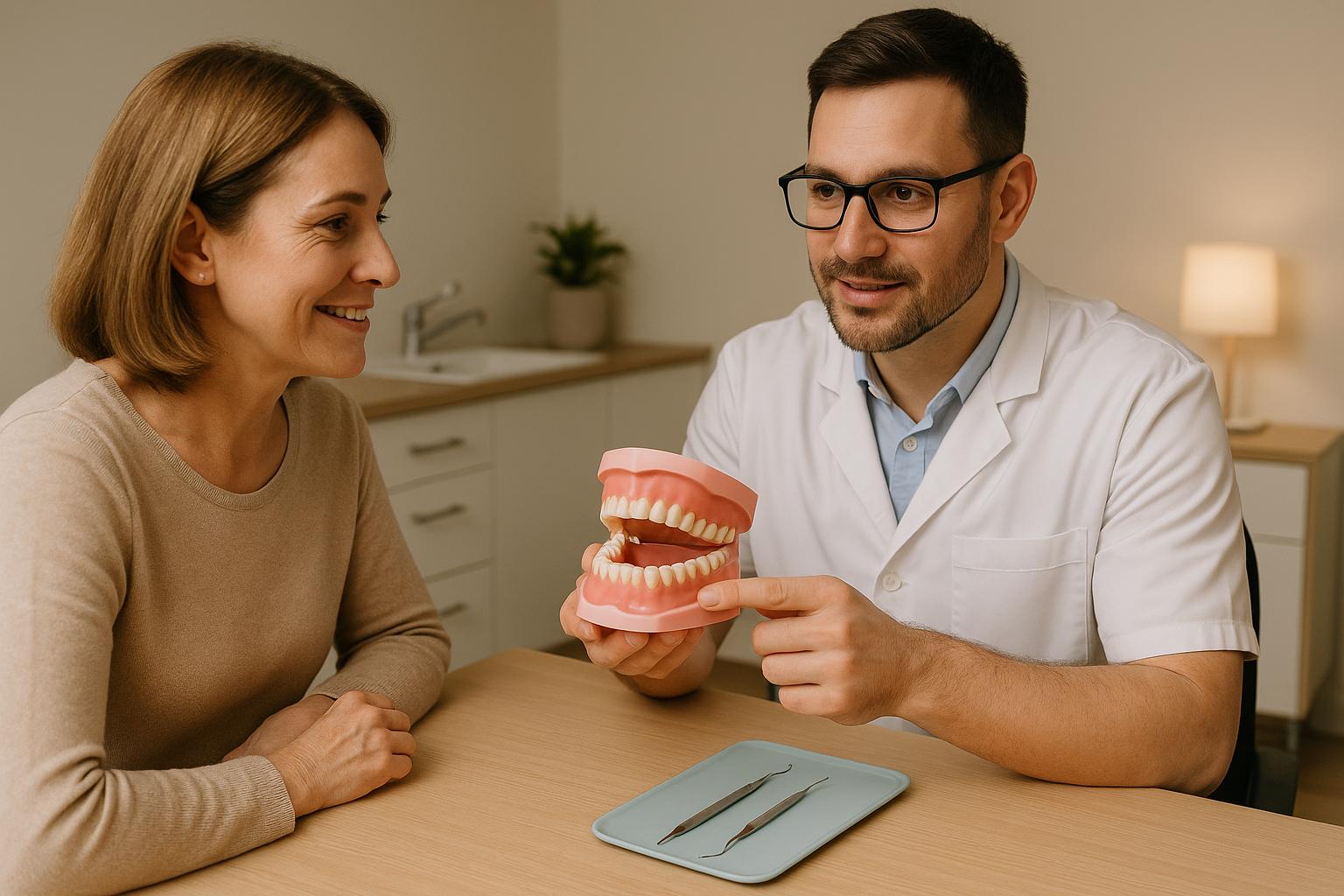
Getting dentures is a multi-step process that ensures they fit well, function properly, and look natural. Here’s a quick overview of what to expect:
- Initial Consultation: Your dentist evaluates your oral health, discusses your needs, and plans the treatment. Costs for this appointment typically range from AUD $60 to $120.
- Impressions & Measurements: Detailed moulds of your mouth are taken over several appointments to create a custom fit.
- Wax Try-In: Temporary wax dentures are tested for fit, comfort, and appearance, allowing adjustments before the final dentures are made.
- Final Dentures: The permanent dentures are fitted, and your dentist ensures they sit correctly and feel comfortable.
- Follow-Ups & Maintenance: Regular check-ups (every 6–12 months) help adjust for changes in your mouth and keep your dentures in good condition.
Each step is designed to provide well-fitting dentures that restore oral function and confidence. Proper care, like cleaning and regular dental visits, ensures durability and comfort over time.
The stages of getting a denture & false teeth
Step 1: First Appointment and Assessment
Your journey to getting dentures kicks off with a 30–60-minute consultation [1]. During this visit, your dentist will evaluate your oral health and discuss your specific treatment goals, ensuring the plan is tailored to suit your needs. It’s also a chance to raise any questions or concerns you might have, helping to ease any worries right from the start. This initial meeting sets the stage for the detailed work that lies ahead.
Complete Oral Examination
As part of the consultation, your dentist will carefully examine your teeth, gums, and jaw. They’ll check for issues like tooth decay, gum disease, or bone loss that could impact how your dentures fit. If you still have some natural teeth, they’ll assess whether these can be saved for partial dentures or if extractions are necessary. Screening for oral cancer and other abnormalities is another essential step, especially given health trends in Australia. Additionally, your medical history and current medications will be reviewed, as these can play a role in both the fitting process and your recovery.
Discussion of Your Needs
This part of the consultation is all about you – your lifestyle, preferences, and goals. Your dentist will ask about what you’re looking for in terms of appearance, comfort, and functionality. They might inquire about your eating habits, any challenges with speaking, and past experiences with dentures, if applicable. Practical topics, like costs (with initial consultations typically ranging from AUD $60 to $120) and payment options, will also be discussed. To help you make an informed decision, your dentist will explain the different types of dentures available, including full, partial, immediate, and implant-supported options, and how each aligns with your oral health and personal goals.
X-rays and Scans
Australian clinics often use digital imaging to ensure both precision and comfort. X-rays and digital scans provide essential details about your bone structure and help identify issues like infections, impacted teeth, or bone loss that could affect your dentures’ stability. Panoramic dental X-rays generally cost between AUD $90 and $150, though many clinics include imaging in their assessment packages. If you have private health insurance, it might cover part or all of these costs [1]. These images play a crucial role in helping your dentist map out the most suitable treatment plan for you.
Step 2: Taking Impressions and Measurements
After your initial assessment, the next step involves taking detailed impressions and measurements of your mouth. This is essential to ensure your dentures fit snugly and function as they should. By capturing the unique shape of your gums, jaw, and any remaining teeth, dental technicians can craft dentures that feel natural and work effectively [2][1]. This process usually requires several appointments over a few weeks, especially if you’ve recently had teeth extracted, allowing time for proper healing. These precise impressions are the foundation for creating dentures that prioritise both comfort and functionality.
Initial Impressions
The first impression appointment is relatively quick, typically lasting about 30 minutes, and serves as the starting point for your custom dentures [2]. During this visit, your dentist will use a soft material called alginate, placed in a tray that fits over your upper and lower jaws. This material sets within minutes, creating a basic mould of your mouth’s structure [2][3].
Although the process might feel a bit unusual, most patients find it manageable. If you have a sensitive gag reflex, let your dentist know beforehand. They can adjust the tray size, use distraction techniques, or take breaks to make the experience more comfortable [2][3].
These initial impressions are used to create study models of your mouth. These models help your dentist analyse the general shape of your oral structures and plan for a custom tray, which will be used in the next stage. Additionally, the impressions can highlight any areas that may need extra attention during the final fitting process.
Detailed Final Impressions
The final impression stage is more thorough and usually takes about one hour [2]. By this point, your dentist will have prepared a custom tray designed specifically for your mouth, based on the initial impressions. This tray allows for greater precision compared to standard trays.
For this step, your dentist will use highly accurate materials such as silicone or polyether [2][3]. These materials capture the intricate details of your gums and oral tissues, ensuring the dentures will fit securely and comfortably. The custom tray ensures the impression material flows evenly into all necessary areas, maintaining the correct thickness throughout.
This stage is critical because the detailed impressions will guide the creation of your actual dentures. Any inaccuracies here could lead to dentures that don’t sit properly, causing irritation or discomfort. If the impression isn’t perfect, your dentist will redo it to achieve the best results [2][3].
Recording Jaw Position
After taking the final impressions, you’ll return for another appointment to record your jaw position, which also takes about one hour [2]. This step focuses on how your upper and lower jaws align when you bite, speak, and rest naturally.
Your dentist will use wax rims or similar tools placed on temporary bases that fit over your gums. You’ll be asked to bite down in a comfortable position, allowing the dentist to record the precise relationship between your jaws [3]. This process ensures your dentures will align correctly, providing proper function for chewing and speaking [2][1].
The measurements taken during this appointment also help determine the placement of the denture teeth for functionality and appearance [3]. Your dentist will evaluate your facial support and lip position to ensure the dentures enhance your natural look. Accurate measurements at this stage can prevent issues like jaw discomfort, difficulty chewing, or an unnatural appearance once the dentures are complete.
Throughout this process, open communication with your dentist is key. If anything feels uncomfortable or if you have concerns about the impressions, speak up immediately. Addressing any issues early makes it easier to correct them before the dentures are fabricated.
Step 3: Wax Trial and Testing
The wax trial is a crucial step in the denture process, where you get a sneak peek at how your future dentures will look and feel. This stage ensures that both the functionality and appearance of your dentures meet your expectations. Usually scheduled two to three weeks after your final impressions are taken [2], this appointment uses temporary wax dentures, which allow for easy and affordable adjustments before the final version is made.
Trying on Wax Dentures
During your wax try-in appointment, which typically lasts about an hour [2], your dentist will place the temporary wax dentures in your mouth. This gives you the chance to evaluate how they fit against your gums, how they feel when you speak, and how natural they look when you smile [4][6]. These temporary dentures are made with real denture teeth held in place by soft wax, making it simple to adjust the fit and alignment.
You’ll be encouraged to test everyday functions like speaking, smiling, and gently biting. Some patients notice that certain sounds, like the "S" sound, might feel a bit different during this trial [3][4]. This is also your opportunity to assess the appearance of the dentures, including the colour, shape, and size of the teeth. The insights you gain during this trial are essential for making final tweaks.
Making Changes Based on Your Feedback
Your input during this stage is key to getting the perfect fit. Be sure to mention any discomfort, pressure points, or areas that feel misaligned. Adjustments might include repositioning the front teeth to improve speech, refining the bite alignment, or even tweaking the tooth shade to better match your preferences [3][4]. If necessary, additional changes can be made to ensure the dentures are as comfortable and natural-looking as possible.
Approving the Final Design
Once you and your dentist are happy with the fit, comfort, bite alignment, and overall look of the wax dentures, the final design is approved [3][4][6]. This wax model then becomes the exact blueprint used by the dental lab to craft your permanent dentures. Before giving your final approval, take time to test the dentures thoroughly – speak, smile, and check your reflection from different angles. It’s important to be confident in your choice because once the permanent dentures are made from durable materials, making significant changes will be much harder.
At this stage, your dentist will also go over care tips and what to expect as you adjust to wearing your new dentures. With the final design approved, the process moves forward to the creation of your permanent dentures, bringing you closer to the finished product.
sbb-itb-2be92ed
Step 4: Getting Your Final Dentures
The moment has arrived – your final dentures, made from the wax model you approved, are ready. After the wax trial and final design sign-off, this appointment marks the start of your adjustment period. It’s the step that brings you closer to a fully functional and comfortable smile.
Fitting Your New Dentures
During this final fitting, your dentist will carefully place the completed dentures in your mouth and ensure they fit as intended. These permanent dentures, built from durable materials, are designed for everyday use.
Your dentist will check for any pressure points or areas of irritation. Special attention is given to bite alignment, as this is essential for comfortable chewing and clear speech. You’ll be asked to bite and move your jaw to evaluate how well the upper and lower dentures align.
To make sure everything works smoothly, your dentist may ask you to say specific words or sounds to identify any issues with speech clarity or denture movement [4][5].
If anything feels off – no matter how minor – it’s important to speak up. Even small pressure points can become uncomfortable over time. Your dentist can make adjustments on the spot to ensure your dentures fit as comfortably as possible [4].
Learning Denture Care
Once your dentures are fitted, knowing how to care for them is key to keeping them comfortable and functional. Your dentist will walk you through the steps for daily maintenance.
- Cleaning: Use a soft brush and a non-abrasive cleanser to clean your dentures. Regular toothpaste is a no-go – it can scratch the surface. Rinsing after meals is also essential to remove food particles and reduce bacterial buildup.
- Soaking: Dentures need to stay moist to retain their shape. Your dentist will explain how to soak them overnight in a specialised denture solution to keep them clean and hydrated [4][5].
- Handling: You’ll also learn safe ways to remove and insert your dentures to avoid accidental damage.
Proper cleaning and handling not only extend the life of your dentures but also help prevent gum irritation and oral infections [4][5]. Additionally, your dentist will advise you on foods to approach carefully at first and how to gradually expand your diet as you get used to wearing dentures.
Follow-Up Appointments
Your final fitting isn’t the end of the process. As your mouth continues to heal and adjust – especially if you’ve had recent tooth extractions – your dentures may need fine-tuning over the next few weeks.
Follow-up appointments are essential for addressing any adjustments. During these visits, your dentist will check how well you’re adapting and resolve concerns like sore spots or changes in fit [1][2].
It’s normal to experience some initial challenges, such as mild discomfort, difficulty eating certain foods, or temporary changes in speech. These issues typically improve with minor adjustments and as you become more accustomed to wearing your dentures [2][4]. Your dentist will offer advice and reassurance throughout this period.
If you notice persistent pain, looseness, sores, or signs of infection like swelling or redness, don’t hesitate to contact your dentist [4][5]. Early intervention can prevent complications and ensure your dentures remain functional and comfortable.
Step 5: Ongoing Care and Maintenance
Taking proper care of your dentures is key to ensuring they function well and maintaining your oral health. Over time, your mouth undergoes natural changes, and keeping up with maintenance can help you tackle potential issues before they escalate.
Regular Dental Visits
Make it a habit to visit your dentist every six to twelve months, or more often if needed [2][4]. These check-ups are essential for keeping your dentures in good shape and catching any problems early.
During these appointments, your dentist will check the fit of your dentures, look for any sore spots, and assess your gums for signs of irritation or other issues. They’ll also clean your dentures professionally and make minor adjustments to ensure everything feels comfortable.
Interestingly, more than 60% of denture wearers need at least one adjustment in their first year of use [4]. Regular visits allow your dentist to address issues like pressure points or looseness before they cause discomfort or harm to your gums.
Routine check-ups typically cost between AUD $100 and $400, but they can save you from more expensive treatments down the track [2]. Depending on your circumstances, you might qualify for government dental schemes or private health insurance rebates to help cover these costs. These visits are also an opportunity to manage the gradual changes that naturally occur in your mouth over time.
Dealing with Changes in Your Mouth
As time passes, your jawbone and gums naturally change due to bone resorption and gum shrinkage. This can cause your dentures to feel loose or uncomfortable [2][4].
Signs of these changes include increased denture movement while speaking or eating, difficulty chewing foods that were once easy, new sore spots, or subtle changes in your speech. These symptoms often appear gradually, so it’s important to stay alert to any differences.
When these changes happen, your dentist can perform maintenance procedures to restore the fit and comfort of your dentures. Denture relining, for instance, involves adding new material to the inner surface for a better fit. In more advanced cases, rebasing might be necessary, where the denture base is replaced while keeping the existing teeth intact.
Australian dental guidelines suggest that most people need a denture reline or replacement every 3–5 years due to these natural changes [4]. Planning for this regular upkeep can help you budget and avoid unexpected discomfort. Keep an eye on how your dentures feel, and don’t hesitate to act if something seems off.
When to Contact Your Dentist
If you experience persistent pain, swelling, or redness in your gums, it’s time to contact your dentist [4][5]. These symptoms could indicate an infection or injury that needs attention. Similarly, any cracks or breaks in your dentures, or noticeable changes in your ability to chew or speak, warrant a visit to your dental professional.
Avoid relying on over-the-counter adhesives to fix loose dentures. While they might provide short-term relief, they can mask underlying problems that need to be addressed by a dentist [4]. Proper adjustments are always the better option.
Australia’s warm climate can also contribute to dry mouth, which can affect denture comfort and overall oral health. If you notice persistent dryness, difficulty swallowing, or increased denture movement due to reduced saliva, talk to your dentist. They can recommend solutions to manage these challenges effectively.
Addressing small issues early can save you from bigger problems later. Simple adjustments during a quick dental visit can often resolve concerns, sparing you the need for more extensive – and expensive – treatments down the line.
Conclusion
Getting proper dentures involves a detailed, step-by-step process designed to ensure both functionality and comfort. From the initial assessment to routine check-ups, every stage plays an essential role in achieving a precise fit and long-term ease of use.
Each step tailors your dentures to the unique shape and structure of your mouth, helping to reduce issues like poor fit or discomfort. Staying in close communication with your dentist throughout the process is key to achieving the best results. It’s also worth noting that as your mouth adjusts, you may need several follow-up appointments to fine-tune the fit [4][5].
Maintaining your dentures over the long term requires consistent care and regular dental visits. Daily cleaning, proper storage, and check-ups every six to twelve months will go a long way in keeping your dentures comfortable and functional. These follow-ups are crucial for ensuring they last for years to come.
If you notice sudden changes in fit, ongoing discomfort, or any damage to your dentures, resist the urge to attempt home fixes. Instead, contact your dentist immediately. Prompt professional care can address small problems before they escalate into bigger issues.
FAQs
What types of dentures are available, and how can I choose the best option for me?
When it comes to dentures, there are a few options to consider: full dentures, partial dentures, and implant-supported dentures.
- Full dentures are designed to replace all the teeth in either your upper or lower jaw.
- Partial dentures are a great choice if you still have some natural teeth and need to fill in the gaps.
- Implant-supported dentures offer extra stability and comfort by being anchored with dental implants.
The best choice for you will depend on factors like your oral health, budget, and personal preferences. A dentist can evaluate your situation and help you decide which option will work best for you. For tailored advice, it’s always a good idea to consult a qualified dental professional who can recommend the most practical and comfortable solution.
What can I do to keep my dentures comfortable and fitting properly over time?
To keep your dentures comfortable and fitting well, maintaining good oral hygiene and visiting your dentist regularly are key. Make it a habit to clean your dentures every day using a soft-bristle brush and a non-abrasive denture cleaner. This helps prevent plaque build-up and stains. Be cautious with hot water, as it can distort the material.
Over time, your gums and jawbone can change, which might affect how your dentures fit. If they start feeling loose or uncomfortable, don’t wait – reach out to your dentist. They might suggest adjustments, relining, or even a replacement to ensure a snug fit. Regular check-ups are also vital to keep an eye on your oral health and make sure your dentures are doing their job properly.
What should I do if my dentures feel uncomfortable or don’t fit properly after the fitting?
If your dentures are causing discomfort or don’t fit properly after being fitted, it’s crucial to reach out to your dentist right away. They can evaluate the problem and make adjustments to improve how they fit and feel.
While it’s normal to need some time to get used to new dentures, ongoing issues like pain, sore spots, or trouble chewing shouldn’t be overlooked. Scheduling regular check-ups with your dentist helps ensure your dentures stay comfortable and work as they should.
Related Blog Posts
- Denture Costs in Australia: 2025 Guide
- Daily Care Tips for Implants, Bridges, and Dentures
- Ill-Fitting Dentures: Signs and Solutions
- Pros and Cons of Dental Bridges and Dentures
Important Notice: Any surgical or invasive procedure carries risks. Before proceeding, you should seek a second opinion from an appropriately qualified health practitioner.
Individual results may vary. The information provided in this article is for educational purposes only and does not constitute medical advice.
Checkout Related Blogs



Get in touch with us
For more information, call us now to start feeling better. Or fill the form below to make appointment
The Latest News from Complete Smiles
How to Clean Clear Plastic Retainers
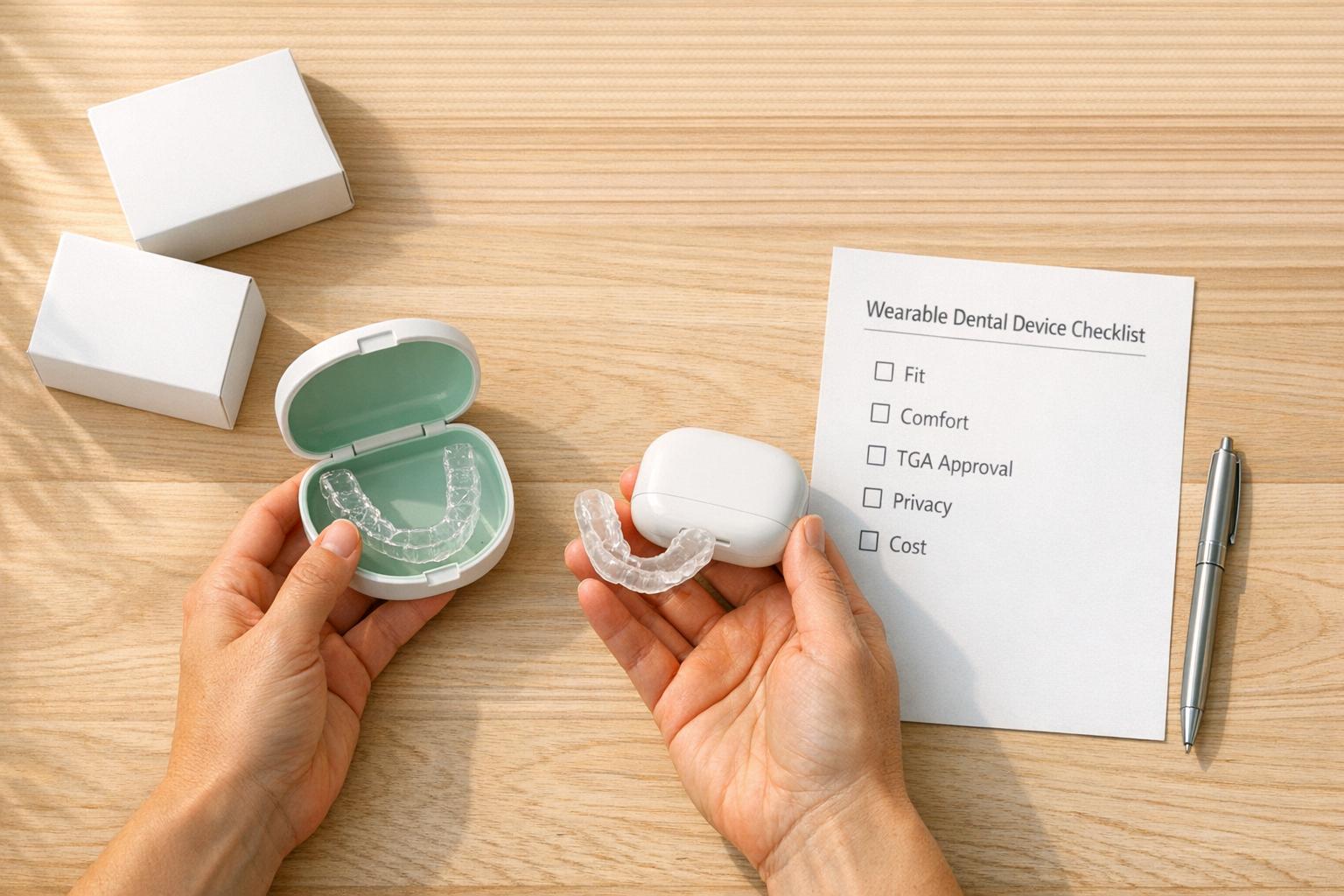
Checklist for Choosing Wearable Dental Devices
Checklist for Choosing Cloud AI Platforms in Dentistry
Complete Smiles Bella VistaAccepts All Major Health Funds, Including