



Speech Disorders and Dental Health: Research Insights
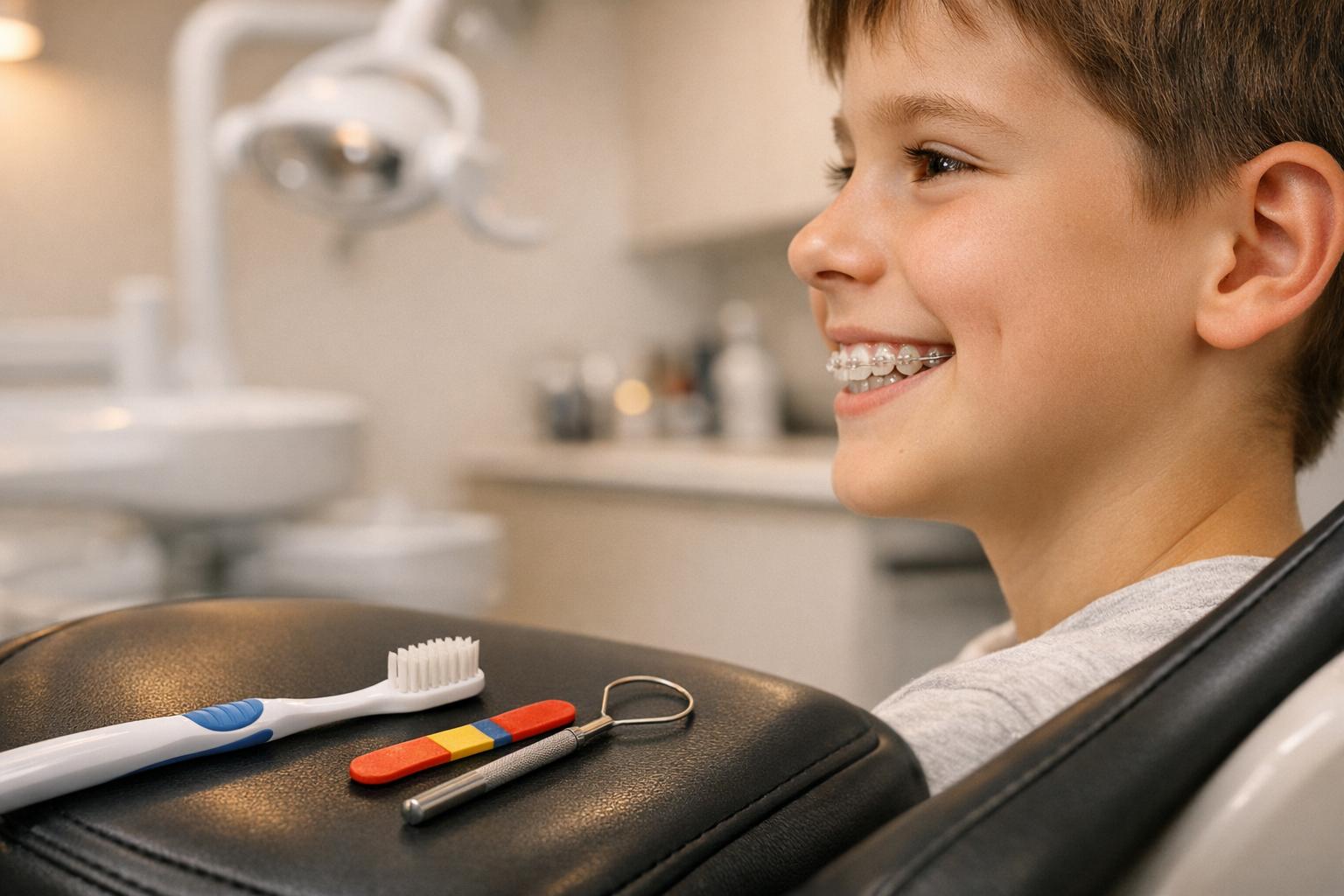
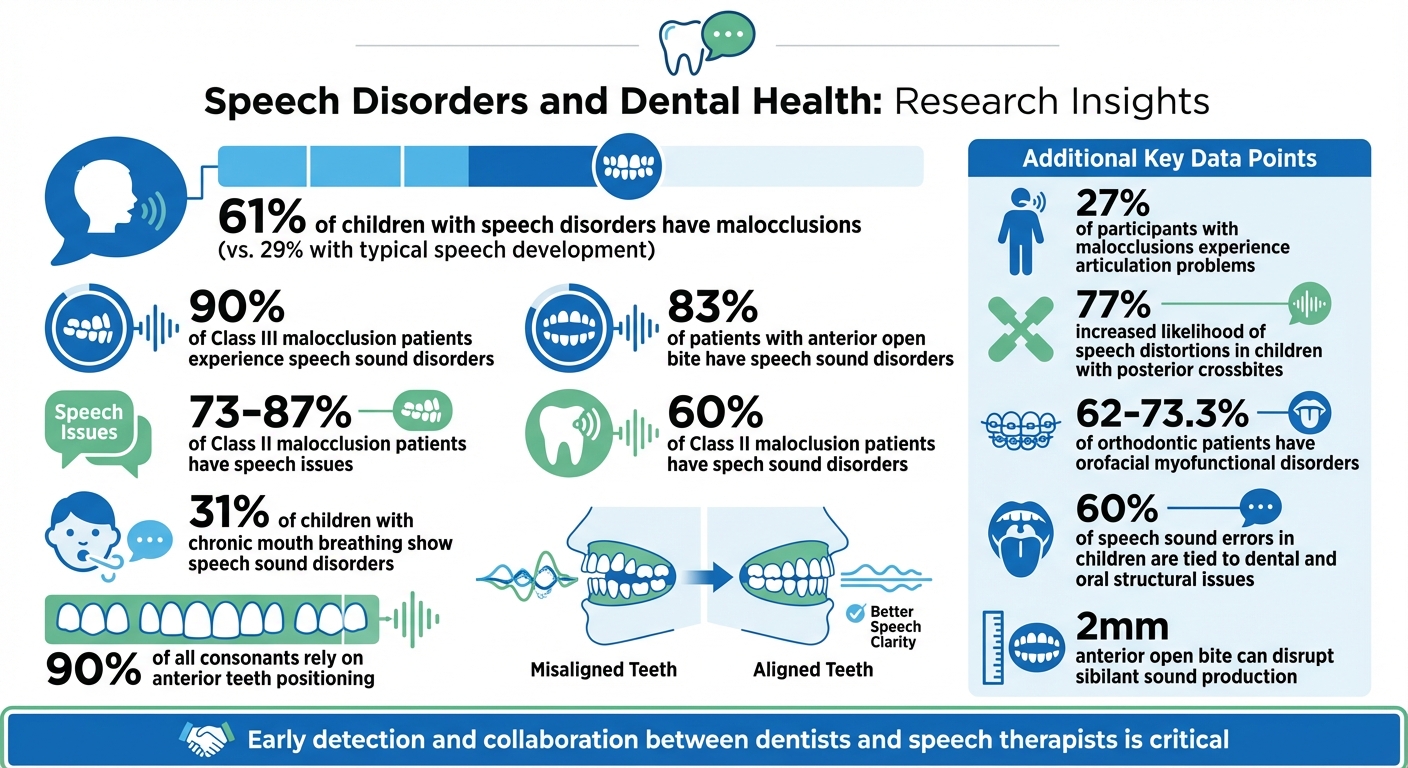
Speech and dental health are closely linked. Misaligned teeth or oral issues like tongue-tie and cleft palate can significantly impact speech clarity. For example, 61% of children with speech disorders have malocclusions, compared to 29% of children with typical speech development. Dental issues such as anterior open bites or gaps as small as 2mm can distort sounds like /s/ and /z/.
Key points:
- Malocclusions: 73–90% of patients with dentofacial disharmony experience speech issues.
- Cleft Palate: Leads to hypernasality and difficulty producing sounds like /p/, /b/, /t/, and /d/.
- Oral Conditions: Chronic mouth breathing affects 31% of children’s speech clarity.
- Early Detection: Dentists can identify speech delays during check-ups, improving outcomes with timely interventions.
Collaboration between dentists and speech-language therapists is critical to address structural and functional challenges. Treatments include orthodontics, surgical corrections, and therapies like orofacial myofunctional exercises. Early screening and care can improve both oral health and communication abilities.
Speech Disorders and Dental Health Statistics: Key Research Findings
Research Findings on Dental Health and Speech Disorders
Cleft Palate and Speech Development Studies
Research into cleft palate conditions highlights how structural differences can significantly influence speech development from a young age. Studies reveal that speech challenges in these patients stem from insufficient intraoral structures, which limit normal sound production [3]. For instance, children with cleft palate often struggle to produce labial sounds like /p/ and /b/, as well as lingual plosives such as /t/, /d/, /k/, and /g/ [3].
To compensate, patients may resort to glottal or pharyngeal articulations due to their inability to generate adequate intraoral pressure. This can lead to unique sound combinations, such as simultaneous tongue contacts at both the tip and back of the palate, producing sounds like [tk] or [dg] [3]. Addressing these issues requires a dual approach: surgical correction of structural defects and behavioural intervention through speech therapy [3].
These findings provide a foundation for exploring how other dental and functional issues can also shape speech patterns.
Orofacial Conditions and Their Impact on Speech
Speech production can also be affected by various orofacial conditions beyond cleft-related anomalies. Malocclusions, for example, are closely linked to speech difficulties. A study conducted in 2025 among native Arabic speakers found that 27% of participants with malocclusions experienced articulation problems, with distortions being the most frequent type of error [1]. Since nearly 90% of all consonants rely on the positioning of anterior teeth, their alignment plays a critical role in speech clarity [4].
Different types of malocclusions present unique challenges. Children with posterior crossbites are 77% more likely to experience speech distortions [4], while even minor anterior open bites – just 2 millimetres – can disrupt the production of sibilant sounds [2]. Interestingly, research suggests that deep overbites may provide some protection against certain speech distortions compared to normal overbites [4].
Chronic mouth breathing is another factor that significantly impacts speech. Approximately 31% of children with this condition demonstrate speech sound disorders [6]. This is often due to weakened facial muscles and incorrect tongue positioning, which particularly affect bilabial sounds like /p/, /b/, and /m/, as well as fricatives such as /f/, /v/, /s/, and /z/ [3].
With such varied speech disruptions, tailored oral health programmes have been developed to address these specific challenges.
Oral Health Programs for Communication Challenges
Given the strong connection between structural issues and speech difficulties, integrated therapeutic approaches have been designed to improve outcomes. Speech sound disorders are highly prevalent among patients with dentofacial disharmony, affecting 90% of Class III patients, 83% of those with anterior open bite, and 73–87% of Class II patients [5].
One effective method is orofacial myofunctional therapy (OMT), which uses isotonic and isometric exercises to enhance tongue and cheek mobility and tone [6]. Among orthodontic patients, 62% to 73.3% are reported to have orofacial myofunctional disorders [6]. Recognising the importance of early intervention, the American Association of Orthodontics recommends evaluations by age 7, as speech development tends to stabilise once permanent teeth are in place [6]. Furthermore, eliminating problematic habits – like nonnutritive sucking – by age 3 is crucial in preventing malocclusions such as anterior open bite, which is strongly associated with lisping [6].
How does teeth misalignment affect speech?
Care Strategies for Speech and Dental Challenges
Managing patients with both speech-related issues and dental health challenges involves a thoughtful blend of structural corrections and functional enhancements. Research indicates that a combination of multidisciplinary teamwork, specialised clinical practices, and effective communication can address these intertwined concerns effectively.
Team‑Based Treatment Approaches
Addressing speech and dental health challenges often requires collaboration across various healthcare fields. Teams typically include dentists, speech‑language‑hearing therapists, rehabilitation physicians, nutritionists, and physical or occupational therapists [7]. This collaborative approach ensures that structural dental corrections complement functional improvements in speech.
One standout example comes from Seirei Mikatahara General Hospital in Japan, where a team led by speech‑language‑hearing therapist Mami Hirasaki and Dr Ichiro Fujishima treated an 83-year-old patient with dysphagia and dysarthria. Using a flexible palatal lift/augmentation prosthesis alongside comprehensive therapy, they achieved remarkable progress. Over 177 days, the patient’s maximum tongue pressure increased from 10.6 kPa to 15.3 kPa, oral transit time improved from 3.3 seconds to 0.7 seconds, and albumin levels rose from 3.0 g/dL to 4.0 g/dL. The patient was discharged successfully on day 216.
"To maximise the effect of the intraoral prosthesis, a transdisciplinary approach with concurrent swallowing rehabilitation, nutritional support, and physical and occupational therapy is necessary." – Ichiro Fujishima, MD, PhD, Hamamatsu City Rehabilitation Hospital [7]
For children, paediatric dentists and orthodontists play a critical role in early detection. They can use oral diadochokinetic tests – asking children to quickly repeat sounds like "puh", "tuh", and "kuh" – to evaluate speech development. Monitoring milestones, such as ensuring speech is fully understood by ages 4–5, helps identify when referrals to speech pathologists are needed [3].
This collaborative and proactive approach lays the groundwork for tailored treatments that address both structural and functional needs.
Adapted Oral Care Methods
For patients with limited mobility or other challenges, minimally invasive dental techniques offer practical alternatives. A notable example is Sound Dental Care in Washington State, which treated 5,700 patients in long-term care facilities in January 2024. Using a mobile practice model, dental hygienists applied Silver Diamine Fluoride (SDF) and performed Silver Modified Atraumatic Restorative Technique (SMART) fillings. These methods reduced the need for invasive procedures, particularly benefiting elderly patients with mobility and communication difficulties. Around 70% of their patients were covered by Medicaid [12].
Incorporating myofunctional therapy into dental care plans can also be beneficial. Isotonic exercises help improve tongue and cheek mobility, while isometric exercises build the muscle strength needed for oral health and clear speech [3][11]. For patients with swallowing difficulties, tools like suction toothbrushes can minimise risks such as aspiration pneumonia while maintaining oral hygiene [8].
Devices that support oral structure, like space maintainers or paediatric dentures, are vital for preserving the anatomy needed for proper speech. Research shows that 60% of speech sound errors in children are tied to dental and oral structural issues [9][10].
Alongside these clinical adaptations, clear and thoughtful communication plays a key role in improving outcomes.
Communicating with Patients Who Have Speech Difficulties
Effective communication is fundamental when working with patients who have speech disorders. Dental professionals should tailor their approach to the patient’s level of linguistic understanding. For those with additional hearing impairments, combining verbal instructions with gestures, written notes, or visual aids can enhance comprehension [3].
Using the "teach-back" method – where patients repeat instructions in their own words – can confirm their understanding [11]. Visual feedback tools, such as dental mirrors placed under the nostrils or stethoscopes against the nose, offer real-time insights into airflow during speech assessments [3].
"Effective communication with patients is the cornerstone of quality dental care and oral health outcomes." – Horowitz A, Researcher [3]
Stimulability tests are another helpful tool. For instance, practitioners can demonstrate how to pronounce a word and then ask the patient to mimic it. Slowing down speech rates during interactions can also improve clarity and reduce frustration for patients [3].
sbb-itb-2be92ed
Challenges and Opportunities in Specialised Care
Meeting Complex Communication Needs in Dental Practice
Patients with speech disorders often encounter unique challenges when it comes to communication in dental settings. Studies reveal that these barriers can lead to misunderstandings, especially in children, which can hinder cooperation during treatment [3]. Dental professionals face the critical task of determining whether a speech impairment stems from anatomical issues, habitual behaviours, or neurological conditions [13].
Research from the University of North Carolina sheds light on the stigma surrounding speech disorders, such as lisping. Patients with these conditions are often perceived as less capable, which can damage their confidence and amplify dental anxiety [5]. This creates a difficult cycle: communication issues heighten stress, which in turn complicates treatment.
To address these challenges, tools like the oral diadochokinetic test can assess neuromotor coordination early in the process [3]. Simple articulation exercises – like asking patients to count from 1 to 20 or pronounce words with "s" sounds (e.g., six, sixteen, seven, seventeen) – can uncover errors that may interfere with communication during treatment [3]. For patients diagnosed with functional disorders, using relatable analogies can help. For example, comparing the condition to a "software glitch" rather than a "hardware issue" or likening it to a "busy server" makes the explanation more accessible and less intimidating [13].
By tackling both diagnostic and psychosocial barriers, dental professionals can help reduce patient anxiety and improve the overall treatment experience.
Reducing Anxiety in Patients with Communication Challenges
Clear communication is only part of the solution; managing patient anxiety is equally crucial. Validating a patient’s experiences fosters trust and reassurance. As highlighted by BMJ recommendations:
"These symptoms are real and not ‘in your head’" [13].
Acknowledging the legitimacy of their concerns can help reduce the stigma often associated with communication difficulties.
For patients with limited verbal skills, observing behaviour becomes critical. Non-verbal signs like reluctance to open the mouth, restlessness, or withdrawal might signal pain or discomfort [14]. Recognising these cues allows dental professionals to adapt their approach. Techniques like sequential finger tapping during conversations can also ease dysfluency and help patients feel more comfortable [13].
Demonstrating immediate progress can be a powerful motivator. Simple clinical actions, such as repositioning the larynx manually or observing natural relaxation during laughter, can show patients their potential for improvement [13]. For those with severe anxiety, sedation options like nitrous oxide or conscious sedation can make treatment less daunting [15]. Collaborating with behaviour support specialists and speech pathologists further strengthens these anxiety management strategies [14] [15].
Conclusion: Combining Dental and Speech Health Care
Key Insights and Care Approaches
The link between dental health and speech development is undeniable. Research reveals that 90% of patients with Class III malocclusion and 83% of those with anterior open bite experience speech sound disorders [5]. Even a small open bite – just 2 millimetres – can disrupt the production of sibilant sounds like /s/ and /z/ [2]. These numbers underline the importance of dental professionals recognising how oral health conditions can influence communication.
Collaboration across disciplines proves to be highly effective. As Laura Jacox from the Adams School of Dentistry explains:
"Shared knowledge can facilitate collaborations between dental specialists and speech pathologists for the proper diagnosis, referral, and treatment of DFD patients with speech pathologies" [5].
By addressing structural concerns – such as malocclusions or tongue-tie – alongside functional therapies, patients can achieve better outcomes. Early intervention also plays a critical role. Screening tools like diadochokinetic tests can pinpoint speech delays early on. Tackling habits such as thumb sucking or tongue thrusting during the primary dentition stage may also reduce the likelihood of more complex orthodontic needs later [6].
These findings highlight the need for dental professionals to take a proactive role in integrating early detection with collaborative care strategies.
Steps Forward for Dental Professionals
Dentists are often in a unique position to spot speech-related issues in children [3]. This makes them crucial players in initiating early referrals and fostering coordinated care. To build on these research findings, dental professionals should adopt simple yet effective screening methods to identify concerns early and connect patients with the right specialists.
Developing clear screening and referral protocols is essential for improving multidisciplinary care. Establishing strong networks with speech-language pathologists, orthodontists, and ENT specialists can ensure patients with complex needs receive comprehensive support. By embracing this collaborative approach, dental professionals can help enhance both oral health and communication abilities, setting the stage for better long-term outcomes.
FAQs
How can dental issues like misaligned teeth impact speech clarity?
Dental misalignments, like malocclusions (when teeth and jaws don’t align properly), can have a noticeable impact on speech clarity. They interfere with the precise movements your mouth needs to produce sounds. Australian research highlights an interesting connection: children with speech disorders are twice as likely to have malocclusions compared to those with typical speech development. Common problems – such as cross-bites, anterior open bites, and lateral shifts – can make it harder to pronounce certain consonants like /s/, /z/, /t/, and /d/.
Tackling these issues often requires teamwork. Orthodontic treatment to straighten teeth, combined with speech therapy, can significantly improve both how the mouth functions and how clearly someone speaks. Acting early, especially during childhood, can be key. Early intervention not only helps avoid long-term complications but also reduces the need for more involved treatments down the track.
How can dentists help identify and address speech disorders in children?
Dentists, particularly those specialising in paediatrics, are vital in spotting oral issues that might lead to speech challenges. Since many speech sounds rely on the proper functioning of the oral cavity, problems like misaligned teeth, an unusually shaped palate, or habits like thumb-sucking and tongue thrusting can interfere with clear articulation.
Studies highlight a strong connection between dental conditions such as malocclusion (e.g., crossbites or open bites) and speech difficulties. By conducting early dental assessments, dentists can identify these problems and recommend timely solutions, such as orthodontic treatments or appliances designed to correct habits. Furthermore, dentists often work hand-in-hand with speech-language pathologists, ensuring a well-rounded approach that addresses both oral health and speech development.
Clinics like Complete Smiles Bella Vista exemplify this collaborative care by offering integrated services. Their combination of paediatric dentistry, orthodontics, and referral networks ensures children receive the support they need for both their oral and speech health.
Why is it important to address speech and dental issues in children early?
Early care is essential because the structures in the mouth that support speech develop rapidly during a child’s early years. Dental problems like malocclusions – such as crossbites or open bites – can seriously affect a child’s ability to pronounce sounds clearly. Studies reveal that children with long-term speech disorders often experience more severe dental misalignments, emphasising the importance of addressing these issues early.
By tackling these challenges sooner rather than later, paediatric dentists can use tools like space maintainers or early orthodontic treatments to fix structural issues. Meanwhile, speech-language pathologists can focus on improving motor-speech skills. Healthy baby teeth play a key role in forming sounds correctly, and losing them too soon or dealing with decay can lead to alignment problems that make speech difficulties even harder to address later on. A combined approach ensures better outcomes for a child’s speech, oral health, and overall growth.
In Australia, clinics such as Complete Smiles Bella Vista provide a range of paediatric dental services, including orthodontic care, which can be seamlessly integrated with speech therapy. Acting early not only supports a child’s oral and speech development but also boosts their confidence in school and social settings.
Related Blog Posts
- How to Prevent Malocclusion in Children
- Top 7 Challenges in Full-Arch Hybrid Implant Cases
- Periodontal Care for Patients with Disabilities
- Guide to Oral Health for Rare Genetic Disorders
Important Notice: Any surgical or invasive procedure carries risks. Before proceeding, you should seek a second opinion from an appropriately qualified health practitioner.
Individual results may vary. The information provided in this article is for educational purposes only and does not constitute medical advice.
Checkout Related Blogs



Get in touch with us
For more information, call us now to start feeling better. Or fill the form below to make appointment
The Latest News from Complete Smiles
How to Clean Clear Plastic Retainers
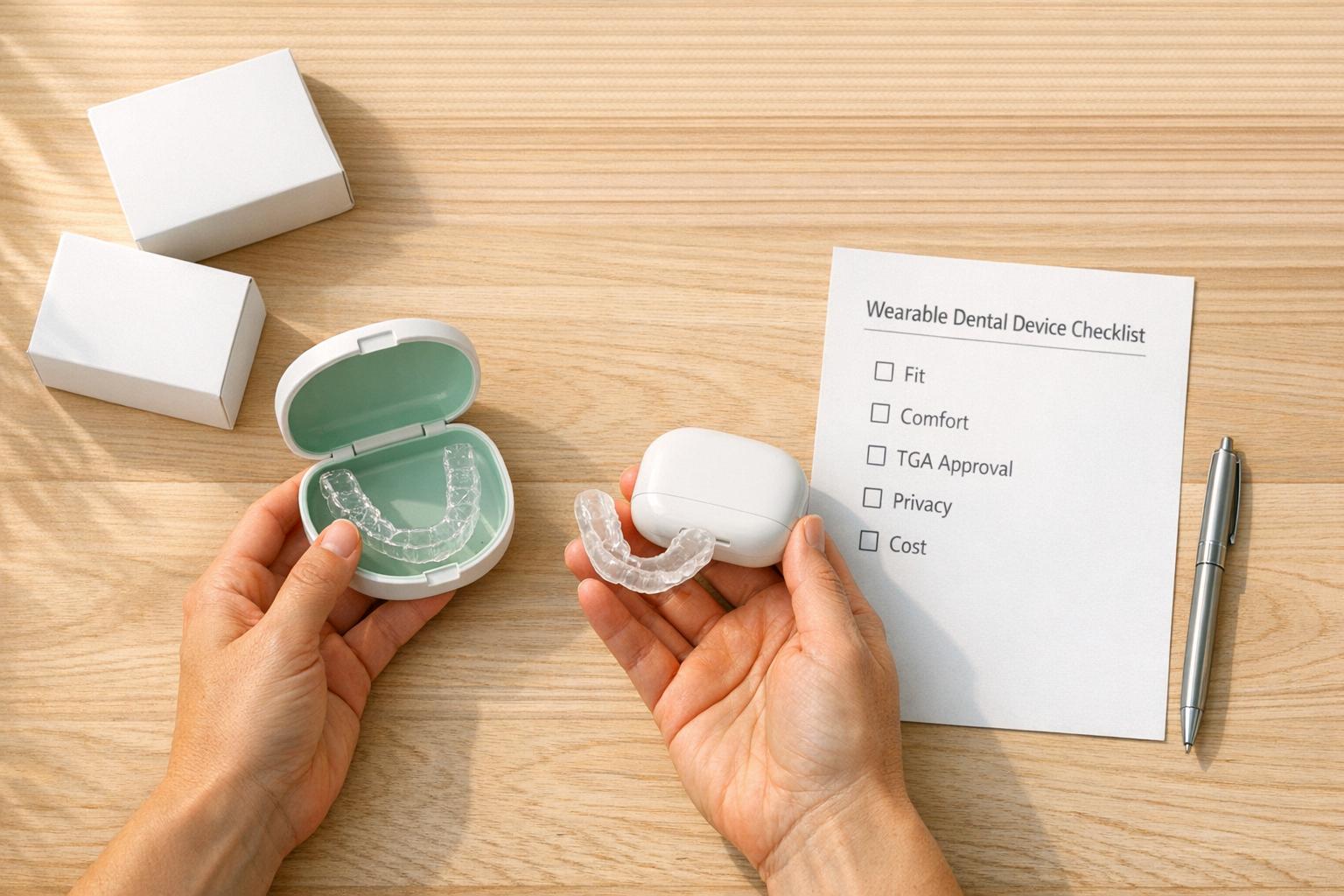
Checklist for Choosing Wearable Dental Devices
Checklist for Choosing Cloud AI Platforms in Dentistry
Complete Smiles Bella VistaAccepts All Major Health Funds, Including