





Top 7 Challenges in Full-Arch Hybrid Implant Cases
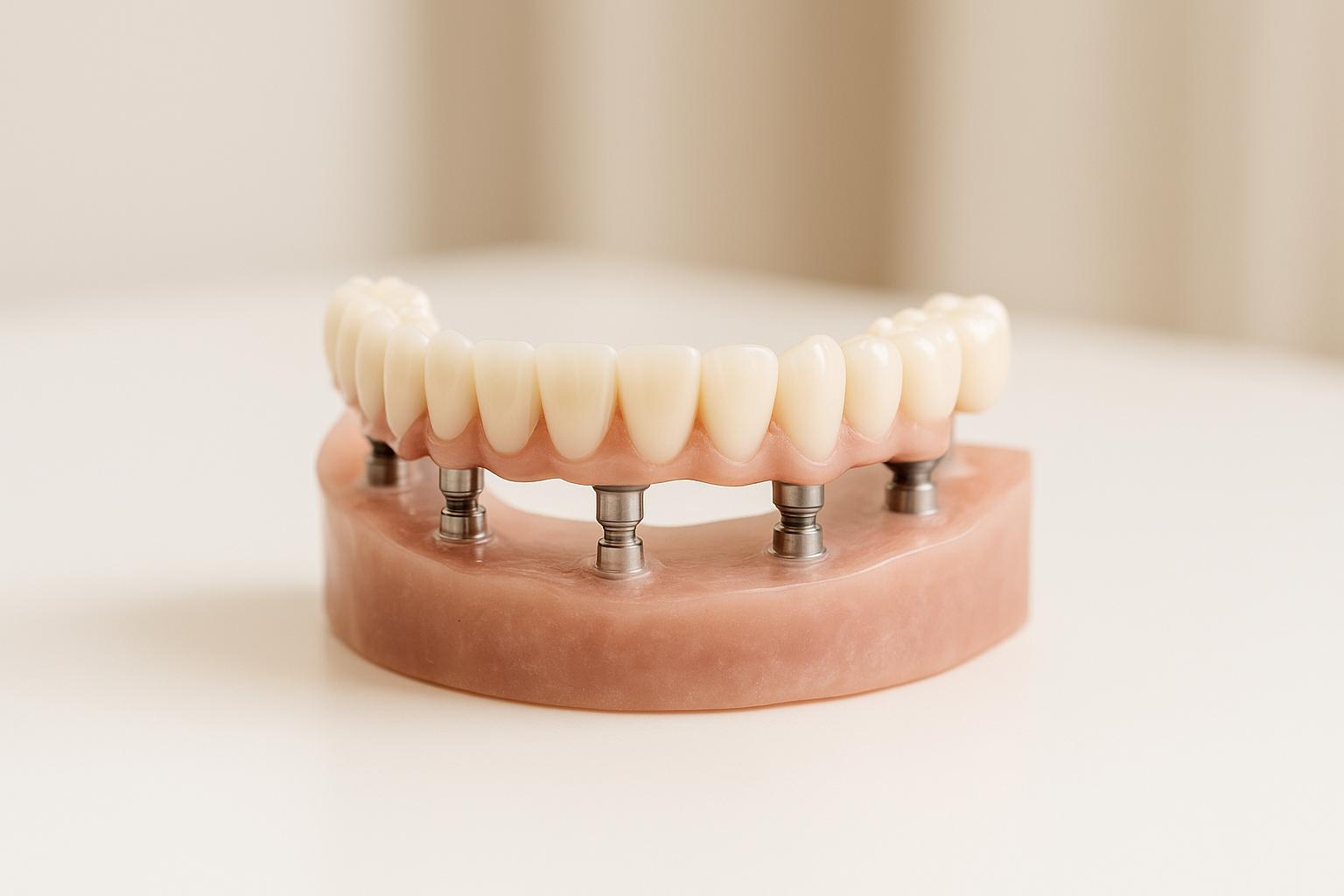
Full-arch hybrid implants are a popular solution for replacing missing teeth, but they come with challenges. From material selection to surgical precision, these cases require careful planning and ongoing maintenance to ensure long-term success. Here are the top issues and how to address them:
- Material Selection: Choosing the right materials affects durability, aesthetics, and maintenance. Common issues include framework fractures (27.6%), ceramic chipping (20.7%), and resin discolouration (13.8%). Zirconia is strong and low-maintenance but more expensive, while resin options are cost-effective but require frequent care.
- Surgical Precision: Implant positioning is critical. Errors can cause misfits, stress, and complications like peri-implant disease. Digital tools like CBCT imaging improve accuracy, but these methods require expertise and investment.
- Framework Fractures: Stress points, occlusal forces, and material fatigue often lead to fractures. Design and material choice play a key role in preventing these issues.
- Peri-Implant Disease: Mucositis (83.1%) and peri-implantitis (16.9%) are common biological issues. Regular professional cleaning and patient hygiene education are essential to minimise risks.
- Maintenance and Hygiene: Prostheses require consistent care, including professional cleaning every 1-2 years. Resin-based options are harder to maintain, while zirconia and metal-ceramic are easier but still need attention.
- Speech and Function: Patients often face initial difficulties with speech and chewing. Preoperative planning and temporary prostheses help reduce these issues.
- Appearance Over Time: Materials can wear, stain, or chip, affecting aesthetics. Regular maintenance and the right material choice can preserve their look.
Quick Comparison
| Challenge | Key Issue | Solution/Management |
|---|---|---|
| Material Selection | Durability vs. cost | Match material to patient needs |
| Surgical Precision | Misfits, stress, complications | Use digital tools for accurate placement |
| Framework Fractures | Stress points, material fatigue | Strong design and material choice |
| Peri-Implant Disease | Mucositis, peri-implantitis | Hygiene education, regular cleanings |
| Maintenance & Hygiene | Difficult cleaning, plaque build-up | Tailored care routines, professional help |
| Speech & Function | Adaptation difficulties | Pre-planning, temporary prostheses |
| Appearance Over Time | Wear, staining, chipping | Regular check-ups, quality materials |
For Australian patients, clinics like Complete Smiles Bella Vista offer advanced techniques and tailored care plans to address these challenges effectively. Success depends on precise planning, material selection, and ongoing maintenance.
Compare Prosthetic Options for Full Mouth Dental Implants
1. Material Compatibility and Selection
Choosing the right materials for full-arch hybrid implant prostheses is crucial for ensuring both mechanical strength and favourable biological outcomes. The harmony between components – such as implants, frameworks, and prosthetic materials – plays a key role in the durability and success of the restoration. Poor material choices can lead to issues that undermine the prosthesis’s lifespan and patient satisfaction.
Material Durability and Compatibility
Commonly used materials include monolithic zirconia, metal-ceramic crowns, zirconia on titanium bars, and hybrid resin/PMMA on cobalt-chromium frameworks [2].
Monolithic zirconia stands out for its high strength and reduced susceptibility to chipping compared to layered ceramics. It also offers excellent wear resistance while maintaining its aesthetic appeal over time. On the other hand, metal-ceramic restorations provide robust strength but are more prone to ceramic chipping, especially in patients with heavy bite forces.
Hybrid resin and PMMA materials, often paired with cobalt-chromium frameworks, present a more budget-friendly option. However, they come with higher maintenance needs due to their tendency to discolour, wear, and fatigue. These materials often require more frequent professional intervention to address these issues.
Statistics highlight the challenges of material performance: 27.6% of cases experienced framework fractures, 20.7% showed ceramic chipping, and 13.8% had resin discolouration within two years [2]. These figures emphasise the importance of selecting materials that can endure the stresses of the oral environment while meeting patient expectations for both function and aesthetics. Balancing durability and aesthetic appeal is essential for long-term success.
Maintenance Requirements and Patient Education
The level of care required varies depending on the material used. Resin-based prostheses, for example, demand more frequent professional cleaning and occasional removal for maintenance due to their higher susceptibility to staining, cracking, and plaque build-up [1].
In contrast, zirconia and metal-ceramic options are generally easier to maintain. They resist staining and surface deterioration better, but patients still need to follow consistent hygiene routines. Proper cleaning techniques around implant sites are essential to minimise biological risks.
Patient education becomes especially critical with acrylic-resin bases. These materials can lead to increased plaque accumulation and tissue inflammation due to their close contact with the mucosa and tendency to deteriorate over time [1]. Teaching patients to recognise early signs of wear or discolouration can prevent more severe problems. The maintenance needs of these materials directly impact both their mechanical performance and biological compatibility over the long term.
Long-term Biological and Mechanical Outcomes
Material compatibility also plays a significant role in reducing biological complications like mucositis and peri-implantitis [1][2]. The surface properties and biocompatibility of materials affect how surrounding tissues respond over time. For instance, acrylic-resin bases, being more porous, can encourage plaque build-up and inflammation [1].
A study involving 70 edentulous patients found that prostheses made with monolithic zirconia and metal-ceramic crowns experienced fewer mechanical issues compared to resin-based options [2]. Regular follow-ups and customised maintenance plans were essential in achieving better results.
However, the longevity and complication rates of prostheses vary greatly based on the materials used. Resin-based restorations, in particular, tend to face more mechanical challenges and aesthetic wear over time.
For patients in Australia, material selection must also account for local factors like dietary habits, climate, and access to specialist care. Clinics such as Complete Smiles Bella Vista provide expertise in material selection and advanced implant techniques, offering the multidisciplinary approach necessary for successful full-arch hybrid cases. Thoughtful material selection serves as the foundation for addressing the broader challenges explored in later sections.
2. Surgical Precision and Implant Positioning
Performing full-arch implant procedures demands a high level of surgical precision. Even minor errors during surgery can lead to significant challenges, impacting both the immediate fit of the prosthesis and its long-term success.
Surgical Accuracy and Planning Protocols
Advances in digital technology have transformed how full-arch implant procedures are planned. By integrating cone-beam computed tomography (CBCT) imaging with intraoral scanning, clinicians can now visualise a detailed three-dimensional model of a patient’s anatomy. This allows for precise simulation of implant placement before the surgery even begins [7]. Such planning not only helps identify risks but also ensures implants are positioned to avoid critical anatomical structures. This meticulous approach plays a key role in ensuring the long-term stability and functionality of the implant restoration.
Custom-designed surgical guides are a crucial tool for translating these digital plans into real-world procedures. Studies show that using guided surgery significantly reduces errors in implant angulation and depth when compared to freehand techniques [7][8]. Additionally, assessing bone volume and quality is an essential part of surgical planning. Severe cases of ridge resorption may require bone grafting or alternative solutions like tilted implants. Tilted implants, in particular, can reduce the need for grafting, offering a less invasive and often more affordable option – something especially relevant in Australia.
Patient-specific factors such as bone density, ridge anatomy, and health conditions like diabetes or cardiovascular disease also influence implant choices and placement strategies [7]. For patients with compromised bone quality, alternative surgical techniques or specialised implant designs may be necessary to ensure optimal stability.
Long-term Biological and Mechanical Outcomes
Accurate planning and placement have a direct impact on implant success. Survival rates for implants placed with precision range between 92–95% over ten years. On the other hand, even small errors in placement can lead to misfits, increased mechanical stress, and a higher likelihood of complications, such as framework fractures or peri-implant disease [1]. Poorly positioned implants can also create biomechanical imbalances, resulting in misaligned prostheses, aesthetic issues, and even speech difficulties. These complications often require additional adjustments or, in some cases, surgical revisions, increasing both the time and cost of treatment.
For screw-retained hybrid prostheses, even slight deviations in implant angulation or depth can undermine their intended benefits [1]. Biological complications are another concern. For instance, a long-term study found that 65 out of 80 restorations experienced complications, with mucositis occurring five times more frequently than peri-implantitis [1]. When implant positioning and prosthesis design make oral hygiene more difficult, the risk of peri-implantitis tends to rise.
| Protocol/Approach | Advantages | Disadvantages/Limitations |
|---|---|---|
| Conventional (straight) | Easier planning, predictable outcomes | May require bone grafting, higher cost |
| Tilted implant approach | Avoids grafting, less invasive, cost-saving | Requires advanced surgical expertise |
| Fully digital workflow | High precision, efficient, patient-friendly | Requires significant investment in technology |
These approaches highlight the importance of precise surgical planning to minimise both mechanical and biological risks.
The growing trend of immediate provisionalisation – providing temporary teeth on the day of surgery – offers patients a faster path to restored function and aesthetics. However, this method is only viable when primary stability and precise implant positioning are achieved. It also demands exceptional surgical skill and careful patient selection [7].
In Australia, many clinics are adopting advanced digital planning and surgical protocols to improve precision and outcomes. For example, Complete Smiles Bella Vista, led by Dr James Hanna, employs cutting-edge technology and multidisciplinary approaches to optimise implant placement. Their work highlights how critical surgical precision is to the success of full-arch hybrid implant treatments.
3. Framework and Prosthesis Fracture Problems
Framework fractures are a major mechanical issue in full-arch hybrid implant treatments. Studies show that about 27.6% of patients experience framework fractures within the first two years after treatment, presenting a significant concern for both patients and dental professionals [2]. These fractures often occur alongside other mechanical problems, such as ceramic chipping (affecting 20.7% of cases) and resin discolouration (seen in 13.8% of cases) [2].
Material Durability and Compatibility
Selecting the right materials for prostheses is key to ensuring both fracture resistance and long-term durability. Hybrid prostheses typically incorporate materials like monolithic zirconia, metal–ceramic crowns, zirconia on titanium bars, or resin/PMMA on cobalt–chromium frameworks [2]. Among these, metal–ceramic restorations are known for their durability compared to metal–acrylic options [1]. However, they come with their own challenges, such as screw access filling loss, which often precedes porcelain fractures [1].
Stress points can also arise where rigid framework components meet acrylic resin, creating areas prone to fractures [1]. Excessive occlusal forces further contribute to material fatigue, increasing the risk of damage [2]. Unlike removable dentures, which are relatively easier to repair, fixed hybrid prostheses often require a complete remake when framework fractures occur. This can lead to significant costs for Australian patients [1], highlighting the importance of material choice and design in ensuring long-term performance.
| Material Type | Fracture Risk | Maintenance Requirements | Aesthetic Longevity |
|---|---|---|---|
| Metal–acrylic/resin | Higher | Frequent cleaning/removal | Lower (due to discolouration) |
| Metal–ceramic | Moderate | Moderate maintenance | Good colour stability |
| Monolithic zirconia | Lower | Less frequent interventions | Excellent colour retention |
| Zirconia on titanium bar | Lower | Minimal maintenance | Superior aesthetics |
Long-term Biological and Mechanical Outcomes
Although implant survival rates are high – ranging from 92% to 95.1% over ten years [1] – mechanical complications, including fractures, tend to increase as time goes on [2]. Within the first two years after treatment, around 41.4% of patients face some form of mechanical issue [2]. This gap between implant longevity and prosthesis durability is a critical challenge in full-arch hybrid cases.
Interestingly, younger and healthier patients often experience more mechanical complications due to higher masticatory forces [2]. Meanwhile, those with conditions like cardiovascular disease or diabetes may exert less force on their prostheses, potentially reducing the risk of damage.
Framework design also plays a pivotal role. It must strike a balance between providing enough bulk for strength, maintaining sufficient acrylic volume to support denture teeth, and avoiding excessive bulk that could interfere with speech or comfort [3]. Overly bulky designs can add unnecessary weight and hinder function, while insufficient bulk may compromise fracture resistance [3].
Maintenance Requirements and Patient Education
Given these mechanical vulnerabilities, regular maintenance is essential. Fixed full-arch metal–porcelain prostheses, for example, require consistent care [1]. Annual periodontal therapy and biannual removal of the prosthesis for cleaning are strongly recommended to ensure better long-term outcomes [1].
Patients should be educated on the importance of meticulous oral hygiene and avoiding habits like clenching or grinding, which can increase the risk of fractures. Regular professional evaluations are crucial for identifying early signs of stress or minor damage, which can help prevent more severe fractures. While screw-retained designs offer the advantage of being retrievable, they can also introduce stress points around screw access holes, potentially leading to fractures [1].
Australian patients should be made aware that mechanical complications affect approximately 41.4% of cases within two years [2]. Over time, these issues are likely to increase, and repairs or remakes of fractured frameworks can add significant costs beyond the initial investment [1]. Setting realistic expectations about long-term care and potential complications is vital for successful treatment outcomes.
4. Peri-Implant Disease and Tissue Health Issues
Peri-implant disease stands out as one of the biggest biological challenges when dealing with full-arch hybrid implant cases. These conditions can compromise both soft tissue and bone, significantly influencing treatment outcomes. The two primary culprits here are mucositis and peri-implantitis, with mucositis being about five times more common than peri-implantitis [1].
In a study involving 80 full-arch restorations, researchers identified 65 biological complications – a prevalence rate of 81.25%. Of these, 54 cases were mucositis (83.1%), while 11 were peri-implantitis (16.9%) [1]. These findings highlight the importance of selecting the right materials and employing precise surgical techniques to mitigate these issues.
Material Durability and Compatibility
Choosing the right materials plays a crucial role in maintaining tissue health by minimising bacterial retention. Metal-acrylic resin prostheses, for example, tend to have a larger contact area with the mucosa, making them more prone to plaque accumulation and bacterial build-up. Over time, the acrylic components can degrade, leading to surface irregularities that harbour bacteria. On the other hand, metal-ceramic (or porcelain-fused-to-metal) restorations offer a smoother surface, which is more resistant to bacterial adhesion [1].
Surgical Accuracy and Planning Protocols
Accurate implant placement is key to ensuring proper hygiene access and reducing bacterial retention around implant sites. This starts with a thorough pre-surgical evaluation, including an assessment of bone volume and quality. Careful patient selection is also critical, particularly excluding individuals with systemic health issues or poor oral hygiene habits. Advanced digital tools like CBCT imaging can significantly enhance surgical precision and improve long-term outcomes [7][1].
Maintenance Requirements and Patient Education
Maintaining peri-implant tissue health over the long term depends heavily on effective maintenance routines and clear patient education. For instance, annual periodontal care combined with biennial removal of the prosthesis for cleaning can help lower the risk of peri-implantitis [1]. Patients should also be guided on specific oral hygiene practices, such as using interdental brushes, water flossers, and antimicrobial rinses, to prevent plaque build-up around the implants. Regular professional check-ups, including soft tissue evaluations and updates on medical history, are equally important for better outcomes [5].
Long-term Biological and Mechanical Outcomes
Managing tissue complications over time requires a combination of consistent maintenance and the use of appropriate materials. While implant survival rates are generally high, the likelihood of biological complications can increase if maintenance protocols aren’t strictly followed [1]. Even though the survival rate of the prosthesis matches that of the implants, factors like systemic health issues and poor oral hygiene – especially involving opposing teeth – can negatively impact results. Metal-acrylic resin prostheses, in particular, show a higher risk of peri-implantitis due to material wear and increased bacterial retention [1].
For Australians considering full-arch hybrid treatments, it’s important to understand that managing biological complications is a lifelong commitment. Regular professional care and diligent hygiene practices are essential for preserving peri-implant tissue health and ensuring the long-term success of the treatment.
sbb-itb-2be92ed
5. Prosthesis Maintenance and Hygiene Difficulties
Maintaining proper hygiene for full-arch hybrid implants is no small feat. Unlike natural teeth, these prostheses come with intricate contours and undercuts that can easily trap plaque and food debris. If left unchecked, these issues can lead to biological complications, putting the success of the treatment at risk. This highlights the importance of patient-specific care and customised hygiene routines.
Material Durability and Compatibility
The type of material used in prostheses significantly impacts maintenance efforts. For instance, metal-acrylic resin prostheses are more susceptible to staining, cracking, and general wear over time. These changes can create uneven surfaces, making it easier for bacteria to accumulate and harder for patients to clean effectively [1]. On the other hand, metal-ceramic and zirconia frameworks tend to have smoother surfaces and greater durability, which can help minimise bacterial adhesion and simplify cleaning [1].
Maintenance Requirements and Patient Education
Daily care for these prostheses involves cleaning not just the visible areas but also the undersurface and abutments. This often requires patients to learn specialised techniques and use tools like interdental brushes, water flossers, and antimicrobial mouth rinses [5]. Mastering these methods is just as crucial as choosing the right prosthetic material.
Professional maintenance is equally important. Regular check-ups – ideally every six to twelve months – should include a thorough evaluation of the surrounding peri-implant tissues. Additionally, prostheses should be removed approximately every two years for deep cleaning [1]. In Australia, the cost of these sessions typically ranges from AUD $150 to $350, representing a significant but necessary ongoing expense.
Long-term Biological and Mechanical Outcomes
Neglecting proper maintenance can lead to biological complications and mechanical failures, as previously discussed. However, patients who consistently follow strict hygiene protocols and attend regular professional cleanings often see better results. Implant survival rates range between 92% and 95.1% at the ten-year mark, while prosthesis survival rates can reach up to 100% over five to seven years [1].
For patients with limited dexterity, these maintenance challenges can be even more daunting. To address this, some Australian clinics, such as Complete Smiles Bella Vista, focus on providing personalised education and tailored hygiene plans to ensure patients can manage their prostheses effectively and maintain long-term oral health.
6. Speech and Function Adaptation Problems
Full-arch hybrid implants often require patients to adjust their speech and chewing habits due to their fixed design. Unlike removable dentures, which can be easily modified or taken out, these fixed prostheses demand a period of adaptation to the new oral environment. Careful preoperative planning plays a key role in reducing potential speech-related challenges.
Surgical Accuracy and Planning Protocols
Preoperative assessments, such as phonetic evaluations and wax try-ins, are crucial for predicting and addressing speech issues before the final prosthesis is created [3]. This planning phase is especially important because fixed hybrid prostheses are harder to adjust after placement compared to removable dentures.
Technological advancements, like intraoral scanning and digital smile design, allow clinicians to visualise and refine the final outcome in advance [7]. Provisional prostheses also act as a trial for patients, giving them a chance to test the fit and provide feedback before the final version is produced [3][7].
The most common speech challenges include difficulty pronouncing sounds like "s", "f", and "v", along with lisping and changes in tongue space [3][9]. These issues often stem from alterations in palatal coverage and the repositioning of teeth compared to their natural alignment. For instance, excessive palatal thickness can lead to persistent lisping, which can be corrected by reducing the bulk and incorporating targeted speech exercises.
Material Durability and Compatibility
The materials used in the prosthesis significantly impact speech adaptation. Acrylic hybrid prostheses, for example, tend to be bulkier and may initially cause more speech difficulties. On the other hand, zirconia frameworks are often thinner and more precisely contoured, better replicating natural oral anatomy [9][4]. The size and shape of the framework, along with the contour of the prosthetic base, directly influence tongue movement and airflow, which are essential for clear speech.
Materials that closely resemble natural oral tissues and allow for precise customisation generally lead to better speech outcomes [3][9]. However, any new prosthesis will initially feel foreign, causing temporary disruptions to both speech and chewing. This adaptation period can take several weeks to months as the neuromuscular system adjusts [9].
Maintenance Requirements and Patient Education
Setting realistic expectations is crucial for a smooth adaptation process. Around 20–30% of patients experience initial speech difficulties, but most adapt within a few months when supported by proper clinical management [2][3]. Educating patients about the adaptation period and offering strategies like speech exercises and gradual dietary adjustments can make a significant difference.
Some patients, especially those with a history of speech disorders or heightened sensitivity to oral changes, may benefit from working with a speech therapist [3][7]. Patients transitioning from removable dentures generally adapt more quickly than those moving directly from natural teeth [3][7]. Regular follow-up appointments during the first few months are essential for tracking progress and making adjustments as needed.
Long-term Biological and Mechanical Outcomes
Issues like framework fractures, material wear, and biological complications such as peri-implant disease can affect the stability of the prosthesis and, consequently, speech clarity over time [1].
To maintain long-term speech quality, proper care is essential. This includes regular professional cleanings and periodic removal of the prosthesis for thorough cleaning to preserve tissue health and prosthesis stability [1][5]. Any changes in fit or tissue health should be addressed promptly to prevent further complications.
Long-term satisfaction often depends on the clinician’s ability to address adaptation challenges early and provide consistent care [2][3]. Clinics like Complete Smiles Bella Vista excel in this area by offering personalised solutions and comprehensive support throughout the adaptation process. With careful planning and patient education, speech adaptation issues can be effectively managed, ensuring a positive experience for patients.
7. Appearance Changes and Material Wear Over Time
Full-arch hybrid implant prostheses can undergo visible changes in appearance over time due to material wear. Being aware of these changes helps patients anticipate long-term care needs, including potential replacement. Let’s explore how material properties and maintenance plans impact the aesthetics of these prostheses over time.
Material Durability and Appearance
The type of material used in prostheses plays a major role in how they wear and look over time. For instance:
- Metal-acrylic resin prostheses often face staining, cracking, and gradual wear on both the base and teeth. This can lead to noticeable discolouration and surface damage over time [1][2].
- Metal-ceramic restorations generally hold their colour better but are prone to ceramic chipping, which can create rough surfaces.
- Monolithic zirconia stands out for its durability, showing minimal wear and rare fractures. However, it comes with a higher initial cost.
Choosing the right material means balancing durability with long-term aesthetics. Younger patients, who may chew with greater force, might find the extra investment in monolithic zirconia worthwhile due to its superior resilience [2].
Importance of Surgical Planning
The foundation for long-lasting aesthetics starts with precise surgical planning. Using digital tools and provisional models ensures the prosthesis is designed for easier cleaning and reduced staining from wear over time.
Maintenance and Patient Awareness
Proper care is essential for keeping prostheses functional and visually appealing. Regular professional cleaning every two years, combined with daily oral hygiene, can significantly slow down staining and material wear [1][5]. Patients should be encouraged to watch for early signs of wear or discolouration and report them promptly. This allows for timely interventions that can extend the life of their prosthesis [6][5].
| Material Type | Durability | Aesthetic Longevity | Common Issues |
|---|---|---|---|
| Metal-acrylic resin | Moderate | Lower | Staining, cracks, wear |
| Metal-ceramic | High | High | Chipping, fracture |
| Monolithic zirconia | Very High | Very High | Minimal wear, rare fracture |
Long-term Outcomes: Aesthetic and Functional
While implant success rates are impressive – ranging from 92% to 95.1% over ten years – mechanical complications become more common as time passes [1]. These issues, along with tissue changes, can affect the prosthesis’ appearance and, ultimately, patient satisfaction. Quick professional action is crucial to address these problems before they escalate.
Patient-specific factors also play a role. Younger individuals with strong chewing forces may experience more mechanical wear, whereas those with conditions like diabetes are at higher risk for biological complications that can impact tissue health and aesthetics [2]. Together, these mechanical and biological factors highlight the importance of regular monitoring and professional care.
Clinics offering well-structured maintenance programs generally see better long-term results. By focusing on tailored material choices and consistent care protocols, they help minimise complications and maintain the prosthesis’ appearance over its lifespan.
Comparison Table
Building on earlier discussions of material performance and surgical precision, this comparison sheds light on how material choices influence long-term outcomes and patient care. By reviewing specific complication patterns, maintenance needs, and overall durability, we can better understand the impact of hybrid implant materials.
Data show clear differences in complication rates across prosthesis types. These findings highlight the importance of selecting materials that consider individual patient factors and lifestyle needs.
Mechanical complications were observed in 41.4% of patients with fixed prostheses over two years, while biological complications (such as gingival inflammation) affected an equal percentage [2]. Notably, mucositis occurred five times more frequently than peri-implantitis, underlining the importance of consistent maintenance protocols [1][2].
| Prosthesis Material | Common Complications | Complication Rate | Maintenance Schedule | Professional Care Requirements |
|---|---|---|---|---|
| Metal-Acrylic Resin (PMMA) | Wear, staining, fractures, peri-implantitis | Higher biological complications | Annual check-ups, removal every 1-2 years | Periodic removal for deep cleaning, supportive periodontal therapy |
| Metal-Ceramic | Porcelain chipping (20.7%), framework fracture (27.6%) | Moderate mechanical complications | Annual professional reviews | Professional cleaning, chipping repair, section replacement if needed |
| Monolithic Zirconia | Framework fracture under high stress, minimal chipping | Lower overall complications | Annual check-ups | Less frequent removal, monitoring for stress fractures |
| Removable Hybrid | Attachment wear, retention issues, soft tissue irritation | Variable based on design | Annual reviews, relining as needed | Attachment maintenance, soft tissue monitoring |
Maintenance requirements differ significantly depending on the material. Metal-acrylic resin prostheses, for instance, demand annual check-ups and removal every 1-2 years for deep cleaning due to their higher susceptibility to wear and tissue inflammation [1]. This reflects the material’s tendency to accumulate plaque, leading to increased biological complications.
Beyond maintenance, individual patient factors play a significant role in complication rates. For example, younger patients with stronger chewing forces may face greater risks of mechanical wear and fractures, while individuals with systemic conditions like diabetes are more prone to biological complications. These differences highlight the need for personalised treatment plans rather than relying on standardised protocols [2].
The growing preference for monolithic zirconia and reinforced metal-ceramic prostheses reflects a shift toward materials that offer better durability and aesthetics [2]. However, these materials come with their own set of maintenance requirements and complication risks, necessitating tailored management strategies.
Home care protocols remain consistent across all prosthesis types. These typically involve using soft-bristled toothbrushes, interdental brushes, and antimicrobial mouth rinses [6]. However, patients with metal-acrylic resin prostheses need to pay extra attention to cleaning underneath the prosthesis due to their increased vulnerability to plaque accumulation [1][6].
This comparison table highlights the key differences in material performance and care needs, offering valuable insights for making informed decisions. Selecting the right material isn’t just about aesthetics and function – it’s about aligning with patient-specific care requirements and ensuring long-term success.
Conclusion
Achieving success in full-arch hybrid implant cases hinges on meticulous strategic planning and a systematic approach to tackling challenges before they escalate. Research shows that when proper protocols are followed, these complex procedures can deliver outstanding long-term results [1].
Three essential factors contribute to success: selecting the right materials to ensure durability and biocompatibility, precise surgical planning and implant placement to maximise stability and function, and consistent maintenance protocols to prevent biological and mechanical issues [1][5].
The advent of digital workflows has transformed treatment planning. For instance, a documented case using digital smile design, CBCT-guided surgery, and structured maintenance protocols achieved excellent results with minimal complications [7].
Maintenance plays a pivotal role. Annual supportive periodontal therapy, coupled with systematic removal of prostheses for cleaning, significantly lowers the risk of peri-implantitis – a condition that occurs far less frequently than mucositis, which is five times more common [1]. Patient selection is equally crucial. Excluding individuals with uncontrolled systemic conditions or poor oral hygiene habits enhances outcomes. While well-managed diabetes does not negatively impact implant success, uncontrolled diabetes (HbA1c levels above 8%) poses a higher risk of complications and impaired healing [7].
In Australia, access to expert care strengthens these strategies. For patients considering full-arch hybrid implants, seeking out experienced practitioners who utilise advanced diagnostics and tailored treatment plans is vital. Complete Smiles Bella Vista, under the leadership of Dr James Hanna, exemplifies this approach. Offering specialised implant services, Dr Hanna blends personalised care with cutting-edge dental techniques. His dedication to clinical excellence and preventative care aligns perfectly with the evidence-based methods necessary for successful outcomes in full-arch hybrid implant cases. With careful planning, appropriate material choices, and ongoing maintenance, these implants can offer patients a functional, aesthetic, and durable solution, significantly improving their quality of life.
FAQs
What materials are commonly used in full-arch hybrid implants, and how do they affect durability and maintenance?
Full-arch hybrid implants are crafted using titanium for the implant posts and materials like zirconia or acrylic for the prosthetic teeth. Titanium stands out for its durability, compatibility with the body, and ability to bond effectively with the jawbone, providing long-term stability. Zirconia offers strength and a natural look, while acrylic is a lighter, more affordable option, though it may need more frequent upkeep.
The material you choose can influence both the lifespan of the prosthesis and how much care it requires. Zirconia resists wear and staining, making it easier to maintain over time. Acrylic, on the other hand, might require occasional adjustments or replacements. To ensure these implants last as long as possible and keep your mouth healthy, maintaining good oral hygiene and scheduling regular dental visits is key.
Why is surgical precision and accurate implant positioning critical for the success of full-arch hybrid implants?
Precision and correct implant placement are crucial for the long-term success of full-arch hybrid implants. When implants are positioned accurately, they bond well with the jawbone, creating a solid base for the prosthetic arch. On the other hand, misalignment or improper placement can result in issues like uneven bite pressure, discomfort, or even implant failure over time.
To ensure the best outcomes, dental professionals rely on advanced imaging technologies and detailed planning to pinpoint the ideal implant positions. This careful approach not only boosts the strength and functionality of the implants but also enhances the patient’s comfort and the appearance of their smile.
How can patients care for their full-arch hybrid implants to reduce the risk of peri-implant disease and extend their lifespan?
To keep your full-arch hybrid implants in great condition and reduce the risk of peri-implant disease, sticking to a solid oral care routine is key. Make sure to brush twice a day using a soft-bristled toothbrush and a non-abrasive toothpaste. On top of that, clean beneath the prosthesis with tools like interdental brushes or a water flosser to tackle those harder-to-reach spots.
Don’t skip your regular dental check-ups either. These visits allow your dentist to keep an eye on the health of your implants, give them a thorough professional clean, and catch any potential problems early. It’s also important to steer clear of smoking, as it can greatly increase the chances of implant complications. Pairing this with a balanced diet will help support your oral health overall. With a bit of care and attention, you can enjoy a strong, confident smile for many years.
Related Blog Posts
- Hybrid Implant Materials: Durability Explained
- How Hybrid Coatings Improve Osseointegration
- Bone Quality in Osseointegration: Research Insights
- Hybrid vs. Traditional Implants in Bone Loss Cases
Important Notice: Any surgical or invasive procedure carries risks. Before proceeding, you should seek a second opinion from an appropriately qualified health practitioner.
Individual results may vary. The information provided in this article is for educational purposes only and does not constitute medical advice.
Checkout Related Blogs




Get in touch with us
For more information, call us now to start feeling better. Or fill the form below to make appointment
The Latest News from Complete Smiles
How to Clean Clear Plastic Retainers
Checklist for Choosing Wearable Dental Devices
Checklist for Choosing Cloud AI Platforms in Dentistry

Complete Smiles Bella VistaAccepts All Major Health Funds, Including





