





Guide to Oral Health for Rare Genetic Disorders

Oral health is often overlooked when managing rare genetic disorders, but it plays a critical role in overall wellbeing. These disorders can lead to unique dental challenges, such as missing teeth, enamel defects, and jaw abnormalities, which require specialised care. Here’s what you need to know:
- Impact of Rare Genetic Disorders: Over 80% of rare diseases are genetic, affecting teeth, gums, and jaw development. Common issues include cleft palate, tooth anomalies, and dry mouth.
- Daily Oral Care: Gentle brushing, fluoride toothpaste, flossing, and a nutrient-rich diet are key. Avoid sugary or acidic foods and drinks.
- Specialised Treatment: Restorative options like crowns or dentures, orthodontics, and sometimes surgery, help address structural and functional issues.
- Regular Check-ups: Dental visits every 6-12 months are crucial, especially for children, to monitor and manage condition-specific risks.
- Collaborative Care: Dentists, geneticists, and other specialists work together to create personalised plans for long-term oral health.
Early intervention and consistent care can improve not only dental health but also quality of life for individuals with rare genetic conditions.
Oral Health and Rare Disorders
Common Oral Problems in Rare Genetic Disorders
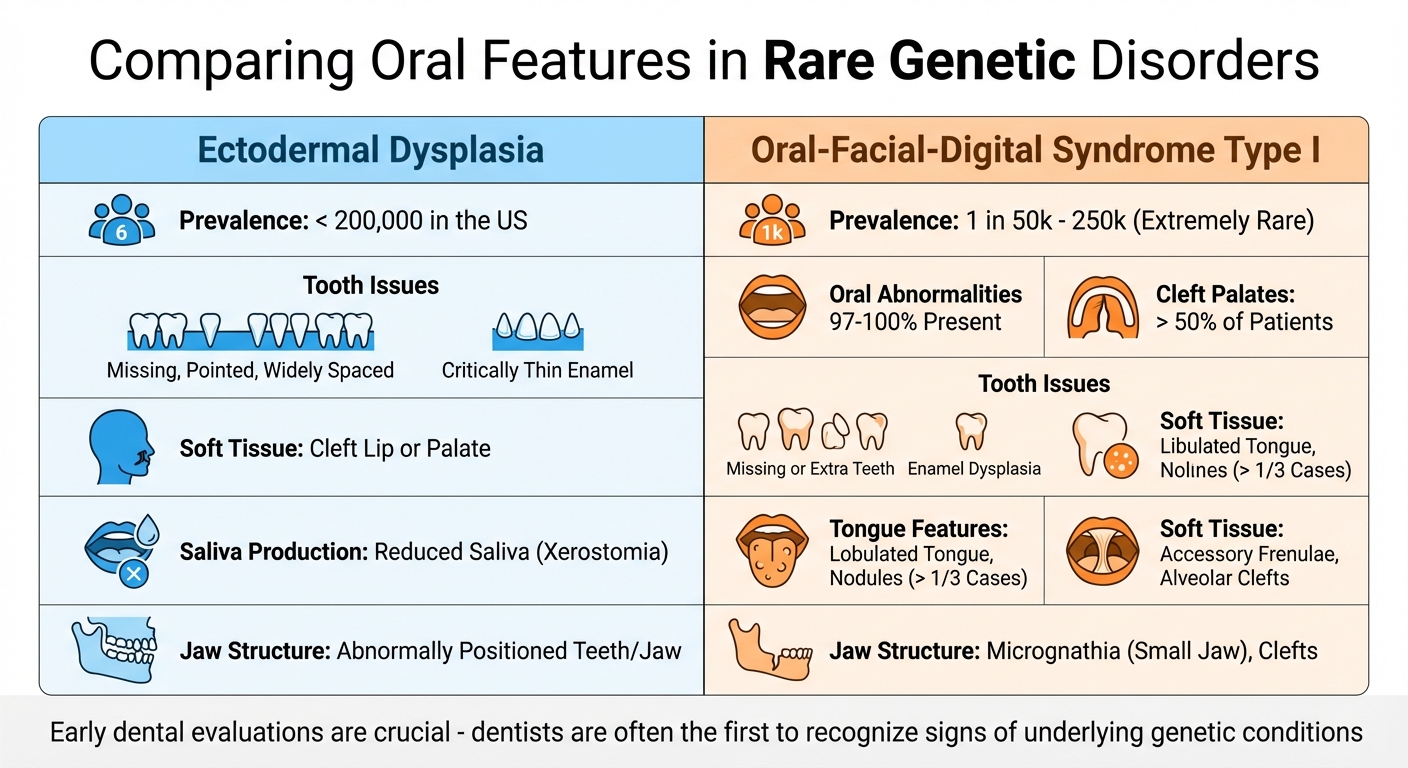
Oral Features Comparison: Ectodermal Dysplasia vs Oral-Facial-Digital Syndrome Type I
Tooth and Jaw Problems
Rare genetic disorders can significantly disrupt tooth development, leading to various dental challenges. Common issues include hypodontia (missing teeth), supernumerary teeth (extra teeth), and microdontia (unusually small teeth). Teeth may also develop in abnormal shapes, such as pointed, conical, or globe-like forms, which can complicate oral health management[3][4].
Another concern is enamel dysplasia, where the enamel becomes thinner than normal, leaving teeth more vulnerable to decay[3][4]. Jaw development can also be affected, with conditions like micrognathia (a smaller-than-normal jaw) and malocclusion (misaligned teeth) making chewing and speaking more difficult. Additionally, clefts of the lip or palate – whether they involve the hard palate, soft palate, or submucous layers – create further challenges for treatment planning[3][4].
These issues, combined with soft tissue abnormalities, make oral care for individuals with rare genetic disorders particularly complex.
Gum and Soft Tissue Problems
Soft tissue complications often accompany rare genetic disorders, adding another layer of difficulty to oral care. For instance, accessory gingival frenulae – fibrous bands extending from the cheek to the gum line – can create notches in the alveolar ridge, interfering with normal oral function[4]. Tongue abnormalities are also common. In Oral-Facial-Digital Syndrome Type I, for example, individuals may develop a lobulated tongue or tongue nodules (hamartomas), with such features appearing in over one-third of cases[4].
Saliva production is frequently compromised in certain conditions. For example, individuals with Ectodermal Dysplasia often experience reduced saliva flow, leading to xerostomia (chronic dry mouth). This increases the risk of tooth decay and highlights the importance of maintaining a rigorous oral hygiene routine[3].
Specific Genetic Disorders and Their Oral Features
The oral symptoms of these conditions vary by disorder, emphasising the need for personalised dental care.
Ectodermal Dysplasia, which affects fewer than 200,000 people in the United States, is characterised by hypodontia, abnormally shaped and widely spaced teeth, and enamel that is critically thin, making it more prone to decay. Patients with this condition often have reduced saliva production, which exacerbates oral health challenges[3].
Oral-Facial-Digital Syndrome Type I presents with striking oral abnormalities, occurring in 97% to 100% of affected individuals. More than half of these patients experience cleft palates, while accessory gingival frenulae and tongue abnormalities, such as lobulated tongues and tongue nodules, are also common. This syndrome is extremely rare, with an estimated prevalence of 1 in 50,000 to 1 in 250,000[4].
| Feature | Ectodermal Dysplasia | Oral-Facial-Digital Syndrome Type I |
|---|---|---|
| Tooth Issues | Missing, pointed, or widely spaced teeth; thin enamel[3] | Missing or extra teeth; enamel dysplasia[4] |
| Tongue Features | Not typically specified | Lobulated tongue; tongue nodules (hamartomas)[4] |
| Soft Tissue | Cleft lip or palate[3] | Accessory gingival frenulae; alveolar clefts[4] |
| Saliva Production | Reduced saliva (dry mouth)[3] | Not a primary diagnostic feature |
| Jaw Structure | Abnormally positioned teeth and jaw[3] | Micrognathia; alveolar clefts; cleft palate[4] |
When teeth fail to erupt on schedule or appear irregular, early dental evaluations are crucial. Dentists are often among the first healthcare professionals to recognise signs of an underlying genetic condition, making their role in early diagnosis essential[3].
Prevention and Daily Oral Care
Daily Cleaning Techniques
A consistent oral care routine is essential for protecting delicate teeth and gums, especially for those with rare genetic conditions that affect enamel and gum health. Brushing twice a day – once in the morning and again before bed – for at least two minutes is key. Use a toothbrush with a small head and soft bristles, applying gentle circular motions to avoid harming fragile enamel. For individuals with limited dexterity, electric toothbrushes can be a great option as many models come with built-in timers and pressure sensors to ensure proper cleaning[5].
A pea-sized amount of fluoride toothpaste helps strengthen enamel. After brushing, spit out the excess toothpaste but avoid rinsing with water, as this gives fluoride more time to protect the teeth. It’s also important to wait at least 30 minutes after eating or drinking before brushing, as acidic foods can temporarily soften enamel, making it more prone to damage[5].
To clean between teeth, use floss or interdental brushes once a day before brushing. This helps remove plaque from spots a toothbrush can’t reach. Replace your toothbrush or electric brush head every three months, or sooner if the bristles look worn or frayed[5].
Pair daily cleaning with a nutrient-dense diet and regular dental visits to maintain overall oral health.
Diet and Nutrition
What you eat can make a big difference in oral health, especially for individuals with genetic conditions affecting tooth structure. A diet rich in calcium, phosphorus, vitamin D, vitamin K2, and magnesium is vital for strengthening enamel and supporting muscle relaxation[6][7][8].
"Magnesium helps to relax muscles which is very important for those with bruxism (grinding/clenching) habits influenced by tense muscles." – Kristel van Eijk, SHDC Hygienist and Therapist[6]
Crunchy fruits and vegetables like apples, carrots, and celery are excellent choices. They stimulate saliva production, which naturally cleans the mouth and neutralises acids – particularly helpful for those with dry mouth conditions[7][8]. If you consume acidic foods like citrus or tomatoes, follow up with a piece of cheese or a glass of plain milk to neutralise the acids and protect enamel[8]. On the other hand, it’s best to avoid sugary drinks, energy drinks, and fruit juices, as they are high in sugar and acid. If you do consume them, use a straw to reduce contact with your teeth and rinse with water or milk afterward[8].
Limit snacking between meals to give saliva enough time to neutralise acids. Structured meal times help reduce the number of acid attacks on teeth throughout the day[8].
Regular Dental Visits
Alongside home care and a nutritious diet, regular dental check-ups are essential. For individuals with rare genetic conditions, professional dental visits every 6 to 12 months help catch and treat problems early, preventing them from escalating[5]. Dentists use specialised tools to remove tartar (a hardened form of plaque) that can’t be eliminated through regular brushing or flossing[5].
These visits are particularly important for those with genetic disorders, as they often face unique challenges like dry mouth or side effects from medications that require close monitoring[9]. In Australia, the Child Dental Benefits Schedule (CDBS) provides eligible children up to $1,132 over two calendar years for basic dental care, helping families access necessary treatments[2].
During check-ups, let your dentist know about any tooth sensitivity, facial swelling, or medications being taken, as these factors can influence oral health and treatment plans[9][5]. A typical visit includes a comprehensive examination, professional cleaning to remove plaque and tartar, polishing, and fluoride application to strengthen enamel[1][5]. For children with genetic conditions, it’s recommended to schedule their first dental visit when their first tooth appears or by their first birthday to establish preventive care early on[5].
sbb-itb-2be92ed
Dental Treatment Options
Rare genetic disorders can significantly affect teeth, gums, and jaw structure. Treatment plans for these conditions focus on a combination of restorative care and ongoing monitoring. The aim is to address immediate issues while protecting long-term oral health. By building on preventive measures, these treatments tackle the unique structural and functional challenges posed by rare genetic conditions.
Restorative and Cosmetic Procedures
Stainless steel crowns are often used to protect primary teeth that are compromised by conditions like Amelogenesis Imperfecta or Dentinogenesis Imperfecta[10][11][13]. These crowns provide a durable solution for primary teeth until they naturally fall out.
For permanent teeth, restorative options include direct composite fillings and indirect restorations such as porcelain crowns and veneers. These treatments correct abnormal tooth shapes and offer longer-lasting results once permanent teeth have emerged[10][11][13]. They also address issues like hypodontia (missing teeth) or unusual tooth morphology, improving not only the appearance of teeth but also helping to prevent excessive wear and sensitivity.
When children are missing teeth due to hypodontia – a condition affecting roughly 8% to 10% of the population[12] – removable partial dentures are often used to support speech development and self-confidence. As they grow and their jaw stabilises, more permanent solutions like dental implants may be explored. However, implants are usually delayed until adulthood to avoid complications from ongoing bone growth[12][13].
"The dental management of GDDs should combine individual care with a strong emphasis on secondary and tertiary prevention adjusted to the age-related needs of those affected." – J. Kühnisch, Department of Conservative Dentistry and Periodontology, LMU University Hospital[10]
Orthodontic and Surgical Procedures
Orthodontic appliances play a key role in correcting issues like malocclusions and crowding, which are common in conditions such as Marfan Syndrome and Ectodermal Dysplasia. For more severe cases, orthognathic surgery may be necessary to reposition the jaw, improving both functionality and facial balance[12][13].
In conditions like X-linked Hypophosphatemia, early root canal treatments are often required to prevent infections caused by dentin defects that make teeth prone to spontaneous abscesses[10][13]. Once growth is complete, treatments such as implants and bone grafting may be considered[10][13].
For individuals with Hypophosphatasia, enzyme replacement therapy (Asfotase alfa) has shown promising results in improving the mineralisation and density of developing teeth[10][13].
Working with Multiple Specialists
Managing oral health for rare genetic disorders often requires a collaborative approach. Dentists, orthodontists, periodontists, prosthodontists, and geneticists work together to create tailored care plans for each patient[10][13]. Geneticists play a key role by confirming diagnoses through molecular testing and helping predict how conditions may progress, which guides treatment strategies. Meanwhile, periodontists, prosthodontists, and oral surgeons address gum health, restorative work, and surgical needs[15][16][17].
"The oral health of patients with rare diseases, can be greatly enhanced by a pooling of knowledge between health professionals in the various sectors around the patient’s care." – Lisa Friedlander, Université Paris Cité[15]
This team-based approach is especially critical when systemic health issues are involved. For instance, patients with Marfan Syndrome need cardiovascular monitoring during dental procedures to mitigate the risk of aortic complications. Similarly, patients with Osteogenesis Imperfecta who take bisphosphonates require careful management to avoid jaw bone issues after extractions[13][18]. When dental care is coordinated within the same facility as the patient’s broader medical treatment, communication between specialists improves, streamlining care and reducing risks[15].
Long-Term Care and Monitoring
Creating a Lifelong Care Plan
Oral health plans need to evolve with patients as they progress through different stages of life. Treatments should align with their physical growth and the specific challenges their genetic condition presents. By focusing on stage-appropriate care, dental management can address developmental needs while tackling the unique oral health risks tied to genetic disorders[10].
A strong emphasis on preventive care is key to avoiding complications like decay or gum disease, which can exacerbate the effects of a genetic condition[10]. Preventive measures might include professional cleanings, fluoride applications, and fissure sealants. For patients at higher risk or those recovering from neglect, more frequent visits – every three to four months instead of the usual twice a year – may be necessary initially[14][20].
"The dental management of GDDs should combine individual care with a strong emphasis on secondary and tertiary prevention adjusted to the age-related needs of those affected." – J. Kühnisch, Department of Conservative Dentistry and Periodontology, LMU University Hospital[10]
Given the unique oral challenges genetic disorders can bring, coordinated care among specialists is essential. Dentists, orthodontists, prosthodontists, oral surgeons, and geneticists must work together to adapt treatments as complications arise[10][19]. Early planning is particularly important for patients with intellectual disabilities or behavioural challenges, ensuring they receive appropriate care throughout their lives. This may include preparing for treatment under general anaesthesia when necessary[19].
Alongside a personalised care plan, regular monitoring plays a critical role in addressing any new complications as they emerge.
Monitoring High-Risk Conditions
For patients with genetic disorders, routine care isn’t always enough – targeted monitoring is essential to manage condition-specific risks. For example, individuals with Amelogenesis Imperfecta need frequent checks to address hypersensitivity and enamel breakdown as teeth emerge. Patients with Dentinogenesis Imperfecta require close observation for rapid wear on biting surfaces, while those with X-linked Hypophosphatemia must be monitored for spontaneous tooth infections, even in the absence of decay[10]. Similarly, in Hypophosphatasia, premature tooth loss caused by weakened cementum and periodontal structures demands careful and consistent attention[10].
Patients on antiresorptive medications, such as bisphosphonates, require extra vigilance. The risk of medication-related osteonecrosis of the jaw (MRONJ) in these individuals ranges from 0.01% to 0.1%[21]. A thorough dental assessment before starting these medications is crucial to ensure dental fitness and reduce the likelihood of future extractions, which carry heightened risks. Regular radiographic imaging can help monitor changes in jaw bone density and structure, which are common in certain genetic conditions[21].
For those with cardiac complications linked to their genetic disorder, dental treatment must be adjusted. For instance, the maximum dose of adrenaline in local anaesthetics drops to 0.04 mg, compared to 0.2 mg for healthy adults[21]. Additionally, invasive procedures should ideally be scheduled during the week following a transfusion, when blood counts are at their peak[21].
Conclusion
Taking care of oral health in individuals with rare genetic disorders calls for a proactive, personalised, and preventive approach. A strong focus on prevention – such as using fluoride treatments, applying fissure sealants, and maintaining strict daily hygiene routines – can help minimise the need for invasive dental procedures[21]. As highlighted by the Thalassaemia International Federation:
"Regular dental care is essential, including preventative advice"[21].
Effective management goes beyond prevention and requires close collaboration between dentists and other medical specialists, like haematologists or paediatricians. This teamwork ensures that any systemic risks are carefully considered and managed during dental treatments. This is particularly crucial given that about 15% of rare diseases have an impact on oral health and may require specialised dental care[22].
Registering patients early with a dentist and establishing baseline care are key to long-term success. Early intervention not only supports oral health but also helps prevent secondary complications, as oral pathogens can affect other organs, including the heart and kidneys[22].
Oral care also plays a big role in emotional well-being. As Lisa Friedlander et al. [22] point out:
"A healthy oral-dental status is part of the person’s self-esteem and confidence. Indeed, oral‐facial aesthetic handicap, pain or altered facial‐buccal expression due to oral diseases impacts the emotional and social life of the individuals."
FAQs
How do rare genetic disorders impact oral health?
Rare genetic disorders can have a profound impact on the development and structure of the mouth, teeth, and surrounding tissues. For instance, conditions like oral-facial-digital syndromes can result in cleft palates, bifid tongues, extra or missing teeth, and other dental irregularities. Similarly, ectodermal dysplasias may cause fragile teeth, enamel defects, and reduced saliva production, which can heighten the risk of tooth decay, gum disease, and oral infections.
These issues often go beyond just dental health, affecting speech, swallowing, and overall quality of life. Preventive measures are essential, such as brushing twice daily with fluoride toothpaste, regular flossing, and scheduling dental check-ups every six months. For long-term care, a multidisciplinary approach involving dentists, orthodontists, and other specialists is key to creating effective, personalised treatment plans. In Australia, clinics like Complete Smiles Bella Vista are equipped to provide tailored dental care for individuals with rare genetic conditions, ensuring they receive the support they need.
What are the best daily oral care tips for individuals with rare genetic conditions?
Daily oral care for people with rare genetic conditions often needs extra attention to tackle specific challenges like reduced dexterity, dry mouth, or heightened sensitivity. A solid routine involves brushing twice daily with a fluoride toothpaste (containing at least 1,000 ppm) and using a soft-bristled or electric toothbrush to gently remove plaque. Adding flossing or using interdental brushes daily helps clean those tricky spots and keeps gum disease at bay.
For individuals dealing with dry mouth, keeping hydrated by sipping water regularly, chewing sugar-free gum, or using saliva substitutes can help maintain moisture and protect teeth. Sticking to a diet low in free sugars and drinking fluoridated tap water further supports enamel strength and lowers the risk of tooth decay. Carers can play a vital role by establishing consistent routines, using visual prompts or timers, and modifying tools like toothbrushes or floss holders to better suit individual needs.
It’s also crucial to schedule dental check-ups at least once a year to catch potential issues early and receive personalised advice. Local dental clinics, such as Complete Smiles Bella Vista, offer tailored guidance and treatments to promote long-term oral health, all in line with Australian dental care standards.
Why is teamwork crucial in managing oral health for people with rare genetic disorders?
A team-based approach is crucial when addressing oral health in individuals with rare genetic disorders, as these conditions often go beyond just dental or gum issues. They can present a mix of systemic, nutritional, and functional challenges that demand expertise from a variety of healthcare professionals. By working together, specialists like dentists, dermatologists, geneticists, dietitians, and speech therapists can design tailored care plans aimed at preventing problems such as enamel erosion, fragile oral tissues, or swallowing difficulties.
Collaboration doesn’t stop with specialists. When families, support workers, and healthcare providers share information and coordinate efforts, preventive strategies – like fluoride treatments and dietary modifications – can be consistently implemented. This collective effort not only helps reduce the risk of oral trauma and infections but also enhances overall well-being, reflecting the high-quality healthcare standards upheld in Australia.
Related Blog Posts
- Role of Medical History in Orthodontic Diagnosis
- How to Teach Oral Care to Patients with Disabilities
- Periodontal Care for Patients with Disabilities
- Research: Systemic Diseases Mimicking Periodontitis
Important Notice: Any surgical or invasive procedure carries risks. Before proceeding, you should seek a second opinion from an appropriately qualified health practitioner.
Individual results may vary. The information provided in this article is for educational purposes only and does not constitute medical advice.
Checkout Related Blogs




Get in touch with us
For more information, call us now to start feeling better. Or fill the form below to make appointment
The Latest News from Complete Smiles
How to Clean Clear Plastic Retainers
Checklist for Choosing Wearable Dental Devices
Checklist for Choosing Cloud AI Platforms in Dentistry

Complete Smiles Bella VistaAccepts All Major Health Funds, Including





