





Scope of Practice for Dental Hygienists Explained
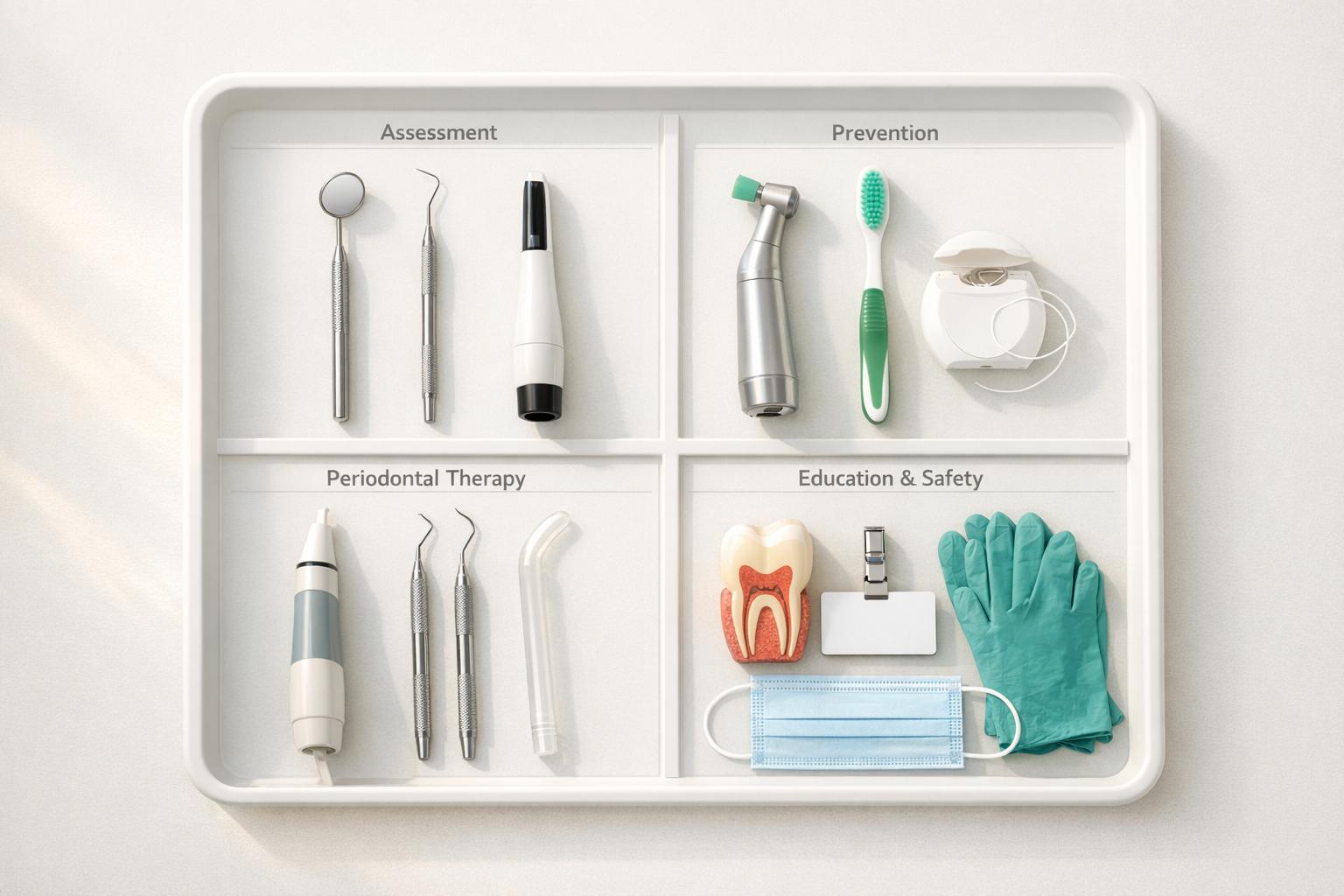
Dental hygienists in Australia focus on preventing dental disease and promoting oral health. They work under a dentist’s guidance within a regulated framework set by the Dental Board of Australia (DBA) and the Australian Health Practitioner Regulation Agency (AHPRA). Their responsibilities include cleaning teeth, applying fluoride, taking X-rays, and educating patients on oral hygiene. However, they cannot perform irreversible procedures like fillings or extractions.
Key points about dental hygienists:
- Core Duties: Removing plaque, tartar, and stains; administering local anaesthesia; taking impressions for mouthguards; and conducting oral health assessments.
- Limitations: Cannot perform fillings, extractions, or prescribe most medications.
- Education: Requires a 2-year Advanced Diploma or 3-year Bachelor degree accredited by the Australian Dental Council.
- Registration: Mandatory with AHPRA and DBA, including meeting requirements like English proficiency and professional indemnity insurance.
- Continuing Development: 60 hours of CPD every three years to maintain skills.
Dental hygienists also contribute to public health by participating in community outreach programs, offering education, and collaborating with other health professionals to promote oral care in underserved areas. Their work is integral to improving oral health outcomes across Australia.
Dental Hygiene Scope of Practice: Why It Matters Webinar 6-6-24
sbb-itb-2be92ed
What Dental Hygienists Do
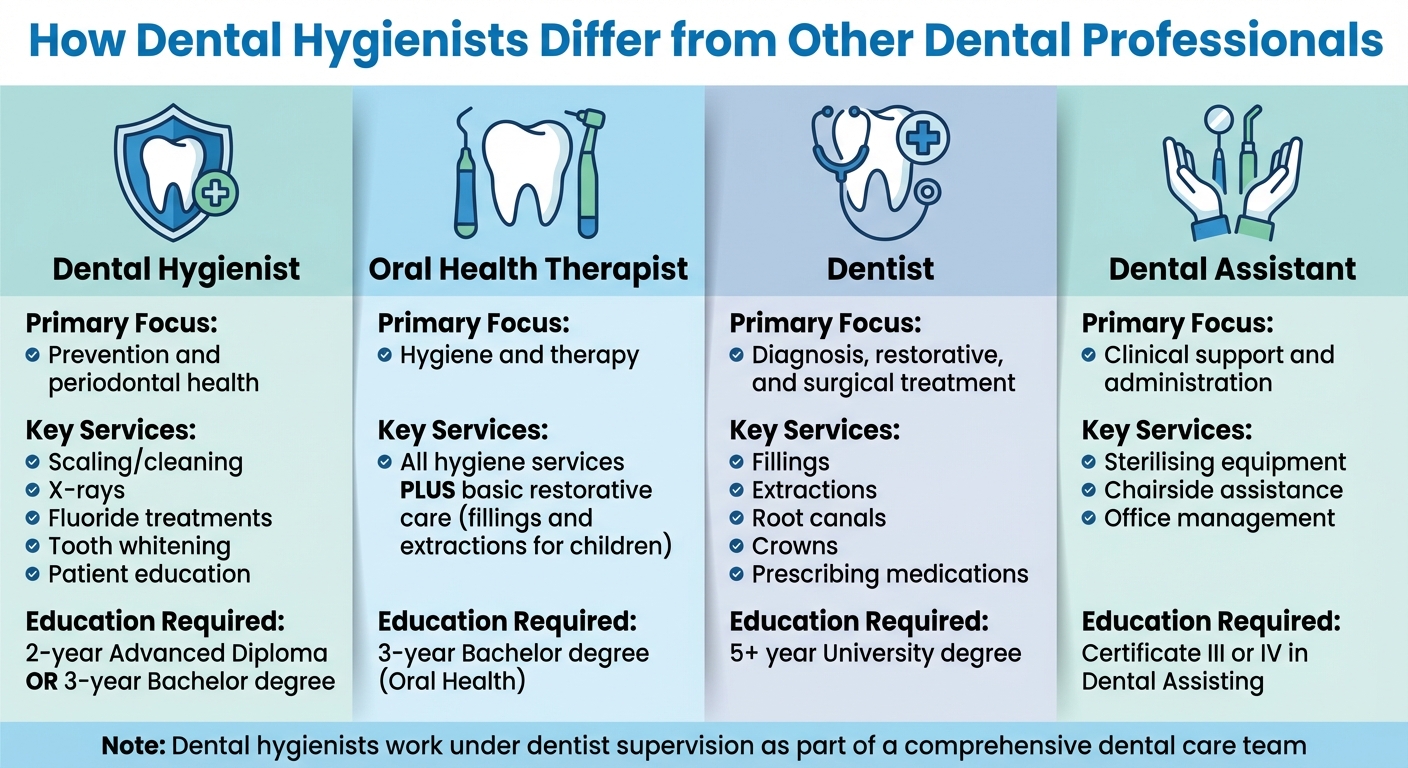
Dental Hygienists vs Other Dental Professionals: Roles and Responsibilities Comparison
Core Responsibilities
Dental hygienists focus on preventative dental care, aiming to protect teeth and gums from problems before they arise. Their primary tasks include removing plaque, tartar, and stains through scaling and root debridement to combat periodontal diseases like gingivitis. They also apply fluoride treatments and whitening agents to maintain oral health.
In addition to cleaning, hygienists perform diagnostic tasks such as oral health assessments, dental charting, reviewing medical histories, and taking and interpreting X-rays. They are also trained to administer local anaesthesia (both infiltration and inferior alveolar nerve blocks) and can take impressions for study models or customised mouthguards.
"The treatments dental hygienists offer tend to be more preventative and educative. The idea is to help people before they get dental decay or other dental diseases." – TAFE Courses Australia
A significant part of their role involves educating patients. This includes teaching effective brushing and flossing techniques, offering advice on nutrition for oral health, and providing support for smoking cessation. These educational efforts help patients maintain their oral health between visits, setting dental hygienists apart from other dental professionals.
How Dental Hygienists Differ from Other Dental Professionals
| Professional | Primary Focus | Key Services Provided | Typical Education |
|---|---|---|---|
| Dental Hygienist | Prevention and periodontal health | Scaling/cleaning, X-rays, fluoride treatments, tooth whitening, and patient education | 2-year Advanced Diploma or 3-year Bachelor degree |
| Oral Health Therapist | Hygiene and therapy | All hygiene services plus basic restorative care (e.g., fillings and extractions for children) | 3-year Bachelor degree (Oral Health) |
| Dentist | Diagnosis, restorative, and surgical treatment | Fillings, extractions, root canals, crowns, and prescribing medications | 5+ year University degree |
| Dental Assistant | Clinical support and administration | Sterilising equipment, chairside assistance, and office management | Certificate III or IV in Dental Assisting |
Dental hygienists operate under the supervision of a dentist, who leads the clinical team and handles more complex procedures and diagnoses. While dentists focus on treatments like root canals and crowns, oral health therapists bring a dual skill set, combining hygiene expertise with restorative care, including fillings and paediatric extractions. Dental assistants, on the other hand, provide essential support, ensuring the smooth running of both clinical and administrative tasks. This structured teamwork ensures comprehensive patient care.
What Dental Hygienists Can and Cannot Do
Permitted Services
In Australia, dental hygienists play a key role in preventative and diagnostic oral care. Their responsibilities include scaling and root debridement, fluoride application, radiograph interpretation, and conducting comprehensive oral assessments. They are also trained to administer local anaesthesia and take impressions for study models or customised mouthguards. According to data from April to June 2021, there were 1,405 registered dental hygienists in the country [3]. However, the specific services a hygienist can provide depend on their training and proven competence. While their focus is on prevention, their scope of practice is clearly defined to ensure patient safety.
Legal and Professional Boundaries
Dental hygienists are not authorised to perform treatments that involve irreversible procedures, such as fillings, tooth extractions, or complex surgical interventions, which fall under the expertise of dentists or oral health therapists.
"The full range of activities and responsibilities which individuals within the profession are educated, trained and competent to perform." – Dental Board of Australia
Hygienists work under a Structured Professional Relationship with a dentist, who acts as the clinical lead. While the dentist’s physical presence is not always required during procedures, collaboration is crucial. This ensures patients are referred for treatments beyond the hygienist’s scope when necessary. Ultimately, the dentist bears responsibility for the decisions and care provided by the entire dental team. Additionally, hygienists cannot deliver final diagnoses for complex dental issues or prescribe most scheduled medications unless they have specific endorsements or extra qualifications.
Registration and Professional Standards
AHPRA and Dental Board of Australia Requirements
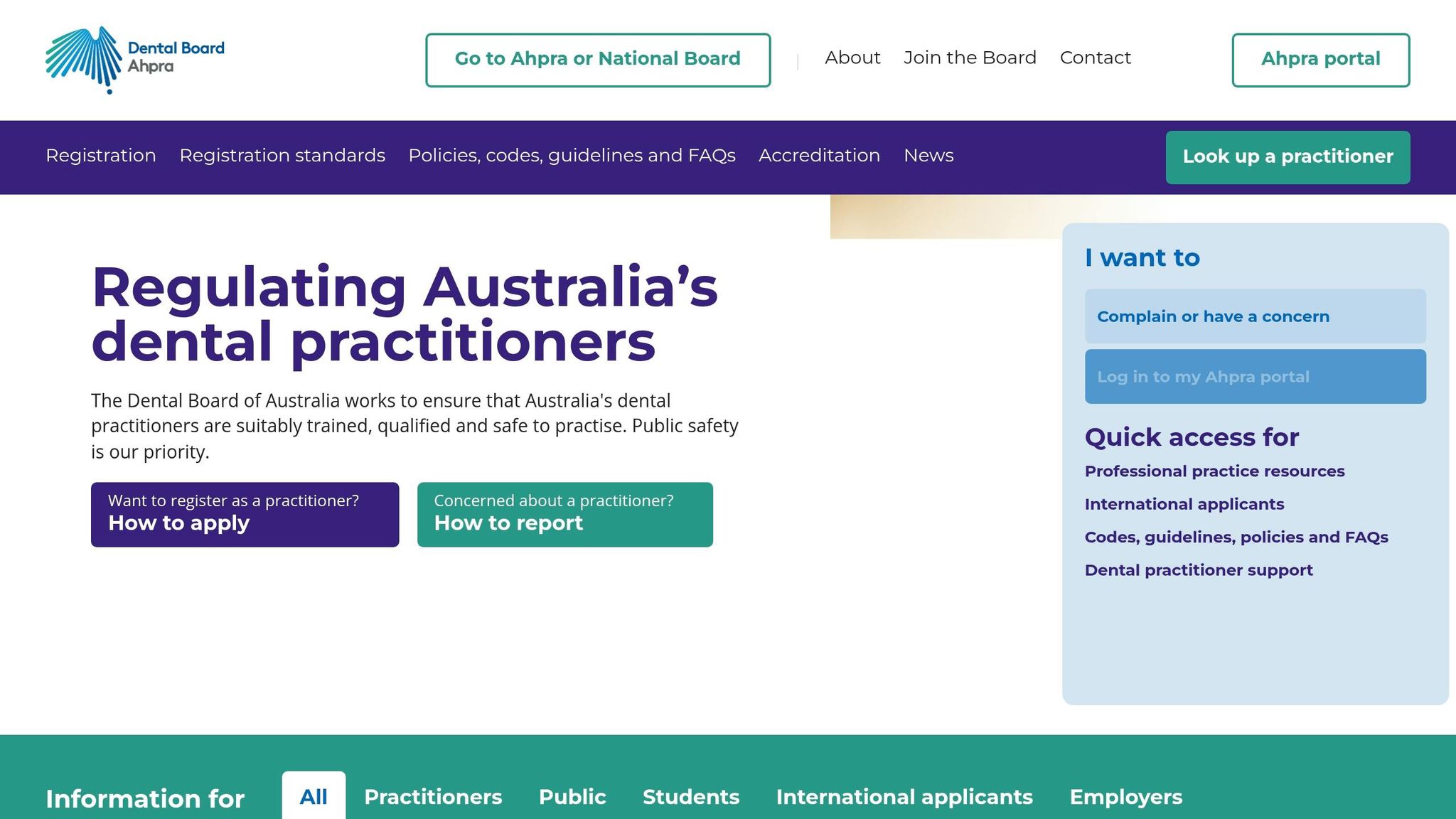
To practise as a dental hygienist in Australia, you must register with AHPRA through the Dental Board of Australia. This process involves meeting several key requirements, including proof of identity, a criminal history check, and demonstrating English language proficiency. For the latter, most applicants need an IELTS academic score of 7 or OET grades of A or B, unless they’ve completed secondary or tertiary education in certain English-speaking countries. You’ll also need professional indemnity insurance and evidence of immunity against conditions like tuberculosis, measles, mumps, rubella, chickenpox, herpes simplex, and hepatitis B.
The Dental Board provides several registration categories to fit different circumstances:
- General registration: For fully qualified practitioners.
- Limited registration: For those engaged in postgraduate training, supervised practice, teaching, or research.
- Non-practising registration: For professionals not working clinically but wishing to remain registered.
- Student registration: For those enrolled in approved dental hygiene programmes.
To qualify for general registration, you must complete a programme accredited by the Australian Dental Council (ADC). If you’re an overseas-trained practitioner, you can apply through the Trans-Tasman mutual recognition agreement (if registered in New Zealand) or complete the ADC’s assessment process.
Once registered, you’re required to complete 60 hours of Continuing Professional Development (CPD) every three years to keep your skills and knowledge up to date. The Dental Board of Australia also establishes the standards, codes, and guidelines for practice and oversees notifications, complaints, and disciplinary matters.
Assessing Your Own Competence and Scope
Understanding your professional scope is essential. Your scope of practice is defined by the procedures you’ve been educated and trained to perform confidently. Before carrying out any treatment, ensure it aligns with your accredited training. CPD can help you refine existing skills and stay updated, but it’s not a substitute for formal training in entirely new techniques. As the Australian Dental Association emphasises, practitioners must use professional judgement to assess their competence and determine if a treatment is appropriate for a patient [2].
You’re also responsible for knowing your workplace agreements and state-specific regulations, especially for tasks like radiography or prescribing medications. Regularly consult the Dental Board of Australia’s Guidelines for Scope of Practice to ensure your activities comply with your training. Maintain detailed CPD logs to demonstrate your ongoing competence, and keep your professional indemnity insurance and any required radiation licences up to date. Exceeding your scope could lead to disciplinary action, so accurate record-keeping and honest self-assessment are critical. By adhering to these standards, you not only protect your professional standing but also prioritise patient safety and care.
Public Health and Community Roles
Patient Education and Prevention
Dental hygienists play a critical role beyond the clinic, focusing on educating patients and preventing oral health issues. They help people understand how to manage plaque, prevent cavities, maintain good nutrition, and address gingivitis effectively [1]. According to the Dental Council New Zealand, their work often bridges oral health and overall wellbeing, with hygienists even screening for conditions like hypertension during regular check-ups [4][5].
Community Programs and Public Health Initiatives
Expanding their impact, dental hygienists actively participate in community programs designed to improve access to oral care. For instance, the Adelaide Dental School‘s Community Outreach Dental Program provides much-needed dental services to individuals experiencing homelessness. Similarly, the My School Dentist Program brings onsite oral health care directly to South Australian schools, benefiting thousands of students [7][8].
Hygienists also contribute to targeted initiatives such as Rebuilding Smiles®, which supports survivors of domestic and family violence [9]. On a global scale, they play a part in programs like Colgate’s Bright Smiles, Bright Futures™, which has provided millions of children with educational materials developed by dental professionals [10]. Closer to home, the Australian Dental Foundation has conducted over 1,700 oral health education sessions to date [8].
These efforts often involve collaboration with other health professionals, such as midwives, pharmacists, and Aboriginal health workers, to weave oral health into broader primary healthcare services [5][6]. This team-based approach is particularly effective in rural and remote areas, where preventive treatments like fluoride varnish and silver diamine fluoride are used to manage oral health risks in vulnerable populations [5]. Through these initiatives, dental hygienists not only stick to their professional scope but also highlight their broader contributions to public health in Australia.
Complete Smiles Bella Vista: Supporting Dental Care

At Complete Smiles Bella Vista, dental hygienists work within a well-structured professional framework alongside dentists who provide clinical leadership. This collaborative model allows hygienists to utilise their full skill set while benefiting from the expertise of seasoned dental professionals. It’s a system that reflects the broader standards of dental practice previously outlined.
Led by Dr James Hanna, the clinic places a strong emphasis on preventative care. Hygienists play a key role in managing orofacial health through nonsurgical periodontal treatments, while specialist services are available for more complex needs. For cases that go beyond a hygienist’s scope, the clinic offers advanced treatments like orthodontic treatment options, dental implants, and cosmetic procedures, ensuring comprehensive care.
"A dental hygienist guides patients’ personal care with the aim of achieving and maintaining oral health as an integral part of general health." – Dental Council
This approach highlights the connection between oral and general health. At Complete Smiles Bella Vista, hygienists can easily refer patients for treatments requiring specialist attention, all under strict clinical oversight. To learn more, visit Complete Smiles Bella Vista.
Conclusion
Knowing your scope of practice is crucial for providing safe and effective dental care. The Dental Board of Australia defines scope as "the full range of activities and responsibilities which individuals within the profession are educated, trained and competent to perform" [2]. In practical terms, this means dental hygienists must carefully evaluate their own training and capabilities before performing any clinical tasks, ensuring they prioritise patient care while adhering to professional regulations.
Operating outside your scope has serious implications that go beyond patient safety. Failing to comply with the Scope of Practice Registration Standard can lead to disciplinary action [2]. Additionally, performing tasks beyond your qualifications could void your professional indemnity insurance, leaving you vulnerable in the event of negligence claims [11]. Rupert Hoppenbrouwers, Senior Dento-legal Adviser at the Dental Defence Union, underscores this point:
"The GDC requires that you should only undertake [a task] if you are trained, competent and indemnified to do so" [11].
Beyond individual accountability, these professional boundaries are also designed to serve the public. They ensure patients receive care from practitioners who combine technical skill with sound clinical judgement [2]. Dental hygienists play a vital role as educators and preventive care providers, working within defined professional frameworks to safeguard public health.
FAQs
Do I need a dentist referral to see a dental hygienist?
No, you don’t need a referral from a dentist to visit a dental hygienist in Australia. Dental hygienists are qualified to work independently within their area of expertise. Their primary focus is on preventive oral care and helping maintain good dental health. If needed, they can refer patients to other dental professionals for further treatment.
Can a dental hygienist numb my mouth for treatment?
No, dental hygienists in Australia are not permitted to administer local anaesthesia. Their role centres around preventive care, educating patients on oral health, and performing non-invasive treatments like cleaning and scaling teeth. The administration of anaesthesia is strictly limited to dentists and other qualified professionals.
How can I check if a dental hygienist is registered with AHPRA?
To check if a dental hygienist is registered in Australia, you can use the Australian Health Practitioner Regulation Agency (AHPRA) online search tool. Just input the practitioner’s name or their registration details, and you’ll be able to confirm their current registration status and authorisation to practise. This process helps ensure the dental hygienist adheres to the necessary professional standards.
Related Blog Posts
- Scope of Practice for Dental Hygienists in Australia
- Dental Hygienist Career Outlook in Australia
- Scope of Practice for General Dentists in Australia
- Scope of Practice for Dental Hygienists
Important Notice: Any surgical or invasive procedure carries risks. Before proceeding, you should seek a second opinion from an appropriately qualified health practitioner.
Individual results may vary. The information provided in this article is for educational purposes only and does not constitute medical advice.
Checkout Related Blogs




Get in touch with us
For more information, call us now to start feeling better. Or fill the form below to make appointment
The Latest News from Complete Smiles
How to Clean Clear Plastic Retainers
Checklist for Choosing Wearable Dental Devices
Checklist for Choosing Cloud AI Platforms in Dentistry

Complete Smiles Bella VistaAccepts All Major Health Funds, Including





