





Non-Surgical vs. Surgical Periodontal Treatments: Key Differences
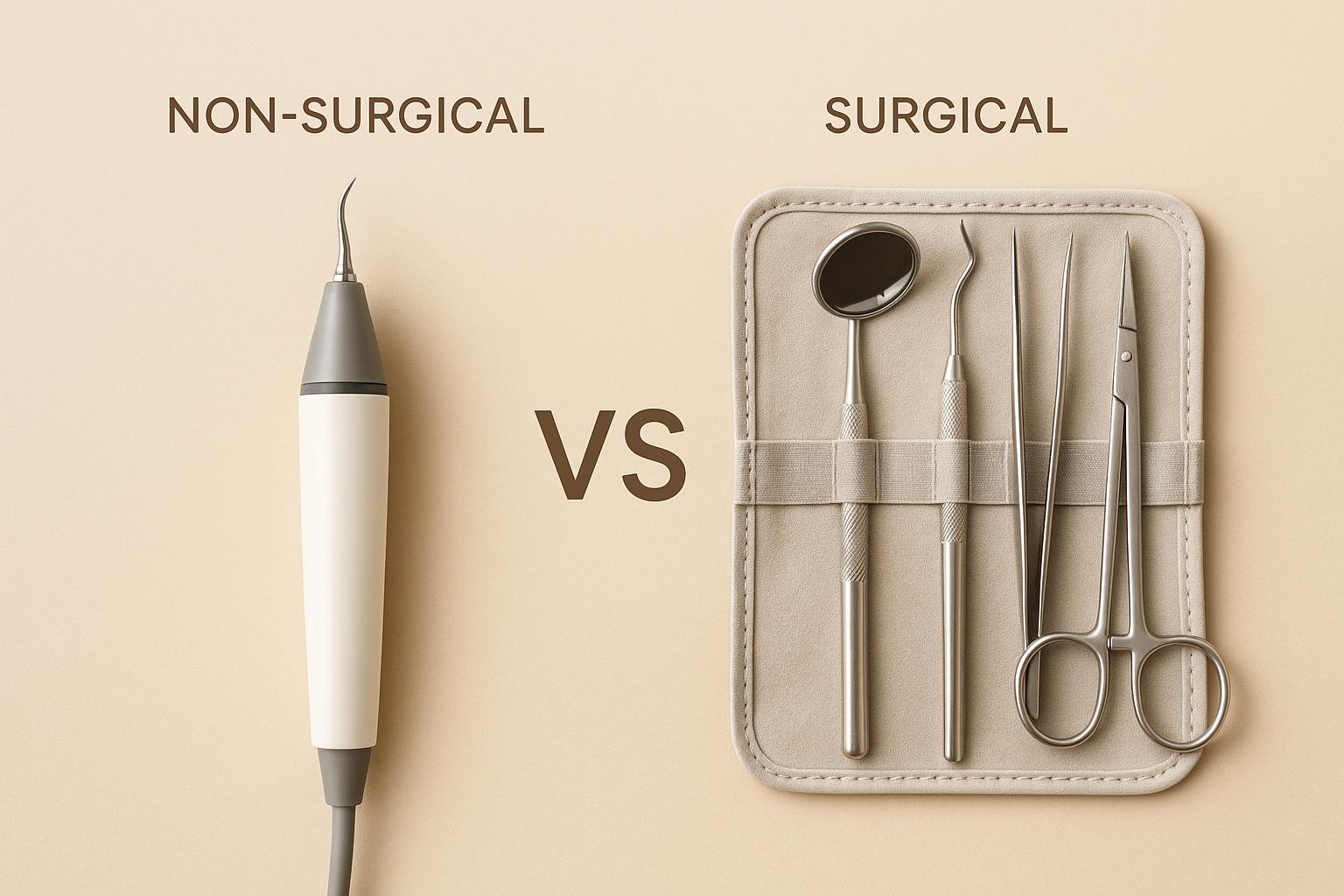
Periodontal disease affects the gums and bone supporting your teeth, ranging from mild gingivitis to severe periodontitis. Treatment options fall into two main categories:
- Non-Surgical Treatments: Ideal for mild to moderate cases. Includes scaling and root planing (deep cleaning), antibiotics, laser therapy, and professional cleanings. These methods are less invasive, cost less (AUD $150–$400 per quadrant), and have shorter recovery times (1–3 days). However, they may not fully address deep gum pockets or advanced tissue damage.
- Surgical Treatments: Necessary for advanced cases with significant bone or tissue damage. Includes flap surgery, bone grafts, and soft tissue grafts. While more expensive (AUD $1,000–$3,000 per quadrant) and requiring longer recovery (1–2 weeks), these methods are better suited for deep pockets and severe conditions.
Key Takeaway: Non-surgical methods are the first step for early gum disease, but surgical options are often required for advanced stages. Both approaches can be effective with proper maintenance and follow-up care.
Quick Comparison
| Factor | Non-Surgical Treatments | Surgical Treatments |
|---|---|---|
| Best For | Mild to moderate cases | Advanced cases |
| Main Methods | Scaling, antibiotics, laser | Flap surgery, grafts |
| Effectiveness | Limited for deep pockets | Better for severe damage |
| Cost (AUD) | $150–$400 per quadrant | $1,000–$3,000 per quadrant |
| Recovery Time | 1–3 days | 1–2 weeks |
Both approaches work best when paired with good oral hygiene and regular dental visits.
Periodontal Disease & Treatment
Non-Surgical Periodontal Treatments
Non-surgical treatments focus on managing early to moderate gum disease by thoroughly cleaning infected areas and encouraging the gums to heal. If these methods don’t achieve the desired results, surgical options may become necessary.
Main Techniques
- Scaling and Root Planing
This is the cornerstone of non-surgical periodontal care. It involves deep cleaning to remove plaque, tartar, and harmful bacterial toxins from below the gumline. The process also smooths the root surfaces, making it easier for the gums to reattach to the teeth. - Antibiotic Therapy
Antibiotics help target bacteria that can’t be eliminated through mechanical cleaning alone. These medications can be taken orally or applied directly into gum pockets using gels or slow-release chips. When combined with scaling and root planing, they can enhance infection control. - Laser Treatment
Laser therapy represents a modern approach to non-surgical care. Using focused light energy, lasers remove infected tissue and bacteria while minimising bleeding, swelling, and discomfort. However, this technique requires precise expertise to avoid damaging healthy tissue. - Professional Cleaning
Routine cleanings are essential for preventing gum disease from returning. They also allow dentists to monitor progress and adjust treatment plans as necessary. - Tray Delivery Systems
This at-home option uses custom-fitted trays to deliver prescribed medications directly to problem areas. While convenient, these systems are generally less effective than in-office treatments.
Benefits and Uses
Non-surgical treatments aim to reduce gum inflammation and shrink periodontal pockets. They come with several advantages, including shorter recovery times. Most patients experience only mild discomfort or sensitivity for a few days, which can usually be managed with over-the-counter pain relief. In Australia, the cost of scaling and root planing typically ranges from AUD $150 to $400 per quadrant [8], making it a more affordable alternative to surgical procedures.
These treatments are minimally invasive and usually require only local anaesthesia, which helps lower anxiety and risk for patients. They are particularly effective during the early stages of gum disease, such as gingivitis or mild to moderate periodontitis. Many patients notice significant improvements in gum health and pocket depth after initial treatment. However, maintaining these results requires consistent home care and follow-up visits.
Treatment Limitations
While non-surgical treatments offer many benefits, they do have limitations. They are less effective for advanced gum disease, especially in cases involving severe tissue or bone loss. Deep periodontal pockets can be particularly challenging; studies suggest that non-surgical methods may not reach the bottom of these pockets on up to 75% of root surfaces [5]. Similarly, molar furcation sites with pockets deeper than 4 mm often show poor responses to non-surgical care [5], making surgical intervention necessary in such cases.
Additionally, advanced techniques like laser therapy require specialised equipment and training, which may not be available at all dental practices. The long-term success of non-surgical treatments also heavily depends on the patient’s commitment to proper home care and regular dental check-ups. For advanced periodontal disease, these limitations often mean that surgery is the best option.
Surgical Periodontal Treatments
When non-surgical methods aren’t enough to tackle advanced periodontal disease, surgical treatments step in as the next line of defence. These procedures involve making precise incisions in the gum to access and remove tartar, bacteria, and diseased tissue that regular cleaning methods can’t reach. Surgery becomes crucial when severe tissue damage, bone loss, or deep gum pockets make non-surgical approaches less effective.
Main Procedures
- Flap surgery: Also called pocket reduction surgery, this procedure involves carefully lifting the gums away from the teeth to expose the roots and underlying bone. This allows for a deep clean, removing tartar and bacteria from areas that scaling and root planing can’t fully address. Once cleaned, the gums are repositioned and stitched to reduce the depth of the pockets.
- Bone grafts: If periodontal disease has caused bone loss, bone grafting can help rebuild the structure. This involves using natural bone (from the patient or a donor) or synthetic materials as a scaffold to encourage new bone growth over time, typically taking several months.
- Soft tissue grafts: Gum recession can be treated by transplanting tissue, often from the roof of the mouth, to the affected areas. This not only restores the gumline but can also reduce tooth sensitivity by covering exposed roots.
- Guided tissue regeneration: This technique uses a barrier membrane placed between the gum and bone to prevent soft tissue from growing into the area too quickly. This creates a controlled space, allowing bone and connective tissue to regenerate, potentially restoring much of the lost support.
These surgical procedures are typically reserved for cases where non-surgical methods fail to restore gum health.
When Surgery is Needed
Surgical intervention is usually recommended for gum pockets deeper than 7 mm, significant bone or tissue loss, or ongoing inflammation despite non-surgical treatments. If scaling and root planing, often combined with antibiotics, don’t lead to sufficient improvement over several months, surgery is considered the next step.
Advantages and Considerations
Surgical treatments go beyond the limitations of non-surgical methods, offering effective solutions for severe periodontal disease. Research shows that surgical procedures often achieve better results in reducing deep pockets compared to non-surgical approaches [5]. Techniques like bone grafting and guided tissue regeneration can even help rebuild lost bone and gum tissue, improving the long-term stability of teeth.
That said, these treatments come with important considerations. Recovery can take anywhere from one to several weeks and requires strict post-operative care, including changes to oral hygiene routines, medications, and dietary habits. Costs can also be a factor, with surgical periodontal treatments in Australia typically ranging from AUD $1,000 to $3,000 per quadrant.
Many Australian dental clinics, such as Complete Smiles Bella Vista, offer these advanced surgical treatments as part of a comprehensive gum disease management plan. These clinics follow evidence-based practices to ensure treatments are tailored to each patient’s needs, focusing on achieving lasting oral health.
sbb-itb-2be92ed
Treatment Effectiveness Comparison
When deciding between non-surgical and surgical periodontal therapy, understanding their effectiveness is crucial. Research indicates both approaches can work well, but the choice often depends on how advanced the periodontal disease is and individual patient needs.
Clinical Results Comparison
Treatment success is typically evaluated using three main indicators: pocket depth reduction, clinical attachment level (CAL) gain, and long-term tooth survival rates [7]. For mild to moderate periodontitis, non-surgical treatments like scaling and root planing generally reduce pocket depths from around 5 mm to 3 mm and improve gum attachment. However, when it comes to advanced cases, surgical options tend to deliver better outcomes. For instance, deep pockets exceeding 7 mm often benefit more from surgical interventions, such as flap surgery, which can reduce an 8 mm pocket to about 4 mm. Non-surgical methods, on the other hand, might show less dramatic improvements in such cases [7][1][2].
One limitation of non-surgical therapy is its inability to fully address the base of deep pockets in up to 75% of root surfaces, often making surgical treatment necessary [5]. Despite this, both approaches can achieve similar long-term results in terms of tooth retention and overall periodontal health, as long as patients maintain excellent plaque control and follow regular maintenance schedules [7].
The table below highlights the key differences between these treatment options:
Treatment Comparison Table
| Factor | Non-Surgical Treatments | Surgical Treatments |
|---|---|---|
| Main Methods | Scaling & root planing, lasers, antibiotics | Flap surgery, bone/soft tissue grafts, guided tissue regeneration |
| Effectiveness | Effective for mild/moderate disease; limited for deep pockets | More effective for deep pockets and advanced disease |
| Recovery Time | 1–3 days | 1–2 weeks (varies by patient) |
| Cost (AUD) | $200–$400 per quadrant | $1,000–$3,000 per site |
| Risks | Mild discomfort, sensitivity | Infection, bleeding, swelling |
| Long-term Outcomes | Effective with regular maintenance | More stable for severe cases |
| Accessibility | Widely available, lower cost | Requires specialist referral, higher cost |
Interestingly, combining scaling and root planing with surgical flap procedures often results in better initial pocket reduction than non-surgical therapy alone [9]. This supports a stepwise treatment plan: starting with non-surgical methods and moving to surgery if deep pockets remain.
Clinics like Complete Smiles Bella Vista provide both non-surgical and surgical periodontal treatments, following established clinical guidelines and tailoring care to the severity of the disease.
Recovery, Risks, and Patient Factors
Understanding what lies ahead helps patients prepare and make informed decisions. Recovery experiences, risk levels, and patient-specific factors differ significantly between non-surgical and surgical treatments.
Recovery Time Differences
For non-surgical treatments, the recovery is typically quick and straightforward. Most patients can return to their normal routines immediately. Mild discomfort, such as soreness or tooth sensitivity, may occur but usually subsides within a few days and can be managed with standard pain relief [3]. These symptoms rarely interfere with daily activities.
Surgical procedures, on the other hand, demand a more significant recovery commitment. Depending on the complexity of the surgery, healing can take anywhere from a week to several weeks [1]. For instance, patients undergoing flap surgery often need to take time off and may experience noticeable swelling and pain [1]. Recovery also involves specific post-operative care, including dietary restrictions, prescribed medications, and strict oral hygiene practices.
Recovery times vary based on factors like the severity of the condition, the type of procedure performed, and how well patients follow post-operative care instructions [1][3].
Potential Risks
Both non-surgical and surgical treatments come with risks, though the severity differs.
Non-surgical treatments generally involve minor risks, such as temporary gum tenderness, mild bleeding, tooth sensitivity, and slight swelling [3]. Rarely, patients may encounter infections or allergic reactions to antibiotics, but these complications are uncommon [6][4]. With proper aftercare and oral hygiene, most side effects resolve quickly.
Surgical treatments, being more invasive, carry higher risks. Common complications include infections, prolonged bleeding, swelling, pain, and slower healing [1][7]. Less frequent but more serious issues can involve damage to surrounding teeth or bone. Post-surgery, patients may also experience gum recession or heightened tooth sensitivity. Minimising these risks requires skilled surgical techniques and strict adherence to post-operative care [1][7].
The likelihood of complications varies depending on individual patient factors. Thorough pre-treatment evaluations and careful monitoring can help identify and manage higher-risk patients effectively.
Treatment Selection Factors
Choosing the right treatment involves weighing recovery times, risks, and patient-specific considerations. The severity of periodontal disease is a key factor. Surgical intervention is typically recommended when non-surgical methods fail to address advanced cases, such as those with deep gum pockets, significant bone loss, or persistent infections [2][7].
Certain patient characteristics also influence treatment choices. Older adults, smokers, and individuals with chronic health conditions often face slower healing and a greater risk of complications. Smoking, in particular, reduces blood flow to the gums, increasing the risk of infections and delaying recovery. For these patients, dental professionals may adjust treatment plans and provide closer monitoring [1][7].
Lifestyle and personal preferences play an important role too [1]. Patients who prefer less invasive options and minimal downtime may favour non-surgical treatments. Others, prioritising long-term results, might opt for surgery despite the longer recovery. Factors like work commitments, the ability to attend follow-up appointments, and the willingness to maintain rigorous oral hygiene routines also influence the best treatment choice.
Access to specialist care can be another deciding factor. Non-surgical treatments are often handled by general dentists, while surgical procedures usually require a referral to a periodontist. Cost is also a consideration, as surgical options tend to involve higher upfront expenses but may provide more lasting results for severe cases.
Ultimately, dental professionals should involve patients in the decision-making process, ensuring they fully understand the benefits, risks, and recovery expectations of each option [1][3]. This collaborative approach ensures that treatment plans align with each patient’s needs, preferences, and circumstances, improving both compliance and outcomes.
Clinics like Complete Smiles Bella Vista focus on tailored care plans and thorough follow-up, helping to optimise treatment results.
Conclusion
Both non-surgical and surgical treatments play essential roles in managing gum disease, with the choice between them depending on the severity of the condition and the patient’s specific needs. It’s not about one method being better than the other – it’s about selecting the right approach for each individual.
Non-surgical treatments like scaling and root planing offer a less invasive solution with shorter recovery periods and minimal risks. However, their effectiveness can be limited when dealing with deeper gum pockets.
When the disease progresses beyond the reach of non-surgical methods, surgical interventions often become necessary. Studies show that surgical treatments are more effective at reducing pocket depths greater than 7 mm [5][10]. While these procedures are more invasive, they allow access to areas that non-surgical techniques simply cannot address.
The severity of the disease is the key factor in determining the treatment approach. Mild to moderate cases often respond well to non-surgical options, while advanced periodontitis, characterised by significant bone loss or persistent infection, typically requires surgical intervention.
Long-term success, however, hinges on consistent maintenance. With regular dental visits and good oral hygiene practices, both treatment types can deliver similar outcomes over time [6]. This highlights the importance of ongoing care to prevent reinfection and maintain oral health.
For patients looking for comprehensive periodontal care, clinics like Complete Smiles Bella Vista offer a wide range of treatment options – from initial non-surgical therapies to advanced surgical procedures – paired with customised maintenance plans to ensure lasting results.
FAQs
What should I consider when choosing between non-surgical and surgical periodontal treatments?
When weighing up non-surgical versus surgical periodontal treatments, it’s essential to consider the condition of your gums and the treatment goals.
Non-surgical treatments, like scaling and root planing, are often suggested for early-stage gum disease. These methods focus on removing plaque and tartar build-up to encourage healing. They’re less invasive and usually come with shorter recovery periods, making them a more straightforward option for mild cases.
On the other hand, surgical treatments, such as flap surgery or bone grafting, are typically reserved for advanced periodontal disease. These procedures work to repair damage to both the gums and the underlying bone, providing a more thorough solution for severe issues. While recovery can take longer, the results are often more enduring.
Your dentist will evaluate your specific situation, taking into account the severity of the disease, your overall oral health, and your personal preferences, to recommend the best treatment path for you.
What are the differences in cost and recovery time between non-surgical and surgical periodontal treatments?
Non-surgical periodontal treatments, such as scaling and root planing, are often more affordable and come with shorter recovery times compared to surgical options. These procedures are less invasive, making it easier for patients to get back to their usual routines without much delay.
In contrast, surgical treatments like flap surgery or bone grafting are more involved. They generally come with higher costs and require longer recovery periods. These options are typically reserved for more severe periodontal conditions and may require some downtime to heal properly. For tailored advice, it’s always a good idea to consult your dentist, who can guide you towards the best treatment for your individual situation.
What are the long-term benefits and considerations of surgical vs non-surgical periodontal treatments?
When it comes to managing gum disease, both surgical and non-surgical periodontal treatments offer distinct advantages, depending on the severity of the condition and your individual oral health needs.
Non-surgical options, such as scaling and root planing, are less invasive procedures aimed at removing plaque and tartar buildup. These treatments encourage gums to heal and are particularly effective for mild to moderate cases of gum disease. One of the key perks? They often come with shorter recovery times.
On the other hand, surgical treatments like flap surgery or bone grafting are typically reserved for more advanced stages of gum disease. These procedures target deeper areas that require cleaning or structural repair. While recovery may take longer, surgical methods can address complex issues and help restore gum health more thoroughly, reducing the risk of future complications.
A dental professional can evaluate your condition and guide you towards the treatment option that best supports your long-term oral health.
Related Blog Posts
- How Dentists Evaluate Patients For Laser Gum Surgery
- Best Practices for Periodontal Care in Cardiac Patients
- Minimally Invasive vs. Traditional Gum Surgery: Key Differences
- 5 Steps of Flap Surgery Explained
Important Notice: Any surgical or invasive procedure carries risks. Before proceeding, you should seek a second opinion from an appropriately qualified health practitioner.
Individual results may vary. The information provided in this article is for educational purposes only and does not constitute medical advice.
Checkout Related Blogs




Get in touch with us
For more information, call us now to start feeling better. Or fill the form below to make appointment
The Latest News from Complete Smiles
How to Clean Clear Plastic Retainers
Checklist for Choosing Wearable Dental Devices
Checklist for Choosing Cloud AI Platforms in Dentistry

Complete Smiles Bella VistaAccepts All Major Health Funds, Including





