





Robotic Dental Surgery: Benefits vs. Limitations

Robotic dental surgery is transforming dental care in Australia, offering precise and efficient procedures. This technology uses 3D imaging, AI planning, and real-time guidance to achieve accuracy that manual methods can’t match. Systems like Yomi®, the only FDA-cleared robotic dental device, boast success rates of 94%-100%. However, it comes with challenges like high costs, limited access, and significant training requirements.
Key Points:
- Precision: Robotic systems minimise errors with sub-millimetre accuracy.
- Patient Comfort: Smaller incisions mean less pain, swelling, and faster recovery.
- Efficiency: Procedures are quicker, saving time for both patients and dentists.
- Cost: Median patient costs reach $19,269, limiting accessibility.
- Access Issues: Technology is mostly available in urban centres, leaving rural areas underserved.
- Training: Dentists need advanced skills to operate robotic systems, increasing adoption barriers.
Quick Comparison:
| Factor | Robotic Surgery | Manual Surgery |
|---|---|---|
| Precision | Sub-millimetre accuracy | Skill-dependent |
| Cost (Median) | $19,269 | Lower |
| Recovery Time | Faster | Slower |
| Availability | Limited to cities | Widely available |
| Training | Extensive | Standard dental training |
Robotic dental surgery offers advanced precision and comfort but remains expensive and less accessible. Dentists and patients should weigh these factors to decide the best approach for their needs.
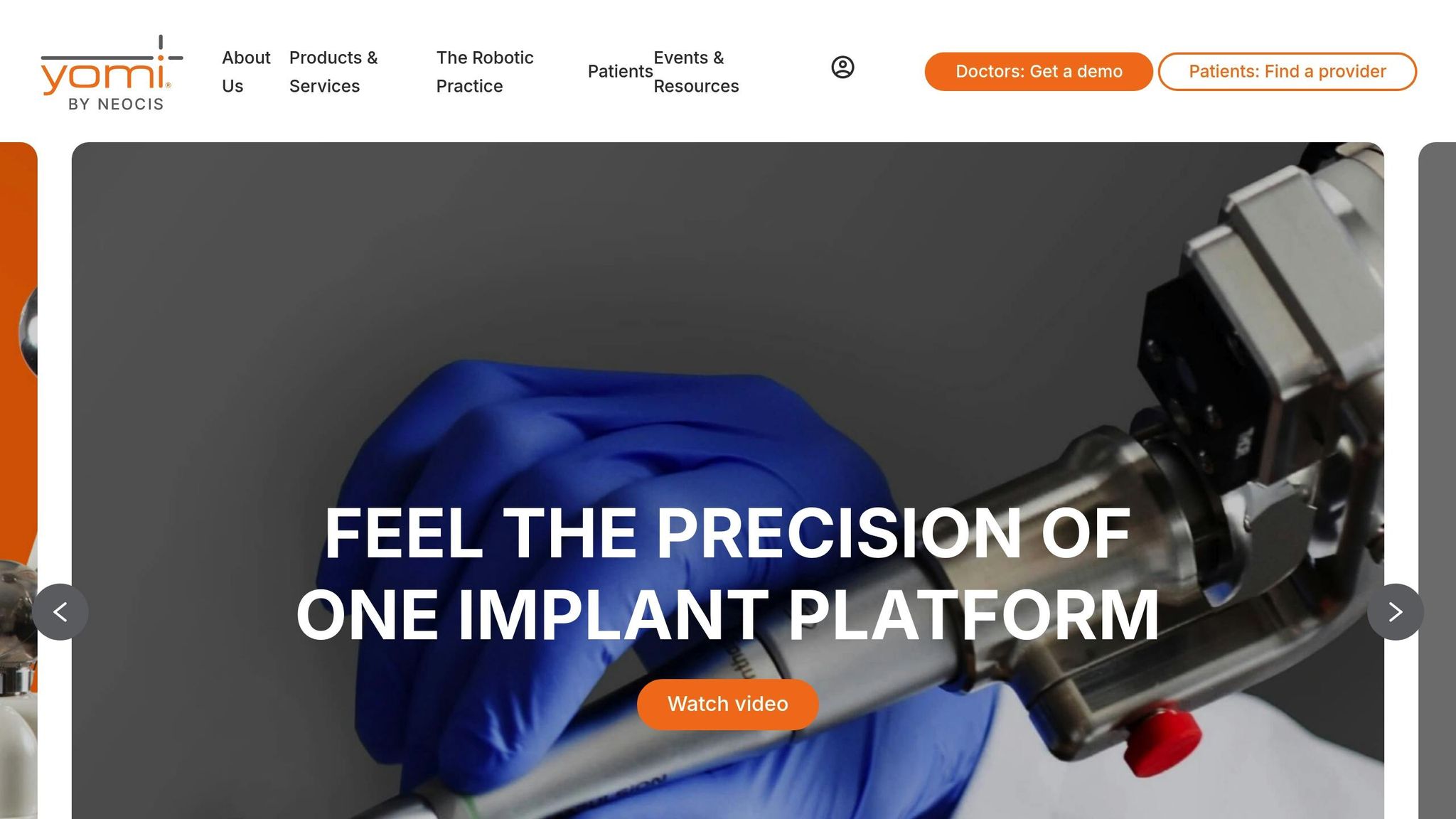
Yomi: The first and only FDA-cleared robotic device for dental surgery
Benefits of Robotic Dental Surgery
Robotic-assisted dental procedures are making waves in Australian dental care, offering improved precision, enhanced patient comfort, and greater treatment efficiency.
Better Precision and Accuracy
One of the standout advantages of robotic dental surgery is its unparalleled precision. Traditional methods rely heavily on a dentist’s manual skills, which can vary, while robotic systems deliver consistent results through advanced technology.
For instance, a retrospective study comparing robot-assisted implant surgery using the Remebot system with traditional freehand placement revealed some striking differences. The robotic group achieved far smaller deviations: a platform deviation of 0.44 ± 0.17 mm, an apical deviation of 0.46 ± 0.17 mm, and an angular deviation of 0.85 ± 0.47°. By comparison, the freehand group showed much larger deviations of 1.38 ± 0.77 mm, 1.77 ± 0.82 mm, and 6.63 ± 3.90°, respectively [4].
What’s more, while freehand accuracy can be influenced by variables like jaw type, implant location, and diameter, robotic systems maintain consistently high precision across all cases [4]. This level of accuracy directly supports less invasive approaches, which we’ll explore next.
Less Invasive Techniques
Robotic precision paves the way for less invasive dental procedures. With smaller, more accurate incisions, robotic systems minimise tissue disruption, which translates to reduced blood loss, a lower risk of infection, and quicker recovery times – up to 15% faster, according to studies [8][9].
Patients also benefit from less pain and swelling post-surgery. For example, during implant placements, robotic systems help preserve healthy tissue, making the recovery process smoother and more comfortable. These advantages are particularly appealing to patients who are wary of pain or extended healing periods.
Better Efficiency and Workflow
Efficiency is another area where robotic systems shine. By streamlining workflows, they save time for both patients and practitioners. For example, a U.S. company demonstrated an AI-driven robotic arm placing a dental crown in just 15 minutes – a procedure that would typically require two separate hour-long appointments [6].
This is possible thanks to a fully digital workflow that allows dentists to plan procedures in advance, resulting in fewer adjustments during surgery and more predictable outcomes [6]. Additionally, robotic systems reduce the physical strain on dentists, enabling them to concentrate more on patient care during complex or lengthy treatments.
Orthodontic treatments have also seen time savings. Systems like SureSmile2 have significantly reduced treatment durations compared to traditional manual wire-bending methods [3]. Together, these advancements lead to shorter chair times, more consistent results, and better patient experiences.
Limitations of Robotic Dental Surgery
Robotic dental surgery has shown potential, but several challenges are holding back its widespread adoption in Australia.
High Costs and Limited Access
The financial burden of robotic dental surgery is a major hurdle, especially when comparing private and public healthcare systems. As of May 2023, Australia and Aotearoa New Zealand had 162 robotic platforms in use – 136 in private hospitals and only 26 in public facilities [11]. Take Royal Prince Alfred Hospital in Sydney as an example: between 2016 and 2018, the hospital spent over $4.4 million on the da Vinci Xi system, covering equipment, refurbishment, and a three-year maintenance agreement [10].
These high upfront costs trickle down to patients, with median expenses reaching $19,269 per case. Implementation costs average $4,691 but can drop to $1,730 if the system is fully utilised [10]. However, such financial demands limit public sector adoption and concentrate access in urban areas, leaving rural and remote communities underserved [11]. Beyond the monetary challenges, introducing robotic systems also requires dental professionals to master new technical skills.
Training and Skill Development Challenges
Operating robotic systems demands a unique blend of traditional dental skills and expertise in advanced digital-mechanical techniques [3]. Simulation-based training has become a cornerstone in building these skills safely. A systematic review of robotic surgery training identified 209 studies, underscoring the need for structured learning programs [12]. However, there’s a gap in training focus – 79% of courses cover only basic skills, while just 21% delve into advanced techniques, making even basic competency a time-intensive process.
The da Vinci Surgical System highlights these issues; most training relies on dry labs and simulators, but personalised feedback remains critical for tracking progress and ensuring readiness for clinical practice [12].
Dependence on Technology
While robotic-assisted surgery achieves impressive success rates – ranging from 94% to 100% – its reliance on complex technology introduces vulnerabilities [1]. System failures, though rare, require immediate human intervention, creating operational risks [1]. Over-reliance on automation can also diminish staff engagement and reduce the level of personalised care [13].
The Canadian Dental Association emphasises that technology should complement, not replace, human expertise. Over-automation risks stifling creativity and adaptability in unique clinical scenarios [13]. Furthermore, maintaining these systems adds complexity and cost. For example, upkeep for the da Vinci Xi system can cost up to $2,290 per case, though this can drop to $845 with full utilisation [10]. Dental practices must also ensure robust backup protocols and retain traditionally trained staff, further increasing operational demands.
sbb-itb-2be92ed
Comparison: Robotic vs Traditional Dental Surgery
Robotic and traditional dental surgery each bring their own strengths and challenges, influencing both patient outcomes and how dental practices operate.
Key Differences Between the Two Approaches
When it comes to precision and accuracy, robotic systems have a clear edge over traditional methods. A study conducted by Xi’an Jiaotong University Hospital of Stomatology found that robotic-assisted implant surgery achieved far greater placement accuracy compared to freehand techniques. Specifically, the robotic group recorded an average platform global deviation of just 0.70 ± 0.11 mm, while the freehand group showed 1.24 ± 0.59 mm [5].
"This study demonstrates that robotic-assisted implant surgery significantly improves implant placement accuracy compared to traditional freehand methods." – Researchers at Xi’an Jiaotong University Hospital of Stomatology [15]
Another standout feature of robotic systems is their angular accuracy. These systems, calibrated to within 100 micrometres, can achieve angular deviations as low as 4.17 ± 0.28°, compared to 5.23 ± 0.10° with manual methods [14]. This level of precision is made possible by eliminating natural hand tremors and offering enhanced visualisation during procedures.
"The robot can reach places a surgeon’s hands traditionally cannot in open and laparoscopic surgery and is free from the normal tremors that come from the surgeon’s hand as well." – Dr. Adeshola Fakulujo, General Surgeon [2]
However, cost and accessibility remain significant factors that favour traditional methods. Traditional dental surgery is far more affordable, making it an option for a wider range of patients. On the other hand, robotic systems require substantial financial investment – not just for the equipment itself but also for training and maintenance. Practices must spend millions to adopt robotic technology, which includes ongoing costs like a three-year maintenance contract priced at $621,245 [10].
Availability is another area where traditional methods dominate. Standard dental surgery equipment and expertise are widely accessible across Australia, even in rural and remote areas. In contrast, robotic systems are typically found in larger cities and major hospitals, limiting their reach. Additionally, the specialised training required for robotic surgery further narrows the pool of qualified practitioners, as dentists must master both traditional techniques and advanced digital-mechanical systems.
Comparison Table
| Factor | Robotic Surgery | Traditional Surgery |
|---|---|---|
| Precision (Platform Deviation) | 0.70 ± 0.11 mm [5] | 1.24 ± 0.59 mm [5] |
| Angular Accuracy | 4.17 ± 0.28° [14] | 5.23 ± 0.10° [14] |
| Median Cost per Patient | $19,269 [10] | Significantly lower |
| Equipment Investment | $3.9 million+ [10] | Thousands of dollars |
| Training Requirements | Extensive specialised training | Standard dental education |
| Availability | Limited to major centres | Widely available |
| Maintenance Costs | $621,245 (3-year contract) [10] | Minimal ongoing costs |
| Consumables per Case | $1,848 [10] | Standard dental supplies |
| Human Error Reduction | Significant reduction | Dependent on practitioner skill |
| Magnification & Visualisation | Enhanced visualisation | Standard optical magnification |
While robotic surgery excels in technical precision and is particularly advantageous for complex cases, traditional methods hold their ground with affordability, wider accessibility, and a track record of reliability in diverse clinical situations. The choice between these approaches often comes down to the complexity of the procedure, patient preferences, location, and budget considerations.
Future of Robotic Dental Surgery
The future of robotic dental surgery looks bright, with advancements in technology set to transform how dental procedures are performed in Australia. These innovations are not only addressing current challenges but also paving the way for better patient care and surgical outcomes.
New Technology Developments
One of the most exciting advancements is the integration of artificial intelligence (AI) into robotic dental surgery. AI-assisted systems are already showing impressive results, reducing operative time by 25% and cutting intraoperative complications by 30% compared to traditional methods [8]. On top of that, surgical accuracy improves by 40%, particularly in procedures like implant placements [8].
For example, Perceptive‘s AI-powered robotic arm recently demonstrated its capabilities by placing a dental crown in just 15 minutes – a task that traditionally requires two separate hour-long visits [6].
Another game-changing innovation is the use of digital twin technology. This allows surgeons to create a virtual replica of a patient’s oral anatomy, enabling them to rehearse complex procedures in extended reality (XR) environments. This approach reduces risks and enhances outcomes by providing an opportunity to perfect techniques before stepping into the operating room.
Advanced adaptive control systems are also in development, designed to adjust in real time to patient movements or unexpected anatomical variations. These systems ensure precision even in challenging situations [8].
Looking further ahead, minimally invasive techniques using natural orifices are being explored. These methods, which involve performing procedures through natural body openings, could lead to less trauma and faster recovery times – especially beneficial for oral and maxillofacial surgeries [17].
Studies show that AI-assisted robotic surgeries can shorten recovery times by 15% on average, with patients reporting lower pain levels post-operation. Additionally, surgeons see a 20% increase in workflow efficiency, while healthcare costs decrease by 10% [8]. These advancements are not just technological leaps; they’re setting the stage for addressing the ethical and practical challenges that come with robotic dentistry.
Ethical and Legal Considerations
As robotic dental surgery becomes more common, ethical and legal issues need careful attention to ensure patient safety and trust.
Data privacy and security are critical concerns. The Australian Health Practitioner Regulation Agency (AHPRA) underscores the importance of complying with the Australian Privacy Principles (APPs) when using AI tools. This means protecting sensitive patient data, such as 3D oral scans and treatment histories, from breaches [20].
The concept of informed consent also becomes more nuanced with AI-driven care. Patients must fully understand how AI contributes to their diagnoses and treatment plans to maintain transparency and trust.
"While AI can enhance clinical accuracy and efficiency, dentists remain ultimately responsible for the care they provide. AI should be viewed as a supportive tool, not a replacement for professional judgment." – Australian Dental Association Victorian Branch Inc [20]
Another challenge is algorithmic bias. If AI systems are trained on limited or non-representative datasets, they risk perpetuating inequities in care. Dental practices need to ensure these systems are tested on diverse populations to avoid discrimination.
Professional liability is also a grey area. When robotic systems make errors, determining accountability – whether it lies with the dentist, the AI developer, or both – can be complex. Australian courts and regulators are still navigating these scenarios [22].
Interestingly, research comparing ChatGPT-4 with human dentists found that while the AI scored higher on knowledge of ethical guidelines, human dentists outperformed it in attitude indices (56.7 vs 53) [21].
"To integrate the technology fully while upholding care standards, acknowledge the ethical, financial, and legal implications of using artificial intelligence for patient care." – Miranda X. Morris, MEng, Duke University School of Medicine [22]
Addressing these ethical and legal challenges is crucial for making robotic dental surgery a trusted and widespread option in Australia.
Making It More Accessible
Currently, the high cost of robotic dental systems limits their adoption, but several strategies could help make this technology more accessible.
Maximising utilisation of robotic systems is one way to reduce costs. Fully utilising robotic theatres can make the investment more cost-effective for dental practices [10].
Government support could also play a role. Grants or subsidies could help offset initial costs, making robotic systems more affordable for smaller practices.
Training programs are another key factor. By equipping more dental professionals with the skills to use robotic systems, the benefits of precision and efficiency can reach a wider audience. As Robert S. Glickman from New York University College of Dentistry explains:
"Robotics are already used in many medical areas that require precision and safety, and these outcomes continue to be validated. Dentistry is no different, and the critical need to educate students and provide the best outcomes is already the standard of care." – Robert S. Glickman, New York University College of Dentistry [7]
Additionally, open-source software for robotic design and control could dramatically lower costs, making the technology accessible to smaller clinics [16].
Workforce models can also contribute to affordability. For instance, Victoria’s 2:3 ratio of oral health therapists (OHTs) to dentists – compared to the national 1:4 ratio – has proven to be a more cost-effective approach. Incorporating OHTs alongside robotic systems could further reduce public dental service expenses [19].
Finally, standardised processes supported by robotic systems can improve predictability and reduce training times, cutting costs even further [18].
As robotic technology continues to evolve, a combination of efficiency gains, reduced training requirements, and supportive policies could bring the benefits of robotic dental surgery to more Australians. This would not only improve access but also set a new standard for precision and care in dentistry.
Conclusion
Robotic dental surgery represents a fascinating step forward in modern dental care, combining cutting-edge technology with the potential to transform patient outcomes. While it offers a range of benefits, it also comes with notable challenges that must be carefully considered.
Key Takeaways
Robotic dental surgery stands out for its precision and accuracy. Systems like YOMI have shown they can perform implant procedures with minimal or no incisions, which often means faster healing, less discomfort, and shorter recovery periods compared to traditional methods [23].
Another advantage is efficiency. Procedures such as implant placement and temporary tooth fitting can often be completed in a single visit, reducing the number of appointments and saving time for both patients and practitioners [23].
However, these advancements come with hurdles. The high upfront costs of robotic systems often make treatments pricier for patients [24]. Accessibility is another concern, as this technology is currently limited to specialised clinics, which can be a barrier for those in rural or regional areas. Additionally, the reliance on advanced technology and the need for specialised training can create challenges, particularly if complications arise during a procedure [24].
| Aspect | Robotic Surgery | Traditional Surgery |
|---|---|---|
| Guidance | Computer-guided | Surgeon skill-dependent |
| Patient Experience | Less invasive, faster recovery | More invasive, longer recovery |
| Investment | Higher upfront costs | Lower costs |
| Availability | Limited to specialised centres | Widely accessible |
This comparison highlights both the promise and the practical challenges of robotic-assisted dental care.
Making Informed Decisions
For patients, choosing between robotic-assisted and traditional dental surgery requires careful thought and professional advice. Dental practitioners play a crucial role in helping patients weigh the higher precision and reduced invasiveness of robotic procedures against the costs and accessibility issues.
A personalised approach is key. By considering factors such as a patient’s oral health, budget, and treatment goals, dentists can provide tailored guidance. Detailed consultations allow patients to understand the pros and cons of robotic-assisted surgery and make decisions that align with their needs.
As technology advances, the gap between benefits and challenges may narrow. But one constant remains: informed, patient-centred decision-making will always be the foundation of high-quality dental care.
FAQs
Why is robotic dental surgery typically more expensive than traditional methods?
Robotic dental surgery tends to come with a higher price tag, primarily because of the hefty costs tied to the advanced robotic equipment involved. These systems demand a large initial investment, along with continuous expenses for upkeep and software updates.
The technology driving robotic dental procedures often incorporates state-of-the-art tools like 3D imaging and artificial intelligence. While these features boost precision and streamline the process, they also play a major role in driving up costs. Although these advancements may enhance accuracy and improve patient outcomes, they significantly contribute to the price gap when compared to traditional dental techniques.
What options are available for patients in rural Australia to access robotic dental surgery, given its limited presence in cities?
Patients living in rural Australia now have the opportunity to access robotic dental surgery through telehealth consultations. These virtual sessions enable patients to connect with specialists for initial assessments and treatment planning, cutting down the need for repeated trips to urban centres.
To further improve access, mobile dental clinics equipped with cutting-edge technology, including robotic-assisted systems, are being rolled out in remote areas. While most robotic platforms remain concentrated in metropolitan regions, these efforts are making it easier for rural communities to benefit from the latest advancements in dental care.
What specialised training do dentists need for robotic dental surgery, and how does it differ from traditional methods?
Dentists specialising in robotic dental surgery gain expertise in digital technology, mechanical systems, and simulation-based techniques. This specialised training revolves around advanced tools like robotic arms and real-time imaging, aiming to improve precision and deliver better results for patients.
On the other hand, traditional dental training focuses more on manual skills and conventional methods, relying heavily on hands-on practice with non-digital tools. Robotic surgery training shifts this focus, emphasising technological skills and the ability to incorporate modern innovations into everyday dental procedures.
Related Blog Posts
- What Are Computer-Controlled Anesthetic Devices?
- AI Research in Oral Disease Detection: Key Findings
- Nanotechnology in Dental Anesthesia: Overview
- Minimally Invasive Tooth Extraction Techniques
Important Notice: Any surgical or invasive procedure carries risks. Before proceeding, you should seek a second opinion from an appropriately qualified health practitioner.
Individual results may vary. The information provided in this article is for educational purposes only and does not constitute medical advice.
Checkout Related Blogs




Get in touch with us
For more information, call us now to start feeling better. Or fill the form below to make appointment
The Latest News from Complete Smiles
How to Clean Clear Plastic Retainers
Checklist for Choosing Wearable Dental Devices
Checklist for Choosing Cloud AI Platforms in Dentistry

Complete Smiles Bella VistaAccepts All Major Health Funds, Including





