





What Are Computer-Controlled Anesthetic Devices?

Computer-controlled local anaesthetic delivery (CCLAD) devices are advanced systems that make anaesthetic injections more comfortable and precise. They are especially useful for people with dental anxiety or fear of needles, offering a less intimidating and less painful experience compared to manual syringes.
Key Points:
- How They Work: CCLAD devices deliver anaesthetic at a controlled, steady rate, adjusting to tissue resistance. This prevents pain caused by sudden pressure surges.
- Patient Benefits: Reduced pain, less anxiety, and faster recovery with targeted anaesthesia (e.g., numbing a single tooth instead of an entire area).
- Dentist Benefits: Easier administration, reduced physical strain, and improved patient satisfaction.
- Popular Devices: Examples include The Wand, Comfort Control Syringe, QuickSleeper, and Calaject.
- Applications: Ideal for paediatric dentistry, managing needle phobia, and precise single-tooth anaesthesia.
- Future Trends: AI and robotics are improving precision, safety, and adaptability in anaesthetic delivery.
If you’re anxious about injections, these devices could make your next dental visit much more comfortable.
The Wand® STA Instrument – Overview
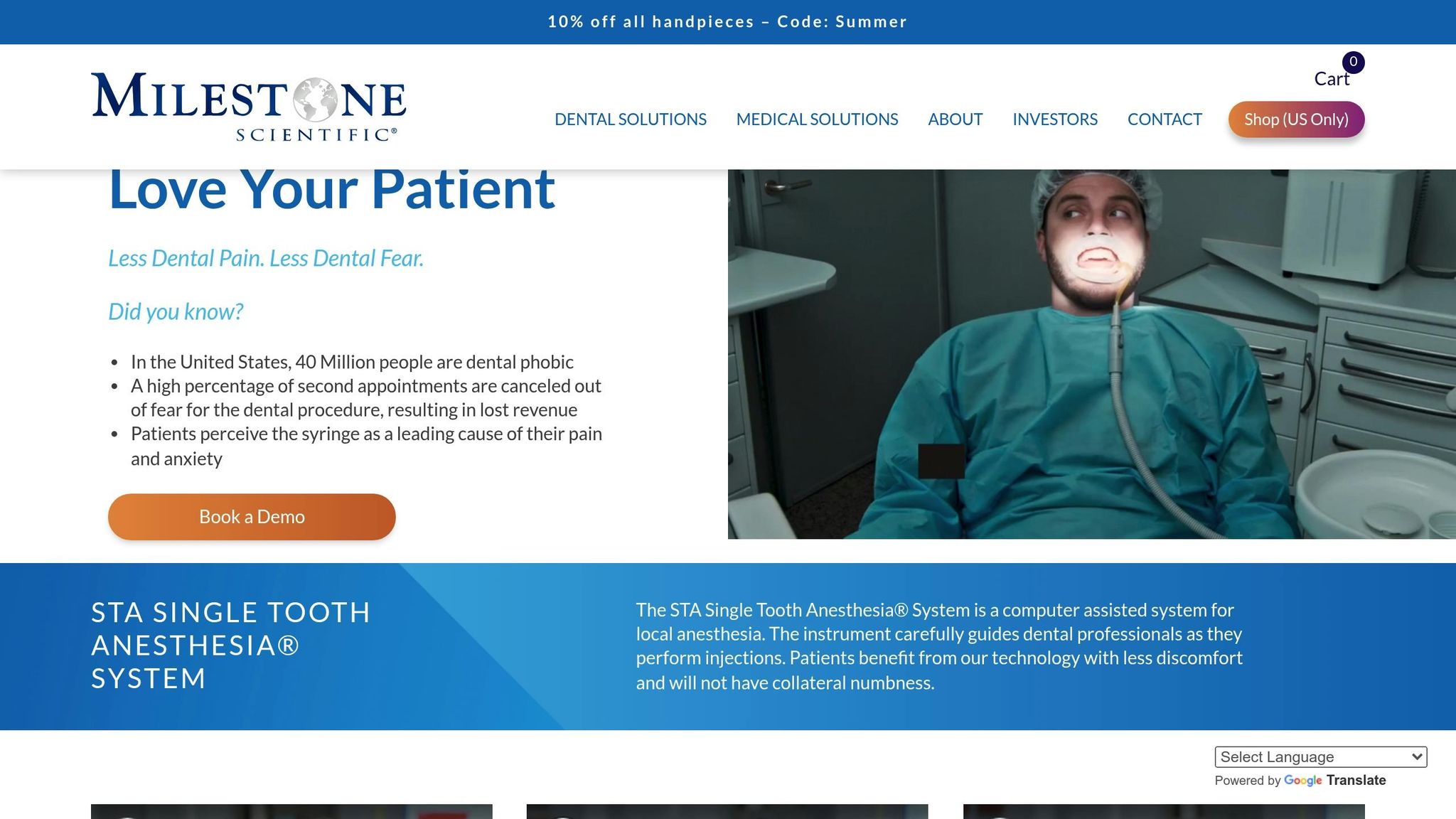
How Computer-Controlled Anesthetic Devices Work
Computer-controlled local anaesthetic delivery (CCLAD) systems are transforming dental care in Australia by combining advanced technology with a focus on patient comfort and precision. These devices are designed to streamline anaesthetic administration, making procedures less intimidating for patients and more efficient for practitioners.
Key Components of the Devices
CCLAD systems are built with a collection of smart components that work together to ensure precise and consistent anaesthetic delivery. At the heart of these systems is an ergonomic, pen-like handpiece, paired with a foot pedal that maintains steady pressure and flow – eliminating the need for manual force.
The anaesthetic cartridge connects to a computerised control unit equipped with advanced software. This software monitors tissue resistance in real time, adjusting the flow rate to maximise patient comfort. As David Isen explains:
"The premise behind computer controlled injection devices is in part, that they can do what our hands cannot. That is, deliver local anaesthetic at a constant rate despite the density of the tissue." [8]
Several devices on the market showcase these principles. One example uses dynamic pressure sensing to monitor the anaesthetic’s exit pressure, ensuring optimal needle positioning [2]. Another cordless, battery-powered device offers automatic priming, aspiration, and adjustable injection speeds, making it both versatile and user-friendly [9].
These features work together to support the device’s three-stage injection process, which is detailed below.
Injection Process and Precision
The injection process in CCLAD systems is designed to enhance patient comfort and ensure precise anaesthetic delivery. It follows a carefully engineered three-stage approach:
- Infiltration stage: Anaesthetic is introduced slowly to initiate numbness, avoiding sudden pressure surges [1].
- Block stage: The system adjusts flow rate and pressure to ensure the anaesthetic diffuses properly, targeting the intended area without excessive force [1].
- Maintenance stage: A steady flow is maintained throughout the procedure, preventing the numbing effect from wearing off during longer treatments [1].
Devices like the Calaject Anaesthesia Device exemplify this process, offering controlled flow rates and precision engineering to deliver consistent results [1].
Comparison with Standard Syringes
CCLAD systems offer a significant upgrade over traditional syringes, particularly in terms of patient experience and clinical outcomes. The table below highlights key differences:
| Feature | Traditional Syringes | Computer-Controlled Devices |
|---|---|---|
| Flow Rate Control | Manual, variable pressure | Computerised, consistent flow |
| Pressure Management | Relies on dentist’s hand strength | Automated sensing and adjustment |
| Patient Comfort | Intimidating appearance | Ergonomic design to reduce anxiety |
| Injection Precision | Subject to human variability | Algorithm-controlled delivery |
| Tissue Trauma | Higher risk of pressure damage | Reduced through controlled regulation |
| Anaesthetic Effectiveness | May require multiple injections | Optimised for single, effective injection |
Studies have shown that patients overwhelmingly prefer computer-controlled devices, with one study reporting a 100% preference for these systems over manual syringes [7].
For dentists, the ergonomic design of CCLAD systems reduces muscle strain and fatigue. For instance, the CompuDent Wand uses microprocessor-controlled technology to eliminate the need for manual pressure, allowing practitioners to focus entirely on precise needle placement [1].
Applications in Modern Dental Care
Computer-controlled local anaesthetic delivery (CCLAD) systems are becoming a staple in Australian dental practices, offering a combination of precision and comfort that addresses both patient needs and clinical challenges. By allowing targeted anaesthesia, these systems have transformed how modern dental care is delivered.
Single-Tooth Anaesthesia
One of the standout features of CCLAD systems is their ability to numb a single tooth with pinpoint accuracy, leaving nearby tissues unaffected. This precision eliminates the widespread numbness often associated with traditional injections. A study from Feeding Hills Dental Care highlights how CCLAD provides consistent and comfortable anaesthesia with minimal spread. Sensation typically returns within 30 to 60 minutes, a significant improvement compared to the hours of numbness caused by conventional methods [4].
Paediatric Dentistry
In paediatric dentistry, CCLAD systems shine by addressing the unique challenges of treating children. Their non-threatening appearance significantly reduces the fear often triggered by traditional syringes. Research shows that 38.75% of children reported feeling no pain with CCLAD, while conventional injections offered no such relief. Additionally, a remarkable 46.09% drop in Children’s Fear Survey Schedule scores was observed after treatment with CCLAD [6][10]. This technology not only minimises pain but also improves behaviour, with 60% of children receiving positive ratings on the Frankel scale [10]. Its ability to ease anxiety extends beyond children, benefiting anyone with a fear of needles.
Managing Needle Phobia
Needle phobia is a common barrier in dental care, and CCLAD systems provide a practical solution. The device’s discreet design puts patients at ease before the procedure even begins. Additionally, its gradual anaesthetic delivery reduces pain, making the experience more tolerable [3]. Patients often report feeling less anxious after their first session with CCLAD, which can lead to fewer cancelled appointments and better long-term oral health [2][5]. By addressing this widespread concern, CCLAD systems contribute to a more positive and accessible dental experience for all.
Benefits and Considerations for Dental Practices
Computer-controlled local anaesthetic delivery (CCLAD) systems bring numerous advantages to Australian dental practices, but their adoption requires careful thought around costs, training, and regulatory compliance. These factors highlight the increasing importance of CCLAD in modern Australian dentistry.
Key Benefits for Patients and Dentists
CCLAD systems are designed with both patient comfort and clinician efficiency in mind, offering benefits that improve the overall dental experience.
For patients, these systems provide a more comfortable and less stressful experience. The slow, controlled delivery of anaesthetic reduces discomfort and anxiety during procedures. This is especially beneficial during periodontal ligament injections, where the precise delivery ensures rapid onset and maintains effective anaesthesia levels [1].
Dentists also benefit significantly. The ergonomic design of CCLAD devices reduces the physical strain associated with traditional syringes, lowering muscle activity and injection force [1]. This can help minimise workplace fatigue and improve long-term health for practitioners. Additionally, the gradual anaesthetic delivery not only enhances patient comfort but also encourages loyalty – patients who experience pain-free procedures are more likely to return and recommend their dentist [12].
Another advantage is the precision of these systems. By numbing only the targeted areas, recovery times can be faster, and side effects are often reduced compared to traditional block injections [12]. Safety is also improved with features like automatic self-aspiration, which reduces the risk of accidental intravascular injections [11].
Cost and Training Requirements
While CCLAD systems offer clear benefits, they come with higher upfront costs compared to traditional syringes. There are also ongoing expenses for specialised supplies and maintenance. Additionally, learning to use these systems can be challenging for less experienced practitioners, though dental training programs increasingly include instruction on these devices [11].
Despite the initial investment, the long-term benefits can outweigh the costs. Australian dentists administer over 1,500 cartridges of local anaesthetic annually, contributing to the 11 million cartridges used nationwide each year [11]. Improved patient satisfaction and reduced appointment cancellations can lead to better financial outcomes for practices over time.
Integrating CCLAD into daily workflows requires planning and proper staff training. However, with a gradual approach, most practices find the transition manageable and worthwhile.
Compliance with Australian Standards
In Australia, CCLAD systems must meet strict regulatory standards set by the Therapeutic Goods Administration (TGA). Governed by the Therapeutic Goods Act 1989, these devices must be listed on the Australian Register of Therapeutic Goods (ARTG) to be legally supplied [13][15].
Practices should ensure that any CCLAD system they purchase has an AUST R or AUST L number on the label, confirming TGA approval [15]. The ARTG database can be used to verify the approval status of specific devices [15].
The TGA’s regulatory framework includes pre-market assessments, manufacturer licensing, and post-market monitoring [14]. Devices are classified by risk, and anaesthetic delivery systems must adhere to Good Manufacturing Practice (GMP) standards [14]. As of October 2019, there were over 90,000 devices listed on the ARTG, with 92% being imported products, highlighting the importance of TGA approval for ensuring safety and reliability [13].
Dental practices must also align their clinical protocols with Australian standards, maintain proper documentation, and stay informed about evolving TGA requirements. Adhering to these regulations ensures patient safety and supports the ongoing development of anaesthetic technology in Australia.
sbb-itb-2be92ed
Future Trends and Developments in Anesthetic Technology
Anaesthetic delivery systems are advancing rapidly, with artificial intelligence (AI) and machine learning paving the way for greater precision and patient comfort. These cutting-edge innovations are addressing existing challenges and are poised to bring transformative benefits to dental practices across Australia.
Emerging Technologies
AI is reshaping the functionality of anaesthetic devices, moving beyond basic automation to systems that can learn and adapt. One standout development is AI-guided injection systems, which use machine learning algorithms to analyse patient data and determine optimal dosing strategies in real time.
In February 2025, a collaboration between the U.S. Army Institute of Surgical Research and MIT’s Lincoln Laboratory introduced an AI-powered ultrasound nerve block device. This device can map nerve bundles and guide needle placement with a built-in safety mechanism that ensures the needle is only inserted when the correct target is identified. Remarkably, even a minimally experienced operator was able to place a needle for regional anaesthesia in under 40 seconds using this technology [17].
"It’s important that we have good communication between clinicians and engineers to shape the development of AI systems so that the end user has trust and confidence in the systems that we’re developing." – Lt. Col. Brian Kirkwood, Comprehensive Dentist and Chief AI Officer with the USAISR team [17]
Another breakthrough is the development of closed-loop anaesthesia delivery systems. These systems automatically adjust anaesthetic levels based on continuous monitoring of the patient. Research shows they can maintain target anaesthetic levels 92% of the time, minimising errors and reducing the risk of adverse incidents [19].
Machine learning is also proving invaluable in predicting patient responses and tailoring anaesthetic protocols. For example, studies have shown that machine learning can improve the accuracy of peak glucose level estimation from 79.0% to 84.7% and opioid dosage prediction from 18% to 42%. One pain prediction model achieved an impressive 95.2% efficiency with an AUC of 0.862 [18].
In addition, robotic assistance is becoming more integrated with computer-controlled local anaesthetic delivery systems. These systems enhance precision and consistency by reducing variability in manual operations, all while maintaining the dentist’s control over the procedure [17][18].
These advancements are refining computer-controlled anaesthetic technologies, making them more precise and adaptable for dental practices. They also address many of the limitations that currently exist in anaesthetic delivery.
Addressing Current Limitations
Despite these promising advancements, some challenges remain. Cost, data security, and the need for specialised training are key hurdles. However, progress is being made with more affordable solutions, stronger cybersecurity measures, and improved training programmes featuring user-friendly interfaces [16].
AI systems now provide real-time guidance and feedback, helping practitioners build confidence and competence more quickly [16]. Regulatory frameworks are also evolving to ensure these technologies meet safety standards while encouraging innovation. In Australia, collaboration with the Therapeutic Goods Administration (TGA) is facilitating this balance [16].
Compatibility with existing systems is another area of focus. Efforts to improve software compatibility and standardise communication protocols are ensuring that these technologies integrate seamlessly with electronic health records and other dental practice tools [19].
Recent surveys reveal that 56% of anaesthesiologists feel time pressures in their work, while 96% acknowledge the importance of adopting new technologies [7]. Nonetheless, the priority remains on ensuring these innovations lead to tangible improvements in patient outcomes without adding unnecessary complexity to clinical workflows.
Together, these advancements are shaping a future for anaesthetic delivery in dentistry that prioritises precision, patient comfort, and safety through the use of intelligent automation and personalised care approaches.
Conclusion
Computer-controlled anaesthetic devices are reshaping dental care by offering precise and more comfortable anaesthesia delivery. These systems are especially helpful for patients dealing with dental anxiety and the discomfort often linked to traditional injection techniques.
By focusing on single-tooth anaesthesia, these devices minimise unnecessary numbness and reduce the visual stress of traditional needles. For dentists, they ease the physical strain of administering anaesthesia, while for patients, they make routine dental procedures less daunting and more efficient.
These tools also address a widespread issue – dental anxiety – which affects around 40 million people in the United States alone [2]. By simplifying pain management and reducing the fear of dental visits, they encourage patients to prioritise their oral health. In Australia, many dental practices now offer advanced options like The Wand or CALAJECT, which reflect the shift toward more personalised and patient-friendly care.
If dental anxiety or past experiences with traditional anaesthesia have held you back, it’s worth discussing these new technologies with your dentist. They could make your next visit much more comfortable and stress-free, setting the stage for better long-term oral health.
FAQs
How are computer-controlled anaesthetic devices different from traditional syringes?
Computer-Controlled Anaesthetic Devices in Dentistry
Computer-controlled anaesthetic devices (CCADs) are changing the way anaesthesia is administered in dental procedures. Unlike traditional syringes, these devices deliver anaesthetic at a slow and steady rate, which makes the experience far more comfortable for patients.
One key advantage of CCADs is their ability to minimise pain. By controlling the flow of anaesthetic precisely, these devices reduce the pressure on tissues, which is often the main cause of discomfort during injections. Patients frequently report that the process feels much less painful compared to the manual delivery of anaesthesia.
Beyond comfort, CCADs also bring a level of precision that traditional methods struggle to match. This accuracy not only ensures that the anaesthetic effect is consistent but also reduces the chances of complications like tissue damage. For both patients and dental practitioners, this means a smoother and safer experience.
In short, CCADs are transforming dental care by putting patient comfort and safety at the forefront. They’re a modern solution that makes trips to the dentist just a little less daunting.
What are the costs and training requirements for using computer-controlled anaesthetic devices in dental practices?
Adopting computer-controlled anaesthetic devices (CCLAD) in dental practices requires both an upfront financial commitment and proper staff training. These systems typically cost between $5,000 and $15,000 AUD, depending on the specific brand and the features they offer. Fortunately, ongoing costs are usually low, as most devices are compatible with standard dental needles and cartridges.
Training plays a key role in making the most of CCLAD technology. Dental professionals should participate in specialised training programs to fully understand how these devices work and how they can enhance patient comfort during procedures. Additionally, staying engaged in continuous education ensures practitioners remain informed about the latest advancements and best practices in the field.
How could AI and robotics improve computer-controlled anaesthetic devices in the future?
Advances in artificial intelligence (AI) and robotics are reshaping the future of computer-controlled anaesthetic devices, making them smarter and more reliable. AI has the ability to process real-time patient data, such as vital signs, to fine-tune anaesthetic delivery. This allows for instant adjustments to dosages, tailored to each patient’s specific needs. The result? A lower risk of complications and enhanced safety for patients.
Robotics is stepping in to handle demanding tasks like drug administration and patient monitoring. By automating these processes, it not only reduces the workload on anaesthetists but also ensures consistent precision in outcomes. Together, these technologies are set to raise the bar in patient care and streamline workflows in both dental and medical settings.
Related Blog Posts
- 6 Ways to Overcome Dental Anxiety
- Wear-Resistant Materials in Dental Restorations
- How X-Rays Help in Dental Treatment Planning
- Digital Dental X-Rays: How They Work
Important Notice: Any surgical or invasive procedure carries risks. Before proceeding, you should seek a second opinion from an appropriately qualified health practitioner.
Individual results may vary. The information provided in this article is for educational purposes only and does not constitute medical advice.
Checkout Related Blogs




Get in touch with us
For more information, call us now to start feeling better. Or fill the form below to make appointment
The Latest News from Complete Smiles
How to Clean Clear Plastic Retainers
Checklist for Choosing Wearable Dental Devices
Checklist for Choosing Cloud AI Platforms in Dentistry

Complete Smiles Bella VistaAccepts All Major Health Funds, Including





