





Research on Dental Sealants and Cavity Prevention
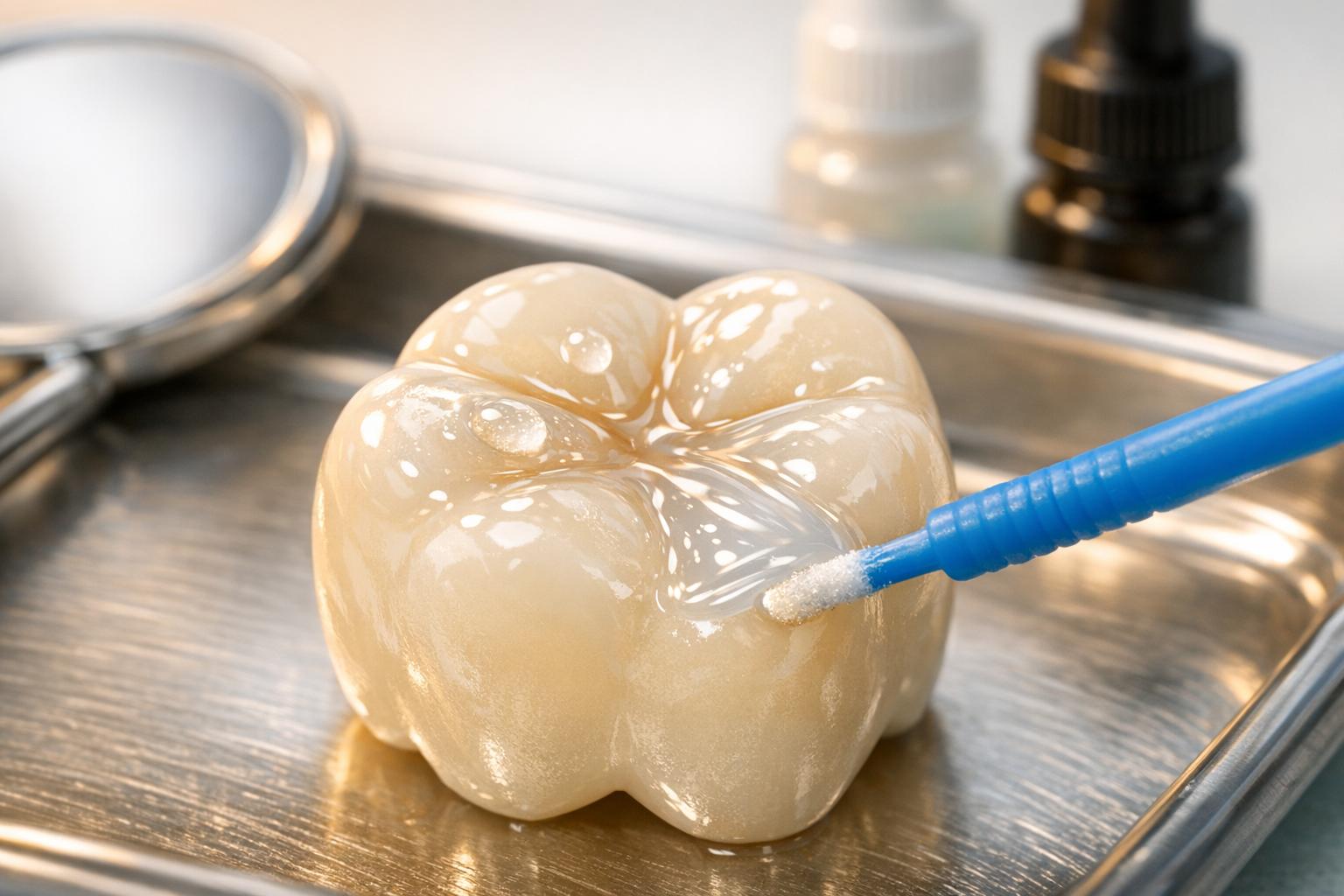
Dental sealants are a simple and effective way to reduce cavities, especially in children. These thin coatings are applied to the chewing surfaces of back teeth, creating a protective barrier that blocks bacteria and food particles from settling in hard-to-clean grooves. Sealants can lower the risk of decay by up to 80% in high-risk children and even help stop early decay from worsening.
Key points:
- Sealants are most effective on molars and premolars, where cavities are common.
- Resin-based sealants last longer than glass ionomer ones, with retention rates of 80% after two years.
- Combining sealants with fluoride varnish can improve cavity prevention by 77%.
- Bioactive sealants, like Biocoat, show higher success rates due to advanced ion-releasing technology.
Sealants are widely used in Australia, with school programs offering affordable options for children. They not only protect teeth but also reduce the need for general dental treatments, making them an important part of preventive care.
Recent Research on Dental Sealant Effectiveness
Clinical Trial Results
Clinical trials have shown that dental sealants can reduce the risk of cavities by over 80% in children considered high-risk. One study reported a Hazard Ratio of 0.17 over a 24-month period, highlighting their effectiveness [4]. For children already dealing with active cavities, sealants demonstrated an Odds Ratio of 0.25 at 12 months and a Hazard Ratio of 0.32 at 36 months. However, their impact on children with a low risk of cavities was minimal [4].
The success of sealants is closely tied to their retention. When the coating remains fully intact, it provides the best protection, whereas partial loss significantly reduces its benefits [6]. Studies also reveal that children with fully retained sealants are far more likely to stay cavity-free compared to those with poorly retained ones [6]. Interestingly, sealants have also been effective for teeth affected by Molar-Incisor Hypomineralisation (MIH), further reinforcing their preventive potential [6].
These findings provide a strong basis for examining how sealants compare to other preventive dental treatments.
Comparing Sealants with Other Preventive Treatments
When evaluating preventive treatments, factors like cost and combination approaches play a critical role alongside clinical effectiveness. While dental sealants have proven efficacy, studies suggest that fluoride varnishes deliver comparable results [2]. A notable example is the "Seal or Varnish?" study, a large-scale trial conducted between 2017 and 2025. This trial, led by Professor I.G. Chestnutt from Cardiff University, involved 1,015 children aged 6–7 from high-deprivation areas in South Wales. After 36 months, 17.5% of children treated with fluoride varnish developed cavities, compared to 19.6% of those treated with fissure sealants. The difference was not statistically significant [7].
"The twice-yearly application of FV [fluoride varnish] resulted in caries prevention that is not significantly different from that obtained by applying and maintaining FSs [fissure sealants] after 36 months. FV proved less expensive."
– I.G. Chestnutt, Professor and Honorary Consultant in Dental Public Health, Cardiff University [7]
Despite their similar effectiveness, fluoride varnish emerged as the more cost-effective option for large-scale community programmes. Over three years, fluoride varnish treatments averaged $432 per child, compared to $500 for fissure sealants – a saving of $68.13 per child [7]. However, combining treatments may yield even better results. Evidence suggests that using a resin-based sealant alongside fluoride varnish can reduce cavities by 77% over two years, compared to fluoride varnish alone [2].
sbb-itb-2be92ed
Dental Sealants: An Effective State Strategy to Prevent Dental Caries in Children
How Long Dental Sealants Last
Dental Sealant Retention Rates and Effectiveness Comparison
Sealant Retention Rates Over Time
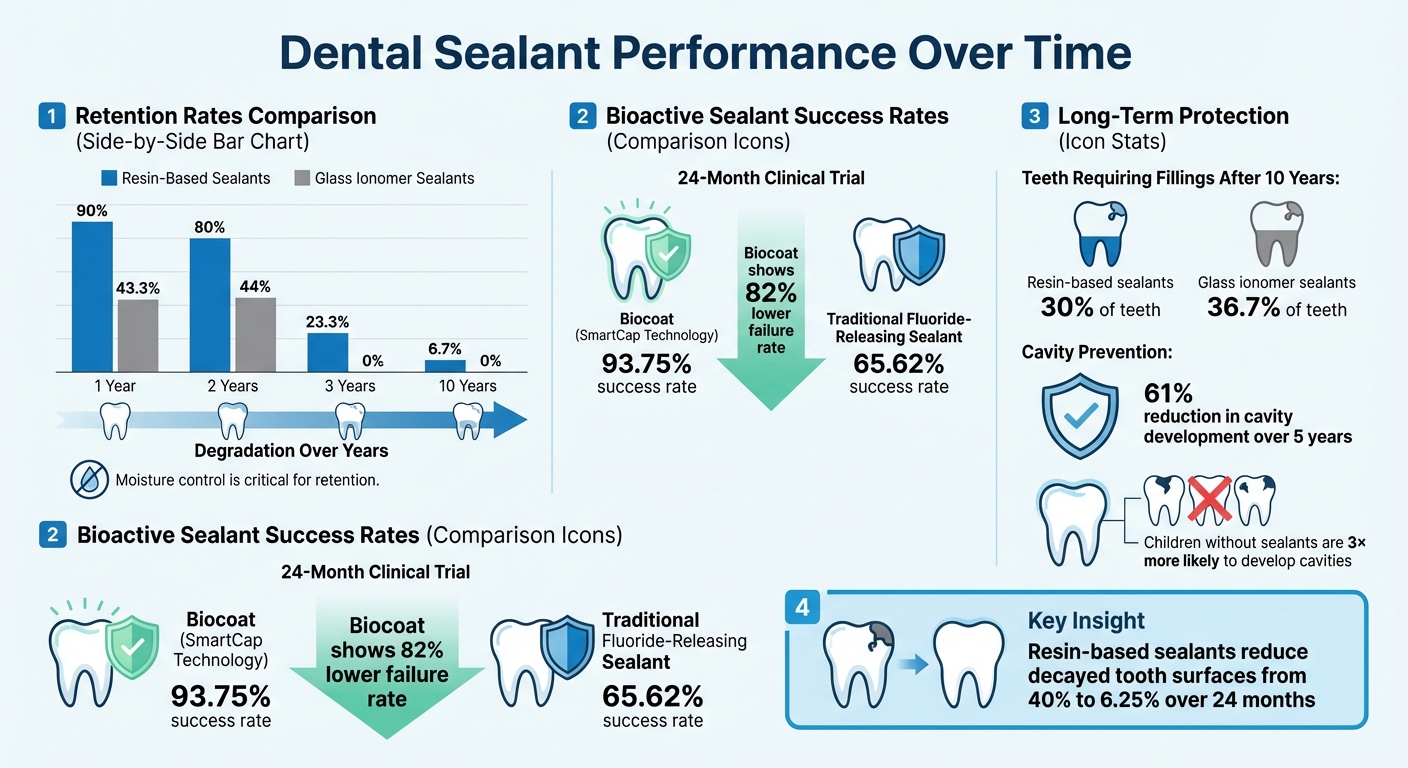
How long dental sealants last depends largely on the material used and how well they are applied. Resin-based sealants tend to hold up much better than glass ionomer sealants. Studies show that about 90% of resin-based sealants remain intact after one year, while glass ionomer sealants drop to just 43.3% retention in the same period [8].
Over time, both materials experience a decline in retention, but resin-based sealants consistently perform better. For example, after two years, resin sealants retain up to 80%, but this falls to 23.3% by three years. Glass ionomer sealants, on the other hand, retain about 44% at two years, dropping to 0% by three years [8][9]. A long-term study at the Lithuanian University of Health Sciences revealed that only 6.7% of resin-based sealants were still intact after ten years, whereas glass ionomer sealants showed no retention at all by that point [8].
One of the biggest factors affecting sealant retention is moisture control during placement. Even a small amount of saliva can weaken the bond, leading to early failure [9]. However, even when a sealant is partially or fully lost, remnants can still provide some protection by staying lodged in the tooth’s pits and fissures [3].
There’s also promising news from advancements in bioactive sealants. A recent clinical trial at Cairo University, registered in May 2023, followed 64 non-cavitated lesions over 24 months. The study found that Biocoat, a bioactive sealant using "SmartCap" technology, maintained a 93.75% success rate after two years, compared to 65.62% for traditional fluoride-releasing sealants [3].
These retention rates are not just numbers – they directly impact the need for future dental work, a topic we cover extensively in our dental tips and news.
Reduced Need for Future Dental Work
Even as sealants lose retention over time, their protective effects continue to reduce the likelihood of needing extensive dental treatments. In the Lithuanian study, only 30% of teeth sealed with resin-based materials required fillings after ten years, compared to 36.7% of teeth sealed with glass ionomer materials. This shows that sealants can still provide benefits even when they’re no longer fully intact [8].
The preventive impact of resin-based sealants is significant. Over five years, they reduce cavity development by about 61% [3]. For children aged 6–11, the difference is even more striking: those without sealants are three times more likely to develop cavities in their first molars than those with sealants [10][11].
Sealants don’t just prevent new cavities – they can also stop early decay in its tracks, preventing cavity formation altogether. This approach avoids the need for drilling and filling, which often leads to a cycle of more invasive treatments down the line. Without sealants, patients may face repeated restorations, progressing from fillings to crowns, and eventually to root canals or extractions [3][11]. By preserving natural tooth structure, sealants play a key role in reducing the need for invasive dental procedures over a lifetime.
Dental Sealants in Clinical Practice
Sealants have become a go-to solution in modern dentistry, thanks to their proven ability to stay intact and significantly lower cavity risks.
Using Sealants for Early Tooth Decay
Dental sealants are now a key tool for managing early, non-cavitated decay. The application process is straightforward but precise. It starts with cleaning the tooth and isolating it from moisture. Next, the tooth is etched with phosphoric acid for about 20 seconds, rinsed, and dried until the enamel takes on a frosty white appearance. The resin sealant is then applied and cured under a light for 10–20 seconds [3][12].
A clinical trial at Cairo University’s Faculty of Dentistry, conducted from February 2023 to February 2025, compared two sealant types on 64 non-cavitated lesions in adults. The bioactive sealant Biocoat achieved a 93.75% success rate, with very few failures. In contrast, the fluoride-releasing sealant Clinpro had a 65.62% success rate, with 11 failures over the same period.
What sets bioactive sealants like Biocoat apart is their SmartCap technology. This feature releases protective ions when the pH drops, creating a shield against decay and reducing the likelihood of sealant failure by 82%. By breaking the cycle of repeated fillings and restorations, these sealants may reduce the need for more invasive dental treatments [3][13].
Australian dental clinics have embraced these advancements, making sealants a staple of preventive care.
Sealant Use in Australian Dental Practices
In Australia, the use of sealants is actively encouraged by the Australian Dental Association, particularly for children aged 6–14 as their permanent molars emerge [12]. School-based dental programmes often offer sealants at approximately AUD$49.00 per tooth, with screenings costing around AUD$29.25 per child [15].
From 2015 to 2017, a preventive trial led by Griffith University targeted a remote Indigenous community in Far North Queensland. This "Big Bang" intervention provided annual fissure sealants and fluoride varnish to children aged 5–17. The results were impressive – a 43% reduction in advanced decay in permanent teeth. Children who didn’t participate in the programme were 2.21 times more likely to develop severe lesions [14].
These findings align with broader research, showcasing sealants as a powerful tool for long-term decay prevention. Economic models suggest that Australian school-based programmes could prevent around 1,860 decayed teeth over two years [15]. This underscores the value of sealants as part of a broader preventive strategy in dental care.
Conclusion: What the Research Shows About Dental Sealants
Dental sealants play a crucial role in preventing cavities and supporting long-term oral health. Research shows that resin-based sealants can significantly reduce decayed tooth surfaces, dropping from 40% to just 6.25% over a 24-month period [1]. For children at high risk of cavities, sealants prove even more effective, cutting the likelihood of new cavities with an odds ratio of 0.25 at 12 months and a hazard ratio of 0.32 at 36 months [4].
Bioactive sealants have shown promising results too, achieving a 93.75% success rate over 24 months. When enhanced with SmartCap technology, they demonstrate an 82% lower failure rate compared to traditional fluoride-releasing sealants [3]. This aligns with findings from respected sources:
"Resin-based sealants applied on occlusal surfaces of permanent molars are effective for preventing caries in children and adolescents." – Cochrane Database of Systematic Reviews [1]
These findings highlight how improved materials contribute to better outcomes. Focusing on high-risk groups amplifies the preventive advantages of sealants. Sealing permanent teeth can reduce the odds of decay by 72% to 94%, depending on the follow-up period [5]. Even when sealants are partially lost, their protective effect often continues, thanks to residual material left in deep pits and fissures.
Sealants also support minimally invasive dentistry by addressing early decay. Sealing non-cavitated lesions helps patients avoid the cycle of repeated restorations, preserving tooth structure and reducing the need for more extensive dental treatments over time [3]. Together, these insights highlight the vital role of dental sealants in advancing preventive dental care across Australia.
FAQs
Are dental sealants worth it for low-risk kids?
Dental sealants are absolutely worth considering, even for children at low risk of cavities. These sealants create a protective layer over molars, which can lower the risk of cavities by as much as 80% in the first two years after they’re applied. This makes them a highly effective tool for preventing tooth decay and supporting long-term oral health.
How often do sealants need checking or reapplying?
Dental sealants should be evaluated during regular dental check-ups, usually every 1–2 years. They might need to be reapplied if they appear worn, thin, or damaged. In general, sealants can last around 7–10 years, though this depends on individual circumstances and your dentist’s recommendation.
Do bioactive sealants work better than standard ones?
Bioactive sealants work just as well as standard sealants in stopping cavities, but they may bring some extra perks to the table. Research highlights their bioactivity, antimicrobial properties, and how they interact with enamel, which could boost their effectiveness over the long haul. Plus, their ability to aid enamel repair over time positions them as an appealing choice for cavity prevention.
Related Blog Posts
- What Is Minimally Invasive Cavity Preparation?
- How Long Do Dental Sealants Last?
- Bioceramic vs. Resin-Based Sealers: Comparison
- Advancements in Nanocoatings for Dental Restorations
Important Notice: Any surgical or invasive procedure carries risks. Before proceeding, you should seek a second opinion from an appropriately qualified health practitioner.
Individual results may vary. The information provided in this article is for educational purposes only and does not constitute medical advice.
Checkout Related Blogs




Get in touch with us
For more information, call us now to start feeling better. Or fill the form below to make appointment
The Latest News from Complete Smiles
How to Clean Clear Plastic Retainers
Checklist for Choosing Wearable Dental Devices
Checklist for Choosing Cloud AI Platforms in Dentistry

Complete Smiles Bella VistaAccepts All Major Health Funds, Including





