




Reducing Allergy Risks in Dental Treatments
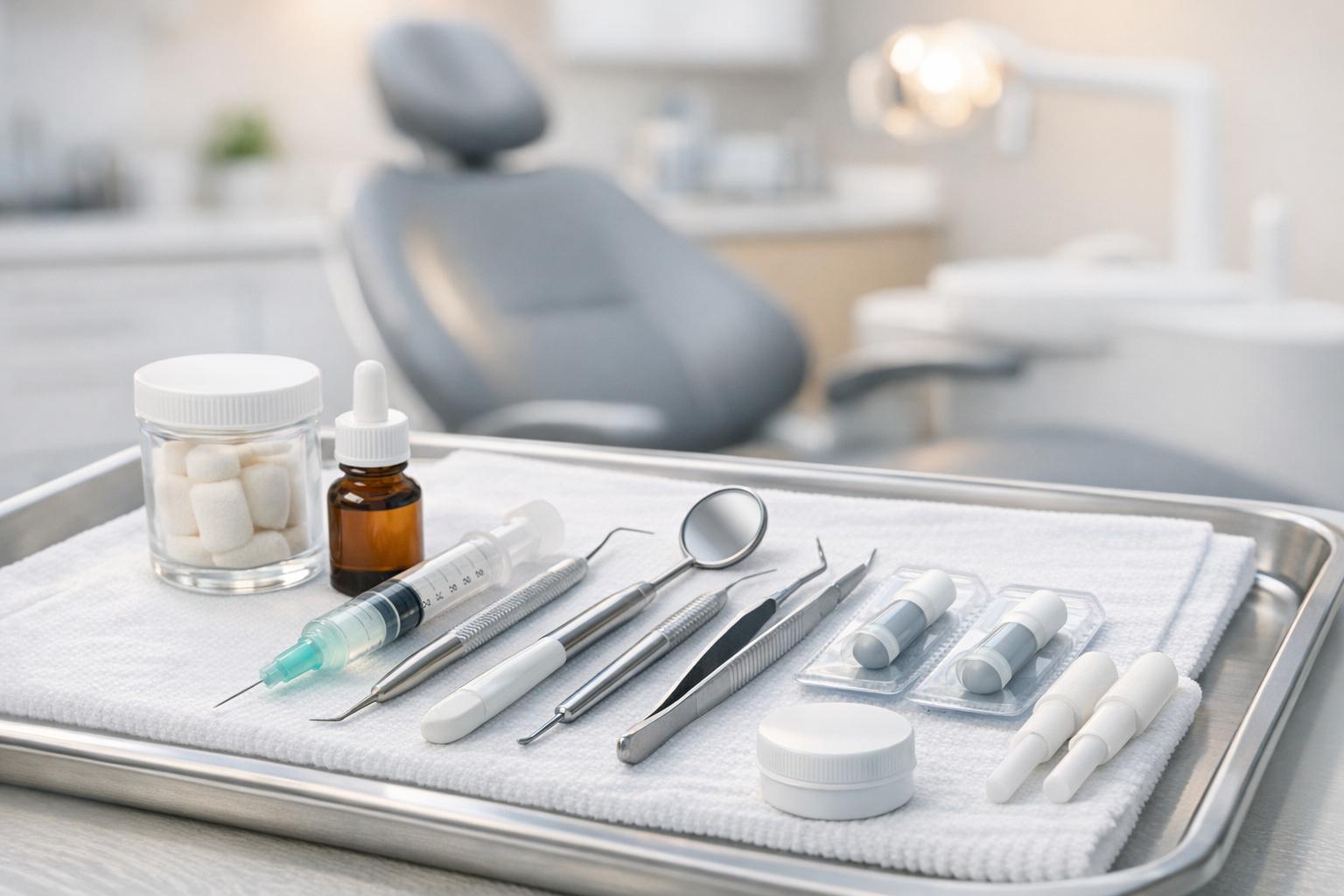
Modern dental treatments often use nanomaterials like silver, titanium oxide, and zirconia for their strength, antibacterial properties, and aesthetic benefits. However, these materials can increase the risk of allergic reactions in patients and dental staff. Allergies typically manifest as skin or oral reactions and, in rare cases, severe symptoms like anaphylaxis. The risks are heightened by the small size of nanoparticles, which makes them more reactive.
To minimise these risks:
- Assess patient history: Identify allergies to materials like metals, latex, or anaesthetics.
- Choose safer materials: Use alternatives like zirconia for metal-sensitive patients or CAD/CAM resins to avoid toxic monomers.
- Control exposure: Use water coolant, high-volume suction, and protective gear to reduce contact with nanoparticles.
- Be prepared for emergencies: Train staff to handle allergic reactions and stock adrenaline for anaphylaxis management.
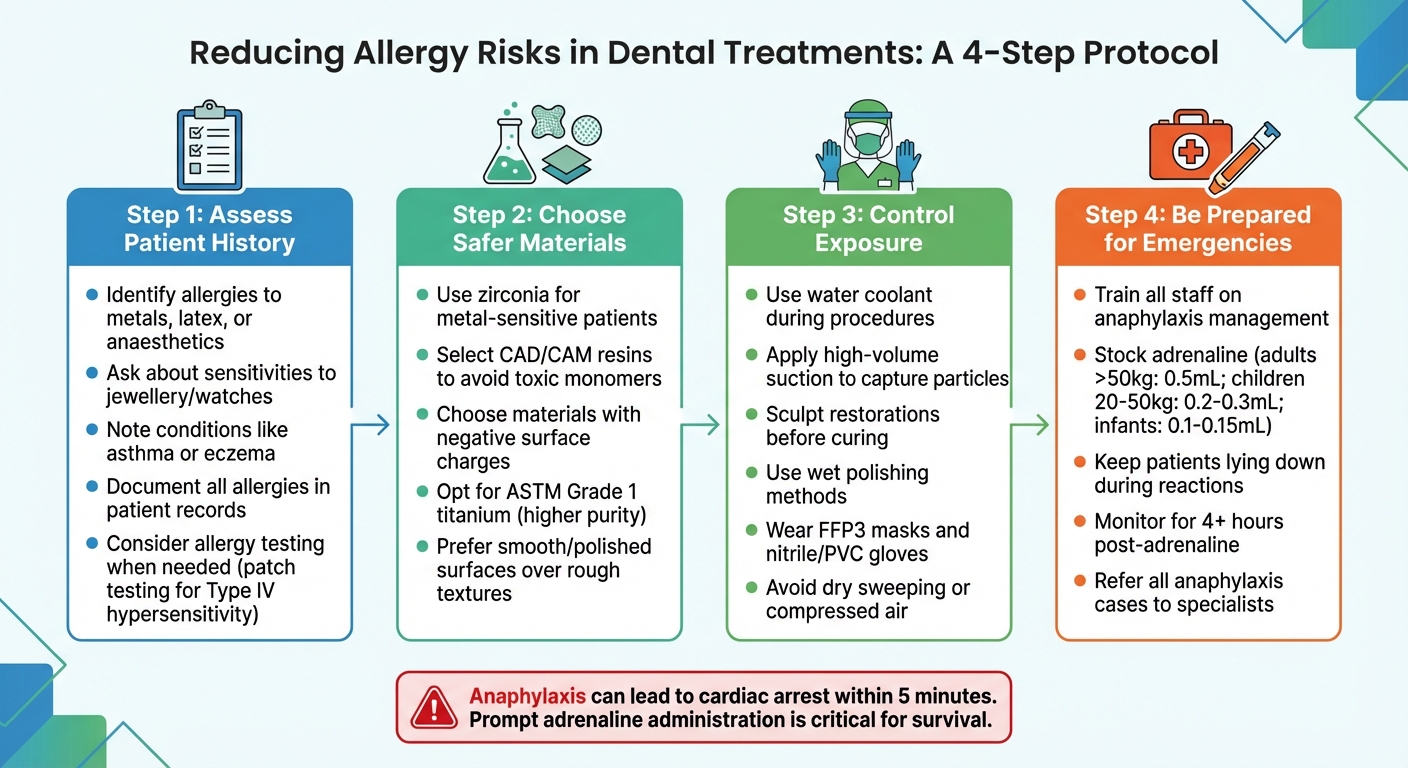
4-Step Protocol for Reducing Allergy Risks in Dental Treatments
Dental Material Toxicity and Skin Disease | Aria Dental | Maryam Horiyat DDS.

Identifying Allergy Risks Before Treatment
Preventing allergic reactions in dental care starts long before any procedure begins. By identifying potential risks early, clinicians can make informed choices about materials and tailor their approach to minimise adverse reactions. A thorough pre-treatment assessment plays a crucial role in ensuring safer outcomes for patients.
Taking a Complete Medical History
A detailed medical history is the cornerstone of managing allergy risks. It’s important to ask patients about past reactions to dental materials like amalgams, resins, metals, and local anaesthetics [3][4]. Questions about sensitivities to everyday metal items, such as watches or jewellery, can offer clues about potential issues with dental alloys or titanium implants [4].
Particular attention should be given to patients with conditions like asthma or eczema, as these are often linked to higher sensitivity levels [3]. For denture wearers, understanding their experience with previous dentures is key – reactions to new dentures can sometimes be traced to residual monomers in "cold-cure" acrylics [3]. Additionally, asking about latex sensitivity can help guide adjustments, such as scheduling early-morning appointments to avoid exposure to airborne latex particles from prior patients [5].
It’s worth noting that mucosal reactions to metals can take years to appear, often due to corrosion or bacterial buildup [3]. To prevent accidental exposure, any confirmed allergies should be clearly documented in patient records and marked on identification bands [5]. This thorough history may also indicate when allergy testing is necessary.
When Allergy Testing Is Needed
In most cases, a comprehensive history will suffice, but there are scenarios where formal allergy testing becomes essential. Testing is recommended for patients with a documented history of reactions to materials like metals, resins, or anaesthetics, or those with related medical conditions [3][6]. For suspected metal hypersensitivity, testing for titanium-based materials may also be advised [4].
Most dental material reactions fall under Type IV (delayed) hypersensitivity. These are typically investigated through patch testing, where materials are applied to the skin for two to four days. Interestingly, while around 80% of patients with amalgam-related lichenoid reactions test positive, over 90% of these lesions improve after replacing the material, regardless of the test result [3][6]. This has led the Australian Dental Association to view patch testing as having limited value in selecting suitable materials.
"If there are visible mucosal reactions to materials in the mouth, it may be cheaper and more reliable to change the material… rather than undertake costly and possibly unreliable contact sensitivity testing." – Martin Tyas AM, Australian Dental Association [3]
For suspected titanium allergies, the MELISA (Memory Lymphocyte Immunostimulation Assay) blood test offers greater specificity than standard patch tests [4]. When testing is necessary, referring patients to a dermatologist or allergist experienced in dental materials ensures accurate interpretation of results [3].
Informed Consent and Patient Communication
Once testing is complete, clear and open communication with patients is crucial. Discussing specific risks, such as the 1% chance of malignant transformation in oral lichenoid lesions, can help patients make informed decisions about replacing existing amalgam restorations [3]. For those with metal sensitivities, offering alternatives like zirconia or ceramic-based materials underscores a commitment to patient-centred care [4].
Patients should also be advised to monitor the treatment site for signs of persistent swelling, redness, or discomfort [4]. In endodontic treatments, informed consent should include a discussion of potential allergic reactions if materials extend beyond the root canal [5]. Documenting these conversations not only protects the practitioner but also ensures patients have a clear understanding of what to expect during and after their treatment.
Methods to Reduce Allergy Risks During Procedures
After conducting thorough pre-treatment assessments, additional steps during procedures can further minimise allergy risks. By carefully choosing materials, employing safe handling techniques, and monitoring patients closely, dentists can significantly lower the chances of adverse reactions.
Choosing Materials with Lower Allergy Risks
Material selection plays a key role in reducing allergic responses. Dentists should opt for nanomaterials with negative surface charges, as positively charged nanoparticles are more likely to bind to cell surfaces, increasing toxicity and irritation risks [7]. Materials with polymeric coatings can help by preventing nanoparticle dissolution and the release of toxic ions [7]. Additionally, coatings infused with antioxidants can neutralise reactive oxygen species, a major factor in nanotoxicity [7].
When working with titanium implants, prioritise higher purity grades, such as ASTM Grade 1 titanium, which contains less iron and has lower corrosion and ion release rates compared to Grade 4 [10]. Surface texture is also important – smooth or polished surfaces release fewer metallic ions than rough or matted ones, which have a larger surface area that accelerates ion release [8]. For acrylic resins, CAD/CAM milled or 3D-printed materials are safer alternatives to traditional cold-cure methods, as they reduce exposure to free methyl methacrylate monomers [3][9].
Always review manufacturer Safety Data Sheets (SDS) to check for trace contaminants like nickel, chromium, or palladium, which can trigger allergies even in titanium systems [10]. For patients with confirmed metal sensitivities, consider metal-free options such as zirconia ceramic implants or acetal resin frameworks, which offer better biocompatibility [9][4]. However, as the Faculty Dental Journal notes, "No material, however, can be considered universally biocompatible" [10].
Once the safest materials are selected, the focus shifts to controlling exposure during procedures.
Safe Handling and Exposure Control
Exposure to dental nanoparticles often occurs through inhalation of dust created during grinding and polishing [2]. To minimise this, sculpt restorations before curing to reduce the need for extensive finishing [2]. During procedures, use high-volume evacuation with water coolant to capture particles at their source [2].
"In order to minimise any possible risk to dental personnel in practice and patients, the amount of generated dental nanoparticle dust should be kept to a minimum." – FDI World Dental Federation [2]
Wet polishing methods are particularly effective, as water droplets can trap nanoparticles, making them less likely to become airborne [7]. Avoid dry sweeping or using compressed air for clean-up, as these methods can aerosolise particles [11]. Ensure that staff wear FFP3 masks and use snug-fitting nitrile or PVC gloves to prevent skin exposure, especially at the wrists [2][11]. For patients with severe airborne allergies, scheduling appointments early in the morning, when particle concentrations are typically lower, may help reduce risks [5].
Beyond these precautions, a gradual approach to material introduction and vigilant monitoring can further ensure patient safety.
Gradual Material Introduction and Patient Monitoring
For patients at higher risk, such as those with spina bifida, multiple surgeries, or food allergies, a cautious approach is essential [12]. Start with smaller restorations and monitor for any delayed reactions before moving on to more extensive treatments. This is particularly important because most dental material allergies involve Type IV hypersensitivity responses, which can take days to manifest [3][12].
Patients should be advised to watch for signs of irritation, such as prolonged swelling, redness, itching, or discomfort at the treatment site [4]. Implant recipients should also be monitored for systemic symptoms like fatigue, which could indicate hypersensitivity [4]. If a lichenoid reaction appears near a metal restoration, consider a biopsy and material replacement, as there is a small risk (about 1%) of malignant transformation in asymptomatic contact lichenoid lesions [3]. Any adverse reactions should prompt an immediate review of both the materials used and the handling procedures.
sbb-itb-2be92ed
Emergency Preparedness for Allergic Reactions
Even with careful material selection, allergic reactions can still happen. Being prepared is crucial to ensure that any reaction – whether minor irritation or a severe anaphylactic event – is managed quickly and effectively. This section covers the key steps for recognising symptoms, equipping staff, and ensuring proper follow-up care.
Recognising and Managing Allergic Reactions
It’s essential to distinguish between mild allergic reactions and anaphylaxis. Mild to moderate reactions might include symptoms like lip, face, or eye swelling, hives, tingling in the mouth, or abdominal discomfort [13][17]. Anaphylaxis, on the other hand, is much more serious and can present with symptoms such as difficulty breathing, tongue swelling, throat tightness, persistent coughing, dizziness, or even collapse [13][17].
In cases of suspected anaphylaxis, immediate action is critical. Remove the allergen, lay the patient flat, and administer an intramuscular adrenaline injection. Dosages vary by weight: adults over 50 kg require 0.5 mL, children between 20–50 kg need 0.2–0.3 mL, and infants require 0.1–0.15 mL. This treatment helps reduce airway swelling, improve breathing, and stabilise heart function [13][15].
"Adrenaline is the first line treatment for anaphylaxis and acts to reduce airway mucosal oedema, induce bronchodilation, induce vasoconstriction and increase strength of cardiac contraction."
Patients must remain lying down. ASCIA emphasises:
"Fatality can occur within minutes if a patient stands, walks or sits suddenly."
[13]
If breathing is difficult, the patient may sit with legs extended, but they need constant monitoring and should be laid flat if their blood pressure drops. Anyone treated with adrenaline should be transferred by ambulance for at least four hours of observation, as symptoms can return in 3–20% of cases [13].
Staff Training and Emergency Protocols
Every clinical staff member should complete ASCIA’s free anaphylaxis e-training and participate in regular practice drills [14][17]. This is vital, as a study of eight Australian emergency departments revealed that 27% of anaphylaxis cases were not treated with adrenaline [14]. Regular training ensures staff are confident and prepared to act.
Your emergency trolley should be fully stocked with essentials, including adrenaline 1:1,000 ampoules or autoinjectors (like EpiPen, Anapen, Jext, or the newer neffy nasal spray), 1 mL syringes, 22–25 G needles, oxygen, airway tools, a defibrillator, a blood pressure cuff, and at least 3 L of saline [13]. Staff should practise using trainer devices to ensure they can administer adrenaline correctly. Also, routinely check the expiry dates on all emergency supplies and document equipment audits [15]. These measures ensure your clinic is ready to respond immediately while allowing for seamless follow-up care.
Referring Patients for Allergy Management
All patients who experience anaphylaxis must be referred to a clinical immunology or allergy specialist [13][15]. Specialists can pinpoint the exact trigger – whether it’s a nanomaterial, latex, chlorhexidine, or another dental product – and create a personalised management plan. Use the ASCIA Allergic Reactions Event Record to document the timing of symptoms and suspected triggers, as this information is invaluable for diagnosis [13][16]. Early referrals not only safeguard the patient’s health but also help refine your clinic’s material choices and handling processes to minimise future risks.
Future Developments in Allergy-Safe Dental Materials
Efforts to manage allergy risks in dental care are evolving, with researchers focusing on creating safer materials that minimise potential reactions.
Advances in Hypoallergenic Nanotechnology
Scientists are exploring dental nanomaterials that prioritise biocompatibility. Prominent examples include natural polymers like chitosan, alginate, and collagen. Additionally, biomimetic nano-hydroxyapatite – designed to replicate the crystalline structure of enamel, which is predominantly inorganic – shows potential in reducing allergic responses [20][21][23].
Surface modification techniques are also advancing. For instance, graphene oxide (GO) coatings are being applied to titanium implants to limit the release of allergenic metal ions such as aluminium and vanadium into surrounding tissues [22]. Another innovation involves zeolite carriers, which act as precise delivery systems for antimicrobial agents. These carriers reduce systemic exposure and the likelihood of generalised allergic reactions. A notable example is Sinanen Zeomic (Zeomic®), developed by Sinanen Co., Ltd. Research by Nakanoda et al. found that incorporating 4–5% Zeomic® significantly inhibited the growth of Candida albicans without compromising the material’s integrity [22].
Improved Safety Standards and Testing Protocols
The International Organization for Standardization (ISO) has introduced frameworks like ISO/TR 10993-22, which guides the biological evaluation of nanomaterials in medical devices [1][24]. This standard highlights that, for nanomaterials, factors like particle number and surface area are better indicators of biological effects than traditional metrics [1].
Regulatory bodies, including the FDA and European Medical Device Regulation (EU MDR), have also updated protocols. These now mandate more thorough hazard identification and risk management processes for new materials [24]. Such measures reflect a growing emphasis on integrating safer nanomaterials into clinical dentistry.
Keeping Clinical Practice Aligned with Advancements
Dental clinics must stay informed about safety developments to adopt allergy-safe materials effectively. Monitoring adverse reaction reports from countries like Norway, Sweden, and the UK, and contributing to global reporting initiatives led by the World Health Organisation, is key [3]. Clinics should also confirm product specifications, such as ensuring items are genuinely "latex-free", to avoid unintended exposures.
Collaboration with dermatologists who specialise in dental material sensitivities can help identify potential reactions early. This is particularly important as mucosal and skin reactions often differ [3]. When new alternatives, such as zirconia implants for patients with titanium sensitivities, become available, practices should assess their integration into treatment plans [4][5]. Additionally, advanced diagnostic tools like the Memory Lymphocyte Immunostimulation Assay (MELISA) can provide more accurate detection of metal hypersensitivity compared to traditional patch tests [4].
As allergy concerns remain at the forefront of dental care, staying up to date with these advancements is essential to ensuring patient safety and comfort.
Conclusion: Providing Safe and Allergy-Aware Dental Care
Effectively reducing allergy risks in dental treatments hinges on a combination of thorough patient assessment, careful material selection, and emergency preparedness. A detailed medical history – particularly noting previous reactions to metals or latex – is a critical starting point [5][4]. Identifying sensitivities early allows dentists to opt for alternatives like zirconia implants for those with metal allergies or resin-based composites instead of amalgam, significantly reducing the likelihood of adverse reactions [3][4].
Beyond assessment, specific procedural techniques also play a key role in minimising exposure. For instance, using adequate water coolant and high-volume suction during processes like grinding or polishing helps reduce airborne nanoparticle dust [2]. Similarly, sculpting restorations before curing minimises the need for post-curing adjustments [2]. Employing protective measures such as FFP3 masks and nitrile gloves further ensures the safety of both patients and dental staff [2][11].
Clear and open communication is another cornerstone of allergy-aware care. Discussing material options, documenting allergies in patient records, and providing written emergency action plans – such as ASCIA Action Plans – help build trust and keep patients informed [18][5]. In cases where allergic reactions occur, referring patients to clinical immunology specialists can pinpoint the exact allergen, paving the way for safer future treatments [18].
"Adrenaline needs to be administered promptly to optimise survival… GDPs need to be competent at administering adrenaline intramuscularly using a syringe and needle." – Phil Jevon, PGCE Academy Tutor [19]
This quote highlights the critical importance of swift emergency intervention. With iatrogenic anaphylaxis potentially leading to cardiac arrest within just 5 minutes of symptom onset, dental teams must be well-trained to recognise and manage severe allergic reactions [25]. Regular emergency simulations and immediate access to adrenaline are vital safeguards [25].
FAQs
What are the symptoms of an allergic reaction during dental treatment?
Allergic reactions during dental treatments can show up in different ways. You might notice skin rashes or hives, itching, or swelling around the lips, tongue, or face. In more serious instances, symptoms like trouble breathing, wheezing, dizziness, or a sharp drop in blood pressure can occur. Some people may also experience nausea, vomiting, or other stomach-related issues.
If you think you’re having an allergic reaction during a dental procedure, let your dentist know straight away. They’ll act quickly to handle the situation and ensure your safety.
How do dental clinics minimise the risk of allergic reactions during treatments?
Dental clinics can minimise the risk of allergic reactions by using hypoallergenic materials and tailoring treatments to suit individual patients. This process begins with gathering a thorough medical and dental history to pinpoint potential allergies, such as sensitivities to latex, metals like nickel or cobalt, or certain resins. For patients with confirmed allergies, clinics can opt for alternatives like latex-free gloves, syringes, and rubber dams, or use materials such as ceramic or high-purity titanium for dental restorations.
It’s also essential for clinics to stock allergen-free products, train staff in their proper use, and document any adverse reactions to refine safety procedures. In some situations, referring patients for allergy testing might be a wise step. By incorporating these measures into everyday operations, dental teams can deliver safer, more customised care while staying aligned with professional standards.
Should I get allergy testing before a dental procedure?
If you’ve experienced allergic reactions to dental materials, latex, or other substances in the past, it’s essential to let your dentist know before any procedure. In some cases, they might suggest allergy testing, especially if your medical history indicates a possible risk. This is particularly relevant for those who may be sensitive to items like anaesthetics, adhesives, or certain metals commonly used in dental treatments.
To keep you safe, your dentist will review your medical history in detail and choose materials that are less likely to cause a reaction. If you’re uncertain about anything, don’t hesitate to ask your dentist for personalised advice.
Related Blog Posts
- What Are Biocompatible Dental Materials?
- Biocompatibility of Dental Nanomaterials: Overview
- Solving Implant Challenges with Hybrid Materials
- Immune Response to Dental Implant Materials
Important Notice: Any surgical or invasive procedure carries risks. Before proceeding, you should seek a second opinion from an appropriately qualified health practitioner.
Individual results may vary. The information provided in this article is for educational purposes only and does not constitute medical advice.
Checkout Related Blogs



Get in touch with us
For more information, call us now to start feeling better. Or fill the form below to make appointment
The Latest News from Complete Smiles
How to Clean Clear Plastic Retainers
Checklist for Choosing Wearable Dental Devices
Checklist for Choosing Cloud AI Platforms in Dentistry
Complete Smiles Bella VistaAccepts All Major Health Funds, Including