





Polymer-Based Dental Restoratives: Overview
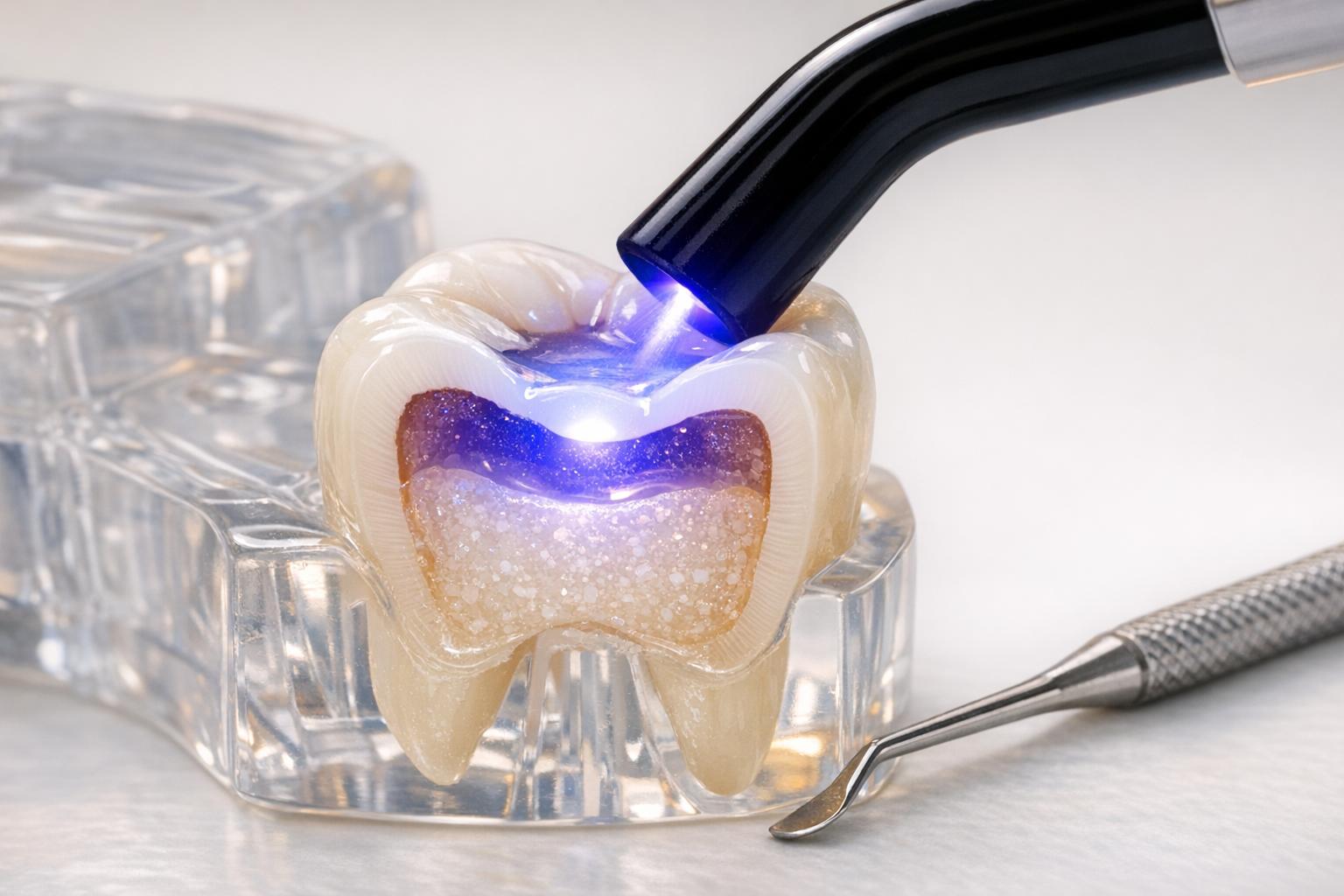
Polymer-based dental restoratives are materials used in dental treatments to repair and restore teeth. These materials blend an organic resin matrix, inorganic fillers, and silane coupling agents to create durable, aesthetically pleasing restorations. Since their introduction over 60 years ago, significant advancements have been made in resin formulations, filler technologies, and curing systems, making them a preferred choice for many dental applications.
Key points include:
- Composition: Made of resin matrices (e.g., Bis-GMA), fillers (e.g., silica, glass), and silane agents for bonding.
- Types: Conventional hybrids, flowable composites, nanofills, bulk-fills, and self-adhesive materials.
- Advantages: Natural appearance, mercury-free, and preservation of tooth structure.
- Challenges: Shrinkage stress during curing, secondary caries, and fractures.
- Recent Innovations: Low-shrinkage monomers, bulk-fill systems, and self-adhesive composites.
These materials are widely used for both anterior and posterior teeth, offering durability, aesthetics, and versatility. Proper techniques, like incremental layering and moisture control, are crucial for achieving long-lasting results.
Composite Resins: Composition and Classifications
What Polymer-Based Dental Restoratives Are Made Of
Polymer-Based Dental Restoratives: Monomer Properties Comparison
Polymer-based dental restoratives are made up of three key components: an organic resin matrix, inorganic filler particles, and silane coupling agents [4][7]. Each plays a crucial role in ensuring the material performs well in the demanding environment of the mouth.
Organic Matrix and Monomers
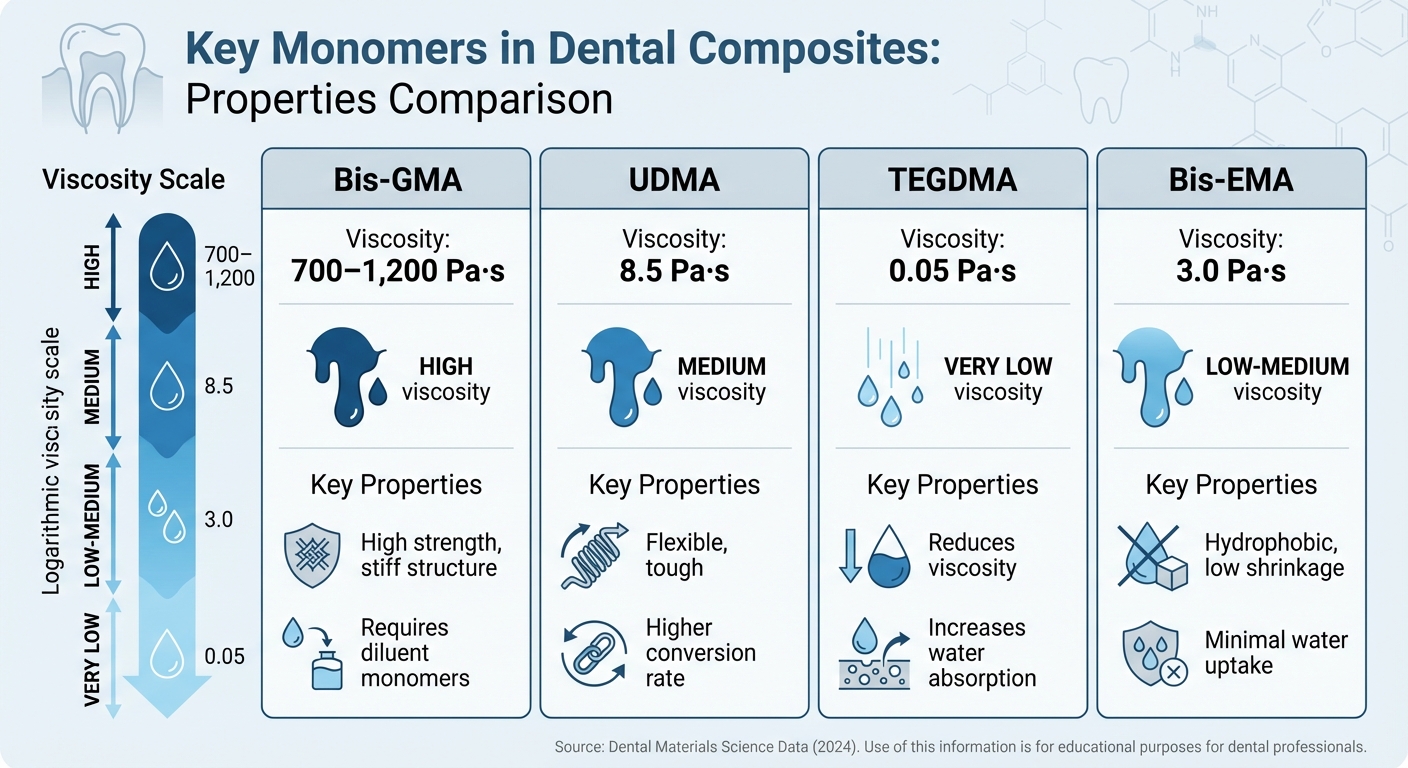
The organic matrix serves as the binding phase of the composite. Typically, it consists of high-molecular-weight monomers like Bis-GMA (Bisphenol A-glycidyl methacrylate), which helps limit polymerisation shrinkage to around 5.2%, compared to the 21% seen with pure methacrylate monomers [9]. However, Bis-GMA’s high viscosity (700–1,200 Pa·s) makes it necessary to mix it with lower-viscosity diluent monomers, such as TEGDMA (Triethylene glycol dimethacrylate, 0.05 Pa·s). This combination allows for easier handling and higher filler loading [9].
Other commonly used monomers include UDMA (Urethane dimethacrylate), valued for its flexibility and toughness, and Bis-EMA (Ethoxylated bisphenol-A dimethacrylate), which is hydrophobic and offers low water absorption with minimal shrinkage, avoiding some of the downsides of TEGDMA [9][2]. Together, these monomers create a balance of viscosity, strength, and usability, supporting the high filler content required for effective restoratives.
| Monomer | Viscosity (Pa·s) | Key Properties |
|---|---|---|
| Bis-GMA | 700–1,200 | High strength, stiff; needs diluents [9] |
| UDMA | 8.5 | Flexible, tough, higher conversion rate [9] |
| TEGDMA | 0.05 | Reduces viscosity but increases water absorption [9] |
| Bis-EMA | 3.0 | Hydrophobic, low shrinkage, minimal water uptake [9] |
Filler Particles and Silane Couplers
The bulk of the composite is made up of inorganic fillers like silica, quartz, glass, or ceramics. In microhybrid composites, the filler content can reach 60–70% by volume (or 77–84% by weight), which improves properties like compressive strength, radiopacity, and hardness while also reducing shrinkage [7][4]. Nanofill composites, on the other hand, use ultra-small particles (5–100 nanometres) that enhance translucency and polish retention, as their size is smaller than the wavelengths of visible light (400–800 nm) [4][7].
To ensure the fillers bond effectively with the resin matrix, silane coupling agents are used – most commonly γ-methacryloxypropyltrimethoxysilane (γ-MPTS) [9][10]. These agents act as a chemical bridge between the hydrophilic surface of the fillers and the hydrophobic resin. As described in Restorative Materials – Composites and Polymers [7]:
"The coupling agent plays a critical role in the composite… It forms an interfacial bridge that strongly binds the filler to the resin matrix and enhances the mechanical properties of the composite and minimises the plucking of the fillers from the matrix during clinical wear."
Without these agents, the fillers would fail to reinforce the composite effectively, weakening stress distribution across the material [10].
Polymerisation Systems
Modern composites rely on light-activated polymerisation systems that use photo-initiators like Camphorquinone (CQ), which absorbs blue light at wavelengths of 465–470 nanometres [7][9]. When exposed to curing light, these initiators create free radicals that trigger chain-growth polymerisation [8].
During the curing process, the material undergoes vitrification, transitioning into a glass-like state. This change dramatically increases its stiffness – by three to four orders of magnitude within seconds [8]. However, this phase also generates most of the shrinkage stress. Clinically, monomer-to-polymer conversion rates often stay below 80%, and in some cases, as low as 40%, leaving residual unreacted monomers [5].
To address these challenges, newer bulk-fill materials have been developed. These materials incorporate advanced initiators like Ivocerin and polymerisation modulators, allowing for curing depths of 4 to 10 millimetres in a single step while reducing sensitivity to technique [2][6].
Types of Polymer-Based Dental Restoratives
The development of polymer-based dental restoratives has come a long way since the early days of macrofill composites, which used large particles (20–30 µm). These early materials lacked durability and translucency, wearing down quickly over time [7]. Modern composites, however, are classified based on factors like filler particle size, placement technique, and bonding mechanism. Each type is tailored to meet specific clinical requirements, making them versatile tools in restorative dentistry.
Conventional and Hybrid Composites
Conventional hybrid composites combine fine particles (2–4 µm) with microfine silica (0.04–0.2 µm), resulting in high filler content. This composition provides excellent wear resistance and mechanical strength, making these composites ideal for high-stress areas like posterior restorations. However, as these composites wear, the larger filler particles can be dislodged, leading to a loss of surface polish over time [7].
Flowable composites are designed with a lower filler content (42–62% by volume), which enhances their adaptability and allows for easy syringe delivery. This makes them particularly useful for small cervical lesions or as liners. On the other hand, packable composites boast a much higher filler loading – up to 80% by volume. Their low shrinkage and sculptable consistency make them well-suited for large posterior restorations [7].
Nanofill and Bulk-Fill Composites
Nanofill composites use ultra-small particles within the 1–100 nm range [7]. This advanced formulation combines the strength of microhybrid composites with the smooth surface finish of microfills. The result is a material that offers exceptional polish retention and high translucency, making it an excellent choice for anterior restorations. At the same time, nanofill composites are durable enough to handle posterior applications.
Bulk-fill composites simplify the restoration process by allowing thicker, single-step placements. Unlike traditional composites, which must be layered in 2 mm increments to ensure proper curing and minimise polymerisation stress [11], bulk-fill materials can be applied in increments ranging from 4 to 10 mm [6]. This is achieved through the use of high-efficiency initiators, such as Ivocerin (a germanium-based photoinitiator found in materials like Tetric EvoCeram [2]), and specialised polymerisation modulators. Bulk-fill composites typically have a filler loading of 76% to 77% by weight (53% to 54% by volume). Some formulations also incorporate specialised monomers to reduce shrinkage rates to as low as 2.2% [11].
Self-Adhesive Composites
The evolution of composites has also led to materials that simplify the bonding process. Self-adhesive composites eliminate the need for a separate adhesive step by using acidic monomers, such as glycerol phosphate dimethacrylate. These monomers allow the composite to etch and chemically bond directly to the tooth structure [2]. Available primarily in flowable formulations, self-adhesive composites are commonly used for small restorations, base/liners, or paediatric applications [2][7]. Examples include Vertise Flow and Dyad Flow from Kerr Corporation [2].
Despite their convenience, self-adhesive composites generally offer lower bond strength compared to traditional etch-and-rinse or self-etch adhesive systems [2]. As noted:
"The bond strength values of resin-based self-adhesive cements and restorative flowable composites are not as high as those achieved with separate adhesives and composite restoratives to tooth structure."
To enhance results, many clinicians still use phosphoric acid etching before applying self-adhesive composites, even though this partially negates the simplicity these materials are designed to offer [2].
Key Properties of Polymer-Based Restoratives
The performance of polymer-based restoratives is shaped by their formulation, with clinical outcomes relying on strength, curing behaviour, and aesthetic durability. These factors collectively determine their success in real-world applications.
Strength and Abrasion Resistance
Failures in restoratives often stem from secondary caries or fractures [3][5]. The material’s fracture toughness directly relates to its risk of breaking, while flexural strength indicates its ability to withstand wear [5]. The monomer choice plays a pivotal role here. For instance, BisGMA is a popular option due to its rigid structure and efficient crosslinking during polymerisation, which results in excellent mechanical strength [5].
The filler content is another critical factor in determining durability. Modern composites typically include 60% to 87% filler by weight, which enhances stiffness, hardness, and wear resistance [7][8]. Nanofilled composites, in particular, maintain their polish better over time [7]. Moreover, nanohybrid resin-based composites are gentler on opposing natural enamel compared to harder materials like lithium silicate or zirconia, reducing the risk of excessive wear [3].
Polymerisation Shrinkage and Stress
One of the ongoing challenges in restorative dentistry is polymerisation shrinkage – the reduction in volume as monomers transform into a solid polymer. This shrinkage can range from 21% in pure methacrylate monomers to as low as 5.2% in modern BisGMA-based resins, with some advanced formulations achieving rates as low as 2.2% [9][11].
The real issue, however, lies not in the shrinkage itself but in the stresses it generates during curing. Stephen J. Bonsor from the University of Edinburgh explains:
"Importantly, it is not the polymerisation shrinkage which is the problem but the stresses which are generated as a result." [11]
These stresses can lead to problems like microleakage, secondary caries, enamel cracking, cuspal deflection, and debonding [5][11]. The configuration factor (C-factor) – the ratio of bonded to unbonded surfaces – plays a significant role in stress development. For example, Class I restorations, which have a high C-factor, experience greater stress due to fewer unbonded surfaces available to absorb it [11]. Additionally, in clinical settings, the conversion of monomers to polymers rarely exceeds 80%, which can further impact material performance [5].
Aesthetics and Clinical Longevity
Aesthetic outcomes for polymer-based restoratives depend on how well they mimic the transparency, opacity, and colour of natural teeth [12]. However, issues like surface roughness or the appearance of white lines or halos – often caused by marginal micro-fractures during finishing or high polymerisation stress – can affect their visual appeal [14]. Despite these challenges, clinical surveys consistently show that patients find composites more aesthetically pleasing than amalgam [13].
The success of aesthetic results is tied to both the material’s properties and the techniques used during application. Data on clinical longevity reveal that composite resins have an annual failure rate of 1% to 4%, with around 12% failing after eight years [13]. Nevertheless, these restorations maintain a survival rate of approximately 75% after 15 years [13]. On average, composite restorations last about 10 years, though their lifespan heavily depends on factors like the operator’s skill, proper moisture control, effective light-curing, and careful layering to minimise shrinkage [2][13][14].
sbb-itb-2be92ed
Recent Developments in Polymer-Based Dental Restoratives
The challenges of polymerisation shrinkage and stress have driven innovations in polymer chemistry, aiming to tackle the clinical problems caused by curing-induced stress. Rather than just focusing on reducing volumetric shrinkage, researchers are now prioritising ways to manage the stresses that arise during the curing process [2][1]. Two key areas of progress include low-shrinkage monomers and advancements in bulk-fill and self-adhesive formulations.
Low-Shrinkage Monomers
To address shrinkage-related issues, several advanced monomer systems have been developed. One example is silorane-based resins (e.g., Filtek LS), which combine oxirane and siloxane molecules. These resins polymerise through a ring-opening mechanism, significantly reducing volumetric shrinkage [2][1].
Another approach uses high molecular weight monomers, such as those found in products like Venus Diamond, N’Durance, and Kalore. These monomers reduce the concentration of reactive groups per unit volume, which helps minimise shrinkage [2][1].
Addition-Fragmentation Chain Transfer (AFCT) technology is another innovation. By incorporating allyl disulfide groups into the polymer network, this method allows bonds to break and reform during polymerisation, cutting stress by up to 30% without compromising the material’s crosslink density [2][1]. Similarly, thiourethane oligomers have been shown to reduce polymerisation stress by up to 50%, while also doubling the material’s fracture toughness [2].
Improvements in Bulk-Fill and Self-Adhesive Materials
Advancements in bulk-fill and self-adhesive composites have also transformed dental restorative practices. Bulk-fill composites now allow for placement in layers ranging from 4–10 mm, a significant improvement over the traditional 2 mm limit [6]. This has been made possible by enhanced photoinitiators like Ivocerin, a germanium-based initiator with a higher quantum yield than the commonly used camphorquinone. This ensures proper polymerisation even at depths of 4–5 mm [2][1]. Additionally, modern bulk-fill materials optimise the refractive index match between fillers and resin, ensuring consistent curing throughout the material [1].
On the other hand, self-adhesive composites – such as Vertise Flow – have simplified clinical workflows by combining the steps of etching, priming, and bonding into one. However, these materials often show lower bond strengths compared to traditional multi-step adhesive systems. Many clinicians find that using conventional phosphoric acid etching beforehand improves outcomes [2].
While laboratory tests for "low-shrink" materials show promise, long-term human trials have yet to confirm significant improvements in clinical longevity or reductions in secondary caries rates when compared to conventional composites [2][1].
Clinical Applications and Techniques
Building on the properties and advancements of polymer-based materials, their clinical use requires careful consideration of the appropriate techniques and materials. These restoratives are widely used to rebuild tooth structure and improve aesthetics, but the choice of material depends on factors like the size and location of the restoration, the forces it will need to withstand, and the patient’s risk of developing caries.
When to Use Polymer-Based Restoratives
For anterior teeth, microfilled or nanocomposites are commonly selected for Class 3–5 restorations, diastema closures, and labial veneers. These materials are designed to provide a natural appearance and a high polish, prioritising aesthetics over strength in these cases [15].
In posterior teeth, where restorations face biting forces as high as 600 N [15], hybrid or nanocomposites are often chosen due to their versatility. These "universal" materials are suitable for Class 1, 2, and 6 (MOD) restorations. For larger restorations that need to handle significant stress, packable composites are preferred, while flowable composites are commonly used for cervical lesions, paediatric restorations, or as liners in deep cavities [7][17].
The Academy of Operative Dentistry European Section has endorsed adhesively bonded resin composites with appropriate formulations as the preferred choice for direct minimal intervention in posterior teeth [19].
These clinical guidelines help determine the best placement techniques for achieving durable and effective restorations.
Placement Techniques
A key challenge in composite placement is managing polymerisation shrinkage stress. The incremental layering technique is widely regarded as the standard approach. By placing composite in layers no thicker than 2 mm, this method helps control shrinkage stress and ensures adequate light penetration for proper curing [19][17]. Incremental layering also reduces the configuration (C-) factor, which is the ratio of bonded to unbonded surfaces, by limiting the amount of material shrinking at any given time [8][16]. While this approach can be time-consuming, it significantly lowers the risk of voids and incomplete curing.
Bulk-fill techniques offer a more time-efficient alternative, allowing placement in single increments ranging from 4–10 mm. However, 4 mm is generally considered the safe limit for most curing units [18][6][17]. These materials incorporate advanced photoinitiators and stress-relieving chemistries to achieve deeper curing and minimise shrinkage stress, even when curing unit power is less than ideal [17].
To ensure a strong adhesive bond and long-term success, contamination from saliva or blood must be avoided. Using a rubber dam is critical for maintaining a clean working field [18][19]. For Class II restorations, anatomically preformed sectional metal matrices with wedges and ring systems are recommended. These tools create tighter proximal contacts and more natural contours compared to circular or transparent matrices [18][19]. Additionally, enamel should be etched with phosphoric acid to prevent marginal discolouration, while dentine should remain moist – but not overly wet – to prevent collagen collapse [18][19][16].
Long-term studies highlight the durability of composite restorations, with survival rates of 91.7% at 6 years, 81.6% at 12 years, and 71.4% at 29 years [17]. However, composite restorations are associated with a higher risk of secondary caries compared to amalgam [17]. This underscores the importance of precise techniques and thoughtful material selection to optimise clinical outcomes.
Conclusion
Polymer-based dental restoratives have transformed the way dental restorations are approached, offering a blend of aesthetic appeal and functional durability. These materials enable clinicians to preserve more of the natural tooth structure, making them a popular choice for both anterior and posterior applications. Their widespread use highlights their versatility and acceptance among patients.
Over time, these materials have seen advancements in areas like mechanical strength, wear resistance, and ease of use. Modern formulations strike a balance between durability for high-stress posterior restorations and the polishability required for anterior aesthetics. These improvements help clinicians tailor treatments to meet the specific needs of each case.
The success of these restorations, however, hinges on selecting the right material and employing proper techniques. Whether it’s nanofills for anterior restorations, hybrids for a range of applications, or bulk-fill systems for efficient posterior work, the choice depends on factors such as cavity location, bite forces, and individual patient risk. Clinical studies suggest these restorations typically last around 10 years, though actual outcomes can vary depending on care and circumstances [2]. Careful material selection and precise techniques are key to achieving long-term success.
For those seeking expert advice on polymer-based restorations or comprehensive dental care, Complete Smiles Bella Vista provides personalised, evidence-based treatment planning to ensure optimal results.
FAQs
What advantages do polymer-based dental restoratives have over traditional materials?
Polymer-based dental restoratives come with a range of benefits that set them apart from traditional options. One standout feature is their ability to closely mimic the natural look of teeth, offering better aesthetics for a seamless appearance. Plus, they exhibit lower polymerisation shrinkage, which helps minimise the chances of gaps or fractures forming in the restoration.
These materials are also known for their strong mechanical properties, making them durable enough for various dental applications. On top of that, some polymer-based restoratives are formulated with antimicrobial or remineralising components, which can help curb bacterial growth and even strengthen the tooth structure over time.
How do polymer-based dental materials minimise shrinkage stress during curing?
Polymer-based dental materials are engineered to address shrinkage stress during the curing process through a combination of advanced techniques. These strategies involve the use of alternative monomers and photoinitiators, adjusting filler content, and refining curing methods to limit both volumetric shrinkage and the stress it can create.
By striking the right balance between these elements, contemporary polymer-based restoratives not only improve durability but also provide a more precise fit, enhancing the performance and lifespan of dental restorations.
What recent innovations have improved the use of bulk-fill composites in dental restorations?
Recent progress in bulk-fill composites has made them much easier to work with and more effective for dental restorations. These materials can now be applied in larger increments – typically between 4 and 10 mm – helping to speed up procedures while lowering the chances of application errors. This is especially useful for handling more complex dental cases.
Today’s bulk-fill composites also boast improved physical and aesthetic qualities. They offer better wear resistance and provide a more natural-looking finish. On top of that, advancements in bioactivity and self-healing properties enhance their durability and performance over time, making them a dependable option for both patients and dental practitioners.
Related Blog Posts
- Wear Resistance of Polymer-Based Restoratives
- Advances in Dental Adhesives: What to Know
- 5 Features of Next-Generation Composite Resins
- Bond Strength of CAD/CAM Materials with Adhesives
Important Notice: Any surgical or invasive procedure carries risks. Before proceeding, you should seek a second opinion from an appropriately qualified health practitioner.
Individual results may vary. The information provided in this article is for educational purposes only and does not constitute medical advice.
Checkout Related Blogs




Get in touch with us
For more information, call us now to start feeling better. Or fill the form below to make appointment
The Latest News from Complete Smiles
How to Clean Clear Plastic Retainers
Checklist for Choosing Wearable Dental Devices
Checklist for Choosing Cloud AI Platforms in Dentistry

Complete Smiles Bella VistaAccepts All Major Health Funds, Including





