





Oral Cancer Risk: Heavy vs. Light Smokers
Smoking significantly increases your risk of oral cancer, but the amount you smoke plays a big role. Heavy smokers face a much higher risk compared to light smokers, but even light smoking doubles the chances of developing oral cancer compared to non-smokers. The risk compounds further when smoking is combined with alcohol use.
Key points to know:
- Heavy smokers (20+ cigarettes/day): Up to 5x higher oral cancer risk.
- Light smokers (1–5 cigarettes/day): 2x higher risk compared to non-smokers.
- Tobacco and alcohol together increase the risk by 30 times.
- Quitting smoking reduces oral cancer risks by 50% within 5 years and aligns with non-smokers’ risk after 20 years.
Early detection through regular dental check-ups and quitting smoking entirely are the most effective ways to reduce risk and improve overall oral health.
What Counts as Heavy or Light Smoking
Determining whether someone is a light or heavy smoker isn’t a matter of personal opinion – it’s based on measurable criteria that help assess cancer risks. These classifications provide a clear framework for understanding the dangers associated with smoking and can guide decisions about quitting. They also set the stage for comparing oral cancer risks in the next section.
How Smoking Levels Are Measured
Smoking exposure is typically evaluated using three key metrics:
- Cigarettes per day (CPD): The number of cigarettes smoked daily [7][11].
- Pack-years: A calculation based on the number of packs smoked per day multiplied by the total years of smoking [11].
- Duration: The total years a person has smoked [9].
These measures allow researchers and health professionals to quantify the link between smoking intensity and oral cancer risk, supporting the dose-response relationship mentioned earlier.
Heavy vs. Light Smoking Thresholds
In Australia, light smoking is defined as smoking 1–5 cigarettes per day, though some studies extend this range to include up to 10 cigarettes daily [3].
On the other hand, heavy smoking is commonly defined as more than 35 cigarettes per day in major Australian studies, although some research sets the threshold at 25 or more cigarettes daily. Moderate smoking typically falls in between, with smokers consuming around 15–24 cigarettes per day [3][11].
There’s also a separate category for occasional or social smokers – those who don’t smoke daily but may smoke during social events. Studies show that occasional smokers average about 50 cigarettes per month, spread over approximately 15 smoking days [8].
The risks associated with smoking climb steeply with intensity. Light smokers (1–5 cigarettes daily) are 9.22 times more likely to develop lung cancer compared to non-smokers, while heavy smokers (more than 35 cigarettes daily) face a 38.6-fold higher risk [3]. For oral and pharyngeal cancers, the risk nearly quintuples at 20 cigarettes per day [7].
"Some smokers are at the point where they are smoking a few cigarettes a day and don’t realise the cancer risks they are running. Cigarette smoke is directly coating their mouth, throat, oesophagus and lungs with 7000 chemicals, including 69 carcinogens, and the increase in cancer risk even with light smoking is dramatic."
– Dr Marianne Weber, Senior Research Fellow, The Daffodil Centre [10]
sbb-itb-2be92ed
Oral Cancer Risk: Heavy vs. Light Smokers
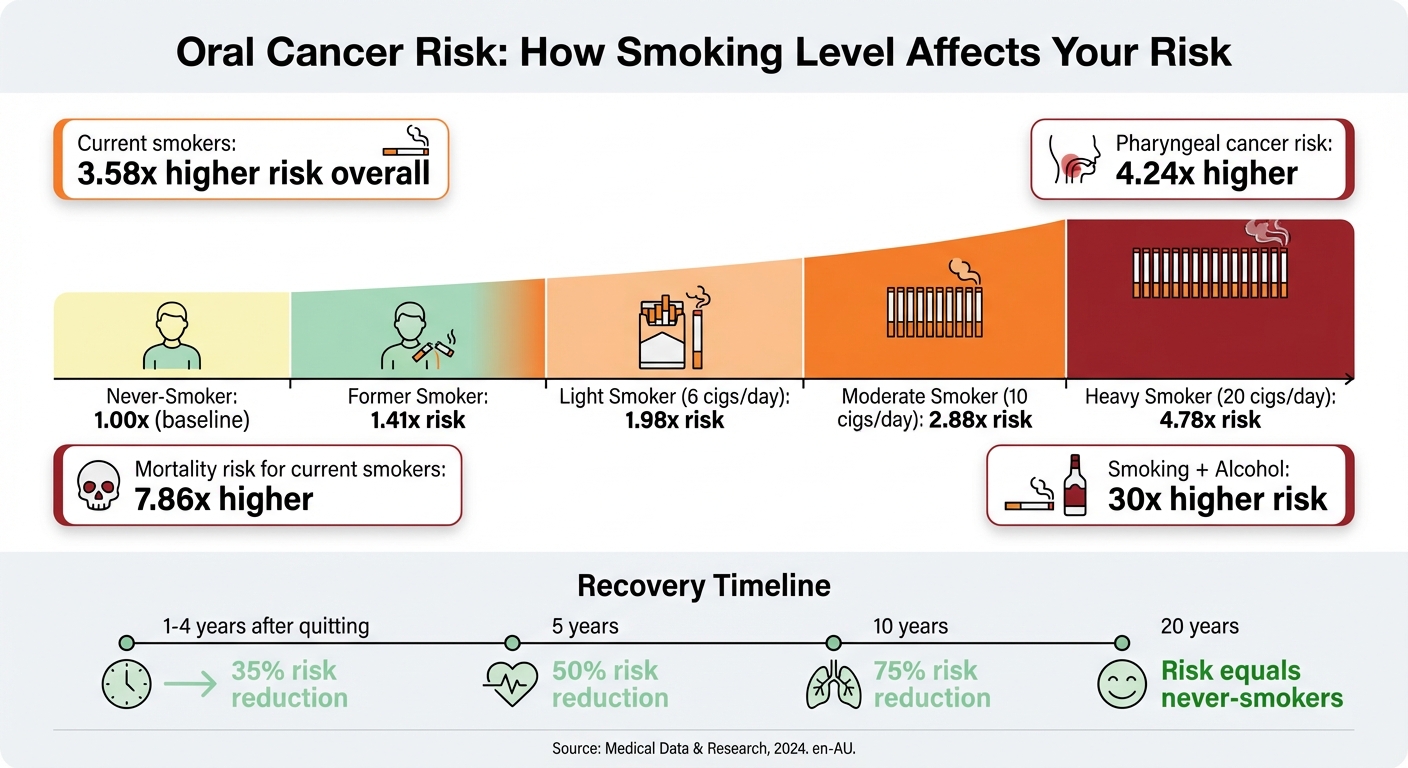
Oral Cancer Risk by Smoking Level: Heavy vs Light Smokers Comparison
Risk Comparison: Numbers and Statistics
Smokers face a heightened risk of developing oral and pharyngeal cancer compared to those who have never smoked. Current smokers have a 3.58 times higher risk of these cancers overall. When broken down further, the risk of oral cavity cancer is 3.39 times higher, while the risk of pharyngeal cancer is even greater at 4.24 times higher compared to never-smokers [7].
The mortality statistics are even more alarming. For current smokers, the risk of dying from oro-pharyngeal cancers is 7.86 times higher than for non-smokers. Even former smokers remain at risk, with a 1.61 times higher chance of death compared to those who have never smoked [11][7].
| Smoking Status | Oral Cavity Risk | Pharyngeal Risk | Mortality Risk |
|---|---|---|---|
| Never-Smoker | 1.00 (baseline) | 1.00 (baseline) | 1.00 (baseline) |
| Light Smoker (6 cigs/day) | 1.98 [7] | 1.98 [7] | Elevated [11] |
| Moderate Smoker (10 cigs/day) | 2.88 [7] | 2.88 [7] | Substantially increased [11] |
| Heavy Smoker (20 cigs/day) | 4.78 [7] | 4.78 [7] | High risk [11] |
| Former Smoker | 1.41 [7] | 1.94 [7] | Elevated [11] |
These figures highlight the escalating dangers tied to smoking intensity and provide a clear picture of how each level of smoking impacts oral cancer risks.
How Risk Increases with Smoking Amount
The relationship between smoking and oral cancer risk is not a simple straight line. Instead, the risk grows disproportionately as smoking levels increase. For instance, smoking 5 to 20 cigarettes per day results in a sharp jump in risk, moving from approximately double to nearly five times the risk faced by non-smokers [7].
The duration of smoking adds another layer of danger. Smoking for just seven years doubles the risk of oral cancer (relative risk of 2.01) [7]. For heavy smokers who continue this habit over decades, the risks skyrocket. This pattern reinforces the importance of quitting altogether, as reducing cigarette consumption alone does not eliminate the danger.
Combined Risk Factors
Other factors can amplify the risks posed by smoking. For instance, combining smoking with heavy alcohol consumption increases the risk of oral cancer by about 30 times compared to avoiding both habits [5]. Poor oral hygiene further complicates matters by allowing tobacco carcinogens to linger in the mouth, intensifying the risk [5].
Geographical differences also play a role. In Oceania, for example, the relative risk for smokers reaches 6.44, significantly higher than the global average [7].
Human papillomavirus (HPV) status is another critical factor. Among individuals without HPV infection, smoking is linked to a relative risk of 3.28. For those who are HPV-positive, the relative risk is lower at 1.35, as HPV-related mechanisms take precedence. However, smoking still negatively impacts outcomes for both groups [7].
Benefits of Quitting for Heavy and Light Smokers
How Risk Decreases After Quitting
Quitting smoking has an almost immediate effect on reducing the risk of oral cancer, and the benefits grow over time. While heavy smokers start with a higher risk compared to light smokers, both groups experience substantial improvements when they quit. The reduction in risk unfolds progressively after quitting [6].
"The risk of oral cancer starts to decrease within the first five years of quitting. If someone who smoked has quit for 20 or more years, their risk is the same as someone who has never smoked." – Canada.ca [12]
Here’s how the timeline looks: within 1–4 years of quitting, the risk of oral cancer drops by about 35%. After 5 years, it’s cut in half, and after 10 years, the risk is reduced by another 50%. By the 20-year mark, the risk aligns closely with that of someone who has never smoked [13][14][15][16][17][18].
Interestingly, the total time someone spends smoking has a bigger impact on their risk than the number of cigarettes smoked daily. This means that even heavy smokers can see significant benefits by quitting early, avoiding the steep rise in risk that typically occurs after 7–10 years of smoking [6]. To put it into perspective, former smokers have a relative risk of 1.61 for oral and pharyngeal cancer, compared to 3.58 for current smokers. That’s roughly a 55% drop in risk [6].
These changes don’t just reduce cancer risk – they also bring about noticeable improvements in overall oral health.
Long-Term Health Improvements
Quitting smoking offers far-reaching benefits for oral health beyond just lowering cancer risk. For those with pre-cancerous lesions, stopping smoking can lead to a reduction or even complete regression of these abnormalities [12].
If oral cancer is diagnosed, quitting immediately improves treatment outcomes. It helps with better wound healing, reduces side effects from treatment, lowers the risk of infections, and significantly decreases the chances of developing a second primary cancer [12][5].
The benefits extend to your teeth and gums as well. Quitting helps prevent further bone loss, reduces the risk of losing teeth, and improves gum health. It also leads to fresher breath and lowers the likelihood of developing gum disease [12][14][16]. Importantly, research shows that quitting entirely is much more effective at reducing disease risks than simply cutting back on smoking [3].
"Quitting is the most important thing someone who smokes can do to improve their health." – Canada.ca [12]
Prevention and Professional Dental Care
Why Regular Dental Check-Ups Matter
Dentists play a key role in spotting early signs of oral cancer, often before noticeable symptoms appear. During routine check-ups, they look for warning signs like red or white patches (known as leukoplakia), lumps in the mouth or neck, or persistent sores that don’t heal properly. Catching these signs early is vital, as oral cancer has a five-year survival rate of only 50%. Early treatment, however, can greatly improve outcomes [2][4].
In 2023, over 700 Australians were diagnosed with oral cancer [19]. Regular screenings are essential for everyone, whether you’re a heavy or light smoker. Dentists use your smoking history to perform targeted risk assessments. Even if you wear dentures, annual check-ups remain crucial to monitor the health of your soft tissues [2].
"Oral and oropharyngeal cancers can be treated if diagnosed at an early stage, so it’s important to have regular check-ups." – Oral Health Victoria [4]
In addition to professional care, self-examinations are important. Watch for persistent sores, ulcers, or unusual patches, and consult a dentist if anything doesn’t heal within two weeks [4]. Dentists can also help reduce your risk by advising on tobacco cessation and moderating alcohol consumption – two factors responsible for about 75% of oral cancer cases [1].
For smokers of all levels, regular dental visits are a crucial safeguard against oral cancer. These check-ups not only detect issues early but also connect seamlessly with the broader preventive care services offered by dental professionals across Australia.
Dental Care Options in Australia
Beyond early detection, Australian dental clinics provide a range of preventive and restorative services tailored to individual needs. For example, Complete Smiles Bella Vista, led by Dr. James Hanna, offers professional screenings alongside general dental care. Their focus on preventive services helps patients maintain good oral health through regular check-ups and personalised treatment plans.
Whether you’re a smoker or not, building a relationship with a dentist who understands your specific risk factors is a smart step toward protecting your oral health. For additional support, Australians can also reach out to Quitline at 13 78 48 for help with smoking cessation [3][4].
Conclusion
Heavy smokers, particularly those consuming over 40 cigarettes daily, are at a 6-fold higher risk of developing oral cancer compared to non-smokers[16]. The longer someone smokes, the greater the risk, as the duration of smoking significantly impacts cancer development[9]. This highlights the strong link between smoking intensity and oral cancer risk.
The good news? Quitting smoking can dramatically lower this risk. Within just five years of quitting, the risk of oral cancer drops by 50%. Over 10 to 15 years, former smokers can approach the same risk level as those who have never smoked[16]. Dr Marianne Weber from The Daffodil Centre puts it plainly:
"These results demonstrate that quitting smoking is much more effective at reducing disease than ‘cutting down’ the number of cigarettes smoked"[3].
Simply smoking less doesn’t provide the same level of protection as quitting entirely.
Beyond lowering cancer risk, quitting also supports early detection efforts. Regular oral cancer screenings during dental check-ups play a crucial role in spotting potential issues early. Whether you’re a heavy smoker planning to quit or a light smoker, maintaining regular dental visits and seeking support from services like Quitline (13 78 48) can make a real difference in protecting your oral health.
FAQs
Is vaping safer than smoking for oral cancer risk?
Vaping is often viewed as posing a lower risk of oral cancer compared to traditional smoking, primarily because it usually involves fewer carcinogens. That said, vaping still exposes the mouth’s tissues to chemicals that could be harmful, and the long-term consequences of this exposure are not yet fully understood. While it might be a less harmful alternative to smoking, the best way to minimise the risk of oral cancer is to quit using nicotine and tobacco altogether.
Does cutting down cigarettes reduce oral cancer risk, or do I need to quit?
Reducing cigarette use can help lower the risk of oral cancer, but stopping altogether is much more effective. Even smoking occasionally or in small amounts still increases your risk. On the other hand, quitting completely leads to a significant reduction in risk over time. For the sake of your long-term oral health, giving up smoking entirely is the best option.
What early signs of oral cancer should I look for?
Early indicators of oral cancer can include a persistent sore on the lips, gums, or inside the mouth that bleeds easily and doesn’t heal. Other warning signs might be a lump or thickened area in the cheek, white or red patches in the mouth, unexplained numbness or loss of sensation, and trouble chewing or swallowing. If you experience any of these symptoms, it’s important to see a healthcare professional without delay.
Related Blog Posts
- When Should Smokers Get Oral Cancer Screening?
- Early Signs of Smoking-Related Oral Cancer
- Preventing Oral Cancer: Dentist’s Role in Smoking Cessation
- Smoking vs. Quitting: Oral Cancer Risk Comparison
Important Notice: Any surgical or invasive procedure carries risks. Before proceeding, you should seek a second opinion from an appropriately qualified health practitioner.
Individual results may vary. The information provided in this article is for educational purposes only and does not constitute medical advice.
Checkout Related Blogs




Get in touch with us
For more information, call us now to start feeling better. Or fill the form below to make appointment
The Latest News from Complete Smiles
How to Clean Clear Plastic Retainers
Checklist for Choosing Wearable Dental Devices
Checklist for Choosing Cloud AI Platforms in Dentistry

Complete Smiles Bella VistaAccepts All Major Health Funds, Including





