





When Should Smokers Get Oral Cancer Screening?
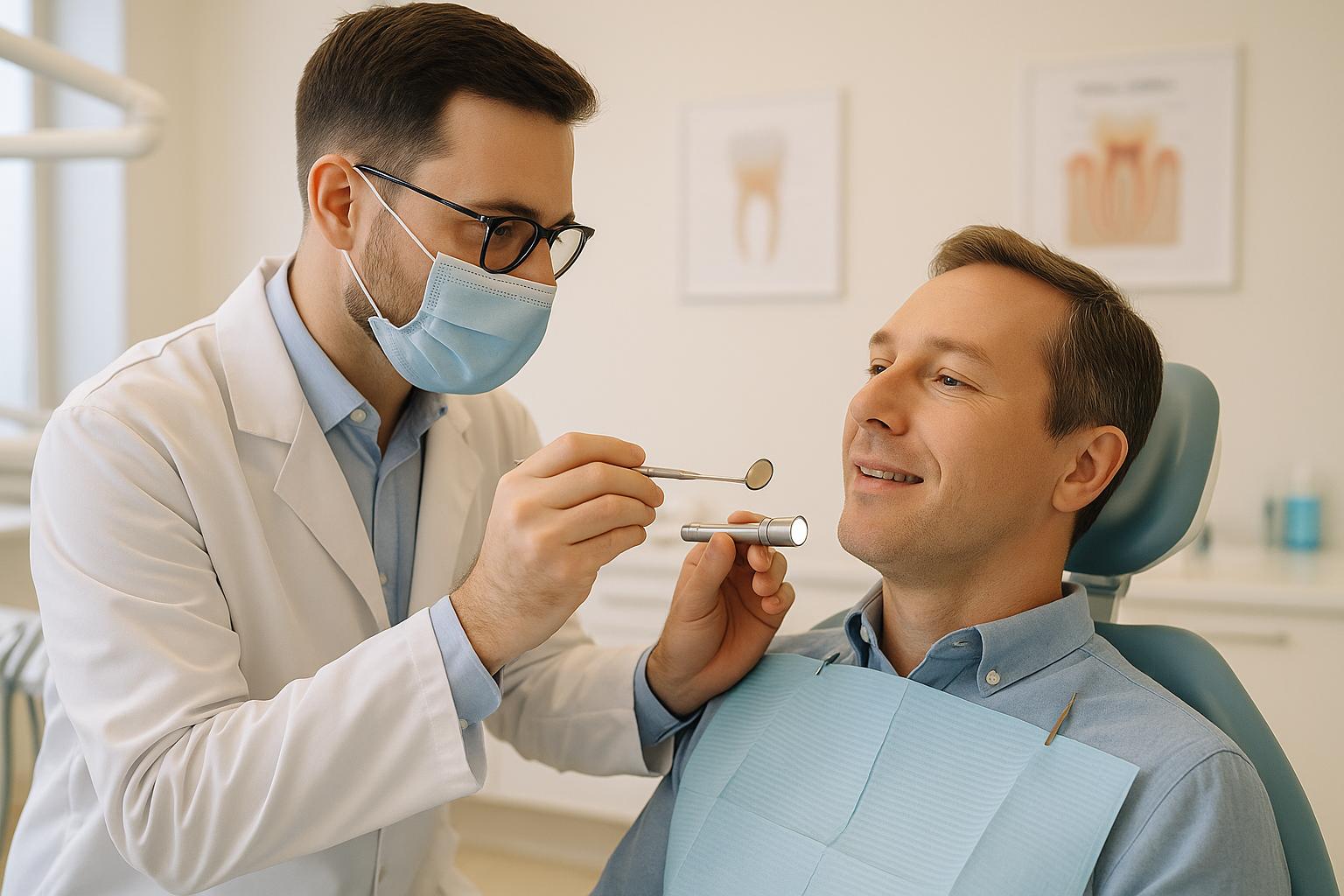
Smokers are at a much higher risk of developing oral cancer, with rates up to 10 times higher than non-smokers. Regular screenings are critical because early detection can lead to survival rates of 80–90%, while late detection drops this to just 50%.
Key Recommendations for Smokers:
- Frequency: High-risk individuals, including smokers, should have oral cancer screenings every 3–6 months.
- Warning Signs: Persistent sores, red or white patches, lumps, or difficulty swallowing should prompt immediate evaluation.
- Self-Checks: Monthly self-exams are encouraged to spot unusual changes early.
- Routine Dental Visits: Regular dental check-ups are essential, as dentists can identify early signs of oral cancer.
The Importance of Oral Cancer Screening (by your Dentist)
How Often Should Smokers Get Oral Cancer Screenings?
The frequency of oral cancer screenings largely depends on an individual’s risk level. Smokers, being at higher risk, require more frequent check-ups to detect potential issues early.
Standard Screening Guidelines
For the general population in Australia, adults over 20 are advised to have oral cancer screenings every three years, while those over 40 should attend annually as part of their regular dental care routine [2]. These guidelines are based on minimal risk factors.
The American Dental Association (ADA) also suggests that adults aged 18 and older undergo oral cancer screenings at least once every three years [7]. While these serve as general recommendations, smokers typically need more frequent evaluations.
Increased Screening for Smokers
Smokers fall into the high-risk category, necessitating more regular screenings compared to non-smokers. High-risk individuals – including smokers, heavy drinkers, and those with a prior history of oral cancer – may benefit from screenings every 3–6 months, accompanied by close monitoring [4].
The importance of early detection cannot be overstated. When oral cancer is identified in its early stages (stages 1 or 2), survival rates range from 70–90% [5][6]. However, if detected later, the five-year survival rate drops significantly to just 58% [7]. Screening frequency within the 3–6 month range may be adjusted based on additional risk factors and a dentist’s clinical judgement.
| Risk Category | Recommended Screening Frequency |
|---|---|
| Moderate-risk individuals (occasional tobacco or alcohol use, family history) | Every 6–12 months, based on the dentist’s advice |
| High-risk individuals (smokers, heavy alcohol use, history of oral cancer) | Every 3–6 months, with careful monitoring |
Other Risk Factors to Consider
Smoking is just one of several factors that can increase the likelihood of developing oral cancer. When combined with heavy alcohol consumption, the risk soars by 75% [5][6].
Age is another critical factor, as the risk of oral cancer rises significantly after 45 years of age [8]. Male smokers face additional challenges, as men are more prone to oral cancer than women, partly due to higher rates of tobacco and alcohol use [11].
Other factors that can influence screening frequency include HPV infection, excessive sun exposure, family history of oral cancer, and poor oral hygiene [8][9]. These risks may necessitate adjustments to the recommended screening intervals.
For individuals with multiple risk factors – such as tobacco use, heavy drinking, or HPV infection – screenings every six months to a year may be advisable [8]. In addition to professional check-ups, smokers should perform monthly self-exams at home. Look out for unusual sores, lumps, bleeding, or changes in chewing or swallowing. If anything unusual is noticed, seek a professional evaluation immediately [10].
Next, we’ll explore what happens during an oral cancer screening to provide you with a complete understanding of the process.
What Happens During an Oral Cancer Screening?
Understanding the screening process can help ease any concerns and make you feel more prepared. The procedure is simple, painless, and often included as part of your regular dental check-up.
Step-by-Step Process
An oral cancer screening typically involves two main stages: an extra-oral examination and an intra-oral examination.
During the extra-oral examination, your dentist will carefully examine your face and neck for any swellings, skin changes, moles, or asymmetry. They’ll also check for changes in the colour or texture of your lips and feel the lymph nodes in your neck to detect any enlargement or irregularities.
For the intra-oral examination, you’ll need to remove any dentures if you wear them. Your dentist will then inspect the inside of your mouth, including the inner cheeks (labial and buccal mucosa), gum lines, and other surfaces. They’ll gently move your cheeks and tongue to ensure all areas are thoroughly checked. You might be asked to say "Ah" to allow a clear view of your throat, including the oropharynx, uvula, and surrounding areas. Throughout the process, your dentist will also feel these tissues to identify any abnormalities [12].
If anything unusual is found, further diagnostic steps may be necessary.
Additional Tests If Needed
Should your dentist notice anything concerning, they might recommend additional tests. While the standard visual and tactile examination is widely recognised as the most reliable method for detecting oral cancer [12], some clinics use advanced tools like Oral CDx, Vizilite Plus, VELscope, Identafi, Orascoptic DK, or Goccles to support their findings [17]. In some cases, a referral for a biopsy may be made [15]. Other tests – such as lymph node sampling, PET scans, or blood tests – could also be used to determine if the cancer has spread [14].
"With earlier diagnosis, a person’s treatment and prognosis can be enormously improved." – Michael McCullough, Professor of Oral Medicine, University of Melbourne Dental School [16]
This thorough approach is key to catching oral cancer early, which is vital for successful treatment.
What to Expect During the Procedure
Even with additional tests, the standard screening is quick and comfortable. The Mouth Cancer Foundation notes that a head and neck cancer screening takes less than 2 minutes [12], while oral cancer screenings usually last about 5–10 minutes [3]. These screenings are often part of routine dental check-ups [13], and some dentists may use fluorescent lighting to enhance visibility during the process [18].
The entire procedure is painless and non-invasive. Early detection can make a huge difference; identifying oral cancer early can lead to survival rates as high as 90% [15]. If you notice any unusual lumps, persistent lesions, or have trouble swallowing for more than two weeks, it’s important to let your dentist know so they can perform a thorough evaluation [15].
sbb-itb-2be92ed
Warning Signs: When to Seek Immediate Screening
For smokers, spotting the early signs of oral cancer can make a world of difference. Acting quickly when symptoms appear can significantly improve treatment outcomes.
Common Symptoms of Oral Cancer
If you notice any of the following symptoms, it’s important to see a dentist or healthcare provider without delay:
- Mouth ulcers lasting more than three weeks [21]. These are not your typical sores that heal within a couple of weeks.
- Red or white patches inside the mouth [19].
- Lumps in the mouth, on the lip, or in the neck or throat [19].
- Persistent pain, unusual tenderness, or numbness in the mouth, lower lip, or chin [19].
- Difficulty swallowing or speaking, a feeling of something stuck in the throat, or pain/ringing in the ears [19].
- Unexplained weight loss, bleeding in the mouth, or changes in how your teeth fit together when you bite [20].
- Thickened, rough, crusty areas or spots that appear to be wearing away [19].
Dr Kimberly Wooten, a Head & Neck Surgeon at Roswell Park Comprehensive Cancer Center, stresses the importance of paying attention to these signs:
"What I generally recommend is that when a lesion or sore in the mouth doesn’t go away in about two weeks, it needs to be further evaluated." [23]
Smokers are encouraged to perform monthly self-checks to become familiar with how their mouth normally looks and feels. Spotting changes early – like new lumps, bumps, or lesions – should prompt an immediate visit to a healthcare provider [13]. Acting on these symptoms early can make all the difference, as discussed further in the next section.
Why Early Action Matters
Tobacco use is linked to 90% of oral cancer cases [20]. By 2025, it’s estimated that 59,660 Americans will be diagnosed with oral or oropharyngeal cancer, with nearly 9,750 fatalities annually [20]. While these numbers are concerning, there’s hope: more than half of those diagnosed live beyond five years [19], and the five-year survival rate for oral cancer stands at 66.9% [26]. For individuals with oral cavity cancer, about 63% survive at least five years [22].
The key to improving these odds lies in early detection. When oral cancer is caught in its early stages, it’s often localised – meaning it hasn’t spread to lymph nodes or other organs. This leads to better survival rates and fewer complications during treatment [24]. For smokers, whose immune systems are often weakened and healing processes slower, seeking evaluation at the first sign of trouble is even more critical [25].
The Role of Preventive Dental Care in Oral Cancer Detection
Preventive dental care is a key player in identifying oral cancer early, particularly for smokers. Regular dental visits not only help maintain oral health but also improve the chances of catching potential issues before they escalate.
Regular Dental Visits
Routine dental check-ups are vital for keeping tabs on oral health. Dentists can spot early warning signs of oral cancer during these exams, which is critical for timely treatment [28]. Early detection significantly boosts survival rates, with nearly 85% of people diagnosed at an early stage surviving at least five years [27]. Unfortunately, oral cancer screenings aren’t always included in standard dental care, leading to delayed diagnoses [29].
For smokers, these visits are even more crucial. Smoking increases the risk of oral cancer, gum disease, tooth loss, and complications after dental procedures [1]. In Victoria alone, over 746 cases of mouth cancer are diagnosed annually [1], with tobacco users being twice as likely to develop the disease compared to non-smokers [30]. Dentists generally recommend a check-up every six months [31].
Clinics Offering Oral Cancer Screenings
Many dental clinics now include oral cancer screenings as part of their routine services. For instance, Complete Smiles Bella Vista, headed by Dr. James Hanna, incorporates these screenings into their comprehensive preventive care. This approach ensures regular monitoring without requiring separate appointments.
Personalised Screening Plans
Smokers face heightened risks, making tailored screening plans a necessity. The American Dental Association (ADA) suggests that all adults over 18 undergo oral cancer screenings at least once every three years [7]. However, smokers and tobacco users often need more frequent checks. Dentists can help customise a screening schedule based on individual risk factors [7].
"Early detection has a significantly higher survival rate. All told, 85% of people diagnosed with early-stage oral cancer are still alive five years later. But about half of oral cancers aren’t diagnosed until the cancer has spread to nearby tissues or lymph nodes. Diagnosis at this stage is harder to treat, and the overall five-year survival rate drops to 67%. Prevention, screening, and early treatment are crucial to increasing survival rate." – Smile Generation [32]
In addition to professional screenings, dentists often recommend monthly self-checks. Look for persistent ulcers, white or red patches, or swelling that doesn’t improve within 7 to 10 days. If you notice anything unusual, consult your dentist or doctor promptly [1].
Conclusion: Making Oral Cancer Screenings a Priority for Smokers
For smokers, regular oral cancer screenings are more than just a precaution – they’re a necessity. Studies reveal that smokers are six times more likely to develop oral cancers, while those using chewing tobacco face an even steeper risk – 50 times higher [33]. These statistics make a compelling case for the importance of routine screenings.
Catching oral cancer early can make a life-changing difference. When detected in its early stages, survival rates soar to 83%, compared to just 58% when identified later [7]. Considering that around 75% of cancers in the lip, oral cavity, and pharynx are linked to tobacco use [35], regular screenings offer a vital layer of protection.
But screenings alone aren’t enough. Quitting smoking remains the single most impactful way to lower the risk of oral cancer [34]. Pair this with good oral hygiene and consistent dental check-ups, and you’re taking meaningful steps to safeguard your health. It’s also crucial to act quickly if you notice warning signs like persistent sores, red or white patches, trouble swallowing, or unexplained bleeding [34]. These symptoms should never be ignored.
Take charge of your health – schedule your oral cancer screening today.
FAQs
Why do smokers need more frequent oral cancer screenings than non-smokers?
Smokers face a significantly higher risk of developing oral cancer compared to those who don’t smoke. The chemicals in tobacco can harm oral tissues, making them more susceptible to cancerous changes. To put it into perspective, smokers are up to six times more likely to develop oral cancer.
This is why regular screenings are so important. These check-ups can catch early signs of cancer or precancerous changes, often before symptoms become severe. Detecting the disease early not only makes treatment more effective but can also be life-saving. For smokers, making oral cancer screenings a priority is a vital step towards safeguarding their health.
What warning signs of oral cancer should smokers be aware of between regular screenings?
Smokers should be alert to any persistent changes in their mouth or throat. Here are some common warning signs to keep an eye on:
- Sores in the mouth that don’t heal within two weeks
- Unusual lumps or thickened areas in the mouth, throat, or on the tongue
- Red or white patches on the gums, tongue, or inside the mouth
- Ongoing mouth pain or discomfort that doesn’t subside
- Trouble swallowing or chewing, or a sensation of something stuck in the throat
- Lumps in the neck or throat region
If you spot any of these symptoms, it’s crucial to see a dental professional as soon as possible. While regular screenings play a key role in early detection, staying alert between visits can help catch potential problems early.
How can smokers check for signs of oral cancer at home?
Smokers can take proactive steps to monitor their oral health by performing regular self-checks for possible signs of oral cancer. Using a mirror and good lighting, examine your lips, gums, tongue, cheeks, and the floor of your mouth. Pay close attention to any unusual changes like sores, lumps, discolouration, or ulcers that don’t seem to heal.
It’s also helpful to gently feel these areas with clean fingers to identify any unexpected textures or bumps. Making this a monthly routine can help you stay aware of any changes. If you spot anything that raises concern, don’t delay – reach out to a dental professional for a thorough evaluation. Early action can make a big difference.
Related Blog Posts
- Smoking and Dental Implants: Impact on Healing
- How Wearables Help Prevent Dental Issues
- AI Research in Oral Disease Detection: Key Findings
- Salivary Tests for Early Detection of Gum Disease
Important Notice: Any surgical or invasive procedure carries risks. Before proceeding, you should seek a second opinion from an appropriately qualified health practitioner.
Individual results may vary. The information provided in this article is for educational purposes only and does not constitute medical advice.
Checkout Related Blogs




Get in touch with us
For more information, call us now to start feeling better. Or fill the form below to make appointment
The Latest News from Complete Smiles
How to Clean Clear Plastic Retainers
Checklist for Choosing Wearable Dental Devices
Checklist for Choosing Cloud AI Platforms in Dentistry

Complete Smiles Bella VistaAccepts All Major Health Funds, Including





