





Smoking and Dental Implants: Impact on Healing
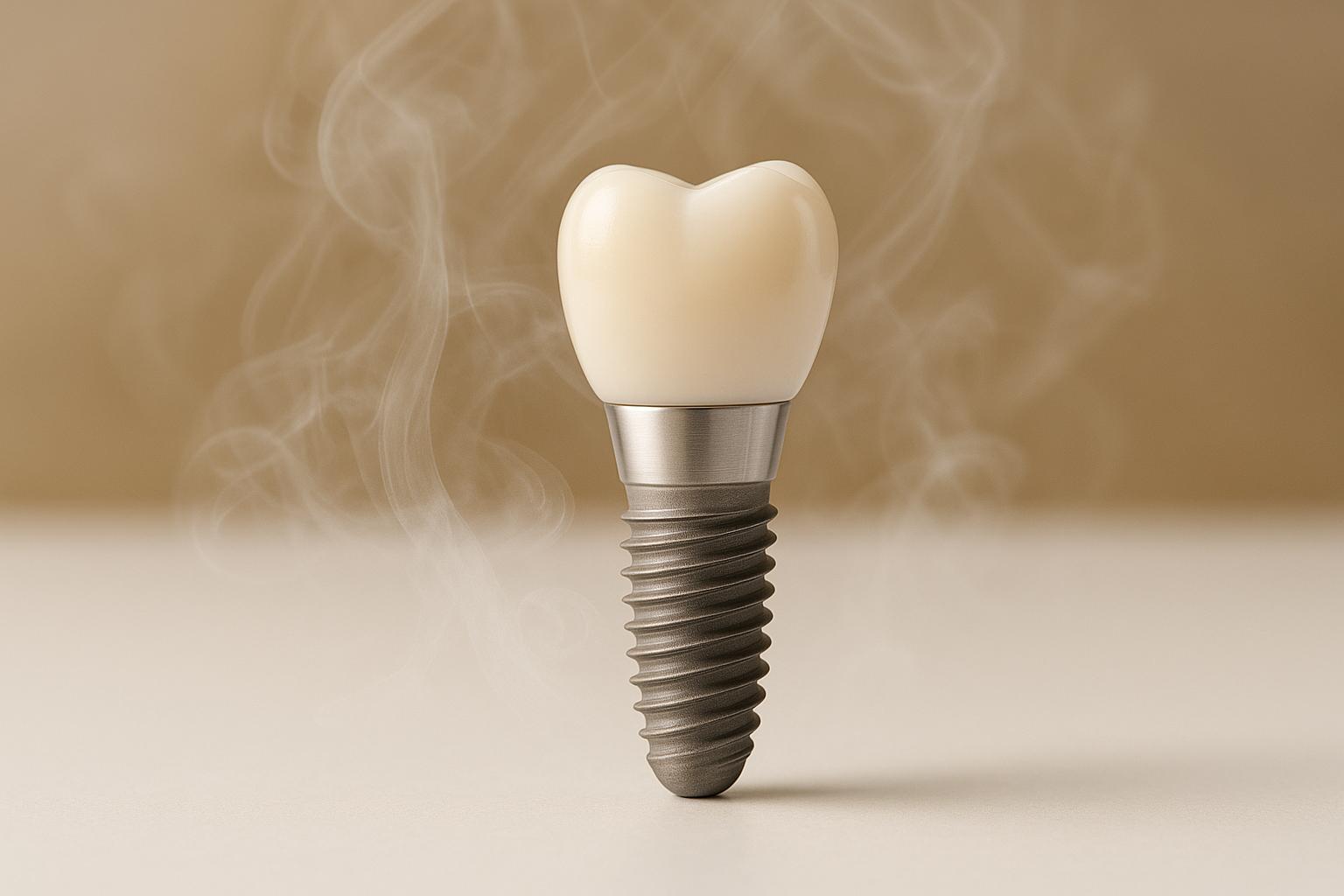
Smoking doubles the risk of dental implant failure. Smokers face higher failure rates – up to 20% compared to less than 2% for non-smokers. Why? Smoking slows healing, reduces blood flow, and increases the risk of infection and bone loss around implants. Here’s what you need to know:
- Healing Delays: Nicotine restricts blood flow, slowing bone fusion (osseointegration) and tissue recovery.
- Higher Failure Rates: Smokers are 2–3 times more likely to experience implant failure.
- Bone Loss: Long-term smoking can cause gradual bone erosion, threatening implant stability.
- Infection Risk: Smokers are prone to peri-implantitis, an inflammatory condition that can lead to implant failure.
What can help?
- Quit smoking at least 2 weeks before and after surgery for better outcomes.
- Advanced implant technologies, like treated titanium surfaces, improve success rates even for smokers.
- Enhanced oral hygiene, regular check-ups, and extended healing periods are crucial.
If you smoke and are considering dental implants, talk to your dentist about a tailored treatment plan to improve your chances of success.
How Does Smoking Affect Titanium Dental Implants? – The Pro Dentist
How Smoking Impacts Healing After Dental Implant Surgery
Smoking can seriously interfere with the healing process following dental implant surgery. Let’s break down how it affects blood flow, tissue health, and overall implant stability.
Reduced Blood Flow and Slower Bone Healing
Nicotine and other chemicals in tobacco act as vasoconstrictors, which means they narrow blood vessels. This limits the flow of oxygen and nutrients that are critical for healing. As a result, the process of osseointegration – when the implant bonds with the jawbone – slows down significantly. Smoking also disrupts bone metabolism, making it harder for new bone to form. On top of that, the oxidative stress caused by free radicals in smokers’ bodies interferes with the normal function of bone-building and bone-resorbing cells, further complicating recovery [6, 8].
Higher Risk of Peri-Implantitis
Peri-implantitis is a serious inflammatory condition that damages both the soft tissue and bone around dental implants. Smokers are at a much higher risk of developing this condition. It’s characterised by inflammation, bone loss, and, in severe cases, implant failure. Smokers with a long history – over 23 pack-years – are especially vulnerable. The reduced blood flow and weakened immune response in smokers allow bacterial plaque to build up more easily, accelerating the progression to irreversible bone loss [13, 15, 17].
Increased Implant Failure Rates in Smokers
The combined effects of smoking result in a significantly higher rate of dental implant failure. Smokers are twice as likely to experience early failure, with rates ranging from 6.5% to 20%, compared to the over 95% success rate seen in non-smokers. Research published in the Journal of Clinical Periodontology found that smokers face a 140.2% higher risk of implant failure. Even moderate smoking increases the likelihood of failure, and maxillary implants (in the upper jaw) are particularly prone to issues due to naturally lower bone quality in that area. Additionally, smokers tend to experience worse peri-implant conditions, such as higher bleeding rates, deeper pockets around the implant, and an average of 0.580 mm more marginal bone loss [8, 11, 12, 19, 20, 21, 22].
Treatment Challenges for Smokers Getting Dental Implants
Smokers dealing with dental implants face more than just general healing issues. Dentists must adapt their clinical methods to address specific hurdles brought on by smoking.
Poor Bone Quality and Placement Difficulties
Smoking weakens bone quality, particularly in the maxilla, which complicates implant placement. Nicotine interferes with bone remodelling processes [2], leading to a weaker, less dense bone structure. This makes it harder to achieve initial implant stability and proper positioning. In cases where the maxilla has insufficient bone volume, bone grafting may be necessary [2]. To manage these challenges, dental professionals might extend the healing period after grafting or choose implants designed to improve osseointegration. These adjustments often mean a longer recovery timeline for the patient.
Extended Recovery Times
Smokers also endure longer recovery periods after implant placement. Healing for smokers can take two to three times longer than for non-smokers [2], largely due to impaired tissue regeneration [3]. Reduced blood flow slows osseointegration, stretching the process from the usual 3–4 months to 6 months or more for heavy smokers. This extended recovery requires more frequent follow-up visits and heightened post-operative care to monitor healing and prevent complications like infections.
| Challenge | Impact | Modifications |
|---|---|---|
| Poor Bone Quality | Difficult implant placement and reduced stability | Bone grafting, extended healing periods, specialised implants |
| Delayed Healing | Recovery times two to three times longer | Increased monitoring, extended osseointegration periods |
| Increased Infection Risk | Higher complication rates post-surgery | Enhanced hygiene protocols, focused post-operative care |
| Compromised Blood Flow | Slower tissue regeneration | Adjusted surgical techniques and medications |
Given these challenges, many dental professionals strongly recommend smoking cessation before implant surgery. Quitting or reducing smoking can greatly improve outcomes, making implant procedures and recovery smoother for both patients and practitioners.
sbb-itb-2be92ed
Ways to Reduce Risks for Smokers Getting Dental Implants
While dental implants can be more challenging for smokers, there are proven strategies to improve outcomes by minimising tobacco-related risks and supporting the healing process.
Quitting Smoking Before and After Surgery
Tackling smoking is crucial when it comes to improving implant success. The best approach? Quit smoking entirely. Research shows that stopping at least two weeks before surgery and continuing through the healing phase significantly boosts implant outcomes[2]. Even a short-term break from smoking can make a noticeable difference, with studies highlighting better surgical results during such periods[2].
For those who find quitting completely overwhelming, cutting smoking by at least half – especially in the 48 hours before and after surgery – can still help[1][2]. Nicotine replacement products can ease withdrawal symptoms, and structured cessation programs combining counselling and medical support can provide additional help[5].
Improved Implant Surface Technologies
Advances in implant technology have made it possible to achieve better results, even in less-than-ideal conditions. Research by Trisi et al. shows that implants treated with airborne abrasion and acid etching significantly improve bone-implant contact[6]. Similarly, anodised surfaces and those created through particle abrasion followed by acid etching demonstrate higher bone-implant contact rates in smokers[6].
Ivanoff et al. also found that titanium surfaces enhanced with titanium oxide (TiO2) abrasion had superior bone-implant contact compared to standard titanium surfaces, whether in the mandible or maxilla[6].
"Implant surface topography significantly influences early bone response under unloaded conditions, with treated surfaces promoting better human bone tissue response than machined surfaces. However, smoking negatively impacts peri-implant bone healing, emphasising the importance of smoking cessation for optimal osseointegration." – Jamil A Shibli et al.[6]
Nanoengineering is another game changer, creating surface textures that enhance bone cell attachment and encourage better osseointegration[7]. These technological improvements work hand-in-hand with lifestyle changes, offering a comprehensive approach to healing.
Additional Treatments and Close Monitoring
For smokers, extra care doesn’t stop at the surgery. Enhanced oral hygiene routines, like tri-monthly cleanings, twice-daily chlorhexidine rinses, and using specialised oral irrigators, can significantly lower the risk of infection[2]. Regular follow-ups, supported by advanced imaging, help monitor bone density around the implant and catch potential issues early[2]. Tailored treatment plans, which may include modified surgical techniques or adjusted medications, further improve the chances of success[2][4].
| Treatment Modification | Purpose | Timeline |
|---|---|---|
| Enhanced hygiene protocols | Reduce infection risk | Throughout the healing period |
| Extended osseointegration | Allow complete bone integration | 6+ months for heavy smokers |
| Frequent monitoring | Early complication detection | Regular check-ups during recovery |
| Advanced surface implants | Improve bone contact | Immediate benefit post-surgery |
Collaboration between the patient and clinician is critical. As Blank Dental explains, "The key is a collaborative approach between the patient and dental professional, where both parties acknowledge the risks but work together toward the shared goal of successful, long-lasting implants"[2].
If you’re a smoker considering dental implants, it’s vital to have an open conversation with your dentist about your habits. This will help create a personalised plan to maximise your chances of success. In Australia, clinics like Complete Smiles Bella Vista (https://completesmilesbv.com.au) offer tailored care and expert guidance to help you navigate this process effectively.
Conclusion: Improving Implant Success for Smokers
The challenges of smoking on implant success are undeniable. Research consistently shows that smokers experience higher implant failure rates compared to non-smokers, highlighting the significant risks associated with tobacco use.
That said, implant failure isn’t a foregone conclusion. Quitting smoking remains the most effective way to improve outcomes. Studies reveal that stopping smoking at least two weeks before surgery helps with healing and minimises complications. Even for those who find quitting completely difficult, cutting back – especially during the critical 48-hour window around surgery – can still make a difference. Enrolling in tobacco cessation programs is often a key part of personalised periodontal care and can significantly improve results [8].
Advancements in implant technology, such as anodised and airborne particle-abraded surfaces, offer better bone-implant integration, even for smokers [6]. Combined with personalised care – like enhanced hygiene practices, extended healing periods, and customised surgical techniques – these approaches can further improve implant success rates.
The path to success lies in collaboration. Working closely with your dental team to develop a treatment plan tailored to your unique needs, reducing or quitting tobacco use, and committing to the recommended care regimen are essential steps. Open communication and a proactive approach can make all the difference in achieving a successful implant outcome.
FAQs
How does smoking affect the success of dental implants compared to non-smokers?
Smoking drastically affects the success rates of dental implants, with smokers experiencing significantly higher failure rates compared to non-smokers. Studies reveal that failure rates for smokers can climb to 15.8%, whereas non-smokers face a much lower rate of just 1.4%. This stark contrast is attributed to factors like slower healing, an increased likelihood of infection, and poorer bone quality – all of which are linked to smoking.
To make matters worse, smokers are 59% more likely to encounter early implant failure. If you’re a smoker planning to get dental implants, cutting back or quitting smoking both before and after the procedure can dramatically boost your chances of success. It’s a good idea to consult your dentist for tailored advice on reducing these risks and ensuring a smoother recovery.
How can smokers improve their chances of successful dental implant healing?
To promote successful healing after a dental implant, smokers are strongly advised to quit smoking at least 1–2 months before the procedure and to avoid smoking for at least 2 months afterward. Smoking can interfere with the healing process and significantly raise the risk of implant failure.
On top of that, keeping up with good oral hygiene is critical. This means regular brushing, flossing, and using any oral care products your dentist recommends. Routine dental check-ups are also key to tracking your healing progress and catching any potential issues early. If you’re thinking about getting dental implants, have a chat with your dentist about personalised strategies to help ensure a smooth recovery.
Can smokers still get good results with dental implants using advanced treatments?
Yes, smokers can still improve their odds of successful dental implants by using specific advanced methods and following targeted strategies. For instance, bone grafting can enhance the quality and quantity of the bone, creating a stronger foundation for the implant to bond effectively. Similarly, laser-assisted surgery offers benefits like faster healing and a reduced risk of infection – critical for smokers, as nicotine can impede blood flow and slow down recovery.
One of the most impactful steps is quitting smoking altogether. Even stopping for at least one week before and two weeks after the procedure can significantly aid healing and lower the chances of implant failure. Coupled with diligent oral care and routine dental visits, these measures can make a real difference for smokers pursuing dental implants.
Related Blog Posts
- Dental Implants: Your Top 8 Questions Answered
- What Are Biocompatible Dental Materials?
- Wear Resistance of Polymer-Based Restoratives
- How X-Rays Help in Dental Treatment Planning
Important Notice: Any surgical or invasive procedure carries risks. Before proceeding, you should seek a second opinion from an appropriately qualified health practitioner.
Individual results may vary. The information provided in this article is for educational purposes only and does not constitute medical advice.
Checkout Related Blogs




Get in touch with us
For more information, call us now to start feeling better. Or fill the form below to make appointment
The Latest News from Complete Smiles
How to Clean Clear Plastic Retainers
Checklist for Choosing Wearable Dental Devices
Checklist for Choosing Cloud AI Platforms in Dentistry

Complete Smiles Bella VistaAccepts All Major Health Funds, Including





