





Laser Whitening vs At-Home Kits: Cost Breakdown
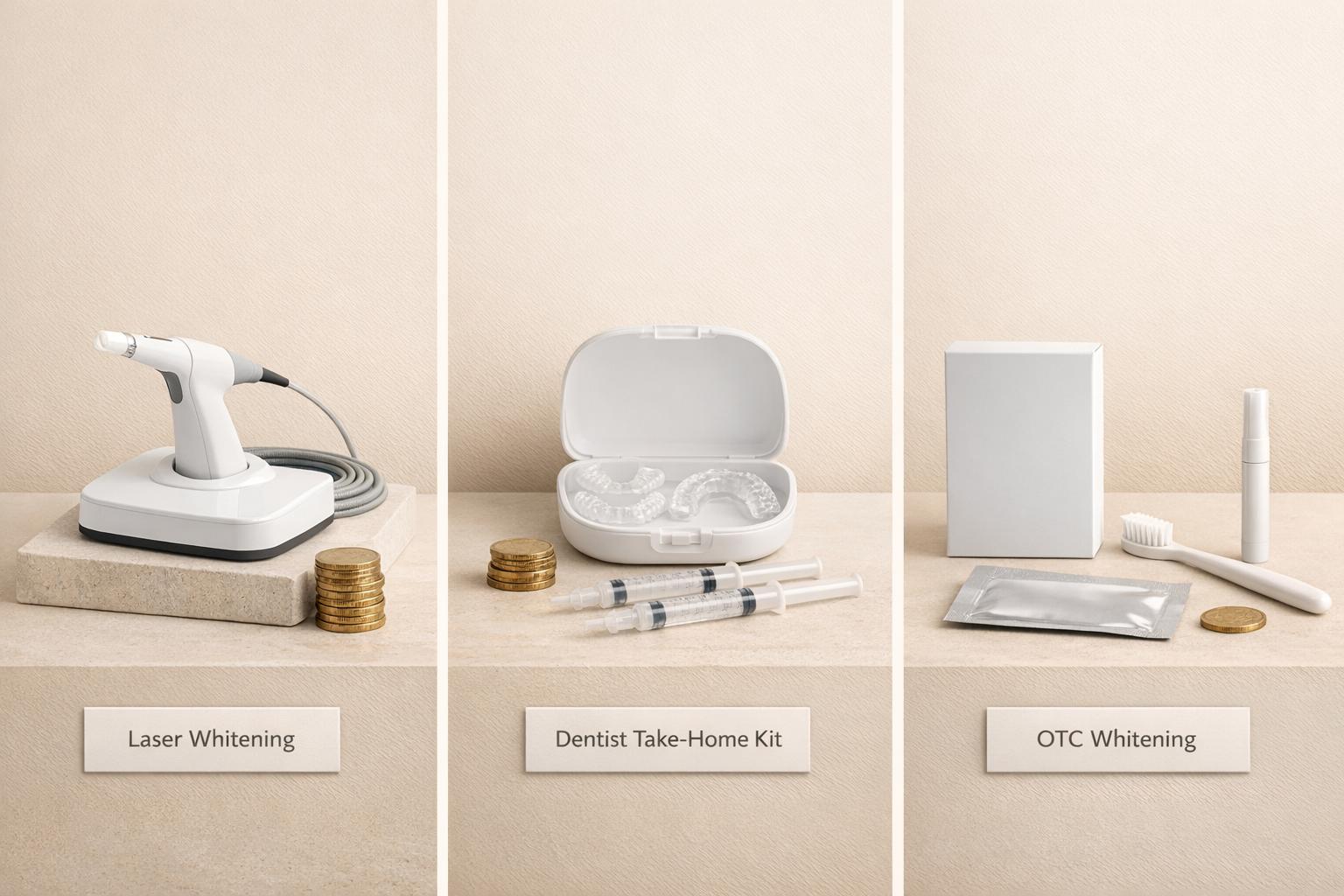
Choosing between laser teeth whitening and at-home kits comes down to cost, time, and results. Here’s the key takeaway:
- Laser Whitening: Costs $600–$1,700 per session, delivers up to 8 shades lighter in 45–90 minutes, and lasts 6–24 months. It’s fast but pricey.
- At-Home Kits: Prices range from $10–$200 for over-the-counter (OTC) products and $250–$600 for dentist-prescribed kits. Results are slower (1–4 weeks) and less dramatic (1–5 shades lighter), lasting 1–12 months depending on the product.
Quick Comparison:
| Feature | Laser Whitening | Dentist Take-Home Kit | OTC Whitening Kits |
|---|---|---|---|
| Cost | $600–$1,700 | $250–$600 | $10–$200 |
| Treatment Time | 45–90 minutes | 1–2 weeks (daily use) | 1–4 weeks (daily use) |
| Shade Improvement | Up to 8 shades | Up to 5 shades | 1–2 shades |
| Results Duration | 6–24 months | 6–12 months | 1–4 months |
| User Effort | Low (1 visit) | High (daily use) | High (frequent use) |
Laser whitening is ideal for quick, noticeable results, especially for special occasions. At-home kits are more budget-friendly but require patience and regular upkeep. Your choice depends on your budget, timeline, and desired level of whitening.
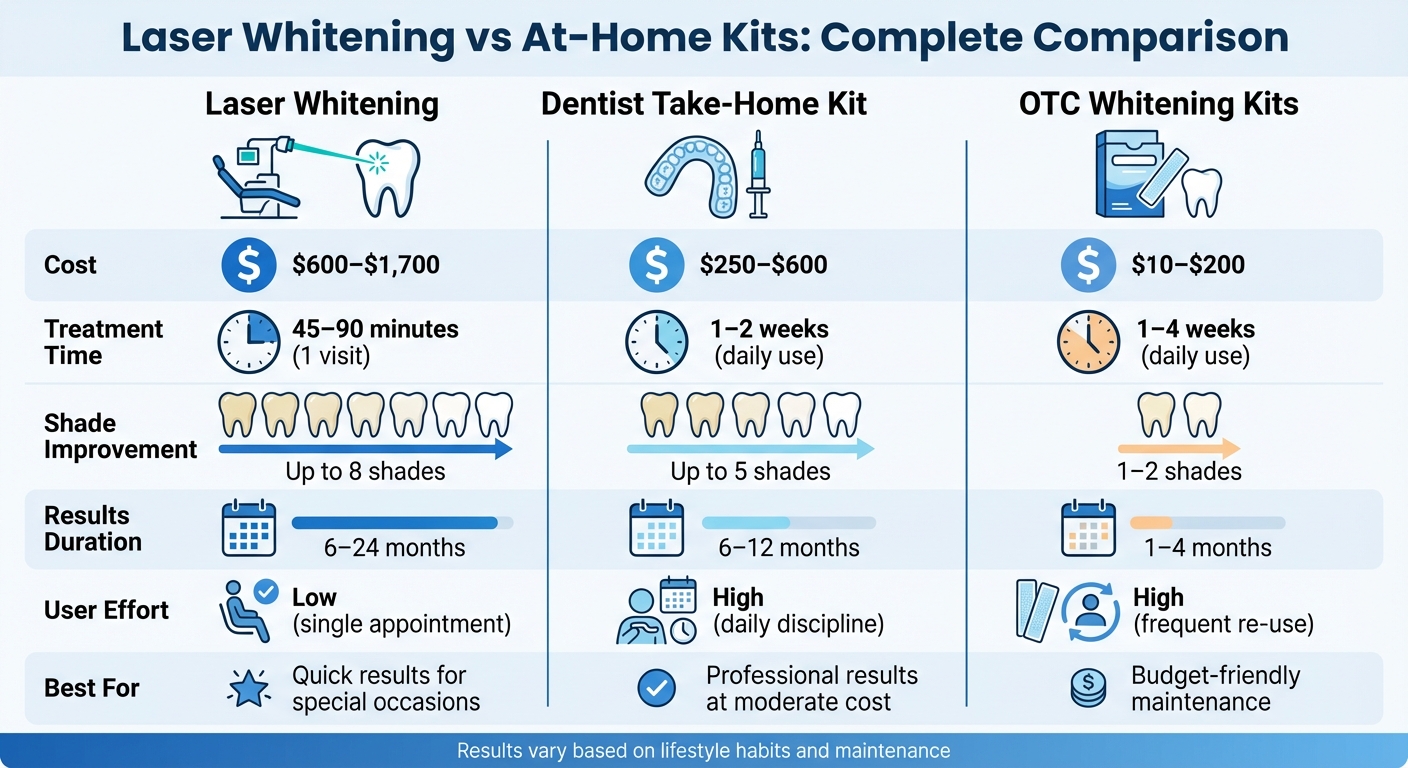
Laser Whitening vs At-Home Kits Cost and Results Comparison
Professional Laser Teeth Whitening: Costs and What You Get
Average Cost in Australia
In Australia, professional laser teeth whitening generally costs between $600 and $1,200 per session, with high-end treatments reaching up to $1,500 [7]. Prices can vary depending on the clinic’s location and the technology used. Clinics in major CBD areas often charge within this range, especially if they use premium systems like Philips Zoom! or Pola. On the other hand, chain lounges may offer treatments for $400 to $800 per session. Keep in mind, you might also need to pay an additional $100 to $250 for a pre-treatment dental cleaning if it isn’t already included.
What’s Included in the Cost
A typical session lasts between 45 and 90 minutes and usually begins with a dental examination to discuss your desired shade. Many clinics either include or recommend a professional scale and clean to remove plaque and tartar, ensuring the whitening gel adheres effectively to the enamel. During the procedure, protective measures like rubber shields or gels are applied to protect your gums and lips. A medical-grade hydrogen peroxide gel is then applied to your teeth and activated with a laser. This process is often repeated several times for the best results.
When considering the cost, it’s worth checking if the quoted price covers the initial consultation, pre-treatment cleaning, and follow-up care or maintenance products. Some clinics even provide custom take-home trays as part of their package to help maintain your results.
Benefits and Drawbacks
Laser whitening is known for delivering fast results, with teeth becoming up to 8 shades lighter in just one session [7]. It’s performed under the supervision of registered dentists and is particularly effective for tackling stubborn intrinsic stains caused by ageing or medications. However, there are some downsides. The upfront cost can be steep, and the procedure may cause temporary tooth sensitivity. For deeply stained teeth – such as those affected by smoking or tetracycline – multiple sessions might be required.
Another consideration is that most private health funds in Australia don’t cover cosmetic procedures. Additionally, after your treatment, you’ll need to follow dietary restrictions for 48 hours to prevent re-staining, as the enamel is more porous during this time. In the next section, we’ll compare these costs and outcomes with at-home whitening kits to help you decide which option works best for you. For more professional advice on maintaining your smile, you can also explore our dental tips and news.
sbb-itb-2be92ed
At-Home Whitening Kits: Pricing and Options
Over-the-Counter Kits
Over-the-counter (OTC) whitening kits are an affordable choice, easily found at places like Chemist Warehouse, Woolworths, and online stores. Prices range from $10 to $200: basic options like whitening strips or toothpaste fall in the $10–$50 range, while LED-activated kits from brands like HiSmile and White Glo cost between $50 and $200[2][8].
These products use a lower concentration of hydrogen peroxide compared to professional treatments, making them ideal for mild surface stains caused by things like coffee or tea. Application methods vary and include whitening strips, LED-activated kits, gels, pens, and toothpastes.
Dentist-Supplied Kits
Dentist-provided take-home kits deliver professional-grade results and typically cost between $250 and $600, with fully supervised options priced at $400–$800[1].
One major benefit of these kits is their customisation. Dentists create trays tailored to fit your teeth perfectly, ensuring the prescription-strength peroxide gel is applied evenly and stays away from your gums. This custom fit not only improves the whitening process but also reduces the risk of gum irritation. For the best results, a pre-treatment cleaning (costing $100–$250) may be recommended to enhance the gel’s effectiveness[1].
Expected Results and Timeframe
Whitening at home requires commitment. OTC kits typically need daily use for 1–2 weeks to show noticeable changes and 2–4 weeks for full results[10]. Dentist-supplied kits, on the other hand, often show visible improvements within 2 to 7 days, with final results achieved in 1 to 2 weeks[9].
The lasting effect of whitening also differs. OTC products usually maintain results for 1 to 4 months[8], while professional take-home kits can last 6 to 12 months[8]. Long-term effectiveness depends on factors like lifestyle habits – smoking or drinking coffee and red wine can shorten the results. It’s also worth noting that whitening agents only work on natural enamel and won’t change the colour of veneers, crowns, or fillings[2].
Professional teeth whitening trays vs laser whitening
Cost Comparison: Laser Whitening vs At-Home Kits
When weighing up laser whitening against at-home kits, it’s clear the decision isn’t just about cost. While laser whitening offers fast, noticeable results, at-home kits provide a slower, more gradual improvement. But how do they stack up in terms of treatment time, effectiveness, and how long the results last?
Laser whitening takes just 45–90 minutes per session, delivering immediate results that can last anywhere from 6 to 24 months[4]. On the other hand, dentist-prescribed take-home kits require daily use for 1–2 weeks, achieving up to 5 shades of improvement, with results lingering for 6–12 months. Over-the-counter (OTC) kits, while more affordable, need 1–4 weeks of daily application to brighten teeth by 1–2 shades, and their effects typically fade after 1–4 months[8].
Longevity is another key factor. Although aftercare is generally the same across all methods, laser whitening demands a strict 48-hour ‘white diet’ after treatment due to temporary enamel porosity[1][3].
Comparison Table
| Feature | Laser Whitening | Dentist Take-Home Kit | OTC Products |
|---|---|---|---|
| Average Cost | $600–$1,700 | $250–$600 | $10–$200 |
| Treatment Duration | 45–90 minutes (1 visit) | 1–2 weeks (daily use) | 1–4 weeks (daily use) |
| Results Timeline | Immediate | 7–14 days | Gradual/subtle |
| Shade Improvement | Up to 8 shades[3] | Up to 5 shades[6] | 1–2 shades[5] |
| Results Last | 6–24 months[4] | 6–12 months | 1–4 months[8] |
| User Commitment | Low (single appointment) | High (daily discipline) | High (frequent re-use) |
It’s worth noting that none of these whitening methods are covered by Medicare or standard private health insurance in Australia, as they are considered cosmetic procedures[1]. However, some extras cover policies might reimburse part of the cost for an initial consultation or pre-treatment cleaning.
Ultimately, the choice comes down to balancing cost, convenience, and how long you want the results to last. Each option has its strengths, depending on your priorities and budget.
Factors That Affect Overall Costs
When it comes to teeth whitening, the final price tag isn’t just about the upfront cost. A variety of factors can influence what you end up paying, whether you choose a professional laser treatment or an at-home kit.
Customisation and Product Quality
Dentist-provided take-home kits often come with a heftier price tag – ranging from $250 to $600 – because they include custom-fitted trays. These trays are made using dental impressions, ensuring they fit your teeth perfectly. On the other hand, over-the-counter kits use standard trays, which can lead to uneven whitening and discomfort due to their one-size-fits-all design.
Another key factor is the strength of the whitening agents used. Professional treatments use high-concentration gels, like hydrogen peroxide or carbamide peroxide, applied under a dentist’s supervision. These are more effective but also more expensive. At-home kits, while cheaper, use lower concentrations that are less potent. Clinics offering advanced systems like Philips Zoom WhiteSpeed or Pola often charge more, reflecting their ability to deliver consistent, noticeable results. These factors all contribute to both the initial and ongoing costs.
Follow-Up Treatments and Maintenance
The cost of teeth whitening doesn’t stop with the initial treatment. For professional laser whitening, dentists often recommend follow-up touch-ups using take-home kits. Gel refills for these kits typically cost $30–$60 per session, and the custom trays themselves can last up to five years, making maintenance far more affordable than repeating laser treatments.
In contrast, at-home kits need frequent replacements. While they are budget-friendly (costing $10–$50), their effects usually last just 2–4 months. Professional whitening treatments, however, can deliver results that last from six months to three years with proper care. Additionally, many dentists advise a professional cleaning before whitening to remove plaque and ensure the whitening agent is applied evenly.
Geographic Pricing Variations
Location plays a big role in determining costs. Dental clinics in major city centres, like Sydney or Melbourne, often have higher prices due to elevated rent and operational costs. For example, a professional whitening session in metropolitan Sydney might cost around $1,500, whereas the same treatment in a regional area could be $800–$1,000. Similarly, professional take-home kits can vary by $100 to $200, depending on where you purchase them.
Long-Term Cost and Value
How Long Results Last
Laser whitening results generally last between 6 and 24 months, but this depends heavily on your lifestyle choices, such as smoking or regularly drinking beverages like coffee or red wine [11][4]. Many dentists suggest an annual touch-up to keep your teeth looking their brightest [12].
On the other hand, over-the-counter whitening products offer much shorter results, typically lasting 1 to 4 months [13][2]. Dentist-prescribed take-home kits, which include customised trays for a more precise application, deliver results that can last 6 to 12 months [1][13][2][6]. Because of their shorter-lasting effects, at-home methods often require more frequent applications to maintain a consistently bright smile.
Knowing how long each option lasts is key to evaluating their long-term value and how they fit into your budget.
Cost Effectiveness Over Time
The differences in how long results last significantly affect the overall cost of each whitening method over time. While laser whitening comes with a higher upfront cost – ranging from $600 to $1,500 [2] – it often turns out to be more cost-efficient in the long run. This is because it requires fewer touch-ups, with gel refills costing about $30 to $60 per session, and custom trays that can last up to five years.
In contrast, over-the-counter kits seem cheaper at first, with prices between $20 and $150 per kit [1][2]. However, their shorter-lasting results mean you’ll need to replace them 9 to 12 times over three years, which can lead to higher cumulative costs. Dentist-prescribed take-home kits offer a middle ground: the initial investment of $250 to $600 [1][2] covers reusable custom trays, and ongoing costs are mainly for gel refills. This makes them an appealing option for maintaining results over time without breaking the bank.
Conclusion
Your decision will hinge on factors like your budget, desired speed of treatment, and the level of whitening you’re aiming for. Laser whitening stands out for delivering fast results – up to 8 shades brighter in just one hour. This makes it a popular choice for special events. However, with prices ranging from $600 to $1,700 [2][4], it’s the priciest option upfront.
Dentist-prescribed take-home kits offer a middle ground, costing between $250 and $600 [1][6]. These kits use custom-fitted trays to achieve professional-grade results, lightening teeth by up to 5 shades over 1–2 weeks [6][11]. They’re also a gentler option for those with sensitive teeth, as the gradual process reduces enamel irritation [2][6].
If you’re looking for a more affordable option, over-the-counter (OTC) whitening kits are available for $10 to $200 [1][2]. These are best for tackling minor surface stains or maintaining results between professional treatments, but their effects typically last only 2 to 4 months [2].
When weighing long-term costs, laser whitening may seem expensive initially, but its results can last 12 to 24 months with proper care, reducing the need for frequent touch-ups. On the other hand, while OTC kits are cheaper upfront, frequent reapplications could add up over time.
It’s also important to remember that all whitening results are temporary and require maintenance. Avoiding staining foods and drinks like coffee, red wine, and tobacco – especially in the first 48 hours after treatment – can help prolong your results [1]. Additionally, whitening treatments only work on natural enamel, so crowns, veneers, or fillings won’t be affected [2][6]. Ultimately, choose the method that aligns best with your goals, budget, and long-term dental care plan.
FAQs
Which whitening option is best for sensitive teeth?
For those with sensitive teeth, at-home whitening kits tailored for sensitivity can be a gentler choice. These kits typically use lower peroxide concentrations and require shorter application times, which can help minimise irritation and discomfort. On the other hand, professional whitening treatments deliver quicker and noticeable results but often involve stronger bleaching agents that may lead to temporary sensitivity. It’s always a good idea to consult your dentist to determine the best whitening method for your specific needs.
Can teeth whitening change the colour of crowns, veneers or fillings?
Teeth whitening treatments are designed to brighten natural tooth enamel but do not impact the colour of crowns, veneers, or fillings. These dental restorations are crafted from materials that don’t react to whitening agents, meaning their shade stays the same regardless of any whitening procedures.
What should I avoid in the first 48 hours after whitening?
In the first 48 hours after whitening, steer clear of acidic foods and drinks such as citrus fruits, soda, pickles, and fruit juices. These can heighten tooth sensitivity and make your teeth more prone to staining. Instead, stick to a ‘white diet’ – focus on non-staining foods and beverages to help preserve your whitening results.
Related Blog Posts
- Professional vs At-Home Teeth Whitening Methods
- Advances in Laser Whitening Technology 2025
- How Long Does Laser Teeth Whitening Last?
- 7 Pros And Cons Of Laser Dentistry
Important Notice: Any surgical or invasive procedure carries risks. Before proceeding, you should seek a second opinion from an appropriately qualified health practitioner.
Individual results may vary. The information provided in this article is for educational purposes only and does not constitute medical advice.
Checkout Related Blogs




Get in touch with us
For more information, call us now to start feeling better. Or fill the form below to make appointment
The Latest News from Complete Smiles
How to Clean Clear Plastic Retainers
Checklist for Choosing Wearable Dental Devices
Checklist for Choosing Cloud AI Platforms in Dentistry

Complete Smiles Bella VistaAccepts All Major Health Funds, Including





