



7 Pros And Cons Of Laser Dentistry
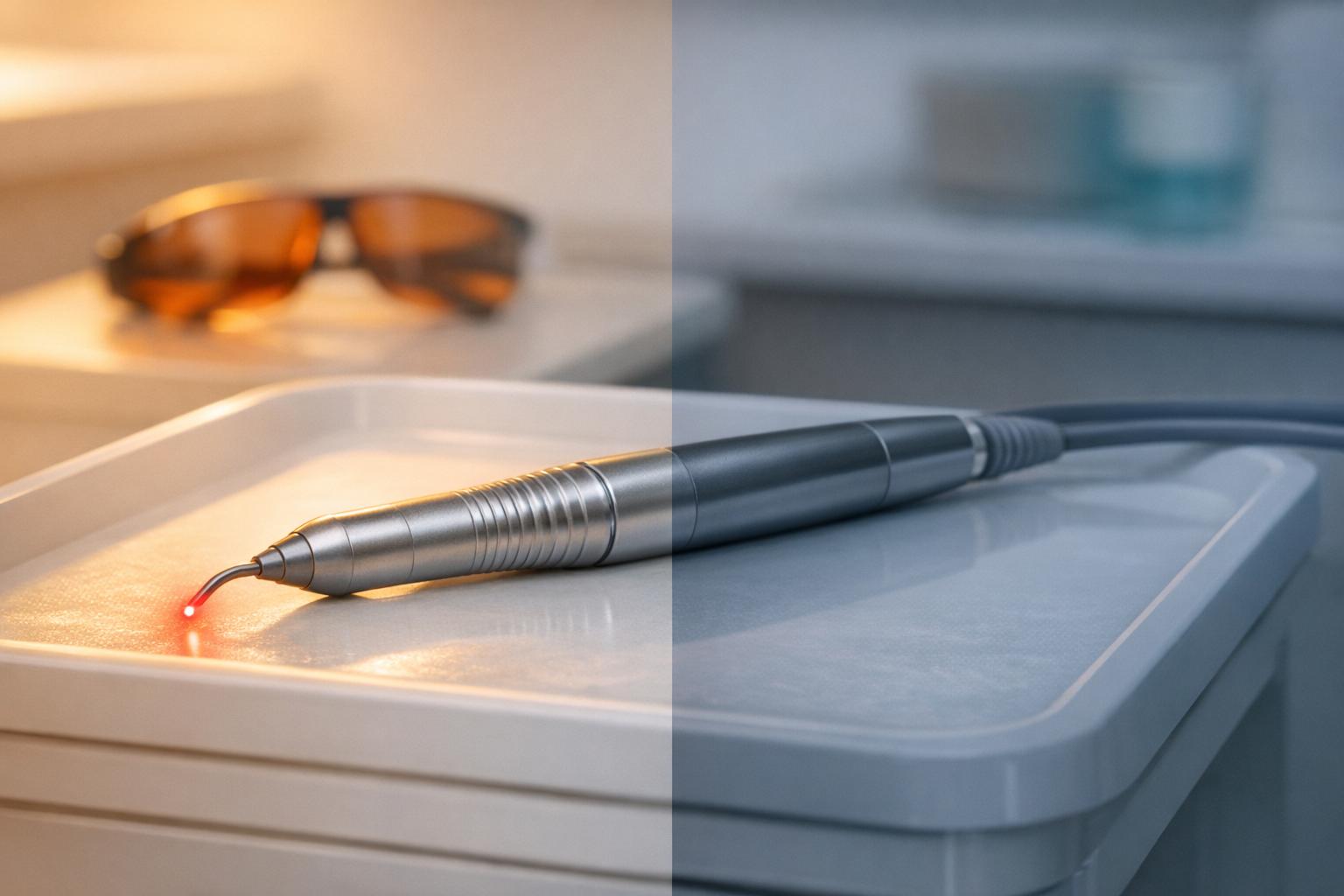
Laser dentistry is a modern approach to dental care that uses focused light beams to treat teeth and gums with precision. It’s quieter, less painful, and often speeds up recovery compared to traditional methods. However, it’s not without drawbacks – higher costs, limited applications, and potential risks if misused. Here’s a quick look at the pros and cons:
Pros:
- Less pain: Often eliminates the need for anaesthesia.
- Minimal bleeding: Lasers cauterise tissue during procedures.
- Faster healing: Reduces infection risks and promotes tissue repair.
- High precision: Targets specific areas without affecting healthy tissue.
- Reduced anxiety: Quieter and less intimidating than drills.
Cons:
- High costs: Equipment and training are expensive, leading to pricier treatments.
- Limited use: Not suitable for all dental procedures, such as working with metal fillings.
- Potential risks: Misuse can cause serious damage, including eye injuries and tissue harm.
Laser dentistry offers benefits for comfort and precision but comes with financial and procedural limitations. Always consult a qualified dentist to determine if it’s right for you.
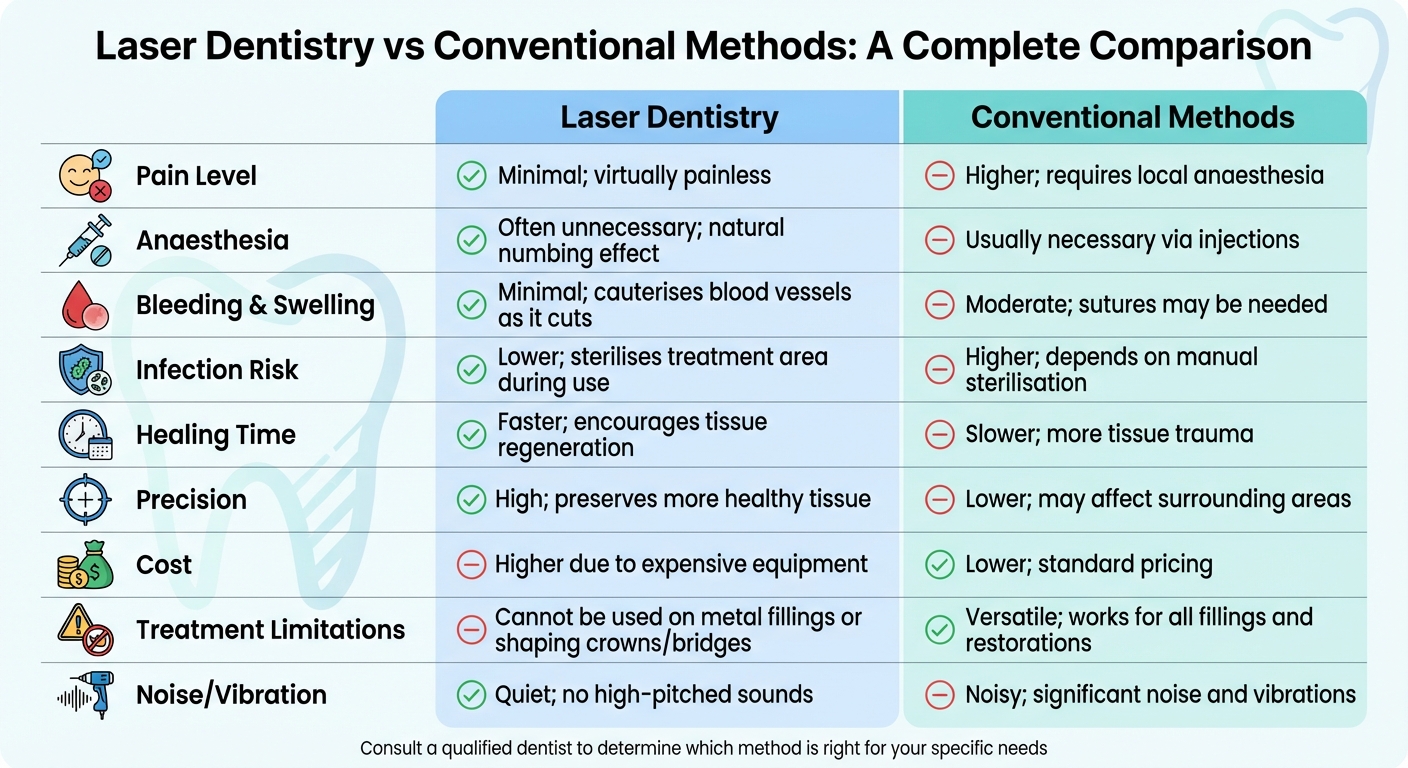
Laser Dentistry vs Conventional Methods Comparison Chart
Laser Periodontal Therapy Pros & Cons
1. Less Pain and Reduced Need for Anaesthesia
Laser dentistry offers a more comfortable experience by naturally numbing the targeted area, often making local anaesthetic injections unnecessary [1]. Dr. V, a cosmetic and general dentist, highlights this benefit:
Laser can actually numb the tooth without using injections or the need for any local anaesthetic [1].
This is a game-changer for patients who are anxious about needles. Beyond that, lasers improve the overall experience by replacing drills with a gentler, quieter alternative.
Traditional drills create heat, pressure, and vibrations, which can be both uncomfortable and nerve-wracking. Lasers, on the other hand, work by ablating tissue layer by layer without direct contact. This means no unsettling sounds or sensations [1].
Another key advantage is that lasers cauterise as they work, sealing nerve endings and blood vessels. This reduces bleeding and inflammation, enhancing recovery [10][11]. For hard tissue treatments like cavity preparation, Erbium YAG lasers often eliminate the need for anaesthesia since they don’t generate the friction-based heat typical of mechanical drills [1][10]. This is particularly helpful for children, easing their anxiety about dental visits [1].
That said, some situations still require anaesthesia. Invasive procedures, deep cavities, or cases of high tooth sensitivity may call for additional pain management. It’s also worth noting that lasers aren’t suitable for teeth with metal amalgam fillings [11][12][1][7].
2. Less Bleeding and Swelling
Laser dentistry offers a major benefit by significantly reducing bleeding during procedures. This is because lasers can cut and cauterise tissue at the same time, sealing blood vessels and nerve endings instantly[13]. As a result, the dentist works in a dry, clear operative area, which not only improves visibility but also helps to minimise post-treatment swelling and inflammation[14].
On top of that, the high-energy laser beam sterilises the treatment site by destroying bacteria, which helps lower the chance of infection-related swelling during recovery[15]. In many cases, lasers eliminate the need for sutures altogether. Their precision allows for neat incisions and immediate clotting, enabling wounds to heal naturally without added intervention[1]. This level of control ensures a smoother recovery experience.
3. Faster Healing and Lower Infection Risk
Laser dentistry offers a major advantage: quicker recovery times for patients. The high-energy laser beam sterilises the treatment area as it works, killing bacteria and significantly reducing the risk of infection[16][2]. This disinfection happens during the procedure itself, ensuring a cleaner environment for healing from the very beginning.
The laser light also stimulates cellular activity deep within the tissue, speeding up the body’s natural healing process. This can cut recovery time in half compared to traditional methods[1][3]. Because lasers are incredibly precise and often don’t require direct contact with tissue, they minimise damage to the surrounding healthy areas. This precision means less trauma, leading to faster and smoother healing[1][6].
In root canal treatments, lasers utilise a photoacoustic effect to push disinfecting agents into tiny side canals that traditional tools can’t reach. This not only eliminates hard-to-access bacteria but also supports rapid tissue repair[1][2]. For gum disease, lasers go deep into infected pockets to destroy harmful bacteria while encouraging the growth of healthy tissue at the same time[1][8]. Procedures like frenectomies benefit too – lasers eliminate the need for stitches, allowing the tissue to heal quickly with minimal risk of infection[1][6].
Since many laser treatments don’t involve incisions or sutures, patients are left without open wounds, making recovery more comfortable and straightforward[5][3]. This combination of precision, sterilisation, and reduced tissue damage sets laser dentistry apart in promoting faster and safer healing.
4. Greater Accuracy
One of the standout benefits of laser dentistry is its incredible precision. By using a narrow, concentrated beam, lasers allow dentists to target specific problem areas with a level of accuracy that traditional drills and scalpels simply can’t match [3]. This means less healthy tooth structure is removed during procedures like cavity preparation, helping to preserve more of your natural tooth.
Another advantage lies in the technology’s ability to differentiate between tissues. Dental lasers are designed to recognise variations in water and mineral content between teeth and gums, enabling them to act selectively [1]. This tissue-specific action helps protect surrounding areas from accidental damage during treatment.
Lasers operate through a process called ablation, which removes tissue one cell layer at a time instead of cutting or grinding through multiple layers [1]. Dentists can also fine-tune the laser’s power, exposure time, and temperature to achieve precise results – whether it’s trimming tissue or disinfecting a treatment site [8]. This level of control allows for optimal outcomes while minimising any unintended impact on nearby tissues. In complex procedures, such as removing fractured teeth, the ability to make precise cuts is invaluable. As one specialist periodontist explains:
Sectioning the roots with laser enables very accurate cuts that cause minimal trauma to the surrounding tissues and hence preserve vital bone [6].
This precision is especially beneficial in treatments like root canal therapy, where lasers can drive cleaning agents into tiny side canals, or in procedures like gum contouring and crown lengthening, which result in sharper and more defined results while sparing healthy tissue [1][6]. In many cases, lasers can even perform tasks without directly touching the tissue, contributing to more natural-looking outcomes [6].
Despite these technical advantages, laser dentistry hasn’t yet become mainstream among general practitioners. Currently, only about 10% of general dentists in Perth utilise laser technology, and its use is mostly limited to soft tissue procedures [5].
sbb-itb-2be92ed
5. Higher Costs
When it comes to laser dentistry, the price tag is significantly steeper compared to traditional methods. The main reason? The equipment. While a standard dental drill costs around A$600, a top-tier dental laser can set a practice back anywhere from A$100,000 to A$150,000. That’s a staggering price difference – up to 250 times more expensive[1].
But the costs don’t stop at the equipment itself. Dentists need specialised training and certification to use laser tools safely, which adds another layer of expense[1]. On top of that, practices must invest in safety measures like protective eyewear and high-volume suction systems to handle laser plumes (the smoke produced when tissue is vaporised). Regular maintenance for the lasers also adds to the operational costs, all of which are reflected in the higher treatment fees.
Another factor driving up costs is the limited use of laser technology. In Perth, only about 10% of general dentists incorporate laser dentistry into their practice, while global adoption rates sit between 6% and 15%[5][2]. This limited availability means less competition, and the high cost of the equipment naturally translates to pricier treatments.
To make matters more complicated, insurance coverage typically focuses on the type of procedure rather than the tools or techniques used. This means patients often bear the brunt of these higher costs out of pocket[7].
6. Limited Applications
While laser dentistry offers numerous benefits, it’s essential to acknowledge its boundaries. Lasers, for all their precision and efficiency, can’t completely replace traditional dental tools. For instance, they aren’t effective on teeth with metal amalgam fillings or for removing old or defective crowns, bridges, and fillings. They also fall short when it comes to preparing teeth for bridges or treating interproximal cavities, particularly large ones that require crown preparation [1][9].
Even when lasers are used to start a procedure, traditional methods often need to step in to finish the job. Tasks like shaping, polishing, and adjusting bites still rely on conventional drills. To date, no laser system has received the ADA’s Seal of Acceptance as a full replacement for traditional dental techniques [9].
7. Possible Risks if Misused
When dental lasers are handled improperly or by untrained professionals, the consequences can be severe. One of the most serious risks is permanent eye damage. Whether through direct exposure or reflected beams, dental lasers can cause retinal burns, scarring, and even blindness. This is especially true for Class 4 lasers, commonly used in dental surgeries, which have a power output exceeding 500 milliwatts (mW) and are capable of injuring both the eyes and skin [4].
Improper settings or extended laser exposure can also lead to tooth damage. Overheating may harm the pulp or even cause the roots to crack or melt [8][18]. If a laser is misdirected, it can carbonise healthy gum tissue and potentially damage the underlying bone [17]. Another concern is the creation of a laser plume during procedures – a vapour containing carbon monoxide, carbon dioxide, and organic materials. Inhaling this plume can result in nausea and breathing difficulties [17].
To minimise these risks, strict safety protocols are non-negotiable.
"Safe use of lasers in a dental practice must be achieved by following a program of laser safety activities and procedures which are monitored, reviewed and audited to achieve best practice." – Australian Dental Association [4]
It’s crucial to ensure your dentist has proper laser certification from reputable organisations like the Academy of Laser Dentistry [7]. During procedures, both patients and staff should wear wavelength-specific protective eyewear to safeguard against optic nerve damage [4]. Additionally, practitioners should use high-speed suction systems to capture the laser plume and apply water cooling to control heat during treatments [4][17].
"The risks of laser dentistry are relatively small. It’s important to find a qualified dental professional, as using the wrong wavelength or power level could damage tissue." – Healthline Editorial Team [7]
Comparison Table
The table below provides a side-by-side comparison of laser dentistry and conventional methods, highlighting the key differences and considerations.
| Factor | Laser Dentistry | Conventional Methods (Drill/Scalpel) |
|---|---|---|
| Pain Level | Minimal; often described as ‘virtually painless’ [1][5] | Higher; typically requires local anaesthesia [1] |
| Anaesthesia | Often unnecessary; lasers have a natural numbing effect [1][3] | Usually necessary, administered via injections [1] |
| Bleeding & Swelling | Minimal; lasers cauterise blood vessels as they cut [2][3] | Moderate; sutures may be needed to manage bleeding [3][5] |
| Infection Risk | Lower; the laser sterilises the treatment area during use [1][7][2] | Higher; depends on manual sterilisation and post-operative care [1] |
| Healing Time | Faster; encourages tissue regeneration and reduces swelling [7][5] | Slower; more tissue trauma leads to longer recovery [1][3] |
| Precision | High; preserves more healthy tissue [1][9] | Lower; mechanical tools may affect surrounding areas [1][9] |
| Cost | Higher due to the expense of laser equipment [1][3][8] | Lower; uses standard tools with traditional pricing [1][3] |
| Treatment Limitations | Cannot be used on metal fillings (amalgam) or for shaping crowns/bridges [1][8][7] | Versatile; works for all types of fillings and restorations [1] |
| Noise/Vibration | Quiet; no high-pitched sounds or vibrations [1][2] | Noisy; includes significant noise and vibrations [1][2] |
This comparison highlights how laser dentistry stands out for comfort, precision, and quicker recovery, while traditional methods offer broader applications and are more budget-friendly. Your choice will depend on your specific dental needs, financial considerations, and the tools your dentist prefers to use.
Conclusion
Laser dentistry provides a modern alternative to traditional techniques, offering benefits like reduced pain, less bleeding, and faster healing times. It also allows for greater precision during procedures. However, it comes with some drawbacks, such as higher costs, limited use in certain cases (like teeth with metal amalgam fillings), and occasional reliance on conventional tools. These factors are worth considering when determining if this option aligns with your dental care goals.
The higher price tag reflects the investment required for this advanced technology, so it’s essential to balance the financial aspect against the potential clinical advantages. This thoughtful approach can help you make an informed decision about your treatment.
It’s crucial to consult a qualified dentist to determine whether laser dentistry suits your specific needs. Not every case is ideal for this method, and a professional assessment ensures you receive the best care while minimising risks.
For tailored advice, the team at Complete Smiles Bella Vista is here to help. Under the leadership of Dr. James Hanna, they offer a full range of dental services, using advanced techniques designed to meet each patient’s unique oral health needs.
FAQs
What types of dental procedures can be performed with laser dentistry?
Laser dentistry offers a modern approach to dental care, especially for procedures that demand precision and aim to minimise discomfort.
When it comes to hard tissue, lasers can detect cavities at an early stage, prepare teeth for fillings without the need for traditional drills, and address tooth sensitivity by sealing exposed dentinal tubules. They also play a role in minimally invasive root canal treatments by effectively sterilising the canal walls.
For soft tissue applications, lasers are widely used in periodontal therapy to remove infected gum tissue and reshape gums, whether it’s to correct a "gummy smile" or perform procedures like frenectomies. They’re also highly effective for removing oral lesions or conducting biopsies. Additionally, laser-activated teeth whitening enhances the bleaching process, delivering faster and more uniform results.
Clinics like Complete Smiles Bella Vista utilise laser technology to provide these advanced treatments. This ensures greater precision, reduced pain, and quicker recovery times, all while focusing on a patient-friendly approach to dental care.
Is laser dentistry more expensive than traditional dental treatments?
Laser dentistry tends to come with a higher price tag compared to traditional techniques. For instance, in Australia, laser gum surgery typically ranges from $1,500 to $6,000 per quadrant, while traditional surgery costs about $1,000 to $3,000 per quadrant, and a deep cleaning is priced between $300 and $600.
This price difference is largely due to the advanced technology involved and the specialised training dentists need to perform laser procedures. Despite the higher cost, many patients appreciate the advantages laser dentistry offers, such as less discomfort, faster recovery, and enhanced precision during treatment.
What precautions should be taken for safe laser dentistry?
When it comes to laser dentistry, safety is non-negotiable. Dentists must use lasers designed specifically for the procedure at hand, following the manufacturer’s strict guidelines for both operation and maintenance. Additionally, all staff involved need to complete accredited laser-safety training and comply with the national standard AS/NZS 4173 Safe use of lasers and intense light sources in health care.
During procedures, everyone in the treatment area – patients and dental staff alike – must wear protective eyewear tailored to the specific laser wavelength being used. To minimise risks, the treatment zone should display clear hazard signage, and any reflective objects must be removed to prevent accidental laser exposure. Accessories like fibre-optic tips should either be single-use or sterilised in line with infection control protocols.
Dental clinics are also required to implement a written laser-safety program. This program should include regular audits, routine equipment servicing, and clearly defined emergency procedures. These comprehensive measures ensure that laser dental treatments are conducted safely while adhering to Australian regulatory standards.
Related Blog Posts
- Laser Dentistry for Pain Relief
- 5 Benefits of AI in Laser Dental Treatments
- Is Laser Gum Surgery Worth the Cost?
- Laser Gum Treatment Costs in Australia
Important Notice: Any surgical or invasive procedure carries risks. Before proceeding, you should seek a second opinion from an appropriately qualified health practitioner.
Individual results may vary. The information provided in this article is for educational purposes only and does not constitute medical advice.
Checkout Related Blogs



Get in touch with us
For more information, call us now to start feeling better. Or fill the form below to make appointment
The Latest News from Complete Smiles
How to Clean Clear Plastic Retainers
Checklist for Choosing Wearable Dental Devices
Checklist for Choosing Cloud AI Platforms in Dentistry
Complete Smiles Bella VistaAccepts All Major Health Funds, Including