





Key Insights into High-Precision Dental Milling

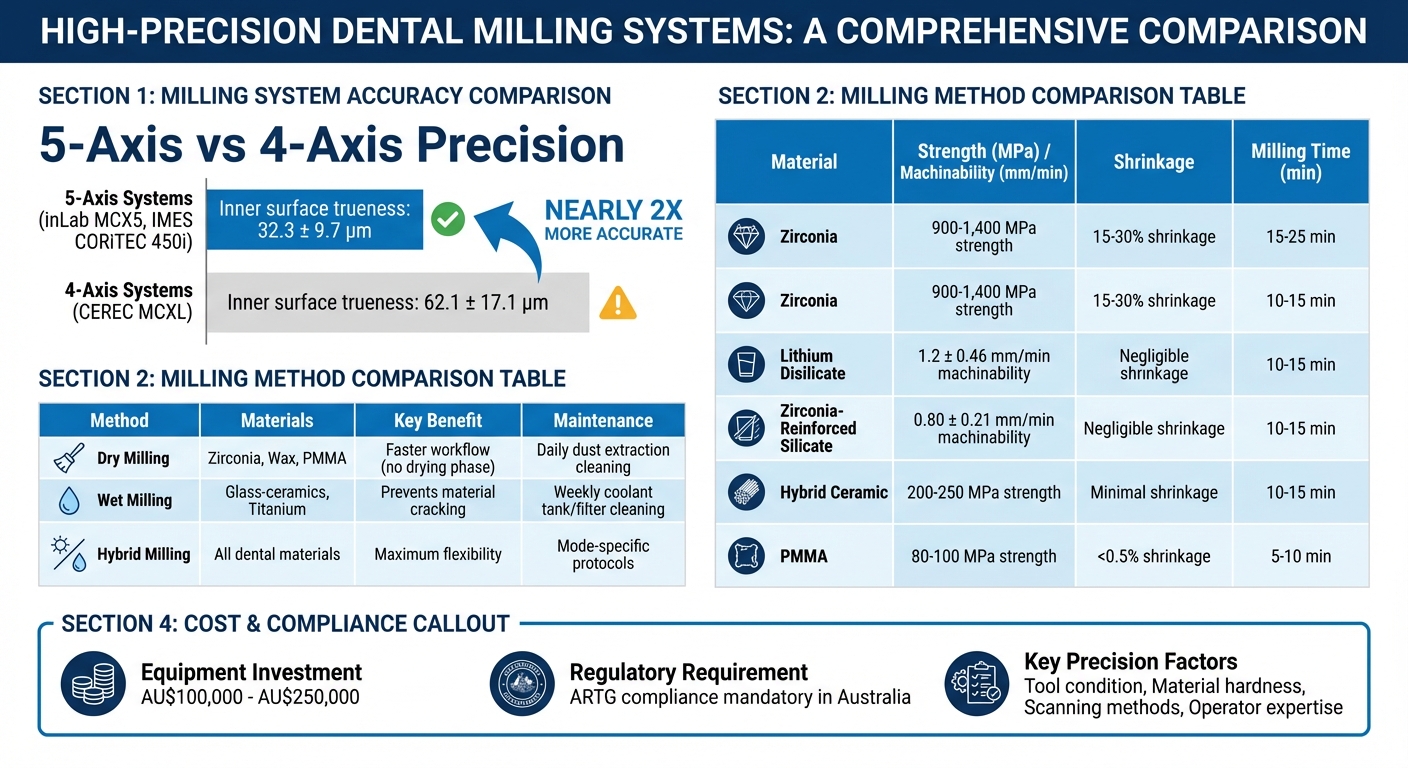
High-precision dental milling is reshaping Australian dentistry, offering faster workflows and improved restoration accuracy. With advancements in 5-axis milling systems, restorations now achieve inner surface precision as fine as 32.3 μm, nearly double the accuracy of older 4-axis systems. Modern materials like zirconia and lithium disilicate, combined with advanced milling technologies, deliver better-fitting, longer-lasting dental restorations while reducing manual adjustments. However, this precision comes with challenges, including high equipment costs (AU$100,000–AU$250,000), tool wear, and strict adherence to quality standards.
Key takeaways include:
- 5-axis systems outperform 4-axis machines in accuracy and handling complex geometries.
- Material choice impacts outcomes: zirconia requires oversized designs due to shrinkage, while lithium disilicate offers smoother milling but may need thicker preparations.
- Maintenance matters: worn tools and improper calibration directly affect precision.
- Wet, dry, and hybrid milling methods cater to different materials, balancing efficiency and surface quality.
- Compliance with Australian regulations (ARTG) is critical for in-house milling practices.
This guide explores the technologies, processes, and materials shaping dental milling in Australia, offering practical insights for clinics and labs striving to balance precision, cost, and patient outcomes.
Dental Milling Systems Comparison: 5-Axis vs 4-Axis Precision and Material Performance
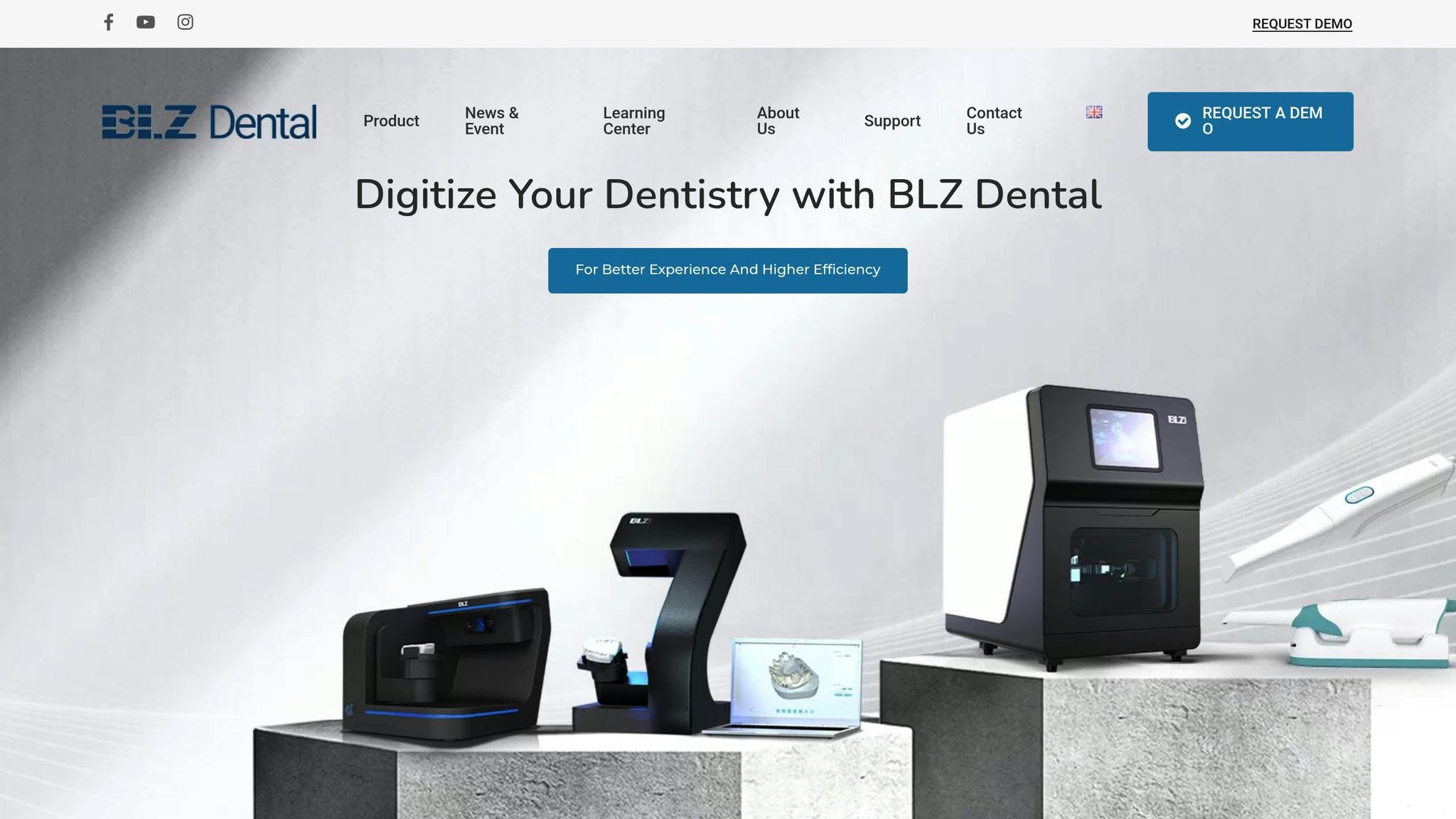
Introduce BLZ Dental MO150 – 5-Axis Dry Milling Machine
What Affects Precision in Dental Milling
Precision in dental milling depends on several key factors, each playing a significant role in determining the accuracy of the final restoration. One of the most critical factors is tool condition. A study conducted by Dankook University in 2021 highlighted how quickly tungsten carbide burs wear down during titanium alloy milling. Their findings revealed that the marginal opening started at 49 µm during the first milling, increased to 172 µm by the third cycle, and reached 278 µm by the sixth – exceeding clinical limits [8]. Researcher Hae-Hyoung Lee summarised the importance of tool maintenance by stating:
"The results recommend proper changing frequency of cutting burs to achieve the quality of fit and predictable outcomes for dental CAD/CAM prostheses" [8].
Another major factor is material hardness, which directly influences surface roughness. Research shows that the type of biomaterial – such as ceramic or composite – has a more pronounced effect on surface quality than the milling feed rate [7]. Additionally, the configuration of the milling system impacts accuracy. For instance, 5-axis milling units, like the inLab MCX5 and IMES CORiTEC 450i, achieve inner surface trueness of around 32–34 µm, significantly outperforming 4-axis systems like the CEREC MCXL, which averages 62.1 µm [5].
Scanning methods and operator expertise also play a crucial role. Full-arch scans tend to have higher root mean square (RMS) errors compared to quadrant scans, with accuracy stabilising after about 20 alignment points. Moreover, experienced operators consistently achieve better results, improving the overall precision of milling operations [6].
How Precision is Measured in Dental Milling
When evaluating milling accuracy, dental professionals focus on specific metrics. Trueness measures how closely the milled restoration matches the original digital design, often expressed as the mean deviation or RMS error between the reference file and the physical object. Precision, on the other hand, refers to the system’s ability to consistently reproduce identical restorations from the same digital file.
Other key measurements include marginal fit, which assesses the gap between the restoration’s edge and the preparation line, and internal fit, which examines the space between the restoration’s inner surface and the abutment. In one study comparing four milling systems for zirconia frameworks, mean gap sizes ranged from 84 µm (VHF CAM 4-02) to 132 µm (CEREC MCXL), with notable variations across different parts of the restoration [9].
Comparing Manual and Digital Workflows
Digital workflows offer a clear advantage over traditional methods like lost-wax casting by reducing production time and labour costs [8]. However, errors can still occur at various stages, including scanning, CAD design, milling, sintering, and manual finishing. Despite these potential pitfalls, digital systems are valued for their consistency, which helps minimise quality variations often seen with manual techniques.
The milling technique also influences the final restoration quality. End milling, which uses the tool tip, generally results in lower surface roughness and an isotropic surface topology. This makes it a preferred choice for functional occlusal surfaces [7]. The precision of digital systems often reduces the need for manual finishing, which can add up to 9% to production costs [10]. This consistency not only streamlines production but also shapes decisions around tool selection and cutting strategies.
Methods for Testing Milling Accuracy
To ensure precision, laboratories use various advanced techniques to test milling accuracy. One widely used method is 3D surface mapping, where the milled restoration is scanned and compared to the original CAD file. This process generates colour-coded deviation maps that highlight any discrepancies. Tools like Geomagic Control X, GOM Inspect, and CloudCompare are commonly used for this purpose [6][5].
Another method is the silicone replica technique, which involves seating the restoration in a light-body polyvinyl siloxane (PVS), stabilising it with a regular-body silicone, and then examining cross-sections under a metallurgical microscope to measure internal and marginal gaps [8]. For non-destructive evaluation, micro-CT analysis provides 3D imaging to assess marginal and internal adaptation without compromising the restoration [5].
Additional tools include desktop laboratory scanners like the inEos X5 and Zirkonzahn S600, which digitise milled restorations for comparison against their original designs. Devices like the Bruker Alicona, which use focal variation, measure 3D surface topography and roughness parameters. These techniques form the foundation for improving milling technology and refining material applications.
Technology Improvements in Dental Milling
Advancements in milling technology have revolutionised precision in dental laboratories. Modern machines now boast features that were once out of reach, with improvements in machine design, processing techniques, and tool management leading the charge.
3-Axis vs 5-Axis Milling Systems
One of the biggest leaps forward in dental milling has been the transition from 3-axis to 5-axis systems. While 3-axis machines operate along the X, Y, and Z coordinates, they struggle with complex geometries and undercuts. In contrast, 5-axis systems introduce A and B rotational axes, enabling the creation of intricate tooth anatomies in a single clamping process [13].
For example, studies have shown that 5-axis machines like the inLab MCX5 achieve inner surface trueness of 32.3 ± 9.7 µm, compared to 62.1 ± 17.1 µm in some 4-axis systems [5]. This capability reduces cumulative errors and ensures a more precise fit.
Additionally, 5-axis systems feature high-frequency spindles that can reach speeds of up to 100,000 rpm [13]. Their simultaneous kinematics deliver superior aesthetic outcomes across a wide range of materials [3]. As noted by imes-icore:
"5-axis systems offer more freedom of movement and enable complex milling in a single pass" [13].
Wet, Dry, and Hybrid Milling Methods
The choice between wet, dry, or hybrid milling can greatly impact workflow efficiency and the final surface quality of restorations.
- Dry milling uses pressurised air and dust extraction to handle materials like zirconia, wax, and PMMA. It’s particularly suited for single-visit procedures since there’s no need for a drying phase before sintering [1]. As Dentsply Sirona explains:
"Dry milling saves a considerable amount of time, as the restoration does not need to be dried before sintering – thus enabling the chairside procedure" [1].
- Wet milling, on the other hand, uses distilled water mixed with lubricants and coolants, making it ideal for glass-ceramics, lithium disilicate, and titanium [12]. The liquid prevents cracking and tool overheating but requires regular maintenance, like cleaning coolant tanks and filters weekly [12].
- Hybrid systems combine the best of both worlds, allowing users to switch between wet and dry modes. Machines like the PrograMill PM3 and CEREC Primemill can handle a variety of materials, from zirconia to glass-ceramics, without the need for separate equipment [3][1]. These systems often feature RFID technology to automatically detect the material and apply the optimal milling strategy [3][11].
| Milling Method | Primary Materials | Key Benefit | Maintenance Requirement |
|---|---|---|---|
| Dry | Zirconia, Wax, PMMA | Faster workflow (no drying phase) | Daily cleaning of dust extraction |
| Wet | Glass-ceramics, Titanium | Prevents material cracking | Weekly cleaning of coolant tanks/filters |
| Hybrid | All dental materials | Maximum flexibility | Mode-specific cleaning protocols |
Tools and Cutting Strategies
Tool management has seen major upgrades, with automatic tool changers (ATC) now offering 13–16 positions [3][11]. These systems support multi-stage milling – covering roughing, finishing, and fine detailing – without the need for operator involvement, enabling efficient overnight production [11][4].
Spindle stability is another critical factor. Machines are designed to damp vibrations, ensuring that high-speed spindles (operating at extreme velocities) maintain precision [13][14].
Advanced cutting strategies also play a significant role. "Extra Fine" milling modes, which use tools as small as 0.5 mm in diameter, can achieve precision levels down to 0.5 mm [1]. Research indicates that these modes offer better marginal fit compared to standard methods. For instance, 4-axis machines using Extra Fine modes achieved occlusal surface trueness of 25.7 ± 9.3 µm, compared to 48.7 ± 23.3 µm in standard modes [5].
Finally, CAM software has streamlined the process by automatically identifying internal contours and preparation margins, reducing the risk of manual errors [3]. This seamless integration between hardware and software ensures even the most complex restorations meet the stringent tolerances required for clinical success.
These advancements pave the way for examining how different materials influence milling precision.
How Different Materials Affect Milling Precision
The properties of dental materials – such as hardness, brittleness, shrinkage, and machinability – play a crucial role in determining milling precision.
Zirconia and Glass Ceramics
Zirconia is typically milled in its pre-sintered state to minimise tool wear. However, the material shrinks by 15–30% during sintering, requiring designs to be oversized by roughly 25%. This demands highly accurate CAD calculations to ensure the final restoration fits properly after firing [9][17][18].
Despite its brittle nature, pre-sintered zirconia exhibits a transformation toughening mechanism, giving it a "ductile-like" behaviour during machining [15]. This property reduces the risk of catastrophic cracking, though the material is still prone to micro-cracks during wet-grinding [16][17]. As Ali Fahmy and Raafat Tammam explain:
"Milling fully sintered Zirconia might be difficult because of its extreme hardness. Instead, a CAD/CAM system is used to grind a partially sintered zirconia block… Sintering results in a linear shrinkage of 15% to 30%" [17].
Glass ceramics, particularly lithium disilicate, generally offer better milling precision compared to zirconia-reinforced alternatives. A study conducted in October 2020 by Seen-Young Kang and colleagues evaluated three ceramic materials using a CEREC Omnicam and inLab MCXL milling machine. The results showed that lithium disilicate materials (Amber Mill by HASS Corp and IPS e.max CAD by Ivoclar Vivadent) achieved inner surface RMS values of 58.76 ± 6.55 µm and 59.42 ± 8.89 µm, respectively. Meanwhile, zirconia-reinforced lithium silicate (CELTRA DUO by Dentsply Sirona) had a higher error of 67.12 ± 3.76 µm [16].
This difference stems from machinability. Lithium disilicate mills at a rate of 1.2 ± 0.46 mm/min, while zirconia-reinforced silicate – containing 10% zirconium oxide for added strength – mills at a slower rate of 0.80 ± 0.21 mm/min [16]. The latter also requires 10–30% higher grinding forces, leading to increased errors, especially in narrow areas where standard burs struggle to maintain precision [16].
A 2021 study by Karl Martin Lehmann at the University Medical Centre of Mainz compared four milling systems for 4-unit zirconia frameworks. The VHF CAM 4-02 Impression system achieved the smallest mean gap size at 84 ± 43 µm, followed by the Roland DWX-50 (101 ± 67 µm), Datron D5 (113 ± 65 µm), and Cerec MCXL (132 ± 71 µm) [9]. While all these measurements fall within the acceptable marginal gap range of 50 to 100 µm [9], the findings highlight how material properties and milling systems interact to influence outcomes.
Polymers and Hybrid Materials
Polymers like PMMA, often used for provisional restorations, are relatively fast to mill, taking just 5–10 minutes. They have a flexural strength of 80–100 MPa and exhibit minimal shrinkage (<0.5%). However, diamond burs typically need replacement after about 30 units [18].
Hybrid ceramic materials, which blend resin and ceramic components, strike a balance between strength and machinability. With flexural strengths ranging from 200 to 250 MPa [18], they are ideal for thin-preparation crowns and onlays. Milling times range from 10 to 15 minutes, but their inherent brittleness makes them susceptible to cracking during wet-grinding [16][17]. For polymer-based materials, higher feed rates can significantly reduce production time without noticeably increasing surface roughness [7].
| Material | Flexural Strength (MPa) | Shrinkage | Machinability (mm/min) | Avg. Milling Time |
|---|---|---|---|---|
| Zirconia | 900–1,400 [18] | 15–30% [17] | High (pre-sintered) | 15–25 min [18] |
| Lithium Disilicate | N/A | Negligible | 1.2 ± 0.46 [16] | 10–15 min |
| Zirconia-Reinforced Silicate | N/A | Negligible | 0.80 ± 0.21 [16] | 10–15 min |
| Hybrid Ceramic | 200–250 [18] | Minimal | Moderate | 10–15 min [18] |
| PMMA | 80–100 [18] | <0.5% [18] | High | 5–10 min [18] |
Metals in CAD/CAM Milling
Milling metals like CoCr alloys introduces unique challenges due to their hardness. These materials, with flexural strengths of 1,200–1,500 MPa [18], cause rapid tool wear and require longer milling times (20–30 minutes), which can affect accuracy [17].
Another issue is material waste. Subtractive CAD/CAM milling for metals often leads to significant material loss, with up to 90% of the initial block being discarded [17]. The quality of a metal restoration’s internal fit depends heavily on the condition of milling tools; worn tools compromise precision [17].
Ali Fahmy, a Professor of Fixed Prosthodontics, underlines the importance of maintaining tools:
"Periodic changes in milling burs were required to achieve the quality of fit and predictable outcomes for dental CAD/CAM prostheses" [17].
For high-strength materials, effective coolant flow is critical to manage the heat and grinding forces generated during milling [16]. Emerging technologies like laser milling (ablation) offer an alternative, eliminating tool wear and reducing the risk of micro-cracks. As Fahmy notes:
"The laser beam’s diameter is at least ten times smaller than the diameter of a traditional milling bur, it can mill crowns with high-resolution details" [17].
When milling zirconia, keeping water temperature below 25°C helps prevent micro-cracking [18]. For pre-sintered Y-TZP (Yttrium oxide Tetragonal Zirconia Polycrystals), maintaining a cutting speed above 133 m/min and a minimum chip thickness of 0.047 mm ensures consistent results [15].
sbb-itb-2be92ed
Using Precision Milling in Dental Practice
Investing in high-precision dental milling in Australia can cost anywhere between AU$100,000 and AU$250,000 [2]. It demands meticulous calibration, smooth digital integration, and adherence to strict TGA-compliant quality standards. Here’s a closer look at calibration, digital workflows, and quality control measures.
Calibration and Equipment Maintenance
Calibration is only necessary when machining results fall outside acceptable tolerances [19]. As DentalPortal points out:
"At delivery, your machine is already calibrated. As long as your machining results are accurate, a new calibration is not necessary" [19].
In fact, unnecessary recalibration can harm a machine’s precision [19]. A better approach is to mill a test specimen first to confirm the machine’s accuracy. If the results are off, then recalibration is warranted. Before proceeding, always check the blank fixation and tool condition [19].
For machines such as the E5 series, it’s recommended to power down the unit for at least two hours before calibration [19]. Additionally, ensure the workspace temperature stays between 18–25°C [19].
Daily upkeep is just as important. Dr. James Tran from Bonnells Bay Dental stresses:
"The staff have to be trained to keep the milling machine absolutely as new as possible. If any powder gets caught in the machine, you’re in big trouble" [2].
Powder contamination can severely affect machine performance [2]. Using a sealed chamber or active suction can help prevent ceramic or resin powders from interfering with the machine’s moving parts [3][4]. Practices should also maintain a stable power supply, as interruptions during milling cycles could damage the spindle or the workpiece [2].
| Machine Model | Required Calibration Tool | Measurement Tolerance (Width/Height) |
|---|---|---|
| E5, K5, R5, S series | P200-R1-40 | 7.95 mm – 8.05 mm [19] |
| N4, N4+ | P200-R1-35 | 7.95 mm – 8.05 mm [19] |
| E4, Z4 | P200-R1-35 / P250-F1-40-T | X: 19.95–20.05 mm; Y: 17.95–18.05 mm [19] |
| E3 | P300-R2-60 | B1: 4.92 mm – 5.08 mm [19] |
Connecting Digital Workflow Components
Precision milling depends on more than just calibration – it also requires a well-integrated digital workflow. RFID technology is a game-changer here, as it automatically identifies materials and sets the correct parameters, minimising human error [3][20][11]. For instance, the PrograMill PM3 can detect material blocks and adjust settings automatically [3].
Upgrading software can significantly improve efficiency, particularly for zirconia restorations, with productivity gains of up to 50% [20]. However, this requires robust computer hardware capable of handling frequent updates. Outdated systems could lead to slow processing or even failure to implement new precision algorithms [2].
Advanced CAM software plays a key role by identifying critical design elements, such as internal contours and preparation margins, ensuring the digital design is accurately translated into the final restoration [3][20]. Real-time monitoring via cloud-based platforms or mobile apps allows practitioners to track the milling process and address any deviations immediately [3][20][4].
For in-house milling, some materials, like lithium disilicate, may need to be thicker (1.5 mm) compared to lab-milled versions (0.5 mm) to avoid chipping during the burr-cutting process [2]. Dr. Tran highlights the practical challenges of this setup:
"If the dentist is doing the milling work, they will have to take time out of their day to design, mill and polish the crown, or they have to pay someone to do it" [2].
Quality Control in Dental Milling
Quality control is the backbone of precise and compliant dental milling. Australian regulations require that CAD/CAM-milled devices adhere to ARTG guidelines [21]. In this context, practitioners who mill crowns or splints are classified as "sponsors" under Australian law [21]. This means that all millable blocks or discs must be listed in the Australian Register of Therapeutic Goods (ARTG) before use [21]. For imported materials, it’s the practitioner’s responsibility to ensure ARTG compliance [21].
Non-implantable devices like crowns or bridges made from ARTG-approved materials are generally exempt from needing separate ARTG inclusion. However, practitioners must still meet safety and performance standards, provide instructions for use, and report any adverse events to the TGA [21].
| Regulatory Category | ARTG Inclusion Required? | Practitioner Responsibility |
|---|---|---|
| Imported Millable Blocks | Yes | Must include in ARTG before import [21] |
| Local Millable Blocks | No (if supplier included them) | Verify supplier’s ARTG status [21] |
| Finished Crowns/Splints | Exempt (if materials are in ARTG) | Meet Essential Principles & report adverse events [21] |
| Implantable Devices | Yes | Must be included in ARTG regardless of material source [21] |
Activating IoT features on milling devices ensures real-time monitoring, helping to catch any deviations during the process [3]. Following manufacturer-recommended service schedules, including software updates and CAD/CAM support, is also essential for maintaining accuracy and staying up to date with the latest milling techniques [3]. By adhering to these protocols, practices can consistently deliver precise restorations that meet the highest standards of care.
Clinical Applications and Future Developments
How Precision Affects Patient Outcomes
High-precision milling has transformed dental restorations, offering longer-lasting results and shorter appointment times. For example, 5-axis systems can achieve an inner surface accuracy of around 32.3 μm, ensuring restorations fit more precisely from the outset. This reduces the need for manual adjustments and cuts down chair time[5]. Better fitting restorations also mean smaller marginal gaps, which help prevent secondary caries and extend the life of the restoration. Additionally, smoother surfaces limit plaque buildup, promoting healthier gum tissue around the restoration[7].
In Australia, the rise of same-day dentistry has brought added convenience, allowing patients to complete their treatments in just one visit[2]. However, in-house milling comes with trade-offs. For instance, materials like lithium disilicate require thicker preparations (approximately 1.5 mm) compared to the 0.5 mm achievable with outsourced lab techniques[2]. This means more of the natural tooth may need to be removed, raising concerns about preserving tooth structure over the long term. These advancements, while promising, highlight the need for ongoing research and careful consideration in clinical applications.
Current Research Limitations
Despite the clear benefits, research on high-precision milling still faces limitations, particularly in understanding its long-term effects. Most studies focus on laboratory settings, measuring factors like surface accuracy and fit, but fail to capture how these restorations perform after five or ten years in real-world conditions[5]. Inconsistent study designs and a lack of standardised testing across materials make it even harder to draw firm conclusions about best practices[7].
Interestingly, the global dental CAD/CAM market is expected to grow at an annual rate of 5.6% to 8.1% through 2027[7]. Yet, the research has not kept pace with these technological advances. Practical challenges, such as the time required for designing, milling, and polishing, remain underexplored in laboratory studies, making it harder to translate findings into day-to-day clinical workflows[2].
Australian Regulations and Practice Standards
In Australia, precision milling must align with strict local regulations and quality standards. Digital workflows, such as intraoral scanning, not only improve accuracy but also enhance infection control by eliminating the need for physical impression trays, thereby reducing cross-contamination risks[2].
However, practices adopting in-house milling must also prepare for potential disruptions. Power outages or IT issues can bring production to a standstill, forcing the cancellation of same-day appointments[2]. While this technology is ideal for simpler cases like single crowns or 3-unit bridges, more complex restorations – such as anterior veneers or long-span bridges – are often better handled by professional labs[2]. Striking a balance between patient convenience and clinical quality remains a key challenge for Australian dental practices as they integrate these advanced technologies into their workflows.
Conclusion
High-precision dental milling has reshaped the way restorations are manufactured, combining advanced technology with material-specific techniques. For instance, modern 5-axis milling systems achieve an inner surface accuracy of around 32.3 μm, which is nearly twice as precise as 4-axis systems at 62.1 μm [5]. This level of precision directly benefits patients by reducing marginal gaps, cutting down chair time, and ensuring longer-lasting restorations. However, achieving such results also requires strict adherence to quality control protocols.
Technology alone can’t guarantee success. Consistent results depend heavily on rigorous quality assurance. As Modern Dental Pacific highlights:
"Our governance processes show our clients, the industry and the world that we believe in and adhere to the highest standards of integrity in all that we do" [22].
In addition to precision, compliance with regulatory and ethical standards is crucial in Australia. Dental laboratory products are classified as medical devices under TGA regulations. This means that in-house milled products must meet TGA/ARTG standards to ensure patient safety and performance [22][23]. These regulations not only safeguard patients but also ensure that devices meet the necessary performance benchmarks.
While advancements in technology promise faster and more precise solutions, the importance of ongoing research and adherence to standards cannot be overstated. The dental CAD/CAM market is projected to grow annually by 5.6% to 8.1% through 2027 [7], reflecting continued innovation. However, the limited scope of long-term studies underscores the need to prioritise quality control and compliance. As MV Dental Laboratory aptly notes:
"Precision is the cornerstone of dental laboratory work, as even the slightest deviation in measurements can result in significant issues for the patient" [24].
FAQs
What are the key benefits of using a 5-axis dental milling system compared to a 4-axis system?
A 5-axis dental milling system takes precision and flexibility to the next level by allowing the tool to tilt and rotate along an extra axis. This added movement means it can handle complex designs like steep angles, deep undercuts, and angled screw channels – all in a single setup. By minimising the need for repositioning, it not only saves time but also achieves impressive accuracy, typically within 0.02–0.04 mm.
When compared to 4-axis systems, 5-axis milling stands out by delivering more precise tolerances, smoother surface finishes, and compatibility with a broader range of materials. This makes it the go-to solution for crafting intricate dental restorations where both precision and quality are non-negotiable.
How do zirconia and lithium disilicate materials impact the precision of dental restorations?
The material you choose significantly impacts the accuracy of dental restorations. Lithium disilicate crowns are known for their precise milling, often showing smaller deviations and higher accuracy compared to zirconia-based restorations. That said, zirconia can deliver similar precision when manufactured through milling or 3D printing, though it may show slightly larger deviations.
Both materials are staples in contemporary dentistry. The decision between them typically hinges on clinical needs and the priority placed on factors like strength, aesthetics, and precision.
What should I focus on to maintain the precision of dental milling equipment?
To ensure dental milling equipment delivers precise results, consistent maintenance of both its mechanical and digital components is crucial. Start by focusing on routine checks of the spindle and bearings, as they are essential for maintaining accuracy. Tools should also be replaced on a regular schedule, especially when working with tougher materials like titanium, to avoid wear and potential breakage. Don’t overlook the coolant system – clean the filters, keep fluid levels adequate, and flush it regularly to prevent overheating issues.
On the digital side, keeping software and material management systems up-to-date is key to avoiding mismatches between tools and materials. Real-time monitoring systems can be especially helpful in detecting problems like temperature spikes or tool-change errors before they escalate. Additionally, maintaining a stable workspace – set to around 20 °C, with low humidity and minimal vibrations – is vital for getting the best performance out of both hardware and software. With regular care, dental labs can consistently achieve dependable, high-precision outcomes.
Related Blog Posts
- Wear-Resistant Materials in Dental Restorations
- CAD/CAM in Dentistry: Cost vs Value
- 3D Printing in Dental Implant Prototyping: How It Works
- Material Options for Chairside CAD/CAM Restorations
Important Notice: Any surgical or invasive procedure carries risks. Before proceeding, you should seek a second opinion from an appropriately qualified health practitioner.
Individual results may vary. The information provided in this article is for educational purposes only and does not constitute medical advice.
Checkout Related Blogs




Get in touch with us
For more information, call us now to start feeling better. Or fill the form below to make appointment
The Latest News from Complete Smiles
How to Clean Clear Plastic Retainers
Checklist for Choosing Wearable Dental Devices
Checklist for Choosing Cloud AI Platforms in Dentistry

Complete Smiles Bella VistaAccepts All Major Health Funds, Including





