





How to Brush Teeth with Limited Hand Movement
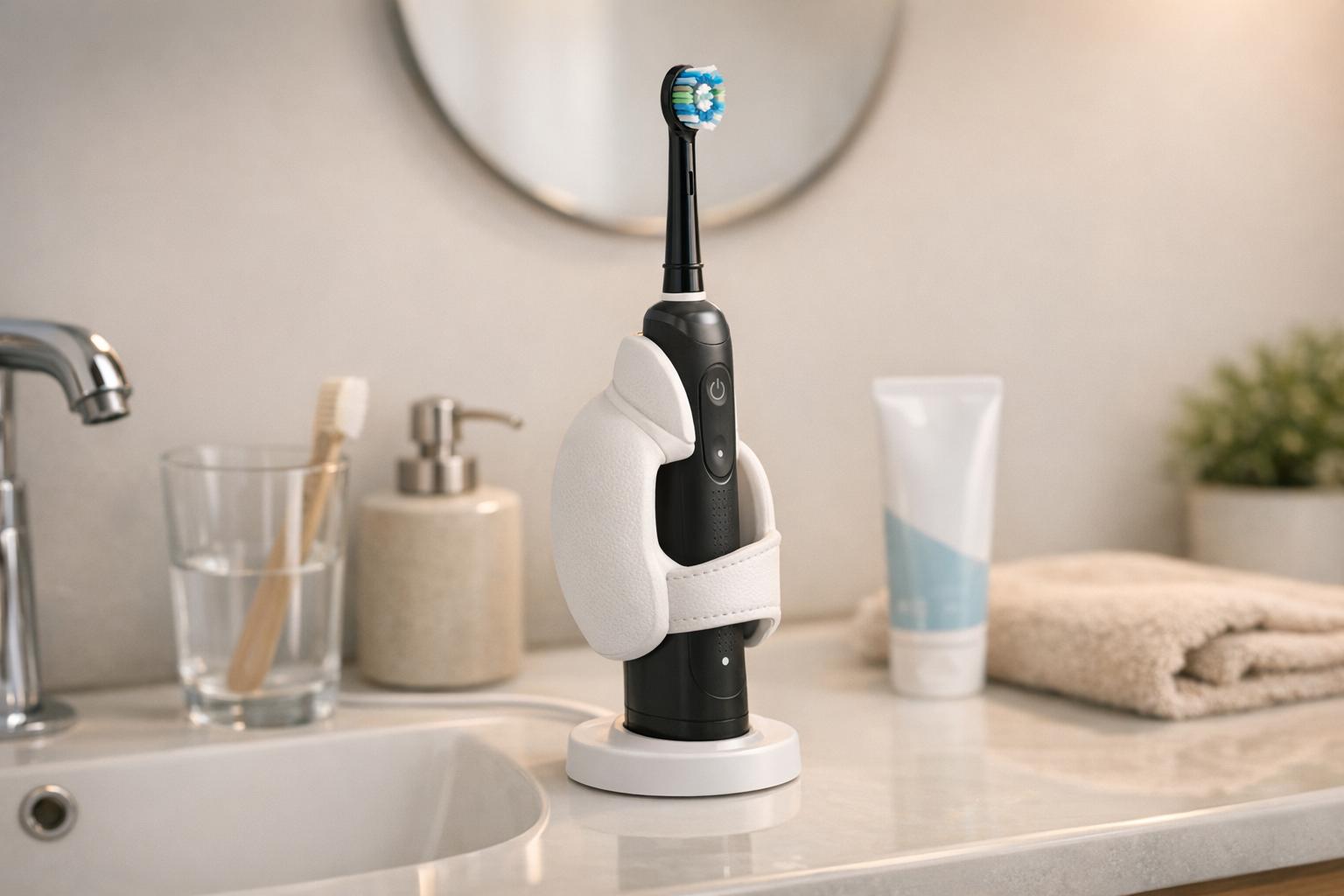
Brushing your teeth can be tough when hand movement is restricted, but it’s still possible to maintain good oral health. Using the right tools, techniques, and small adjustments can make a big difference. Here’s a quick rundown:
- Electric toothbrushes: Thicker handles and automated brushing reduce effort.
- Handle modifications: Add foam tubing, a tennis ball, or straps for easier grip.
- Special tools: Three-headed toothbrushes, floss picks, and water flossers simplify cleaning.
- Techniques: Let electric brushes do the work and focus on proper angles.
- Caregiver tips: Use safe positioning, avoid fingers in the mouth, and brush gently.
- Bathroom setup: Good lighting, stable seating, and a spitting bowl can help.
These strategies can reduce strain and improve oral hygiene for those with limited mobility. Always consult a dentist or occupational therapist for tailored advice.
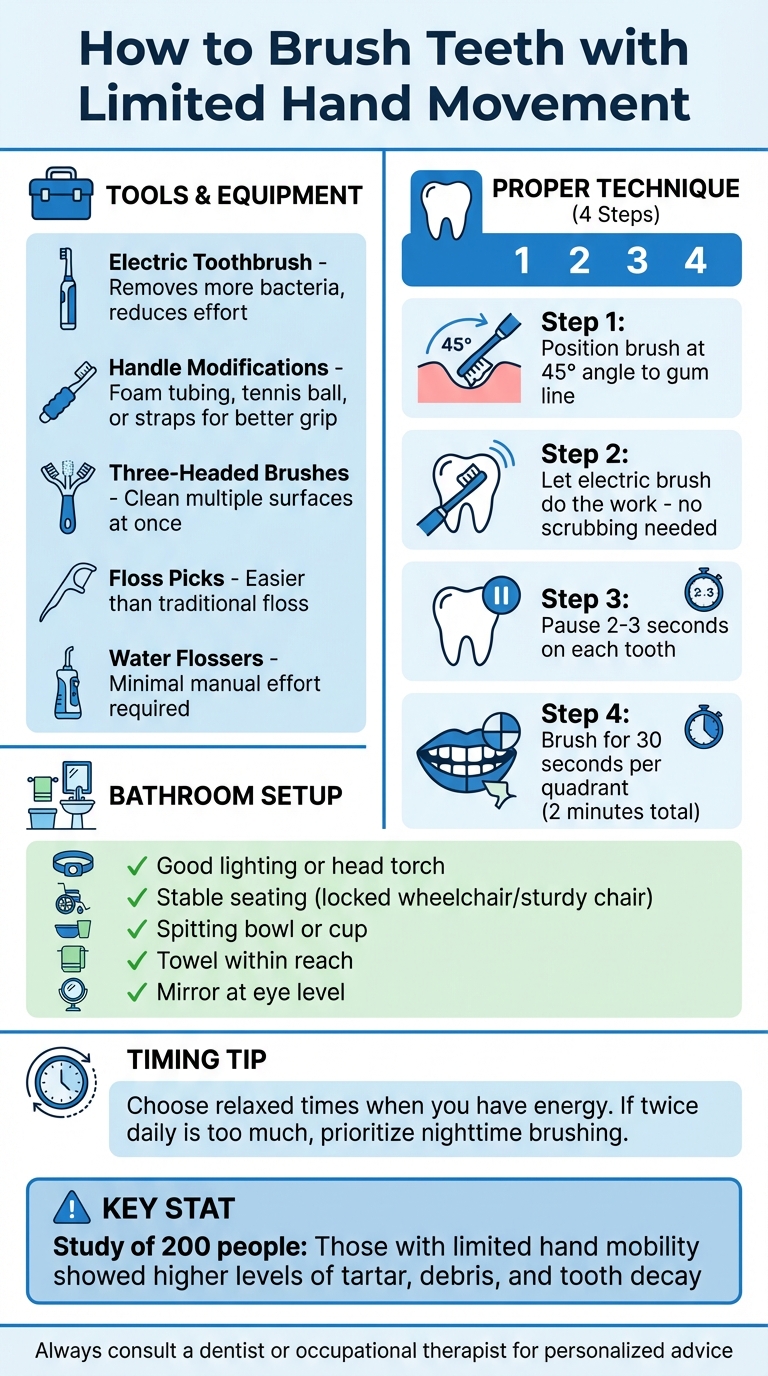
Step-by-Step Guide to Brushing Teeth with Limited Hand Movement
Adaptive Toothbrushes
How Limited Hand Movement Affects Oral Health
Living with conditions like arthritis, cerebral palsy, stroke, or tremors can make everyday tasks – like brushing teeth – much harder. These conditions often affect grip strength and fine motor skills, making it difficult to clean all tooth surfaces properly, especially tricky spots like back molars and along the gum line. This can lead to plaque buildup that, if not removed, hardens into tartar, which only dental professionals can address [1][9].
When brushing becomes a challenge, oral health can suffer. A study involving 200 people with joint pain and limited hand mobility revealed higher levels of tartar, debris, and tooth decay compared to individuals without these limitations [11]. This connection is further emphasised by experts in the field. For example, Anshula N Deshpande from the Department of Pediatric & Preventive Dentistry explains:
"Cerebral palsy is associated with poor motor skills and manual dexterity that hampers their ability to brush and thus leads to poor oral hygiene." [7]
But the effects of limited hand movement go beyond oral discomfort. Poor oral hygiene can allow harmful bacteria to enter the bloodstream, potentially causing heart disease, kidney inflammation, or respiratory infections like pneumonia [10][12]. Additionally, there’s a two-way relationship between gum disease and diabetes: gum inflammation can make blood sugar harder to manage, while diabetes increases the risk of gum disease. To complicate matters further, many people with limited mobility take medications that cause dry mouth, which speeds up tooth decay and raises the risk of infection [4].
The physical effort required to brush can also be a barrier. For those with neuromuscular conditions, even holding their mouth open long enough for a proper clean can be painful [1][4]. Involuntary movements, such as tremors or spasms, increase the likelihood of accidentally injuring the gums or cheeks [7]. And while most people aim to brush for the recommended two minutes, limited hand movement may cut this time down to just 45 seconds [11].
Practical Solutions for Brushing with Limited Hand Mobility
Brushing your teeth can feel like an uphill battle if you have limited hand mobility, but the right tools and techniques can make it much simpler. By reducing the need for strength and fine motor skills, these solutions can turn brushing from a frustrating task into a more manageable part of your daily routine.
Electric Toothbrushes: A Game-Changer
Electric toothbrushes can be a lifesaver for those with restricted hand movement. According to the Australian Dental Association, research shows that electric toothbrushes not only remove more bacteria but also help reduce gum inflammation compared to manual brushes [6]. Their thick handles and automated brushing action mean less physical effort is required [2][8].
When shopping for an electric toothbrush, look for features that make brushing even easier. Models with built-in timers help you stick to the recommended two-minute brushing time by dividing it into 30-second intervals for each quadrant of your mouth [13][6]. Pressure sensors are another handy feature – they alert you if you’re pressing too hard, which helps protect your gums [6]. For even less manual effort, consider brushes with three-sided heads, like the Collis Curve or Dr Barman’s Super Brush, which clean multiple surfaces of your teeth at once [2][4].
And if the handle still feels tricky to grip, there are simple modifications you can try.
Making Handles Easier to Hold
You don’t need to buy a special toothbrush to make brushing easier – sometimes a simple handle modification can do the trick. Adding foam pipe insulation, bicycle grips, or even a slit tennis ball to the handle can enlarge the grip, making it easier to hold. For those with very limited grip strength, strapping devices like the "Handcuff" strap or silicone "EazyHold" straps can secure the brush to your hand [2][14].
There are also innovative solutions emerging. In December 2024, researchers at SRM Dental College & Hospital in India tested a 3D-printed "all-in-one glove" designed for individuals with spastic cerebral palsy. This patented glove, which integrates toothbrush heads and vibratory elements into the fingers, showed impressive results. Over six months, participants experienced a 48.87% reduction in plaque and a 31.57% drop in bleeding scores compared to traditional brushing methods [5]. Study leader Sucharitha Palanisamy noted:
"The utilization of the ‘All in one glove’ has improved the effectiveness of oral hygiene maintenance and gingival health in spastic CP individuals" [5].
These kinds of advancements show how technology can make oral care more accessible.
Techniques That Make Brushing Easier
While tools are important, the way you brush matters too. Adopting the right technique can minimise movement while maximising results. For example, the "guide and pause" method works well with electric toothbrushes. Instead of scrubbing, hold the bristles at a 45-degree angle and let the brush do the work. Pause for a few seconds on each tooth, working your way through the four quadrants of your mouth – 30 seconds per quadrant [8][15][6].
Dental Health Services Victoria offers this advice:
"Start with the outside surfaces. Let the electric toothbrush do the work for you. Move the toothbrush slowly from tooth to tooth, gently massaging the gums, and stopping for a few seconds on each tooth" [8].
After brushing, spit out the excess toothpaste but skip rinsing with water. This leaves a protective fluoride layer on your teeth, giving them extra protection [8][3].
With the right tools and techniques, maintaining oral hygiene becomes far less of a challenge, even with limited hand mobility.
Options for Cleaning Between Teeth
Brushing your teeth is essential, but it only tackles three out of five tooth surfaces. That means the spaces between your teeth often go untouched. And here’s a surprising fact: 75% of Australians skip cleaning between their teeth altogether [16]. Thankfully, there are easier tools available that make it simpler to clean these hard-to-reach areas, so you don’t have to wrestle with traditional string floss.
Floss Holders and Floss Picks
Floss picks, also called flossettes, are a handy alternative to traditional floss. These tools come with a short piece of floss – about 2 cm – already strung between two plastic prongs on a curved handle [16][17]. According to SA Dental:
"Flossettes are an excellent alternative to dental floss, especially for… people with reduced manual dexterity who find reaching all parts of the mouth difficult" [16].
Using a flossette is straightforward. Gently guide the floss between your teeth using a back-and-forth, see-saw motion, and avoid forcing it down. Once it’s in place, slide it along the sides of each tooth to remove plaque and debris. The sturdy handle makes it easier to clean the back teeth, which are often the hardest to reach.
Another great option is interdental brushes. These resemble tiny bottle brushes with short handles and flexible wire bristles. The Australian Dental Association highlights their usefulness for people who find flossing tricky [17]. Choose a brush that fits snugly but comfortably between your teeth without needing to force it. You can rinse and reuse these brushes until the bristles wear out or the wire bends [16][17].
Water Flossers
If manual dexterity is a challenge, water flossers might be your best bet. These motorised devices use a pressurised stream of water to clean between teeth and along the gum line [17]. They require minimal effort – just guide the nozzle along your teeth, and the water does the rest.
To avoid splashing, start with the nozzle at the back of your mouth before turning it on. Slowly move it along the inner and outer surfaces of your teeth, holding the stream over each tooth for about two seconds [17].
If you notice bleeding during this process, don’t panic. It’s usually caused by inflammation from plaque buildup rather than the cleaning itself. Continue for a short while, but if bleeding persists despite regular cleaning, it’s a good idea to consult your dentist [17][4].
sbb-itb-2be92ed
How Caregivers Can Help with Tooth Brushing
Helping someone brush their teeth requires the right tools, positioning, and approach. Start by gathering what you’ll need: disposable gloves, a small-headed soft or electric toothbrush, fluoride toothpaste, a towel, a basin, and extra lighting to clearly see inside the mouth. Once you have everything ready, focus on positioning for both comfort and ease of access.
Positioning for Comfort and Accessibility
Keeping the person upright is key to preventing choking. If they use a wheelchair, stand or sit behind them with the wheels locked. For someone seated on the floor, let them lean back against your knees for support. If the individual is bedridden, use pillows to gently tilt and support their head.
Brushing Techniques for Caregivers
Once the person is comfortably positioned, follow safe and effective brushing techniques. Always explain what you’re about to do to ensure they feel comfortable and give their consent. Avoid putting your fingers in their mouth – Dental Health Services Victoria advises:
"Never put fingers inside a person’s mouth." [18]
If they have trouble keeping their mouth open, use a soft, damp washcloth or a professional bite block instead of your hands.
To improve visibility, gently lift their lips and retract their cheeks using a second toothbrush or a damp washcloth. When brushing, hold the toothbrush at a 45-degree angle to the gum line and use small, circular motions. Be thorough – clean the outside, inside, and chewing surfaces of the teeth, as well as the tongue and the inside of the cheeks. If the person can participate but has limited mobility, try a hand-over-hand technique to guide their movements.
After brushing, encourage them to spit out the excess toothpaste, but skip rinsing with water. This allows the fluoride to keep protecting their teeth.
Making the Bathroom Easier to Use
Tweaking your bathroom setup and routine can go a long way in reducing strain and making oral care simpler.
Bathroom Setup Changes
Small adjustments to your bathroom environment can make brushing more manageable. Start with lighting – good visibility is key when hand movement is limited. Position a mirror directly in front of you or use a head torch to see clearly while brushing. This helps you track which areas have already been cleaned [1][4].
If leaning over a sink is uncomfortable, try using a bowl or cup for spitting instead [1][4]. Keep a clean bath towel within reach to protect your clothes and wipe your mouth without needing extra effort [4].
Stable seating is another crucial factor. Lock the wheels on your wheelchair or use a sturdy chair to ensure you feel secure. Even a beanbag can be a good option, as noted by the Queensland Government:
"Sitting on a beanbag might be an option as it lets the person relax without fear of falling" [1].
When you’re not worried about balance, your body and jaw naturally relax, making brushing less tiring. Pairing these adjustments with brushing at the right time can make a big difference.
Choosing the Best Time to Brush
Once your bathroom setup is sorted, think about timing your oral care routine to match your energy levels. SA Dental advises:
"Choose a time when you and they are relaxed and able to focus on the task" [4].
Avoid brushing when you’re feeling rushed or drained. If brushing twice a day feels overwhelming, focus on the session before bed [4]. This helps prevent food and plaque from lingering overnight. While the Australian Dental Association recommends brushing twice daily for 2 minutes each time [6], it’s better to do one thorough session than two hurried ones.
Conclusion
Taking care of oral hygiene when hand movement is limited doesn’t have to be overwhelming. With the right tools and a few simple adjustments, maintaining good oral health is entirely possible. Assistive devices like electric toothbrushes, grip aids, floss picks, and water flossers can make daily routines much easier and more effective.
Small changes in the bathroom – such as adding better lighting, a spitting bowl, or stable seating – can also make a big difference in comfort and efficiency. If brushing twice a day feels too challenging, prioritising a thorough clean at night is a practical approach.
For those who provide care, techniques like proper positioning and gentle brushing can go a long way in ensuring effective oral care. If gums bleed, it’s often a sign to brush more gently and regularly, not to stop altogether.
Since every situation is different, seeking guidance from a dental professional or occupational therapist is key. They can offer tailored advice and help address concerns early, keeping oral health on track. Regular check-ups are an important part of staying ahead of potential issues.
FAQs
What are the best toothbrush options for people with limited hand mobility?
For those with limited hand mobility, selecting or adapting the right toothbrush can make a world of difference. Electric toothbrushes are often a go-to choice. Their motorised heads take care of the brushing motion, so users only need to guide the brush gently. Many come with ergonomic handles for an easier grip, and some even feature multi-headed designs that clean multiple tooth surfaces simultaneously, reducing the effort required.
If a manual toothbrush is preferred, adding a thicker grip can greatly enhance control and comfort. There are plenty of DIY options to achieve this, such as wrapping the handle with foam tubing, silicone tape, or even using something as simple as a tennis ball. Alternatively, you can find manual toothbrushes designed with built-in contoured or soft rubber grips. For those who need extra assistance, attachments like handle extenders or loops can make lifting or holding the brush more manageable.
Combining an electric toothbrush with a thickened grip often strikes the perfect balance between ease and efficiency, making it much simpler to maintain good oral hygiene despite limited hand movement.
How can a caregiver help someone with limited hand movement brush their teeth?
Caregivers can play a key role in making tooth brushing a smoother experience by setting up a comfortable environment and using tools that simplify the process. Start by gathering the basics: a soft-bristled toothbrush (or consider an electric or three-sided one), fluoride toothpaste, a towel to protect clothing, and ensuring there’s good lighting. To improve grip, you can modify the toothbrush with a foam handle or even a tennis-ball adaptor. For those who have difficulty keeping their mouth open, a simple mouth prop can be a helpful addition.
Position the person in a stable, upright seat to ensure both comfort and visibility. Clearly explain each step of the process and get their consent before beginning. Use gentle, circular motions to clean one or two teeth at a time, paying close attention to the gum line. If the person is able to hold the toothbrush but needs guidance, you can lightly support their hand to help direct the motion. Try to stick to the goal of brushing for two minutes, twice a day.
Once brushing is done, allow time for rinsing or spitting, and clean up any mess with a towel. Remember, consistency matters more than getting it perfect every time. For personalised advice on assistive tools or oral care techniques, reach out to a dental professional, such as Complete Smiles Bella Vista.
Why is cleaning between teeth important if you have limited hand movement?
Cleaning between your teeth plays a key role in keeping your mouth healthy. Plaque and bacteria tend to gather in spots your toothbrush can’t reach, and if not removed, this build-up can harden into tartar. Tartar not only increases your chances of tooth decay but also raises the risk of gum disease. For those with limited hand movement, these issues can be harder to spot and manage, making interdental cleaning all the more essential.
Tools like floss holders, interdental brushes, or specially designed toothbrushes can make this process much easier. These handy aids are designed to clear plaque from between your teeth and along the gum line, helping to prevent decay and inflammation. Adding these tools to your daily routine can lead to better oral health while reducing the risk of discomfort or complications that might affect your overall wellbeing.
Making interdental cleaning a priority is a simple way to enhance your brushing routine and maintain a healthier, more comfortable smile, even if dexterity is a challenge.
Related Blog Posts
- How to Floss Properly: Step-by-Step Guide
- Charter’s Technique: Step-by-Step Guide
- Periodontal Care for Patients with Disabilities
- Powered vs Manual Interdental Tools: Key Differences
Important Notice: Any surgical or invasive procedure carries risks. Before proceeding, you should seek a second opinion from an appropriately qualified health practitioner.
Individual results may vary. The information provided in this article is for educational purposes only and does not constitute medical advice.
Checkout Related Blogs




Get in touch with us
For more information, call us now to start feeling better. Or fill the form below to make appointment
The Latest News from Complete Smiles
How to Clean Clear Plastic Retainers
Checklist for Choosing Wearable Dental Devices
Checklist for Choosing Cloud AI Platforms in Dentistry

Complete Smiles Bella VistaAccepts All Major Health Funds, Including





