





How CBT Helps with Neuropathic Pain
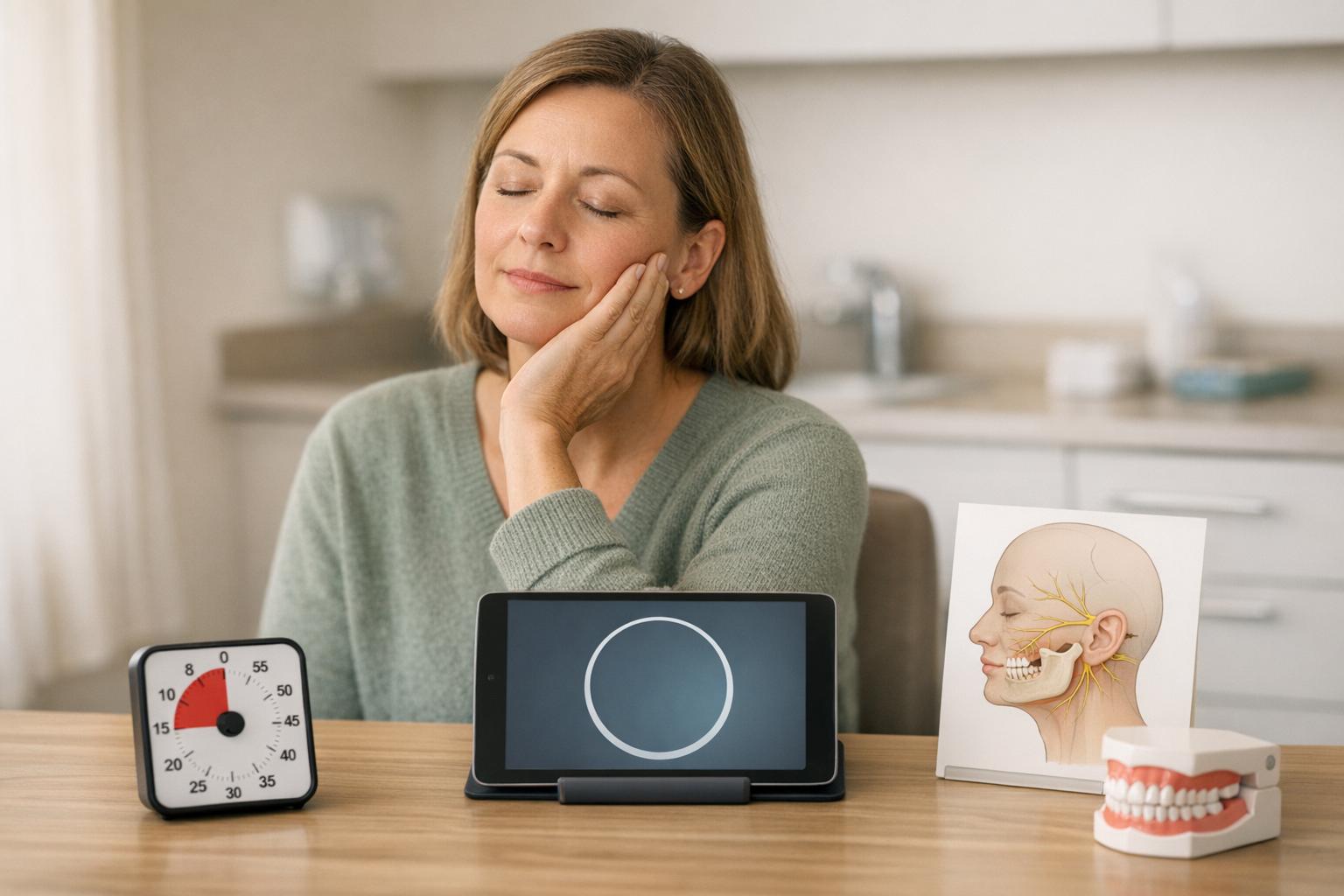
Cognitive Behavioural Therapy (CBT) can help people manage neuropathic pain by addressing the mental and emotional challenges that come with it. Neuropathic pain, often caused by nerve damage, doesn’t respond well to traditional pain treatments. CBT focuses on changing negative thoughts and behaviours, helping people cope better with pain and improve their quality of life.
Key points about CBT and neuropathic pain:
- What it is: Neuropathic pain is caused by nerve dysfunction, not tissue damage, and can persist long after the initial injury.
- Challenges: It’s hard to diagnose and often mistaken for other issues, leading to unnecessary treatments.
- How CBT helps: It reduces the emotional impact of pain, teaches coping strategies, and improves daily functioning.
- Techniques used: Thought reframing, relaxation exercises, graded activity, mindfulness, and sleep strategies.
- Results: While CBT may not eliminate pain, it helps people regain control, reduce disability, and improve mental health over time.
If pain is affecting your daily life, CBT combined with medical and general dental care could be an effective approach.
Cognitive Behavioral Therapy for Chronic Pain
sbb-itb-2be92ed
What Is Neuropathic Pain?
Neuropathic pain occurs when there’s damage or disease affecting the somatosensory system, leading to pain that originates from malfunctioning nerves rather than tissue injury [4]. Unlike pain from a cut or a decayed tooth, which typically resolves as the injury heals, neuropathic pain can linger long after the initial issue is gone. This happens because the nervous system essentially "learns" to keep sending pain signals even when there’s no ongoing harm.
The underlying cause is tied to maladaptive neuroplasticity. Here, glial cells amplify pain signals, and nerves may fire off pain messages spontaneously, even without any clear trigger [3]. This makes neuropathic pain particularly unpredictable and challenging to manage.
Common Causes of Orofacial Neuropathic Pain
The orofacial region, which includes the face and mouth, is especially vulnerable to nerve injuries due to its complex network of sensory nerves. The trigeminal nerve, the primary sensory nerve of the face, is often involved. Routine dental procedures – such as root canals, extractions, dental implants, or wisdom tooth removals – can occasionally damage this nerve, resulting in chronic pain. Studies indicate that 3% to 5% of patients undergoing root canal treatments develop persistent neuropathic pain unrelated to the tooth itself [5].
Other triggers include facial fractures, viral infections like shingles (which can lead to postherpetic neuralgia), and even local anaesthetic injections, which in rare cases may injure nerves [5]. Specific conditions under this category include trigeminal neuralgia, burning mouth syndrome, and painful post-traumatic trigeminal neuropathy (PTTN). Women over the age of 45 are particularly susceptible to these types of pain [5].
Symptoms of Orofacial Neuropathic Pain
The experience of neuropathic pain varies greatly. People often report sensations like burning, stabbing, or shooting pain [5]. These symptoms typically affect one side of the face and follow the path of the trigeminal nerve, involving areas such as the cheeks, jaw, teeth, or gums [6].
Key features of this pain include allodynia (pain from stimuli that wouldn’t normally hurt) and hyperalgesia (heightened sensitivity to painful stimuli), along with numbness [5]. These sensory changes can make everyday tasks – eating, speaking, or even brushing teeth – incredibly difficult, often leading to emotional challenges like anxiety, depression, and social isolation [3][5][6].
"Typical pain qualities are aching, throbbing, burning and sharp." – E Russell Vickers, Medicine Today [2]
Diagnosing neuropathic pain in its early stages can be tricky. It’s often mistaken for a standard toothache, but unlike typical dental pain, neuropathic pain doesn’t respond to local anaesthesia and won’t show up on dental X-rays [5]. This misdiagnosis can result in unnecessary dental treatments that may worsen the nerve damage instead of resolving the pain [5].
How CBT Helps Manage Neuropathic Pain
Neuropathic pain stems from disrupted nerve signalling, making it a challenge that often requires more than just physical treatments. Cognitive behavioural therapy (CBT) addresses this by focusing on the mental and emotional aspects of pain. According to the RACGP, "CBT aims to help patients identify and change unhelpful thoughts and behaviours that can contribute to the experience of pain" [7].
The CBT Pain Model
CBT operates on the principle that thoughts, feelings, and behaviours are deeply connected. Changing one can influence the others. Negative thought patterns, common with neuropathic pain, can amplify the experience of discomfort. For example, persistent nerve signals might lead to catastrophic thoughts like "this will never stop", which can increase anxiety and lower the pain threshold. CBT works to interrupt this cycle by challenging and reframing these unhelpful thoughts.
The therapy also addresses avoidance behaviours – where people steer clear of activities they believe might worsen their pain. While this may seem protective initially, it often leads to physical deconditioning and social withdrawal over time. CBT helps individuals gradually re-engage with their routines, shifting their role from passive sufferers to active managers of their condition. This sense of control can significantly enhance overall quality of life.
How CBT Improves Daily Life
Rather than solely focusing on reducing pain levels, CBT prioritises minimising pain’s impact on daily life, mood, and relationships. Even if pain intensity remains the same, many people report improvements in their ability to function and enjoy day-to-day activities.
"By changing these negative thoughts and behaviours, you can change your awareness of pain and develop better coping skills, even if the actual level of pain stays the same." – Arthritis Australia [8]
CBT provides practical tools like paced activity and goal-setting to help manage pain effectively. Paced activity breaks the "boom-and-bust" cycle, where individuals overexert themselves on good days and then crash when pain flares. By dividing tasks into manageable portions, people can maintain consistent activity levels despite fluctuations in pain. Similarly, setting small, achievable goals encourages active engagement with life, shifting the focus from simply enduring symptoms to building a more fulfilling daily routine.
CBT Techniques for Neuropathic Pain
CBT for managing pain relies on three main elements: education, behavioural skills training, and cognitive skill training [9]. Each step builds on the last, creating a practical toolkit for everyday use. These methods expand on the CBT model, offering hands-on techniques to help manage pain effectively.
Cognitive Restructuring and Relaxation Training
Cognitive restructuring focuses on addressing automatic negative thoughts often triggered by ongoing pain – like "this will never get better" or "I can’t handle this." Instead of trying to push these thoughts aside, the aim is to identify and reshape them into more balanced perspectives [10]. A helpful exercise is thought journaling, where you write down a troubling thought, examine its validity, and replace it with a more constructive view [11].
Relaxation training complements this by calming the body’s stress response. Techniques like progressive muscle relaxation (PMR) – where you tense a muscle group for 5 seconds and then release for 10 seconds – and slow diaphragmatic breathing help ease the fight-or-flight response [11]. Regular practice of these methods, rather than using them only during pain episodes, is key. Studies using functional MRI reveal that CBT can change activity in brain regions involved in pain processing, such as the prefrontal cortex. Many individuals report noticeable improvements after 8 to 12 sessions [11].
Graded Activity and Behavioural Activation
Cognitive strategies are bolstered by structured activity plans that promote physical engagement. Graded activity involves a gradual, step-by-step approach to rebuilding activity levels. Instead of stopping when pain becomes unbearable, time-based pacing sets a fixed, manageable duration for activities – like walking for five minutes – regardless of pain levels at the time [11]. This approach helps prevent overexertion and gradually builds tolerance. Even small, gentle movements are a good starting point [10].
Behavioural activation adds another layer by encouraging participation in enjoyable activities. Engaging in positive experiences can boost levels of neurochemicals like endorphins, serotonin, and dopamine, which naturally improve mood and help regulate pain [12]. The goal is to shift focus away from avoiding pain and towards creating a life filled with moments of joy and anticipation.
Mindfulness and Sleep Strategies
Mindfulness encourages people to change how they relate to pain rather than trying to eliminate it. By observing pain sensations without reacting emotionally, individuals can reduce the distress that often amplifies the intensity of pain [9]. A review of 15 randomised controlled trials (n = 764) found that psychological interventions, including mindfulness-based approaches, significantly reduced pain-related disability, with better outcomes than exercise or education alone [13].
"Rehabilitation interventions, and psychological interventions in particular, seem to be of value for patients with neuropathic orofacial pain." – Emmanuel Bäckryd et al., Pain and Rehabilitation Centre, Linköping University [13]
Sleep is another critical focus in managing neuropathic pain. Poor sleep and pain often fuel each other, creating a challenging cycle. CBT tackles this through sleep hygiene strategies, such as maintaining regular sleep and wake times, reducing pre-bedtime stimulation, and addressing worries about sleep [10]. Improving sleep as part of a broader pain management plan can significantly lessen the impact of pain on daily life [13].
What the Research Says About CBT for Neuropathic Pain
CBT for Neuropathic Pain: Techniques, Outcomes & Multidisciplinary Care
The body of research supporting CBT for neuropathic pain has expanded significantly, offering hope for those managing the challenges of chronic nerve pain.
Functional and Psychological Outcomes
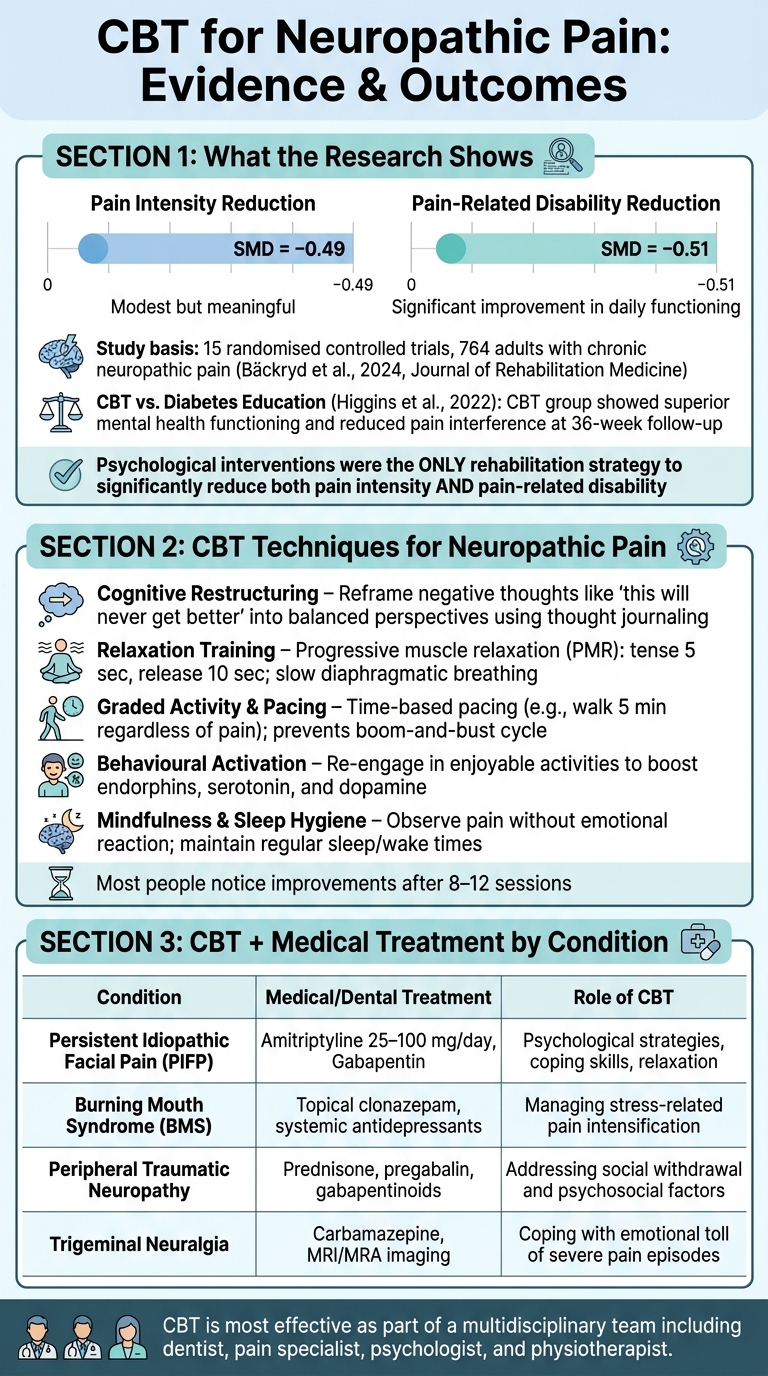
A 2024 systematic review and meta-analysis led by Emmanuel Bäckryd and his team at Linköping University analysed 15 randomised controlled trials with 764 adults suffering from chronic neuropathic pain. Published in the Journal of Rehabilitation Medicine, the study highlighted that psychological interventions like CBT, ACT, and mindfulness-based programs were the only rehabilitation strategies that significantly reduced both pain intensity and pain-related disability [13]. The standardised mean differences (SMDs) were –0.49 for pain intensity and –0.51 for pain-related disability [13].
What stands out is the improvement in disability. While other rehabilitation methods showed some ability to lower pain intensity, psychological interventions were unique in significantly enhancing daily functioning [13]. For individuals with neuropathic pain, the ability to work, maintain relationships, and participate in daily activities often holds more value than merely reducing numerical pain scores.
Additional evidence comes from a randomised controlled trial published in the Journal of Health Psychology in March 2022. Led by Diana M. Higgins at the VA Boston Healthcare System, the study compared CBT to diabetes education (ED) for patients with diabetic peripheral neuropathic pain. Although both groups saw some reduction in pain intensity, the CBT group demonstrated significantly better mental health functioning and reduced pain interference at the 36-week follow-up [14].
These findings pave the way for understanding CBT’s specific impact on pain intensity and its interference with daily life.
CBT and Pain Intensity: What to Expect
When it comes to reducing raw pain intensity, CBT’s effect is modest. The SMD of –0.49 is meaningful but does not imply that pain will vanish [13]. However, where CBT truly excels is in reducing the impact of pain on daily life. For example, the Higgins et al. trial showed that the most notable improvements in mental health and pain interference weren’t immediate but became apparent at the 36-week follow-up [14]. This suggests that the long-term practice of CBT techniques is key to experiencing its full benefits.
| Outcome Measure | Effect (SMD) | Key Finding |
|---|---|---|
| Pain Intensity | –0.49 [13] | Modest but meaningful reduction |
| Pain-Related Disability | –0.51 [13] | Significant improvement in daily functioning |
| Mental Health Functioning | Superior to ED [14] | Long-term improvement at 36 weeks |
| Pain Interference | Superior to ED [14] | Significant reduction over time |
The success of CBT can often be measured by asking: "Am I more engaged in the things that matter to me?" and "Is pain less of a barrier in my life?" While CBT may only slightly reduce pain itself, its ability to improve overall functioning and mental health makes it a powerful tool for managing neuropathic pain.
CBT as Part of a Broader Care Plan
For managing orofacial neuropathic pain, Cognitive Behavioural Therapy (CBT) proves most effective when included as part of a broader plan that combines dental, medical, and psychological care. As E. Russell Vickers states, "Multidisciplinary treatment is the gold standard" [2]. This highlights how CBT fits within a comprehensive strategy aimed at tackling the many facets of chronic pain.
When to Consider CBT
CBT should be considered when pain starts to interfere with essential daily activities like eating, sleeping, working, or socialising. It’s particularly important if avoidance behaviours are leading to a poorer quality of life. Acting early is crucial, as chronic neuropathic pain can lead to neuroplastic changes in the brain, making it progressively harder to manage over time [1]. Research from 2025 revealed that CBT, along with mindfulness-based therapies, significantly reduced both pain severity and opioid use over 12 months compared to standard care [16].
Combining CBT with Dental and Medical Support
Once CBT is deemed appropriate, integrating it with dental and medical treatments is key. Tackling both the physical and psychological aspects of pain often leads to better results. A well-rounded care plan typically includes a dentist, pain specialist, psychologist, and sometimes a physiotherapist [15]. The dental team’s first task is to rule out any underlying dental issues using appropriate imaging tools, followed by initiating psychological interventions [1]. As noted in Current Oral Health Reports, "Establishing an accurate diagnosis and understanding the pathophysiology of the disorders are critical in the management of pain as these will avoid the initiation of unnecessary dental interventions" [1].
After dental causes are addressed or ruled out, CBT can be paired with first-line medications like amitriptyline (25–100 mg/day) or gabapentin, which are commonly prescribed for conditions such as Persistent Idiopathic Facial Pain (PIFP) and Burning Mouth Syndrome (BMS) [1]. This dual approach is often more effective because medications primarily target the sensory aspects of pain, while CBT focuses on the cognitive and emotional dimensions [2]. Additionally, about one-third of patients with PIFP experience depression, further emphasising the need for psychological support [1].
The table below illustrates how CBT complements dental and medical treatments for various orofacial neuropathic conditions:
| Condition | Dental/Medical Integration | Role of CBT |
|---|---|---|
| Persistent Idiopathic Facial Pain (PIFP) | Amitriptyline (25–100 mg/day), Gabapentin | Psychological strategies, coping skills, relaxation techniques |
| Burning Mouth Syndrome (BMS) | Topical clonazepam, systemic antidepressants | Managing stress-related pain intensification |
| Peripheral Traumatic Neuropathy | Prednisone, pregabalin, or gabapentinoids | Addressing social withdrawal and psychosocial factors |
| Trigeminal Neuralgia | Carbamazepine, MRI/MRA imaging | Coping with the emotional toll of severe pain episodes |
If you’re experiencing orofacial pain, consult your dental practitioner for specialist dental care to determine whether the source is dental or related to central nerve factors. This initial step is critical in shaping an effective care plan.
Conclusion: CBT’s Role in Managing Neuropathic Pain
Orofacial neuropathic pain stems from a mix of sensory, emotional, and cognitive factors, making it clear that no single treatment can tackle it entirely. This is where Cognitive Behavioural Therapy (CBT) comes in, addressing the psychological aspects of pain – like fear, avoidance, and mood issues – that medications alone might not fully manage.
As E. Russell Vickers puts it, "Psychological treatment is often required for associated depression and anxiety" [2]. This highlights the importance of ongoing management for such complex pain conditions.
"Optimal outcome may be achieved following a multidisciplinary approach employing a combination of pharmacological therapy and psychological counseling involving patient education, cognitive therapy, coping strategies, relaxation techniques, biofeedback, or psychotherapy." – Current Oral Health Reports [1]
CBT proves especially effective when used as part of a broader treatment strategy. Combining it with medications and working alongside a team of professionals – including dentists, doctors, and psychologists – equips patients with long-term tools to manage their pain. Addressing the interconnected sensory, emotional, and cognitive processes is key to achieving meaningful relief [1]. This comprehensive approach reinforces the need for both psychological and physical care in managing neuropathic pain.
If you’re dealing with ongoing orofacial pain, speak with your dentist. A referral to a pain specialist could help determine if CBT is a suitable addition to your treatment plan.
FAQs
How do I know if my facial pain is neuropathic or a tooth problem?
Neuropathic facial pain is often described as a burning, shooting, or tingling sensation. It can come on suddenly or linger over time. On the other hand, tooth-related pain tends to feel more localised and throbbing, often intensifying with actions like biting or exposure to hot or cold temperatures. If you’re uncertain about the source of your discomfort, it’s best to consult a healthcare professional for accurate diagnosis and proper treatment.
How many CBT sessions are usually needed for neuropathic pain?
Cognitive behavioural therapy (CBT) is often recommended as a way to help manage chronic pain, including neuropathic pain. Usually, around 5 to 6 sessions are suggested. The therapy works by targeting negative thought patterns and behaviours, aiming to improve coping mechanisms and enhance overall quality of life.
Can I do CBT while taking nerve pain medicines?
Yes, you can undergo Cognitive Behavioural Therapy (CBT) while taking medication for nerve pain. CBT is a psychological method that works hand-in-hand with medical treatments to help manage pain signals and improve overall well-being. By focusing on reshaping negative thought patterns and behaviours, CBT serves as a helpful addition to medication in managing neuropathic pain effectively.
Related Blog Posts
- Antidepressants in Orofacial Pain: Evidence Summary
- Neuropathic Orofacial Pain: Adjuvant Analgesic Options
- Emerging Therapies in Orofacial Pain Management
- Topical Analgesics for Neuropathic Orofacial Pain
Important Notice: Any surgical or invasive procedure carries risks. Before proceeding, you should seek a second opinion from an appropriately qualified health practitioner.
Individual results may vary. The information provided in this article is for educational purposes only and does not constitute medical advice.
Checkout Related Blogs




Get in touch with us
For more information, call us now to start feeling better. Or fill the form below to make appointment
The Latest News from Complete Smiles
How to Clean Clear Plastic Retainers
Checklist for Choosing Wearable Dental Devices
Checklist for Choosing Cloud AI Platforms in Dentistry

Complete Smiles Bella VistaAccepts All Major Health Funds, Including





