





High-Frequency Loading and Bone Integration
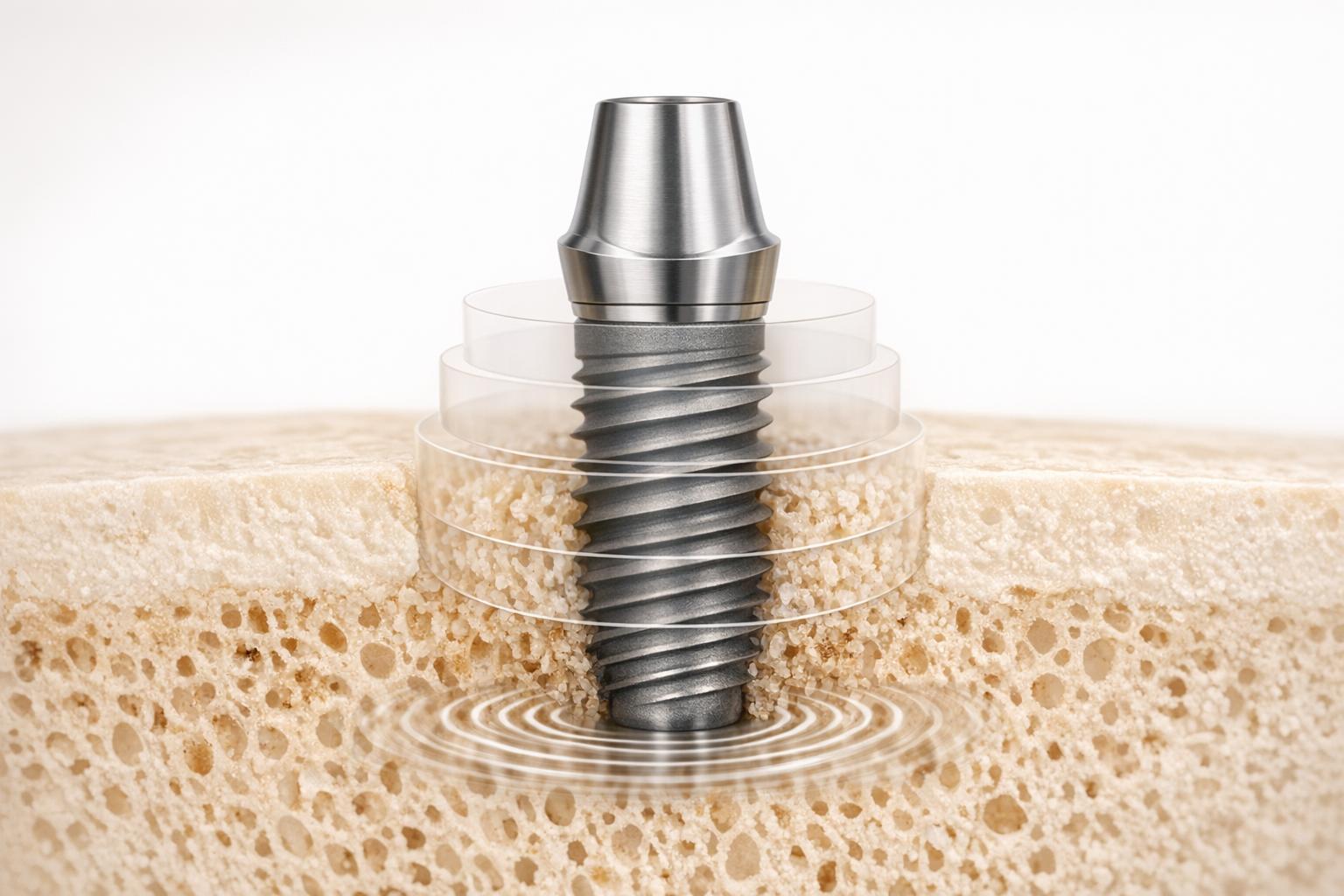
High-frequency mechanical loading (HFML) is showing promise in improving factors for dental implant success by enhancing osseointegration – the connection between implants and bone. By applying gentle vibrations (30–150 Hz, 0.2g–0.3g), HFML stimulates bone cells, speeding up healing and strengthening bone-to-implant contact. This approach could benefit patients with poor bone quality, such as those with osteoporosis, by reducing healing time and improving implant stability.
Key findings include:
- Bone stimulation: Vibrations as low as 5–10 µε trigger bone remodelling without causing damage.
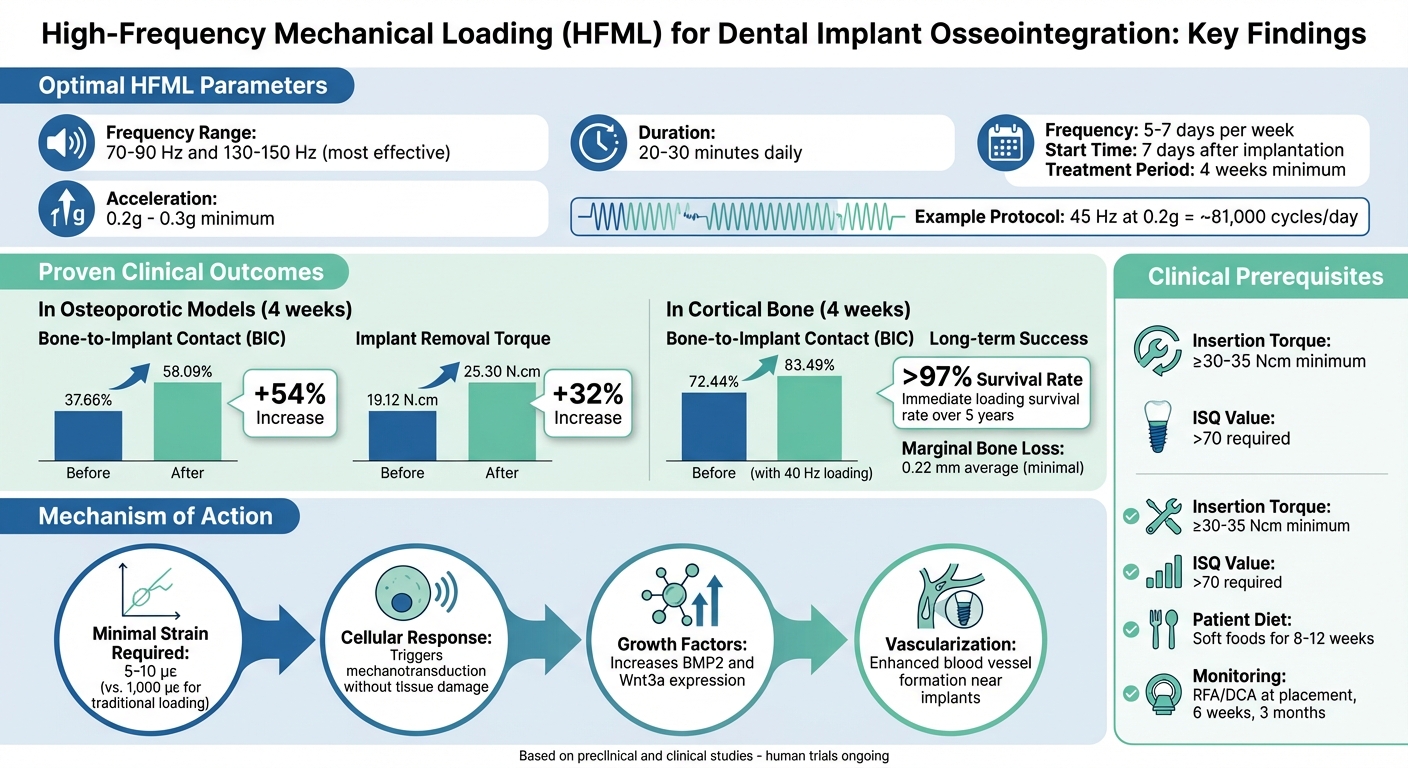
- Faster healing: Four weeks of HFML increased bone-to-implant contact from 37.66% to 58.09% in osteoporotic models.
- Optimal parameters: Frequencies of 70–90 Hz and daily sessions of 20–30 minutes deliver the best results.
- Combination therapy: HFML works well with PTH but less so with bisphosphonates.
While the technology is promising, more human trials are needed to refine protocols and ensure consistent clinical outcomes.
High-Frequency Loading Effects on Dental Implant Osseointegration: Key Parameters and Results
How High-Frequency Loading Affects Bone Integration
High-frequency vibrations play a key role in bone integration by triggering mechanotransduction – a process where physical forces are converted into biochemical signals within bone cells. When the bone matrix deforms slightly under loading, it causes fluid to flow through the lacunar-canalicular system. This fluid movement generates shear stress on osteocyte membranes, which then translate these mechanical forces into chemical signals that promote bone remodelling [5][2].
Unlike traditional mechanical loading, which requires tissue deformation exceeding 1,000 microstrain (µε) to stimulate bone formation, high-frequency signals can activate bone cells with deformations as small as 5–10 µε. This allows for precise cellular activation without causing tissue damage or discomfort [5]. These effects form the foundation for further bone cell stimulation and vascularisation.
Stimulation of Bone-Forming Cells
High-frequency mechanical loading directs mesenchymal stem cells – versatile cells capable of becoming various tissues – towards differentiating into osteoblasts, the cells responsible for new bone formation [5]. This is particularly important around dental implants, where strong bone formation is critical. Research shows that high-frequency loading improves direct bone-to-implant contact in cortical bone within just four weeks [5].
This mechanical stimulation also speeds up the mineralisation of new bone. Studies reveal that high-frequency loading increases both the Mineral Apposition Rate (MAR) and the Bone Formation Rate (BFR), enabling bone to form faster and become denser more quickly [2]. For instance, applying 45 Hz vibrations at 0.2g for 30 minutes daily led to thicker bone lamellae and a greater fraction of bone surrounding implants, especially in cases of poor bone quality [2]. Interestingly, the frequency of vibrations matters more than their strength – highlighting that the rhythm, rather than the magnitude, of the loading drives these benefits [5]. Additionally, these mechanical signals enhance molecular pathways that promote vascularisation and growth factor activation.
Growth Factors and Blood Vessel Formation
High-frequency loading doesn’t act alone; it amplifies the body’s natural healing mechanisms. For example, it increases the expression of BMP2, a protein essential for bone healing [9]. In a 2015 study published in Scientific Reports, researchers applied 30 Hz vibrations at 0.5g for one hour daily to rabbit models with femoral bone defects and porous titanium implants. Over 12 weeks, the treatment boosted BMP2 and Wnt3a expression, accelerating bone growth through implant pores and raising the bone formation rate compared to untreated controls [9].
The frequency of mechanical loading also determines how long these growth factor signals remain active. A 2024 study using a 3D bioreactor system found that human osteoblasts exposed to 10 Hz cyclic compression and BMP2 maintained signalling for up to 120 minutes, while lower frequencies (0.03 Hz) saw signalling drop after just 90 minutes [8]. Blood vessels play a vital role in this process, becoming more prominent near vibrated implants to supply the nutrients and cells needed for bone healing [5]. This enhanced vascularisation creates an ideal environment for rapid and effective osseointegration.
sbb-itb-2be92ed
Optimal Loading Parameters for Bone Integration
High-frequency vibrations have shown to stimulate bone-forming cells effectively, but fine-tuning the loading parameters can take dental implant integration to the next level. Research demonstrates that specific high-frequency loading conditions significantly improve implant osseointegration. For instance, acceleration levels of at least 0.2g–0.3g yield better outcomes compared to lower acceleration levels [10][4].
Frequency and Acceleration Levels
The right combination of frequency and acceleration is key. Studies highlight that vibration frequencies of 70–90 Hz and 130–150 Hz result in stronger bone-to-implant contact than lower frequencies like 12–30 Hz [10][4]. Dr Ogawa and colleagues emphasised this in their findings:
"The findings reveal the potential of high-frequency vibration loading to accelerate and enhance implant osseointegration, in particular when applied at high acceleration" [10].
A specific protocol tested at 45 Hz and 0.2g (equivalent to approximately 81,000 cycles per day over 30 minutes) demonstrated remarkable results. In osteoporotic models, this approach increased implant removal torque from 19.12 N.cm to 25.30 ± 2.17 N.cm over a four-week period, further confirming the importance of acceleration levels of at least 0.2g–0.3g [2][11].
Application Duration and Timing
When it comes to timing, consistency and duration are crucial. Most protocols recommend applying vibrations for 20–30 minutes daily, five to seven days a week, starting about seven days after implantation to avoid interfering with initial healing [2][6][11].
Longer treatment durations lead to better outcomes. For example, four weeks of loading significantly enhanced both biomechanical strength and mineral deposition compared to just one week [2][5]. One study from July 2012 applied 40 Hz loading at 8 µm displacement for 10 minutes per session, five days a week. After four weeks, the cortical bone-to-implant contact reached 83.49%, compared to 72.44% in controls [5].
High-Frequency Loading in Poor Bone Quality
High-frequency loading isn’t just effective for healthy bone – it also shows promise for improving bone with compromised quality. Studies reveal that vibration treatment can specifically enhance osteoporotic trabecular bone, addressing the impaired healing often associated with systemic conditions impacting osseointegration [1][2].
Effects on Different Bone Types
The way high-frequency loading influences bone depends on the type of bone involved. Cortical bone (the dense outer layer) gains density through this method, while trabecular bone (the spongy inner structure) tends to respond more strongly to treatments like PTH [6][7]. For example, in osteoporotic rat models, just four weeks of low-magnitude, high-frequency vibration increased bone-to-implant contact from 37.66% to 58.09% [2]. This effect happens because the mechanical forces generated by vibration create fluid movement and shear stress, shifting the balance from excessive bone breakdown to new bone growth [2]. Unlike drug-based treatments, these mechanical stimuli offer a unique pathway to bone healing, sparking interest in combining them with other therapies.
Comparison with Drug Treatments
High-frequency loading operates differently from typical osteoporosis medications, and understanding these differences is key to tailoring treatment plans. When combined with PTH, high-frequency loading delivers even greater improvements in bone healing [6][7]. As Aya Shibamoto from Tohoku University‘s Division of Advanced Prosthetic Dentistry explained:
"High-frequency loading combined with PTH produces additive improvements in implant osseointegration" [6].
On the other hand, bisphosphonates like alendronate don’t work as effectively with mechanical loading. While PTH has shown to be much more effective than alendronate in improving implant stability, pairing bisphosphonates with vibration therapy doesn’t yield the same additive benefits [6]. This is because bisphosphonates suppress osteoclastic activity, which is essential for the bone remodelling and adaptation driven by mechanical stimuli [7].
Clinical Use and Practical Considerations
High-frequency loading, when applied correctly, can significantly improve bone integration in clinical settings. However, its success hinges on precise timing and technique. To avoid complications like fibrous encapsulation, begin high-frequency loading only after achieving solid primary stability – defined as a minimum insertion torque of 30–35 Ncm and an ISQ value above 70 [14]. These benchmarks allow clinicians to evaluate the suitability of immediate versus delayed loading strategies.
Immediate vs Delayed Loading Approaches
Research shows that early mechanical stimulation, such as high-frequency axial displacement (40 Hz with 8 µm displacement starting one day post-placement), enhances cortical bone contact. In a study, this approach increased cortical contact to 83.49% ± 2.23% after four weeks, compared to 72.44% ± 5.47% in controls without loading [5]. This underscores the influence of early loading on bone-forming cells during the critical initial healing phase.
Immediate loading protocols, where prosthetic restorations are placed within 48–72 hours, have demonstrated survival rates comparable to delayed loading (3–6 months), provided primary stability is achieved [14][15]. For full-arch fixed prostheses supported by four to six implants, immediate loading has shown long-term survival rates exceeding 97% over five years. Marginal bone loss in these cases remains minimal, averaging around 0.22 mm, which is within acceptable clinical limits [14][15].
Clinically, mechanical loading should be applied directly to the implant abutment using precise intraoral devices [12]. To monitor osseointegration, non-invasive tools like RFA or DCA are recommended at placement, six weeks, and three months [13]. Devices such as the Anycheck system allow for direct assessment of the healing abutment without removal, potentially reducing crestal bone resorption caused by frequent component changes [13].
Faster Healing and Recovery
Targeted mechanical loading not only improves integration but also accelerates healing. For example, direct loading at 100 Hz with 8 µm displacement increased peri-implant bone volume within two weeks in canine models [12][16]. To protect the integration process, patients should follow a soft diet for 8–12 weeks [14]. In immediate-loading cases, using advanced attachment systems like LOCATOR with lighter retention inserts can help minimise harmful micromovements during the early healing phase [14].
Optimal outcomes are most likely in healthy individuals with no significant metabolic disorders. However, extra caution is advised for patients with risk factors such as smoking, poor bone quality, or parafunctional habits like bruxism [14].
In Australia, dental professionals incorporate these evidence-based protocols into their treatment plans to ensure successful and long-lasting results. Clinics like Complete Smiles Bella Vista (https://completesmilesbv.com.au) adhere to rigorous standards, aligning their implant procedures with current research to maximise osseointegration outcomes through advanced surface design.
Research Limitations and Future Directions
While preclinical studies have shown promise and clinical applications are evolving, there are still considerable uncertainties about the standardisation and relevance of high-frequency loading protocols for humans.
Quality of Current Evidence
Most of what we know about high-frequency loading comes from animal studies, which makes it hard to apply directly to human clinical scenarios. For example, a systematic review on micromotion and osseointegration found 24 animal studies but only one human post-mortem study [17]. The majority of these studies used small animals like rats and rabbits, focusing on long bones such as the tibia. This environment is vastly different from that of the jawbone [17][7].
One major issue is the lack of standardised loading parameters, which has led to inconsistent findings. For instance, successful osseointegration has been observed with micromotion levels as high as 750 µm, while failures have occurred at just 30 µm. On average, successful cases reported micromotion at 112 ± 176 µm, compared to 349 ± 231 µm for failures [17]. As noted in Scientific Reports:
"The available data refutes the idea of a universal limit of tolerable micromotion for implant osseointegration."
These inconsistencies likely result from differences in frequency, magnitude, and duration across studies [18].
Need for Human Clinical Studies
To validate the findings from animal models, rigorous human trials are essential. As Aya Shibamoto from Tohoku University’s Division of Advanced Prosthetic Dentistry explains:
"As long bones such as the tibia are different from craniofacial bones, further studies using jawbone models are necessary to optimise the performance of vibration devices for local application."
Future research should focus on diverse patient groups, especially those with poor bone quality, and explore the best timing and duration for loading protocols [6][19].
Another critical gap lies in understanding the molecular pathways of mechanotransduction, which remain unclear [19]. Factors like age, sex, and systemic conditions such as osteoporosis influence responses to mechanical loading [18]. To address these challenges, clinical trials should adopt standardised metrics and incorporate non-invasive tools like resonance frequency analysis (RFA). This approach could help translate lab findings into practical, evidence-based dental implant protocols tailored for use in Australia [3].
Conclusion
High-frequency mechanical loading has shown promise in improving bone integration around dental implants by leveraging mechanotransduction. Research suggests that mechanical signals in the range of 40–50 Hz stimulate osteocytes through fluid shear stress and matrix deformation. When paired with optimal acceleration levels around 0.3g, these approaches have been shown to significantly enhance bone-to-implant contact and biomechanical stability.
For instance, in osteoporotic models, four weeks of mechanical loading increased removal torque from 19.12 N.cm to 25.30 N.cm, while bone-to-implant contact improved from 37.66% to 58.09% [2]. These results suggest that high-frequency loading could shorten healing times and allow for earlier functional loading of dental implants.
However, applying these laboratory findings to clinical practice, especially when adapting protocols from animal models to the human jawbone, presents challenges. As highlighted by Calcified Tissue International, high-frequency vibration loading holds potential as a non-pharmacological method to enhance implant osseointegration in compromised bone [4].
While the evidence supports its effectiveness, clinical application requires further refinement. Future advancements will depend on rigorous human clinical trials to standardise loading parameters, such as frequency, magnitude, and duration. Additionally, researchers need to delve deeper into the molecular mechanisms of mechanotransduction. The development of targeted vibration devices designed specifically for oral use, rather than relying on whole-body systems, will also be critical for practical adoption in dental clinics across Australia.
FAQs
Is high-frequency loading safe for dental implants?
High-frequency loading, particularly low-magnitude, high-frequency vibration, is generally regarded as a safe approach for dental implants. Animal studies suggest it can encourage bone growth and improve osseointegration, helping implants integrate more effectively with the surrounding bone structure.
Who is most likely to benefit from high-frequency loading (e.g., osteoporosis)?
Individuals with osteoporosis could see notable benefits from high-frequency loading techniques like whole-body vibration. This method can help promote bone growth and improve osseointegration around implants, which is especially valuable when bone health is compromised.
When should high-frequency loading start after implant placement?
High-frequency loading can be introduced following an initial healing phase. Studies indicate that starting loading earlier might help, provided micromotion is carefully managed. However, the ideal timing varies based on individual factors. It’s crucial to minimise excessive micromotion, as this could cause fibrous encapsulation, which may interfere with proper bone integration.
Related Blog Posts
- Osseointegration in Titanium Implants: How It Works
- Surface Modifications for Better Osseointegration
- Bone Quality in Osseointegration: Research Insights
- Advances in Bone Grafting for Implant Stability
Important Notice: Any surgical or invasive procedure carries risks. Before proceeding, you should seek a second opinion from an appropriately qualified health practitioner.
Individual results may vary. The information provided in this article is for educational purposes only and does not constitute medical advice.
Checkout Related Blogs




Get in touch with us
For more information, call us now to start feeling better. Or fill the form below to make appointment
The Latest News from Complete Smiles
How to Clean Clear Plastic Retainers
Checklist for Choosing Wearable Dental Devices
Checklist for Choosing Cloud AI Platforms in Dentistry

Complete Smiles Bella VistaAccepts All Major Health Funds, Including





