





Guided Tissue Regeneration vs Bone Grafting
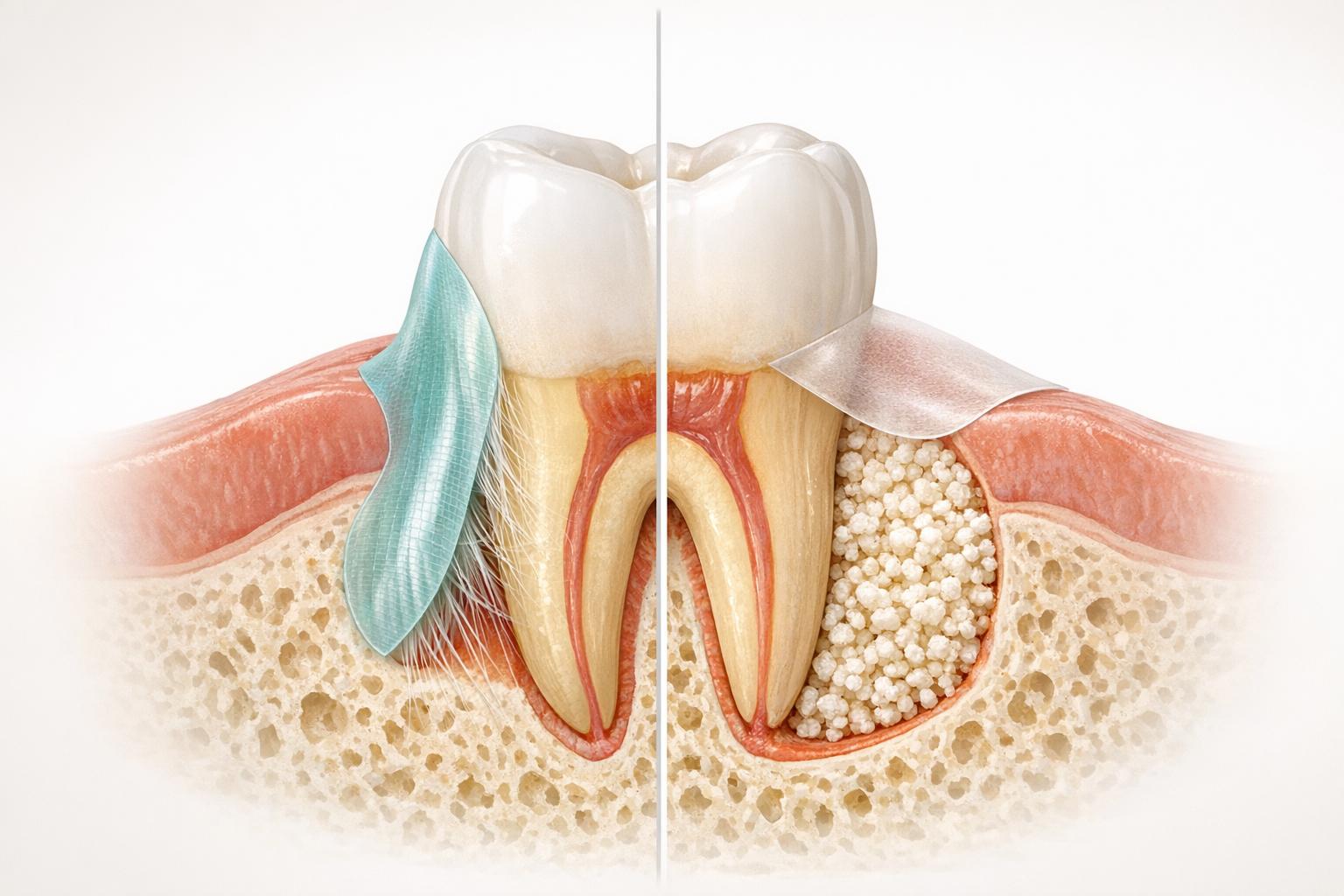
When it comes to repairing periodontal damage, Guided Tissue Regeneration (GTR) and bone grafting are two of the most effective options. Both aim to restore lost tissues caused by early signs of gum disease or trauma, but they work differently:
- GTR uses a barrier membrane to encourage the regrowth of periodontal structures (bone, ligament, and cementum) by blocking fast-growing cells from interfering with regeneration.
- Bone grafting involves placing bone or substitute materials into areas of bone loss, acting as a scaffold for new bone formation.
Key Differences:
- GTR relies on membranes (resorbable or non-resorbable), while bone grafting uses materials like autografts, allografts, xenografts, or alloplasts.
- Bone grafting directly restores bone volume, while GTR focuses on regenerating the entire periodontal structure.
- GTR is ideal for contained defects (e.g., intrabony defects), whereas bone grafting is often necessary for larger, non-contained defects or implant preparation.
Quick Comparison:
| Aspect | Guided Tissue Regeneration (GTR) | Bone Grafting |
|---|---|---|
| Method | Barrier membrane to guide tissue growth | Bone material as scaffold |
| Focus | Periodontal ligament, cementum, bone | Bone volume and density |
| Materials Used | Resorbable/non-resorbable membranes | Autografts, allografts, xenografts, alloplasts |
| Applications | Intrabony defects, furcation defects | Bone loss, implant preparation |
| Surgical Complexity | Requires precise wound closure | May involve additional surgical sites (e.g., autografts) |
| Healing Time | Typically 6–12 months for full regeneration | 3–12 months depending on graft size |
Both techniques can be combined in complex cases for better results, especially in non-contained defects. However, factors like defect type, patient health, and desired outcomes will determine the best approach. Always consult a dental professional to tailor the treatment to your needs.
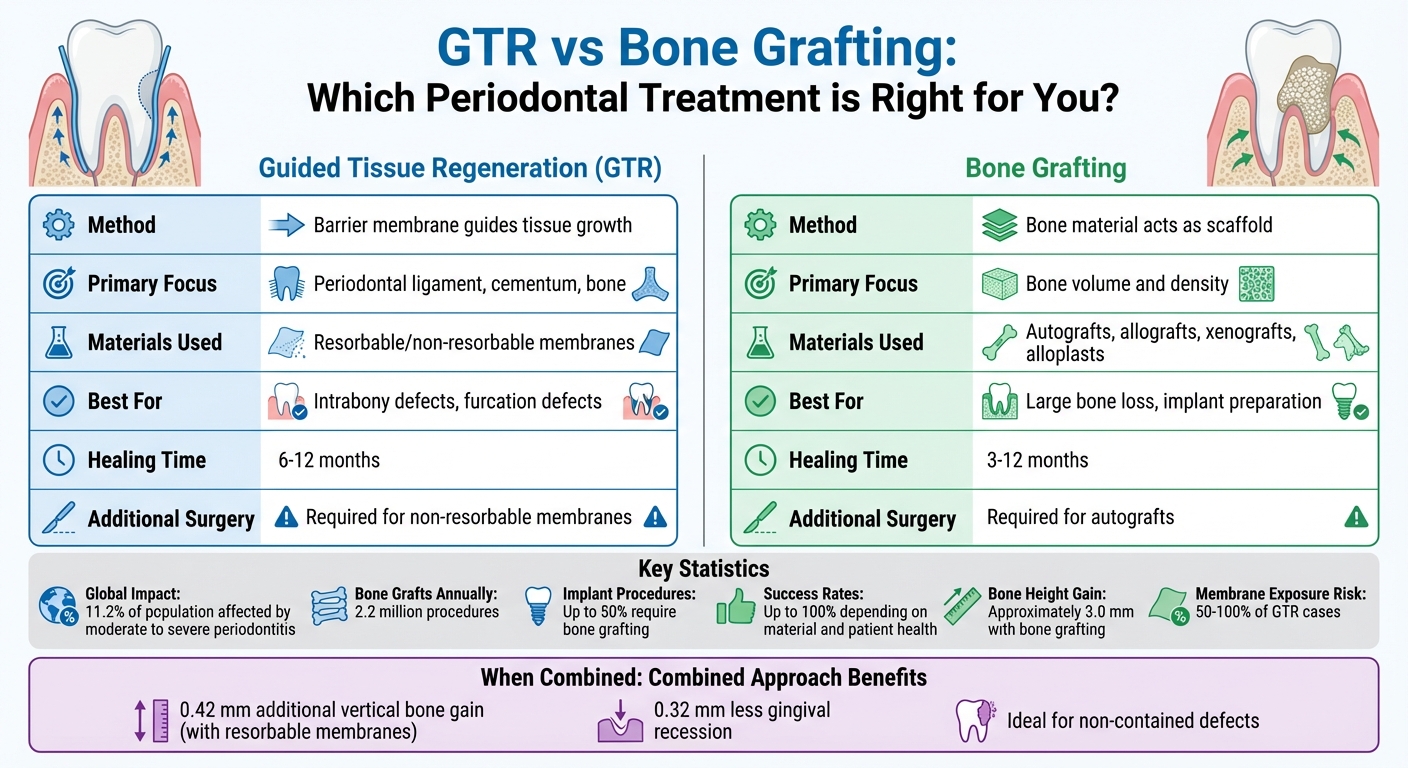
GTR vs Bone Grafting: Complete Comparison Guide for Periodontal Treatment
Guided Tissue Regeneration with Bone Grafting
sbb-itb-2be92ed
What is Guided Tissue Regeneration (GTR)?
Guided Tissue Regeneration (GTR) is a surgical technique designed to restore periodontal support by encouraging the growth of specific tissues around teeth. It involves placing a barrier membrane that directs the regeneration of the periodontal ligament, cementum, and alveolar bone. As researcher Melcher observed, “Only cells originating from the periodontal ligament and repopulating the root surface during healing could regenerate the tooth supporting structures” [2].
How GTR Works
The principle behind GTR is compartmentalisation. A barrier membrane is strategically placed between the gum tissue and the cleaned root surface. This setup prevents fast-growing epithelial and connective tissue cells from occupying the area, giving slower-growing periodontal and bone cells the chance to regenerate the defect properly [5].
For GTR to succeed, four key factors – known as the PASS Principles – must be met:
- Primary wound closure
- Angiogenesis (formation of new blood vessels)
- Space maintenance
- Clot stability [1]
The membranes used in GTR come in two categories:
- Non-resorbable membranes: These include materials like expanded polytetrafluoroethylene (e-PTFE) or titanium mesh. While they provide excellent support, they require a second surgery for removal [1].
- Resorbable membranes: Made from materials like collagen or synthetic polymers (e.g., polylactic acid), these naturally dissolve over time. They usually remain stable for about 14 days and begin breaking down within 30 days, eliminating the need for additional surgery [1][2][7].
This process makes GTR an essential tool for addressing specific periodontal issues.
When GTR is Used
GTR is particularly effective for treating periodontal intrabony defects – areas where bone loss occurs between the tooth root and the surrounding jawbone – and furcation involvements, which involve bone loss between the roots of multi-rooted teeth [3][5]. The technique works best in two- or three-wall defects, with three-wall defects typically showing the most predictable results [8].
Advantages and Drawbacks of GTR
GTR offers some clear benefits but also comes with challenges.
The main advantage of GTR is its ability to regenerate the entire periodontal structure, not just create scar tissue. Research has shown that GTR leads to better clinical attachment gains and reduced probing depths compared to traditional open flap debridement [3]. Additionally, resorbable membranes remove the need for a second surgery, which can reduce patient discomfort.
However, GTR is a technically demanding procedure. Achieving primary wound closure is critical, and complications such as membrane exposure – where the barrier becomes visible through the gum tissue – are common, with rates ranging from 50% to 100% [5]. The clinical criteria for Guided Tissue Regeneration mean the procedure is not suitable for everyone, particularly patients who smoke, have poor oral hygiene, or suffer from uncontrolled systemic conditions like diabetes [1]. Post-surgery care involves avoiding mechanical cleaning at the surgical site and using a 0.12% chlorhexidine rinse [5].
What is Bone Grafting?
Bone grafting is a surgical method used to rebuild jawbone volume and density. Unlike Guided Tissue Regeneration (GTR), which uses membranes to guide bone growth, bone grafting directly enhances the bone structure. It’s a widely performed procedure, with around 2.2 million bone grafts done each year [12].
This approach relies on three key biological processes – osteogenesis, osteoinduction, and osteoconduction – to regenerate bone lost due to causes like periodontal disease, tooth extraction, or trauma [11].
Types of Bone Grafts
Dentists typically use four types of bone graft materials, each with unique strengths and limitations:
- Autografts: These are taken from the patient’s own body, often from areas like the chin, jaw, or hip. As Maria Pia Ferraz explains:
Autologous bone, taken from the patient’s own body, is the gold standard for bone grafting but has drawbacks such as uncertain prognosis, surgery at the donor site, and limited availability [10].
While autografts have all the necessary biological properties for bone regeneration, they require an additional surgical site, which can increase discomfort.
- Allografts: Sourced from human donors via bone banks, these include options like Freeze-Dried Bone Allograft (FDBA) and Demineralized Freeze-Dried Bone Allograft (DFDBA). DFDBA is especially effective because its exposed growth factors boost bone growth. Allografts eliminate the need for a second surgery and are available in larger quantities.
- Xenografts: Derived from animals, typically cows or pigs, xenografts are often used for maxillary sinus defects. Research shows bovine bone grafts achieve about 39% new bone formation within six months, comparable to the 40% seen with autografts [14].
- Alloplasts: These are synthetic materials like hydroxyapatite (HA), tricalcium phosphate (TCP), and bioactive glasses. They are disease-free and can be mass-produced, but they lack the ability to stimulate new bone growth (osteoinduction). In 2018, the market for dental bone substitutes was valued at US$493 million, with projections reaching US$931 million by 2025 [13].
| Graft Type | Source | Main Advantages | Main Drawbacks |
|---|---|---|---|
| Autograft | Patient’s own body | Excellent biological properties; no rejection | Requires second surgery; limited quantity |
| Allograft | Human donor | No second surgery; widely available | Not osteogenic; minor disease risk |
| Xenograft | Animal (bovine/pig) | Abundant supply; similar to human bone | Slower resorption; ethical concerns |
| Alloplast | Synthetic material | No disease risk; scalable production | No osteoinductive properties |
These materials form the backbone of various dental and surgical applications.
When Bone Grafting is Used
Bone grafting is essential in both periodontal treatment and dental implant procedures. It helps rebuild bone lost due to advanced gum disease, stabilising loose teeth and reducing the risk of further tooth loss [12]. It’s estimated that up to 50% of dental implant procedures involve bone grafting [13].
Key applications include:
- Socket Preservation: After a tooth extraction, a bone graft can prevent significant bone loss. Without it, the jawbone may lose 40% to 50% of its width and 1.5 to 2 mm of vertical height within the first year [11].
- Ridge Augmentation: This procedure restores the jawbone’s height and width, creating a solid base for dental implants.
- Sinus Lifts: By adding bone material between the jawbone and the maxillary sinus membrane, this technique increases bone height in the upper jaw, particularly for patients with insufficient bone for implants.
These uses highlight the importance of bone grafting in maintaining oral health and supporting dental restorations.
Advantages and Drawbacks of Bone Grafting
Bone grafting offers a way to rebuild lost bone, providing a stable base for dental implants and reversing bone loss that might otherwise be irreversible. Success rates can reach up to 100%, depending on the graft material and the patient’s overall health [12]. Typically, grafts integrate with natural bone within three to six months, though larger grafts may take up to a year.
However, like any surgery, it comes with potential risks. Complications such as infection, nerve damage, or graft failure are possible, especially in smokers or patients with certain health conditions. Autografts, in particular, involve an additional surgical site, which can increase discomfort and risk. Patients are strongly advised to avoid smoking or vaping during recovery, as these habits significantly increase the chance of graft failure.
If the graft is part of a dental implant preparation, the implant should ideally be placed within six to twelve months after healing to reduce the risk of bone resorption.
GTR vs Bone Grafting: How They Compare
What GTR and Bone Grafting Have in Common
Both Guided Tissue Regeneration (GTR) and bone grafting aim to restore periodontal support lost due to disease or trauma. They address similar clinical challenges, particularly moderate to severe periodontitis, including intrabony defects and furcation involvement. These conditions affect around 11.2% of the global population [9].
Both procedures share the same biological requirements for success: the presence of progenitor or stem cells, a robust blood supply through angiogenesis, a scaffold material, and regulatory signals provided by growth factors. This common foundation highlights their biological similarities, even though their clinical methods differ.
How GTR and Bone Grafting Differ
The primary difference lies in their approach. Bone grafting fills the defect with a material that serves as a scaffold, while GTR uses a barrier membrane to block faster-growing cell types. This allows slower-moving osteogenic cells from the periodontal ligament or bone to repopulate the area [6].
The materials used also set them apart. GTR relies on barrier membranes, which can be resorbable (like collagen or PLA/PGA polymers) or non-resorbable (such as e-PTFE, d-PTFE, or titanium). In contrast, bone grafting uses one of four graft types: autografts, allografts, xenografts, or alloplasts. Another key difference is procedural: non-resorbable GTR membranes often require a second surgery for removal, whereas resorbable membranes and bone grafts are naturally degraded or integrated by the body [9]. These distinctions influence treatment planning and outcomes.
Treatment Results Compared
Comparative studies provide valuable insights into the effectiveness of these methods. Research indicates that both procedures achieve similar outcomes. A meta-analysis of 15 randomised controlled trials found no significant difference in primary success metrics between GTR and bone grafting [9]. As Fengqi Zhang from the Department of Stomatology at Liangxiang Hospital explains:
Both simple bone grafting and bone grafting combined with membrane materials have good clinical efficacy in periodontal regenerative therapy, and no significant difference in clinical efficacy is indicated between the two, with the exception of GR [gingival recession] [9].
The notable difference lies in gingival recession, which varies based on the type of membrane used. Non-resorbable membranes result in an additional 0.55 mm of recession compared to bone grafting alone, while resorbable membranes reduce recession by 0.32 mm [9]. Over the long term, both treatments maintain their clinical improvements in Clinical Attachment Level (CAL) and Probing Depth (PD), with no significant differences observed after 12 months.
| Metric | Bone Grafting Alone | Bone Grafting with GTR |
|---|---|---|
| Clinical Attachment Level | No significant difference | No significant difference |
| Probing Depth | No significant difference | No significant difference |
| Bone Gain | Effective space maintenance | 0.23-0.42 mm additional gain (often not clinically significant) |
| Gingival Recession | Standard baseline | Non-resorbable: +0.55 mm more recession Resorbable: 0.32 mm less recession |
Choosing Between GTR and Bone Grafting
When deciding between Guided Tissue Regeneration (GTR) and bone grafting, dentists consider several clinical factors tailored to each patient. One key factor is the defect’s morphology. If the defect is "contained" with sufficient bony walls, a membrane alone might suffice. However, "non-contained" defects typically require a bone graft to prevent the membrane from collapsing [2]. As Gaia Pellegrini from the Department of Biomedical, Surgical and Dental Sciences at the University of Milan explains:
Space provision plays a fundamental role in both periodontal and bone regeneration [2].
Aesthetic concerns also come into play, particularly for areas like the front teeth, where gingival recession can visibly impact appearance.
Other considerations include the complexity of the surgery and patient preferences. Non-resorbable membranes, for example, require an additional procedure for removal, which can increase both recovery time and costs [2]. Similarly, autogenous bone grafts – where bone is harvested from the patient – introduce surgical risks not present with alternative materials [2]. Many patients lean towards resorbable options to avoid extra surgeries.
Dentists also evaluate the likelihood of achieving primary wound closure at the surgical site. When sealing a wound completely is difficult, non-resorbable membranes can pose a higher risk of infection if they become exposed [2]. Treatment goals further influence the choice. For instance, GTR is particularly effective for regenerating the structures that support teeth, especially in narrow, deep intrabony defects and Class II furcation defects [5]. On the other hand, bone grafting is often necessary for rebuilding bone volume in preparation for implants [2].
In some situations, combining both techniques can yield the best results. A membrane provides cell-occlusive benefits, while a graft material helps maintain the necessary space [9][3]. Ultimately, your dentist will recommend a tailored approach based on your specific condition and desired outcomes.
Using GTR and Bone Grafting Together
Combining Guided Tissue Regeneration (GTR) with bone grafting can address specific challenges in periodontal treatment. In complex cases, this dual approach often delivers better results than when either technique is used on its own. It’s particularly useful for nonretentive or noncontained defects [5][2]. Without the structural support provided by a graft, the membrane may collapse into the defect, hindering the regeneration process. This builds on earlier discussions about defect morphology and treatment planning.
Bone grafts act as a scaffold, keeping the space open and stabilising the blood clot [5][2]. As highlighted in Dental Clinics of North America:
The placement of bone grafting materials beneath barrier membranes is expected to ensure clot stabilisation and space maintenance in nonretentive defects, thereby preventing membrane collapse into the defect [5].
Research backs the benefits of this combined approach. A meta-analysis of 15 randomised controlled trials reported that using resorbable membranes with bone grafts resulted in 0.42 mm additional vertical bone gain compared to grafting alone after six months [9]. Additionally, the study found 0.32 mm less gingival recession when combining these methods, which is crucial for maintaining aesthetics in visible areas [9].
This combination is particularly effective for treating Class II furcation defects and deep intrabony defects. In these cases, the bone graft offers critical structural support while the membrane blocks unwanted epithelial cells [3][5]. The type of membrane used also plays a role: resorbable membranes paired with grafts tend to provide better aesthetic outcomes and reduce gingival recession compared to non-resorbable membranes [9].
However, membrane exposure remains a significant challenge, occurring in 50% to 100% of cases. Exposure can lead to bacterial colonisation, which compromises the treatment [5]. Careful surgical techniques that ensure primary wound closure are essential to minimise this risk and promote successful regeneration.
Conclusion
Guided Tissue Regeneration (GTR) focuses on restoring periodontal structures, while bone grafting addresses bone defects. These techniques, though distinct, share the goal of improving oral health, and their application depends on factors like defect type, individual patient needs, and aesthetic goals.
Both approaches demonstrate strong clinical success. Bone grafting typically results in a bone height gain of approximately 3.0 mm [4]. When used together, GTR membranes and bone grafts show enhanced results for complex, non-contained defects. However, membrane exposure remains a challenge. Resorbable vs nonresorbable membranes are often compared, but resorbable options reduce the need for follow-up surgeries and provide better aesthetic results [15][9].
"Periodontal regeneration is not uniformly predictable due to local and patient factors." – Dental Clinics of North America [5]
Ultimately, the decision between GTR and bone grafting hinges on the specific defect and patient considerations. A personalised treatment plan, crafted by a dental professional, ensures the best possible outcomes for your unique needs.
For tailored advice on periodontal regenerative treatments, the team at Complete Smiles Bella Vista can evaluate your condition and recommend the most suitable approach.
FAQs
How do I know if my defect is ‘contained’ or ‘non-contained’?
When a defect is described as ‘contained’, it means it is fully enclosed by intact bony walls – typically at least three walls – providing an ideal setting for regeneration. On the other hand, a ‘non-contained’ defect lacks sufficient bony walls, often requiring extra measures like membranes for support. Determining the type of defect involves clinical and radiographic assessments, which play a key role in shaping the strategy for regenerative treatment.
Can GTR or bone grafting save a loose tooth, or is an implant more likely?
Guided tissue regeneration (GTR) and bone grafting are procedures designed to rebuild lost periodontal tissue and bone, which can help support teeth. However, these methods are generally not intended to save a tooth that has become loose. When stabilising the tooth isn’t feasible, extraction followed by implant placement might be suggested as an alternative. It’s essential to consult your dentist to evaluate your situation and decide on the most suitable treatment.
What can I do to lower the risk of membrane exposure or graft failure?
To lower the chances of membrane exposure or graft failure, it’s important to prioritise precise surgical techniques and maintain top-notch oral hygiene throughout the healing process. Avoid any disruption to the membrane while it heals. Additionally, selecting the right materials and ensuring the area has a sufficient blood supply are key factors in achieving successful results.
Related Blog Posts
- Clinical Outcomes of Guided Tissue Regeneration
- Resorbable vs Nonresorbable Membranes
- Clinical Criteria for Guided Tissue Regeneration
- Soft Tissue Grafting: New Techniques Explained
Important Notice: Any surgical or invasive procedure carries risks. Before proceeding, you should seek a second opinion from an appropriately qualified health practitioner.
Individual results may vary. The information provided in this article is for educational purposes only and does not constitute medical advice.
Checkout Related Blogs




Get in touch with us
For more information, call us now to start feeling better. Or fill the form below to make appointment
The Latest News from Complete Smiles
How to Clean Clear Plastic Retainers
Checklist for Choosing Wearable Dental Devices
Checklist for Choosing Cloud AI Platforms in Dentistry

Complete Smiles Bella VistaAccepts All Major Health Funds, Including





