





Resorbable vs Nonresorbable Membranes
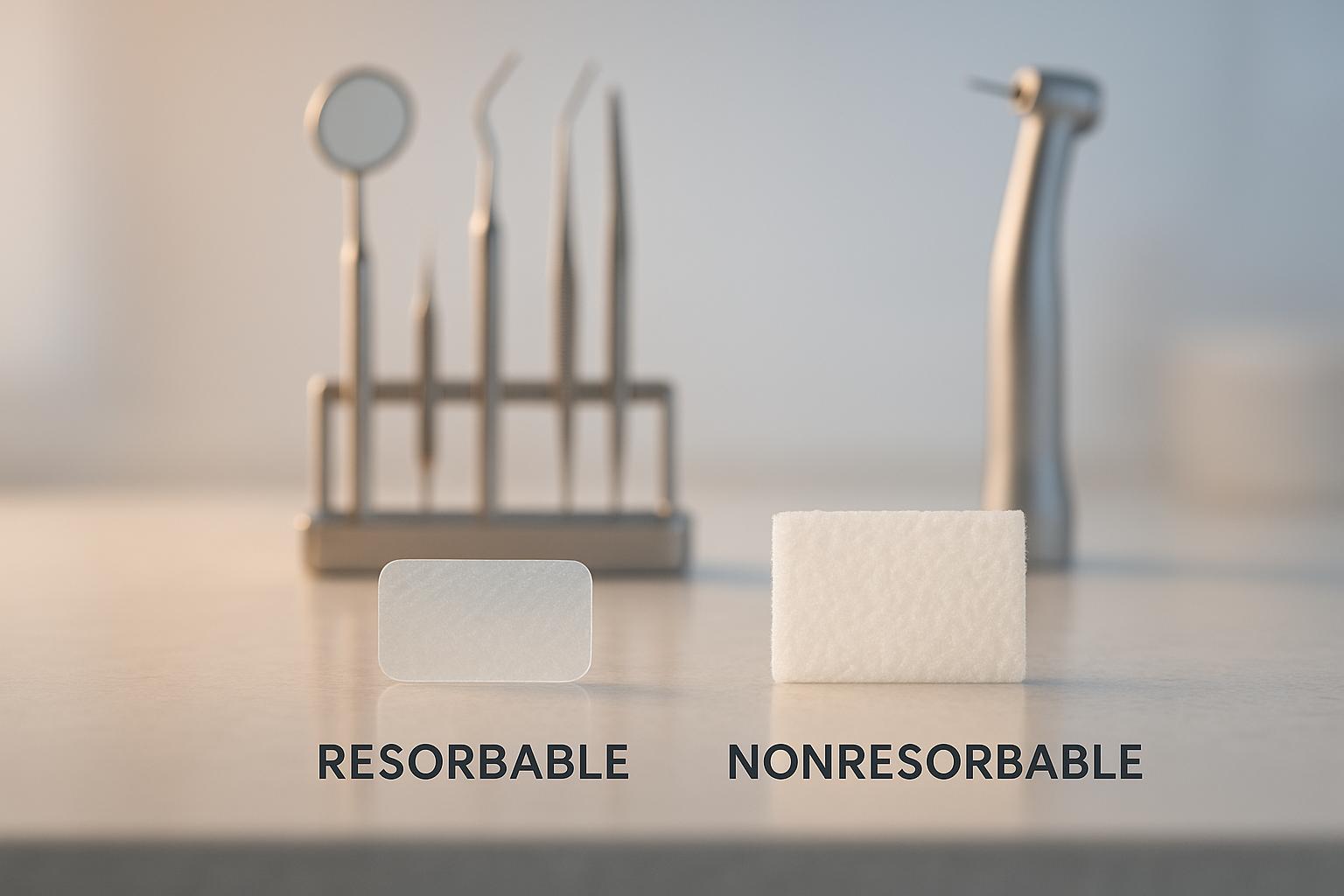
Resorbable and nonresorbable membranes are critical tools in guided tissue regeneration (GTR), particularly in periodontal and implant dentistry. Here’s the key takeaway: resorbable membranes naturally degrade over time, eliminating the need for removal, while nonresorbable membranes require a second procedure but offer superior stability for complex cases.
Key Points:
- Resorbable Membranes:
- Made from materials like collagen or synthetic polymers (e.g., PLA, PGA).
- No removal surgery needed; they degrade over weeks to months.
- Suitable for small to moderate defects but less durable under pressure.
- Higher upfront cost but lower total treatment time.
- Nonresorbable Membranes:
- Constructed from materials like e-PTFE, d-PTFE, or titanium mesh.
- Require a second surgery for removal but maintain structure longer.
- Ideal for large defects and high-pressure areas.
- Lower initial cost but higher total treatment expense due to removal.
Quick Comparison:
| Aspect | Resorbable Membranes | Nonresorbable Membranes |
|---|---|---|
| Degradation | Natural over time | None; requires removal |
| Use Case | Small/moderate defects | Large/complex defects |
| Stability | Limited, decreases over time | High, constant stability |
| Cost | Higher upfront, no removal cost | Lower upfront, removal adds cost |
| Exposure Management | Often self-resolving | Requires intervention |
Choosing the right membrane depends on the defect size, patient factors, and procedural goals. Resorbable options prioritise patient comfort, while nonresorbable ones focus on durability for challenging cases. Both have their strengths and limitations, making tailored clinical decisions essential.
Resorbable Membranes: Materials, Uses, and Clinical Performance
Materials and Composition
Resorbable membranes, designed to break down naturally over time, fall into two main categories: natural (collagen-based) and synthetic polymers.
In the natural category, collagen-based membranes are the most commonly used. Porcine collagen membranes are particularly popular due to their excellent compatibility with human tissue, while bovine collagen membranes share similar qualities but degrade at a slightly different rate. Human-derived collagen membranes are less common, mainly because of challenges in sourcing.
On the synthetic side, materials like PLA (polylactic acid), PGA (polyglycolic acid), and their copolymers are valued for their predictable degradation timelines. These can be tailored to meet specific clinical needs. Cross-linking techniques can further enhance their barrier function, with cross-linked membranes lasting longer than non-cross-linked ones. This variability gives clinicians more control over treatment planning and outcomes.
The choice of material significantly influences how these membranes perform in clinical settings.
Clinical Advantages
Resorbable membranes bring several benefits to the table. One of their key advantages is eliminating the need for a second surgery, which not only spares patients additional discomfort but also cuts down on treatment time and expenses. This allows both patients and clinicians to focus solely on healing.
Another notable feature is their ability to handle minor exposures to the oral environment. This resilience helps maintain their role as a barrier during the critical healing phase, even in less-than-ideal conditions.
Drawbacks and Clinical Considerations
While resorbable membranes offer clear benefits, they are not without challenges. Factors like a patient’s age and the condition of their tissues can unpredictably affect how long the membrane takes to degrade. Premature breakdown due to infections, mechanical stress, or poor oral hygiene can jeopardise the success of regenerative treatments.
Additionally, these membranes generally have lower mechanical strength, making them less suitable for large or load-bearing defects. In such cases, additional grafting materials might be needed to maintain the necessary space for regeneration.
Another potential drawback is the risk of localised inflammation during the degradation process. While the overall treatment may be more cost-effective by avoiding a second procedure, the initial cost of resorbable membranes is often higher compared to nonresorbable options. These factors must be carefully weighed during treatment planning.
Absorbable membranes for GBR procedures
Nonresorbable Membranes: Materials, Uses, and Clinical Performance
Nonresorbable membranes bring specific strengths and limitations to the table, making them an important consideration in treatment planning.
Materials and Composition
Nonresorbable membranes are designed to maintain their structure throughout the healing process. A commonly used material is expanded polytetrafluoroethylene (e-PTFE), known for its microporous design that permits selective cell passage while blocking unwanted tissue infiltration. For cases requiring enhanced barrier properties, dense PTFE (d-PTFE) provides a non-porous alternative, effectively preventing bacterial penetration.
Another option is titanium mesh, valued for its biocompatibility and mechanical strength. These meshes are highly adaptable, allowing precise shaping to fit complex anatomical defects, and they offer robust support for bone regeneration. Some manufacturers combine titanium with PTFE to create titanium-reinforced PTFE membranes, merging the structural stability of titanium with the proven barrier properties of PTFE.
In Australian dental practices, high-density PTFE membranes have become popular due to their reliable performance. Unlike porous membranes, the dense variety forms an impermeable barrier, effectively excluding soft tissue cells from the regeneration site. Additionally, their inert nature minimises inflammatory responses, making them suitable for extended use when needed. These material options make nonresorbable membranes a dependable choice for challenging regenerative procedures.
Clinical Advantages
One of the standout features of nonresorbable membranes is their mechanical stability. This durability makes them ideal for treating large defects, areas under significant tissue pressure, and complex reconstructive cases where maintaining space is crucial. Unlike resorbable membranes, they remain intact throughout the entire healing process, unaffected by patient factors or local conditions.
Their long-lasting durability allows for extended treatment timelines. When longer regeneration periods are required – sometimes exceeding six months – nonresorbable membranes retain their structural integrity, which is particularly useful in implant site preparation and ridge augmentation. These procedures often demand sufficient bone volume for long-term success, and the reliability of nonresorbable membranes supports these outcomes.
Another major advantage is their ability to provide effective space maintenance, even in difficult anatomical locations. Materials like titanium mesh resist collapse under significant tissue pressure, making them especially useful in vertical bone augmentation. Maintaining the desired contour during healing is critical in achieving optimal results.
From a financial perspective, nonresorbable membranes can also be cost-efficient. While they do require a second surgical procedure for removal, their upfront cost is often lower than that of premium resorbable membranes. For practices working within tighter budgets, this can make advanced regenerative treatments more accessible.
Drawbacks and Clinical Considerations
Despite their benefits, nonresorbable membranes come with challenges. The most notable is the need for surgical removal, which adds a second procedure to the treatment plan. This can increase patient discomfort, extend treatment timelines, and raise overall costs. While the removal process is generally straightforward, it carries its own risks and requires additional healing time before final restorative work can proceed.
Another concern is the risk of exposure and bacterial colonisation. If a nonresorbable membrane becomes exposed, it cannot self-resolve like resorbable alternatives, often necessitating early removal and potentially compromising the regenerative outcome. In cases of infection, immediate removal is required, which can undo any progress made during the healing process.
The success of these membranes also hinges on precise surgical techniques. Ensuring proper soft tissue coverage is critical, as any compromise can lead to exposure issues and premature removal. Additionally, patient compliance plays a significant role. Poor oral hygiene or failure to follow post-operative care instructions can significantly heighten the risk of complications, making nonresorbable membranes more demanding in terms of aftercare compared to their resorbable counterparts.
sbb-itb-2be92ed
Side-by-Side Comparison: Resorbable vs Nonresorbable Membranes
Understanding the differences between resorbable and nonresorbable membranes is crucial for clinicians aiming to tailor treatments to their patients’ needs. The choice often involves balancing patient comfort with the need for mechanical stability, while also considering the complexity of the case. Resorbable membranes are typically suited for simpler cases with good soft tissue conditions, while nonresorbable membranes are better for complex defects due to their superior ability to maintain space and provide stability.
Patient history and compliance also play a significant role. For instance, resorbable membranes are often favoured when there is a risk of complications from membrane exposure or when avoiding a second surgery for removal is a priority. The table below outlines the main differences to help guide clinical decision-making.
Comparison Table
| Aspect | Resorbable Membranes | Nonresorbable Membranes |
|---|---|---|
| Primary Materials | Collagen, PLA, PGA, PLGA | e-PTFE, d-PTFE, titanium mesh |
| Surgical Procedures | Single procedure only | Two procedures (placement + removal) |
| Resorption Timeline | 2-8 weeks (collagen), 6-24 months (synthetic) | No resorption – requires removal |
| Mechanical Stability | Variable, decreases over time | Consistent throughout healing |
| Space Maintenance | Limited in high-pressure areas | Excellent, even under tissue pressure |
| Bacterial Resistance | Moderate, depends on material | High (especially d-PTFE) |
| Exposure Management | Self-resolving in most cases | Requires immediate intervention |
| Treatment Duration | Shorter overall timeline | Extended due to removal procedure |
| Upfront Cost | Higher (premium materials) | Lower initial investment |
| Total Treatment Cost | Moderate (single procedure) | Higher (two procedures + follow-up) |
| Patient Compliance Requirements | Standard post-operative care | Enhanced hygiene protocols |
| Ideal Applications | Small-moderate defects, implant sites | Large defects, complex reconstructions |
| Learning Curve | Moderate (handling techniques) | Steeper (placement + removal skills) |
| Complication Management | Conservative approach possible | Often requires surgical intervention |
| Healing Predictability | Variable (patient-dependent factors) | Consistent (controlled environment) |
For simpler cases, such as implant site development in a patient with good oral hygiene and compliance, a resorbable collagen membrane may be the ideal choice due to its ease of use and patient comfort. On the other hand, complex procedures like ridge augmentation requiring significant vertical bone gain often demand the durability and long-term reliability of a titanium-reinforced PTFE membrane.
In Australian dental practices, additional factors influence membrane selection. These include patient travel distances for follow-up visits, scheduling constraints within the practice, and the availability of specialist referrals for managing complications. These logistical considerations are just as important as clinical factors, shaping the overall approach to membrane selection and risk management in local settings.
Clinical Selection Criteria and Australian Practice Standards
Membrane Selection Criteria
Choosing the right membrane for regenerative procedures involves evaluating several factors, including the defect’s size, shape, and the condition of the surrounding soft tissue. For smaller defects, collagen-based membranes are often suitable, while larger, more complex reconstructions may require membranes with greater mechanical strength.
The patient’s overall health and oral hygiene also play a critical role in determining healing capacity. Membrane selection should align with the graft material being used and the anticipated healing timeline. For example, nonresorbable membranes are better suited to rigid grafts that need extended stability, whereas resorbable membranes are more compatible with softer grafts that integrate more quickly.
The defect’s location in the mouth further influences the choice of membrane. These considerations not only guide clinical decisions but also adhere to Australian regulatory standards for dental practice.
Managing Complications
Membrane exposure is one of the most common challenges in regenerative procedures. When resorbable membranes are exposed, conservative measures such as antimicrobial rinses and gentle cleaning often allow the tissue to heal while preserving the regeneration process. However, exposures involving nonresorbable membranes may require surgical intervention, such as trimming the exposed section or, in some cases, removing the membrane entirely.
Infections are managed based on the type of membrane used and the severity of the issue. Resorbable membranes can often be treated with systemic antibiotics and local antimicrobial therapies. On the other hand, infections linked to nonresorbable membranes may necessitate membrane removal to control bacterial growth effectively.
Regular post-operative check-ups are crucial for identifying complications early. These follow-ups allow clinicians to monitor tissue healing and address any issues promptly. Minimising risks involves careful surgical techniques, selecting the right patients, and providing thorough post-operative care – all of which are essential for achieving successful outcomes.
Australian Practice Standards
Australian dental practice standards place a strong emphasis on adhering to these clinical criteria. The Dental Board of Australia mandates that practitioners maintain competency in regenerative techniques through ongoing education and training.
Clinics are required to document detailed treatment plans, including informed consent discussions that explain the reasons behind specific membrane choices. Quality assurance measures, such as regular case reviews and outcome evaluations, help ensure high standards of care are consistently met.
Practitioners are also expected to stay informed about advancements in membrane technology and surgical methods. This is achieved through professional development activities like attending conferences and completing specialised courses, which enable the integration of the latest evidence into daily practice.
In Australia, clinics like Complete Smiles Bella Vista incorporate membrane-based regenerative techniques as part of their comprehensive treatment plans. These practices comply with strict equipment and material standards by sourcing membranes from approved suppliers and maintaining proper storage conditions to preserve material quality. Clear communication with patients about treatment options, potential risks, and post-operative care is a cornerstone of meeting Australian practice standards.
Conclusion
Choosing between resorbable and non-resorbable membranes in guided tissue regeneration comes down to clinical requirements, patient-specific factors, and safety considerations. Each type has its own strengths, making it suitable for particular regenerative needs.
In Australian dental practice, evidence-based decision-making plays a central role in membrane selection. Research and systematic reviews support the effectiveness of regenerative techniques, especially when membranes are used alongside grafts [1]. This approach not only ensures better outcomes but also promotes cost-effective care [2].
Patient factors such as diabetes, a history of cancer, or smoking habits demand a tailored approach. Personalising regenerative solutions through stratified, evidence-supported methods is essential to address these variables effectively [2][3].
For Australian practitioners, keeping up with advancements in membrane technology and surgical methods is vital. Continuous professional development helps ensure that patient care remains at the highest standard. Combining clinical expertise with evidence-based protocols enables informed decisions that prioritise both safety and treatment success.
Achieving successful results hinges on choosing the right membrane, thorough planning, precise surgical execution, and careful post-operative care. By adhering to Australian guidelines and evidence-backed practices, practitioners can deliver predictable outcomes, reduce risks, and enhance patient satisfaction.
FAQs
What should be considered when selecting between resorbable and nonresorbable membranes in dental procedures?
When choosing between resorbable and nonresorbable membranes for dental procedures, the decision hinges on factors like their intended use, durability, and the specific requirements of both the patient and the treatment.
Resorbable membranes naturally dissolve over time, so there’s no need for a second procedure to remove them. They work well in cases where a temporary barrier is enough to support healing. That said, they may lack the long-term stability provided by nonresorbable options.
On the other hand, nonresorbable membranes, such as PTFE, deliver extended support. They’re particularly effective at maintaining space and preventing soft tissue from encroaching. However, they usually require a follow-up procedure for removal and come with a higher risk of exposure, which could impact the healing process.
Your dentist will assess your specific needs and treatment goals to recommend the best option, ensuring the best possible outcome for your oral health.
What’s the difference between resorbable and nonresorbable membranes in guided tissue regeneration?
Resorbable membranes are crafted from materials like collagen, chitosan, or synthetic polymers that naturally break down within the body over time. This feature eliminates the need for a follow-up procedure to remove them. Their effectiveness, however, hinges on factors such as how well they integrate with the body (biocompatibility), the speed at which they degrade, and their ability to maintain mechanical stability. For optimal results, these membranes need to stay intact long enough to support the healing process.
On the other hand, nonresorbable membranes, made from materials like high-density polytetrafluoroethylene (d-PTFE) or titanium-reinforced ePTFE, are prized for their durability and strong barrier properties. Unlike their resorbable counterparts, these membranes require surgical removal once healing is complete. They are often the go-to choice for procedures that demand additional mechanical support or involve extended healing periods.
Deciding between resorbable and nonresorbable membranes largely depends on the specific requirements of the procedure, such as the type of tissue being regenerated and the expected healing timeline.
What complications can arise from membrane exposure during guided tissue regeneration, and how are they managed?
When membranes used in guided tissue regeneration become exposed to the oral environment, it can lead to complications. Issues like infections, slower bone healing, or less effective treatment outcomes often arise because bacteria can disrupt the healing process.
To address this, early detection is key. Contaminated membranes should be removed promptly, and maintaining top-notch oral hygiene is crucial. In some instances, antibiotics might be necessary to manage infections. Preventing such exposure begins with precise surgical techniques and ensuring patients follow post-operative care instructions carefully to promote proper healing.
Related Blog Posts
- Clinical Outcomes of Guided Tissue Regeneration
- Advances in Gum Grafting Materials and Techniques
- Biodegradable Materials in Guided Tissue Regeneration
- Stem Cells in Periodontal Regeneration: Current Trials
Important Notice: Any surgical or invasive procedure carries risks. Before proceeding, you should seek a second opinion from an appropriately qualified health practitioner.
Individual results may vary. The information provided in this article is for educational purposes only and does not constitute medical advice.
Checkout Related Blogs




Get in touch with us
For more information, call us now to start feeling better. Or fill the form below to make appointment
The Latest News from Complete Smiles
How to Clean Clear Plastic Retainers
Checklist for Choosing Wearable Dental Devices
Checklist for Choosing Cloud AI Platforms in Dentistry

Complete Smiles Bella VistaAccepts All Major Health Funds, Including





