



Fatigue Resistance of CAD/CAM Dental Materials
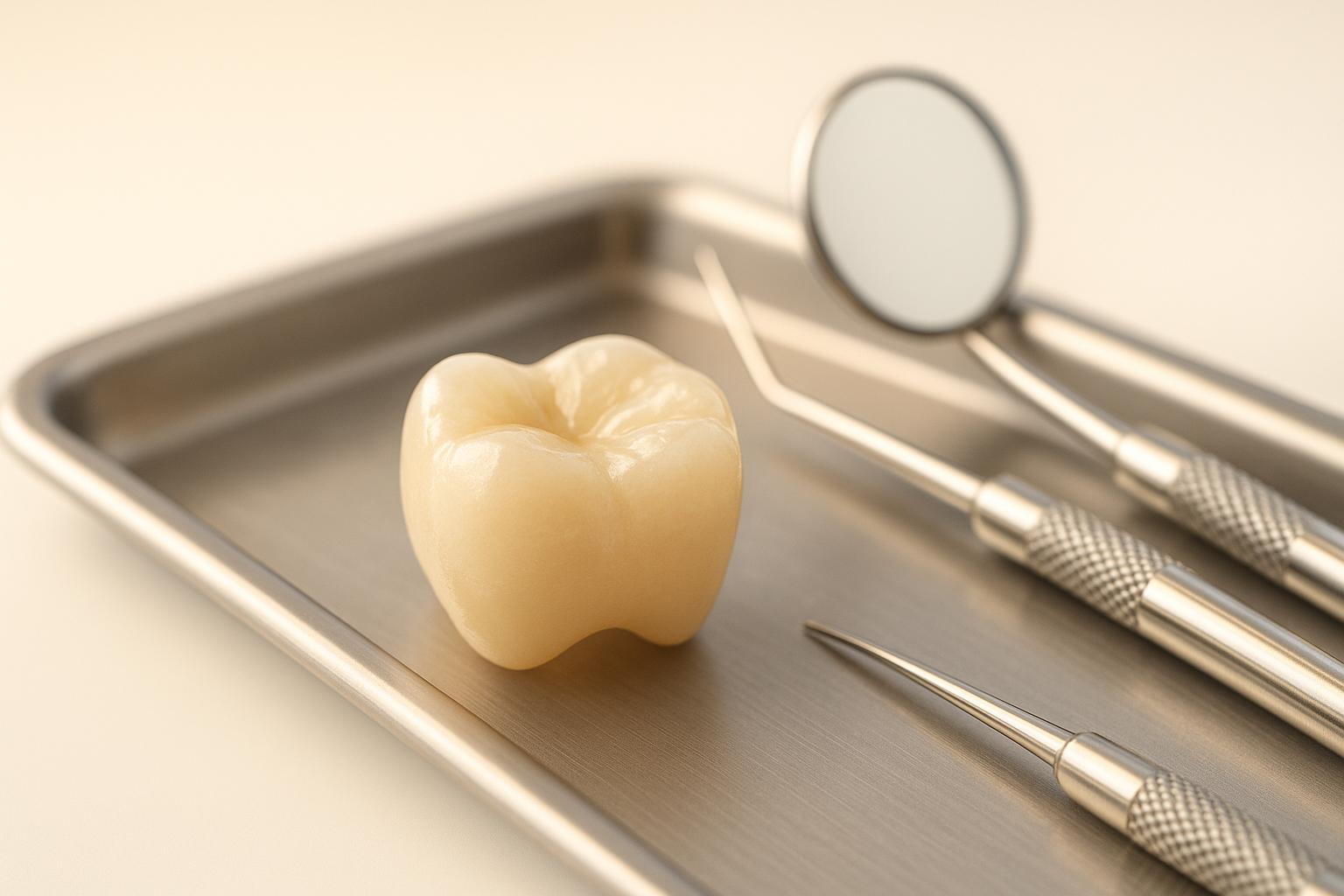
Dental restorations face constant stress from chewing, moisture, temperature changes, and pH fluctuations. The ability of CAD/CAM materials to endure these conditions without cracking or failing is called fatigue resistance. Here’s what you need to know:
- Lithium disilicate glass-ceramic (e.g., IPS e.max CAD): Strong and visually appealing, ideal for front teeth. Requires a minimum thickness of 1.5 mm for durability.
- Zirconia: Extremely durable, even at thin designs (as little as 0.7 mm). Perfect for back teeth but less aesthetic than glass-ceramics.
- CAD/CAM composites: Flexible and damage-tolerant, but prone to gradual deformation under long-term stress.
Quick Comparison
| Material Type | Flexural Strength | Minimum Thickness | Best For | Limitation |
|---|---|---|---|---|
| Lithium Disilicate | 360–400 MPa | 1.5 mm | Aesthetic restorations | Requires thicker designs |
| Zirconia | Very high | 0.7 mm | Thin, strong crowns | Limited aesthetic appeal |
| CAD/CAM Composites | Moderate | Varies | High-stress areas | Time-dependent deformation |
Fatigue resistance depends on factors like material composition, crown thickness, and oral conditions. For long-lasting restorations, material choice should match the patient’s needs and bite forces.
CAD/CAM Milling Materials: The Definitive Guide for First-Time Users
Common CAD/CAM Materials and Their Basic Properties
In Australian dental practices, three main categories of CAD/CAM materials are commonly used. Each type has specific mechanical properties that influence its ability to withstand repeated stress over time. Understanding these properties helps clinicians choose the right material for different clinical scenarios.
Lithium Disilicate Glass-Ceramic
Lithium disilicate glass-ceramic, particularly IPS e.max CAD, is a popular choice in Australian dentistry. It offers a combination of mechanical strength and aesthetic appeal, making it ideal for restorations in visible areas, such as the front teeth.
With a flexural strength of 360–400 MPa, lithium disilicate can handle significant biting forces [1][3]. Its fatigue resistance is supported by a slow crack growth parameter (n ≈ 14.2) [1]. The material’s durability lies in its interlocking crystal structure, which provides strong resistance to crack propagation under repeated stress [1].
However, thickness is critical. To match the longevity of other materials, lithium disilicate restorations need to be at least 1.5 mm thick [3]. Laboratory tests reveal a fatigue to flexural strength ratio of 0.58 at 50,000 cycles, highlighting its consistent performance under stress [1]. These characteristics make it a reliable choice for crowns and bridges that require both strength and aesthetics.
Zirconia
Zirconia, such as Cercon ZC, is known for its exceptional fracture resistance, making it a game-changer for minimally invasive dentistry. It’s particularly suited for posterior restorations where space is often limited.
Unlike other materials, zirconia maintains its strength even at reduced thicknesses. For example, zirconia crowns as thin as 0.7 mm can last up to 24 years under a 50 N load [3]. Even under a 120 N load, zirconia performs well, lasting 1.9 years, which still surpasses many alternatives [3].
This strength is due to zirconia’s polycrystalline structure, which uses transformation toughening to resist crack propagation [3]. Its durability at minimal thickness allows for conservative tooth preparation, making it a preferred option when preserving natural tooth structure is a priority.
Compared to lithium disilicate, zirconia requires less tooth reduction to achieve similar performance, making it increasingly popular in practices focused on minimally invasive techniques.
CAD/CAM Composite Materials
CAD/CAM composite materials like Brilliant Crios, Cerasmart 270, Grandio, and Tetric CAD offer a different balance of flexibility and strength. These materials combine resin with ceramic fillers, providing unique mechanical properties [1][2].
While composites may not last as long as lithium disilicate, they show comparable resistance to fatigue degradation. Their fatigue to flexural strength ratios range from 0.57–0.65 at 50,000 cycles [1]. What sets them apart is their failure behaviour. Monolithic resin composite crowns can endure up to 1,700 N with only minor damage, whereas glass-ceramic crowns can fracture at loads as low as 450 N [2].
The resin matrix with ceramic fillers allows composites to absorb and dissipate energy, reducing the likelihood of sudden fractures [1]. However, this flexibility has a downside: time-dependent creep (gradual deformation under stress) is noticeable after prolonged testing, particularly at high cycle counts [1]. This highlights the need for thorough evaluation under realistic oral conditions to fully understand their long-term performance.
| Material Type | Flexural Strength | Minimum Thickness | Key Advantage | Primary Limitation |
|---|---|---|---|---|
| Lithium Disilicate | 360–400 MPa | 1.5 mm | Excellent aesthetics | Requires adequate thickness |
| Zirconia | Very high | 0.7 mm | Ultra-thin capability | Limited aesthetic options |
| CAD/CAM Composites | Moderate | Varies | High damage tolerance | Time-dependent creep |
Each of these materials offers unique benefits, and the choice often depends on the clinical situation, aesthetic goals, and how much natural tooth structure can be retained. The properties of these materials underscore the importance of carefully matching the material to the design and functional demands of the restoration.
Recent Study Results on Fatigue Resistance
Recent research using advanced testing techniques has provided valuable insights into the durability of CAD/CAM materials by analysing their resistance to fatigue over time.
Material Performance Comparisons
Studies reveal that zirconia crowns consistently outperform other materials in terms of fatigue resistance and longevity under repeated stress. They are followed by lithium disilicate glass-ceramic and then CAD/CAM composites [1][3]. For instance, zirconia crowns with a thickness of 0.7 mm can endure a 50 N load for up to 24 years. However, as the load increases, their lifespan decreases – 4.3 years at 100 N and just 1.9 years at 120 N [3].
Lithium disilicate crowns, on the other hand, require a minimum thickness of 1.5 mm to last beyond five years when subjected to a 100 N load. Thinner crowns are significantly more prone to early failure [3]. While CAD/CAM composites generally have a shorter lifespan compared to lithium disilicate, their resistance to fatigue degradation is comparable, with fatigue ratios ranging between 0.57 and 0.65 at 50,000 cycles, closely matching lithium disilicate’s ratio of 0.58 [1].
In mouth-motion step-stress fatigue tests, monolithic resin composite crowns can withstand loads as high as 1,700 N with only minor surface damage, whereas glass-ceramic crowns tend to fail under much lower loads [2]. Interestingly, CAD/CAM composites also show more consistent performance with less variability in fatigue results compared to lithium disilicate glass-ceramic [1].
These findings highlight the importance of selecting the right material to ensure long-lasting dental restorations.
How Design and Thickness Affect Performance
The thickness of a crown plays a crucial role in its fatigue resistance, regardless of the material. For example, lithium disilicate crowns must be at least 1.5 mm thick to endure a 100 N load for over five years. Thinner crowns, however, are far more likely to fail prematurely [3]. Zirconia, known for its exceptional strength, allows for thinner designs. Even ultra-thin zirconia crowns (0.7 mm) can handle physiological loads for extended periods, though their lifespan decreases as the load increases [3].
In addition to thickness, the design of the restoration – such as its anatomical shape and preparation margins – affects how stress is distributed, which directly influences fatigue resistance. This underscores the need for precise preparation and material selection to maximise the durability of CAD/CAM restorations [3][4].
These factors demonstrate how design and material choices are closely tied to the success of dental restorations in real-world clinical settings.
Testing Under Mouth-Like Conditions
Testing methods that mimic real-life oral conditions are critical for understanding material fatigue. Modern fatigue tests aim to replicate the complex oral environment by using techniques like step-stress fatigue testing and finite element analysis (FEA). These tests are often conducted in water baths at body temperature to simulate the effects of moisture and heat on materials [1][2][3].
For example, long-term testing has revealed that CAD/CAM composites can experience creep – slow, time-dependent deformation – after 3 million cycles. This highlights the importance of extended testing to accurately predict how materials will perform in clinical settings [1]. When tested under simulated mouth conditions, resin composite crowns typically show minor occlusal damage, such as partial cone cracks and radial cracks caused by flexure. These damages usually remain contained within the restoration [2]. In contrast, glass-ceramic crowns are more prone to bulk fractures, even under lower loads [2].
Step-stress fatigue testing has proven especially useful for predicting failure probabilities in dental materials, offering insights that static strength tests often overlook [2]. Additionally, the slow crack growth parameter (n) provides a measure of fatigue resistance, with CAD/CAM composites showing values ranging from 10.4 to 13.3, while lithium disilicate scores slightly higher at 14.2 [1].
These testing methods provide a clearer picture of how dental materials perform under the complex conditions of daily use, ensuring better outcomes for patients.
sbb-itb-2be92ed
What Affects Material Fatigue Resistance
Understanding the factors that influence the fatigue resistance of CAD/CAM materials is key to creating dental restorations that last. These factors determine whether a crown or restoration can handle years of daily stress or if it will fail prematurely.
Material Structure and Composition
The internal structure and composition of CAD/CAM materials play a major role in their ability to resist fatigue. Each material’s microstructure directly impacts how it handles repeated stress and loading cycles.
For example, variations in microstructure explain why some materials perform better under stress. While composites may show similar fatigue resistance initially, their lifespan tends to be shorter due to differences in microstructure and gradual deformation over time [1].
The slow crack growth parameter (n) is particularly useful for predicting fatigue resistance. This parameter measures how quickly small cracks grow under repeated stress – higher values indicate better resistance to crack propagation.
Reinforcing particles and the base matrix composition also significantly affect fatigue performance. The type, size, and distribution of these particles influence how stress travels through the material. Uniformly distributed particles help ensure predictable performance, reducing the likelihood of small defects growing into larger issues.
Tooth Preparation and Design Factors
Material composition is only part of the equation – design and preparation also play a critical role in fatigue resistance. Proper tooth preparation and well-thought-out restoration design can significantly improve the performance and longevity of CAD/CAM materials. Key design elements like crown thickness and margin configuration directly impact how restorations handle stress [4].
One crucial factor is crown thickness. For lithium disilicate crowns, a minimum thickness of 1.5 mm is recommended to ensure durability for over five years under moderate loads [3]. Thinner crowns are more prone to early failure, while optimised designs distribute stress more evenly, improving durability [3][4].
Zirconia, on the other hand, offers exceptional strength, allowing for thinner designs. Even ultra-thin zirconia crowns at 0.7 mm can withstand physiological loads for extended periods. However, crowns with a thickness of 1.1–1.5 mm provide even greater longevity [3]. This makes zirconia an excellent choice for situations with limited space.
Preparation geometry and margin design further influence stress distribution. Rounded internal line angles and precise marginal fit help reduce stress concentrations that can lead to crack formation. In contrast, sharp angles and poor fit create stress points that may compromise even the strongest materials over time.
Matching the preparation design to the material’s mechanical properties ensures better stress distribution and minimises the risk of early failure, regardless of the material chosen [4].
Mouth Conditions and Long-Term Wear
The oral environment presents unique challenges that can affect material fatigue resistance over time. Factors like moisture, temperature fluctuations, pH changes, and chewing forces all contribute to material degradation [1][2].
Water plays a significant role in fatigue and creep, with tests showing noticeable deformation after 3 million cycles [1]. This highlights the importance of long-term testing in water to accurately predict clinical performance.
Temperature changes and acidic conditions also weaken the bonds within materials, encouraging crack growth over time [1][2]. The constant exposure to hot and cold foods, combined with pH variations from different diets, creates a challenging environment for dental materials.
Daily chewing adds another layer of complexity. Unlike controlled laboratory tests, real-world mechanical loading involves forces from multiple directions and varying intensities. This makes it essential to evaluate how materials respond to these dynamic forces rather than relying solely on single-direction tests.
Even with optimal design and preparation, the oral environment’s unpredictability plays a significant role in restoration longevity. Patient-specific factors such as grinding habits, bite force, and dietary preferences can greatly influence clinical outcomes. For instance, some patients generate significantly higher bite forces, while certain foods create harsher conditions for dental materials. These variables help explain why identical restorations may perform differently from one patient to another.
Modern testing methods that simulate oral conditions – such as water immersion at body temperature and multi-directional loading – offer more reliable insights into clinical performance compared to traditional dry testing [1][2]. These realistic simulations help bridge the gap between laboratory results and real-world outcomes.
Clinical Applications and Future Research
Choosing Materials Based on Evidence
Recent studies show that resin composites perform better than glass-ceramics under heavy loads, making them a strong choice for high-stress posterior restorations [2]. For Australian clinicians, it’s important to combine these findings with patient-specific considerations, such as bite force, grinding habits, and aesthetic preferences.
Zirconia’s strength allows for ultra-thin designs, while lithium disilicate’s higher resistance to slow crack growth (14.2 compared to 10.4-13.3 for composites) ensures durability when minimum thickness guidelines are followed [1][3]. However, gaps in current research make it challenging to directly apply these findings to clinical settings.
Research Limitations and Testing Standards
Research on fatigue resistance comes with notable limitations that complicate its application in clinical practice. Many studies rely on accelerated testing methods that fail to fully replicate the complexity of the oral environment [2].
The absence of long-term clinical trials is one of the biggest hurdles in understanding how materials perform over time. Laboratory studies often use standard protocols like three-point flexural tests, S-N curve plotting with the Basquin model, and step-stress fatigue tests in water baths at 36°C [1][2]. While these methods provide valuable insights, they don’t account for the multifaceted challenges materials face in patients’ mouths over years of use.
Developing standardised, clinically relevant testing methods is essential. Future studies should incorporate more realistic conditions, such as cyclic loading combined with temperature and pH fluctuations, as well as longer-term evaluations to measure time-dependent degradation [1]. Consistent testing protocols would make it easier to compare results across studies and improve their reliability.
Testing variability further complicates material comparisons. For instance, some research suggests that CAD/CAM composites exhibit less variability in fatigue data compared to lithium disilicate glass-ceramics, indicating more predictable performance [1]. However, without standardised methods, clinicians should interpret these findings cautiously and closely monitor restorations to ensure they hold up in real-world conditions. Improved standards are crucial for translating laboratory data into practical clinical guidance.
Modern Techniques in Australian Dental Practices
Australian dental practices are adapting to these research insights while addressing the limitations of current testing methods. Complete Smiles Bella Vista, for example, follows evidence-based protocols for selecting CAD/CAM materials, using digital workflows and high-quality options like zirconia, lithium disilicate, and nanohybrid composites to create durable and visually pleasing restorations.
Practices across Australia must adhere to Therapeutic Goods Administration (TGA) regulations and guidelines from professional bodies like the Australian Dental Association. These ensure that only materials with proven safety and effectiveness, backed by solid research, are used in clinical settings.
Digital workflows are transforming material selection and restoration design. CAD/CAM systems allow for precise customisation, optimising restoration thickness and geometry based on fatigue resistance data. This ensures sufficient material strength while preserving as much natural tooth structure as possible.
Ongoing professional development plays a key role in helping Australian clinicians stay updated on advancements in material science and fatigue resistance. By keeping pace with the latest research and embracing evidence-based protocols, dental practices can deliver reliable, long-lasting restorations that meet patients’ needs and expectations.
FAQs
What should you consider when selecting between lithium disilicate, zirconia, and CAD/CAM composites for dental restorations?
When selecting a material for dental restorations, it’s important to weigh up factors like durability, appearance, and the unique requirements of each patient.
- Lithium disilicate stands out for its impressive translucency and lifelike look, making it a popular choice for restoring front teeth. It also offers reliable strength for areas with moderate chewing stress.
- Zirconia is incredibly durable, making it perfect for molars and other areas that endure heavy chewing forces. Plus, advancements in its formulation have significantly improved its visual appeal.
- CAD/CAM composites are a flexible and more budget-friendly alternative. They’re less prone to cracking compared to ceramics and can handle stress effectively, making them ideal for specific clinical needs.
Your dentist will carefully assess factors like the restoration’s location, the forces exerted during biting, and your aesthetic preferences to recommend the best material for your situation.
How do factors like temperature changes and chewing forces affect the durability of CAD/CAM dental materials?
The durability of CAD/CAM dental materials is shaped by the everyday challenges they face in the mouth, such as shifts in temperature and the forces from chewing. These materials are engineered to handle the constant stresses of daily life, including the pressure from biting and the impact of hot or cold foods and drinks. That said, prolonged exposure to these conditions can eventually cause material fatigue, potentially affecting their long-term reliability.
Research highlights that the fatigue resistance of CAD/CAM materials depends on their composition and how they’re manufactured. For instance, ceramic-based materials are known for their strength and resistance to wear, making them a robust choice. On the other hand, resin-based composites may show more gradual wear when subjected to continuous stress over time. Maintaining proper oral hygiene and scheduling regular dental visits play a key role in extending the lifespan of these restorations.
What are the benefits of using advanced methods like step-stress fatigue testing to assess the durability of dental materials?
Step-stress fatigue testing is a contemporary technique designed to assess the durability of dental materials by mimicking the repeated stresses they endure over time. This method replicates the forces of daily chewing and biting, offering a realistic evaluation of how materials hold up under everyday conditions.
Through step-stress fatigue testing, researchers can estimate the long-term performance of materials such as CAD/CAM ceramics and composites. This information enables dental professionals to choose materials that are not only resilient but also dependable for extended use, ultimately leading to improved patient care.
Related Blog Posts
- Wear-Resistant Materials in Dental Restorations
- Wear Resistance of Polymer-Based Restoratives
- Nanomaterials in Dentistry: Wear Resistance Explained
- Bond Strength of CAD/CAM Materials with Adhesives
Important Notice: Any surgical or invasive procedure carries risks. Before proceeding, you should seek a second opinion from an appropriately qualified health practitioner.
Individual results may vary. The information provided in this article is for educational purposes only and does not constitute medical advice.
Checkout Related Blogs



Get in touch with us
For more information, call us now to start feeling better. Or fill the form below to make appointment
The Latest News from Complete Smiles
How to Clean Clear Plastic Retainers
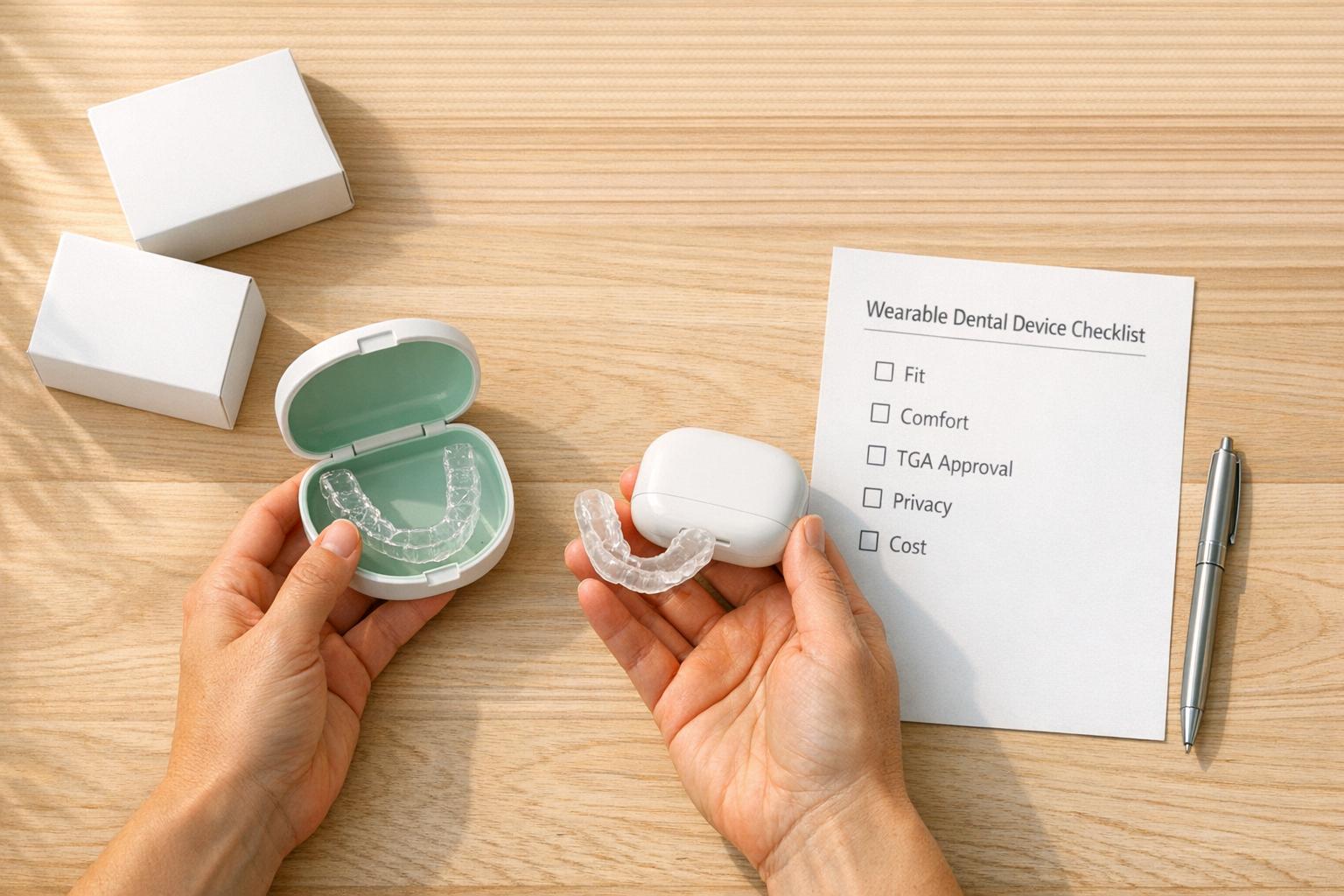
Checklist for Choosing Wearable Dental Devices
Checklist for Choosing Cloud AI Platforms in Dentistry
Complete Smiles Bella VistaAccepts All Major Health Funds, Including