





Emerging Titanium Alloys for Dental Implants
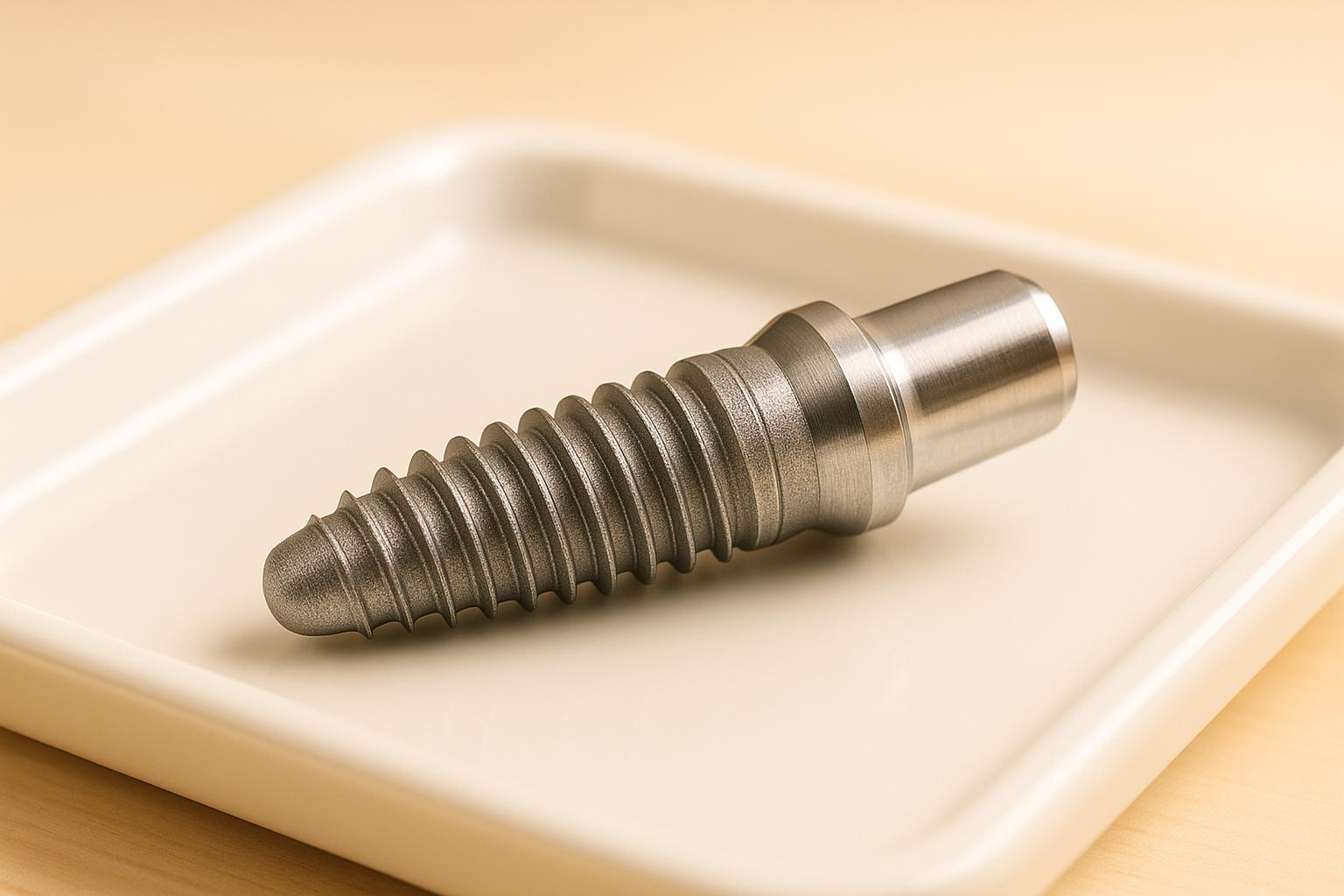
Titanium alloys have transformed dental implants thanks to their strength, biocompatibility, and resistance to corrosion. However, traditional alloys like Ti-6Al-4V have limitations, including potential toxicity from aluminium and vanadium and a mismatch between their stiffness and natural bone. This has led to the development of advanced alloys designed to address these issues.
Key advancements include:
- Safer compositions: New alloys exclude aluminium and vanadium, using biocompatible elements like zirconium, niobium, and molybdenum.
- Improved mechanical properties: Alloys like Ti-20Zr-3Mo-3Sn and Ti-15Zr (Roxolid®) have lower elastic moduli (closer to bone) and higher strength, reducing stress shielding and improving durability.
- Enhanced performance: These alloys resist corrosion, support better osseointegration, and perform well under high stress.
Australian clinics, such as Complete Smiles Bella Vista, are adopting these materials for complex cases like narrow implants, compromised bone, and bruxism. With regulatory oversight ensuring safety, these alloys represent the future of dental implants, offering better outcomes for patients with diverse needs.
What Are The Different Types Of Titanium Dental Implants Available? – The Pro Dentist
Key Properties of Titanium Alloys for Dental Implants
Titanium alloys are widely used in dental implants due to their excellent combination of biocompatibility, strength, and resistance to corrosion. Their success in implantology is driven by three key factors: their ability to integrate with the body, their mechanical performance, and their durability in challenging environments. Let’s take a closer look at these properties.
Biocompatibility and Osseointegration
When it comes to dental implants, biocompatibility is non-negotiable. Titanium alloys naturally form a thin layer of titanium dioxide (TiO₂) on their surface, which prevents the release of harmful metal ions and promotes osseointegration – a process where bone cells grow directly onto the implant surface, creating a secure and lasting bond [2][6][7]. This layer not only protects the implant but also works in harmony with the body’s healing mechanisms.
Recent advancements have introduced alloys like Ti-20Zr-3Mo-3Sn, which have demonstrated excellent performance in laboratory settings. These newer materials show no toxic effects on cells and support their growth and mobility just as well as traditional alloys [2][5][6]. Clinically, they’ve achieved impressive success rates, with studies showing up to 99% of implants remaining functional even after ten years [2][6].
Mechanical Properties and Elastic Modulus
The mechanical strength of titanium alloys plays a vital role in ensuring implants can endure the forces of chewing and other oral activities. These alloys are valued for their high tensile strength, flexibility, and hardness, which make them ideal for withstanding everyday wear and tear [3][5].
However, traditional titanium alloys like Ti-6Al-4V have a high elastic modulus – a measure of stiffness. While cortical bone has an elastic modulus of around 10–30 GPa, Ti-6Al-4V sits at approximately 110 GPa. This mismatch can lead to stress shielding, where the implant absorbs too much force, potentially causing bone loss and implant failure [2][3][5].
To address this, newer β-type titanium alloys have been developed with significantly lower elastic moduli. For example, Ti-20Zr-3Mo-3Sn has a Young’s modulus of about 52 GPa, nearly half that of traditional alloys. Similarly, Ti-13Nb-13Zr alloys range between 55 and 85 GPa. These properties allow for better force distribution, reducing stress on surrounding bone and improving the implant’s long-term stability.
| Alloy Type | Elastic Modulus (GPa) | Ultimate Strength (MPa) | Elongation (%) | Hardness (HV) |
|---|---|---|---|---|
| Ti-6Al-4V (Traditional) | ~110 | ~900 | ~10 | 307 |
| Ti-15Zr (Roxolid®) | ~80 | >850 | ~15 | ~280 |
| Ti-20Zr-3Mo-3Sn | 52 | 825 | 10 | 300 |
| β-type alloys | 55–80 | 700–900 | 10–20 | 250–350 |
These advancements in mechanical performance not only enhance patient comfort but also contribute to the long-term success of implants.
Corrosion Resistance and Longevity
The oral environment presents unique challenges for implants, with constant exposure to saliva, fluctuating pH levels, and fluoride-containing products. Titanium alloys excel in this environment due to their exceptional corrosion resistance, which is largely attributed to the stable TiO₂ layer on their surface [2][6].
This oxide layer has the remarkable ability to self-repair if damaged, ensuring continuous protection against corrosion and the release of ions [2][4]. Moreover, newer titanium alloys avoid the use of elements like vanadium and aluminium, which have raised concerns due to their potential toxicity [2][5]. Instead, these alloys incorporate safer metals such as zirconium, niobium, molybdenum, and tin, enhancing both their corrosion resistance and overall safety.
In Australia, these properties are especially valued when selecting materials for dental implants. Patients with sensitivities to certain metals or concerns about long-term safety are often recommended vanadium- and aluminium-free alloys, providing them with greater reassurance and improved outcomes.
Established vs. New Titanium Alloys
The development of titanium alloys for dental implants highlights a shift toward materials designed to address specific clinical challenges. By comparing established alloys with newer options, it becomes clear why the industry is leaning towards materials that better balance mechanical performance and compatibility with the human body.
Overview of Established Titanium Alloys
To understand how titanium alloys have evolved, let’s first examine the characteristics of traditional materials.
Commercially pure titanium (cpTi), especially Grade 4, has been a go-to material in dental implantology. It’s known for its excellent resistance to corrosion and compatibility with biological tissues. With an ultimate tensile strength of around 550 MPa and an elastic modulus of about 110 GPa, it has proven reliable for standard implant applications [2]. Its long-standing use has cemented its reputation as a trusted choice.
Ti-6Al-4V (Grade 5) introduced a stronger alternative, incorporating 6% aluminium and 4% vanadium. This alloy offers a tensile strength of approximately 900 MPa and a hardness of about 350 HV [2][5]. Clinical studies suggest success rates as high as 99% over a decade [6]. However, this alloy’s high elastic modulus can lead to stress shielding, and concerns about the potential toxicity of aluminium and vanadium persist [2][5].
Ti-6Al-7Nb was developed to address some of these concerns by substituting niobium for vanadium, reducing potential toxicity risks while maintaining similar mechanical properties. Yet, the presence of aluminium continues to be a point of caution for some clinicians [5].
Introduction to New Titanium Alloys
Emerging titanium alloys aim to improve mechanical properties while eliminating potentially harmful elements. β-type titanium alloys represent a significant leap forward, incorporating biocompatible elements like niobium, zirconium, tantalum, molybdenum, and tin [2][3][5].
Ti-13Nb-13Zr is one of the leading β-type alloys. It features an elastic modulus ranging from 55 to 85 GPa and tensile strengths between 800 and 900 MPa [2][3][5]. This balance reduces stress shielding while ensuring the alloy remains strong enough for clinical use.
Ti-20Zr-3Mo-3Sn is another standout, with an elastic modulus of 52 GPa, a tensile strength of 825 MPa, and a hardness of 300 HV [5]. These properties demonstrate that it’s possible to achieve better mechanical compatibility without compromising strength.
Roxolid® (Ti-15Zr), designed specifically for dental implants, combines titanium with 15% zirconium. This alloy delivers tensile strengths exceeding 850 MPa while maintaining biocompatibility similar to that of pure titanium [2]. Its high strength makes it ideal for small-diameter implants and narrow ridge applications.
Newer alloys are engineered to exclude aluminium and vanadium altogether, relying solely on biocompatible elements. These materials form stable titanium dioxide (TiO₂) layers, which enhance corrosion resistance and support long-term integration with bone [2][5].
Comparison of Alloy Properties
Here’s a side-by-side look at the key differences between established and new titanium alloys:
| Alloy Type | Main Elements | Elastic Modulus (GPa) | Tensile Strength (MPa) | Biocompatibility | Applications | Limitations |
|---|---|---|---|---|---|---|
| cpTi (Grade 4) | Ti | ~110 | ~550 | Excellent | Standard implants | Lower strength; higher modulus |
| Ti-6Al-4V (Grade 5) | Ti, 6% Al, 4% V | ~110 | ~900 | Good, but concerns over Al/V | Widely used in implants & abutments | Potential toxicity; stress shielding |
| Ti-6Al-7Nb | Ti, 6% Al, 7% Nb | ~110 | ~900 | Improved over Ti-6Al-4V | Alternative to Ti-6Al-4V | Still contains Al |
| Ti-13Nb-13Zr (β-type) | Ti, 13% Nb, 13% Zr | 55–85 | 800–900 | Excellent | Implants, abutments | Higher cost; limited long-term history |
| Ti-20Zr-3Mo-3Sn (β-type) | Ti, 20% Zr, 3% Mo, 3% Sn | 52 | 825 | Excellent | Endosseous implants | New; limited long-term data |
| Roxolid® (Ti-15Zr) | Ti, 15% Zr | ~100 | >850 | Excellent | Small-diameter / narrow ridge implants | Newer; higher cost |
The move from traditional to newer alloys reflects the industry’s focus on eliminating aluminium and vanadium, reducing elastic modulus values, and maintaining or improving strength. These advances address the limitations of earlier materials, paving the way for more versatile implant designs.
New β-type alloys also bring better fatigue strength and corrosion resistance, which are crucial for the long-term success of implants [2][3]. Their lower elastic modulus – ranging from 52 to 85 GPa – marks a significant step toward achieving better compatibility with bone structure.
sbb-itb-2be92ed
Clinical Applications of New Titanium Alloys in Australia
Australian dental practices are now embracing advanced titanium alloys to tackle complex cases that were once difficult – or even impossible – to manage with traditional materials.
Applications for Specific Patient Needs
Thanks to their superior mechanical properties, these alloys are transforming how dentists address challenges like small-diameter implants, compromised bone conditions, and high-stress scenarios.
For small-diameter implants, materials such as Ti-15Zr (Roxolid®) are making a big difference. With a tensile strength exceeding 850 MPa, these alloys allow for narrow implant placement in patients with limited bone volume, all without sacrificing structural integrity[2]. This is particularly beneficial for patients who have experienced bone loss after tooth extraction.
Patients with compromised bone quality, such as those with osteoporosis or diabetes, also stand to gain. Alloys like Ti-20Zr-3Mo-3Sn, which offer an optimal elastic modulus, excel in distributing stress evenly. This reduces the risk of stress shielding – a factor that can lead to bone loss and implant failure[5].
For individuals who suffer from bruxism, the enhanced fatigue resistance and strength of these alloys ensure implants remain durable over time. Additionally, they support immediate loading protocols, enabling temporary restorations to be placed right after implant insertion. This not only improves patient comfort but can also shorten overall treatment timelines.
Regulatory and Safety Considerations
While these alloys offer exciting clinical possibilities, their use must align with strict safety and regulatory guidelines. In Australia, the Therapeutic Goods Administration (TGA) plays a key role in ensuring that all new dental implant materials meet stringent safety and efficacy standards before they can be used clinically[4]. Manufacturers are required to provide thorough evidence, including laboratory tests, biocompatibility assessments, and clinical trial data, to demonstrate compliance with both local and international regulations.
Post-market surveillance further ensures ongoing safety, while proper training for dental professionals is critical to fully harness the benefits of these advanced materials while minimising potential risks.
Advanced Practices in Australian Clinics
Leading dental clinics across Australia are integrating these next-generation titanium alloys into their treatment plans, guided by a patient-focused and evidence-based approach. One example is Complete Smiles Bella Vista, which uses these advanced materials to customise implants based on individual patient needs and the latest scientific advancements.
Modern tools such as digital treatment planning and CBCT imaging allow for precise implant selection and design. Techniques like nano-texturing and laser etching are also being employed to enhance osseointegration by creating surfaces that encourage strong bone integration[1]. Furthermore, additive manufacturing is enabling the creation of custom implant solutions tailored to unique anatomical challenges.
To ensure long-term success, clinics are implementing comprehensive follow-up protocols. These include advanced imaging and regular clinical evaluations, which not only help monitor implant performance but also contribute to the growing body of evidence supporting these materials’ effectiveness.
Future Directions in Titanium Dental Alloys
Ongoing research is pushing titanium dental alloys toward safer, more effective implants that better mimic the mechanics of natural bone. With current successes as a foundation, the focus is shifting to refining alloy compositions and advancing manufacturing techniques.
Advances in Alloy Design
Researchers are working to remove aluminium and vanadium from titanium alloys to minimise risks like neurotoxicity and adverse tissue reactions[5]. Instead, they are developing multi-element systems that are fully compatible with the human body. These new alloys are fine-tuned to improve mechanical properties while avoiding harmful components.
β-type titanium alloys, such as Ti-13Nb-13Zr and Ti-Nb-Zr-Ta, are particularly promising. They offer elastic modulus values ranging from 55 to 80 GPa, closely aligning with the mechanical behaviour of bone. This alignment helps reduce stress shielding, a common issue with implants[2][3]. These advancements in alloy design also create opportunities for improved manufacturing techniques and surface treatments.
Additive Manufacturing and Surface Engineering
Additive manufacturing, or 3D printing, is transforming implant production by enabling custom designs tailored to individual anatomies[6]. Clinics in Australia, such as Complete Smiles Bella Vista, are already using these methods for complex dental cases.
When paired with advanced alloy designs, these manufacturing techniques enhance implant integration and longevity. Surface engineering methods, including laser etching and nano-texturing, further improve outcomes by boosting osseointegration – the process by which implants bond with bone tissue. These surface modifications also reduce bacterial build-up while promoting bone cell growth, making implants more durable and effective[1][6].
The Importance of Long-Term Studies
Long-term clinical trials are crucial to validate these innovations. They provide critical data on implant survival rates, potential complications, and biological responses, which are necessary for Therapeutic Goods Administration (TGA) approval in Australia[6]. Current research is also exploring multifunctional alloys with antibacterial and bone-stimulating properties, smart materials that adapt to biological signals, and refined 3D printing techniques for creating personalised implants[5][3][6].
Conclusion: The Promise of New Titanium Alloys
Advancements in titanium alloys are reshaping dental implant technology by removing harmful elements like aluminium and vanadium, while better replicating the mechanical properties of natural bone.
These improvements bring noticeable clinical advantages. For instance, β-type alloys such as Ti-20Zr-3Mo-3Sn feature an elastic modulus of 52 GPa and an ultimate tensile strength of 825 MPa. Similarly, Roxolid® (Ti-15Zr) surpasses 850 MPa, making these materials particularly well-suited for small-diameter implants in more complex cases.
Clinical research confirms these alloys are non-cytotoxic, with stable titanium dioxide films that promote tissue integration and reduce inflammation. This ensures predictable healing and lowers risks, especially for patients with heightened sensitivities [5][2].
In Australia, dental practices like Complete Smiles Bella Vista are embracing these advanced materials alongside innovations like additive manufacturing and surface engineering. These technologies allow for tailored implant solutions, meeting the unique needs of individual patients.
As highlighted earlier, these advancements support minimally invasive procedures, improved durability, and enhanced safety, aligning with Australia’s commitment to evidence-based dental care. This progress positions these new titanium alloys as a future standard of care [2].
FAQs
What are the benefits of using modern titanium alloys in dental implants compared to traditional materials?
Modern titanium alloys bring a range of benefits to dental implants compared to older materials. These alloys are engineered to deliver greater strength and better biocompatibility, allowing them to bond more effectively with the jawbone. This improved integration often results in implants that are more stable and durable over the long term.
What’s more, these titanium alloys tend to be lighter and highly resistant to corrosion, which helps to prevent material wear and tear over time. Their specific composition also reduces the likelihood of allergic reactions, making them a safer choice for more patients. These advancements enhance not only the comfort and functionality of dental implants but also their overall success in clinical applications.
What advantages do modern titanium alloys offer for dental implants in enhancing the osseointegration process?
Modern titanium alloys used in dental implants are crafted to support osseointegration – where the implant bonds seamlessly with the surrounding bone. These alloys are often enriched with elements like zirconium or niobium, which enhance both their compatibility with the body and their mechanical durability.
Compared to older materials, these updated titanium alloys offer superior resistance to corrosion, greater strength, and optimised surface properties. These advancements encourage quicker and more dependable integration with the jawbone, ensuring better stability and long-term success for dental implants. With these cutting-edge materials, patients gain access to stronger, longer-lasting solutions for replacing missing teeth.
How is the biocompatibility of new titanium alloys for dental implants ensured?
Titanium alloys used in dental implants are thoroughly tested to guarantee they are safe for the human body. These materials go through detailed laboratory and clinical assessments to ensure they don’t trigger issues like inflammation or rejection once implanted.
To make them even safer, advanced manufacturing techniques and strict quality checks are employed. By fine-tuning alloy compositions and improving surface treatments, researchers have developed implants that bond effectively with natural bone, supporting long-term stability and reliable performance.
Related Blog Posts
- How Titanium Grades Affect Implant Surface Modifications
- Electrochemical Deposition for Titanium Implants
- Ti-6Al-4V Alloy: Composition and Implant Use
- Osseointegration in Titanium Implants: How It Works
Important Notice: Any surgical or invasive procedure carries risks. Before proceeding, you should seek a second opinion from an appropriately qualified health practitioner.
Individual results may vary. The information provided in this article is for educational purposes only and does not constitute medical advice.
Checkout Related Blogs




Get in touch with us
For more information, call us now to start feeling better. Or fill the form below to make appointment
The Latest News from Complete Smiles
How to Clean Clear Plastic Retainers
Checklist for Choosing Wearable Dental Devices
Checklist for Choosing Cloud AI Platforms in Dentistry

Complete Smiles Bella VistaAccepts All Major Health Funds, Including





