





How Titanium Grades Affect Implant Surface Modifications
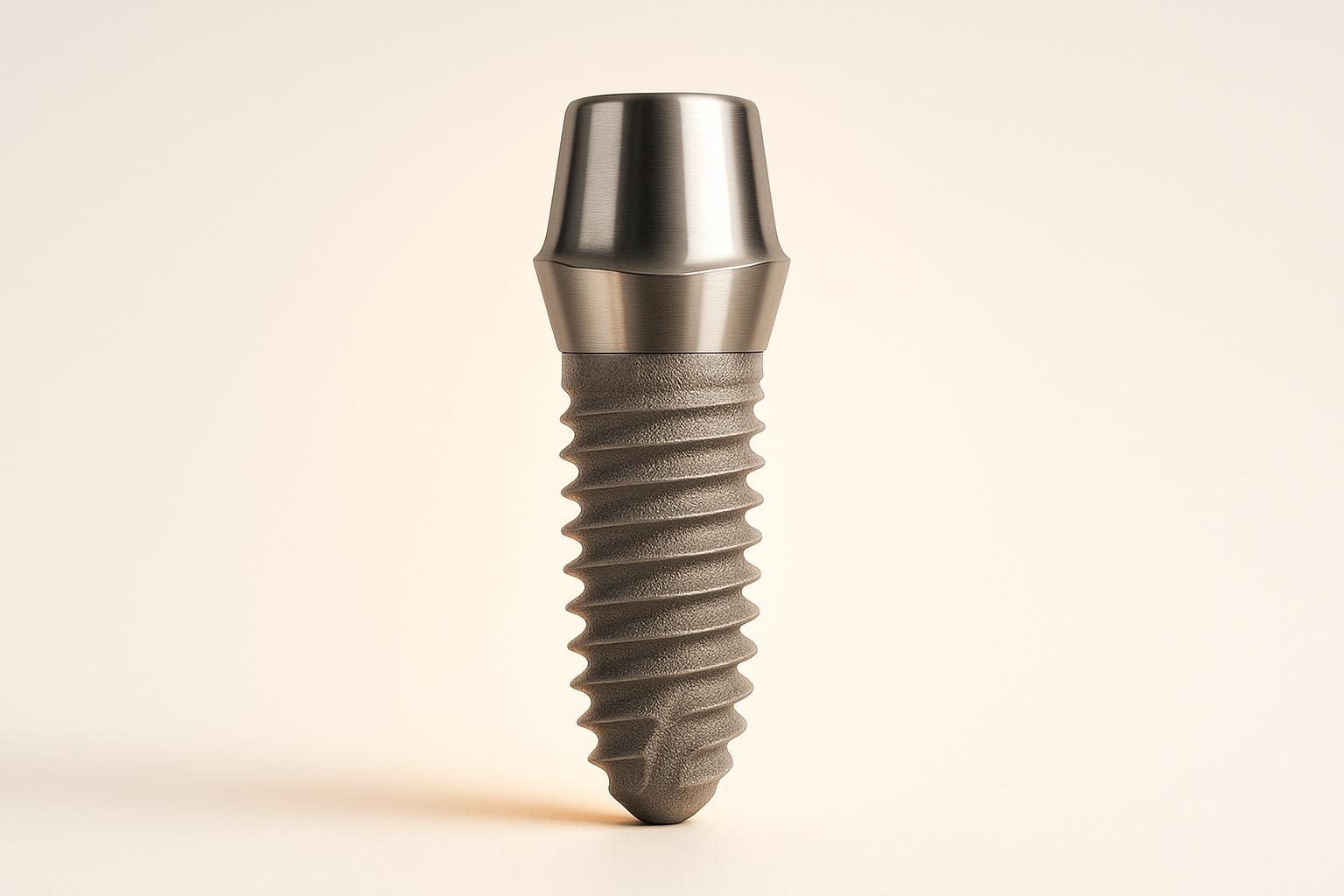
When it comes to dental implants, the type of titanium used plays a major role in implant performance and clinical success. Titanium grades are divided into two categories: commercially pure titanium (Grades 1–4) and titanium alloys (Grades 5 and 23). Each grade has unique properties that affect strength, biocompatibility, and how well they respond to surface modification techniques.
- Grade 4 (Pure Titanium): Offers a balance of strength (550 MPa) and biocompatibility, making it ideal for most implant applications. It’s easier to modify and produces consistent results with methods like acid etching and sandblasting.
- Grade 5 (Ti-6Al-4V): Stronger (895 MPa) and more fatigue-resistant but requires specialised treatments due to increased hardness. May release aluminium and vanadium ions, which could cause biological concerns.
- Grade 23 (Ti-6Al-4V ELI): Similar to Grade 5 but with extra low interstitials, offering high fatigue resistance and better biocompatibility.
Surface modification techniques like acid etching, sandblasting, and anodising improve implant integration by enhancing roughness, wettability, and bone-implant contact. However, the effectiveness of these methods depends on the titanium grade. For instance, Grade 4 responds well to standard methods, while Grade 5 and 23 may need tailored approaches.
Key takeaway: The right combination of titanium grade and surface treatment is critical for successful dental implants, ensuring strength, longevity, and reliable bone integration.
3 Types of Dental Implants and Surface treatments explained!
Common Surface Modification Techniques for Titanium Implants
Surface modifications play a crucial role in improving titanium implants by creating better conditions for bone integration and long-term stability.
Key Surface Modification Methods
Titanium’s natural properties provide a strong foundation, but surface modification techniques take implant performance to the next level. These methods are typically grouped into two categories: subtraction methods, which create controlled roughness, and addition methods, which apply coatings or treatments to enhance the implant’s functionality [2].
Subtraction Techniques focus on creating surface roughness. One common method is sandblasting, where microspheres are used to create uneven textures (ranging from 0.3 to 3 μm). However, sandblasting has its drawbacks, including contamination risks and inconsistent surface morphology, which limit its clinical applications [2].
Acid etching involves immersing implants in solutions like HCl, H₂SO₄, HNO₃, or HF to create micropits. This process not only removes residual particles from earlier treatments but also improves cell adhesion and bone formation, as supported by research [3].
The SLA (Sandblasted Large-grit Acid-etching) technique combines sandblasting with acid etching, resulting in surfaces with cavities measuring 5–20 μm and micropits around 0.5–3 μm [3]. A study involving miniature pigs demonstrated that SLA-treated implants had approximately 30% higher removal torque values compared to machined or solely acid-etched surfaces [2].
Anodising is another method that uses controlled oxidation to form a porous titanium dioxide (TiO₂) layer on the implant surface [2]. This technique enhances the adhesion and osteogenic differentiation of bone marrow mesenchymal stem cells. For instance, a sandblasted and acid-etched implant with anodisation (Modi-ANO) achieved a bone-to-implant contact (BIC) of 74.20% ± 10.89%, significantly higher than the 33.58% ± 8.63% observed in machined surfaces [2].
Addition Techniques involve coating the titanium surface with bioactive materials. Plasma spraying, for example, deposits hydroxyapatite (HA) and creates a roughness of 3.43 ± 0.63 μm, compared to just 0.15 ± 0.04 μm on machined surfaces [3]. HA coatings have been shown to promote faster healing compared to untreated implants [3]. Other addition methods include sol-gel coating, hydrothermal treatment, and physical vapour deposition, which allow precise control over coating thickness and composition [2].
Advanced techniques like laser treatment can improve biocompatibility and osseointegration while increasing surface roughness through precise energy application [2]. Additionally, plasma treatment enhances surface wettability and osteoblast attachment, while UV treatment boosts hydrophilicity, aiding in cell attachment and mineralisation [2]. The choice of technique often depends on the titanium grade, as different grades respond uniquely to these treatments.
Purpose of Surface Modifications
The primary aim of these techniques is to enhance osseointegration and ensure long-term implant success. By modifying surface characteristics like roughness, wettability, and antibacterial properties, implants are better equipped for integration with bone tissue.
Surface roughness is crucial for mechanical interlocking between the implant and surrounding bone. It increases the surface area available for bone-implant contact, promoting cell growth and attachment [3]. Improved wettability, on the other hand, helps biological fluids spread more evenly across the implant, enhancing protein adsorption and cell attachment – key factors in bone formation. For example, SLActive surfaces have been shown to elicit stronger early-stage responses from cells and bone tissue compared to standard SLA surfaces [2].
Antibacterial properties are another critical focus. Surface treatments can incorporate antimicrobial agents to help prevent peri-implantitis, though ion release must be carefully regulated to avoid cytotoxic effects [4].
Clinical data highlights the impact of these modifications. While titanium dental implants often achieve success rates above 90%, there is still a failure rate of around 10% [2]. By optimising surface characteristics, these techniques aim to improve osseointegration and reduce the likelihood of failure.
How Titanium Grades Affect Surface Modification Techniques
The type of titanium used in dental implants plays a critical role in determining how surface modification techniques perform and their impact on clinical outcomes. By understanding the differences between titanium grades, dental practitioners can make better decisions when choosing the ideal combination of material and surface treatment for their patients. Let’s dive into how these variations influence clinical treatments and biological results.
Pure vs Alloyed Titanium Grades
Commercially pure titanium (cpTi) grades (1–4) and titanium alloys like Grade 5 and Grade 23 behave differently under surface modification due to their unique material properties and chemical makeup.
For instance, Grade 4 cpTi is well-suited for conventional surface roughening methods, producing consistent results. Its relatively softer nature allows for predictable outcomes. On the other hand, Grade 5 titanium (Ti-6Al-4V), which includes 6% aluminium and 4% vanadium, is stronger and more corrosion-resistant but requires more aggressive or specialised treatments to achieve comparable surface roughness. This is due to its increased hardness.
Additionally, during etching processes, pure titanium tends to develop uniform etching patterns. In contrast, alloyed grades like Ti-6Al-4V may exhibit selective etching because of their mixed-phase structure. These differences highlight the need for tailored approaches depending on the titanium grade being used.
Performance and Biological Outcomes
The grade of titanium also affects how surface modifications influence key factors like osseointegration, cell adhesion, and implant durability over time.
Research shows that cpTi consistently produces stable TiO₂ layers and uniform etching, which are beneficial for osseointegration. In comparison, Ti-6Al-4V alloys often require specific modification parameters to match the biological outcomes of cpTi [5][35][40]. For example, a study by Li et al. using a split-mouth model in miniature pigs compared sandblasted, large-grit, acid-etched (SLA) surfaces to machined and acid-etched ones. The SLA-treated surfaces showed a 30% improvement in removal torque values, indicating stronger bone anchoring [35].
Both pure and alloyed titanium grades are widely successful in dental implant applications. However, cpTi is more commonly chosen in clinical settings due to its excellent biocompatibility and fewer concerns about ion release. In contrast, Ti-6Al-4V offers superior mechanical strength but carries potential risks associated with the release of aluminium and vanadium ions, which could impact biological outcomes [5].
The table below summarises the differences between titanium grades and their responses to surface modifications.
Comparison Table of Titanium Grades and Techniques
| Property | Grade 4 (CPTi) | Grade 5 (Ti-6Al-4V) | Grade 23 (Ti-6Al-4V ELI) |
|---|---|---|---|
| Composition | Pure titanium | 6% Al, 4% V | 6% Al, 4% V (Extra Low Interstitial) |
| Tensile Strength | ~550 MPa | ~900 MPa | ~860 MPa |
| Surface Modification Response | Easier to modify, predictable | Requires specialised approaches | Excellent response, high fatigue resistance |
| Sandblasting Effectiveness | Good, uniform roughening | May require higher pressures | Excellent, controlled roughening |
| Acid Etching Response | Uniform etching patterns | Selective etching due to dual-phase structure | Uniform, controlled etching |
| Anodisation Results | Stable, porous TiO₂ layer | May require adjusted parameters | Excellent porous layer formation |
| Biocompatibility | Excellent | Good (ion release concerns) | Excellent |
| Clinical Applications | Standard implants | High-stress applications | Narrow implants, angled abutments |
sbb-itb-2be92ed
Clinical Considerations and Practical Guidance
Choosing the right titanium grade and surface modification for dental implants requires careful evaluation of the implant site, expected load, and individual patient factors. There’s no universal solution – each case demands a tailored approach based on these variables.
Selecting the Right Titanium Grade
Grade 4 commercially pure titanium is often the go-to choice for routine implant procedures. Its high biocompatibility and reliable machining properties make it ideal for standard single-tooth replacements and straightforward treatments. Additionally, it supports consistent surface modification, which is crucial for long-term success.
For situations requiring greater mechanical strength – such as narrow implants, angled abutments, or thin-walled components – Grade 5 and Grade 23 titanium alloys are typically preferred. Grade 23, in particular, is notable for its superior fatigue resistance, making it a strong candidate for high-stress areas like molars. However, it’s important to note that Grade 5 titanium may release aluminium and vanadium ions, which could raise biological concerns for patients with heightened sensitivities [6].
Selecting the right grade also sets the foundation for choosing the most effective surface modification techniques, ensuring better clinical outcomes.
Matching Surface Modifications to Titanium Grades
The pairing of titanium grades with the appropriate surface treatments is key to achieving reliable results and minimising risks. Understanding how these elements interact is essential for optimising implant performance.
For instance, anodisation has shown outstanding clinical success. Research led by Professor Ann Wennerberg highlights a 98.5% survival rate for anodised implants over a 10-year period. Additionally, a large-scale study involving 4,694 patients treated with anodised TiUnite implants reported survival rates exceeding 99% after one year and 95.1% after a decade [7].
Sandblasting and acid etching (SLA) are commonly used to create uniform surface roughness on Grade 4 titanium. However, Grade 5 and Grade 23 alloys, due to their increased hardness, may require adjustments to these techniques. Dual acid etching (DAE) is particularly effective across all titanium grades, as it ensures consistent microroughness, which promotes faster osseointegration.
When combining multiple surface modification techniques, it’s crucial to fine-tune the sequence and parameters based on the specific titanium grade. This approach helps prevent issues like thermal stress, especially when working with alloyed titanium.
Advanced Techniques at Complete Smiles Bella Vista

At Complete Smiles Bella Vista, advanced methods are employed to ensure precision and reliability in implant treatments. Under the leadership of Dr. James Hanna, the clinic integrates evidence-based strategies to match the titanium grade and surface modification to each individual case.
Their personalised treatment planning takes into account factors such as bone density, implant location, and patient lifestyle. By leveraging advanced diagnostic tools, the clinic enhances implant selection, reduces complications, and improves predictability. For more complex cases, their expertise in aligning titanium grades with specific surface treatments results in durable, long-lasting solutions tailored to the needs of each patient.
Conclusion and Key Takeaways
Choosing the right titanium grade and pairing it with the appropriate surface modification technique is essential for achieving the best possible implant outcomes. The combination of material selection and surface treatment plays a critical role in promoting osseointegration and ensuring long-term stability.
Summary of Titanium Grades and Techniques
The effectiveness of surface modification methods is closely tied to the type of titanium used. Grade IV commercially pure titanium (CPTi), which contains around 0.4% oxygen, is known for its strength and excellent biocompatibility [1]. This makes it a popular choice for routine implants, especially when paired with techniques like dual acid etching or SLA.
On the other hand, Ti-6Al-4V alloys offer higher mechanical strength but raise concerns due to the potential release of aluminium and vanadium ions. This has led many dental professionals to favour CPTi for dental implants [5]. Meanwhile, newer alloys like Roxolid®, a titanium–zirconium blend, have shown superior tensile and fatigue strength compared to both CPTi and Ti-6Al-4V [1].
The success of surface modifications also depends on the titanium grade. For example, sandblasted large-grit acid etching has been shown to increase removal torque values by approximately 30% [3]. When the right titanium grade is combined with targeted surface treatments, clinical success rates can reach as high as 99%.
"Overall, published studies indicated that an acid etched surface-modified and a coating application on commercial pure titanium implant was most preferable in producing the good surface roughness. Thus, a combination of a good surface roughness and mechanical properties of titanium could lead to successful dental implants." – A Jemat et al. [3]
These findings highlight the importance of tailoring treatment plans to suit individual clinical scenarios.
Clinical Implications for Dental Practitioners
For dental professionals, the evidence points to the importance of systematically matching titanium grades with the right surface modification techniques. Factors such as patient-specific needs, implant site conditions, and expected load requirements must guide this decision-making process.
Surface roughness and antibacterial properties are key to enhancing osteoblast attachment and promoting osseointegration [2]. Techniques like acid etching and coatings have proven particularly effective on commercially pure titanium, delivering the desired surface roughness for successful outcomes [3].
Clinical studies back the effectiveness of this approach. Long-term survival rates of up to 99.2% have been reported for sandblasted–acid etched implants, compared to 96.9% for titanium dioxide grit-blasted implants. These results underscore the significance of aligning the correct titanium grade with an appropriate surface treatment.
FAQs
How do titanium grades impact the success and durability of dental implants?
The type of titanium used in dental implants is a crucial factor in their success and durability over time. High-grade titanium, like Grade IV commercially pure titanium, stands out for its strength and compatibility with the human body, both of which are vital for effective osseointegration. This process ensures the implant securely bonds with the jawbone, providing enhanced stability and functionality.
Research has shown that implants crafted from high-grade titanium can achieve outstanding longevity, with survival rates surpassing 99% over a 10-year period in some cases. Furthermore, specific surface treatments designed for the titanium grade can boost results by encouraging stronger bone integration and minimising potential complications. These attributes make high-grade titanium the go-to choice for dependable, long-lasting dental implants.
What are the potential risks of using Grade 5 titanium alloys in dental implants?
Grade 5 titanium alloys, a popular choice for dental implants, can release titanium ions and particles over time due to corrosion or wear. This could potentially result in localised inflammation, bone loss around the implant site, or, in rare instances, implant failure.
While uncommon, some people might also develop hypersensitivity or mild allergic reactions to the alloy. Regular maintenance and monitoring of implants are key to reducing these risks and ensuring their long-term success.
How do titanium grades influence the choice of surface modification techniques for dental implants?
The type of titanium used in dental implants significantly influences the choice of surface modification techniques. Each grade has distinct mechanical characteristics and compatibility with biological tissue, which affect how effectively the implant bonds with the surrounding area.
Take Grade IV commercially pure titanium, for example. This grade is widely preferred because of its high strength and its ability to integrate well with bone tissue. To optimise its performance, surface treatments like roughening or applying a hydroxyapatite coating are often employed. Advanced methods such as plasma spraying, ion doping, or physical vapour deposition (PVD) can further enhance the implant’s surface by improving energy levels, texture, and antibacterial properties – factors that are key to better tissue integration.
Choosing the right technique depends on the titanium grade, the specific clinical use, and solid research evidence, ensuring the implant achieves strong integration and lasts over time.
Related Blog Posts
- What Are Biocompatible Dental Materials?
- 3D Bioprinting in Dental Implants: How It Works
- Titanium vs. Biodegradable Implants: Comparison
- Recent Advances in Titanium Implant Surface Design
Important Notice: Any surgical or invasive procedure carries risks. Before proceeding, you should seek a second opinion from an appropriately qualified health practitioner.
Individual results may vary. The information provided in this article is for educational purposes only and does not constitute medical advice.
Checkout Related Blogs




Get in touch with us
For more information, call us now to start feeling better. Or fill the form below to make appointment
The Latest News from Complete Smiles
How to Clean Clear Plastic Retainers
Checklist for Choosing Wearable Dental Devices
Checklist for Choosing Cloud AI Platforms in Dentistry

Complete Smiles Bella VistaAccepts All Major Health Funds, Including





