





Titanium vs. Biodegradable Implants: Comparison
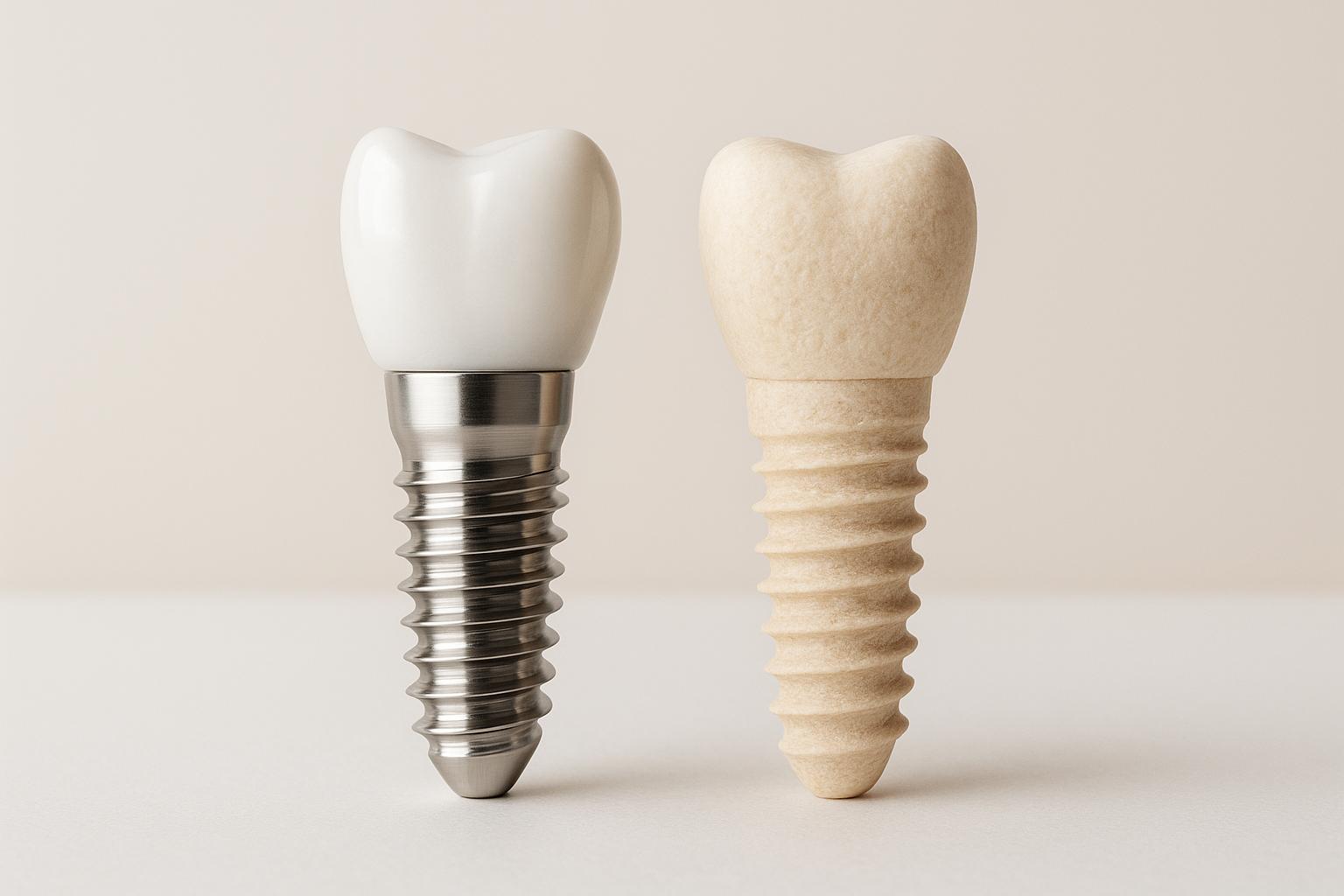
Looking for the best dental implant material? Here’s a quick comparison to help you decide:
- Titanium implants: Durable, long-lasting (over 95% success rate after 10 years), and highly compatible with bone. However, they may require removal or replacement and can leave a grey shadow under thin gums.
- Biodegradable implants: Designed to dissolve in the body, eliminating the need for removal surgery. They are eco-friendlier but less durable and suited for temporary support during healing.
Quick Comparison Table:
| Factor | Titanium Implants | Biodegradable Implants |
|---|---|---|
| Durability | Permanent, may require replacement | Temporary, designed to dissolve |
| Surgery Needs | May need removal in some cases | No removal surgery required |
| Strength | Excellent for load-bearing areas | Lower strength, case-specific use |
| Appearance | May cause grey shadows under gums | Blends better with natural tissue |
| Cost (in Australia) | $3,000–$7,500 per tooth | $4,500–$7,500 per implant |
| Environmental Impact | High (energy-intensive production) | Lower (biodegrades naturally) |
Key Takeaway:
Titanium implants are ideal for permanent, high-strength solutions, while biodegradable implants suit temporary needs with less environmental impact. Your choice depends on durability, cost, and specific oral health needs.
How Are Titanium Dental Implants Made?
Material Properties and Composition
The materials used in dental implants play a critical role in their performance and how they interact with the body. By understanding the physical and chemical properties of these materials, we can better appreciate how each type functions within the oral environment.
Titanium Implants: Strength and Compatibility with the Body
Titanium has long been considered the gold standard for dental implants, thanks to its exceptional properties. The most commonly used types include commercially pure titanium (Grade 4) and titanium alloys like Ti-6Al-4V, each tailored to meet specific clinical needs.
Commercially pure titanium Grade 4, which contains over 98.6% titanium, is the strongest form of pure titanium available. It boasts an elastic modulus of approximately 110 GPa and a density of about 4.5 g/cm³ [1]. These characteristics make it durable enough to support long-term implant success.
"Titanium and its alloys have become the cornerstone materials of modern dental implant restoration due to their excellent biocompatibility, mechanical properties, and osseointegration ability." – DentalMaster Med [6]
One of titanium’s standout features is its ability to form a natural TiO₂ layer, which provides excellent corrosion resistance and contributes to its clinical success [3]. Additionally, its bio-inert nature minimises adverse tissue reactions and supports osseointegration – a process where the implant bonds directly with the bone. This ensures a stable, long-lasting foundation for dental restorations.
| Material Type | Typical Grade | Main Composition | Advantages | Limitations | Main Dental Applications |
|---|---|---|---|---|---|
| Commercially Pure Ti | Grade 4 | >98.6% Ti | Strongest CP Ti | Lower ductility than lower-grade CP Ti | Mainstream implants, abutments, archwires |
| α+β Titanium Alloys | Ti-6Al-4V (Gr5) | Ti-6Al-4V | High strength, excellent fatigue resistance | Contains Al/V (potential bio-toxicity), high modulus | Implants in high-load areas, connectors, surgical tools |
| β-Type Alloys | Ti-13Nb-13Zr | Ti-13Nb-13Zr | Low elastic modulus, excellent biocompatibility, no Al/V | Complex processing | Implants (to reduce stress shielding), orthodontic wires |
| Dental-Specific Alloy | Ti-15Zr (Roxolid®) | Ti-15Zr | Much stronger than CP Ti, similar performance to Gr5, excellent biocompatibility | Higher cost | Small diameter/narrow ridge implants |
These advancements in titanium materials have significantly improved implant performance, while also paving the way for the development of biodegradable alternatives.
Biodegradable Implants: Materials and Degradation Process
Unlike titanium implants, biodegradable materials are designed to gradually dissolve within the body, promoting natural tissue regeneration. These materials provide temporary support, allowing the body to heal and rebuild tissue without the need for removal procedures.
Polymeric biodegradable materials, such as polylactic acid (PLA), polyglycolic acid (PGA), and their copolymers, are popular for their biocompatibility and flexibility [8]. Their controlled degradation supports the restoration of natural tissue at the implant site.
Biodegradable metals are another promising option. Alloys based on magnesium, zinc, and iron are being explored for dental applications. Magnesium alloys, with a modulus of 40–60 GPa, and zinc alloys, ranging from 78–121 GPa, closely match the properties of natural bone [7]. Maintaining a degradation rate of less than 0.5 mm per year is essential to ensure the implant remains structurally sound during the healing process [7].
Magnesium-based implants break down through metabolic processes, with the by-products being naturally absorbed by the body. For example, MgYREZr screws have shown success in treating hallux valgus [8]. Zinc-based materials offer antibacterial properties and support cellular metabolism, but challenges remain in achieving consistent degradation rates and sufficient strength. On the other hand, iron-based systems degrade much more slowly, with pure iron exhibiting a degradation rate of approximately 0.16 mm per year in bone-forming environments [8].
The choice of biodegradable material depends on factors like healing timelines, load-bearing requirements, and desired degradation rates, making them a versatile option for specific clinical scenarios.
Environmental Impact and Manufacturing
The journey of dental implants, from production to disposal, carries a distinct environmental footprint. By understanding these impacts, dental professionals and patients can make choices that balance sustainability with clinical effectiveness.
Production Methods and Waste
The process of extracting titanium is notoriously energy-intensive. Producing 1 tonne of titanium can result in up to 17 tonnes of CO₂ equivalent emissions, alongside significant industrial waste from mining ores like ilmenite and rutile [10]. According to the U.S. Geological Survey, the environmental challenges tied to titanium mining include waste rock disposal and water contamination from trace elements [11]. Australia, a major global producer of titanium minerals, shares these environmental concerns with other leading producers like South Africa and Canada [12].
"Environmental considerations for titanium mining are related to waste rock disposal and the impact of trace constituents on water quality… the processes required to extract titanium from titanium feedstock can produce industrial waste." – U.S. Geological Survey [11]
On the other hand, biodegradable materials like calcium phosphate and poly-lactic acid are produced using less energy-intensive methods, resulting in fewer greenhouse gas emissions [4]. Advances in manufacturing technology have also made a difference. For example, 3D printing reduces material waste by up to 50% compared to traditional methods [4]. This is evident in the improved "buy-to-fly" ratios: while traditional titanium manufacturing for aircraft parts ranges from 12–25:1, additive manufacturing achieves ratios between 3–12:1 [13]. Such efficiency significantly lowers the environmental toll of dental implant production.
Newer technologies, like the Hydrogen-Assisted Mg Reduction (HAMR) process, show even more promise. This method uses about 25% less energy than the traditional Kroll process and, when magnesium regeneration is factored in, could lead to energy savings of up to 65% [13].
The environmental story doesn’t end with production – it extends to what happens after implants have served their purpose.
Disposal and Recycling Options
End-of-life strategies are key to reducing the overall environmental impact of dental implants. Titanium implants, for example, are highly recyclable, with a recycling rate of approximately 95% [10]. Removed implants can be melted down and reused, which can cut dental practice waste by up to 40% [4]. However, titanium recycling is not without challenges. The process is expensive and technically complex, as even minor impurities can compromise the quality of new products [12].
Biodegradable implants, in contrast, naturally dissolve within the body, eliminating the need for removal and long-term waste. Materials like calcium phosphate break down into by-products that are safely absorbed by the body’s metabolic processes.
Beyond the implants themselves, packaging and sterilisation practices also contribute to the environmental footprint. The introduction of sustainable packaging has reduced waste by 25% in the dental implant industry [4]. Additionally, recyclable components and eco-friendly sterilisation methods are being adopted to further minimise environmental harm [5].
Titanium implants also stand out for their durability. Unlike alternatives such as dentures – which often require frequent replacements – dental implants can last for decades. This longevity reduces the need for repeated material production, making titanium implants a more sustainable option compared to traditional prosthetics made from plastic, metal, and porcelain, which involve energy-intensive manufacturing [9].
The growing focus on sustainability is mirrored in the Australian biomaterials market, which is projected to grow from A$1,902.70 million in 2024 to A$6,091.98 million by 2032 [14]. This shift underscores increasing awareness of the environmental impact of dental materials.
"Dental implants are becoming more eco-friendly due to advancements in materials and sustainable practices that reduce environmental impact while maintaining high performance and durability." – Harry Adair, Sustainability Writer and Human Geographer [4]
Clinical Results and Patient Outcomes
The true measure of any dental implant is its performance once placed in a patient’s mouth. Both titanium and biodegradable implants have unique clinical characteristics that influence their suitability for specific cases.
Longevity and Bone Integration
Titanium implants have long been regarded as the gold standard, backed by decades of clinical success. These implants boast survival rates of over 95% after 10 years [16][17], and many continue to perform well even after 20 years. A key factor in their success is osseointegration – the process where bone tissue bonds directly to the implant, ensuring long-term stability [15].
"Titanium is a bioinert material, inducing little or no deleterious effect on the surrounding tissue." – Rayane C S Silva et al. [15]
Modern advancements, such as surface modifications, have further improved titanium implants by enhancing the speed and quality of bone integration. Titanium-zirconium alloy implants show even better outcomes, with survival rates exceeding 97% after three years of functional use [17].
On the other hand, biodegradable implants are designed to provide temporary support, dissolving as the tissue heals. This feature could eliminate the need for a second surgery, which is required in 19% to 54% of metallic implant removal cases [16]. However, because these materials are relatively new, their long-term performance is still under scrutiny.
While longevity is critical, the occurrence of complications plays a significant role in determining implant success.
Side Effects and Complications
Titanium implants, despite their high success rates, are not without challenges. Issues such as peri-implantitis, injury to surrounding structures, and rare allergic reactions can occur [18][20]. Peri-implantitis, the most common complication, causes redness, tenderness, and bleeding around the implant. Smokers, diabetics, and individuals with gum disease face a heightened risk of this condition. Additionally, rare allergic reactions to titanium coatings have been reported, with patch testing used to confirm sensitivities [20].
Biodegradable implants present their own set of challenges, including breakage during insertion, loss of initial fixation, incomplete burial, implant migration, and inflammatory reactions during degradation. As these implants dissolve, they can cause acidification in the surrounding tissue, leading to inflammation. To address this, researchers are exploring combinations of biodegradable materials with bioceramics to minimise acidification and encourage bone growth [19].
Beyond clinical performance, aesthetic and functional outcomes are key factors in implant selection.
Appearance and Function
Aesthetics are increasingly important, especially for implants in visible areas of the mouth. Titanium implants can sometimes create grey shadows under thin gum tissue, which affects the natural appearance of the restoration. This aesthetic issue occurs in about 7% of cases over five years [22].
Biodegradable implants, on the other hand, tend to blend better with natural tissue colour during the healing phase. However, they lack the long-term structural support that titanium provides.
When it comes to functionality, titanium implants offer decades of reliable performance. In comparison, biodegradable implants are only effective during the healing process. For example, titanium-zirconium narrow-diameter implants have shown cumulative survival and success rates of 97.5% and 97.2%, respectively, over a 36-month follow-up period [23].
Ultimately, the choice between these implant systems depends on balancing clinical performance with patient needs and treatment goals, which ties directly into the discussions on cost and regulations.
sbb-itb-2be92ed
Costs and Availability in Australia
When choosing dental implants in Australia, costs and regulatory compliance play a major role alongside clinical performance. These factors help shape decisions for both patients and practitioners.
Price Comparison
In Australia, the cost of titanium implants ranges from $3,000 to $7,500 per tooth. On the other hand, biodegradable implants come at a higher price, typically between $4,500 and $7,500 per implant. This price difference is largely due to the complexity of production and market dynamics.
Several factors can influence the final cost of treatment. These include the complexity of the case, the need for additional procedures like bone grafting, the experience of the dental practitioner, and the location of the clinic. For more complex cases, a single implant can cost up to $11,500 [25]. For multiple implants, costs vary depending on the treatment type:
- All-on-4 procedures: $23,000–$27,000
- All-on-6 procedures: $28,000–$35,000
- Implant-supported bridges: $6,300–$9,500
While dental implants are generally not covered by Medicare [26], some private health insurance plans may offer partial reimbursement. Additionally, many dental clinics provide payment plans to make these treatments more accessible [24].
TGA Approval and Standards
Regulatory approval is another critical factor in implant selection, ensuring both safety and effectiveness. In Australia, all dental implants – whether titanium or biodegradable – must meet the rigorous standards set by the Therapeutic Goods Administration (TGA). This process involves detailed evaluations of safety, performance, and manufacturing quality.
Since 1 December 2021, all implantable medical devices in Australia must include Patient Information Cards and Leaflets. These materials are designed to support informed consent and enable reporting of any adverse events. The same regulatory standards apply to both conventional and biodegradable implants, and manufacturers are required to keep information updated throughout the product’s lifecycle.
Thanks to these strict regulations, patients in Australia can trust that implants provided by registered practitioners meet international safety benchmarks. However, while biodegradable implants offer distinct advantages, their higher costs and limited availability mean they are often reserved for cases where their benefits outweigh the additional expense. This balance of cost, performance, and compliance shapes their accessibility in the Australian market.
New Developments and Combined Approaches
The dental implant field is progressing rapidly, thanks to research that blends the strengths of various materials. These hybrid innovations aim to address the limitations of titanium and biodegradable implants while leveraging their benefits.
Combined Material Designs
Today’s implant technology often uses hybrid materials, merging titanium’s durability with biodegradable coatings to improve osseointegration.
One standout example is Straumann Roxolid, a titanium-zirconium alloy made up of 83%–87% titanium and 13%–17% zirconium. This alloy is 50% stronger than pure titanium, enabling the creation of thinner implants that can handle higher stress while maintaining the biocompatibility of pure titanium [28].
Researchers are also working on bioactive coatings like hydroxyapatite, which promote better osseointegration and bone regeneration [27]. The concept of smart implants is another exciting area, with sensors being integrated to monitor implant health and tissue conditions. These sensors could provide real-time updates on healing and help detect complications early [27]. Additionally, surface modification techniques are being explored to improve the mechanical properties of zinc-based biomaterials without compromising their core structure [2].
Such advancements, backed by focused Australian research, are pushing the boundaries of dental implant technology.
Australian Research Contributions
Australia is at the forefront of implant innovation, with universities and research institutions making strides in materials science and advanced manufacturing. These efforts aim to refine biomaterials and production techniques, improving the effectiveness of implants.
Dr. Karan Gulati from the University of Queensland has pioneered nanopore technology, which enhances soft tissue integration and the formation of a secure seal around implants.
"Our simple solution is the fabrication of nanopores – which are tiny nano-scale holes of just 40 to 80 nanometres in diameter – to cover the entire surface of the implant. We’ve found that soft-tissue cells attach well onto the nanopores, resulting in better soft-tissue seal formation." [29]
This breakthrough addresses a critical issue in implant dentistry: achieving proper integration between implants and soft tissue. Poor integration in this area is a leading cause of implant failure [29].
Australian researchers are also advancing digital technologies to improve implant placement. Tools like advanced cone beam computed tomography (CBCT) for 3D imaging and computer-guided surgical techniques are enhancing precision while minimising surgical trauma [31]. Additionally, the focus on minimally invasive procedures is improving patient comfort and recovery, while making treatments more accessible across the country [30].
Ongoing research in Australia is also exploring biocompatible materials that support osseointegration and optimise healing, aligning with global efforts to create more effective and patient-friendly implant solutions [31].
Summary: Choosing Between Titanium and Biodegradable Implants
Selecting the right implant means weighing immediate treatment results against long-term oral health needs. Both titanium and biodegradable implants come with distinct advantages, making the choice highly dependent on individual circumstances.
Titanium implants have earned their reputation as the go-to option for permanent tooth replacement. With an impressive 98.8% survival rate over a decade [36], their durability and mechanical strength are unmatched. These implants are highly biocompatible, making them ideal for load-bearing applications. However, they are not without drawbacks. Titanium implants may occasionally require replacement and can interfere with MRI imaging [33][34][35].
On the other hand, biodegradable implants are designed for temporary fixation and offer a very different set of benefits. Maria-Cristina Smith from Berkley Life Sciences notes:
"Biodegradable implants offer several advantages over traditional, permanent implants…one of the most significant advantages is the elimination of the need for additional surgery to remove or adjust the implant, thereby reducing patient recovery time and long-term health costs and greatly improving patient comfort." [32]
It’s also worth mentioning that metallic implants still show notable removal rates [16].
| Factor | Titanium Implants | Biodegradable Implants |
|---|---|---|
| Durability | Permanent; may require replacement | Designed to degrade over time |
| Surgery Requirements | Single placement; possible removal if needed | Single placement with no removal required |
| Mechanical Strength | Exceptional for load-bearing applications | Lower strength; careful case selection needed |
| Imaging Compatibility | May interfere with MRI imaging | Minimal interference with imaging |
| Environmental Impact | Adds to permanent waste | Lower environmental footprint |
These factors underline the key trade-offs clinicians must consider when recommending an implant.
The decision-making process also requires a detailed evaluation of patient-specific factors, including oral health, bone density, aesthetic goals, and any potential material sensitivities [21]. For patients who need temporary support, biodegradable implants can be a practical choice. Meanwhile, titanium implants are typically the better option for those seeking a permanent and high-strength solution.
In Australia, costs for implants can vary depending on the material and the procedure. Consulting with an experienced implantologist is essential to determine the best fit for each individual’s needs.
FAQs
What should I consider when deciding between titanium and biodegradable dental implants?
When deciding between titanium and biodegradable dental implants, it’s essential to consider aspects like strength, compatibility with your body, and their impact on the environment.
Titanium implants are known for their exceptional strength and resistance to corrosion, boasting a success rate of approximately 98%. They’re built to last, making them a reliable choice for long-term dental restoration. Plus, their compatibility with human tissue ensures they work well for most patients, even under the pressure of daily chewing.
On the other hand, biodegradable implants are designed to naturally dissolve over time, which can eliminate the need for additional surgeries to remove them. They’re often seen as a more sustainable option, producing less long-term waste and potentially offering greater comfort. That said, they might not yet match titanium’s durability in certain situations.
Choosing the right implant comes down to your unique circumstances, including your health, daily habits, and personal values. A conversation with your dentist can help you weigh these factors and find the option that suits you best.
What are the environmental differences between titanium and biodegradable implants, and why do they matter?
Titanium and biodegradable implants each carry their own environmental considerations. Titanium implants are incredibly durable, often lasting for decades, which means fewer replacements are needed over time. However, the downside lies in their production. Extracting and processing titanium requires a lot of energy and can contribute to environmental harm due to mining activities.
On the other hand, biodegradable implants take a different approach. These implants are designed to dissolve naturally within the body, which means they don’t leave behind long-term waste. Plus, they eliminate the need for follow-up surgeries to remove them, making recovery smoother and more convenient for patients.
Recognising these differences helps promote eco-friendly practices in healthcare, aligning with the growing emphasis on sustainability and patient-focused care.
What are the latest advancements in dental implant technology, and how do they combine the benefits of titanium and biodegradable materials?
Recent developments in dental implant technology are blending the strength of titanium with the healing and eco-friendly advantages of biodegradable materials. These biodegradable implants, made from specialised polymers, are designed to dissolve as the bone heals. This eliminates the need for a second procedure to remove the implant and lowers the chances of long-term complications. They provide a less invasive option while still offering essential support during the recovery process.
Technologies like 3D printing and nanotechnology are also making waves by enabling the creation of customised implants. These innovations improve how well the implant bonds with the bone – a process called osseointegration. By enhancing this integration, both titanium and biodegradable implants deliver more effective results, offering improved comfort and durability in the long run. These advancements are steering dental care towards solutions that prioritise comfort, minimise invasiveness, and promote natural healing.
Related Blog Posts
- Dental Implants: Your Top 8 Questions Answered
- What Are Biocompatible Dental Materials?
- Smoking and Dental Implants: Impact on Healing
- 3D Bioprinting in Dental Implants: How It Works
Important Notice: Any surgical or invasive procedure carries risks. Before proceeding, you should seek a second opinion from an appropriately qualified health practitioner.
Individual results may vary. The information provided in this article is for educational purposes only and does not constitute medical advice.
Checkout Related Blogs




Get in touch with us
For more information, call us now to start feeling better. Or fill the form below to make appointment
The Latest News from Complete Smiles
How to Clean Clear Plastic Retainers
Checklist for Choosing Wearable Dental Devices
Checklist for Choosing Cloud AI Platforms in Dentistry

Complete Smiles Bella VistaAccepts All Major Health Funds, Including





