





Ti-6Al-4V Alloy: Composition and Implant Use
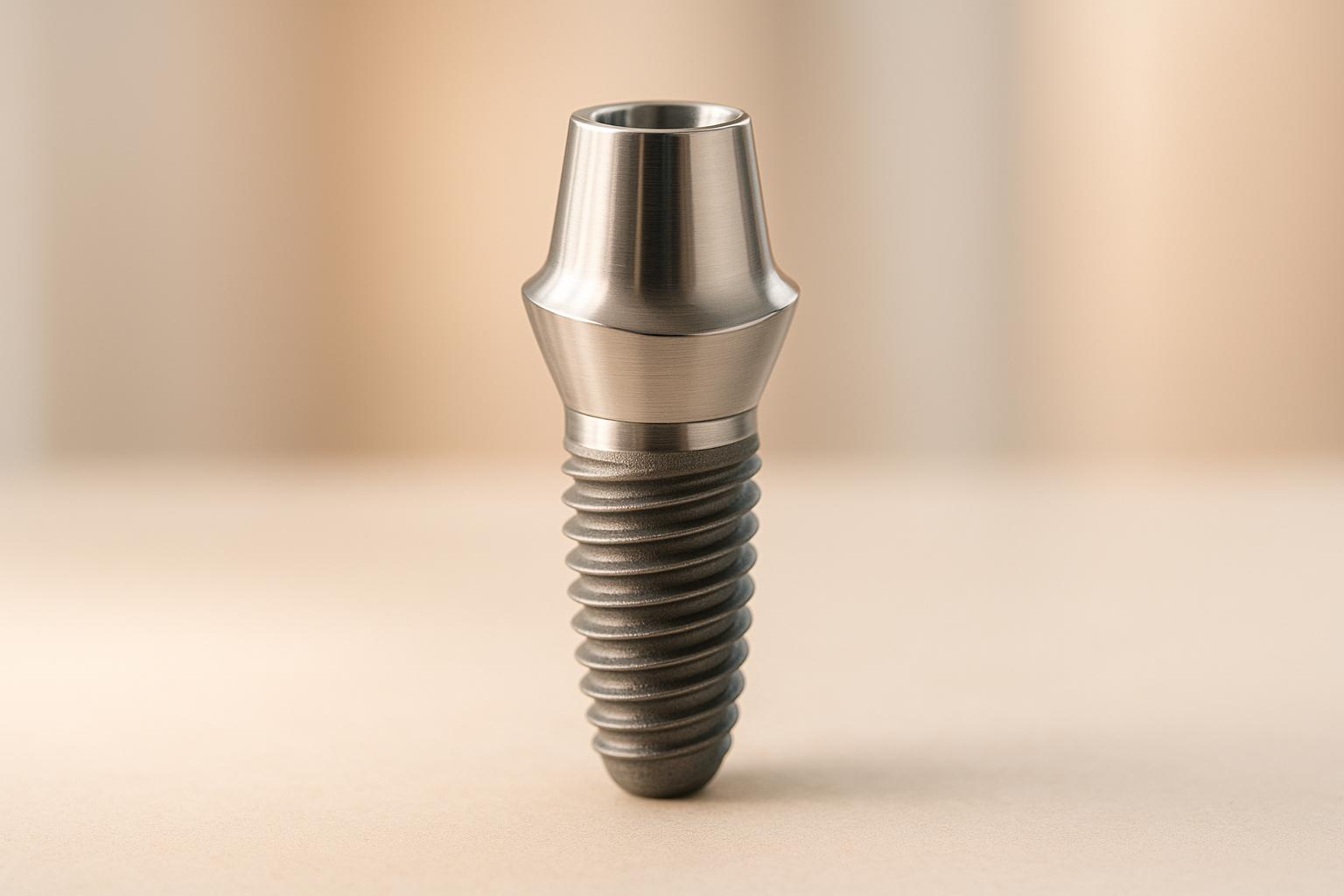
Ti-6Al-4V is a titanium alloy widely used in dental implants due to its strength, corrosion resistance, and compatibility with the human body. Comprising 90% titanium, 6% aluminium, and 4% vanadium, it balances durability with biocompatibility, making it suitable for challenging dental procedures. Despite its benefits, it comes with considerations like higher costs and minor ion release risks.
Key Points:
- Composition: 90% titanium, 6% aluminium, 4% vanadium, with trace elements.
- Strength: Tensile strength of 900–1,200 MPa, ideal for high-stress areas like molars.
- Corrosion Resistance: Titanium dioxide layer prevents degradation in the oral environment.
- Biocompatibility: Supports bone integration for long-term stability.
- Limitations: Costlier than pure titanium; minor ion release may affect sensitive patients.
In Australia, implants using Ti-6Al-4V must comply with Therapeutic Goods Administration (TGA) regulations to ensure safety and quality. This alloy is preferred for cases requiring durability, such as narrow-diameter implants or areas with high chewing forces.
Grades of titanium in dental implants | Dr.Prem Alex Lawrence
Chemical Composition of Ti-6Al-4V
The chemical makeup of Ti-6Al-4V (Grade 5 Titanium) plays a key role in explaining why it’s such a reliable choice for dental implants, complementing its well-known mechanical strengths.
This alloy is primarily made up of three main elements, along with trace amounts of other components:
| Element | Percentage by Weight |
|---|---|
| Titanium (Ti) | 90.00% |
| Aluminium (Al) | 6.00% |
| Vanadium (V) | 4.00% |
| Carbon (C) | < 0.10% |
| Oxygen (O) | < 0.20% |
| Nitrogen (N) | < 0.05% |
| Hydrogen (H) | < 0.0125% |
| Iron (Fe) | < 0.30% |
This carefully controlled composition is what gives Ti-6Al-4V its remarkable mechanical properties, making it an ideal material for dental implants. Its balance of strength, durability, and biocompatibility ensures it performs reliably in clinical settings. This foundation paves the way for further exploration of its material characteristics and how they translate to real-world applications.
Biocompatibility and Clinical Performance of Ti-6Al-4V Implants
Biocompatibility and Bone Integration
Ti-6Al-4V stands out for its strong compatibility with the human body, largely due to a stable surface oxide layer that supports direct bone integration. When exposed to oxygen, this alloy forms a thin, durable layer of titanium dioxide (TiO₂). This layer not only prevents the release of ions but also encourages bone to bond directly with the implant, ensuring effective load distribution and mechanical stability.
The process of osseointegration – where living bone forms a direct connection with the implant surface – is key to the long-term success of these implants. The titanium dioxide layer plays a vital role by promoting bone cell growth onto the implant, creating a bond that can endure for decades.
Clinical research highlights that Ti-6Al-4V implants achieve osseointegration rates comparable to those of pure titanium. However, they offer the added advantage of superior mechanical strength, making them particularly useful in demanding scenarios like posterior implant placements or immediate loading protocols. These benefits are significant, though some biological challenges, as discussed below, should be considered.
Potential Biological Concerns
While Ti-6Al-4V has a well-documented history of success, there are some biological considerations to keep in mind. A primary concern is the minor release of aluminium and vanadium ions, which can occur in acidic environments or under mechanical stress.
Aluminium ion release is minimal and remains below toxicity thresholds. However, patients with reduced kidney function may need extra attention, as their ability to eliminate aluminium from the body could be compromised.
Vanadium, on the other hand, can show toxic effects at higher concentrations. Research is ongoing to better understand the long-term impact, especially in cases involving multiple implants or patients with heightened sensitivity to metal ions.
Despite its excellent resistance to corrosion, certain factors – like fluoride exposure from toothpaste, acids produced by bacteria, or galvanic reactions with other metals – can increase ion release. This underscores the importance of maintaining good oral hygiene and attending regular dental check-ups. Addressing these concerns is particularly critical under Australia’s rigorous regulatory standards.
Australian Regulatory Requirements
In Australia, the use of Ti-6Al-4V implants is strictly regulated to ensure patient safety. The Therapeutic Goods Administration (TGA) requires all dental implants to be included in the Australian Register of Therapeutic Goods (ARTG) before they can be imported or supplied.
The TGA states [1]:
"Implantable dental devices need to be included in the ARTG before they are imported into or supplied within Australia. Implantable dental devices are not exempt from ARTG inclusion when made using materials included in the ARTG."
Dental practitioners who import or manufacture dental devices using non-ARTG-listed materials are classified as "sponsors" under TGA regulations. As sponsors, they must ensure compliance with ARTG requirements, follow the Essential Principles for medical devices, report any adverse events, and meet advertising standards.
The TGA further emphasises [1]:
"As a registered dental practitioner, you have responsibilities to act in accordance with the Board’s standards, codes, and guidelines. You must be aware of and comply with other laws and regulations, including regulatory responsibilities to the TGA when importing dental devices (a sponsor), or manufacturing dental devices away from chair-side (a manufacturer and a sponsor)."
This extensive regulatory framework ensures that patient safety remains the top priority while allowing access to high-quality materials like Ti-6Al-4V. From ARTG listing to ongoing monitoring of adverse events, the system provides robust oversight to safeguard patients undergoing dental implant procedures in Australia.
sbb-itb-2be92ed
Advantages and Limitations of Ti-6Al-4V for Dental Implants
Advantages of Ti-6Al-4V
Ti-6Al-4V offers several benefits that make it a strong candidate for use in dental implants. Its mechanical strength is a standout feature, with tensile strength ranging from 900 to 1,200 MPa – far exceeding the 240 to 550 MPa of pure titanium. This allows for thinner implant designs without sacrificing durability, which is especially useful in areas with narrow bone structures.
The alloy’s fatigue resistance ensures that it can withstand the repetitive chewing forces experienced in the mouth over time. For example, molar regions can generate bite forces of up to 800 Newtons, making this property particularly valuable for implants in high-stress areas. This durability helps reduce the likelihood of implant fractures during prolonged use.
Another key advantage is its corrosion resistance, which is achieved through a naturally forming titanium dioxide layer that protects the material in the oral environment. Additionally, Ti-6Al-4V is known for its machinability, enabling manufacturers to craft implants with precise thread patterns and surface textures. These features are designed to enhance osseointegration, or the bonding of the implant to the bone, which is critical for long-term success. This machinability also allows for the creation of complex geometries tailored to specific clinical needs.
These strengths make Ti-6Al-4V a reliable choice for dental implants, particularly in challenging situations. However, it is not without its drawbacks.
Limitations of Ti-6Al-4V
One concern with Ti-6Al-4V is the potential release of trace amounts of aluminium and vanadium ions. While this is generally minimal, it may pose a risk for patients with impaired kidney function, as their ability to process these ions could be compromised.
The cost is another factor to consider. Ti-6Al-4V implants are 15–25% more expensive than those made from pure titanium, partly due to the alloy’s higher production costs and the stricter quality control measures required during manufacturing.
The alloy’s hardness, while contributing to its strength, can make surgical placement more challenging. Precise drilling techniques and enhanced cooling protocols are essential to avoid heat damage to the surrounding bone during implantation.
There is also a risk of galvanic reactions when Ti-6Al-4V comes into contact with other metals in the mouth, such as amalgam fillings or metal crowns. These electrochemical interactions, though uncommon, can lead to increased ion release and localised tissue irritation.
Comparison Table: Advantages vs. Limitations
Here’s a quick overview of the main advantages and limitations of Ti-6Al-4V:
| Advantages | Limitations |
|---|---|
| High mechanical strength (900–1,200 MPa) | Potential release of aluminium and vanadium ions |
| Excellent fatigue resistance for long-term use | 15–25% higher cost compared to pure titanium |
| Strong corrosion resistance in oral environments | Hardness increases surgical complexity |
| Precise machinability for advanced surface textures | Risk of galvanic reactions with other oral metals |
| Suitable for thin designs in areas with limited bone width | Requires stricter quality control measures |
| Proven durability in high-stress conditions |
Choosing Ti-6Al-4V for dental implants involves weighing these advantages against its limitations. The decision should always be guided by the specific needs of the patient, their anatomy, and the clinical scenario at hand. While the alloy’s benefits often make it the preferred choice in demanding cases, each situation requires careful evaluation.
Applications and Clinical Use of Ti-6Al-4V in Australia
Applications in Dental Implants
Ti-6Al-4V plays a key role in dental implantology, serving as the material of choice for various components such as root-form implants, abutments, and prosthetic frameworks. In Australia, root-form implants are particularly common, and this alloy’s strength ensures reliable performance, even under immediate loading conditions. Its durability is especially valuable for narrow-diameter implants, where maintaining structural integrity within slimmer designs is critical.
These components endure significant stress during installation and daily use. The alloy’s fatigue resistance ensures they can handle repeated loads over time. Additionally, a well-machined Ti-6Al-4V framework helps evenly distribute forces, which is crucial for the stability of implant-supported bridges and dentures. These applications highlight why this alloy is often chosen for optimising implant success in clinical settings.
Factors Affecting Implant Selection
Several considerations influence the choice of Ti-6Al-4V for dental implants:
- Bone density and volume: In cases where bone availability is limited, the alloy’s strength supports successful implant placement.
- Patient medical history: Reviewing for metal sensitivities ensures the material is suitable for the individual.
- Implant site: Areas like the posterior jaw, which experience higher chewing forces, benefit from the alloy’s enhanced strength.
- Cost: While Ti-6Al-4V implants may be more expensive than other titanium options, their clinical advantages often justify the investment.
- Regulatory compliance: In Australia, only implant systems approved by the Therapeutic Goods Administration (TGA) should be used.
These factors guide clinicians in making informed, evidence-based decisions for each patient.
Evidence-Based Practice and Patient Safety
Australian dental practices follow rigorous safety protocols when using Ti-6Al-4V implants. Clinical studies consistently show high long-term success rates when these implants are used appropriately. However, achieving favourable outcomes depends on careful case selection and precise surgical methods.
Patient safety measures include a thorough review of medical history and medications to minimise risks and support healing. While Ti-6Al-4V’s strength offers distinct advantages in challenging cases, its use should always align with individual patient needs.
Quality assurance is another critical aspect. This involves verifying the authenticity of implant materials, adhering to proper storage and handling procedures, and maintaining detailed documentation of material selection, patient consent, and follow-up care. These steps ensure both patient safety and compliance with professional standards in Australia.
Conclusion
Ti-6Al-4V bridges the gap between material science and practical dentistry, offering Australian dental professionals a dependable option that balances strength with excellent biocompatibility. Its unique blend of titanium, aluminium, and vanadium delivers mechanical advantages that surpass pure titanium, making it a go-to choice for more demanding clinical scenarios.
With its impressive fatigue resistance and tensile strength, Ti-6Al-4V is particularly well-suited for narrow-diameter implants and areas under significant occlusal stress, like the posterior jaw. These properties enable clinicians to address cases involving limited bone volume or immediate loading protocols with greater confidence.
That said, some considerations remain. Factors like cost and potential metal sensitivity necessitate thorough patient evaluations. Despite these challenges, Australian dental practices have embraced the alloy for a wide range of uses – from single-tooth implants to complex full-arch restorations – all while adhering to professional standards and evidence-based care.
As Ti-6Al-4V implant systems continue to evolve, alongside Australia’s dedication to quality assurance and patient safety, this alloy solidifies its role in modern implant dentistry. Its combination of mechanical durability and biological compatibility ensures it remains a valuable tool for managing complex dental cases.
FAQs
What are the risks of aluminium and vanadium ions being released from Ti-6Al-4V dental implants?
The release of aluminium and vanadium ions from Ti-6Al-4V dental implants can carry certain health risks. These ions have been linked to DNA damage and harm to cells, which might trigger negative biological responses. Vanadium ions, in particular, are known to have toxic effects on cells like pre-osteoblasts and fibroblasts, potentially interfering with bone and tissue health.
In some instances, these ions can lead to localised tissue irritation, allergic reactions, or even toxicity that affects the body more broadly. Prolonged exposure raises additional concerns about potential effects on other organs. Although these risks are typically minimal, they underscore the need for high-quality implant materials and the expertise of skilled dental professionals during procedures.
Why are Ti-6Al-4V implants more expensive than pure titanium implants, and what makes them worth the cost?
Ti-6Al-4V implants generally come with a higher price tag compared to pure titanium implants, largely because of their greater strength, durability, and resistance to both corrosion and fatigue. These qualities make them an excellent choice for dental implants, where lasting performance and dependability are essential.
The alloy’s blend of aluminium and vanadium contributes to its impressive mechanical stability, allowing it to endure the everyday stresses that implants face over time. While the upfront cost might be steeper, the long-term advantages and lower likelihood of complications often make it a worthwhile choice.
How can patients help maintain the durability of Ti-6Al-4V dental implants and reduce ion release?
To extend the lifespan of Ti-6Al-4V dental implants and reduce ion release, a few key strategies are essential. Advanced surface treatments like thermal oxidation can form a protective oxide layer, which helps guard against corrosion and boosts overall durability. Additionally, careful handling during dental procedures – such as using the right instruments and steering clear of harsh chemicals – can prevent surface damage and further minimise ion release.
These steps significantly enhance the implant’s resistance to wear and corrosion, ensuring it remains functional and compatible with the body over the long term. Regular dental check-ups are equally important, allowing for ongoing monitoring of the implant’s condition and early intervention if any issues arise, helping to achieve the best results for patients.
Related Blog Posts
- What Are Biocompatible Dental Materials?
- Titanium vs. Biodegradable Implants: Comparison
- How Titanium Grades Affect Implant Surface Modifications
- Electrochemical Deposition for Titanium Implants
Important Notice: Any surgical or invasive procedure carries risks. Before proceeding, you should seek a second opinion from an appropriately qualified health practitioner.
Individual results may vary. The information provided in this article is for educational purposes only and does not constitute medical advice.
Checkout Related Blogs




Get in touch with us
For more information, call us now to start feeling better. Or fill the form below to make appointment
The Latest News from Complete Smiles
How to Clean Clear Plastic Retainers
Checklist for Choosing Wearable Dental Devices
Checklist for Choosing Cloud AI Platforms in Dentistry

Complete Smiles Bella VistaAccepts All Major Health Funds, Including





