





How Dentist Communication Impacts Patient Satisfaction

Patients remember less than half of the advice dentists provide. This simple fact highlights how communication gaps can lead to confusion, reduced trust, and even skipped follow-ups. Miscommunication is also a major factor in malpractice complaints. But when dentists communicate clearly, patients understand their care better, feel listened to, and are more likely to follow treatment plans.
Here’s what makes communication effective in dental care:
- Avoid jargon: Use plain language like “gum disease” instead of “periodontal disease.”
- Active listening: Focus on the patient’s concerns during the first few minutes of the appointment.
- Visual aids: Diagrams and models make complex procedures easier to understand.
- Shared decisions: Involve patients in choosing treatment options to build trust.
- Empathy: Acknowledge fears and past experiences to reduce anxiety.
Clear communication isn’t just about being polite – it directly improves patient outcomes, reduces complaints, and strengthens relationships. Even small changes, like explaining procedures step-by-step or asking patients to repeat key details, can make a big difference. Practices that prioritise good communication see higher satisfaction, better health results, and loyal patients.
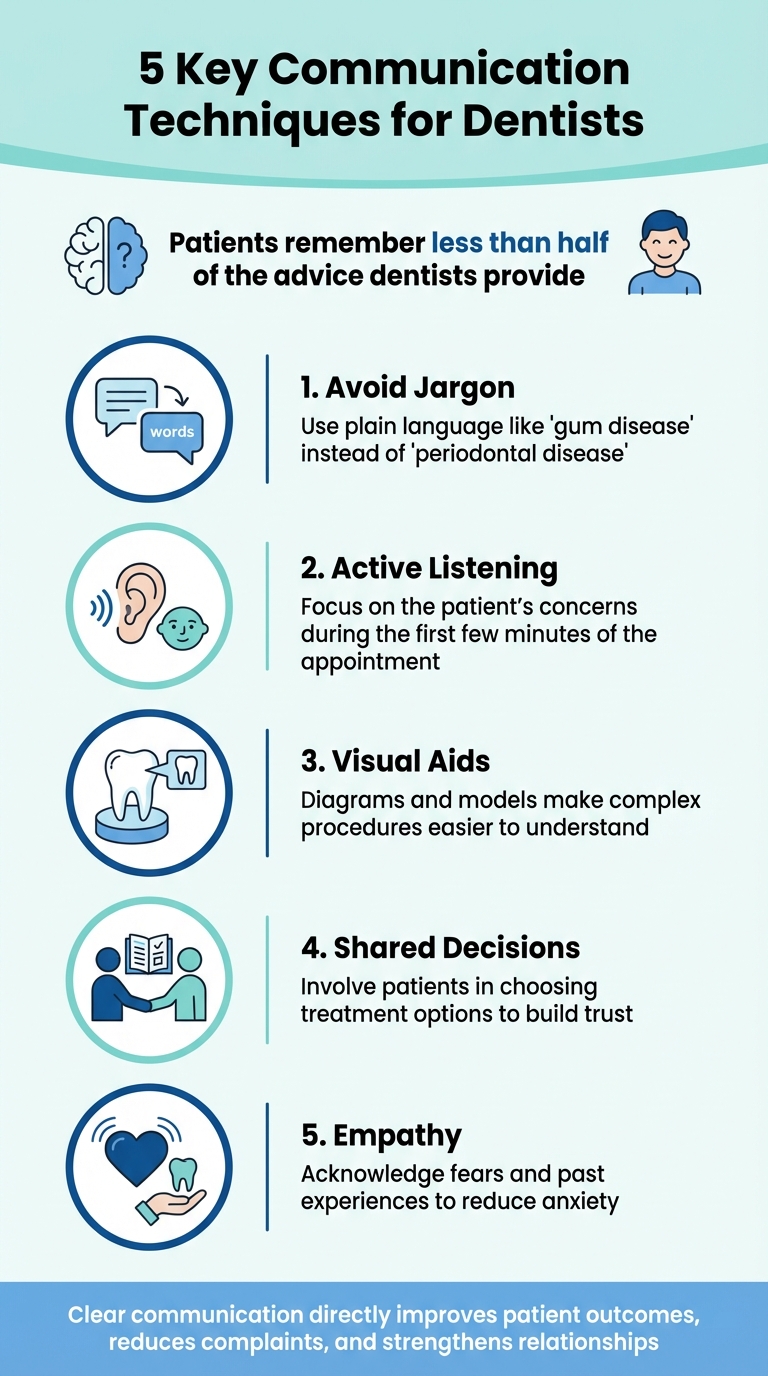
5 Key Communication Techniques for Dentists to Improve Patient Satisfaction
Effective Communication Techniques for Dentists | Dr Dij evo endo
While adopting positive strategies, it is equally important to identify and avoid common communication mistakes in dentistry that can lead to patient dissatisfaction.
sbb-itb-2be92ed
Common Communication Barriers in Dental Practices
Several factors can hinder effective communication between dentists and their patients. These obstacles can lead to confusion, reduced trust, and lower satisfaction levels. Understanding these challenges is a key step in improving communication and building rapport with dental patients.
Technical Language and Overly Complex Explanations
Using technical jargon or overly complicated explanations can alienate patients. As Aengus Kelly, Clinical Lead at Peninsula Dental Social Enterprise, points out, clinical communication can feel like navigating a foreign language when technical terms like "periodontal disease" replace simpler phrases like "gum disease" [5]. This disconnect can leave patients confused, making it harder for them to follow treatment plans or home care instructions [2][8].
Adding to the problem, providing too much detail can overwhelm patients. According to Miller’s Law, the human brain can only retain about seven pieces of information at a time [3]. When dentists overload patients with excessive details – particularly during moments of pain or anxiety – it can lead to cognitive overload. Under such stress, patients may rely on quick, intuitive thinking, which makes processing complex information even more challenging [5].
Limited Appointment Time
In busy dental practices, time constraints often leave little room for meaningful conversations. Rushed consultations can prevent dentists from engaging in active listening during the critical first few minutes of an appointment. Without this initial connection, trust can erode, and patients may feel their concerns are not fully addressed [5]. This lack of time can result in unmet needs and a decrease in overall satisfaction.
Lack of Empathy and Personal Connection
Patients without dental expertise often judge their experience based on how they are treated rather than the technical quality of care. Professor Liliana Bove from the University of Melbourne highlights this:
"Patients find it difficult to judge service levels because they lack the expertise to know if the treatment recommended is the best for them. Instead, they focus on… whether the dentist treated them like human beings and with care" [10].
When empathy is missing, patients may feel like just another number rather than being valued as individuals. This is especially concerning in Australia, where 85% of adults report anxiety about painful or uncomfortable dental procedures. Dental fear significantly affects 1 in 6 adults and 1 in 10 children [10]. Without a personal connection, patients might hesitate to share important health details due to embarrassment or fear of judgment. Physical barriers like masks, which muffle voices and hide facial expressions, further complicate the ability to build rapport [5][7][10].
Research on Communication and Patient Satisfaction
There’s a growing recognition of how much communication quality influences patient satisfaction and treatment success. Evidence shows that patients often gauge their trust in a dental team based on how well they communicate. In many cases, they even equate effective communication with clinical expertise [5]. This makes it clear that strong communication isn’t just a "nice-to-have" – it directly affects both trust and outcomes.
Consequences of Poor Communication
It’s interesting to note that malpractice complaints are rarely about a dentist’s technical skills. Instead, they’re often tied to failures in communication [4]. Poor communication can lead to patients skipping follow-up visits or ignoring clinical advice, particularly if they feel unheard or receive conflicting information [1]. For instance, a study conducted at a UK dental hospital revealed that dentists’ communication skills were rated as "excellent" only 73% of the time, with the lowest scores related to involving patients in decision-making [11]. On the flip side, clear communication can lead to far better results.
Advantages of Clear Communication
The rewards of effective communication are both measurable and impactful. One study involving 336 dental patients found a strong positive link (r = 0.644, p < 0.001) between therapeutic communication and patient satisfaction [12]. When communication is clear, it helps build a therapeutic relationship where patients feel comfortable sharing important details, leading to more accurate diagnoses and treatments [4]. Interestingly, the first two or three minutes of a consultation are especially crucial. During this time, focused attention and active listening can lay the foundation for long-term trust [5]. Patients who trust their dentists are more likely to take oral health advice seriously, follow treatment plans, and return for regular check-ups [4][13].
Practical Communication Methods for Dentists
Now that we’ve discussed why communication is crucial, let’s dive into specific techniques that can make a noticeable impact on your daily practice. These methods are straightforward to implement and can help strengthen patient relationships while improving overall satisfaction.
Active Listening and Relationship Building
First impressions matter – especially in dentistry, where trust is key. Research shows that the first two to three minutes of a consultation, often called the "Golden Minutes" [5], are critical for establishing a strong connection. A poor start can damage trust, requiring significant effort to repair. This is why giving your full attention right from the beginning is so important.
Start consultations with open-ended questions like, "How can I help you?" and pause to show you’re genuinely listening. A small but effective change is asking, "Is there something else you’d like to discuss?" instead of "Is there anything else?" – this phrasing encourages patients to share more freely.
Active listening goes beyond words. Pay attention to tone, body language, and non-verbal cues. Simple actions like maintaining eye contact, smiling, leaning slightly forward, or sitting at or below the patient’s eye level can help balance the power dynamic [1]. Acknowledging their concerns with empathetic phrases like, "I understand" or "That sounds difficult" can ease dental anxiety and make patients feel heard.
Clear Explanations and Visual Tools
Patients often feel overwhelmed by medical jargon, which can lead to confusion. To ensure your explanations are understood, use plain language wherever possible. For example, say "germ" instead of "bacteria". If more complex details are necessary, break them into manageable chunks – limiting explanations to three key points helps prevent information overload.
Visual aids can be a game-changer. Tools like tooth models, 3D scans, or printed diagrams make abstract concepts tangible and easier to grasp. When discussing procedures, positioning yourself at eye level with the patient can create a sense of equality and collaboration. Using the "teach-back" method – asking patients to repeat instructions in their own words – ensures they’ve understood your advice. Additionally, outlining the structure of the appointment beforehand can help patients feel more prepared during complex treatments.
Involving Patients in Treatment Decisions
Patients are more satisfied and likely to follow through with treatment when they feel involved in the decision-making process. Shared decision-making is a collaborative approach where you present treatment options, discuss their advantages and disadvantages, and explore potential outcomes together. This approach transforms the examination into a partnership.
The Australian Commission on Safety and Quality in Health Care defines effective clinical communication as "two-way communication (spoken, written and non-verbal) that engages patients in decision making and care planning" [6]. Addressing the patient’s main concern at the start of the consultation reinforces that their priorities are being acknowledged.
Customising explanations with relatable analogies can also make a big difference. For instance, comparing oral hygiene to regular car maintenance helps simplify complex ideas while respecting the patient’s intelligence. This personalised approach not only aids understanding but also builds rapport.
Benefits of Better Communication
Breaking down communication barriers in dentistry can lead to a range of advantages. From improving patient health to strengthening practice reputation, effective communication is a game-changer for both dentists and their patients.
Better Health Results and Patient Retention
Clear communication encourages patients to follow through with dental advice, leading to better oral hygiene and fewer missed appointments [1][2]. When patients feel comfortable discussing their concerns, they’re more likely to bring up issues early. This allows dentists to catch and address oral health problems – like malignant disorders – before they escalate [1][2].
"Effective communication empowers patients with the knowledge required to make an informed decision about their own oral health." – Jasmine Cheuk Ying Ho et al., Faculty of Dentistry, The University of Hong Kong [1]
Building trust through open and empathetic dialogue also fosters patient loyalty. Instead of one-off visits, patients are more likely to return, benefiting both their health and the stability of the practice [1][2]. This trust leads to better adherence to treatment plans and helps reduce anxiety, creating a more positive experience for everyone involved.
Lower Anxiety and Fewer Complaints
Empathy plays a vital role in reducing dental anxiety. Explaining procedures, addressing past negative experiences, and offering reassurance can make patients feel more at ease. Simple steps, like introducing a "stop" signal or describing the sounds of dental tools before use, help to eliminate fear of the unknown.
Good communication also helps prevent misunderstandings that could lead to complaints or legal issues. Poor communication is a leading cause of dental malpractice claims [1]. When patients fully understand the treatment process – including outcomes, risks, and treatment costs – before any work begins, the chances of disputes drop significantly. Using the teach-back method, where patients repeat key points in their own words, ensures they grasp important details and reduces the likelihood of dissatisfaction [3].
"By making the effort to communicate clearly and concisely with patients, practices can minimise the risk of a complaint and doing so can often help to resolve complaints at an early stage." – David Lauder, Dento-legal adviser, Dental Defence Union [9]
Stronger Practice Reputation
Effective communication doesn’t just benefit individual patients – it also enhances the reputation of the entire practice. When patients feel heard, respected, and confident in their care, they’re more likely to recommend the practice to friends and family [1]. Consistent and clear communication throughout the patient journey also reduces operational hiccups, such as missed appointments and repeated explanations about costs or procedures [1][14].
Patients often judge the quality of care based on how well dentists listen, explain, and involve them in decisions. This makes communication a cornerstone of not only clinical success but also a practice’s public image [5].
Applying Communication Strategies in Your Practice
To turn effective communication into real results, dentists need to adopt specific strategies in training, scheduling, and feedback. These approaches help dental teams integrate communication improvements into their daily routines.
Staff Training in Communication Skills
Role-playing scenarios are a practical way to sharpen team communication skills. These exercises might involve greeting a nervous patient, explaining a complex procedure to a child, or discussing an unexpected complication during treatment [15]. Practising these situations helps staff develop empathetic and clear responses when facing similar challenges in real consultations.
Self-assessment tools, like the communication checklist from the Canadian Dental Association, allow team members to regularly evaluate their consultation styles [1]. Simple questions such as "Did I greet the patient by name?" can highlight areas that need attention. Peer audits also play a key role – having a colleague observe a consultation and provide feedback on empathy, clarity, and non-verbal communication often uncovers insights that self-reflection might miss [5].
Training should emphasise the 5 Cs of Communication: ensuring that all patient interactions are Clear (easy to understand), Correct (accurate), Concise (to the point), Complete (covers essential details), and Cohesive (well-organised) [1]. Techniques like the "teach-back" method, where patients repeat back instructions to confirm understanding, are also highly effective [3].
Scheduling Adequate Consultation Time
Rushing through appointments can undo even the best communication efforts. Tailoring appointment lengths to the procedure is essential – for instance, scheduling cleanings at 8:00, 8:45, and 9:30 prevents delays from snowballing throughout the day. Setting aside specific blocks for new patient consultations allows for comprehensive examinations and rapport building without the pressure of a tight schedule.
Adding 15–20 minute buffers helps manage unexpected issues and ensures there’s enough time for clear explanations. Morning huddles – quick team meetings to review the day’s schedule and discuss high-priority cases – keep everyone on the same page and prepared. Allowing time for patient questions is crucial, as clinical information can often be overwhelming or hard to retain.
"The difference between a chaotic practice and a thriving one often comes down to small but powerful scheduling decisions." – Delta Dental [16]
Teledentistry can also help optimise schedules. Virtual consultations for case presentations, treatment planning, or post-operative checks reduce in-office demand, freeing up time for procedures that require in-person care.
Tracking and Improving Patient Satisfaction
To sustain the benefits of better communication, ongoing feedback is key. Patient surveys provide direct insights into how well the practice meets expectations. Tools like the Dental Satisfaction Questionnaire, which evaluates interpersonal quality and patient experience across 23 items, offer a structured way to assess performance [1].
Regularly reviewing survey feedback can reveal trends – like whether certain procedures cause confusion or if specific team members excel at calming anxious patients. This data can guide adjustments in training, refine patient scripts, or allocate more time to areas where patients often express dissatisfaction. Automated reminder systems, which can reduce appointment no-shows by 30% [16] to as much as 90% [17], also contribute by keeping schedules on track and communication lines open.
When practices actively respond to feedback and make noticeable changes, patients take note, and trust grows stronger.
Conclusion
Strong communication between dentists and patients plays a pivotal role in improving clinical outcomes, growing practices, and enhancing patients’ overall wellbeing. By focusing on the 5 Cs – clarity, correctness, conciseness, completeness, and cohesiveness – dentists empower patients to make informed decisions and take ownership of their oral health [1]. Techniques like non-verbal communication and active listening and shared decision-making are key to fostering these outcomes, shifting the patient experience from passive care to an active, collaborative relationship.
The evidence is clear: effective communication directly influences patient care outcomes. Satisfied patients are more likely to follow treatment plans, keep appointments, and experience reduced pain and anxiety levels [1]. In fact, communication skills often serve as a proxy for clinical expertise, as patients frequently evaluate a dentist’s technical abilities based on the quality of their interactions [5].
"Effective dentist-patient communication is vital for practice success. Dentists who prioritise communication and build positive relationships with their patients are more likely to achieve positive outcomes and foster the expansion of their dental practice." – Ho JCY, Chai HH, Lo ECM, Huang MZ, Chu CH [1]
Even small adjustments can make a big difference. Spending a few focused minutes at the start of each consultation, using visual aids to simplify complex information, and employing teach-back methods to ensure understanding can lead to more efficient appointments and better health outcomes [5]. Practices that consistently integrate these approaches – through staff training, thoughtful scheduling, and ongoing feedback – cultivate trust that endures well beyond a single visit.
FAQs
What should I do if I don’t understand what my dentist just explained?
If your dentist’s explanation isn’t clear, don’t hesitate to ask for clarification. Politely request that they repeat or explain things in simpler terms. By sharing your concerns or asking questions, you not only gain a better understanding of your treatment but also build trust with your dentist. Communication works best when it’s a two-way street, and understanding the details is key to making informed choices about your dental care.
How can I tell my dentist I’m anxious without feeling judged?
The best way to talk about your anxiety with your dentist is to be open and honest. Let them know what you’re feeling and discuss specific concerns. You can ask for adjustments, like taking breaks during the appointment, agreeing on calming signals, or exploring sedation options if needed. Dentists are trained to listen and understand their patients’ worries, which helps build trust. Sharing your feelings upfront can make your visit much more comfortable and less stressful.
What is the teach-back method and why is it important?
The teach-back method is a simple yet powerful approach where patients are asked to explain health information in their own words. This practice helps confirm they’ve grasped the key points, enhancing their understanding, confidence, and trust in the process. By catching and addressing any misunderstandings early, it also plays a role in reducing medical errors.
Related Blog Posts
- Common Communication Mistakes in Dentistry
- How Empathy Improves Dental Patient Outcomes
- Active Listening Tips for Dentists
- Solving Communication Barriers in Multicultural Dental Practices
Important Notice: Any surgical or invasive procedure carries risks. Before proceeding, you should seek a second opinion from an appropriately qualified health practitioner.
Individual results may vary. The information provided in this article is for educational purposes only and does not constitute medical advice.
Checkout Related Blogs




Get in touch with us
For more information, call us now to start feeling better. Or fill the form below to make appointment
The Latest News from Complete Smiles
How to Clean Clear Plastic Retainers
Checklist for Choosing Wearable Dental Devices
Checklist for Choosing Cloud AI Platforms in Dentistry

Complete Smiles Bella VistaAccepts All Major Health Funds, Including





