





Solving Communication Barriers in Multicultural Dental Practices
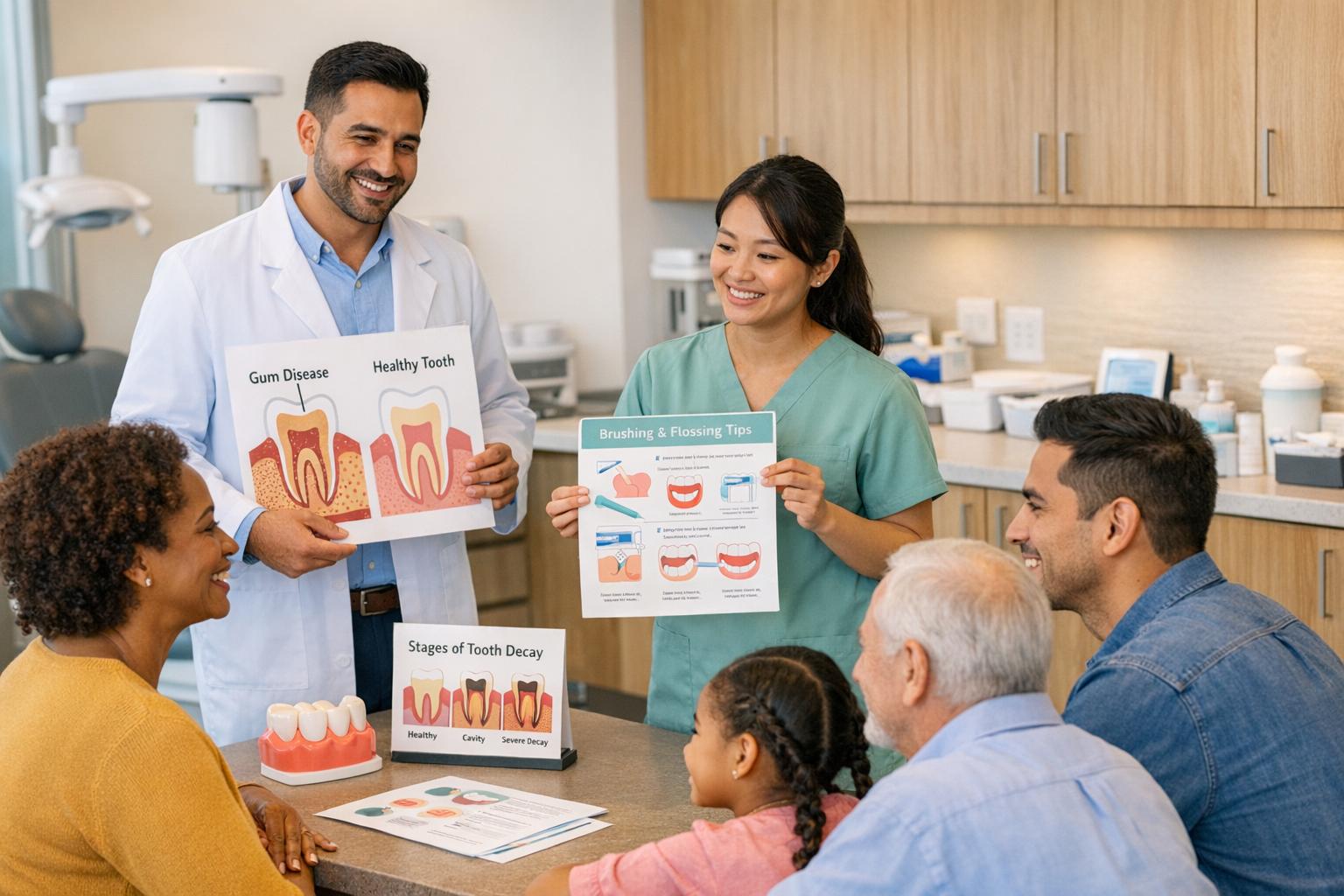
Communication issues in dental care can lead to misdiagnoses, poor treatment adherence, and delayed care. In Australia’s diverse communities, patients often face challenges due to language differences, technical jargon, and varying health beliefs. These barriers affect everything from understanding consent forms to following treatment plans. Here’s what dental practices can do to improve communication:
- Hire bilingual staff: Helps build trust and bridge language gaps.
- Use professional interpreters: Ensures accurate translation for complex terms.
- Leverage visual aids: Diagrams and models simplify explanations.
- Develop culturally relevant materials: Tailored resources improve patient understanding.
- Train staff on cultural differences: Helps address biases and foster better patient interactions.
Good cross-cultural patient communication
Common Communication Barriers in Dental Settings
Multicultural dental practices face challenges that go far beyond simple translation issues. Even patients fluent in English can struggle to grasp technical terms like "endodontic therapy", "periodontal disease", or "crown preparation." These terms can feel overwhelming, leaving patients confused and potentially leading to uninformed consent [1][5].
The situation becomes even more complex without access to professional interpreters. Many practices rely on family members, including children, to translate during consultations. This approach can compromise accuracy, confidentiality, and the quality of informed consent. On top of that, written materials like consent forms, after-care instructions, and treatment plans are often only available in English. For patients with limited English proficiency, this can make it difficult to follow post-operative care instructions, increasing the risk of complications [3][6].
Language Barriers and Patient Understanding
Language barriers don’t just affect spoken communication; they also impact how well patients understand their diagnosis and treatment options. Misunderstandings about procedures, associated risks, or home-care instructions can affect every stage of the care process. This can lead to lower adherence to treatment plans and a higher chance of errors [1][3][7].
Techniques like the teach-back method – where patients repeat instructions to confirm their understanding – can help bridge this gap. However, this approach only works when explanations are clear, jargon-free, and given without rushing [5]. Patients with limited English skills may also miss important non-verbal cues or struggle to voice concerns about pain, discomfort, or anxiety. In some cases, cultural norms around respecting authority figures may prevent patients from asking questions or seeking clarification. These unspoken misunderstandings can result in missed appointments or untreated health issues [7].
Cultural Differences in Oral Health Beliefs
Cultural beliefs can add another layer of complexity to communication in dental care. For instance, some communities may only seek dental care during emergencies, while others might view tooth loss as an unavoidable part of ageing. Such beliefs can reduce the acceptance of preventive or restorative treatments, which are key components of dental practices focused on early intervention and regular check-ups [7][8][9].
Attitudes toward pain management and anaesthesia also vary widely. Some patients might feel they need to "tough it out" or may fear that injections are harmful, leading them to under-report pain or refuse anaesthesia altogether [2][7][9]. Additionally, differing expectations about the doctor–patient relationship can complicate communication. For example, some patients may prefer directive advice over shared decision-making, while others might feel uncomfortable with clinicians of a certain gender. These mismatched expectations can erode trust and satisfaction, making effective communication even more challenging [7][9].
Solutions for Improving Communication
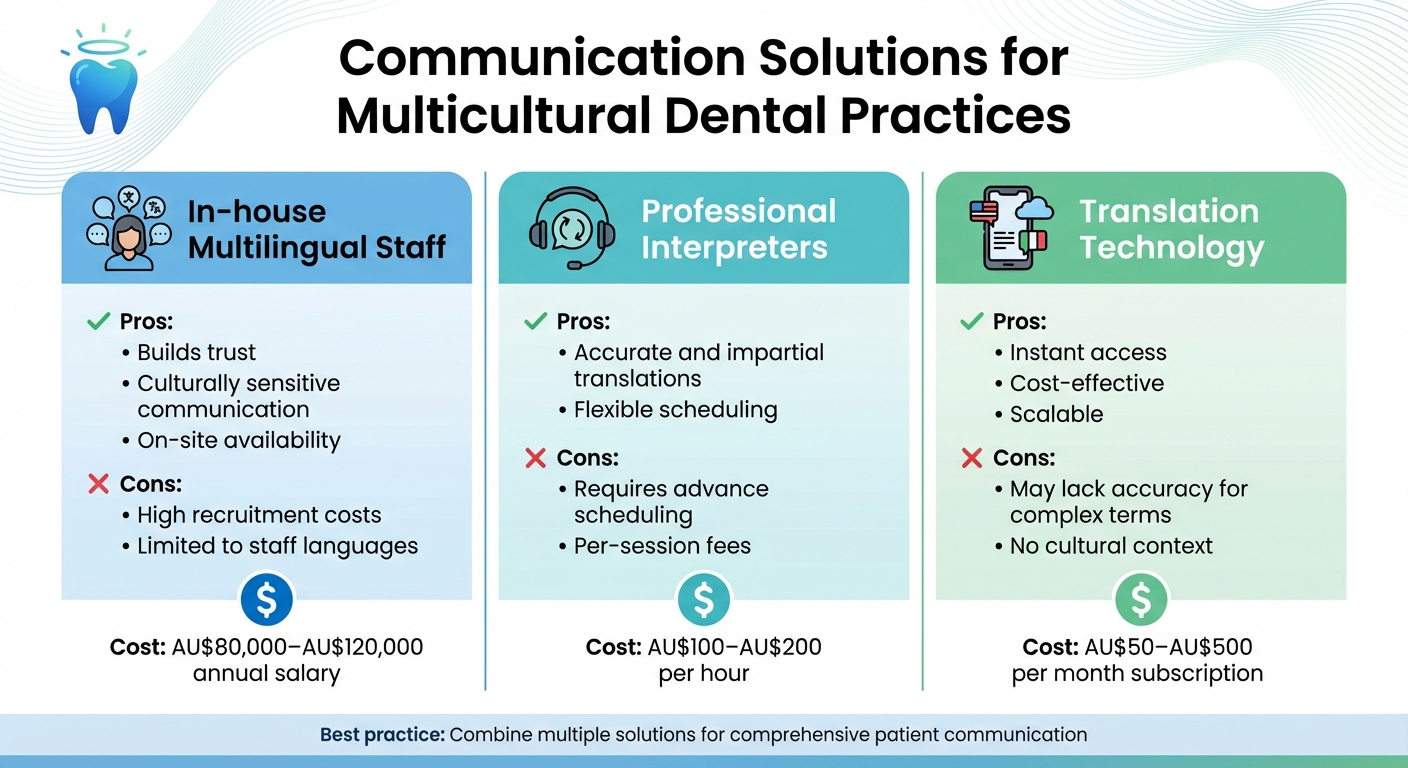
Comparison of Communication Solutions for Multicultural Dental Practices
Breaking down language and cultural barriers in healthcare requires a mix of skilled staff and supportive technology. By combining these elements, practices can create a more inclusive and effective communication environment.
Multilingual Staff and Translation Services
Hiring bilingual staff can make a huge difference in patient care. These professionals can explain treatments, handle administrative tasks, and build trust with patients. In areas with diverse populations, practices have reported increased patient satisfaction and stronger relationships after bringing bilingual staff on board.[1]
Professional interpreters, trained specifically for healthcare settings, are another key resource. They can accurately and confidentially translate complex medical terms. Services like Over-the-Phone Interpreting (OPI) and Video Remote Interpreting (VRI) are especially useful for rare languages or when precise communication is critical, such as during informed consent for procedures.[3]
Translation technology also plays a role, particularly for appointment reminders and basic instructions. Many engagement platforms can send multilingual messages in languages like English, Spanish, French, and Chinese. However, these tools are best used as a supplement to human interpreters, especially when dealing with technical dental terms where precision is essential.[1]
| Option | Pros | Cons | Approximate Costs (AUD) |
|---|---|---|---|
| In-house Multilingual Staff | Builds trust; culturally sensitive communication; on-site availability [1] | High recruitment costs; limited to staff languages | AU$80,000–AU$120,000 annual salary |
| Professional Interpreters | Accurate and impartial translations; flexible scheduling [3] | Requires advance scheduling; per-session fees | AU$100–AU$200 per hour |
| Translation Technology | Instant access; cost-effective; scalable [1] | May lack accuracy for complex terms; no cultural context | AU$50–AU$500 per month subscription |
Beyond language-focused solutions, visual tools can further enhance understanding.
Visual Aids and Culturally Adapted Materials
Visual aids can overcome language barriers altogether. Tools like diagrams, anatomical models, videos, and illustrated charts help patients grasp procedures without relying solely on spoken explanations.[2] For instance, a chart showing how tooth decay progresses or a model demonstrating proper brushing techniques can make complex ideas much easier to understand.
Culturally adapted materials take this concept further by addressing specific health beliefs and practices. Instead of simply translating brochures word-for-word, these resources incorporate cultural contexts and address concerns unique to particular communities. For example, aftercare instructions might include dietary considerations relevant to a specific group, or consent forms could use familiar analogies to explain procedures. These tailored materials can improve understanding, encourage treatment adherence, and strengthen trust between patients and practitioners.[2]
To implement these solutions cost-effectively, Australian practices can start by identifying the most common languages among their patients and partnering with local interpreters, including telehealth options. Creating simple multilingual PDFs using reviewed translations and investing in basic visual aids can be done for under AU$5,000. This makes it feasible to begin with high-demand services like dental implants or routine cleanings.[1]
sbb-itb-2be92ed
Developing Cultural Awareness in Dental Teams
Even the best communication tools can fall short if staff lack an understanding of cultural nuances. This gap can lead to misinterpretations and erode patient trust, making targeted training a vital step for dental practices.
Training Staff on Cultural Differences
To tackle language and cultural barriers effectively, dental teams need structured and ongoing training. A recommended approach is to dedicate 4–8 hours each year to cultural competence training. This should include role-plays, case studies, and self-reflection exercises aimed at uncovering and addressing unconscious biases [1][2][6].
In Australia, training should reflect the diversity of local communities. This includes understanding the health perspectives of Aboriginal and Torres Strait Islander peoples, as well as the needs of culturally and linguistically diverse (CALD) groups. For example, some cultural groups may favour holistic remedies or adhere to specific dietary practices, which can influence how appointments are scheduled or how oral health advice is delivered [2][7]. Studies show that practices adopting these training methods often report a 20–40% increase in patient satisfaction and encounter fewer communication challenges [1][3].
Interactive learning methods are particularly effective. Scenario-based role-plays give staff a chance to practise explaining procedures to patients from different cultural backgrounds. These exercises, followed by discussions about language choices and non-verbal cues, help refine communication skills. Additionally, self-assessment tools can help staff identify personal biases that might influence patient care [2][7].
Building Trust Through Active Listening
Cultural awareness training is just the beginning; active listening is another key to bridging cultural gaps. By focusing entirely on the patient, using open body language, and paraphrasing their concerns, dental teams can foster trust and understanding.
Starting consultations with open-ended questions like "What do you think might be causing this issue?" or "Do you have any concerns about dental care?" sets a collaborative tone. Using the teach-back method – where patients repeat back information in their own words – can also confirm understanding and encourage questions. These techniques not only improve communication but also help patients feel more confident in following treatment recommendations [3][7].
Conclusion
Breaking down communication barriers in multicultural dental practices requires ongoing efforts in language support, cultural understanding, and patient-focused care. Strategies like hiring multilingual staff, offering professional translation services, using visual aids, and conducting cultural competency training all contribute to creating a space where patients feel both heard and respected.
When dental teams make communication a priority, the benefits are clear. Misunderstandings decrease, reducing the risk of misdiagnoses and medical errors, while patients are more likely to follow their treatment plans effectively [1][3][4]. Trust grows when patients can share their concerns in their preferred language and when staff show a genuine awareness of different cultural health beliefs and practices. This is particularly important in a country as diverse as Australia.
For practices serving Aboriginal, Torres Strait Islander, and other linguistically and culturally diverse communities, these strategies are essential. Providing patient materials in widely spoken languages like Mandarin, Arabic, and Spanish, paired with culturally relevant explanations tailored to local needs, turns routine dental visits into meaningful experiences that foster stronger community connections [2][6].
FAQs
What role do visual aids play in improving communication with dental patients?
Visual aids like diagrams, models, and pictograms play an important role in explaining dental procedures and oral health concepts. They simplify complex topics, making them easier for patients to grasp – especially when language differences might otherwise create confusion.
Using simple and culturally relevant visuals is key. Choose images that are easy to understand and highlight important details with clear visual markers. Pair these visuals with concise explanations to ensure clarity. This method not only helps patients feel more informed but also builds trust and strengthens communication, particularly in diverse communities.
How do cultural beliefs impact patients’ commitment to dental treatment?
Cultural beliefs play a key role in shaping how patients perceive oral health, engage with dental professionals, and follow through with treatment plans. For instance, some individuals might lean towards traditional remedies instead of modern dental practices, while others may have differing levels of trust in healthcare providers influenced by their cultural experiences.
When dental practitioners take the time to understand and respect these beliefs, they can strengthen patient relationships, enhance communication, and promote greater adherence to treatments. This not only helps patients feel acknowledged and respected but also creates a more inclusive and effective care experience.
Why should dental staff receive training in cultural competence?
Cultural competence training gives dental staff the tools they need to connect and communicate effectively with patients from all walks of life. This training minimises misunderstandings, builds trust, and ensures that every patient feels respected and appreciated.
When staff understand cultural differences and language subtleties, they can offer care that’s more tailored and patient-focused. This approach aligns perfectly with Australia’s commitment to delivering top-quality healthcare.
Related Blog Posts
- Cultural Sensitivity in Dentistry: Key Challenges and Solutions
- Motivational Interviewing in Dental Care
- Common Communication Mistakes in Dentistry
- How Multilingual AI Helps Dental Clinics Communicate
Important Notice: Any surgical or invasive procedure carries risks. Before proceeding, you should seek a second opinion from an appropriately qualified health practitioner.
Individual results may vary. The information provided in this article is for educational purposes only and does not constitute medical advice.
Checkout Related Blogs




Get in touch with us
For more information, call us now to start feeling better. Or fill the form below to make appointment
The Latest News from Complete Smiles
How to Clean Clear Plastic Retainers
Checklist for Choosing Wearable Dental Devices
Checklist for Choosing Cloud AI Platforms in Dentistry

Complete Smiles Bella VistaAccepts All Major Health Funds, Including





