




Motivational Interviewing in Dental Care

Motivational Interviewing (MI) is a patient-focused counselling method that helps people make positive changes in their oral health by addressing ambivalence and encouraging collaboration. It’s particularly useful in dentistry, where many patients delay care due to fear, cost, or lack of awareness.
Key Takeaways:
- What is MI? A communication style that builds trust and encourages patients to explore their own reasons for change.
- Why use MI in dental care? It’s effective in tackling common issues like untreated decay in children (affecting 26% of 5–6-year-olds in Australia) and improving adherence to treatment plans.
- Core principles: Partnership, acceptance, compassion, and evocation.
- Techniques: Use the OARS framework – Open-ended questions, Affirmations, Reflections, and Summaries – to guide conversations.
- Benefits: Better patient engagement, improved oral health outcomes, and stronger clinician-patient relationships.
- Challenges: Time constraints, limited training, and difficulty addressing sensitive topics.
MI is a practical and evidence-supported tool that can transform dental care by empowering patients to take charge of their oral health. It’s especially relevant in Australia’s diverse population, where understanding individual perspectives is key to effective care.
Core Principles and Techniques of Motivational Interviewing
Key Principles of MI
Motivational Interviewing (MI) is grounded in principles that encourage positive behavioural changes, particularly in dental care. It shifts the focus from directive counselling to a more collaborative dialogue. At its heart, MI is built on four key elements: partnership, acceptance, compassion, and evocation [5].
- Partnership: This is about working with patients, not positioning oneself as the sole authority.
- Acceptance: Embracing patients as they are, without judgment.
- Compassion: Showing genuine care and concern for their well-being.
- Evocation: Drawing out the patient’s own reasons for change rather than imposing external motivations.
As Advantage Dental+ puts it:
"Motivational interviewing (MI) is a conversation style that strengthens a patient’s motivation to make a change. The patient voices the reasons for change, which helps to encourage acceptance." – Advantage Dental+ [6]
One of the challenges in traditional dental consultations is the "righting reflex" – the instinct to immediately correct or educate patients when concerns about their oral habits arise. MI encourages taking a step back to first understand the patient’s perspective.
For example, if a patient mentions bleeding gums, they might be expressing deeper concerns, such as fear of tooth loss or the impact on their social image. MI is particularly effective for patients in the precontemplation stage (when they don’t yet see their behaviours as problematic) and the contemplation stage (when they’re wrestling with ambivalence about making a change) [3].
Using OARS Techniques
To bring MI principles into everyday practice, dental professionals can use the OARS framework: Open-ended questions, Affirmations, Reflections, and Summaries [3]. This framework provides practical tools for fostering meaningful conversations with patients.
- Open-ended questions: Encourage patients to share more about their habits and challenges. For instance, instead of asking, “Do you floss daily?” try, “Tell me about your routine for cleaning between your teeth.”
- Affirmations: Recognise and reinforce the patient’s strengths and efforts, no matter how small.
- Reflections: Paraphrase what the patient has shared to confirm understanding and show you’re actively listening.
- Summaries: Pull together key points from the conversation, emphasising the patient’s own motivations for change.
This approach not only makes patients feel heard but also helps clarify their goals and priorities.
Building Empathy and Trust
Empathy and trust are at the core of MI, fostering a patient-centred approach that respects individual autonomy [5]. MI acknowledges that each patient’s relationship with oral health is shaped by a variety of factors – past experiences, cultural influences, financial constraints, and personal priorities.
For example, non-compliance with oral health advice might stem from deeper issues like depression, physical limitations, or simply a lack of understanding. Building trust means addressing these concerns without judgment. Instead of saying, “You need to stop drinking soft drinks,” a more empathetic approach might be, “Help me understand what role soft drinks play in your daily routine and how you feel about that.”
This collaborative style [4] shifts the traditional power dynamic in dental consultations. It encourages patients to share openly and take an active role in their care. Research backs this approach – meta-analyses show that MI leads to better outcomes in health-related behaviours compared to standard treatments, with an odds ratio of 1.55 (95% confidence interval: [1.40, 1.71]) [1].
Applying Motivational Interviewing in Dental Practice
Understanding the Stages of Change
Motivational Interviewing (MI) builds on a deep understanding of behavioural change, helping dental professionals identify where their patients fall within the stages of change model. This model breaks down the process of change into five phases: precontemplation, contemplation, preparation, action, and maintenance.
In the precontemplation stage, patients may not recognise their oral health habits as problematic. For instance, they might dismiss bleeding gums as harmless or assume tooth loss is an unavoidable part of ageing. During contemplation, patients start to see the need for change but may feel daunted by what it entails. The preparation stage is marked by taking small, actionable steps, such as buying interdental brushes or booking regular dental check-ups. Action involves actively adopting healthier behaviours, while maintenance focuses on sustaining these habits over time.
MI techniques can be tailored to each stage. For patients in precontemplation, the goal is to gently raise awareness rather than push for immediate change. Questions like, "What concerns you most about your oral health?" can open up a conversation without overwhelming them with advice. In contemplation, exploring ambivalence and addressing doubts becomes key. During preparation, planning manageable steps helps build confidence. Finally, in the action and maintenance stages, ongoing support and encouragement are crucial to keeping progress on track.
These insights provide a solid foundation for integrating MI into various dental scenarios.
Tailoring MI to Dental Scenarios
MI is a practical tool for dental practitioners, even within the short timeframes of routine appointments. The method revolves around four core processes: engaging, focusing, evoking, and planning [5]. Each of these can be adapted to everyday interactions in the dental clinic.
Take oral hygiene, for example. Instead of simply demonstrating brushing techniques, use MI to explore what oral health means to the patient. A parent might value being a role model for their children, while a young professional might prioritise fresh breath for social confidence. When discussing smoking cessation, acknowledge the complexity of addiction while encouraging self-reflection. A question like, "How does smoking fit into your daily life, and how do you feel about that?" can prompt patients to consider their habits without feeling judged.
MI is also effective in addressing barriers to regular dental check-ups, such as anxiety or financial pressures. By exploring these challenges empathetically – whether they stem from past negative experiences or competing family obligations – dentists can work with patients to find practical solutions.
David Price from Waitakere Hospital offers a simple yet powerful approach:
"Listen with empathy, provide information, explore their motivations and do not push expert advice." [2]
Following up on patient progress during subsequent visits and offering positive reinforcement helps build confidence and self-efficacy [5].
This flexible approach is particularly valuable when working with Australia’s diverse population, where cultural and language differences can shape oral health beliefs and behaviours.
Working with Australia’s Diverse Population
Australia’s multicultural society presents unique challenges and opportunities for applying MI in dental care. Research shows that self-management of health conditions can be more difficult for patients from culturally and linguistically diverse backgrounds [7].
Language barriers, in particular, can hinder the effectiveness of MI. A 2009 Australian study involving Greek, Italian, and Vietnamese-speaking patients in nephrology clinics found that limited understanding of medications negatively impacted confidence in self-management. The study, which included fortnightly phone calls averaging 9.5 minutes, highlighted the importance of clear communication in building trust and improving outcomes [7].
When working with interpreters, careful planning is essential. Allow extra time and ensure the interpreter understands MI’s collaborative and non-directive nature. This helps maintain the spirit of MI while bridging language gaps.
Cultural beliefs also play a role in oral health. For example, some communities may see tooth loss as a natural part of ageing, while others might follow dietary or religious practices that affect oral hygiene. MI’s patient-centred approach is particularly useful here, as it prioritises understanding the individual’s perspective. By acknowledging traditional health beliefs and finding ways to align them with modern dental practices, practitioners can offer advice that resonates with patients’ values.
The core principles of MI – partnership, acceptance, compassion, and evocation – translate seamlessly across cultural boundaries. By genuinely seeking to understand each patient’s unique circumstances and motivations, dental professionals can build trust and inspire positive change, no matter the cultural context.
Benefits, Challenges, and Evidence Base of MI in Dentistry
Benefits of MI in Dental Care
Motivational Interviewing (MI) has proven to be an effective tool for improving dental care outcomes by inspiring patients to adopt healthier dental habits and stick to treatment plans. This approach fosters long-term behavioural changes by focusing on the patient’s personal motivations, strengthening the clinician–patient relationship in the process. Instead of merely offering advice, MI creates a partnership where patients feel genuinely heard and understood, leading to better outcomes [6][5].
One of the standout advantages of MI is the boost it gives to patient satisfaction. By promoting clear, empathetic, and positive communication, MI makes patients more receptive to treatment recommendations and encourages them to embrace changes that improve oral health. It’s been particularly effective in addressing behaviours linked to caries, periodontal disease, and oral cancers [6][3]. Another plus? MI can be adapted as a brief intervention, making it practical even in busy general dental practices [5].
When patients feel their views are respected and their autonomy is acknowledged, they’re more likely to take ownership of their oral health. This heightened engagement not only drives positive behavioural changes but also enhances their overall experience during dental visits [5]. However, putting MI into practice does come with its own set of challenges.
Challenges of Implementing MI
Bringing MI into everyday dental practice isn’t without obstacles. Time constraints, limited training, and the complexity of the approach are common barriers [3][8].
A significant hurdle is the gap in training. A survey in central Norway revealed that while most dentists (80%) and dental hygienists (90%) understood MI principles, far fewer felt confident in applying them – only 45% of dentists and 60% of hygienists [8]. Lack of training was a key reason for this, with 50% of dentists and 75% of hygienists citing it as a barrier to adoption [8]. Time pressures also play a role, with over a third of dentists (36.4%) perceiving MI sessions as too lengthy [8]. Interestingly, dental hygienists reported using MI more frequently (78.4%) compared to dentists (50.8%) [8].
Discussing delicate topics, especially with certain patient groups, adds another layer of difficulty. For example, some professionals struggle to address issues like adolescent home environments. A notable number feel that some adolescents are unlikely to change their behaviour, which can lead to frustration and a sense of helplessness [8].
Overcoming these challenges requires structured solutions. Regular training, hands-on practice, and mentorship are crucial [9][8]. Tailored interventions designed for specific patient behaviours and demographics can also improve effectiveness [8]. Additionally, using validated tools to monitor MI delivery ensures it’s applied correctly and highlights areas where further training might be needed [8].
Evidence Supporting MI in Dentistry
The evidence backing MI in dentistry is solid, although outcomes can vary depending on how it’s implemented and the patient population involved. In periodontal care, for instance, MI outperformed traditional health education methods in five out of seven studies [5]. A systematic review of MI as part of periodontal therapy also found improvements in clinical measures like plaque levels and gum inflammation in two out of four studies [5].
Even in time-limited settings, brief MI interventions have shown promise. In studies where sessions lasted under 20 minutes, 64% (7 out of 11) demonstrated significant behaviour changes [5]. Overall, MI surpassed standard advice in 75% of studies, and its success wasn’t tied to the educational background of the counsellor [5].
Research into broader health behaviours further supports MI’s relevance. A meta-analysis found moderate effects (0.25–0.57) when MI was adapted for areas like diet and exercise, with benefits lasting up to four years [5]. Another review highlighted that MI was 10%–20% more effective than no treatment in reducing risky behaviours such as alcohol and tobacco use – factors that directly influence oral health [5].
In dental-specific applications, MI has shown encouraging results. For example, one study reported positive outcomes when MI was used to motivate parents to bring their children for fluoride varnish treatments [5]. While not every study reports dramatic results, the overall evidence suggests that MI is a valuable tool for engaging patients and improving oral health outcomes.
sbb-itb-2be92ed
The Effective Dentist: Motivational Interviewing Demonstration
Conclusion
Motivational interviewing (MI) is reshaping dental care by moving away from directive approaches and fostering a genuine partnership between clinicians and patients. Research highlights that when dental professionals embrace MI principles – such as resisting the urge to "fix" the problem, understanding what drives each patient, practising empathetic listening, and encouraging patients to take charge of their decisions – they create an atmosphere where meaningful and lasting behaviour change becomes possible.
The OARS framework provides a practical roadmap for incorporating MI into everyday dental practice. Through open-ended questions, affirming patient strengths, reflecting on their thoughts, and summarising key points, clinicians can build trust and establish the kind of rapport that leads to better oral health outcomes. This method is especially relevant in Australia’s diverse population, where acknowledging individual motivations and addressing cultural barriers is essential for providing fair and effective care.
Of course, implementing MI comes with its challenges, such as time limitations and the need for specialised training. However, the rewards – improved patient satisfaction, stronger engagement, and better adherence to treatment plans – far outweigh these obstacles. Dental practices also benefit by fostering deeper connections with their patients, enhancing both professional fulfilment and practice success.
A great example of MI in action can be seen at Complete Smiles Bella Vista. Led by Dr. James Hanna, the clinic prioritises personalised care and advanced techniques, seamlessly integrating MI principles into its approach. Offering a wide range of services, from general dentistry to specialised treatments like Invisalign and dental implants, this practice exemplifies how modern Australian dentistry can centre care around the patient.
While mastering motivational interviewing requires dedication and ongoing effort, the results speak for themselves – better clinical outcomes, more satisfied patients, and greater professional satisfaction. As the Australian dental industry continues its shift towards patient-centred care, MI stands out as a proven, effective tool that helps both patients and practitioners work together to achieve the best possible oral health. It reinforces the idea that dentistry is not just about treatments but about empowering individuals to take control of their health in a supportive and collaborative environment.
FAQs
How does motivational interviewing help reduce dental anxiety and encourage patients to follow treatment plans?
Motivational interviewing (MI) is a patient-centred technique designed to ease dental anxiety and encourage patients to stick to their treatment plans. It relies on strategies like open-ended questions, reflective listening, and affirmations to create a welcoming space where patients feel heard and motivated to take charge of their oral health.
By addressing patients’ concerns and uncertainties about dental care, MI helps them feel more comfortable and open to guidance. This approach not only reduces fear but also strengthens trust between patients and dentists. The result? Better communication, improved treatment outcomes, and healthier smiles over the long term.
How can dental professionals use motivational interviewing techniques effectively during short appointments?
Dental professionals can make the most of motivational interviewing (MI) during short appointments by mastering a few key techniques: asking open-ended questions, providing affirmations, practising reflective listening, and summarising conversations. These methods can easily become part of everyday patient interactions, helping to build trust while encouraging positive changes in behaviour.
The four main stages of MI – engaging, focusing, evoking, and planning – offer a structured way to guide conversations effectively. For example, starting with empathetic listening to engage patients, then narrowing the focus to their specific oral health goals, creates a cooperative atmosphere. Even in brief consultations, this approach can address concerns, inspire motivation, and strengthen the patient-practitioner relationship, paving the way for better long-term care.
How does motivational interviewing support cultural and linguistic diversity in dental care within Australia’s multicultural society?
Motivational interviewing (MI) plays a key role in supporting Australia’s rich cultural and linguistic diversity by focusing on a patient-centred approach. It emphasises respect for each person’s cultural background, values, and language preferences, creating space for open conversations that help patients feel truly heard and empowered to make informed choices about their oral health.
In a multicultural country like Australia, MI stands out because it adjusts communication strategies to fit diverse cultural contexts. When dental professionals are trained in cultural competence, they can use MI to build trust and meaningful connections with patients. This not only ensures respectful and relevant interactions but also helps improve oral health outcomes for individuals across all communities.
Related Blog Posts
- Cultural Sensitivity in Dentistry: Key Challenges and Solutions
- 6 Ways to Overcome Dental Anxiety
- Phases of Dental Treatment Planning
- AR in Dental Care: Patient Education Tools
Important Notice: Any surgical or invasive procedure carries risks. Before proceeding, you should seek a second opinion from an appropriately qualified health practitioner.
Individual results may vary. The information provided in this article is for educational purposes only and does not constitute medical advice.
Checkout Related Blogs



Get in touch with us
For more information, call us now to start feeling better. Or fill the form below to make appointment
The Latest News from Complete Smiles
How to Clean Clear Plastic Retainers
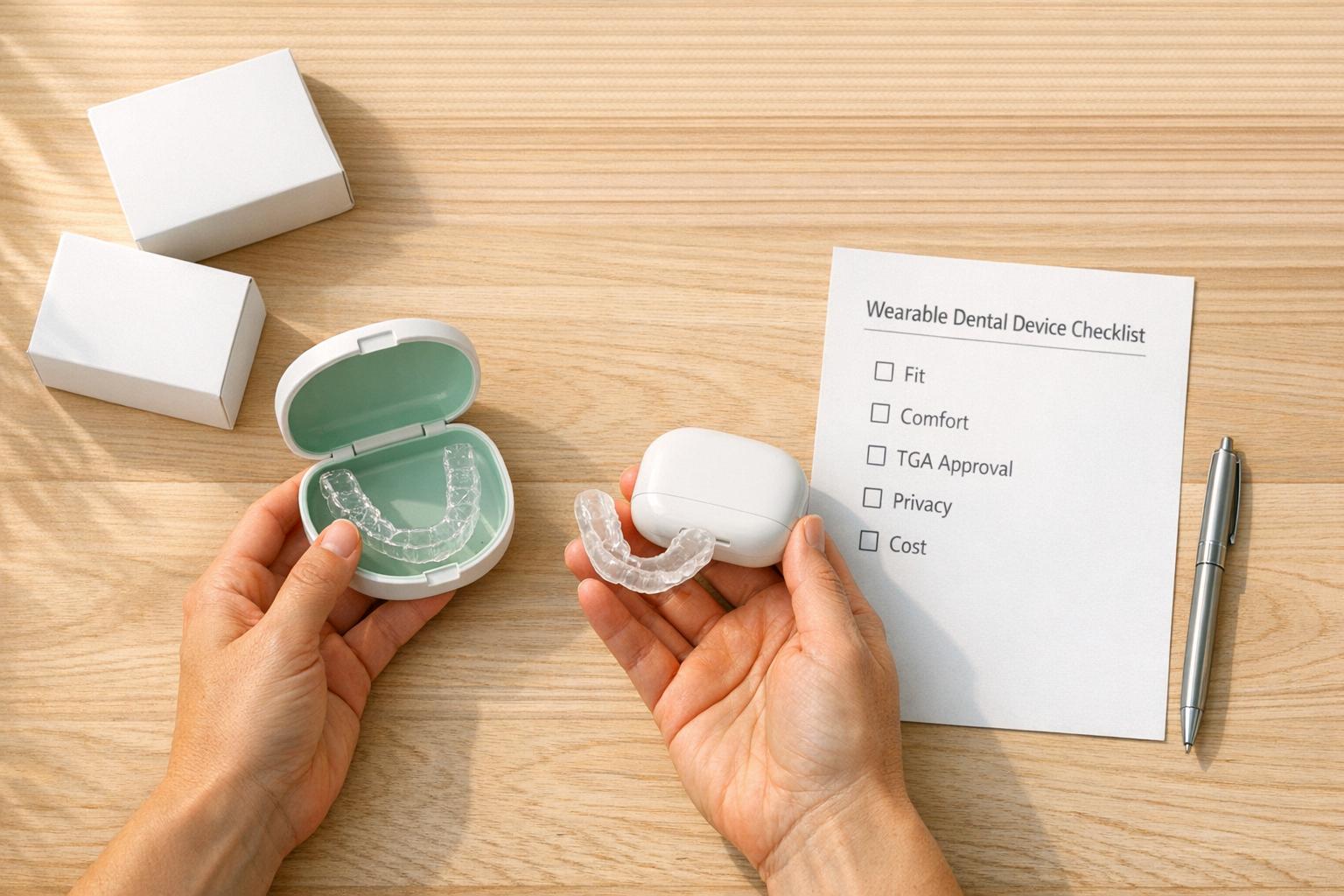
Checklist for Choosing Wearable Dental Devices
Checklist for Choosing Cloud AI Platforms in Dentistry
Complete Smiles Bella VistaAccepts All Major Health Funds, Including