





Dental Surgery Recovery Timeline Explained
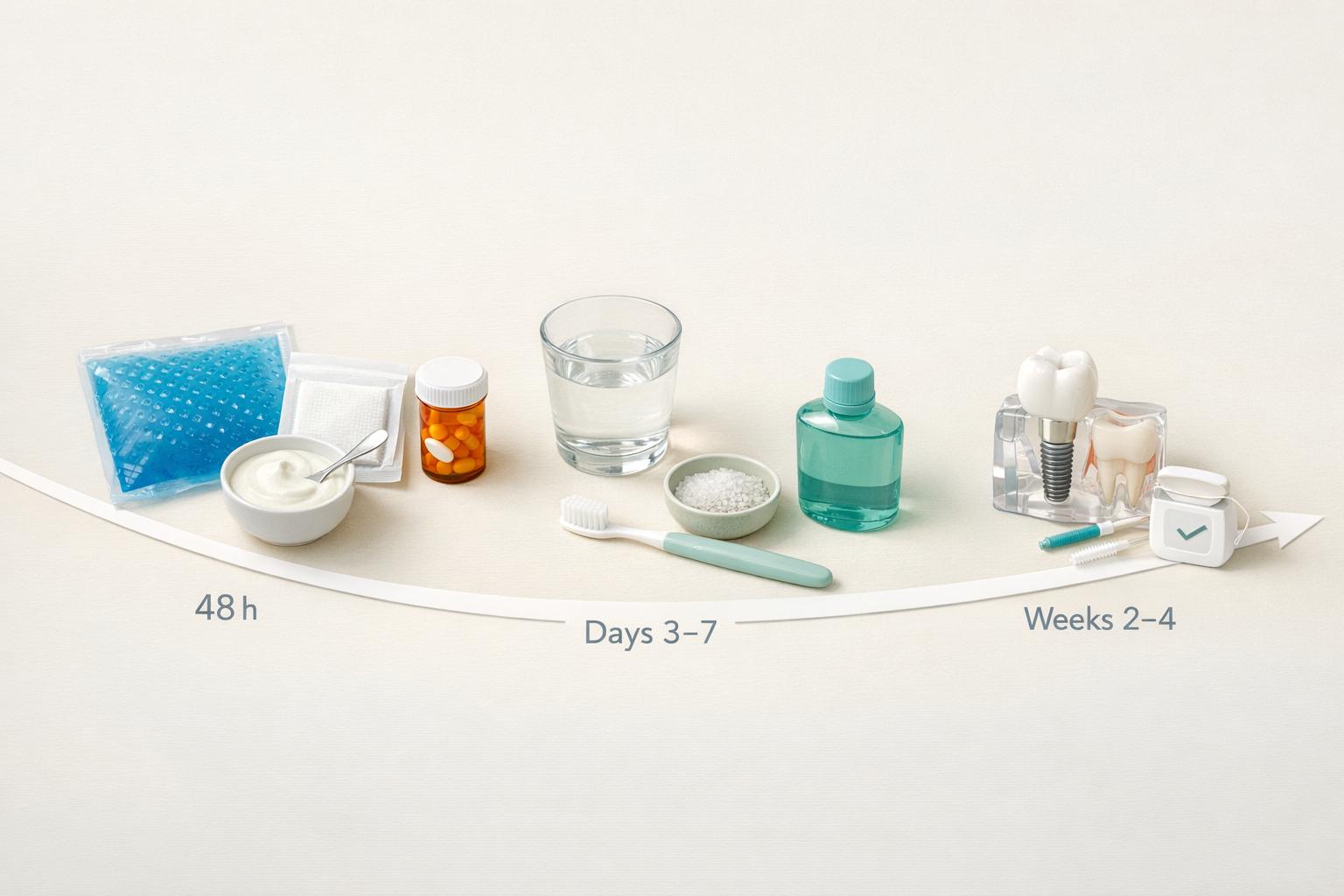
Recovering from dental surgery can be challenging, but knowing the timeline helps you prepare and heal effectively. Here’s what to expect:
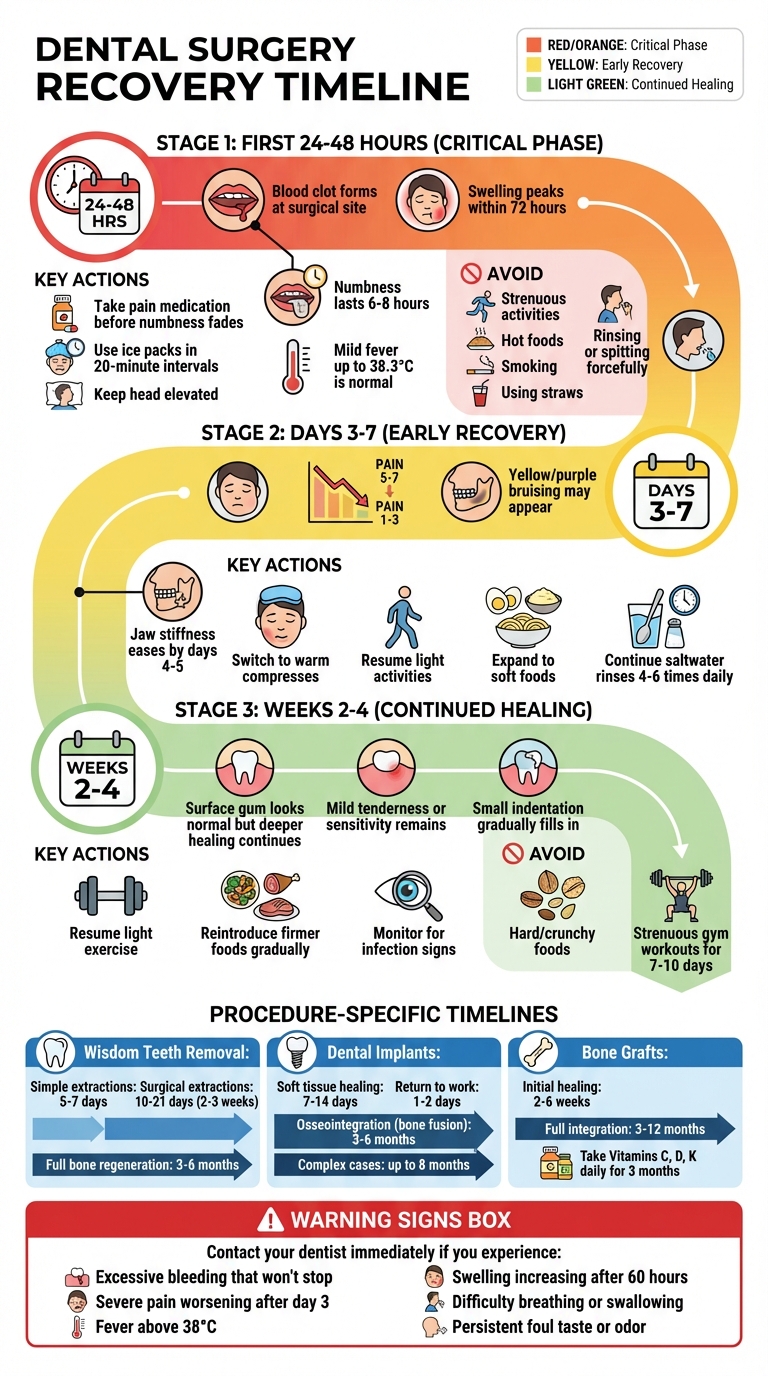
- First 24–48 Hours: Blood clot forms at the surgical site. Swelling peaks within 72 hours. Avoid strenuous activities, hot foods, smoking, and using straws to protect the clot.
- Days 3–7: Swelling reduces, pain subsides, and bruising may appear. Gradually return to light activities and expand your diet to soft foods.
- Weeks 2–4: Gum tissue heals, but deeper recovery continues. Monitor for signs of infection, like worsening pain or a bad taste.
- Procedure-Specific Timelines:
- Wisdom Teeth: Simple extractions heal in 5–7 days; surgical ones may take 2–3 weeks.
- Implants: Soft tissue heals in 7–14 days; bone integration takes 3–6 months.
- Bone Grafts: Initial healing in 2–6 weeks; full integration in 3–12 months.
Stick to your dentist’s aftercare plan, eat soft and nutrient-rich foods, and rest to promote healing. Contact your dentist if you notice excessive bleeding, severe pain, or signs of infection.
Dental Surgery Recovery Timeline: What to Expect After Your Procedure
Tooth Extraction Explained: Healing, Aftercare & What Happens Next
First 24–48 Hours After Surgery
The first couple of days after surgery are crucial for your recovery. During this time, your body starts forming a blood clot at the surgical site. This clot acts like a protective barrier, helping to prevent infection and kickstarting the tissue healing process [6]. It’s normal to notice minor bleeding or blood-streaked saliva in the first 12 to 24 hours. Some discolouration may linger for up to 48 hours. Swelling usually begins right away, increases over the first 24 to 72 hours, and tends to peak around the second or third day [9].
As the numbness from the procedure wears off (typically 2–8 hours later), pain may set in. Numbness can last for about 6–8 hours, so it’s important to avoid hot foods or drinks during this time and be careful not to bite your lip, cheek, or tongue. A mild fever (up to 38.3°C) is also common within the first day after oral surgery [8]. Managing both pain and swelling during this period is key to staying comfortable.
Controlling Pain and Swelling
To stay ahead of the pain, take your medication before the numbness fades [12]. For moderate to severe pain, alternating paracetamol and ibuprofen every three hours can provide consistent relief. Just make sure to stick to the maximum daily limits: 2,400 mg for ibuprofen and 4,000 mg for paracetamol. Avoid aspirin, as it can thin the blood and increase bleeding risks [9].
For swelling, ice packs are your best friend in the first 24 hours. Use them in 20-minute intervals to keep swelling in check. After the first day, switch to warm, moist heat to help reduce any lingering puffiness. Keeping your head elevated – using extra pillows while resting – can also help minimise both swelling and bleeding. And don’t push yourself too hard; avoid strenuous physical activities for at least 24 to 48 hours. Once the pain and swelling are under control, your focus should shift to protecting the blood clot and maintaining proper oral care.
Oral Hygiene During the First 48 Hours
The blood clot formed at the surgical site is delicate, so protecting it is a top priority during the first 24 hours. Avoid rinsing, spitting forcefully, using straws, or smoking, as these actions can dislodge the clot and lead to a condition called dry socket, which can be very painful. Smoking, in particular, significantly increases the already low risk (around 2%) of developing dry socket [9].
You can resume brushing the non-treated areas of your mouth about 12 hours after surgery but steer clear of the surgical site for the first day. After 24 hours, you can start using gentle saltwater rinses – mix ½ to 1 teaspoon of salt in a glass of warm water. Instead of swishing, just hold the solution in your mouth for a couple of minutes to cleanse the area, then let it fall out naturally rather than spitting.
Stick to a diet of cool, soft foods like yoghurt, smoothies, or mashed potatoes during this time. Avoid hot liquids while your mouth is still numb to prevent accidental burns.
Warning Signs That Need Immediate Attention
While some discomfort is expected, it’s important to watch for signs that could indicate complications. Contact your dentist right away if you experience any of the following:
- Excessive bleeding that doesn’t stop after applying firm pressure with gauze
- Severe pain that gets worse after three days, as this may point to dry socket
- A fever higher than 38°C
- Swelling that continues to increase after 60 hours
- Difficulty breathing or swallowing
- A persistent foul taste or odour in your mouth, which could signal an infection [8]
Paying close attention to these warning signs can help ensure a smooth recovery.
Days 3–7: Early Recovery Phase
After the critical first 48 hours, the recovery process becomes a bit easier to manage. By day three, swelling is usually at its peak, often accompanied by visible facial puffiness. Some people also notice yellow or purple bruising around the cheeks or jawline – this is completely normal and signals the body’s natural healing response [13]. At this point, you’re likely to notice gradual improvements as the days go on.
Pain typically decreases from moderate levels (around 5–7) on day three to much milder levels (about 1–3) by day seven [13]. As swelling starts to subside around days four and five, jaw stiffness also eases, making it less uncomfortable to talk or open your mouth [13]. With these changes, you can slowly adjust your care routine. Most people feel ready to return to light, sedentary activities by days four or five, with near-normal function by the end of the week [13].
This is also the time to transition from using ice packs to moist heat. After the first two days, warm compresses can help reduce any lingering swelling and encourage better blood flow to the surgical area [13]. Light activities like short walks or simple household chores can be resumed, but avoid anything strenuous – such as heavy lifting or intense exercise – for at least 7 to 10 days [13].
What to Eat During Recovery
As jaw stiffness improves, you can begin to expand your diet beyond liquids to include soft, easy-to-eat foods. Options like scrambled eggs, pasta, soft bread, cooked vegetables, and mashed potatoes are all good choices [13]. Staying hydrated is equally important – make sure you’re drinking plenty of water throughout the day to support healing.
Restarting Gentle Oral Care
Stick with the saltwater rinses from earlier in your recovery, increasing to four to six times a day, especially after meals [9].
For brushing, continue to use a soft-bristled toothbrush on non-surgical areas while avoiding the surgical site [10]. Dissolvable stitches will typically start loosening or falling out on their own between days five and ten [13].
Weeks 2–4: Continued Healing
By the second week, the surface of the gum often looks normal, but deeper tissue healing is still underway and can take several weeks to fully complete [15]. At this stage, most of the discomfort and swelling should have subsided, leaving behind only mild tenderness or sensitivity to cold or certain foods [7]. It’s also common to notice a small indentation or "dip" where the tooth was removed, which will gradually fill in over time [1]. This period is crucial for observing how sensitivity and discomfort change as the healing process continues.
Tracking Your Healing Progress
As the gum surface begins to look more like normal, keep an eye on the surgical site for signs of improvement, such as reduced redness and swelling. It’s normal to experience lingering sensitivity to cold or specific foods, but this should lessen as the days go by [7]. However, if you notice any unusual symptoms, such as a persistent bad taste, an unpleasant smell, or pain that worsens rather than improves after the first week, it’s time to contact your dentist – these could point to a delayed infection [1].
Food getting trapped in the healing area is another thing to watch for. Gentle rinsing with water or a dentist-recommended solution after meals can help manage this issue and keep the area clean [15].
Returning to Normal Activities
By the second week, most people can ease back into their regular routines and light exercise, as long as there’s no ongoing pain or complications [7]. As your comfort improves, you can slowly reintroduce firmer foods. However, it’s still wise to avoid hard, crunchy, or sharp foods like nuts, seeds, or chips, as these can irritate the healing area [14] [11]. Spicy and acidic foods may also need to be skipped if they cause discomfort [11].
When it comes to physical activity, light exercise is generally fine, but avoid anything strenuous that might increase pressure in your mouth or cause throbbing at the extraction site [14] [11].
Strenuous activities, such as gym workouts or swimming, should be avoided for seven to 10 days [11].
If you notice pain or bleeding when resuming exercise, stop immediately and allow more time for recovery [2] [14]. Additionally, it’s essential to continue avoiding smoking and alcohol during this stage, as both can significantly slow down the healing process [6] [7].
sbb-itb-2be92ed
Recovery Timelines for Specific Procedures
Different dental surgeries come with unique healing timelines and recovery needs. Understanding what to expect for your specific procedure can help you prepare and track your progress. Always stick to your dentist’s aftercare instructions for the best results.
Wisdom Tooth Removal Recovery
In Australia, over 80% of adults undergo wisdom tooth removal [16]. The recovery process depends on whether the extraction is simple or surgical. Simple extractions usually heal within 5–7 days, while surgical extractions for impacted teeth may take 10–21 days for initial recovery. During the first 24 hours, a blood clot forms at the extraction site, with swelling and pain peaking between 48 and 72 hours. Most people can return to regular activities within 3–4 days, though the soft tissue around the socket takes 7–10 days to close, and the bone underneath may take 3 to 6 months to regenerate fully.
Dry socket (alveolar osteitis) is a common complication, occurring when the protective blood clot is dislodged. To minimise this risk, follow your dentist’s dry socket prevention tips. If you experience severe pain after day 3, persistent bleeding beyond 24 hours, pus discharge, or a fever above 38°C, contact your dentist immediately. Always adhere to your dentist’s guidance for proper healing.
Dental Implant Surgery Recovery
With a success rate of 95–98%, dental implants are a trusted option, and over 15,000 procedures are performed annually in Australia [17]. Soft tissue healing generally takes 7–14 days, with discomfort peaking early and subsiding within a week. Most people can return to work or daily activities within 1–2 days, but strenuous exercise should be avoided for at least a week.
A key stage in implant recovery is osseointegration – the process where the titanium post fuses with the jawbone. This typically takes 3–6 months, though it may extend to 8 months for complex cases. Once this phase is complete, an abutment is placed, requiring a few more weeks for gum healing before the final crown is fitted.
During the initial healing period, stick to soft foods like yoghurt, soup, and mashed potatoes to avoid disturbing the implant site. Avoid smoking for at least three months, as nicotine reduces blood flow to the gums and bone, increasing the risk of infection and implant failure. Always follow your dentist’s advice for the best outcome.
Bone Grafting Recovery
Bone grafts generally take 3–12 months to integrate fully [18]. In the first 24–48 hours, it’s common to experience pain, swelling, and minor bleeding. Swelling usually peaks between days 3 and 7, then subsides as gum tissue heals. Initial bone formation begins within 2–6 weeks, with full integration occurring over 2–6 months.
To support bone healing, take Vitamins C, D, and K daily for three months. Avoid using straws, as suction can dislodge blood clots or disrupt the graft. Keeping your head elevated, even while sleeping, can help reduce swelling and improve circulation. Heavy alcohol consumption can increase complications, so it’s best avoided during recovery. Follow your dentist’s instructions to ensure proper healing.
Jaw Surgery Recovery
Jaw surgeries, such as sinus lifts, ridge augmentation, and nerve repositioning, involve more extensive procedures and longer recovery times. While initial healing mirrors other oral surgeries, the first week is often the most uncomfortable. Full functional recovery can take weeks or even months, depending on the complexity of the surgery.
To reduce swelling and bleeding, avoid strenuous activities for the first few days to a week, and stick to a soft-food diet during early recovery. Use a soft-bristled toothbrush and avoid brushing near the surgical site for the first week, using dentist-recommended antiseptic rinses instead. Advanced techniques like guided tissue regeneration or platelet-rich growth factors may be used to promote faster bone regeneration. Your dentist will provide specific aftercare based on the procedure. Always follow their instructions for the best results.
Tips for Better Recovery
Recovering from dental surgery doesn’t have to be overwhelming. A few straightforward steps can make a noticeable difference in how smoothly and quickly you heal. These practical tips apply to most dental procedures and help your body focus on doing what it does best – healing.
Follow Your Dentist’s Instructions
Your dentist’s aftercare instructions are there for a reason. They’re tailored to your specific procedure and medical history, covering everything from managing pain to activity restrictions. Ignoring these guidelines could lead to complications like dry socket, infection, or a prolonged recovery.
Take any prescribed pain medications before the anaesthetic wears off, complete your course of antibiotics (if prescribed), keep your head elevated for the first 24 hours, and avoid intense physical activity for at least 48 hours [12][11][23][6][24].
Don’t skip your follow-up appointments, even if you feel fine. These check-ups allow your dentist to monitor your healing and catch any potential issues early. Be on the lookout for warning signs that need immediate attention, such as heavy bleeding that doesn’t stop, a fever over 38°C, or severe pain that isn’t relieved by medication [8][21].
Eat a Balanced Diet
Nutrition plays a key role in your recovery. Stick to soft, nutrient-rich foods, especially those high in protein and vitamins C, D, and K, as they support tissue and bone healing [20][4][19]. If you’ve undergone bone grafting or implant surgery, these vitamins are particularly helpful for calcium absorption and bone strength over the next three months [4].
Good options include yoghurt, mashed avocado, nut butters, and pureed soups, which are gentle on the surgical site [20]. Hydration is equally important – drink plenty of water or coconut water, but avoid using straws for at least three to seven days. The suction could dislodge the blood clot and lead to dry socket [20][5].
Steer clear of spicy, acidic, or crunchy foods like chips and popcorn for at least a week, as they can irritate incisions and slow healing [20][19]. Also, avoid alcohol and smoking for at least 72 hours, as they can delay healing and increase the risk of infection [4][6][8].
Allow Adequate Time to Heal
Healing takes time, and patience is your best ally. While soft tissues generally heal within 1–2 weeks, bone healing can take anywhere from 1–4 months, with full integration taking up to 8 months [22][24]. Rest is especially important during the first 48 hours – this is when the protective blood clot forms and stabilises [6].
Hold off on gym workouts, contact sports, or heavy lifting until your dentist gives you the green light – usually about seven to ten days after surgery [11][12]. Physical exertion can raise your blood pressure, which may lead to bleeding or dislodge the clot. Be patient, stick to your recovery plan, and trust that giving your body the time it needs now will save you from complications down the road.
Conclusion
Understanding the stages of recovery is crucial for safely resuming normal activities after a dental procedure. The initial 24–48 hours are particularly important, as this is when the blood clot forms to protect the site of extraction or surgery [6]. Recovery times differ depending on the procedure: simple extractions typically heal within a week, surgical extractions may take 2–4 weeks, and dental implants can require 3–6 months for osseointegration [2][3]. Being aware of these timelines can help you identify what’s normal and when to seek professional advice.
Your lifestyle choices play a big role in how well you recover. For instance, heavy alcohol use has been associated with a 200% increase in late dental implant failure, while smoking reduces blood flow and hinders bone healing [4]. Following your dentist’s aftercare instructions, sticking to soft, nutritious foods, and allowing yourself enough rest – especially in those critical first 48 hours – can make a significant difference in your recovery.
Even if your gums appear healed after two weeks, remember that the bone and deeper tissues may take weeks or even months to fully regenerate [7]. Trust the process, adhere to the advice you’ve been given, and don’t hesitate to contact your dentist if something doesn’t feel right. Taking the time to heal properly now will set you up for a smooth and trouble-free recovery.
FAQs
What are the symptoms of a dry socket, and how can I avoid it after a tooth extraction?
Dry socket often comes with intense, throbbing pain that typically begins 1–5 days after a tooth extraction. This pain can radiate to other areas like your ear, eye, or temple. You might also notice an empty socket where the blood clot should be, or even see exposed bone. Other signs include bad breath or a lingering unpleasant taste in your mouth. Unlike normal healing, the pain tends to worsen over time instead of getting better.
How to Lower Your Chances of Dry Socket
To avoid dry socket, it’s crucial to follow your dentist’s advice for aftercare. Here are a few key tips:
- Don’t smoke: Smoking can disrupt healing and increase your risk.
- Skip the straws: Sucking motion can dislodge the blood clot.
- Avoid vigorous rinsing: Be gentle when cleaning your mouth early on.
Take care of the extraction site by practising good oral hygiene and being cautious with what and how you eat or drink during the healing process.
How long should I rest and avoid physical activity after dental surgery?
After dental surgery, it’s best to take it easy and avoid any strenuous physical activity for at least 24 hours. This downtime gives your body a chance to heal properly and reduces the chances of issues like bleeding, swelling, or slower recovery.
Use this period to rest and stick closely to the aftercare instructions your dentist has provided. If you’re unsure about when you can safely return to your normal routine, it’s always a good idea to reach out to your dentist for guidance tailored to your situation.
What foods should I eat while recovering from dental surgery?
During recovery from dental surgery, picking the right foods can make a big difference in how comfortable you feel and how quickly you heal. Stick to soft or liquid foods like smoothies, lukewarm soups, mashed potatoes, yoghurt, or boiled vegetables. These are gentle on your mouth, especially if you’re dealing with tenderness or swelling, and they won’t irritate the surgical area.
It’s also crucial to avoid hot foods and drinks for the first few hours after surgery, particularly while your mouth is still numb. This helps prevent burns or accidental injuries. As the healing progresses, you can slowly bring back soft, easy-to-chew foods, but make sure to avoid anything hard, crunchy, or spicy, as these can interfere with healing or cause discomfort.
Staying hydrated is just as important. Drink plenty of water to aid tissue repair and keep inflammation in check. Try to limit sugary drinks, as they can slow the healing process. Following these simple dietary guidelines can help make your recovery much smoother.
Related Blog Posts
- Simple vs. Surgical Tooth Extractions: Key Differences
- How Dentists Assess Crown Lengthening Candidates
- When Wisdom Teeth Need Removal
- Bone Graft Healing Stages Explained
Important Notice: Any surgical or invasive procedure carries risks. Before proceeding, you should seek a second opinion from an appropriately qualified health practitioner.
Individual results may vary. The information provided in this article is for educational purposes only and does not constitute medical advice.
Checkout Related Blogs




Get in touch with us
For more information, call us now to start feeling better. Or fill the form below to make appointment
The Latest News from Complete Smiles
How to Clean Clear Plastic Retainers
Checklist for Choosing Wearable Dental Devices
Checklist for Choosing Cloud AI Platforms in Dentistry

Complete Smiles Bella VistaAccepts All Major Health Funds, Including





