





When Wisdom Teeth Need Removal
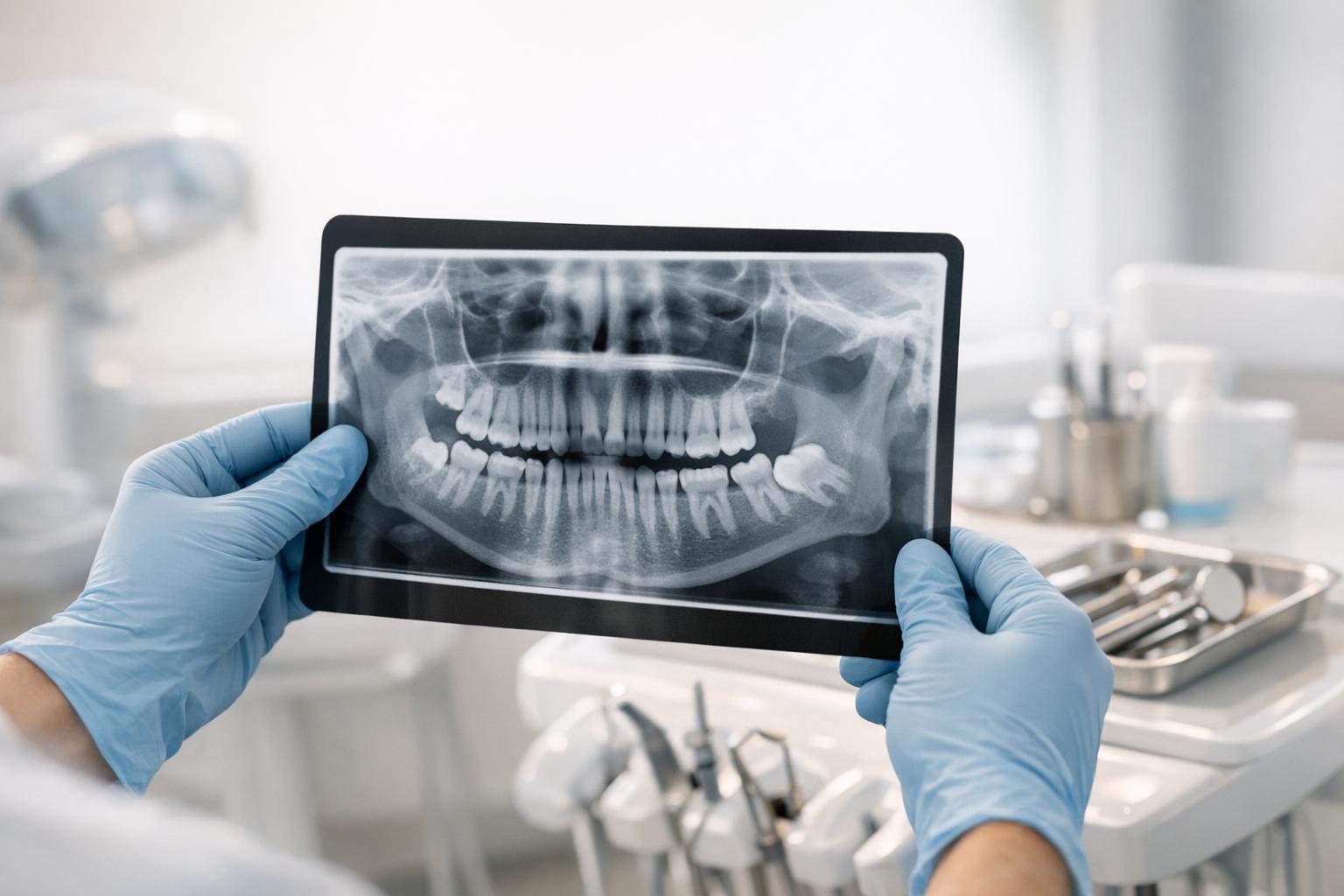
Wisdom teeth, or third molars, often cause problems when they don’t grow properly. About 65% of people have these teeth, and 85% of them will likely need removal due to issues like pain, gum swelling, or damage to other teeth. Key signs include:
- Pain at the back of your mouth or jaw.
- Swollen or bleeding gums, often linked to infection.
- Crowded teeth or shifting due to pressure from wisdom teeth.
- Difficulty opening your jaw or chewing.
- Recurring infections or cysts near the teeth.
Dentists use exams and X-rays (like OPG scans) to diagnose these problems. Removal can be simple or surgical, depending on whether the teeth are fully erupted or impacted. Recovery involves managing swelling, avoiding hard foods, and following care instructions to prevent complications like dry sockets. Regular dental check-ups help catch issues early, making treatment less complex and reducing risks.

Wisdom Teeth Removal Statistics and Warning Signs
When to Remove Wisdom Teeth
Common Signs Your Wisdom Teeth Need Removal
Wisdom teeth can sometimes go unnoticed, but when they cause trouble, the symptoms can escalate over time. Identifying these signs early and consulting a dentist can save you from future complications. Here’s what to watch out for.
Ongoing Pain at the Back of Your Mouth
If you’re experiencing persistent throbbing or pressure at the back of your mouth, it could be a sign of wisdom teeth issues. This pain might extend to your jaw, neck, or even your sinuses. In fact, upper wisdom teeth can press against sinus cavities, leading to sinus pain, congestion, and headaches. The discomfort might not always feel like a classic toothache; it can sometimes manifest as frequent sore throats or even feel like it’s coming from your ear or neck. If this sounds familiar, it’s time to get your teeth checked.
Red, Swollen, or Infected Gums
Partially erupted wisdom teeth can trap food and debris under a flap of gum, leading to a condition called pericoronitis. This often results in red, swollen, and tender gums. You might notice bleeding while brushing, a bad taste in your mouth, or even small amounts of pus. Pericoronitis is especially common in young adults aged 20 to 29 [9]. While mild cases can be treated with professional cleaning and antibacterial rinses, symptoms like fever, facial swelling, or difficulty swallowing call for immediate dental attention.
Teeth Shifting or Damage to Adjacent Teeth
When wisdom teeth push against neighbouring molars, they can cause crowding, misalignment, or even decay in the adjacent teeth. This happens in about 25–30% of patients [5]. These issues may sometimes require not just the removal of the wisdom teeth but also treatment for the affected molars.
Difficulty Opening Your Jaw
Impacted wisdom teeth can lead to restricted jaw movement, a condition known as trismus. This occurs when inflammation spreads to the muscles and tissues that control jaw movement, making chewing or even opening your mouth painful and difficult.
Repeated Infections or Cyst Development
Chronic infections or cysts around a wisdom tooth are clear signs of trouble. Bad breath or a foul taste in your mouth can signal ongoing bacterial buildup around a partially erupted tooth. In rare cases – less than 1% of patients – fluid-filled sacs called cysts can form around impacted wisdom teeth, potentially damaging nearby teeth and even the jawbone [5]. Severe infections may also cause systemic symptoms like fever and swollen lymph nodes, which require urgent care.
| Symptom Category | Specific Signs | Potential Underlying Issue |
|---|---|---|
| Gums | Redness, swelling, bleeding, pus, or a tissue "flap" | Pericoronitis or gum infection |
| Jaw/Face | Stiffness, difficulty opening mouth, neck pain | Impacted tooth or jaw inflammation |
| Teeth | Crowding, shifting, or pain in second molars | Misalignment or decay in adjacent teeth |
| Sensory | Bad breath, foul taste, or frequent sore throats | Bacterial buildup or chronic infection |
| Sinus | Pressure, congestion, or headaches in the upper jaw | Pressure from upper wisdom teeth roots |
Regular dental visits and X-rays can help detect wisdom tooth problems before they escalate. Early intervention can prevent damage to your other teeth and jawbone, ensuring your oral health stays on track.
How Dentists Identify Wisdom Teeth Problems
Once potential symptoms are noted, dentists rely on a thorough clinical exam and imaging to confirm and understand the issue. During the clinical exam, they check for signs like redness, swelling, or pus in the oral tissues, assess jaw movement, and look for swollen lymph nodes. They also document any discomfort you may be experiencing [1].
The go-to imaging tool for diagnosing wisdom teeth problems is the OPG (Orthopantomogram). This specialised X-ray provides a comprehensive view of your entire jaw, teeth, and surrounding structures [5]. It’s particularly useful for identifying hidden problems, such as teeth trapped below the surface or those growing at odd angles. It also shows how close the tooth roots are to critical areas like the mandibular nerve or sinus cavities [2]. This detailed imaging helps dentists distinguish between wisdom teeth that have erupted and those that are impacted.
X-rays can also reveal other issues, such as cysts, decay affecting the wisdom teeth or nearby molars, or incomplete root development. Many dentists recommend removing wisdom teeth during the teenage years, as the roots are not yet fully developed, making the extraction process easier and recovery quicker [1] [5]. The following table highlights the differences between erupted and impacted wisdom teeth, which play a significant role in deciding the treatment approach.
Erupted vs. Impacted Wisdom Teeth
Understanding the differences between erupted and impacted wisdom teeth is crucial for determining the right treatment plan. Here’s a quick comparison:
| Feature | Erupted Wisdom Teeth | Impacted Wisdom Teeth |
|---|---|---|
| Definition | Teeth that have completely emerged through the gum line and are functional [6] | Teeth that remain trapped beneath the gums or blocked by bone or other teeth [2] |
| Visibility | Fully visible during an exam [4] | Partially visible or entirely hidden under the gums [4] |
| Common Symptoms | Difficulty cleaning, localised decay, or cheek biting [1] | Persistent pain, jaw stiffness, swollen or red gums, and bad breath [6] |
| Primary Risks | Increased likelihood of cavities and gum disease due to cleaning challenges [2] | Risks include pericoronitis, cyst formation, damage to nearby teeth, and overcrowding [5] |
| Treatment | Straightforward extraction, usually completed in about 35 minutes [4] | Surgical extraction involving gum incisions and possibly bone removal, typically taking 45–60 minutes [4] |
Routine dental X-rays are an essential tool for monitoring the development of wisdom teeth. Even if your wisdom teeth aren’t causing any discomfort now, your dentist might recommend removal if imaging shows they could lead to future complications [5].
sbb-itb-2be92ed
What to Expect During Removal and Recovery
Once your dentist has diagnosed the issue and created a treatment plan, the next step is understanding what happens during the extraction process and how to recover smoothly.
Simple and Surgical Extraction Methods
The type of extraction depends on how your wisdom teeth are positioned. Dentists use X-rays to assess factors like the tooth’s alignment, root structure, and its proximity to nerves before deciding on the best approach [11][3].
Simple extractions are used when the tooth has fully emerged and is visible. In this case, the dentist numbs the area with a local anaesthetic, loosens the tooth, and removes it using forceps [10][13]. The cost for a simple extraction typically ranges from $120 to $180 per tooth, or around $720 for all four [13].
Surgical extractions are needed for impacted teeth – those trapped beneath the gums or in the jawbone – or teeth growing at odd angles. This procedure involves making an incision in the gum, removing any obstructing bone, and sectioning the tooth into smaller pieces to ease removal [10][11][13]. Afterward, the site is cleaned, stitched with dissolvable sutures, and packed with gauze to encourage clotting [10][11][13]. Surgical removal of four impacted wisdom teeth typically takes 45 minutes to an hour and costs about $550 per tooth, or $3,120 for all four, including general anaesthesia [13].
There are several anaesthesia options based on the complexity of the procedure. Local anaesthetic keeps you awake but numbs the area. IV sedation makes you relaxed or even sleepy during the process. General anaesthesia is reserved for more complex cases or for patients with high anxiety levels [11][13].
Once the procedure is over, following the right recovery steps is crucial to avoid complications.
Recovery Guidelines and Self-Care
Taking proper care after the extraction is key to healing well. While initial recovery typically takes 3–4 days, full gum healing may take 1–2 weeks [12][13]. Right after the surgery, bite down on a clean gauze pad for 30–60 minutes to stop bleeding and help a clot form [10][13]. If bleeding continues, using a moistened black tea bag for 30 minutes can help [14][15].
Swelling and pain usually peak around days 2–3. To manage this, apply an ice pack in 20-minute intervals during the first 24 hours and sleep with your head elevated [10][14]. For pain relief, ibuprofen is often recommended. Alternating between ibuprofen and paracetamol (Tylenol) can also provide effective relief [14]. Just be sure not to exceed the maximum daily dose of 3,200 mg of ibuprofen [14].
Stick to a soft-food diet during the first 3–5 days. Foods like yoghurt, mashed potatoes, and lukewarm soup are ideal. Gradually reintroduce semi-soft foods as you heal [12][13]. Avoid using straws, smoking, or vigorous rinsing for at least 24–48 hours to prevent dislodging the blood clot, which could lead to a painful dry socket [10][12][1].
When it comes to oral hygiene, avoid brushing your teeth for the first 24 hours. After that, resume brushing gently, steering clear of the extraction site. Rinse with warm salt water (½ teaspoon of salt in a glass of water) after meals and before bed to keep the area clean [14][12]. Dissolvable stitches generally fall out on their own within 5–7 days [14].
If you notice persistent bleeding, severe pain that doesn’t improve with medication, a fever over 38°C, or a bad taste in your mouth, contact your dentist immediately [11][12]. Following these steps will help ensure a smooth recovery and minimise risks associated with impacted teeth.
Regular Check-Ups and When to Seek Treatment
Routine dental check-ups are your first line of defence against potential wisdom tooth problems. These visits allow your dentist to monitor the development and positioning of your third molars well before they break through. Imaging techniques like OPG X-rays are often used during these appointments to evaluate tooth alignment and detect issues like impaction early, even before symptoms appear [5][16]. Catching problems early can stop minor concerns from escalating into serious complications.
Research shows that about 65% of people have wisdom teeth, and 85% of those eventually require extraction. With millions undergoing this procedure each year, the importance of early detection cannot be overstated [4][8]. Dentists recommend addressing wisdom tooth concerns promptly, as early intervention often makes treatment easier and reduces the risk of complications.
As mentioned earlier, problems like undetected decay or overcrowding can lead to more complex dental procedures. If you notice discomfort, don’t wait – seek treatment as soon as possible. Wisdom teeth can cause damage long before pain becomes noticeable. Studies indicate that tooth decay affecting wisdom teeth or neighbouring molars occurs in 25% to 30% of patients [5]. Regular six-monthly check-ups give your dentist the chance to catch these issues early, making treatment simpler and recovery smoother.
However, if you experience severe pain, persistent swelling, difficulty moving your jaw, or signs of infection (like a bad taste that won’t go away), don’t wait for your next routine visit. These symptoms signal complications that need immediate attention to prevent further damage [4][7].
For thorough assessments and removal procedures, services like those available at Complete Smiles Bella Vista can provide expert care. Regular monitoring and timely action are key to protecting your oral health and achieving the best possible outcomes.
Summary
Wisdom teeth problems often come with clear warning signs. If you’re experiencing persistent pain in the back of your mouth, red or swollen gums, or difficulty opening your jaw, these could indicate issues like impaction, infection, or even damage to nearby teeth. Ignoring these symptoms can lead to more serious complications over time.
Dentists rely on clinical exams and OPG X-rays to identify impacted wisdom teeth and assess any potential damage. Early detection is key to avoiding complications such as cysts, bone damage, or decay in otherwise healthy teeth. Since most people eventually require wisdom tooth extraction, regular dental check-ups are essential to catch problems before they escalate. These diagnostic tools enable timely treatment and better outcomes.
As Better Health Victoria highlights:
"The longer you wait or delay, the more problems that can happen and damage that might result to the nearby teeth." [1]
Prompt action can make treatment simpler and recovery quicker. For younger patients, extractions tend to be less complicated because their tooth roots are still developing, and their jawbone is less dense. On the other hand, delaying treatment can lead to significant decay in wisdom teeth or even adjacent molars, increasing the risks and complexity of the procedure [5].
If you’re dealing with ongoing discomfort, swelling, or difficulty moving your jaw, don’t wait – get a professional evaluation as soon as possible. Acting early not only protects your oral health but also helps prevent small issues from turning into major dental problems.
FAQs
What are the signs that my wisdom teeth might need to be removed?
Wisdom teeth sometimes need to be removed, especially if they’re impacted or causing trouble. Common signs to look out for include pain or swelling in your gums or jaw, difficulty opening your mouth, or feeling pressure from overcrowded teeth. Other indicators might be bad breath or a strange taste, often caused by trapped food or an infection around the tooth.
Your dentist can determine if your wisdom teeth are impacted through a check-up, which may involve an X-ray. Impacted teeth are those that can’t fully emerge or grow at an odd angle, which can lead to problems with neighbouring teeth or gums. If you’re noticing any of these symptoms, it’s a good idea to book an appointment with your dentist to figure out the best course of action.
What happens if I don’t get my wisdom teeth removed?
If wisdom teeth aren’t removed when needed, they can create a variety of problems. Some of the most common issues include pain, swelling, and gum infections like pericoronitis. They might also contribute to tooth decay, gum disease, or, in more severe cases, lead to cysts or dental abscesses.
Left untreated, wisdom teeth can even cause nearby teeth to shift, potentially disrupting your bite. In rare instances, they might trigger serious infections that can affect your overall health. If you’re feeling discomfort or suspect trouble with your wisdom teeth, it’s important to see a dentist as soon as possible to prevent further complications.
What is the recovery process like after having your wisdom teeth removed?
After having your wisdom teeth removed, most people go through a relatively brief recovery with only mild discomfort. During the first 24 hours, you might still feel numb from the anaesthetic and notice some light bleeding. To manage swelling and bleeding, gently press clean gauze onto the area and use an ice pack on your cheeks for 15–20 minutes at a time. Prioritise rest and stick to soft, cool foods like yoghurt or soups. Once the numbness fades, it’s normal to feel a mild ache.
Swelling tends to peak around days 2–3. Keep using cold packs and follow your dentist’s instructions for any prescribed painkillers or antibiotics. At this stage, you can move on to lukewarm, soft foods and rinse your mouth gently with a saline solution (mix ½ teaspoon of salt in 250 ml of warm water) to keep the area clean. Steer clear of crunchy, spicy, or hot foods to avoid irritation. By day 3 or 4, most people feel ready to return to light activities, though it may take up to a week for a full recovery.
By the second week, your gums should be mostly healed, allowing you to resume normal chewing and oral care. However, if you notice worsening pain, ongoing bleeding, a bad taste in your mouth, or signs of a dry socket, it’s important to contact your dentist straight away. For tailored advice and support, your dentist is the best resource to ensure a smooth recovery.
Related Blog Posts
- Simple vs. Surgical Tooth Extractions: Key Differences
- Minimally Invasive Tooth Extraction Techniques
- Delayed Healing After Extractions: Causes Explained
- Studies on Pain Management in Dental Extractions
Important Notice: Any surgical or invasive procedure carries risks. Before proceeding, you should seek a second opinion from an appropriately qualified health practitioner.
Individual results may vary. The information provided in this article is for educational purposes only and does not constitute medical advice.
Checkout Related Blogs




Get in touch with us
For more information, call us now to start feeling better. Or fill the form below to make appointment
The Latest News from Complete Smiles
How to Clean Clear Plastic Retainers
Checklist for Choosing Wearable Dental Devices
Checklist for Choosing Cloud AI Platforms in Dentistry

Complete Smiles Bella VistaAccepts All Major Health Funds, Including





