





Common Veneer Bonding Failures Explained
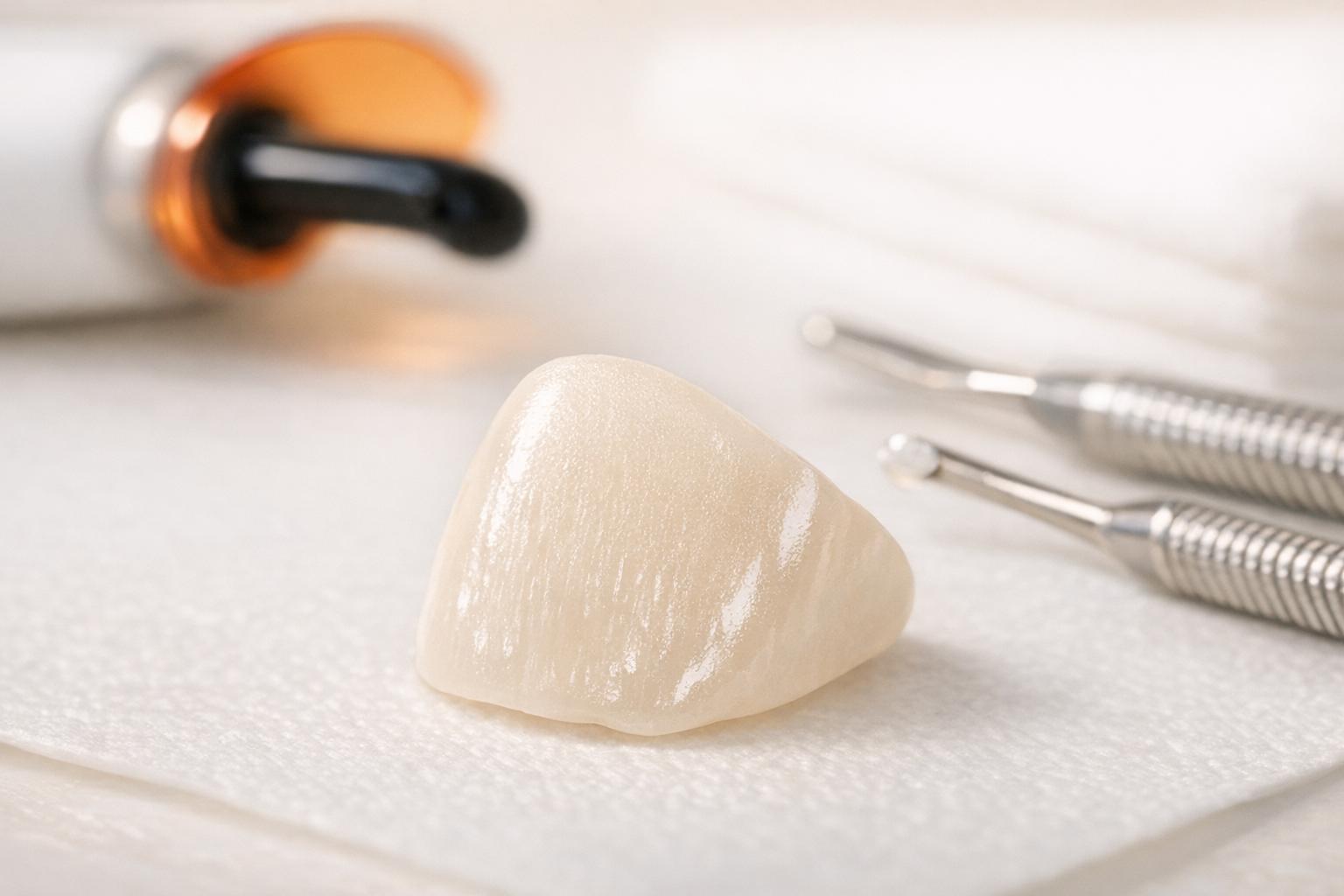
When porcelain veneers fail, it’s often due to preventable mistakes during bonding or patient habits. Veneer bonding is a precise process, and errors – like moisture contamination, poor surface prep, or using low-quality materials – can cause veneers to debond prematurely. Common patient factors, such as teeth grinding or poor oral hygiene, also play a role in reducing veneer lifespan.
Here’s what you need to know:
- Key Causes of Bonding Failures:
- Moisture contamination (e.g., saliva during bonding).
- Incorrect etching (over-etching or under-etching).
- Poor tooth preparation or insufficient enamel preservation.
- Use of subpar materials prone to degradation.
- Patient Habits That Affect Veneers:
- Teeth grinding can lead to fractures or debonding.
- Poor oral hygiene increases risks of decay and gum disease.
- Misaligned bites or excessive chewing force can damage veneers.
- Preventing Failures:
- Proper isolation (e.g., rubber dam) and high-quality materials.
- Regular oral hygiene and avoiding hard or sticky foods.
- Nightguards for patients who grind their teeth.
Correct techniques and consistent care can extend veneer lifespan to 10–15 years or more. If issues arise, consult a dentist instead of attempting DIY fixes.
Three Common Reasons Bonded Restorations Fail
Why Veneer Bonding Fails
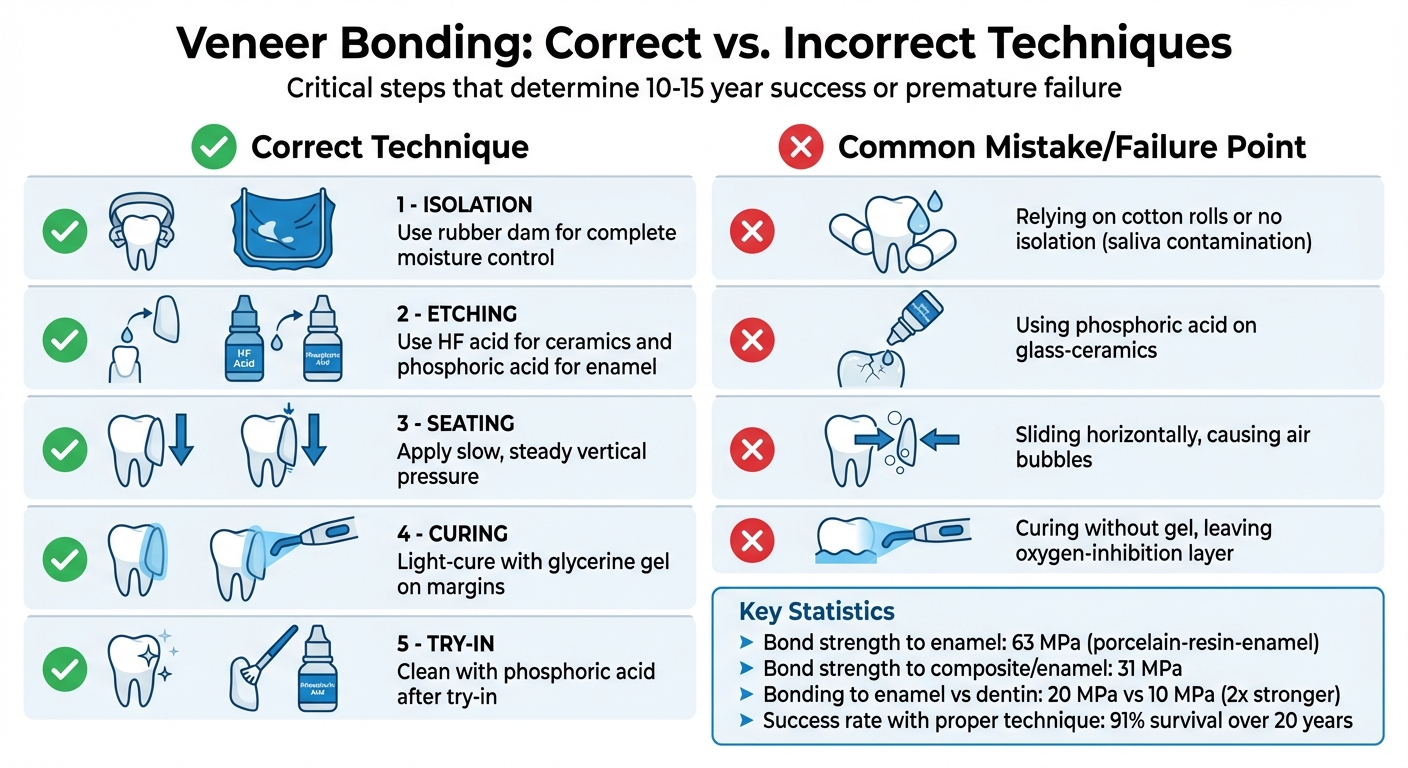
Veneer Bonding: Correct Techniques vs Common Mistakes That Cause Failures
Veneer bonding can fail due to technical mistakes, poor preparation of the tooth surface, or the use of low-quality materials. These issues explain why some veneers debond within just 4 to 12 months after resin cementation [3], while others last significantly longer. Let’s explore these failure points in more detail.
Dorothea Cohen, a well-known dental care author, highlights the complexity of veneer bonding:
Veneer bonding is more challenging than preparation and impression.
Incorrect Bonding Methods
Getting the bonding process right is critical. One of the biggest culprits behind failure is moisture contamination. If saliva, blood, or gingival crevicular fluid touches the prepared surface, it can weaken the adhesive bond significantly [1]. This is why using a rubber dam for proper isolation is non-negotiable.
Etching errors are another common problem. Over-etching for longer than 15 seconds can collapse enamel rods, making it harder for the resin to penetrate. On the other hand, under-etching results in weak retention [3]. Additionally, using the wrong etching agent – like phosphoric acid instead of hydrofluoric acid on glass-ceramics – fails to create the necessary surface roughness [3].
The application technique also plays a big role. Veneers should be seated with steady vertical pressure to avoid trapping air bubbles, which can lead to discolouration, fractures in the porcelain, or even complete debonding [1]. Insufficient light-curing or skipping the use of glycerine gel during curing can leave an oxygen-inhibition layer, compromising the bond at the margins [8].
| Step | Correct Technique | Common Mistake (Failure Point) |
|---|---|---|
| Isolation | Use a rubber dam for complete moisture control | Relying on cotton rolls or no isolation (saliva contamination) |
| Etching | Use HF acid for ceramics and phosphoric acid for enamel | Using phosphoric acid on glass-ceramics |
| Seating | Apply slow, steady vertical pressure | Sliding horizontally, causing air bubbles |
| Curing | Light-cure with glycerine gel on the margins | Curing without gel, leaving an oxygen-inhibition layer |
| Try-in | Clean with phosphoric acid after the try-in | Bonding directly after the try-in with saliva residue |
Poor Tooth Surface Preparation
The condition of the tooth surface is just as important as the bonding technique. Preserving enamel is crucial because the bond strength of the porcelain–resin–enamel complex is around 63 MPa, compared to just 31 MPa when bonding to composite and enamel alone [4]. As Associate Professor Tariq F. Alghazzawi points out:
The amount of preserved enamel layer plays a paramount role in the survival and success rates of veneers.
Tooth preparation creates a "smear layer" made of inorganic debris. If this layer isn’t removed properly during etching, the adhesive won’t penetrate the dentinal tubules effectively, which weakens the bond [9]. The challenge increases when the preparation reaches the dentin, as bonding to dentin is less predictable and more prone to long-term degradation [9].
Substandard Materials
Even with perfect technique and preparation, poor-quality materials can doom the bonding process. Adhesives with overly hydrophilic resin monomers allow water to move through the bonded interface, leading to resin leaching and bond breakdown over time [9]. Methacrylate-based resin monomers, in particular, are vulnerable to degradation by salivary enzymes like esterases [9].
Storage conditions also matter. Bonding agents that are exposed to high temperatures or improperly stored may lose their effectiveness before they’re even used [3]. Sometimes, bonding failures occur not due to the dentist’s skill, but because the materials were compromised beforehand.
Choosing the right material for the job is equally important. Feldspathic porcelain, for example, has a flexural strength of just 60–70 MPa, making it prone to fractures in high-stress areas. In contrast, lithium disilicate glass-ceramics (around 450 MPa) and zirconia (approximately 1,200 MPa) offer much greater durability [5]. Simplified one-bottle adhesive systems and self-adhesive cements, while convenient, often have lower bond strengths and are more vulnerable to hydrolytic degradation compared to multi-step systems [8].
Christopher O’Connor and Dimitrios Gavriil highlight the importance of proper surface treatment:
The stability of silane added in a universal primer may be negatively affected by the combined acidic monomers (for example, MDP); thus, surface pre-treatment with a sole-silane primer… has been recommended to improve bond strengths.
Patient Factors That Affect Bonding
While technical precision is key to successful veneer bonding, patient habits play a huge role in determining how long that bond holds up. Even the most expertly applied veneers can fail if patients don’t take proper care or subject their veneers to undue stress. Let’s dive into some common habits that can compromise veneer bonding.
Teeth Grinding and Clenching
Bruxism, or teeth grinding, puts extreme pressure on veneers, especially in areas with thinner enamel like the incisal edge or cervical third. This stress can lead to cracks, wear, or even debonding. Research shows that bruxism can lower the success rate of cosmetic veneers by as much as 60%, with fractures and debonding incidents being significantly more common in patients with this habit [5][10].
To combat this, protective measures such as wearing a custom nightguard are essential. High-strength materials like lithium disilicate or zirconia are also better suited to withstand the effects of grinding. Addressing underlying causes, such as stress, and scheduling regular dental check-ups to catch early signs of wear can make a big difference.
Poor Oral Hygiene
Neglecting oral hygiene can severely impact the lifespan of veneers. While veneers themselves are artificial, the natural tooth structure underneath remains vulnerable to decay. Poor cleaning habits can lead to gum disease, gum recession, and decay around veneer margins, which compromises the bond [7][11].
With proper care, porcelain veneers typically last 10 to 15 years, while composite veneers may last around five years. Brushing, flossing, and using an alcohol-free mouthwash are vital to prevent plaque buildup around veneer edges. Simple habits like rinsing with water after meals and cutting back on sugary foods can also help maintain oral health and protect the veneers.
Bite Problems and Excessive Chewing Force
Misaligned bites can create uneven pressure on veneers, making them more prone to debonding or breakage. For instance, an edge-to-edge bite or other misalignments can exert excessive force on the veneers. Poorly fitted veneers may also disrupt the natural bite, leading to discomfort and uneven chewing forces.
Frequent biting on hard objects or favouring one side while chewing adds to the stress. Studies reveal that all-ceramic veneers chip in about 13% of cases over three years and 15% over five years [6].
"Fractures can be reduced by evaluation of occlusion immediately after cementation and through the use of high-strength veneer materials."
Associate Professor Tariq F. Alghazzawi highlights the importance of assessing occlusion after bonding. Identifying and correcting misalignments early can prevent unnecessary force and chipping [3][6]. For patients with severe bite issues, clear aligners may be recommended before placing veneers to create a more stable foundation. Additionally, wearing a nightguard and avoiding hard foods are practical steps for those prone to clenching or heavy chewing.
sbb-itb-2be92ed
Preventing and Fixing Bonding Failures
Using Proper Techniques and Quality Materials
Getting veneers to bond successfully isn’t just about sticking them on – it’s about precision and quality. Bonding directly to enamel can actually double the shear strength (20 MPa compared to 10 MPa) [5]. With the right techniques and materials, veneers have an impressive survival rate of 91% over 20 years [4][5].
"The amount of preserved enamel layer plays a paramount role in the survival and success rates of veneers." – Associate Professor Tariq F. Alghazzawi, Taibah University [5]
One key step is ensuring isolation with a rubber dam to prevent contamination [1]. For thin veneers, light-cure resin cements are often the go-to choice because they offer better shade stability and give you a longer working time before curing [1]. For etching, lithium disilicate requires 20 seconds, while feldspathic porcelain needs a longer duration – 60 to 90 seconds [5]. After bonding, it’s crucial to check the occlusion right away to address any high spots that could lead to ceramic fractures [5]. Beyond the technical steps, regular patient care plays a huge role in long-term success.
Maintaining Good Oral Hygiene
Daily maintenance is essential to protect both the veneer and the natural tooth underneath. Use a soft-bristled toothbrush with non-abrasive fluoride toothpaste to avoid scratching the veneer surface [7]. Alcohol-free mouthwash is a safer choice since alcohol can weaken some bonding agents over time. Visiting your dentist every six months for professional cleaning ensures that hard-to-reach areas stay clean and any minor bonding issues are caught early.
Small changes in your diet can also make a big difference. Instead of biting directly into hard foods like apples or carrots, cut them into smaller pieces. To avoid staining, sip beverages like coffee, tea, or red wine through a straw, which helps maintain the veneers’ appearance and bond.
Addressing Individual Patient Needs
Customising care based on individual habits and risks can prevent problems down the line. For example, patients who grind their teeth should wear custom-fitted nightguards to protect their veneers from excessive force.
If a veneer becomes loose or falls off, resist the urge to fix it yourself with household glues. Instead, store the veneer in a secure container and contact your dentist right away [7]. The dentist will determine whether the issue stems from a bonding error, which might allow for reattachment, or from tooth decay, which could require a crown instead [2]. Professional re-bonding involves carefully cleaning the area, removing any old cement, and preparing both surfaces before applying specialised dental adhesive [7]. For minor chips or cracks, a colour-matched resin composite can often do the trick, but severe damage usually means replacing the veneer entirely [7].
Conclusion
Achieving long-lasting veneer bonding relies on precise techniques, high-quality materials, and consistent care. Preserving enamel is especially important, as bonding to enamel provides nearly twice the strength compared to bonding to dentin (around 20 MPa versus 10 MPa) [5]. Attention to detail, proper isolation, and timely occlusal adjustments are key to ensuring veneers remain durable over time [4][5].
To maintain your veneers, stick to non-abrasive toothpaste, avoid excessive force, and schedule regular six-monthly dental check-ups. If you grind your teeth or have bite issues, a custom night guard can help prevent potential damage.
Individual care is just as crucial as technical expertise. As Smile Art Lab aptly puts it:
Veneer preparation and bonding is more than a clinical procedure; it’s an art form guided by precision, planning, and proven technique.
Most bonding failures arise from preventable factors like contamination during placement, poor surface preparation, or unaddressed patient habits. With expert guidance and a tailored treatment plan, these risks can be greatly reduced. If you notice discomfort, looseness, or any changes in your veneers, consult a professional rather than trying to fix the issue yourself.
For advanced care and personalised cosmetic dentistry, Complete Smiles Bella Vista provides expert services, including porcelain veneers. Dr. James Hanna and his team focus on creating customised treatment plans that cater to each patient’s unique needs, ensuring the best possible results for your smile.
FAQs
Why do veneers sometimes fail earlier than expected?
Veneers can sometimes fail earlier than expected, and the reasons usually fall into a few categories. Poor bonding techniques – like insufficient adhesive application or improper tooth preparation – can compromise their durability. Then there are material problems, such as veneers chipping or cracking under pressure. On top of that, patient habits like clenching, grinding (also known as bruxism), or neglecting oral hygiene can significantly shorten their lifespan. Over time, factors like exposure to moisture or bacterial activity can weaken the bond between the veneer and the tooth.
To reduce the chances of veneer failure, it’s essential to maintain strong oral hygiene habits, address issues like grinding (a night guard can help), and ensure the veneers are applied using modern, evidence-based methods by a skilled dentist. If you’re thinking about getting veneers or are facing problems with the ones you already have, it’s a good idea to consult an experienced dental professional for advice tailored to your situation.
What can I do to stop my veneers from coming loose?
To keep your veneers securely in place, it all starts with proper bonding. The tooth surface needs to be thoroughly cleaned, free of plaque, and carefully prepared to ensure a strong attachment. Dentists rely on specialised adhesives and precise curing techniques to create a firm, lasting bond between the veneer and your tooth.
Maintaining good oral hygiene is just as important for their longevity. Brush your teeth twice a day using a non-abrasive fluoride toothpaste, floss gently, and steer clear of biting down on hard foods or using your teeth to open objects. Regular dental check-ups play a key role too, as they allow your dentist to monitor your veneers and address any issues before they escalate. If you play sports, wearing a mouthguard can provide extra protection against accidental damage.
If you have concerns about your veneers or need advice tailored to your situation, consult a qualified dentist. The team at Complete Smiles Bella Vista can help ensure your veneers are crafted and cared for to stand the test of time.
What should I do if my veneer feels loose or falls off?
If your veneer comes loose or falls off, the first step is to carefully find it and rinse it with water to clear away any debris. Resist the urge to try and reattach it yourself – this could harm both the veneer and your tooth. Instead, to protect the exposed tooth temporarily, you can apply dental wax or even sugar-free chewing gum.
In the meantime, steer clear of hard, sticky, or chewy foods, as these can cause additional damage to the tooth. Reach out to your dentist as soon as you can to have the veneer professionally reattached or replaced. Acting promptly can help avoid further issues and keep your smile looking its best.
Related Blog Posts
- 5 Essential Tips for Maintaining Porcelain Veneers
- Chemical Adhesion in Dental Bonding: How It Works
- What to Do if Veneers Fall Off
- In-Depth Guide to Veneer Bonding Protocols
Important Notice: Any surgical or invasive procedure carries risks. Before proceeding, you should seek a second opinion from an appropriately qualified health practitioner.
Individual results may vary. The information provided in this article is for educational purposes only and does not constitute medical advice.
Checkout Related Blogs




Get in touch with us
For more information, call us now to start feeling better. Or fill the form below to make appointment
The Latest News from Complete Smiles
How to Clean Clear Plastic Retainers
Checklist for Choosing Wearable Dental Devices
Checklist for Choosing Cloud AI Platforms in Dentistry

Complete Smiles Bella VistaAccepts All Major Health Funds, Including





