





5 Common Complications After Crown Lengthening

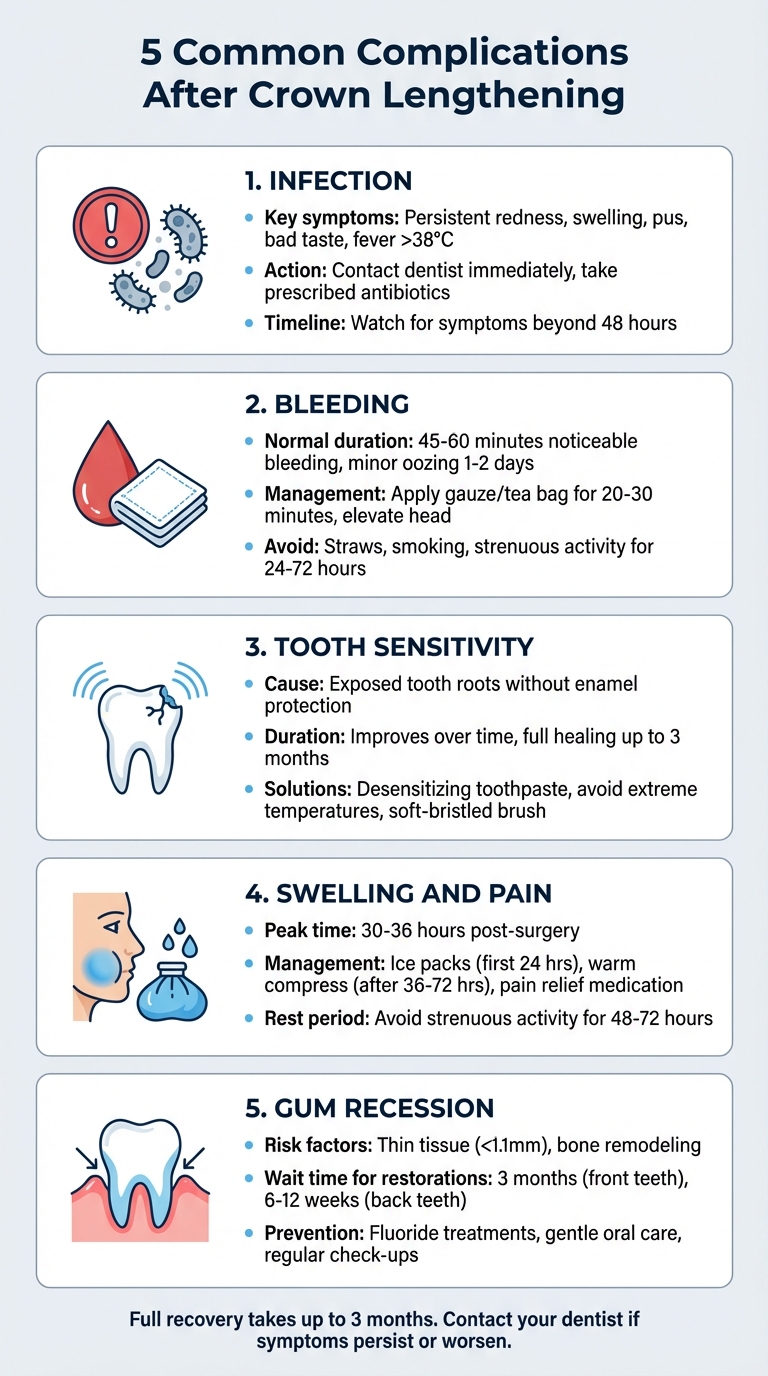
Crown lengthening is a dental procedure that can improve tooth structure for restorative treatments or enhance the appearance of a gummy smile. While it’s generally safe, some complications may arise during recovery. Here’s what you need to know:
- Infection: Look for signs like persistent redness, swelling, pus, bad taste, or fever. Prompt treatment with antibiotics or antiseptic rinses can help.
- Bleeding: Mild bleeding is normal, but heavy or prolonged bleeding needs attention. Avoid activities like using straws or smoking to prevent disrupting blood clots.
- Tooth Sensitivity: Exposed tooth roots can cause discomfort. Use desensitising toothpaste, avoid extreme temperatures, and maintain gentle oral care.
- Swelling and Pain: Common after surgery but manageable with ice packs, pain relief, and rest. Contact your dentist if symptoms worsen after a week.
- Gum Recession: Gums may recede, exposing more tooth root, which can increase decay risk or affect appearance. Regular dental check-ups and fluoride treatments can help.
Recovery takes up to three months, so follow aftercare instructions closely. If you notice persistent symptoms or complications, consult your dentist immediately.
5 Common Complications After Crown Lengthening Surgery
The No-Nonsense Guide to Simple & Complex Crown Lengthening
sbb-itb-2be92ed
1. Infection
Infection can be a serious complication following crown lengthening surgery, occurring when bacteria enter the surgical site. While it’s normal to experience some redness, swelling, and tenderness within the first 48 hours, symptoms persisting beyond this timeframe might indicate an infection [10].
Key warning signs include worsening pain, white or yellow pus around the incision, a persistent bad taste or foul breath, a fever exceeding 38°C, or swollen neck glands – suggesting the infection may be spreading [10]. Gums that appear unusually red, swollen, or pale can also signal infection [9].
"If not treated promptly, an infection can become more serious and affect both your oral health and overall well-being." – Cypress Periodontics [10]
Early detection is essential. If you notice these symptoms, contact your dentist immediately. Follow your prescribed antibiotic course and consider rinsing your mouth with an antiseptic solution or a saltwater mix (half a teaspoon of salt in a glass of warm water) [10]. Refrain from smoking for at least 7–10 days, as it can hinder healing and increase infection risk [5].
Keep a close eye on your recovery. If redness and swelling persist or worsen beyond a week post-surgery, seek professional care. In severe cases, especially outside regular hours, visiting the emergency department of your nearest hospital may be necessary [11].
2. Bleeding
Experiencing mild bleeding after crown lengthening is completely normal. Since the procedure involves cutting and reshaping gum tissue – and sometimes the underlying bone – a certain amount of bleeding is expected. Most people find that noticeable bleeding stops within 45 to 60 minutes after the surgery, though minor oozing can continue for a day or two [4].
"For the next few days following your surgery, some minor oozing may occur and is no cause for alarm." – Fiandaca Periodontics [2]
Certain activities can disrupt blood clots and prolong bleeding during the first 24–72 hours. These include strenuous exercise, consuming hot foods or drinks, and actions that create suction, like using straws, spitting, or probing the surgery site [5][6]. Smoking and alcohol consumption can also interfere with proper clotting, so it’s best to avoid these as well.
If bleeding occurs, you can manage it by applying firm pressure to the area with a moistened gauze pad or a tea bag. Tea bags are especially helpful because tannic acid can constrict blood vessels and reduce bleeding. Hold it in place for 20–30 minutes without frequently checking. While resting, keep your head elevated with extra pillows, and avoid strenuous activities for at least two to three days.
However, if heavy bleeding continues despite applying pressure, or if it persists beyond 48 hours, it’s important to contact your dentist. Pay attention to the colour of the blood – bright red blood that doesn’t darken over time may indicate active bleeding that requires professional attention [13].
Keep an eye on these symptoms, and then move on to learn about the next possible complication.
3. Tooth Sensitivity
Tooth sensitivity is a frequent issue following crown lengthening. The procedure involves removing gum tissue to expose more of the tooth, which can leave the tooth roots uncovered. Unlike the crown of the tooth, these roots lack enamel, making them more reactive to external triggers like temperature or sweetness [3].
"As the gum shrinkage will reveal more of the root of the tooth, it is very likely you will experience sensitivity to hot and cold or sweet food and drinks." – Cambridge University Hospitals NHS Foundation Trust [3]
The exposed dentin in these roots contains tiny tubules that lead directly to the tooth’s nerve. This connection makes the tooth particularly sensitive to changes in temperature, sugary foods, and even pressure [16]. Sensitivity often starts within the first few days after the procedure and generally improves over time, though full gum healing can take up to three months [5]. Proper care can help ease discomfort during this period.
Here are some tips to manage sensitivity:
- Use desensitising toothpaste: Look for products with potassium nitrate or stannous fluoride, which can help block pain signals. For extra relief, apply a small amount directly to the sensitive area before going to bed [15].
- Stick to lukewarm foods and drinks: Extreme temperatures can trigger pain, so avoid very hot soups, cold beverages, or even breathing in cold air through your mouth [17].
- Choose a soft-bristled toothbrush: Hard bristles or abrasive whitening toothpastes can worsen irritation. A gentle approach is key to protecting the exposed dentin.
- Limit acidic and sugary foods: Items like citrus fruits, soft drinks, and sweets can aggravate sensitivity, so it’s best to reduce their intake.
If your sensitivity doesn’t improve or worsens after a few weeks, reach out to your dentist. They may recommend professional fluoride treatments or other solutions to help manage the discomfort.
4. Swelling and Pain
Swelling and pain are common experiences following crown lengthening surgery. These symptoms arise due to the reshaping and manipulation of gum tissue – and sometimes the bone – during the procedure [2][5][18]. Typically, swelling and discomfort peak within the first 30 to 36 hours post-surgery before gradually subsiding [20][21].
Managing pain effectively is a key part of recovery. It’s a good idea to start pain relief before the anaesthetic wears off to ease the transition and minimise discomfort [2][21]. Your dentist may suggest taking Ibuprofen (400mg–800mg every six hours), but be cautious not to exceed 2,400mg within 24 hours [2][21].
To reduce swelling during the first 24 hours, use an ice pack on the surgical area. Apply it for 20 minutes, then remove it for 20 minutes, always placing a cloth between the ice and your skin [2][14][20]. After 36 to 72 hours, switch to a warm, moist compress to help bring down swelling [5][20][21]. Sleeping with your head elevated can also reduce facial pressure and aid healing [2][14][21].
Avoid any strenuous physical activity, such as heavy lifting or intense exercise, for at least 48 to 72 hours. Increased heart rate and blood pressure can aggravate swelling and may even lead to bleeding [5][6][18]. Stick to soft, lukewarm foods, and avoid anything spicy, acidic, or crunchy, as these can irritate the healing tissues [14][19][20].
If swelling or pain worsens or doesn’t improve after a week, contact your dentist. Persistent redness, swelling beyond seven days, fever, or severe pain that doesn’t respond to medication could indicate an infection and should be addressed promptly [4][11][19].
5. Gum Recession
Gum recession is a common part of the healing process after surgery, though how it unfolds can vary significantly from one person to another. As the bone and soft tissues adjust post-surgery, the gum line might shift, sometimes revealing more of the tooth root than expected. This is often linked to changes in the bone structure, such as crestal height resorption [8].
The type of gum tissue you have plays a big role in the outcome. People with thinner tissue (less than 1.1 mm) are more likely to experience recession, while those with thicker, more fibrous tissue may see some level of regrowth [8][24].
"Postoperative healing and maturation of the periodontal tissues after surgical crown lengthening involves bone remodeling… with possible crestal height resorption and corresponding soft tissue changes in the form of regrowth, stability, or recession" [8].
This unpredictability makes it important to monitor gum health closely during recovery.
When recession occurs, it exposes the root surfaces, which can increase the risk of decay and affect the appearance of your smile [22][23]. To address this, your dentist might suggest fluoride treatments to shield the exposed dentinal tubules. A gentle oral care routine with a soft-bristled toothbrush is also key to preventing further irritation or damage [23][24].
Timing is everything when it comes to restorations. For front teeth, it’s best to wait three months, while for back teeth, six to twelve weeks is ideal to allow the gum line to stabilise [8][1]. If the recession becomes a cosmetic issue or causes ongoing sensitivity, a connective tissue graft might be the best solution. This procedure is one of the most reliable ways to restore the gum line [23][24]. Combined with follow-up care, these steps can help ensure the best possible results over time.
Routine dental visits are particularly important, especially since gum recession is quite common in people over 65 [23]. During these check-ups, your dentist can apply fluoride treatments and perform professional cleanings to protect against root decay and support gum health. This ongoing care is an integral part of managing potential complications from crown lengthening.
Conclusion
Crown lengthening is a reliable procedure with outcomes that are generally consistent. However, being aware of potential complications, such as gum recession or bone loss, is crucial for the success of restorative treatments like crowns and implants [5][7].
To ensure the best results, following aftercare instructions is non-negotiable. This includes sticking to a soft food diet, avoiding intense physical activity, and steering clear of anything that could interfere with the healing process [5][6]. While initial healing takes a few weeks, it can take up to three months for the gum line to fully stabilise [6][25][12]. If you notice persistent swelling, redness lasting beyond a week, fever, or any signs of pus, it’s critical to contact your dentist right away [4].
"Crown lengthening is a stable procedure, and the gingival margin does not move significantly after surgery." – Brägger et al., Researchers [12]
Understanding the financial side of the procedure is also helpful. In Australia, crown lengthening typically costs between A$1,000 and A$3,000, depending on the complexity of the case [1]. For those in Bella Vista, Complete Smiles Bella Vista provides tailored post-operative care and comprehensive support to ensure smooth recovery.
FAQs
When should I call my dentist after crown lengthening?
If you notice persistent or heavy bleeding, symptoms of infection like pronounced swelling, redness, fever, or pus, or if your pain intensifies or fails to improve within 48 hours of recovery, contact your dentist immediately. These could be signs of complications that need urgent care.
How long do I need to wait before getting a crown or veneer?
When undergoing crown lengthening, it’s generally advised to wait around 4 to 12 weeks before placing a crown or veneer. This waiting period is crucial to ensure that the gums and bone have enough time to heal completely. However, the exact timing can differ based on how well you heal and your overall oral health. To get a precise timeline tailored to your needs, it’s best to consult your dentist.
Will crown lengthening change how my smile looks long term?
Crown lengthening can bring lasting changes to the look of your smile, especially when it’s done for cosmetic reasons, such as reducing a "gummy smile." By reshaping the gum tissue and bone, the procedure exposes more of the tooth’s surface. The outcome is generally permanent, improving both the functionality and appearance of your smile.
Related Blog Posts
- Research on Crown Lengthening Benefits
- How Dentists Assess Crown Lengthening Candidates
- What Is Crown Lengthening?
- 5 Tips for Reducing Swelling After Laser Gum Therapy
Important Notice: Any surgical or invasive procedure carries risks. Before proceeding, you should seek a second opinion from an appropriately qualified health practitioner.
Individual results may vary. The information provided in this article is for educational purposes only and does not constitute medical advice.
Checkout Related Blogs




Get in touch with us
For more information, call us now to start feeling better. Or fill the form below to make appointment
The Latest News from Complete Smiles
How to Clean Clear Plastic Retainers
Checklist for Choosing Wearable Dental Devices
Checklist for Choosing Cloud AI Platforms in Dentistry

Complete Smiles Bella VistaAccepts All Major Health Funds, Including





