





Study: Aesthetic Outcomes of Tooth Replacement Methods
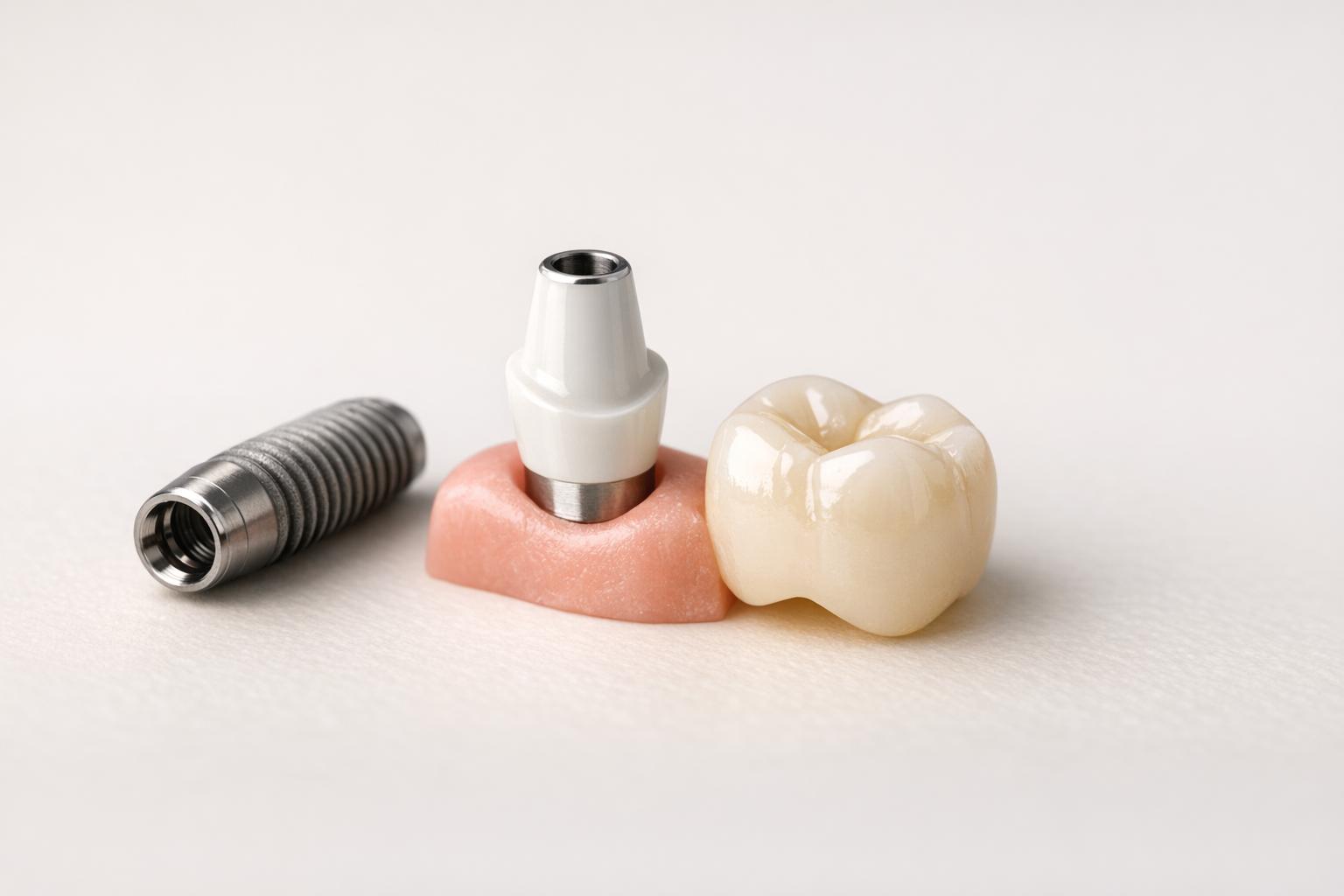
Tooth replacement isn’t just about function anymore – it’s about how natural and pleasing the results look. This study dives into the different methods used for replacing teeth, focusing on aesthetics and patient satisfaction. Key findings include:
- Immediate vs Early Placement: Immediate implants can save time but need careful planning, while early placements are safer with fewer complications.
- Single vs Multiple Replacements: Single implants often look better because natural teeth support gum contours, but replacing multiple teeth can be harder to perfect.
- Material Matters: Zirconia abutments generally look more natural than titanium, especially for thin gums, with pink-veneered zirconia offering the best match.
Patients often rate their outcomes highly, even when clinical measures suggest room for improvement. The study emphasises the importance of tailored planning, from implant timing to material choice, for achieving the best visual and long-term results.
Implants in the aesthetic zone, what is the best timing? | Prime Time Debate
sbb-itb-2be92ed
Research Findings on Tooth Replacement Methods
Recent research highlights how factors like restoration type, implant timing, and support methods shape both aesthetic results and patient satisfaction.
Immediate vs Early Implant Placement
The timing of implant placement after a tooth is extracted plays a big role in aesthetic outcomes. Immediate placement (Type I) is done on the same day as the extraction, while early placement is performed either 4–8 weeks (Type II) or 12–16 weeks (Type III) after the extraction. Each method has its own set of benefits and risks.
Between 2015 and 2021, a multicentre randomised controlled trial led by Stefan P. Hicklin at the University of Geneva studied 60 patients, comparing immediate placement with early placement (6–8 weeks) using bone-level-tapered implants. After 12 months, the immediate placement group showed a slight buccal gain (0.10 ± 0.80 mm), whereas the early placement group experienced a small recession (0.13 ± 0.57 mm). Both groups saw improvements in papilla height (0.53 mm mesial, 0.43 mm distal) and an increase in the Papilla Fill Index, from 1.6 to 2.0 [7].
Immediate placement can shorten treatment time but requires careful patient screening. It works best with a thick gingival phenotype and at least 1 mm of buccal bone thickness to reduce the risk of recession [6]. On the other hand, early placement allows for full soft tissue coverage and boasts survival rates of 95%–100%, with fewer complications. At 12 months, early placement had a 0% biologic complication rate, compared to 6.9% for immediate placement [7].
Apart from timing, the type of prosthetic support also plays a key role in achieving aesthetic success.
Implant-Supported vs Tooth-Supported Prostheses
The number of teeth being replaced significantly affects aesthetic predictability. Single implant crowns tend to perform better, with 68% reaching clinically acceptable Pink Esthetic Scores (PES), compared to implant-supported fixed partial dentures, which achieved only 37%. This is largely because single crowns benefit from the support of adjacent natural teeth [2][3]. For adjacent multiple single crowns, the success rate was in the middle, with 52% achieving acceptable aesthetics [3].
"Implant-supported fixed restorations in the esthetic zone have an overall positive impact on OHRQoL. However, patient satisfaction from this treatment reduced as the number of missing teeth replaced by implants was increased."
– Rishi S. Ramani, Journal of Esthetic and Restorative Dentistry [1]
Replacing multiple teeth presents additional challenges, especially in achieving consistent inter-implant soft tissue contours. As the number of missing teeth increases, restoring aesthetics in the aesthetic zone becomes progressively more difficult and less predictable [2].
How Implant Abutment Materials Affect Aesthetics
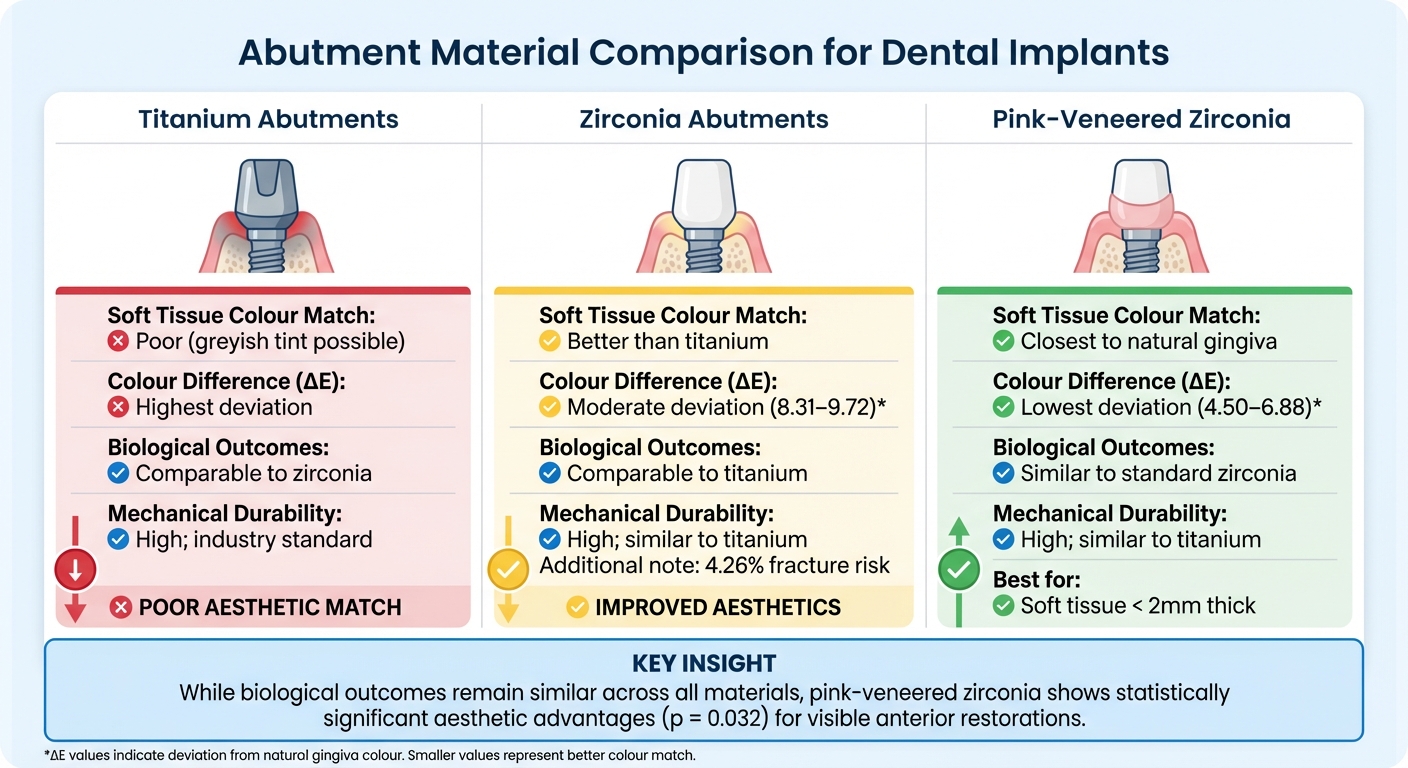
Dental Implant Abutment Materials Comparison: Titanium vs Zirconia vs Pink-Veneered Zirconia
When it comes to achieving a natural-looking dental restoration, the choice of abutment material is just as important as implant timing and prosthesis design. The abutment, which connects the implant to the crown, plays a key role in determining how the surrounding soft tissue appears. Common materials include titanium, zirconia, and pink-veneered zirconia, each affecting the final aesthetic in unique ways.
Titanium abutments, while durable, can sometimes create a greyish tint in the soft tissue, especially when the gum is thin. On the other hand, zirconia abutments tend to blend more seamlessly with natural gingiva. A meta-analysis highlighted this difference, showing that zirconia provides significantly better soft tissue colour outcomes compared to titanium [8].
"The peri-implant soft tissue around zirconia demonstrated a better colour match to the soft tissue at natural teeth than titanium."
– Anton Sculean, Department of Periodontology, University of Bern [9]
For patients with soft tissue less than 2 mm thick, pink-veneered zirconia offers the best aesthetic results. Research from the University of Zürich found that pink-veneered zirconia achieved a lower colour difference (ΔE: 4.50–6.88) compared to standard white zirconia (ΔE: 8.31–9.72), with the difference being statistically significant (p = 0.032) [10].
Abutment Material Comparison
| Feature | Titanium Abutments | Zirconia Abutments | Pink-Veneered Zirconia |
|---|---|---|---|
| Soft Tissue Colour Match | Poor (greyish tint possible) | Better than titanium | Closest to natural gingiva |
| Colour Difference (ΔE) | Highest deviation | Moderate deviation | Lowest deviation (4.50–6.88) [10] |
| Biological Outcomes | Comparable to zirconia [8] | Comparable to titanium [8] | Similar to standard zirconia |
| Mechanical Durability | High; industry standard | High; similar to titanium | High; similar to titanium |
While biological outcomes, such as marginal bone levels and soft tissue health, remain similar across materials, the choice of abutment material has a direct impact on aesthetics. Long-term studies (3 to 5 years) confirm no significant differences between titanium and zirconia in terms of biological health markers like bleeding on probing or soft tissue recession [8].
Ultimately, the decision should be guided by aesthetic priorities, especially when dealing with visible areas like the anterior region. These findings emphasise the importance of considering every detail – from timing to material selection – to achieve the best possible aesthetic results.
Patient Satisfaction and Aesthetic Perceptions
When it comes to dental restorations, patient satisfaction doesn’t always align with clinical evaluations. Studies reveal that patients often express high satisfaction with their restorations, even when those restorations fall short in clinical assessments. For instance, a prospective study found that 48% of adjacent multiple single crowns and 63% of implant-supported fixed partial dentures were rated as clinically unacceptable based on Pink Esthetic Scores (PES). Yet, these lower scores showed no link to patient satisfaction [3]. This disconnect begs the question: what aesthetic elements matter most to patients?
For many patients, tooth colour and shape top the list of priorities. Research indicates that 56.2% of adult dental patients are dissatisfied with tooth colour [12], making it a leading motivator for seeking cosmetic treatments. Although the gingival frame also plays a role in aesthetics, patients are generally more lenient about minor gum discrepancies than dentists [3][11].
A long-term study spanning 10–15 years revealed that single dental implants scored an average satisfaction of 8.6 out of 10. However, when broken down, the peri-implant mucosa rated lower at 7.1 out of 10, compared to the crown’s impressive 9.2 out of 10 [13]. This suggests that while patients value the functional and visual appeal of the tooth replacement, the surrounding soft tissue often falls short aesthetically.
"Patient satisfaction from this treatment reduced as the number of missing teeth replaced by implants was increased."
– Vincent Bennani DDS, PhD, Department of Oral Rehabilitation, University of Otago [1]
These findings underline how aesthetic predictability diminishes as the complexity of the case increases. Single-tooth replacements typically deliver more consistent aesthetic results because adjacent natural teeth provide vital support for gum contours and papilla (the triangular gum tissue between teeth). However, when multiple adjacent teeth are replaced with implants, achieving a harmonious smile becomes more difficult, often leading to lower patient satisfaction [1][2]. To address this, clinicians are encouraged to perform an Esthetic Risk Profile (ERP) assessment before treatment. This helps set realistic expectations and ensures patients have a clear understanding of the potential outcomes [3]. By focusing on these patient-centred insights, dental professionals can better plan treatments that balance clinical goals with patient satisfaction.
Long-Term Aesthetic and Clinical Outcomes
The appearance of dental implants over time hinges on maintaining stable marginal bone levels and healthy soft tissues. Research shows that marginal bone loss varies significantly depending on the implant system used. Over a 12-year period, one-piece implant systems demonstrated marginal bone loss of just 0.28 mm, while two-piece systems faced a greater loss of 1.11 mm [14]. This bone loss can influence the soft tissues above it, potentially leading to visible gum recession and unsightly gaps between teeth.
Bone level changes also impact soft tissue aesthetics. Despite measurable changes in bone, alterations to the buccal contour were relatively minor, ranging from 0.29 mm to 0.46 mm [14]. However, when peri-implantitis – characterised by bone loss of 3 mm or more – occurs, the aesthetic consequences are more severe. In a study tracking patients over 10–15 years, 4.4% of single dental implants developed peri-implantitis. These patients reported lower aesthetic satisfaction scores (7.5/10) compared to those with only mild inflammation (8.7/10) [13].
The quality of the surrounding soft tissues also plays a critical role in long-term outcomes. For instance, keratinised tissue widths under 2 mm are linked to increased plaque buildup and inflammation, which can compromise aesthetics over time [15]. Soft tissue grafting to enhance this width has shown better results, with a noticeable reduction in both gingival inflammation (weighted mean difference of 0.863) and plaque levels (weighted mean difference of 0.344) compared to untreated sites [15].
"For long-term esthetic soft tissue stability, sufficient horizontal and vertical bone volume is essential. When deficiencies exist, appropriate hard and/or soft tissue augmentation procedures are required."
Regular maintenance plays a key role in preserving both bone and soft tissue health. Papilla height, which affects the space between teeth, is largely influenced by the clinical attachment level of adjacent teeth. Additionally, avoiding overcontoured emergence profiles near the bone level helps minimise tissue inflammation and recession [16][17]. Routine periodontal check-ups and professional cleanings are essential for monitoring bone levels and soft tissue health, allowing potential issues to be addressed before they compromise the implant’s appearance [14].
Conclusion: Main Findings on Aesthetic Outcomes
Achieving aesthetic success relies heavily on customised treatment planning rather than adopting a universal approach. For single-tooth implants in the aesthetic zone, studies show a 95.5% survival rate after one year, with 56% to 68% of cases meeting clinical standards for Pink Esthetic Scores (PES ≥ 6) [4][3].
When it comes to abutment materials, titanium offers durability but can lead to a greyish tint in thin gum tissues. Zirconia abutments, on the other hand, provide better colour matching but carry a 4.26% fracture risk. Modified titanium abutments with gold or pink tones strike a balance between strength and appearance [5]. This highlights the importance of carefully integrating material selection and implant positioning into the overall treatment plan.
"Implant therapy in the anterior maxilla is considered an advanced or complex procedure and requires comprehensive preoperative planning and precise surgical execution based on a restoration-driven approach."
– ITI Consensus Statement [2]
Precise three-dimensional implant positioning, combined with sufficient bone volume, is crucial for maintaining long-term aesthetic outcomes. When tissue deficiencies are present, augmentation procedures play a key role [2]. Interestingly, while professional assessments using standardised indices often point to suboptimal results, many patients still report high satisfaction with their aesthetic outcomes [3][5].
To achieve predictable results, treatment planning must take into account factors like tissue biotype, bone volume, and aesthetic risk. This approach not only helps manage patient expectations but also guides the selection of the most suitable materials [3][5].
FAQs
Am I suitable for an immediate implant after an extraction?
Immediate implant placement following tooth extraction can be a possibility in some situations. However, factors like the quality of the bone, the condition of the soft tissue, and ensuring primary stability play a critical role in determining its success. Since every case is unique, it’s important to consult your dentist for a tailored evaluation and advice.
Why do single-tooth implants usually look better than multiple implants?
Single-tooth implants tend to deliver superior aesthetic results, largely due to the support they gain from the surrounding natural teeth. This natural tissue support helps achieve more consistent and visually appealing outcomes, particularly in the front of the mouth, where appearance matters most.
Which abutment material looks most natural with thin gums?
Zirconia is known for its ability to closely mimic the appearance of natural teeth, making it an excellent choice for thin gums. Its colour blends seamlessly, reducing the likelihood of discolouration that can sometimes occur with titanium. This makes zirconia a preferred option for those prioritising aesthetics in dental restorations.
Related Blog Posts
- Factors Affecting Long-Term Implant Success
- Studies on Implant Longevity: Key Findings
- Bone Quality in Osseointegration: Research Insights
- How Implant Materials Impact Longevity
Important Notice: Any surgical or invasive procedure carries risks. Before proceeding, you should seek a second opinion from an appropriately qualified health practitioner.
Individual results may vary. The information provided in this article is for educational purposes only and does not constitute medical advice.
Checkout Related Blogs




Get in touch with us
For more information, call us now to start feeling better. Or fill the form below to make appointment
The Latest News from Complete Smiles
How to Clean Clear Plastic Retainers
Checklist for Choosing Wearable Dental Devices
Checklist for Choosing Cloud AI Platforms in Dentistry

Complete Smiles Bella VistaAccepts All Major Health Funds, Including





