





Checklist for Choosing Wearable Dental Devices

Wearable dental devices are transforming oral health by combining advanced technology with everyday dental tools. These devices, such as smart retainers, sensor-equipped mouthguards, and saliva-testing tools, offer features like real-time feedback, in-office vs. remote monitoring, and data insights to help address issues like bruxism, gum disease, and orthodontic progress. To choose the right device, focus on:
- Your Oral Health Needs: Identify goals like reducing teeth grinding, improving brushing habits, or monitoring cavity risk.
- Device Safety: Ensure the device complies with Australian standards (TGA-approved) and check for clinical research backing its effectiveness.
- Comfort and Fit: Custom-fitted devices generally offer better usability and durability compared to generic options.
- Privacy and Security: Verify how your data is collected, stored, and shared, ensuring compliance with Australian privacy laws.
- Budget: Consider upfront costs, ongoing expenses, and potential rebates through your health fund.
Consult your dentist for professional advice and to integrate these devices into your dental care plan.
Identifying Your Oral Health Needs
Assessing Your Dental Goals
Start by defining what you want to achieve for your oral health. Different devices are designed to tackle specific issues, so knowing your goals can help you choose the right tool.
| Dental Issue or Goal | Recommended Device Type | What It Monitors |
|---|---|---|
| Teeth grinding (bruxism) | Sensor-enabled mouthguard | Jaw movement, pressure, grinding patterns |
| Orthodontic progress | Smart retainer or aligner | Daily wear time, usage consistency |
| Cavity and gum disease risk | Saliva monitoring device | pH balance, bacterial activity, hydration |
| Plaque control | Smart toothbrush attachment | Brushing duration, pressure, surface coverage |
| Migraine prevention | Occlusal splint (e.g., NTI-tss Plus) | Reduction of clenching forces |
| Athletic safety | Smart sports mouthguard | Heart rate, body movement, head impacts |
When selecting a device, consider how it fits into your daily routine and whether it meets your treatment needs. Some devices even go beyond dental care. For instance, saliva-based tools are being developed to identify early signs of systemic conditions like diabetes or dehydration [1]. Additionally, occlusal splints such as the NTI-tss Plus are FDA-cleared for reducing migraines and tension headaches caused by clenching [2]. If you have related health concerns, these broader applications might be worth exploring.
Once you’ve chosen a device, the next step is to consult your dentist to make the most of its capabilities.
Consulting Your Dentist
After matching your goals with the right device, it’s critical to have your dentist review the data. Dentists can interpret key patterns, such as changes in saliva pH or grinding activity, within the context of your overall dental history [1].
"These devices, when combined with regular dental visits and proper preventive dentistry, give people a better way to manage their oral health in real time." – Smile Invent [1]
Make sure to bring any wearable data to your dental appointments. This information can guide targeted treatment planning. Devices like smart retainers or custom-fit mouthguards for kids and adults often require professional fitting to ensure they work correctly, so involving your dentist is a must [1][2].
Many clinics, such as Complete Smiles Bella Vista, offer specialised services – including orthodontics and general dentistry – where data from these devices can be seamlessly integrated into personalised care plans.
sbb-itb-2be92ed
Evaluating Device Safety and Effectiveness
Regulatory Compliance in Australia
Before buying a dental device, ensure it complies with Australian standards. The Therapeutic Goods Administration (TGA) oversees the evaluation and monitoring of all medical devices sold in Australia, including dental wearables.
"All medical devices used in dentistry, whether manufactured in Australia or overseas, must comply with the requirements of the Therapeutic Goods Administration (TGA)." – Australian Dental Association [4]
Every device must be listed on the Australian Register of Therapeutic Goods (ARTG) to be legally supplied in Australia. You can verify this by searching the ARTG on the TGA website using the device name, product ID, or sponsor details. Additionally, check if the device adheres to relevant ISO standards, which the TGA often references for dental materials and equipment [4]. Be especially cautious with products purchased online from overseas sellers that haven’t been TGA-approved, as these may pose serious health risks [3].
Once regulatory compliance is confirmed, it’s crucial to assess the clinical evidence supporting the device’s claims.
Reviewing Clinical Evidence
The level of clinical research supporting dental devices varies significantly. For sleep-related devices, such as oral appliances, the evidence is robust. These devices are widely accepted as a first-line treatment for adults experiencing snoring or mild to moderate obstructive sleep apnoea (OSA) [5].
"Appropriate treatment strategies for the use of oral appliances in therapy for SDB require a multi-disciplinary and collaborative setting using evidence-based guidance." – Australian Dental Association [5]
For other devices, such as consumer-grade custom night guards, it’s essential to check whether they were designed by dental professionals and manufactured by qualified dental technicians. While formal clinical trials may not always be available for these devices, this design and production process can serve as a practical indicator of quality [6].
Considering the evidence helps you better weigh the benefits against the risks.
Understanding Potential Risks
Most patients adjust to dental devices within the first month, with approximately 85% adapting during this period [8]. Short-term side effects, such as jaw soreness, dry mouth, and gum irritation, typically subside within two to four weeks. However, long-term use can lead to gradual tooth movement of 0.5 to 1.5mm per year, making regular dental check-ups essential [8].
Particular caution is needed with fixed palatal expanders. Devices like the AGGA and FAGGA, when used on adults, have been flagged by the FDA for causing severe complications, including bone erosion, exposed roots, and tooth loss [7]. Non-custom devices should only be used if prescribed and monitored by a professional.
| Risk Category | Common Symptoms | Typical Timeframe |
|---|---|---|
| Short-term | Jaw soreness, dry mouth, gum irritation | Resolves within 2–4 weeks [8] |
| Long-term | Tooth tipping, bite changes, TMJ clicking | Develops over months to years [8] |
| Severe (fixed devices) | Bone erosion, root exposure, tooth loss | Linked to unapproved expanders [7] |
A Mouthguard That Monitors Your Health
Comparing Features and Practicality
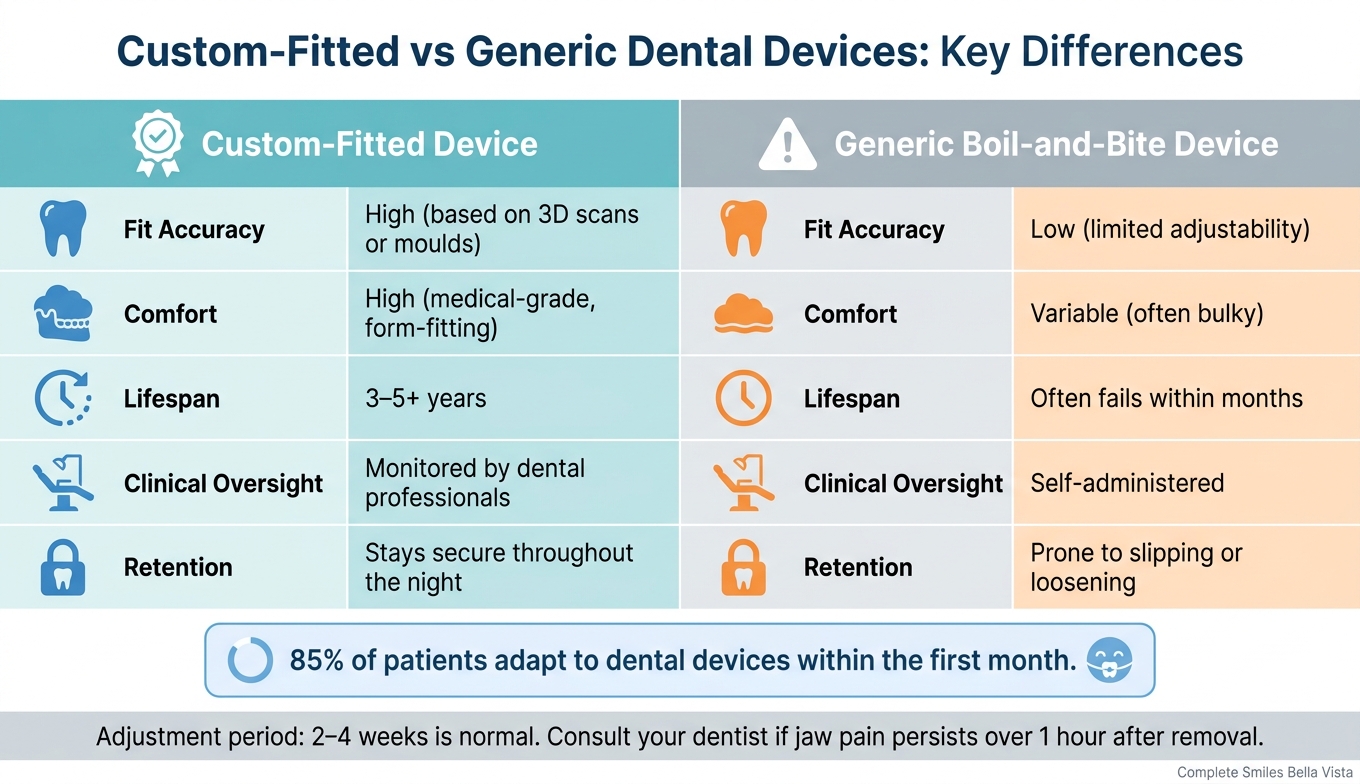
Custom-Fitted vs Generic Dental Devices: Key Differences
Core Features to Look For
Once you’ve confirmed a device’s safety and clinical backing, the next step is to assess how it fits into your daily life. A good device should seamlessly integrate into your routine. Look for features like sensors that monitor bruxism, saliva pH, brushing pressure, and, for orthodontic users, retainer wear-time. Wireless Bluetooth connectivity is another handy feature, allowing the device to sync with a smartphone app. These apps often display data in an easy-to-read format and provide actionable advice based on the information collected [1].
Another key factor to consider is whether the device offers a custom fit for better comfort and usability.
Device Fit and Comfort
Once you’re satisfied with the technical features, it’s time to evaluate how the device feels to use. Custom-fitted devices, crafted from digital scans, generally offer superior comfort and stability compared to generic "boil-and-bite" options. The latter tend to be bulkier and less reliable. Professionally fitted devices can last anywhere from three to five years – or even longer – if properly maintained.
It’s normal to take about two to four weeks to get used to wearing such a device overnight. During the adjustment period, you might notice mild jaw tension or increased saliva production. However, if you experience jaw pain lasting more than an hour after removing the device or if your bite feels off for over two hours, it’s a good idea to consult a general dental professional for adjustments [9][10].
"If the device feels bulky, uncomfortable, or difficult to use, compliance may drop." – Smile Invent [1]
| Feature | Custom-Fitted Device | Generic "Boil-and-Bite" |
|---|---|---|
| Fit Accuracy | High (based on 3D scans or moulds) | Low (limited adjustability) |
| Comfort | High (medical-grade, form-fitting) | Variable (often bulky) |
| Lifespan | 3–5+ years | Often fails within months |
| Clinical Oversight | Monitored by dental professionals | Self-administered |
| Retention | Stays secure throughout the night | Prone to slipping or loosening |
Budget Considerations
After evaluating features and comfort, it’s time to think about costs. Basic smart toothbrush attachments are generally more affordable, while advanced devices with sensors, saliva monitors, and smart retainers sit at the higher end of the price range [1]. In Australia, custom oral appliances usually cost between $1,500 and $3,500, depending on the type of device and your health fund cover [9].
Don’t forget to include ongoing expenses, such as subscription fees for app features or the cost of specialised cleaning solutions. While the upfront cost may seem high, early intervention using monitoring devices could save you from more expensive treatments down the line. It’s also worth checking with your health fund, as some dental devices prescribed for diagnosed conditions may qualify for rebates under extras cover.
Privacy and Data Security
Data Collection and Usage
When evaluating wearable dental devices, it’s not just about cost and comfort – you also need to think about how your data is handled. These devices can collect an extensive range of sensitive information, such as diagnostic images and your medical history, using real-time sensors. This data plays a crucial role in clinical care and supports AI-driven predictive diagnostics[14][15].
Health data is particularly valuable, with healthcare records fetching up to $250 per record on the Dark Web. This makes them a prime target for cyberattacks[17]. Because of this, it’s critical to examine how a device manages your information before making a decision.
"Dentists serve as stewards of patient data, ensuring appropriate access, sharing and use while maintaining patient control over their health information." – Australian Dental Association[12]
In Australia, personal health information is safeguarded by the Privacy Act 1988, the 13 Australian Privacy Principles (APPs), and the Health Records Act 2001[11][14]. Any reliable wearable dental device – or its connected software – should comply with these regulations. Clear privacy policies and strong security measures are essential for protecting your data.
Privacy and Security Features
While functionality and comfort are essential, privacy and security measures should be top priorities when selecting a wearable dental device. Carefully review the manufacturer’s privacy policy. It should clearly outline what data is collected, where it is stored, who has access to it, and how you can file a complaint if needed[13]. If data is stored overseas, confirm whether the Australian entity remains legally accountable for any misuse or mishandling[13][15].
A 2025 study of 17 leading wearable manufacturers revealed that 76% were rated as "High Risk" for transparency reporting, and about 59% lacked robust breach notification processes[17]. These findings underscore why it’s essential not to accept privacy claims at face value.
Here’s a quick guide to the key privacy features you should look for:
| Privacy Feature | What to Look For |
|---|---|
| Encryption | End-to-end encryption for both data in transit and at rest |
| Authentication | Multi-factor authentication (MFA) supported on the companion app |
| Data Sharing | A clear list of third parties and their legal basis for data sharing |
| Data Deletion | Easy in-app option to delete your account and health data |
| Default Settings | Privacy mode enabled by default, not set to "public" |
| Security Updates | Regular firmware and app updates to address vulnerabilities[16] |
Make it a habit to manually check privacy settings after each software update, as defaults can sometimes revert to less secure options[18]. If the companion app requests permissions unrelated to its primary function – like access to your contacts or camera – consider this a warning sign worth investigating[16].
"By default, when you click ‘agree,’ you may unknowingly give a device maker consent to share your data with third parties." – Ivy Lee, MD, FAAD, Chair of the American Academy of Dermatology’s Augmented Intelligence Committee[18]
If your device connects with your dentist’s practice management system, ask detailed questions about how that data exchange is handled. Ensure it complies with the Dental Board of Australia’s guidelines for maintaining patient records[12].
Conclusion and Next Steps
Key Takeaways
Selecting the right wearable dental device hinges on a few critical factors. First, make sure the device is TGA-compliant to guarantee safety. Next, ensure its materials are biocompatible to suit your oral tissues. Clinical validation and data privacy are also crucial aspects, as discussed earlier.
Interestingly, about 73% of users prioritise safety and regulatory approval when choosing these devices [19]. This focus makes sense – wearables with healthcare approvals see a 32% higher adoption rate compared to those without [19].
With these points in mind, it’s wise to consult your dentist to match the device to your specific oral health requirements.
Discussing Options with Your Dentist
Once you’ve confirmed a device’s safety, comfort, and effectiveness, the logical next step is to seek professional advice. A consultation with a registered dentist will help ensure the device meets your individual needs.
"The fitting and intra-oral adjustment of dental devices is part of the practice of dentistry." – Australian Dental Association [4]
During your visit, the dentist can verify the device’s TGA listing and explore how its features, like grinding data, saliva pH tracking, or brushing pressure monitoring, could integrate into your treatment plan [4]. For example, at Complete Smiles Bella Vista, Dr. James Hanna and his team provide tailored consultations to help you assess your options within the context of your overall oral health.
To make the most of your appointment, come prepared with a shortlist of devices and specific questions about certifications, materials, and data handling. The more detailed your queries, the more valuable the consultation will be.
FAQs
How do I check if a dental wearable is TGA-approved in Australia?
To check if a dental wearable is approved by the Therapeutic Goods Administration (TGA) in Australia, head to the TGA website and use their database of therapeutic goods. Search for the product to verify it’s listed or registered as a therapeutic good. TGA approval means the device meets Australia’s safety and performance standards, ensuring it complies with local regulations.
Will a wearable mouthguard or splint change my bite over time?
A well-fitted mouthguard or splint, when used correctly, is not likely to change your bite. However, if the device is poorly fitted or used for an extended period without professional oversight, it could potentially impact your bite alignment. To avoid any issues, always consult your dentist to ensure the device fits properly and is used as intended.
What should I look for in the app’s privacy policy before sharing health data?
Before using a wearable dental device app to share your health data, take a close look at the privacy policy. Make sure your information is handled securely and responsibly. Pay attention to how the app collects, stores, uses, and shares your data, and ensure it aligns with privacy regulations. Key points to check include data encryption methods, whether you have control over your data, and how long your information will be stored. These details are essential to protect both your personal and health-related information.
Related Blog Posts
- How Wearables Help Prevent Dental Issues
- How Wearables Connect with Dental Software
- How AI Wearables Detect Early Gum Disease
- How Oral Health Wearables Handle Data
Important Notice: Any surgical or invasive procedure carries risks. Before proceeding, you should seek a second opinion from an appropriately qualified health practitioner.
Individual results may vary. The information provided in this article is for educational purposes only and does not constitute medical advice.
Checkout Related Blogs




Get in touch with us
For more information, call us now to start feeling better. Or fill the form below to make appointment
The Latest News from Complete Smiles
How to Clean Clear Plastic Retainers
Checklist for Choosing Wearable Dental Devices
Checklist for Choosing Cloud AI Platforms in Dentistry

Complete Smiles Bella VistaAccepts All Major Health Funds, Including





