





How Material Composition Affects Clear Aligner Performance
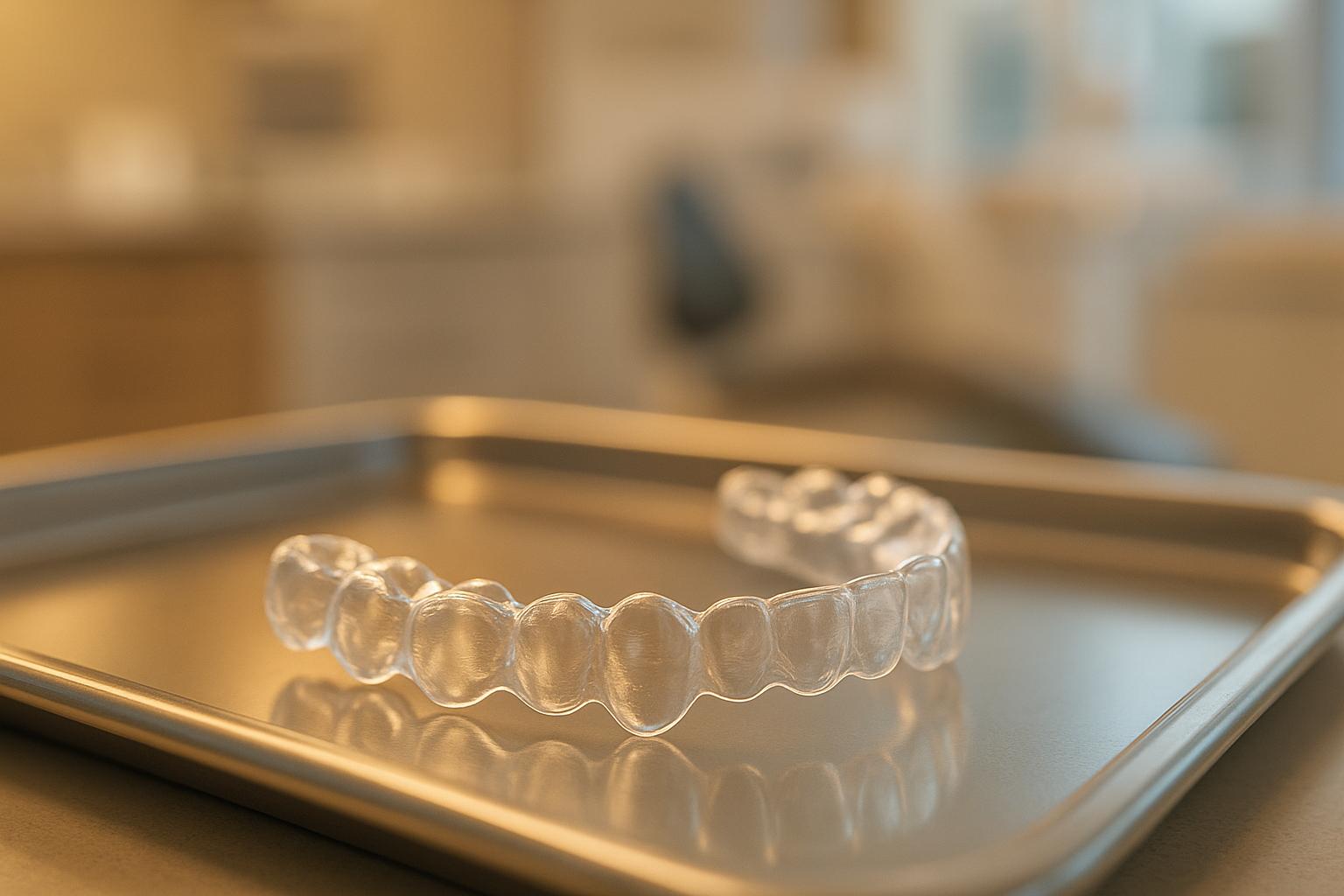
Clear aligners are a popular orthodontic solution, but their effectiveness depends heavily on the materials used. Different materials – PETG, polyurethane, polycarbonate, and TPU – offer varying levels of force delivery, durability, comfort, and safety. Here’s a quick summary:
- PETG: Affordable and durable but less elastic, suited for simpler cases.
- Polyurethane: Used in Invisalign, provides steady force and flexibility, ideal for complex treatments.
- Polycarbonate: Rigid and durable but can feel less comfortable.
- TPU: Combines strength and flexibility, offering a snug fit and consistent force.
Each material has its strengths and drawbacks, making the choice dependent on treatment goals, complexity, and patient needs. Aligners crafted from TPU or polyurethane generally excel in precision and comfort, while PETG is a cost-effective option for less demanding cases. Polycarbonate’s rigidity can be useful but may compromise comfort. Material advancements and hybrid blends continue to refine aligner performance, offering better outcomes for patients.
Clear Aligner Sheets Comparison | ClearPath | Zendura | Zendura FLX | Essix
1. PETG (e.g., Duran, Essix A+)
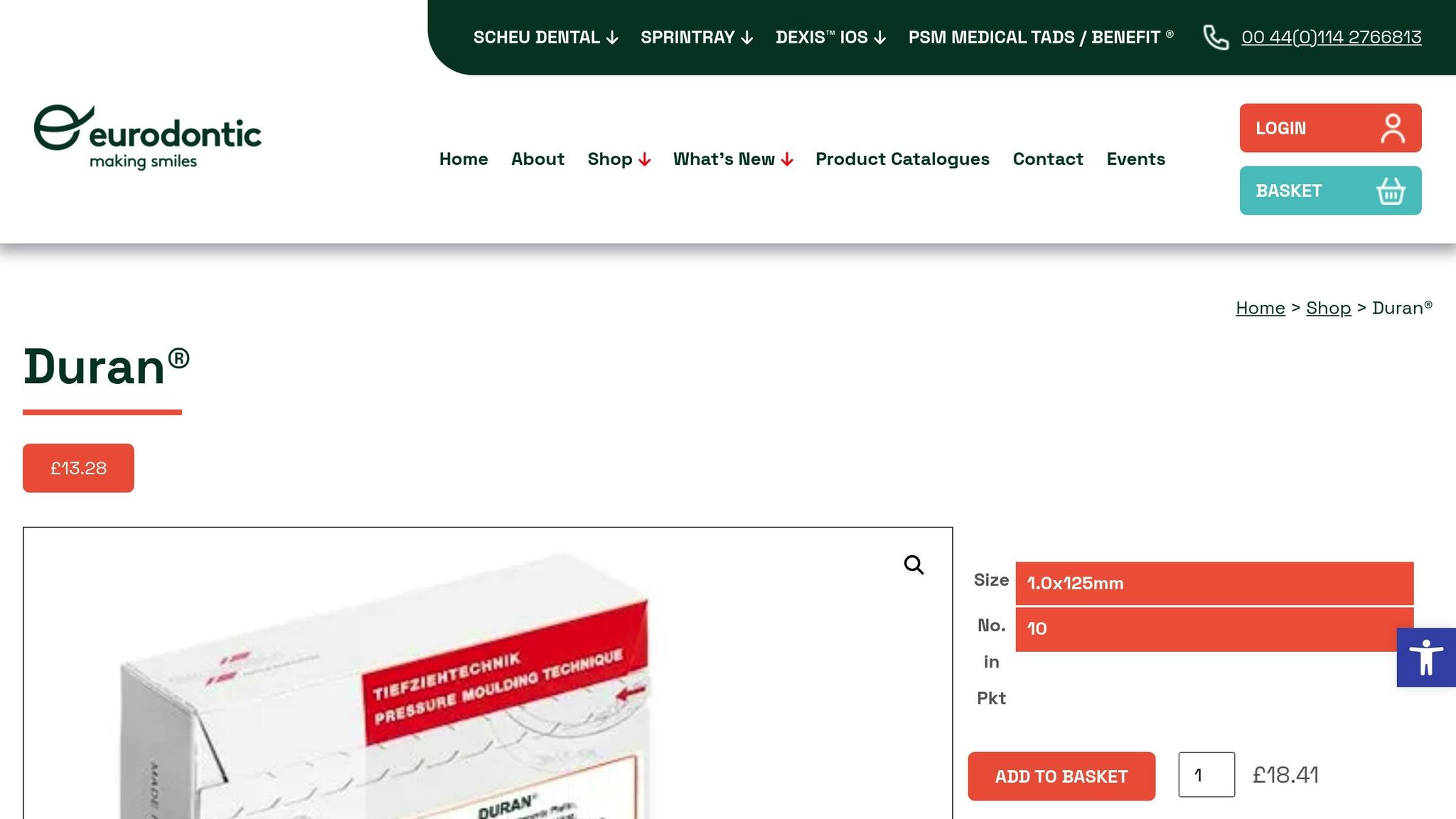
Polyethylene terephthalate glycol (PETG) is a popular choice in orthodontics due to its clarity and durability. Used in systems like Duran and Essix A+, PETG aligners are often a more budget-friendly alternative compared to some premium materials.
Force Delivery and Retention
PETG aligners deliver a moderate initial force that gradually stabilises, making them ideal for simpler or moderately complex tooth movements. This steady pressure works well for cases that don’t demand extreme precision or intricate adjustments, as it prioritises gentle, consistent force over pinpoint accuracy.
Durability and Resistance to Deformation
PETG aligners hold up well during typical short-term wear cycles, which usually last one to two weeks per set. They retain their shape through daily activities like eating and speaking, showing good resistance to cracking. However, they can be prone to surface scratches or whitening if exposed to extreme temperatures or excessive force during insertion.
Patient Comfort
Patients generally find PETG aligners comfortable, thanks to their smooth design. Initial irritation around the edges of the aligners may occur but typically subsides within a few days of wear, making the transition period manageable for most users.
Biocompatibility
PETG is considered safe for dental use, as it’s free from BPA and other harmful plasticisers. It’s designed for prolonged contact in the mouth, with minimal risk of allergic reactions, although patients with sensitivities to polyester-based materials should be monitored. Its chemical stability also reduces the likelihood of leaching, ensuring a dependable option for orthodontic treatments. These qualities make PETG a reliable benchmark for comparing other aligner materials.
2. Polyurethane (e.g., Invisalign SmartTrack)
Polyurethane, the material behind Invisalign’s SmartTrack aligners, is specifically designed to improve the performance of clear aligners. It addresses the limitations of PETG by offering better force delivery, durability, and comfort. While both materials are tailored for aligner use, polyurethane stands out for its consistency and resilience.
Force Delivery and Retention
Polyurethane aligners are crafted to apply a steady and controlled force throughout their wear cycle. They retain their elasticity over a typical two-week period, ensuring consistent pressure for effective tooth movement. This feature is particularly beneficial for managing complex adjustments, such as rotations and intrusions, which demand precise and sustained force.
Durability and Resistance to Deformation
Durability is another strength of polyurethane. Its flexibility allows aligners to bend during insertion and removal without cracking or chipping. Additionally, these aligners are designed to maintain their clarity over time, which helps minimise issues like staining or clouding during use.
Patient Comfort
The flexibility and smooth surface of polyurethane aligners contribute to a more comfortable experience. They are less likely to irritate gums and are shaped to fit closely to the teeth, reducing the likelihood of speech difficulties. This ensures a more natural and seamless feel for the wearer.
Biocompatibility
Polyurethane aligners undergo thorough biocompatibility testing to ensure they are safe for extended contact with oral tissues. Formulations like SmartTrack are free from compounds such as BPA and phthalates, which lowers the risk of allergic reactions. This chemical stability not only supports effective tooth movement but also ensures the aligners are safe for patients to use over the course of their treatment.
3. Polycarbonate
Polycarbonate was one of the earlier materials used for clear aligners. While it’s less common in today’s systems, it still has some appeal in specific orthodontic applications thanks to its particular properties.
Like any aligner material, polycarbonate comes with its own set of strengths and limitations.
Force Delivery and Retention
Polycarbonate aligners deliver force differently compared to polyurethane ones. They often provide a firmer initial fit, which some may find beneficial. However, maintaining consistent force over time can be a challenge. This variability might impact how well the aligners guide gradual tooth movement.
Durability and Resistance to Deformation
Polycarbonate is known for its rigidity, making it highly resistant to cracking under normal use. This durability can be helpful when inserting or removing the aligners. On the flip side, the same rigidity can lead to brittleness over time, especially when exposed to temperature fluctuations. To avoid issues, it’s essential for patients to stick to the recommended replacement schedule. The material’s stiffness also plays a role in how comfortable it feels for the wearer.
Patient Comfort
The rigid nature of polycarbonate can sometimes make it less adaptable to the natural contours of teeth. This might result in localised pressure, particularly when aligners are first worn. Comfort levels can differ from person to person, so any discomfort should be discussed with an orthodontist to find a suitable solution.
Biocompatibility
Polycarbonate has been widely used in medical and dental applications for years and is generally considered safe for use in the mouth. While older versions of the material sometimes included bisphenol A (BPA), most modern dental-grade polycarbonate is now manufactured without it, addressing earlier safety concerns.
sbb-itb-2be92ed
4. Thermoplastic Polyurethane (TPU)
Thermoplastic polyurethane (TPU) strikes a balance between flexibility and strength, addressing the shortcomings of earlier materials. This combination not only improves treatment effectiveness but also enhances patient comfort. Below, we explore how TPU performs in key areas like force delivery, durability, comfort, and biocompatibility.
Force Delivery and Retention
TPU aligners excel at maintaining consistent force thanks to their elastic recovery. This means they continue to apply steady pressure even after being removed and reinserted. Their flexibility allows them to fit snugly against the contours of teeth, improving the precision of force application over time.
Durability and Resistance to Deformation
One of TPU’s standout qualities is its ability to withstand repeated flexing without cracking or losing shape. This durability reduces the likelihood of breakage or fatigue over extended use. However, TPU can warp when exposed to high temperatures, so it’s crucial to follow care instructions to maintain its integrity.
Patient Comfort
The flexibility of TPU aligners ensures a snug, natural fit with fewer pressure points. This reduces irritation and makes the initial adjustment period more comfortable for patients.
Biocompatibility
Dental-grade TPU is thoroughly tested to ensure safety. It’s free from BPA and phthalates, making it a safer choice for oral use. Additionally, its smooth surface is designed to minimise bacterial adhesion and plaque build-up, promoting better oral hygiene during treatment.
Material Comparison: Advantages and Disadvantages
Choosing the right clear aligner material is crucial, as each option offers unique traits that can impact treatment results and patient comfort. Here’s a breakdown of how these materials stack up across key factors:
| Material | Force Delivery | Durability | Patient Comfort | Biocompatibility |
|---|---|---|---|---|
| PETG | Pros: Consistent initial force, good retention Cons: Force diminishes over time, limited elasticity |
Pros: Retains clarity, resists staining Cons: Prone to stress cracks, brittle with repeated flexing |
Pros: Smooth finish for comfort Cons: Rigid fit may create pressure points and require longer adjustment |
Pros: Safe for oral use |
| Polyurethane (SmartTrack) | Pros: Excellent elasticity, maintains steady force over time Cons: Complex to manufacture |
Pros: Resists tearing, holds shape well Cons: Can be affected by some cleaning products |
Pros: Flexible fit reduces discomfort and eases handling Cons: May feel less secure initially due to flexibility |
Pros: BPA-free and rigorously tested |
| Polycarbonate | Pros: Strong initial force, stable dimensions Cons: Limited flexibility may affect precision |
Pros: High impact resistance, maintains structure Cons: Can become cloudy, vulnerable to chemical stress cracks |
Pros: Durable design Cons: Rigid nature can cause discomfort and make adjustments harder |
Pros: Established safety record |
| Thermoplastic Polyurethane (TPU) | Pros: Great elasticity, consistent force, precise fit Cons: Requires careful calibration for optimal performance |
Pros: Resists fatigue cracking, handles repeated flexing well Cons: Warps under high heat, needs proper care |
Pros: Natural fit with minimal pressure points, comfortable adjustments Cons: Flexibility might feel less secure to some |
Pros: BPA- and phthalate-free, smooth surface resists bacteria Cons: Long-term clinical data still developing |
These comparisons highlight the trade-offs involved in choosing aligner materials. Each option has strengths and weaknesses, making the choice dependent on specific treatment goals and patient needs.
Additional Considerations
Temperature sensitivity is another factor to keep in mind. TPU and certain polyurethanes require careful handling to avoid warping, while PETG and polycarbonate are more temperature-stable. Manufacturing processes also vary: PETG is easier to thermoform, while advanced polyurethanes require specialised methods, which can influence their availability.
From a clinical perspective, materials with superior elasticity – like TPU and polyurethane – offer more predictable treatment progress. However, their flexibility may necessitate adjustments in treatment planning to ensure precision.
Cost is also a key factor. PETG is typically the most affordable, while advanced materials like polyurethane and TPU are more expensive. Balancing these costs against potential benefits, such as improved treatment efficiency and patient comfort, is essential.
Advancements in Material Science
Ongoing research continues to improve aligner materials. Hybrid formulations are being developed to combine the clarity of PETG with TPU’s flexibility, and new surface treatments aim to enhance both biocompatibility and stain resistance. These advancements could further refine treatment outcomes and patient satisfaction, making material selection even more tailored to individual needs.
Conclusion
The composition of aligner materials plays a pivotal role in determining treatment outcomes, with different polymers offering distinct advantages depending on the complexity of the case. For simpler treatments, PETG is a popular choice due to its clarity and ease of manufacturing, although its rigidity might compromise comfort. On the other hand, polyurethane-based materials, like those found in SmartTrack aligners, are specifically designed to maintain consistent force over time, making them ideal for more intricate cases. These material distinctions open the door for continuous advancements in aligner performance.
Thermoplastic polyurethane (TPU) adds elasticity and biocompatibility, while polycarbonate enhances strength and durability. Innovations like multilayered aligner designs – such as ClearCorrect‘s three-layer structure and Great Lakes ComfortTrack – demonstrate how combining these materials can improve performance. For instance, ComfortTrack applies 40% less initial force but maintains over 150% more sustained force, offering a balance of comfort and effectiveness [5][6].
Studies reveal that polymer blends, such as a 70/10/20 mix of PETG, polycarbonate, and TPU, deliver superior mechanical properties. Meanwhile, the global market for clear aligners is projected to grow from US$3.1 billion in 2021 to US$11.6 billion by 2027. This growth provides Australian practices, like Complete Smiles Bella Vista, with a wide array of treatment options to address varying patient needs [1][2][4][7]. Such advancements underscore the importance of refining aligner materials to meet clinical demands while also paving the way for future technologies.
Emerging direct 3D printing techniques are set to overcome the limitations of thermoforming, enabling custom thickness and precise spatial force control [1][3][4][7]. As material science progresses, the focus remains on striking the right balance between clinical effectiveness, patient comfort, and affordability to deliver the best orthodontic outcomes for Australian patients.
FAQs
What should I consider when selecting clear aligner materials for my orthodontic treatment?
When selecting clear aligner materials, you’ll want to think about how durable, flexible, and comfortable they are. The best materials should consistently apply the right amount of pressure to move teeth effectively, while also handling the wear and tear of daily use. It’s also crucial to choose aligners made from biocompatible, non-toxic materials that meet safety regulations, such as being BPA-free and approved by relevant health authorities.
Some aligners are crafted from multi-layered materials, which can strike a good balance between strength and elasticity. This combination not only enhances the treatment’s effectiveness but also makes the aligners more comfortable to wear. Talking to your orthodontist about the material that fits your needs can help you get the safest and most effective treatment possible.
What are the potential downsides of using different clear aligner materials like PETG, polyurethane, or TPU?
Different materials used in clear aligners, like PETG, polyurethane, and TPU, come with their own set of challenges that can influence performance. Take PETG, for instance – it has a tendency to stain and discolour, especially when exposed to dark-coloured foods and drinks. Meanwhile, TPU presents its own hurdles, as it can be trickier to process and store, which might affect its consistency during manufacturing and clinical application.
Another consideration is how these materials behave after thermoforming. Both PETG and TPU can lose some of their mechanical strength post-thermoforming, which could impact their durability and performance. Selecting the right material is crucial to ensure the aligners stay comfortable, sturdy, and effective throughout the treatment process.
How will advancements in material science enhance the performance and comfort of clear aligners?
Advancements in material science are shaping the future of clear aligners by incorporating materials that are tougher, more adaptable, and elastic. With the development of multi-layered polymers and enhanced thermoplastics, aligners are now designed to fit more snugly, maintain steady pressure, and adjust more effectively to tooth movement.
These breakthroughs are focused on improving patient comfort while boosting the success of orthodontic treatments. As these materials continue to evolve, clear aligners are likely to deliver even more precise results with reduced discomfort for wearers.
Related Blog Posts
- Invisalign vs Traditional Braces: A Complete Comparison
- Wear Resistance of Polymer-Based Restoratives
- Advances in Dental Adhesives: What to Know
- Types of Braces and Their Costs Explained
Important Notice: Any surgical or invasive procedure carries risks. Before proceeding, you should seek a second opinion from an appropriately qualified health practitioner.
Individual results may vary. The information provided in this article is for educational purposes only and does not constitute medical advice.
Checkout Related Blogs




Get in touch with us
For more information, call us now to start feeling better. Or fill the form below to make appointment
The Latest News from Complete Smiles
How to Clean Clear Plastic Retainers
Checklist for Choosing Wearable Dental Devices
Checklist for Choosing Cloud AI Platforms in Dentistry

Complete Smiles Bella VistaAccepts All Major Health Funds, Including





