





How Wearables Help Prevent Dental Issues
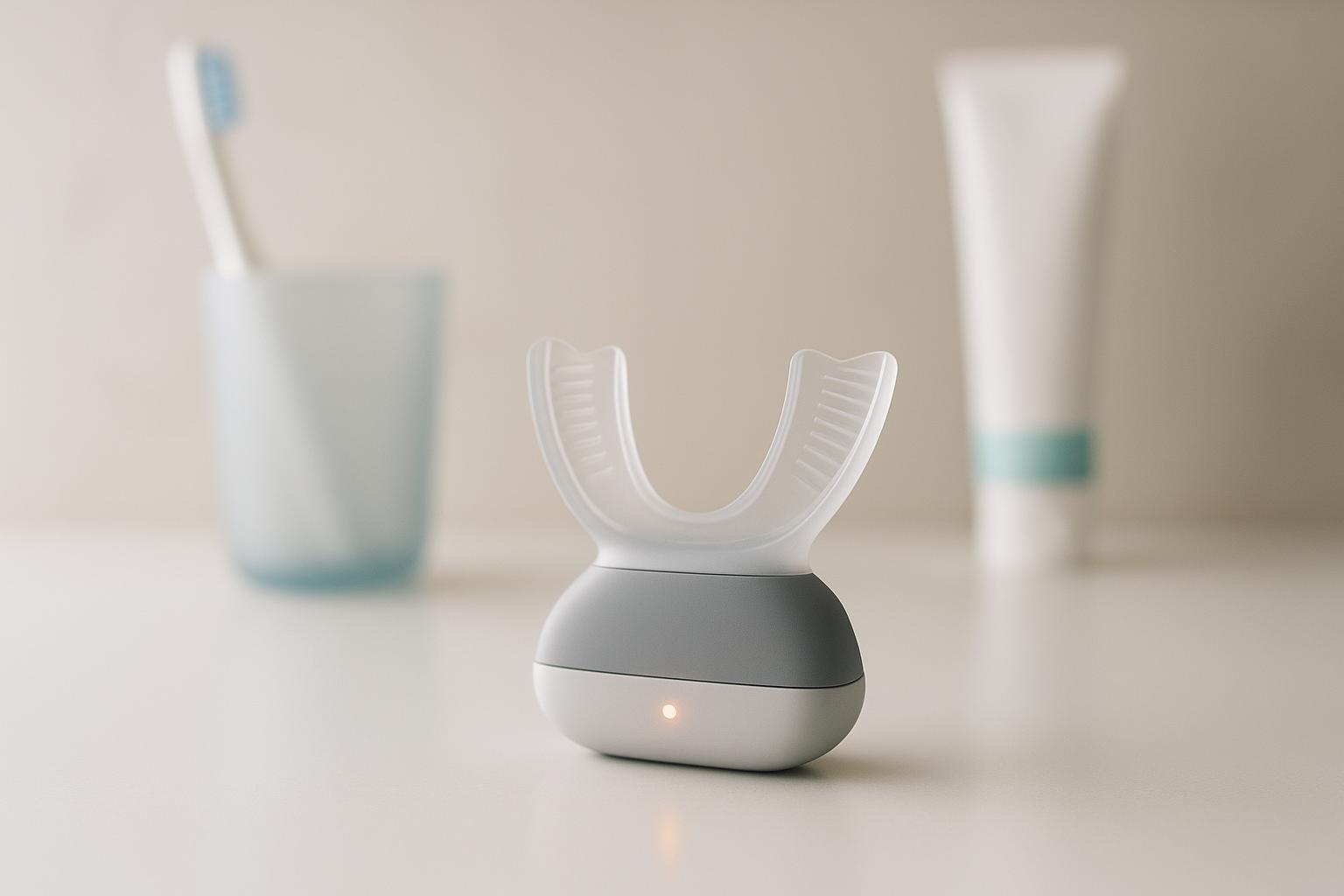
Wearable technology is changing how we take care of our teeth. Devices like smart toothbrushes, oral health monitors, smart mouthguards, and intraoral sensors make it easier to detect and prevent dental problems before they get worse. Here’s how they work and why they matter:
- Smart Toothbrushes: These improve your brushing habits with real-time feedback and apps that track your routine. They help prevent plaque buildup and gum disease.
- Oral Health Monitors: These track pH levels, bacteria, saliva composition, and temperature to spot early signs of cavities, gum disease, or other issues.
- Smart Mouthguards: Protect teeth from grinding or sports injuries while collecting data on bite force and grinding patterns for better prevention.
- Intraoral Sensors: These advanced devices monitor saliva and bacteria in real-time, helping detect cavities and other issues early.
Wearables shift dental care from reactive to proactive, making it easier to maintain oral health and avoid costly treatments. They’re also useful for remote monitoring, especially in areas with limited access to dentists. With AI integration, these tools are becoming even smarter, offering personalised care tailored to your needs.
A Mouthguard That Monitors Your Health
Smart Toothbrushes: Better Daily Oral Care
Smart toothbrushes take electric brushing to the next level by combining sensors and artificial intelligence to provide personalised feedback and insights. These tools are designed to help you optimise your brushing routine, making it easier to prevent common dental issues like plaque buildup and gum disease. It’s a great example of how technology can turn everyday habits into more effective care.
What Smart Toothbrushes Can Do
Modern smart toothbrushes come packed with features that make brushing both effective and convenient. Using built-in sensors, they provide real-time feedback on brushing pressure, timing, and technique. Many models include timers and quadrant guidance to ensure you’re spending the right amount of time on each part of your mouth.
Bluetooth connectivity is another key feature, linking the toothbrush to a smartphone app that tracks your brushing habits. These apps can highlight areas you might be missing and offer tailored recommendations to improve your technique. On top of that, features like multiple brush head options, waterproof builds, wireless charging, and long battery life make these devices practical for everyday use.
For families, the gamification aspect is a big plus. Many smart toothbrushes include games or rewards systems in their apps, turning brushing into a fun activity – especially for kids who might otherwise rush through it.
How Smart Toothbrushes Prevent Dental Problems
Smart toothbrushes do more than just clean your teeth – they help you build healthier habits. Studies suggest that users of these devices are more likely to brush for the full two minutes and cover all areas of their mouth effectively [8]. Real-time feedback helps you adjust your technique on the spot, reducing plaque and protecting your enamel and gums.
Tracking progress over time can also keep you motivated, and many apps allow you to share your brushing data with your dentist. This can help with early detection of potential issues and ensure you’re getting advice tailored to your specific needs.
Prices for smart toothbrushes vary, ranging from A$50 to over A$200, with some models requiring subscriptions for access to premium app features [7]. While the upfront cost is higher than traditional toothbrushes, the long-term benefits – like improved oral health and potentially avoiding expensive dental treatments – make them a smart choice for many households.
Oral Health Monitors: Tracking Important Health Signs
Oral health monitors go beyond the capabilities of smart toothbrushes by offering continuous tracking of various health indicators throughout the day. These devices gather data about your mouth’s environment and can alert you to early signs of dental issues, making them a valuable tool for maintaining oral health.
What These Devices Monitor
These monitors keep tabs on crucial oral health indicators like pH levels, bacterial activity, temperature, saliva composition, and breath quality. By analysing these factors, they can detect early warning signs of enamel erosion, infections, or other oral diseases [2][9].
- pH Levels: Monitoring pH is critical since an acidic environment can lead to enamel erosion and cavities. These devices track pH changes in real time, helping you identify when your mouth becomes too acidic – such as after eating or drinking [9].
- Bacterial Activity: Understanding how diet, stress, and oral hygiene impact microbial balance in your mouth can help you manage your overall oral health.
- Temperature: Changes in temperature can signal inflammation or infections even before visible symptoms appear.
- Saliva Analysis: Advanced monitors can evaluate saliva composition to detect dehydration, pH imbalances, or early dental diseases [2]. Since saliva helps neutralise acids and remove food particles, assessing its quality is essential for maintaining oral health.
Catching Problems Early
One of the standout benefits of these monitors is their ability to detect issues before they escalate. For example, gum disease, a leading cause of tooth loss in adults, often develops gradually without noticeable symptoms [10]. These devices can identify early signs of conditions like gingivitis or periodontitis by regularly measuring gum inflammation and other indicators [11].
Real-time alerts take preventive care to the next level. If the monitor detects concerning changes – like prolonged acidic conditions or rising bacterial activity – it sends immediate notifications. This allows you to take quick action, such as rinsing with water, chewing sugar-free gum, or making dietary adjustments.
These devices also help uncover the causes of tooth sensitivity, which could stem from tooth decay, gum recession, or worn enamel [10]. Addressing these issues early can stop them from developing into more severe problems.
Interestingly, oral health monitors can also reveal clues about broader health conditions. For instance, changes in oral health may point to systemic issues like diabetes, enabling early intervention by dental professionals [10].
This shift from reactive to proactive care is a game-changer. Instead of waiting for problems to worsen before seeking treatment, these monitors empower you to prevent many issues from occurring in the first place. Given that dental caries in permanent teeth are among the most common diseases globally, as reported by the WHO’s Global Burden of Disease Study 2017 [1], tools like these can play a crucial role in maintaining long-term oral health. They also open the door to personalised daily care and more effective prevention strategies.
Smart Mouthguards: Protection and Health Monitoring
Smart mouthguards are changing the game when it comes to dental protection. These devices not only shield your teeth from physical harm but also gather health data to help prevent future dental issues. By merging traditional protection with advanced monitoring, they’re taking dental wearables to a whole new level of proactive care.
Uses for Athletes and Teeth Grinding
Smart mouthguards are incredibly versatile, making them useful for both athletes and those dealing with teeth grinding. For athletes, the numbers are clear: without a mouthguard, the risk of dental injury increases 60-fold [12]. These devices act as a buffer between the upper and lower teeth, reducing the chance of damage to teeth, gums, lips, tongue, and the jaw during high-impact activities [12].
Professional sports are already embracing this technology. For example, World Rugby has committed an initial A$2 million to smart mouthguards, acknowledging their role in improving player safety [13]. Research in ice hockey has shown that using mouthguards can lower the risk of concussion by 20% [13]. These devices are proving to be more than just dental protection – they’re becoming essential tools for overall player welfare.
"The advances in smart mouthguard technology mean elite players will be better cared for than ever before. We are taking smart mouthguards out of the realm of medical research and putting them into the world of everyday performance management to continue to manage player welfare in the best way possible." – Dr Eanna Falvey, World Rugby Chief Medical Officer [13]
In elite sports, smart mouthguards don’t just protect; they also monitor. Equipped with sensors, they measure the intensity of head impacts and send this data wirelessly to coaches and medical staff [14]. This real-time information is invaluable for assessing player safety and managing potential concussions.
For individuals with bruxism (teeth grinding), these mouthguards offer a twofold benefit. They protect against dental damage and relieve jaw pain while also tracking grinding patterns. This data helps dentists understand how often and how intensely grinding occurs, enabling them to provide more targeted treatments [12]. It’s a step forward in using data to improve oral health.
Using Data for Better Prevention
The real power of smart mouthguards lies in their ability to collect and analyse data, paving the way for personalised dental care. By monitoring bite force, grinding frequency, and impact severity, these devices allow for early intervention, helping to address problems before they escalate.
Take bite force monitoring, for example. Excessive pressure can lead to issues like tooth damage, enamel wear, or jaw disorders. By tracking these patterns over time, dentists can recommend preventive measures to stop minor concerns from becoming major problems.
Another advantage is the customisation they offer. Unlike generic mouthguards, smart versions can be tailored to an individual’s usage patterns and risk factors. This ensures a better fit, greater comfort, and optimal protection, especially for extended use.
When choosing a smart mouthguard, prioritise fit, comfort, and functionality [15]. A custom-fitted device not only provides better protection but also ensures the accuracy of the data collected [16]. Proper fitting makes a significant difference in both usability and long-term oral health benefits.
"Always look for independent validity in the literature. Don’t trust ‘black box’ products that companies try to sell you. Try to understand the fundamental and mechanical principles that underpin how these technologies work or reach out to someone who does. You’ll hopefully then be able to see through the nonsense." – Greg Tierney [15]
sbb-itb-2be92ed
Intraoral Sensors: Advanced Dental Monitoring
Building on the progress seen in smart mouthguards and oral monitors, intraoral sensors push dental technology further by offering monitoring directly within the mouth. These devices provide real-time insights into oral health by analysing saliva in a simple and painless way. Since saliva reflects overall physical health, this approach offers a unique window into both oral and general well-being [1].
Unlike earlier devices that focused on broader health conditions, intraoral sensors deliver precise, continuous data from inside the oral cavity. They convert biological signals into digital information for immediate analysis [18]. A standout feature is their ability to monitor the saliva adults produce daily, which contains a rich mix of biomolecules, ions, and over 700 types of microorganisms [17].
Real-Time Testing of Saliva and Bacteria
These sensors track important salivary markers like pH, calcium, phosphate, and fluoride, which are key indicators of potential tooth decay [17]. For example, slight increases in saliva acidity can create an ideal environment for cavities, making pH monitoring essential.
Recent technological advances have also enhanced their role in preventive dentistry. In 2020, researchers led by Li developed a fluorescent mouthguard using zinc oxide quantum dots. These quantum dots glow yellow under ultraviolet light but lose their fluorescence when they come into contact with volatile sulfur compounds (VSCs). This allows for precise detection of areas where VSCs are present. Similarly, in 2021, Ma and colleagues introduced a colour-changing mouthguard using Au@Ag nanorod-polydimethylsiloxane materials. This device responds to VSCs, helping identify areas at risk for decay.
Preventing Tooth Decay and Beyond
The real strength of intraoral sensors lies in their ability to do more than just detect problems – they enable early intervention. Dental caries in permanent teeth rank among the most common diseases globally [1], making early detection critical. These sensors can identify VSCs more accurately than other devices, uncovering hidden cavities that might otherwise remain unnoticed.
Another important feature is fluoride monitoring. These sensors help determine whether fluoride exposure from toothpaste, water, or treatments is sufficient for protecting teeth without exceeding safe levels. Since salivary biomarkers change throughout the day based on factors like eating, oral hygiene, or sleep, continuous monitoring provides a more complete picture than single-point tests [17].
Intraoral sensors can be incorporated into a variety of devices, including mouthguards, pacifiers, dentures, vacuum-formed appliances, and even silk-based dental tattoos [17]. This adaptability allows for personalised oral health solutions that fit different lifestyles. Moreover, saliva, being a non-invasive alternative to blood, opens the door for these sensors to potentially detect systemic health conditions in the future. By offering precise, targeted monitoring, these devices empower dental professionals to prevent decay and create tailored care strategies for individuals.
Main Benefits of Dental Wearables for Prevention
Dental wearables, such as smart toothbrushes, oral monitors, and mouthguards, have revolutionised oral health by offering continuous monitoring and personalised insights. These advanced tools go beyond what routine dental check-ups can achieve, enabling more proactive and tailored prevention strategies.
Spotting Dental Problems Early
One of the standout benefits of dental wearables is their ability to detect oral health issues before they become noticeable or painful. Using advanced sensors, these devices can pick up subtle changes that might otherwise go unnoticed [3]. By continuously tracking key oral health indicators, wearables can flag potential problems early, often before any symptoms arise. This early warning system allows for timely intervention, potentially avoiding more invasive and expensive treatments down the road [5]. When combined with daily oral care routines, this technology enhances personalised preventive care.
Improving Daily Oral Care Habits
Dental wearables bring a new level of interactivity to everyday oral hygiene. For example, smart toothbrushes equipped with sensors can detect plaque buildup during brushing, offering immediate feedback to help users focus on neglected areas. These devices often sync with mobile apps to track brushing habits, monitor oral health metrics, and provide tailored guidance for better care [19]. Many apps also include gamification features – like reminders, goals, and rewards – to keep users motivated and engaged. By turning oral care into a more interactive and data-driven experience, these tools help users develop better habits and monitor their progress over time [2] [19].
Personalised Oral Health Care
The data collected by dental wearables opens the door to highly customised oral health strategies. AI-powered systems analyse this continuous stream of information to create specific recommendations tailored to each individual. For instance, wearable devices can generate personalised care plans and even predict potential issues before they arise [6]. For those dealing with conditions like bruxism, smart mouthguards can detect teeth grinding during sleep and provide real-time alerts, allowing for targeted solutions [3]. This combination of constant monitoring, real-time feedback, and AI-driven insights represents a leap forward in oral health, moving beyond the limitations of traditional prevention methods.
Conclusion: What’s Next for Dental Wearables
Dental wearables are transforming oral care by shifting the focus from reactive treatments to proactive prevention. From smart toothbrushes to intraoral sensors, the technologies we’ve covered highlight how advanced sensors, AI, and data analytics are opening up new possibilities in oral health care [5].
A recent US survey found that 30% of users collect data from wearables daily [4]. This growing trend suggests that dental wearables could soon become as ubiquitous as fitness trackers. But the real leap forward lies in the integration of AI. Dr. Thomas Nguyen, DMD, MSc, Diplomate of ABP, FRCD(C), notes:
"We may see AI systems capable of collecting real-time feedback from devices tracking grinding and clenching habits, providing clinicians with patient-specific insights." [21]
AI has the potential to personalise wearables, allowing them to learn individual habits and predict oral health risks with greater precision [21].
For Australian patients, particularly those in rural areas with limited access to dental specialists, remote monitoring capabilities offered by wearables are a game-changer. These devices allow dental professionals to oversee patient care remotely, reducing the need for frequent in-person visits while maintaining high standards of care [5].
Beyond monitoring, technologies like augmented reality (AR) and virtual reality (VR) are beginning to make their mark in dental education and patient treatment [20]. At the same time, researchers are investigating regenerative medicine approaches, such as using stem cells to repair damaged tissues or even regrow teeth [20].
The rise of dental wearables offers an exciting opportunity to make oral health management more interactive and engaging. These devices not only strengthen the connection between patients and healthcare providers but also enable real-time feedback and personalised care plans, which represent a significant improvement over traditional prevention methods [5].
As dental wearables evolve, they will become more accurate, user-friendly, and seamlessly integrated into professional care. With advancements in prevention and early intervention, this technology has the potential to dramatically reduce dental issues across the population.
FAQs
How can smart toothbrushes improve my brushing technique?
Smart toothbrushes are equipped with cutting-edge sensors and connectivity features that keep tabs on your brushing habits in real time. They track details like how long you brush, the pressure you use, and the spots you might overlook. By connecting to a mobile app, these devices offer customised feedback designed to refine your brushing technique and ensure a more effective clean.
This kind of guidance helps you build healthier brushing routines, lowering the chances of dental problems like plaque buildup or gum disease while supporting better oral health overall.
How can wearable technology help monitor and prevent dental problems?
Wearable technology is stepping into the world of oral health, offering ways to monitor and potentially prevent dental issues. These devices can track vital oral health indicators, such as salivary markers, pH levels, and harmful bacteria. By spotting early warning signs of conditions like tooth decay or gum disease, they empower users to take action before problems escalate.
On top of that, wearables can keep an eye on everyday habits, like how often and how well you brush your teeth. They provide real-time feedback to help improve hygiene routines. With these insights, users can maintain consistent oral care, lowering the chances of serious dental issues and supporting better long-term dental health.
How can smart mouthguards benefit athletes and people who grind their teeth?
Smart mouthguards bring a range of benefits to athletes and people dealing with teeth grinding (bruxism). For athletes, these devices do more than just protect teeth – they track impact levels and performance metrics in real time. This added insight helps reduce injury risks and enhances safety during sports or other physical activities.
For those who grind their teeth, smart mouthguards act as a shield against tooth damage and jaw pain. They also monitor grinding patterns, providing valuable data that dental professionals can use to design personalised treatment plans. This proactive approach helps maintain oral health and prevents future complications.
Related Blog Posts
- Wear-Resistant Materials in Dental Restorations
- AI Tools for Periodontal Disease Diagnosis
- Digital Dental X-Rays: How They Work
- Gene Therapy in Dental Implants: Overview
Important Notice: Any surgical or invasive procedure carries risks. Before proceeding, you should seek a second opinion from an appropriately qualified health practitioner.
Individual results may vary. The information provided in this article is for educational purposes only and does not constitute medical advice.
Checkout Related Blogs




Get in touch with us
For more information, call us now to start feeling better. Or fill the form below to make appointment
The Latest News from Complete Smiles
How to Clean Clear Plastic Retainers
Checklist for Choosing Wearable Dental Devices
Checklist for Choosing Cloud AI Platforms in Dentistry

Complete Smiles Bella VistaAccepts All Major Health Funds, Including





