



AI Tools for Periodontal Disease Diagnosis

AI is transforming how Australian dentists diagnose and treat periodontal disease. It offers faster, more accurate diagnostic capabilities, helping dental professionals detect issues earlier and provide personalised care. Here’s what you need to know:
- Faster Diagnosis: AI models like YOLOv8 can analyse dental images in just 1.5 seconds, compared to 53.8 seconds for a human dentist, with a 94.4% accuracy rate.
- Improved Detection: AI systems identify early signs of periodontal disease, such as bone loss and gum inflammation, often missed during routine exams.
- Personalised Treatment: Predictive analytics assess risk factors (e.g., age, smoking, diabetes) to tailor treatments and monitor progress.
- Streamlined Workflows: Tools like Denti.AI Voice simplify periodontal charting, cutting time in half while reducing errors.
- Regulatory Standards: In Australia, AI tools must comply with Therapeutic Goods Administration (TGA) regulations and privacy laws.
AI isn’t replacing dentists but enhancing their expertise, enabling better care for more patients, even in remote areas. Dive into the article to explore how AI-powered dental tools are reshaping periodontal care in Australia.
Dental AI: The Artificial Intelligence Revolution in Dentistry
AI-Powered Tools and Technologies for Diagnosing Periodontal Disease
AI technologies have revolutionised the way periodontal disease is diagnosed, offering dental professionals tools that analyse dental data with remarkable precision. From traditional X-rays to advanced 3D imaging systems, these innovations provide a new level of accuracy and efficiency. Below, we delve into how AI enhances imaging, predictive analytics, and clinical documentation in periodontal care.
AI in Dental Imaging
Radiographic Analysis is one of the most common ways AI is applied in periodontal diagnostics. Using panoramic radiographs, periapical X-rays, and cone beam computed tomography (CBCT) scans, AI systems can pinpoint early signs of bone loss and periodontal damage. These tools focus on critical anatomical landmarks like the cemento-enamel junction (CEJ) and alveolar bone levels, which are key to accurate diagnosis.
For example, Kim et al. introduced a deep learning system called DeNTNet, achieving accuracy rates between 73.4% and 99% in identifying bone loss in dental images [3]. Such technology can detect subtle patterns that might escape even the most trained human eye, especially during the early stages of periodontal disease.
Intraoral Imaging Systems enhanced by AI take clinical photos and analyse them for signs of gum inflammation, plaque build-up, and tissue changes. By examining the colour, texture, and morphology of gum tissues, these systems help monitor gingivitis progression and flag areas needing immediate attention. Chang et al. reported impressive results with their AI model, which achieved an accuracy of 0.93 for bone detection and 0.91 for identifying the CEJ and teeth [3]. This level of precision ensures dental professionals can consistently identify the structures crucial for periodontal assessment.
3D Imaging Analysis through CBCT scans allows AI systems to generate detailed three-dimensional maps of periodontal structures. These tools can measure bone density, assess furcation involvement, and evaluate the extent of periodontal defects with exceptional accuracy. By providing a multi-angle view of periodontal damage, these systems offer a comprehensive understanding of a patient’s condition.
Predictive Analytics for Disease Progression
AI doesn’t just stop at imaging – it also plays a critical role in predicting how periodontal disease might progress and in tailoring treatment plans. By analysing vast amounts of patient data, these predictive models assess risk factors like age, smoking habits, medical history, diabetes, and oral hygiene to create personalised risk profiles.
Historical Data Analysis and Risk Stratification enable AI to sift through large datasets, identifying patterns and prioritising patients who are at higher risk of severe periodontal complications. By combining clinical measurements, radiographic findings, and patient-specific factors, these systems provide a holistic view that informs treatment choices.
Treatment Response Prediction is another area where AI shines. By studying similar cases and treatment outcomes, these models can predict how a patient might respond to specific periodontal therapies. This helps dental professionals choose the most effective treatments for each individual, improving overall outcomes.
Natural Language Processing in Dentistry
Natural Language Processing (NLP) takes unstructured clinical notes and transforms them into actionable insights. By extracting key information from patient records, treatment notes, and referral letters, NLP systems can identify specific periodontal conditions or risk factors. They also integrate patient data like medical histories, medication lists, and past treatments to uncover links between systemic health issues and periodontal disease risks.
Automated Documentation and Communication Enhancement is another practical application of NLP. By generating standardised periodontal assessments and treatment recommendations, these systems reduce the administrative workload for dental professionals. They can also create personalised explanations of periodontal conditions and treatment options in plain language, making it easier for patients to understand their diagnoses and make informed decisions.
Key AI Platforms in Periodontal Diagnostics
AI platforms are reshaping periodontal diagnostics, offering tools that significantly enhance accuracy, efficiency, and workflow integration. These technologies leverage advanced imaging and analytics to support dental professionals in identifying and managing periodontal disease.
Overjet Dental AI
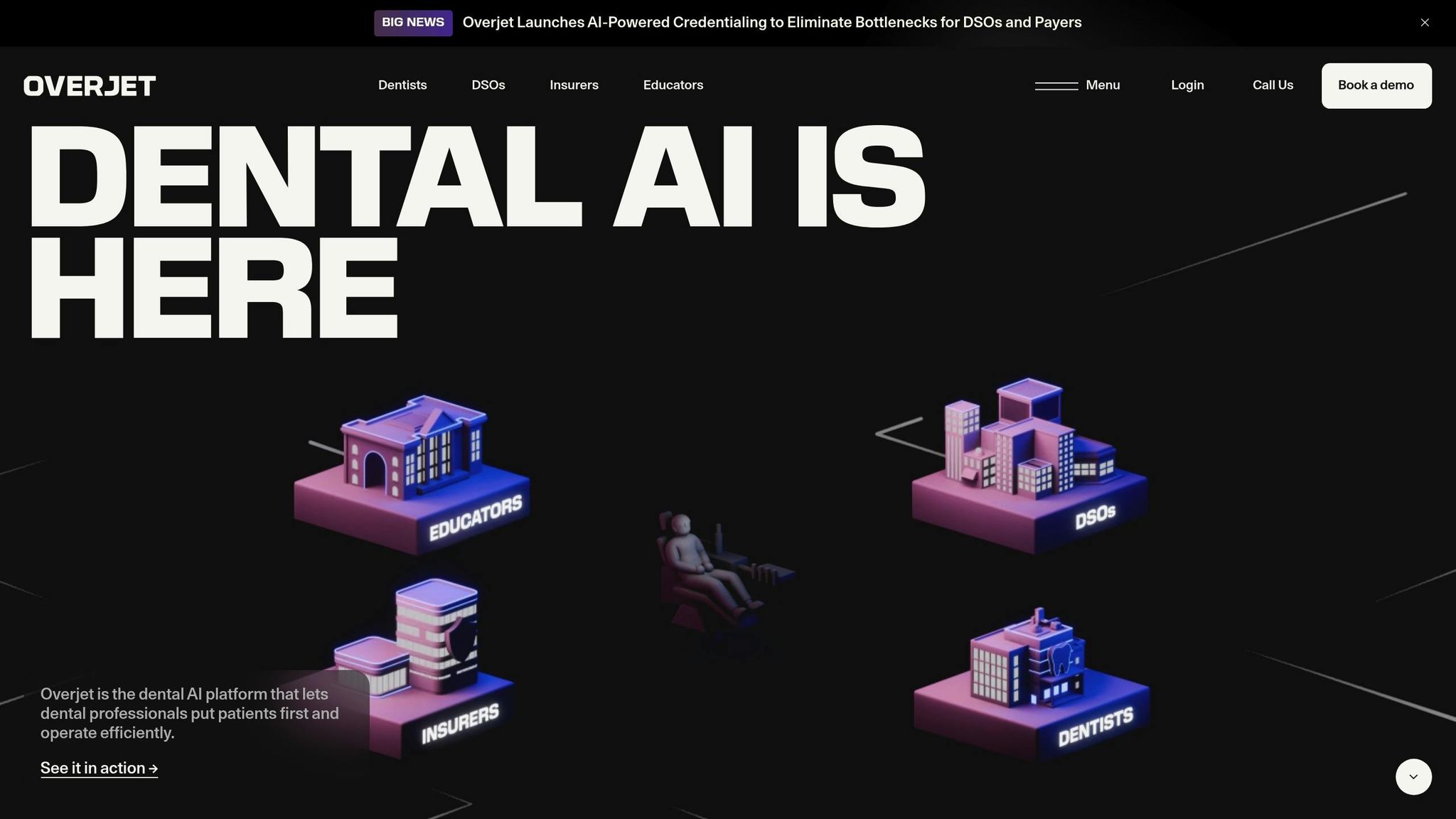
Overjet Dental AI stands out as a leader in AI-based dental diagnostics. Clinical tests reveal its AI measurements align closely with those of experienced dentists, showing an average variance of just 0.3 mm. Practices using Overjet report a 25% increase in case acceptance rates, while insurance claims are processed up to five times faster. Additionally, administrative workloads are slashed by 90% [6]. For Australian practices, Overjet’s ability to standardise measurements across clinicians ensures consistent diagnostic outcomes, fostering trust and reliability.
Denti.AI Voice
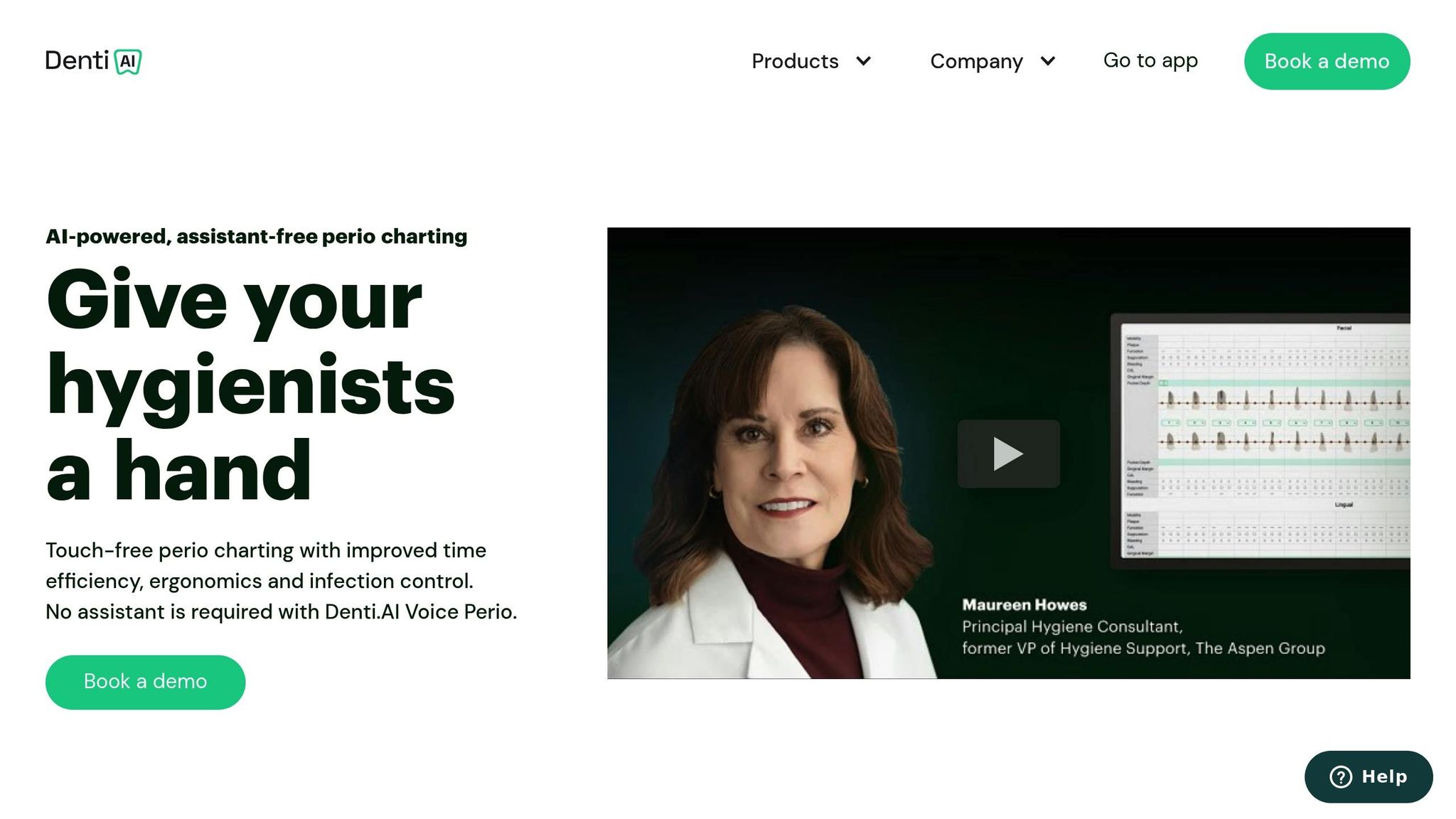
Denti.AI Voice revolutionises periodontal charting through voice-controlled technology. The Voice Perio feature enables hygienists to complete comprehensive periodontal charts in under five minutes, cutting the traditional charting time of 10–15 minutes in half. Its Auto-Chart function reduces the need for manual clicks by 70%, automatically transferring confirmed conditions and treatment codes into practice management systems. Pricing for Voice Perio is $199 per location per month, while Denti.AI Scribe is available at $299 per month, often discounted to $129 [27,28,32]. Designed with Australia’s diverse workforce in mind, the system excels at recognising a variety of accents and includes intuitive pause-and-resume features, seamlessly fitting into natural clinical workflows.
Diagnocat and VideaHealth
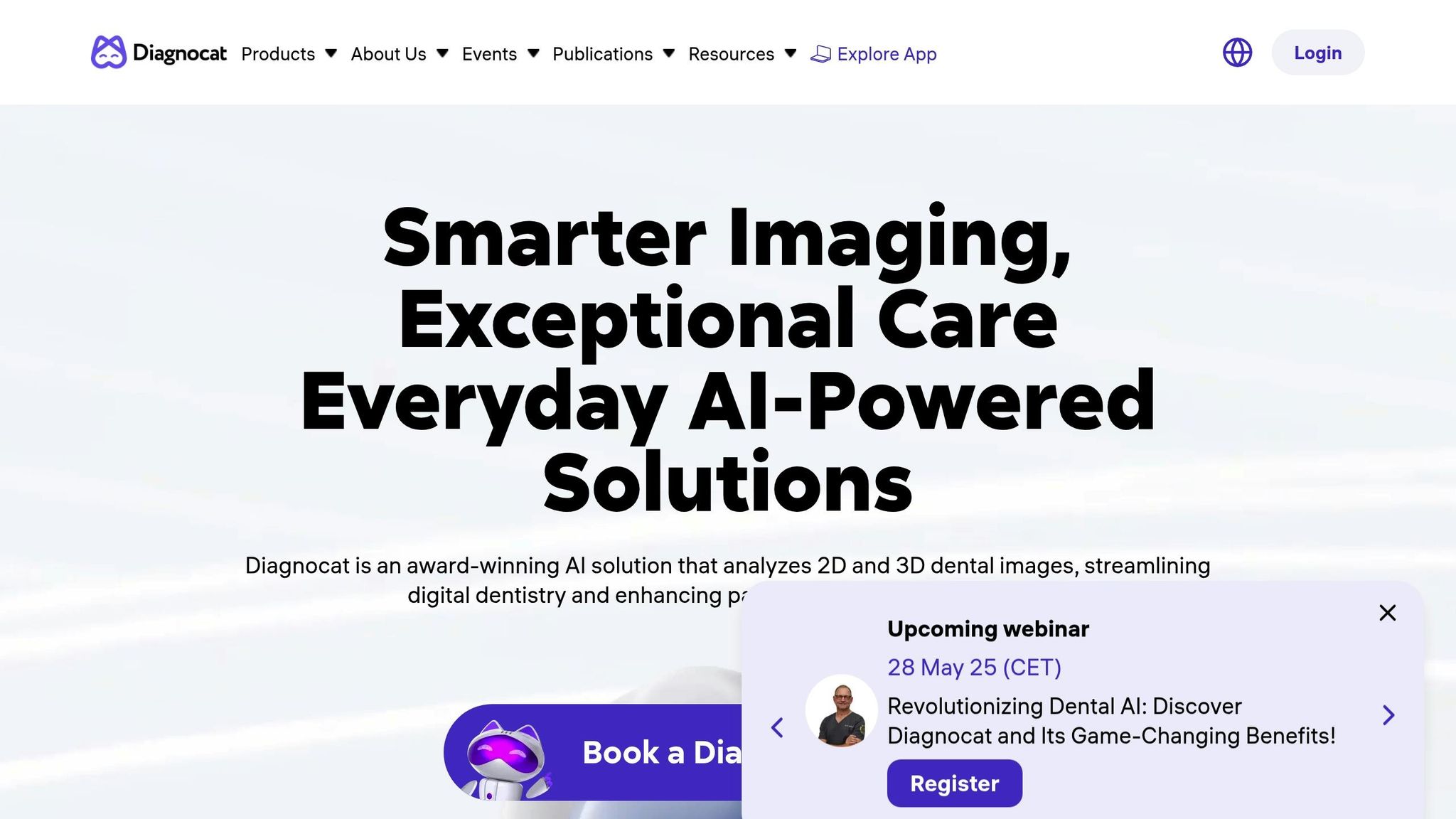
Diagnocat delivers detailed image analysis, detecting over 30 pathologies in 2D scans and 65 in 3D scans. This capability enhances diagnostic accuracy, with screening precision reaching up to 90% [25,26]. On the other hand, VideaHealth focuses on improving detection rates and patient acceptance, boasting a 119% increase in caries detection and a 13% boost in case acceptance rates [5]. Both platforms excel at identifying subtle radiographic changes that might go unnoticed during routine evaluations. They also simplify data management without requiring extensive training [25,26]. Diagnocat’s ability to analyse both 2D and 3D images offers added flexibility, making it a valuable tool for practices utilising both traditional radiographs and CBCT imaging.
Adding AI to Periodontal Diagnostic Workflows
Incorporating AI into periodontal diagnostic workflows is reshaping how dental practices across Australia approach the identification, treatment, and monitoring of periodontal disease. By improving diagnostic precision and streamlining clinical processes, AI is making advanced periodontal care both more efficient and accessible. This technology not only enhances early disease detection but also enables tailored treatment plans and long-term patient monitoring.
Early Detection of Periodontal Disease
AI has proven exceptionally skilled at spotting subtle changes in radiographs that may be overlooked during routine visual exams. By systematically evaluating radiographic images, AI can identify early signs of bone loss and periodontal changes well before they become clinically evident [1]. This is particularly important given that periodontitis is responsible for 80% of tooth loss in individuals aged 35 and older [7].
The accuracy of AI in early detection is impressive. For instance, the YOLOv8 model achieves a 94.4% accuracy rate and 100% sensitivity in analysing panoramic radiographs. This outperforms periodontists, who achieve 91.1% accuracy and 90.6% sensitivity, and significantly enhances the diagnostic performance of general practitioners, who reach 86.7% accuracy and 85.9% sensitivity with AI assistance [1]. AI is also adept at detecting subgingival calculus and early bone loss, with accuracy rates ranging from 63% to 94% for identifying radiographic bone loss in panoramic images [2].
By providing objective data, AI-powered radiograph analysis supports consistent clinical decision-making and ensures diagnostic uniformity, which is particularly valuable in practices with multiple clinicians. Additionally, the visual evidence generated by AI helps in communicating periodontal conditions clearly to patients, fostering better understanding and trust.
Customising Treatment Plans
Once periodontal disease is identified, AI extends its utility by enabling personalised treatment planning. Using extensive patient data, AI-driven algorithms can develop tailored treatment strategies. Studies reveal that algorithms trained on patient histories and treatment outcomes can achieve accuracy rates exceeding 90% [8]. By analysing a range of clinical parameters, AI assists clinicians in crafting treatment plans and follow-up schedules that align with each patient’s unique needs.
Monitoring Patient Progress Over Time
AI also plays a crucial role in tracking treatment outcomes and monitoring disease progression. By comparing sequential radiographs, AI can detect subtle changes in bone levels, pocket depths, and tissue architecture that might escape notice during routine exams. This longitudinal analysis provides measurable insights into treatment effectiveness and helps identify early signs of disease recurrence.
Advanced pattern recognition further enhances AI’s ability to detect trends in healing or disease progression, aiding clinicians in making informed decisions about ongoing care. By automating these tracking tasks, AI allows clinicians to spend more time focusing on direct patient care [2]. Additionally, AI ensures consistency in care across multiple practitioners, reinforcing standardised treatment protocols.
AI also boosts patient engagement by presenting clear and visual representations of their periodontal health. This transparency helps patients better understand their conditions, encouraging adherence to treatment and maintenance routines [7]. Beyond individual practices, AI contributes to broader periodontal research by collecting and analysing data from diverse sources [2]. This not only helps refine treatment approaches but also advances the field of periodontal care as a whole.
sbb-itb-2be92ed
Regulatory and Ethical Considerations for AI in Australian Dentistry
Bringing AI tools into Australian dental practices for periodontal diagnostics isn’t just about technology – it’s about following strict regulatory, ethical, and data protection standards. These guidelines form the backbone of integrating AI into clinical workflows.
TGA Compliance and Certification
In Australia, the Therapeutic Goods Administration (TGA) oversees AI tools used for diagnosing, monitoring, or treating medical conditions, classifying them as medical devices. To operate legally, most AI tools in periodontal diagnostics must be registered with the Australian Register of Therapeutic Goods (ARTG) [10].
To determine whether an AI tool qualifies as a medical device, the TGA offers a handy "Is my software regulated?" flowchart. Taking this step early can save dental practices from compliance headaches later on [10].
Manufacturers must provide extensive documentation to prove their AI tools are safe, reliable, and effective. This includes clear evidence of the model’s objectives, design, data sources, and risk management strategies. The TGA also stresses the importance of ensuring data is applicable to Australian populations.
"AI developers will need to understand and demonstrate the sources and quality of text inputs used to train and test the model, and in clinical studies, in addition to showing how the data is generalisable and appropriate for use on Australian populations." – Therapeutic Goods Administration (TGA) [10]
Foreign manufacturers face additional hurdles, as they must appoint an Australian Sponsor to manage TGA submissions and maintain compliance [11].
Ongoing monitoring is another critical requirement. The TGA mandates that manufacturers track their AI systems’ performance and promptly report any safety concerns. Between 12 September and 20 October 2024, the TGA conducted consultations to refine AI regulations as part of the Australian Government’s Supporting Safe and Responsible AI Budget measure [10].
Data Privacy and Security
Protecting patient data is a non-negotiable priority for dental practices adopting AI tools. These practices must comply with the Privacy Act 1988 and the Australian Privacy Principles (APPs), ensuring that personal information is handled lawfully, securely, and transparently [12][13].
To stay compliant:
- Update privacy policies to include AI-related data usage.
- Conduct Privacy Impact Assessments to identify and mitigate risks before deploying AI [12][14].
- Use secure servers and encrypted storage to safeguard patient information [13].
- Train staff on data protection practices, such as secure passwords and limiting data access [13][15].
Regular software updates are essential to address emerging security vulnerabilities [13]. Additionally, obtaining active consent for using patient data in AI training is considered best practice. Patients should always have the option to opt out, and practices must remain transparent about how their data is being used.
"Patient safety must be the primary consideration for any dental AI system." – Australian Dental Association [9]
Staff Training and Workflow Changes
Successfully integrating AI into dental practices goes beyond installing new software – it requires a shift in how staff approach their daily work. Comprehensive training is key. The Australian Dental Association (ADA) stresses that AI tools should always be supervised by qualified dental professionals and never operate independently [9].
Training should cover:
- How to use AI tools effectively.
- Interpreting AI-generated insights.
- Recognising AI’s limitations and understanding its role as a support tool rather than a replacement for clinical judgement [16].
AI implementation often leads to workflow changes, from image capture protocols to patient communication strategies. For example, studies show that using AI visuals can boost patient case acceptance by about 30% within the first 90 days [17]. However, this relies on staff being skilled in presenting AI-enhanced diagnostics in a way that builds trust and understanding.
Protocols should also be in place for situations where AI recommendations differ from clinical judgement. A study found that less than 50% of 136 practitioners agreed on diagnoses when reviewing the same radiographs [17]. This highlights AI’s potential to improve consistency but also underscores the irreplaceable role of professional oversight.
"One of the myths in AI is that the dentist is no longer needed, and that’s definitely not the case. It’s a second set of eyes. The first opinion will always be the clinician." – Sheela Roth, Director of Clinical Operations at Pearl [17]
Training should also address the importance of bias recognition and mitigation. Dental professionals have a responsibility to ensure that AI tools are designed with fairness in mind, using diverse datasets and being evaluated regularly for any discriminatory tendencies [16].
"Dental professionals have a duty to ensure that the AI tools they use are developed with fairness and equity in mind." – Dr Raj DK Dhaliwal, Community Relations Manager and Professional Consultant, ADAVB [16]
With Australia’s medical devices market projected to grow to A$10.56 billion by 2034 [11], AI adoption in healthcare is set to expand. Dental practices that invest in training and compliance today will be better equipped to harness these advancements while maintaining exceptional patient care and meeting regulatory standards.
Conclusion: The Future of AI in Periodontal Disease Diagnosis
AI is changing the landscape of periodontal diagnostics in Australia, offering a significant step forward in precision and early detection – two critical challenges in dentistry.
Recent studies have shown that AI can deliver diagnostic accuracy rates of up to 97%, complementing clinical expertise and pushing the boundaries of traditional diagnostic methods [18]. Instead of replacing dentists, AI serves as a valuable tool, enhancing their ability to identify and treat periodontal issues effectively.
Real-world examples and partnerships have demonstrated AI’s role in improving early detection rates and increasing patient acceptance [19]. As more dental practices adopt these tools, they are seeing tangible benefits in their diagnostic processes and patient care outcomes.
One of the most exciting prospects is the shift towards personalised and proactive care. By combining predictive analytics with data from multiple sources, AI can help create tailored treatment plans and enable ongoing monitoring of disease progression [4]. This approach holds the promise of significantly improving long-term patient outcomes.
However, challenges remain. To unlock AI’s full potential, efforts must prioritise expanding diverse datasets, incorporating advanced imaging technologies like 3D imaging, and refining algorithms to tackle complex cases [18]. Additionally, the development of user-friendly and interpretable AI tools is crucial for smooth integration into clinical settings, especially as practitioners work through regulatory requirements from the TGA and adapt to new workflows.
Dental practices that embrace AI today are positioning themselves to deliver more precise, efficient, and patient-focused care. The future of periodontal diagnostics lies in a collaborative model – where AI empowers dental professionals to elevate their expertise, not replace it. Together, they can provide the kind of personalised care that patients deserve.
FAQs
How does AI enhance the early diagnosis of periodontal disease compared to traditional methods?
How AI Is Changing Periodontal Disease Diagnosis
AI is making waves in dentistry, particularly in the early detection of periodontal disease. By using advanced imaging techniques and machine learning, AI can analyse dental X-rays and intraoral images with incredible accuracy. This means it can spot early signs of problems – like bone loss or gum inflammation – that might go unnoticed during traditional check-ups.
What’s more, AI can process vast amounts of data in no time. This speed doesn’t just make diagnoses quicker; it also allows for more precise results. With this level of detail, dentists can create treatment plans tailored to the specific needs of each patient.
By improving diagnostic accuracy and simplifying workflows, AI is reshaping how periodontal disease is identified and managed, leading to better care and outcomes for patients.
What are the key regulatory and ethical requirements for using AI in dental practices in Australia?
AI and Dental Practices in Australia: Regulations and Ethics
In Australia, the integration of AI into dental practices is closely monitored by strict regulatory and ethical standards designed to uphold patient safety and privacy. Dental professionals are required to follow the Privacy Act 1988 and the Australian Privacy Principles (APP), which focus on safeguarding patient information and ensuring secure data handling.
The Australian Dental Association (ADA) emphasises that AI tools must always operate under the supervision of qualified dental practitioners. This ensures that high standards of care are maintained and patient safety remains a priority. Ethical responsibilities include promoting transparency, ensuring accountability, and addressing any potential biases within AI systems. These measures are vital for preserving trust and professional integrity in the field.
Additionally, dental practitioners must comply with the guidelines established by AHPRA. These guidelines ensure that AI technologies align with Australia’s broader healthcare standards, emphasising evidence-based practices and a patient-centred approach to care.
How does AI help create personalised treatment plans for periodontal disease?
AI is transforming how personalised treatment plans for periodontal disease are developed by diving deep into patient-specific data. It evaluates everything from clinical measurements and genetic factors to lifestyle habits, giving dental professionals a clear picture of an individual’s risk level and how the disease might progress. With this insight, tailored and highly targeted interventions can be designed for each patient.
What’s more, AI tools offer the ability to monitor patients in real time. This means treatment plans can be adjusted as a patient’s condition evolves, ensuring care stays relevant and effective. By improving precision in both prevention and treatment, these advancements are reshaping oral healthcare for the better, benefiting not just patients but also the clinicians who care for them.
Related Blog Posts
- How X-Rays Help in Dental Treatment Planning
- Flapless Implant Surgery: Benefits and Process
- What Are Computer-Controlled Anesthetic Devices?
- Digital Dental X-Rays: How They Work
Important Notice: Any surgical or invasive procedure carries risks. Before proceeding, you should seek a second opinion from an appropriately qualified health practitioner.
Individual results may vary. The information provided in this article is for educational purposes only and does not constitute medical advice.
Checkout Related Blogs



Get in touch with us
For more information, call us now to start feeling better. Or fill the form below to make appointment
The Latest News from Complete Smiles
How to Clean Clear Plastic Retainers
Checklist for Choosing Wearable Dental Devices
Checklist for Choosing Cloud AI Platforms in Dentistry
Complete Smiles Bella VistaAccepts All Major Health Funds, Including