





When to Choose Air Abrasion for Restorations
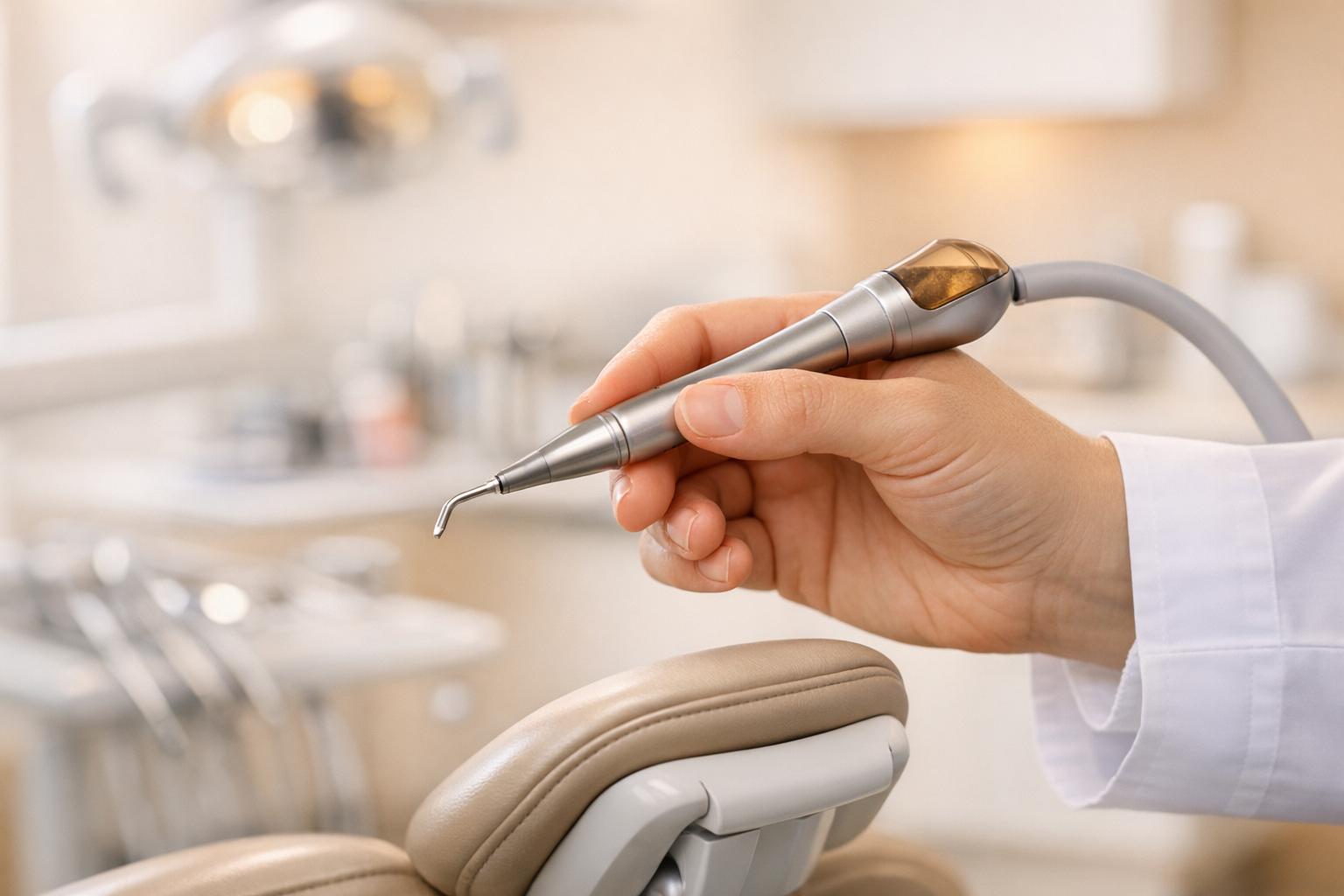
Air abrasion is a drill-free dental technique that uses fine particles and compressed air to remove decay, stains, and prepare teeth for procedures. It’s quieter, less invasive, and preserves more healthy tooth structure compared to standard drilling. This method is ideal for small cavities, cosmetic prep, and anxious or young patients. However, it’s not suitable for deep cavities, metal restorations, or treatments requiring sharp margins like crowns or inlays. Consult your dentist to determine if this option suits your needs.
Problems with Standard Drilling Methods
Heat, Vibration, and Noise
Traditional dental drills generate a combination of heat, pressure, vibration, and that unmistakable high-pitched noise – factors that can cause significant discomfort and anxiety for patients. Because of this, local anaesthesia is often necessary to manage the pain and unease these tools create [3].
But the issues go beyond just the sensory experience. The process of traditional drilling can also compromise the structure of the tooth itself.
Removing Too Much Healthy Tooth Structure
Conventional drilling frequently employs the ‘extension for prevention’ approach, a method originally designed for amalgam fillings. This technique often involves removing more healthy tooth structure than necessary to create defined cavity walls and margins. Dr. Vivek S Hegde from the Department of Conservative Dentistry and Endodontics highlights this concern:
Use of burs for this procedure would remove far more sound enamel than the few micrometres removed with air abrasion [2].
This excessive removal of healthy enamel can weaken the tooth’s overall structure, potentially reducing the durability of any restorative work.
Patient Anxiety and Discomfort
For many patients – especially children and those with dental anxiety – the physical sensation of drilling, combined with the need for anaesthetic injections, can be deeply distressing. Additionally, the mechanical action of traditional drills increases the likelihood of micro-fractures or chipping in the tooth, which may lead to further complications and additional treatments down the line [4].
No pain filling with air abrasion technology
When to Choose Air Abrasion for Dental Restorations
Air abrasion has carved out a niche in cosmetic dentistry, offering a gentle yet effective option for various procedures. Its precision and patient-friendly nature make it a preferred choice in specific scenarios.
Treating Small Surface Cavities
Air abrasion shines when addressing early-stage decay on tooth surfaces, such as pit and fissure caries. This method carefully removes decay while preserving as much healthy enamel as possible [2]. Because it doesn’t generate heat, pressure, or vibration, it often eliminates the need for local anaesthesia [1]. For cutting tooth structure, a typical air pressure setting is around 100 psi [2].
Preparing Teeth for Cosmetic Procedures
When it comes to prepping teeth for cosmetic work, air abrasion plays a key role in creating a surface that bonds effectively with restorative materials. Whether it’s for bonding, sealants, porcelain veneers, or composite restorations, this technique ensures the surface is textured for better adhesion. Dr. Vivek S Hegde from the Department of Conservative Dentistry and Endodontics highlights:
Air abrasion breaks the glaze of the highly polished surface that is not suitable for bonding and produces a highly textured surface that is excellent for the wet dentin-bonding technique [2].
Additionally, air abrasion is adept at removing superficial enamel stains and discolourations before cosmetic treatments. For surface etching, a lower pressure of around 80 psi is typically used [2].
Anxious or Young Patients
For children and patients with dental anxiety, air abrasion offers a much less intimidating experience. Without the high-pitched noise or vibrations associated with traditional drills, the process feels more approachable. According to WebMD Editorial Contributors, "Air abrasion is ideal for use in children and others who are fearful and have minimal decay" [1].
Repairing Minor Damage
Air abrasion is highly effective for removing old restorations and repairing minor fractures. It also doubles as a diagnostic tool, clearing debris from pits and fissures to reveal any hidden decay [1][2]. For treating cervical lesions (abfractions), it roughens polished surfaces to improve bonding [2]. This versatility makes it a valuable tool for minor repairs and touch-ups.
sbb-itb-2be92ed
Limitations of Air Abrasion
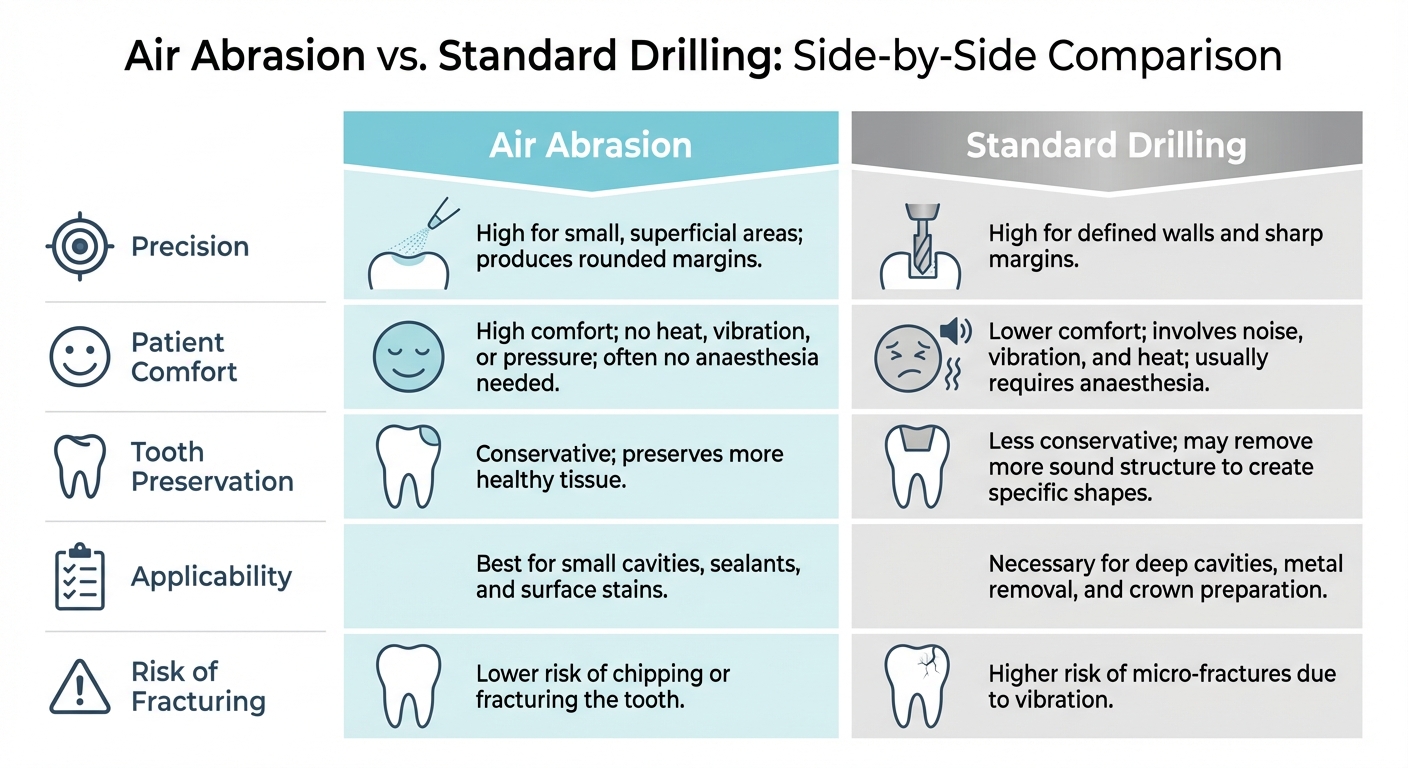
Air Abrasion vs Traditional Drilling Comparison Chart
Air abrasion has its merits, but it’s not a one-size-fits-all solution. Knowing its limitations ensures you get the most suitable dental treatment for your specific needs.
Not Ideal for Deep Cavities
Air abrasion works best for surface-level decay but isn’t recommended for deep cavities or areas close to the pulp [1]. The technique struggles to control depth, which can be risky when working near the tooth’s nerve. It also falls short in removing soft, leathery decay (known as ‘gross caries’). In such cases, a spoon excavator is needed first, and traditional drilling becomes necessary if the hard enamel must be removed [1][2].
Ineffective for Metal Restorations
This method cannot handle metallic restorations like silver amalgam fillings. It simply doesn’t have the power to cut through these materials [1][2]. Moreover, attempting to abrade amalgam fillings can release mercury vapour at levels four times higher than OSHA‘s safety guidelines [2]. Air abrasion also isn’t suitable for preparing teeth for crowns, inlays, or onlays, whether they involve metal or porcelain. Dr. Vivek S Hegde from the Department of Conservative Dentistry and Endodontics explains:
Air abrasion produces a rounded textured cavosurface margin and thus is not suitable for restorative preparations requiring definitive walls and sharp, well-defined cavosurface margins such as those needed for conventional amalgam and metal or porcelain inlays/onlays [2].
The table below highlights the key differences between air abrasion and traditional drilling.
Comparison Table: Air Abrasion vs. Standard Drilling
| Factor | Air Abrasion | Standard Drilling |
|---|---|---|
| Precision | High for small, superficial areas; produces rounded margins [2] | High for defined walls and sharp margins [2] |
| Patient Comfort | High; no heat, vibration, or pressure; often no anaesthesia needed [1] | Lower; involves noise, vibration, and heat; usually requires anaesthesia [1][2] |
| Tooth Preservation | Conservative; preserves more healthy tissue [1] | Less conservative; may remove more sound structure to create specific shapes [2] |
| Applicability | Best for small cavities, sealants, and surface stains [1] | Necessary for deep cavities, metal removal, and crown preparation [1][2] |
| Risk of Fracturing | Lower risk of chipping or fracturing the tooth [1] | Higher risk of micro-fractures due to vibration [1] |
Is Air Abrasion Right for You?
Key Takeaways
Air abrasion is a useful technique for treating small, early-stage cavities, particularly on the outer or chewing surfaces of teeth. It’s designed to preserve as much healthy tooth structure as possible, which can help ease patient anxiety. In many cases, it also eliminates the need for anaesthesia [1]. Beyond cavity treatment, air abrasion is effective for preparing teeth for sealants or bonding agents and even for removing surface stains [2].
That said, air abrasion does have its limits. It’s not suitable for deep cavities, especially those close to the tooth’s pulp, nor can it remove metal restorations like silver amalgam fillings [1]. While most people tolerate the procedure well, the high-pressure air stream may cause sensitivity for some patients [1].
Consulting a Dental Professional
To determine if air abrasion is the right choice for you, it’s essential to consult with a dental professional. Your dentist will assess your specific needs and check whether your cavity is shallow enough for this method or if traditional drilling is required. If you have dental insurance, it’s also worth confirming what’s covered under your plan [2].
During your visit, consider asking about protective measures like the use of a rubber dam and high-volume suction to shield your lungs and eyes from any abrasive dust [1]. Keep in mind that in some situations, traditional tools might still be needed to remove hard enamel before air abrasion can tackle the decay underneath [1]. For personalised advice, Complete Smiles Bella Vista offers a range of dental services and can help you decide if air abrasion suits your restoration needs.
FAQs
What makes air abrasion a better choice than traditional drilling for dental restorations?
Air abrasion brings a range of benefits compared to traditional drilling methods. For starters, it’s a much gentler approach, sidestepping the heat, vibration, and pressure that often come with drills. This makes the process far more comfortable for many patients and, in some cases, even reduces or completely eliminates the need for anaesthetic.
Another key advantage is its ability to conserve more of your natural tooth structure, which is essential for maintaining long-term dental health. Plus, air abrasion lowers the chances of fractures or chips in the tooth, making it a fantastic option for precise, minimally invasive restorations.
When is air abrasion not suitable for dental restorations?
Air abrasion isn’t typically suitable for addressing deep cavities near the pulp, extensive decay, or areas with existing metal restorations. Additionally, it’s not recommended when the treatment area can’t be properly isolated. These restrictions are in place to maintain the procedure’s safety and ensure the surrounding tooth structure remains protected.
Is air abrasion the right option for my dental treatment?
Air abrasion is a gentle, drill-free technique often used to treat small, shallow cavities or to prepare teeth for cosmetic work. Instead of traditional drilling, it relies on fine particles to carefully remove damaged tooth material. This makes it a great option for those looking for a low-vibration and low-heat alternative.
That said, air abrasion isn’t suitable for every situation. For example, it may not be effective for deeper cavities or decay located close to the tooth’s pulp. Your dentist will evaluate the size, depth, and location of the issue to decide if this method is right for you. Make sure to share your preferences and raise any concerns during your consultation so you can choose the best treatment approach together.
Related Blog Posts
- Wear-Resistant Materials in Dental Restorations
- What Is Minimally Invasive Cavity Preparation?
- Microdentistry vs. Traditional Dentistry for Kids
- How Ceramic Restorations Compare to Amalgam
Important Notice: Any surgical or invasive procedure carries risks. Before proceeding, you should seek a second opinion from an appropriately qualified health practitioner.
Individual results may vary. The information provided in this article is for educational purposes only and does not constitute medical advice.
Checkout Related Blogs




Get in touch with us
For more information, call us now to start feeling better. Or fill the form below to make appointment
The Latest News from Complete Smiles
How to Clean Clear Plastic Retainers
Checklist for Choosing Wearable Dental Devices
Checklist for Choosing Cloud AI Platforms in Dentistry

Complete Smiles Bella VistaAccepts All Major Health Funds, Including





