





Tooth Decay Treatment Costs: Options Explained
Tooth decay can lead to costly dental treatments if not addressed early. In Australia, dental care costs vary widely depending on the severity of the issue, the procedure required, and whether you have private health insurance. Here’s a quick breakdown:
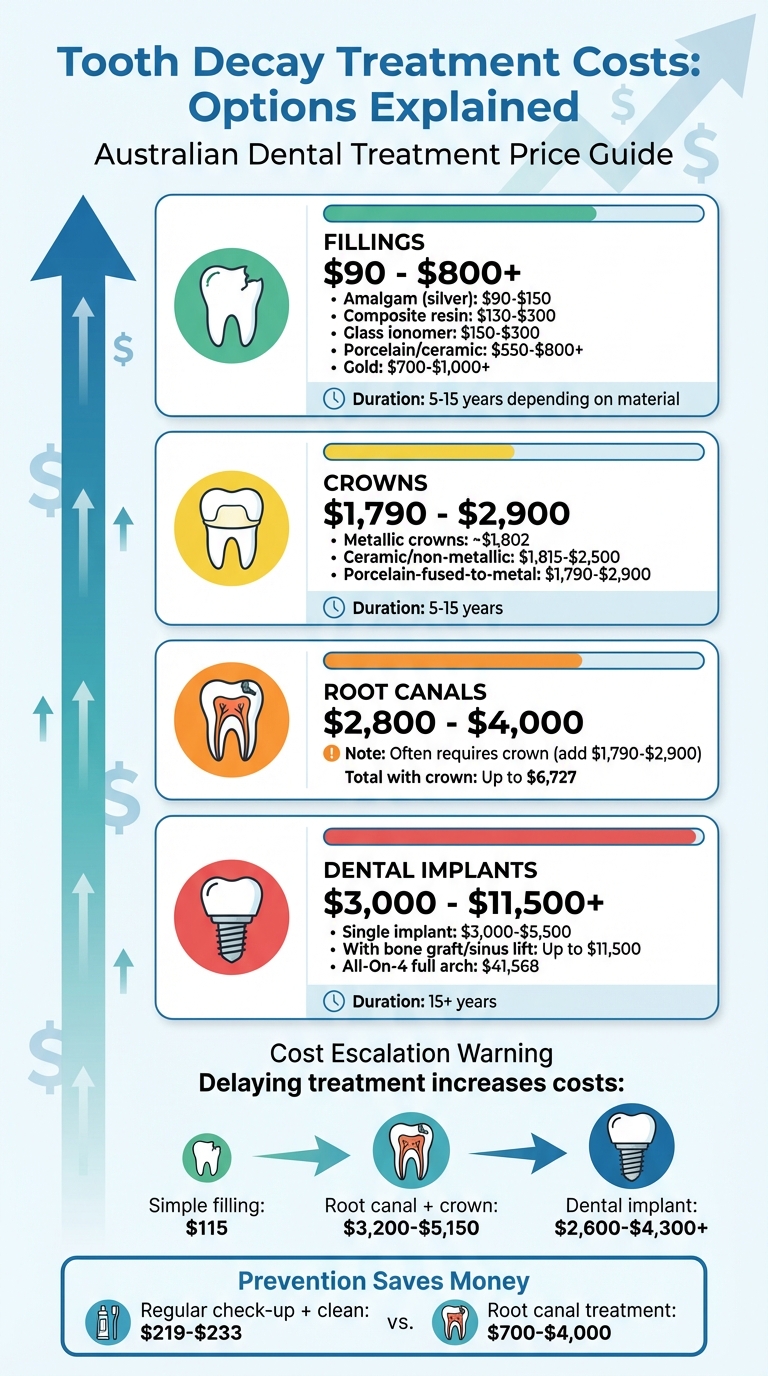
- Fillings: Start at $115 for a basic filling and go up to $800+ for premium materials like porcelain or gold.
- Crowns: Range from $1,800 to $2,900, depending on the material and complexity.
- Root Canals: Typically cost between $2,800 and $4,000, often requiring a crown as well.
- Dental Implants: Start at $3,000 and can exceed $11,500 if additional procedures, like bone grafts, are needed.
Delaying treatment can escalate costs significantly. For example, a simple filling may prevent the need for a root canal or implant later. Regular check-ups, good oral hygiene, and preventive care can save you thousands in dental bills. If costs are a concern, health insurance with dental extras, payment plans, or government schemes like the Child Dental Benefits Schedule can help manage expenses.
Tooth Decay Treatment Costs in Australia: From Fillings to Implants
How Much Does It Cost To Fix Tooth Decay? – The Pro Dentist
Treatment Options and Their Costs
The cost of addressing tooth decay in Australia largely depends on the severity of the issue and the type of restoration required. Below is a breakdown of common treatment options and their associated costs.
Dental Fillings
Fillings are used to repair decayed or damaged teeth by removing the decay and filling the cavity. The cost varies based on factors like the size of the cavity, the tooth’s location, and the material used.
- Composite resin (tooth-coloured): These fillings cost between $130 and $300. They bond directly to the tooth and require minimal removal of natural tooth structure. They typically last 5–7 years.
- Amalgam (silver): At $90–$150, these are a more affordable option and can last up to 15 years. However, their metallic look has led to their reduced use in many clinics.
- Glass ionomer: Priced at $150–$300, these are often used for temporary fixes or near the gumline, as they release fluoride to help prevent further decay.
For a more durable option, porcelain or ceramic fillings cost $550–$800+, while gold fillings range from $700–$1,000+. A simple filling may cost up to $275, while more complex fillings can reach $475. Costs vary by region – for example, in 2022, the average filling price was $148 in Queensland and $183 in Tasmania.
"The price of tooth fillings is always going to be much more affordable than the complex treatment you may need if you ignore dental cavities!" – Green Door Dental
If decay is extensive, a crown becomes the next step.
Dental Crowns
Crowns are recommended when a tooth is too damaged for a filling, whether due to severe decay, cracks, or after root canal therapy. A crown acts as a protective cap, restoring the tooth’s function and appearance. The process typically involves two visits: one for preparation and impressions, and another for fitting the crown.
Costs depend on the material used:
- Ceramic or non-metallic crowns (Item 613): $1,815–$2,500, ideal for front teeth due to their natural appearance.
- Porcelain-fused-to-metal crowns (Item 615): $1,790–$2,900, offering a balance of durability and aesthetics.
- Metallic crowns (Item 618): Around $1,802, these are highly durable and best suited for molars.
Material choice impacts both durability and appearance. For instance, metal crowns are strong but noticeable, while ceramic options blend seamlessly with natural teeth. Zirconia crowns are a premium choice, known for their strength and natural light reflection. Specialist dentists, like prosthodontists, may charge about 15% more than general dentists. In some cases, additional procedures, such as a core buildup, may be required before fitting the crown, adding to the total cost. Crowns typically last 5–15 years, depending on the material and maintenance.
"Dental costs vary widely between dental clinics. That is because there are no standard fees for dentists like there are for doctors." – Healthdirect
Root Canal Therapy
Root canal therapy is necessary when decay reaches the tooth’s pulp, the innermost layer containing nerves and blood vessels. The procedure involves removing the infected pulp, cleaning the canals, filling them with a biocompatible material, and sealing the tooth. Because the tooth may be weakened, a crown is often recommended for added protection.
Costs vary depending on the complexity of the tooth and any specialist fees. For instance, a four-canal root canal combined with a crown can cost around $6,727, while other treatments typically range from $2,800 to $4,000 [2].
If a tooth is too damaged to save, extraction and dental implants may be the next step.
Dental Implants
When a tooth cannot be saved and must be removed, dental implants offer a long-term replacement. An implant acts as an artificial root, made from titanium, that integrates with the jawbone. Implants restore both function and appearance while preventing bone loss, making them one of the most natural-looking options available.
The process takes 3–6 months to allow proper integration with the jawbone. A single dental implant in Australia generally costs $3,000–$5,500. If additional procedures like a bone graft or sinus lift are required, costs can rise to $11,500. For full-arch restoration using All-On-4 implants, the price may reach $41,568. Though the upfront cost is higher than other options, implants are durable, often lasting 15 years or more. The total cost usually includes the consultation, the implant itself (e.g., Item 661, around $1,212), and the crown attached to the implant (e.g., Item 672, $2,309–$3,031). Proper care, including regular brushing and flossing, is essential for long-term success.
"Dental implants are the most natural looking restoration option, are ideal for replacing missing or badly diseased teeth." – Smile.com.au
When comparing quotes, ask for specific item numbers to ensure you’re comparing the same services. If you have private health insurance with "Extras" or "Major Dental" cover, you may be eligible for rebates that reduce out-of-pocket costs by 15%–40%. Payment plans or joining a dental cover group can also help manage upfront expenses.
Other Costs to Consider
When it comes to dental care, treatment fees are just one part of the picture. There are other related costs that can add to your overall bill. Knowing these expenses ahead of time can help you plan your budget and avoid surprises.
Diagnostic Costs
Before any treatment begins, your dentist will assess the condition of your teeth. A comprehensive oral exam (item 011) typically costs between $50 and $92, with the average fee being about $67. If you’re returning for a routine check-up, a periodic oral exam (item 012) generally ranges from $45 to $85, averaging around $60.
X-rays are often necessary to detect decay that isn’t visible during a regular exam. A standard intraoral X-ray (item 022) costs approximately $45 per exposure, while a full-mouth X-ray, also known as an OPG (item 037), is priced at around $116. If your case requires a specialist, such as an endodontist for a complex root canal, consultation fees can be higher – around $120, compared to the $67 you’d pay for a general dentist.
Some dental clinics offer new patient packages that bundle services like exams, X-rays, cleaning, and fluoride treatments for a fixed price. If you’re insured, ask for specific dental item numbers to ensure you get the right rebate. Families with children may benefit from the Child Dental Benefits Schedule (CDBS), which covers up to $1,052 in basic dental care over a two-year period.
Follow-Up Care
Procedures like crowns and root canals often involve multiple visits, and each visit is billed separately under specific item codes. For treatments requiring laboratory work, such as crowns, it’s standard practice for clinics to request a 50% deposit at the first appointment, with the balance due when the final restoration is fitted.
If you experience pain beyond 48 hours after a procedure, you should contact your dentist, but keep in mind that additional fees may apply. To avoid confusion, always request a written treatment plan that details all expected costs. This will clarify whether follow-up visits are included in the initial quote or billed separately.
Health Insurance and Payment Plans
Having private health insurance with ‘Extras’ or ‘Major Dental’ cover can significantly lower your out-of-pocket expenses. Insurers typically cover a large portion of general dental services, such as exams and fillings, but rebates for major work like crowns, root canals, and implants are often smaller. Many health funds also have preferred provider networks, which can result in higher rebates and reduced gap fees.
Most dental clinics use HICAPS, allowing you to claim insurance benefits on the spot. This means you only need to pay the gap amount rather than the full fee upfront.
"Choosing a dentist who partners with your provider can save you hundreds each year. No-gap networks mean your check-up could be completely covered." – Nina Rinella, Editor in Chief, Canstar
Keep in mind that waiting periods usually range from 2 to 6 months for general dental services and 12 months or more for major procedures. Additionally, most policies have annual limits on the total amount you can claim within a year.
For those without insurance or facing high costs, many Australian clinics offer flexible payment options. Services like Afterpay, Humm, or Zip allow you to spread payments over time, while dental loans – ranging from $3,000 to $25,000 – can help cover urgent or expensive procedures.
sbb-itb-2be92ed
How to Prevent Tooth Decay and Save Money
Taking steps to prevent tooth decay can save you from expensive dental treatments. In Australia, untreated tooth decay is still a common issue for both adults and children [6]. The good news? Many of these cases are avoidable with simple daily habits and regular dental care.
Daily Oral Hygiene
Brushing your teeth twice a day with fluoride toothpaste is a must. But here’s a tip: don’t rinse after brushing. Leaving the fluoride on your teeth gives it more time to strengthen enamel and repair early damage before it turns into cavities [6][7].
Flossing or using interdental brushes daily is just as important. These tools clean the tight spaces between your teeth where your toothbrush can’t reach, preventing plaque from hardening into tartar [6]. Another bonus? Most Australian tap water contains fluoride, so drinking tap water provides an extra layer of protection for your teeth [6].
Diet and Lifestyle
Your diet and lifestyle choices play a huge role in your oral health. Sugary foods and drinks are a major culprit because plaque bacteria thrive on sugar, producing acid that attacks your enamel. To reduce this risk, the World Health Organization advises limiting your daily intake of free sugar to six teaspoons or less (around 24 grams) [6]. If you do consume sugary or acidic foods, have them with meals to lessen the impact on your teeth [6].
Smoking is another factor that increases your risk of tooth decay and gum disease, so quitting is a smart move for your overall and oral health. And when it comes to drinks, soft drinks, energy drinks, and fruit juices are particularly harmful because they combine sugar and acid. Stick to plain tap water whenever possible. If you do indulge in acidic or sugary treats, wait at least 30 minutes before brushing to avoid damaging enamel that’s temporarily softened.
Regular Dental Check-Ups
Even the best daily routines need a helping hand from professional care. Seeing your dentist at least once a year can catch problems early – often before you even notice them. Dentists can spot early signs of decay, like "white spots", and treat them with fluoride varnish or fissure sealants, which are far less costly than fillings or crowns. They can also remove hardened tartar that brushing at home can’t tackle [6][7].
Routine check-ups, including a clean and fluoride treatment, typically cost between $219 and $233 [3][4]. Compare that to the potential $700 to $4,000 for a root canal or the $1,678 average cost of a crown, and the benefits of regular check-ups become clear [3].
"A cavity that was simple to fix with a filling could turn into a bigger (and more painful) problem that requires more expensive treatment." – Dr Isabel Holmes, Principal Dentist, Illumident [1]
Your dentist can also tailor a prevention plan to suit your needs, taking into account any changes in your diet, medications, or overall health [8][9]. If you have private health insurance and use a preferred provider, you might even be able to get check-ups without any out-of-pocket costs [5][3]. By staying on top of preventive care, you can protect your teeth and avoid the hefty bills that come with restorative treatments.
Conclusion
Taking care of dental issues early not only protects your teeth but also saves you money in the long run. For instance, a straightforward filling might set you back around $115. But if left untreated, you could end up needing a root canal with a crown, which can cost between $3,200 and $5,150, or even a dental implant, ranging from $2,600 to over $4,300 [2].
The cost and type of treatment you need will depend on how severe the decay is, which tooth is affected, and your budget. Acting promptly can often help you avoid these higher expenses.
It’s always a good idea to consult a qualified dentist for a detailed, written treatment plan. This should include specific item numbers so you can compare costs and check your rebates.
Delaying dental care can lead to more complex and expensive problems. Unfortunately, about 40% of Australians put off or skip dental visits due to financial concerns [3]. But there are options to help. Many dental clinics offer payment plans, and eligible children can access up to $1,052 in benefits over two calendar years through the Child Dental Benefits Schedule.
Your dentist can assess your situation, explain your options, and guide you toward a decision that works for both your dental health and your budget. When it comes to managing tooth decay, early action is always the most cost-effective choice.
FAQs
What are some ways to make dental treatments more affordable in Australia?
Dental care in Australia can be pricey, but there are ways to make it more manageable. Start by asking your dentist for a written treatment plan and compare fees across different clinics. Routine check-ups, which typically cost around $233, can help catch potential issues early and save you from pricier treatments down the track.
You might also want to look into dental discount programs that offer reduced fees for members. Public dental services and schemes like the Child Dental Benefits Schedule (CDBS) are worth exploring too, especially for eligible children and adults on lower incomes. If you have private health insurance with extras cover, it can help reduce out-of-pocket expenses for treatments like fillings, crowns, or implants.
Some clinics, such as Complete Smiles Bella Vista, even offer flexible payment plans to help spread the cost of dental care. By focusing on preventive care, comparing prices, taking advantage of subsidies, and considering insurance or discount programs, you can make dental treatments far more affordable.
What are the long-term advantages of dental implants compared to other treatment options?
Dental implants offer a long-lasting and realistic option for replacing missing teeth. Unlike dentures or bridges, they go beyond just filling gaps – they help preserve jawbone density, which is crucial for maintaining your facial structure and preventing bone deterioration over time. Plus, they work just like your natural teeth, enhancing your ability to chew, speak clearly, and enjoy overall oral comfort.
Although the initial expense might be higher compared to other alternatives, implants are built to stand the test of time with the right care. This makes them a smart, long-term investment in both your oral health and your self-confidence.
How can private health insurance reduce the cost of dental treatments?
Private health insurance can ease the financial burden of dental treatments by offering rebates or partial coverage, depending on your specific policy and the procedure involved. Once the insurer contributes, your out-of-pocket costs are reduced, making dental care more affordable.
The extent of coverage depends on factors such as your policy’s inclusions, annual limits, and the category of dental care – whether it’s general, major, or orthodontic treatment. To avoid surprises, it’s wise to review your policy details and clarify with your insurer what’s covered, along with any potential gaps in coverage.
Related Blog Posts
- Transparent Dental Pricing Explained
- Ultimate Guide to Dental Treatment Cost Estimation
- Cost Comparison: Implants, Bridges, and Dentures in 2025
- Cracked Tooth Repair Costs: What to Expect
Important Notice: Any surgical or invasive procedure carries risks. Before proceeding, you should seek a second opinion from an appropriately qualified health practitioner.
Individual results may vary. The information provided in this article is for educational purposes only and does not constitute medical advice.
Checkout Related Blogs




Get in touch with us
For more information, call us now to start feeling better. Or fill the form below to make appointment
The Latest News from Complete Smiles
How to Clean Clear Plastic Retainers
Checklist for Choosing Wearable Dental Devices
Checklist for Choosing Cloud AI Platforms in Dentistry

Complete Smiles Bella VistaAccepts All Major Health Funds, Including





