





Why Teeth Feel Sensitive After Restorative Work
Feeling sensitivity after dental work? It’s a common experience. Procedures like fillings, crowns, or clean & polish treatments can irritate the tooth’s nerve or alter its structure, leading to discomfort. Here’s what you need to know:
- Sensitivity often results from changes to the tooth’s enamel or pulp irritation during treatment.
- It typically lasts 2–4 weeks, depending on the procedure and individual healing.
- Desensitising toothpaste, avoiding hot or cold foods, and adjusting oral care can help ease the discomfort.
- Persistent pain, swelling, or worsening symptoms need professional attention.
Most cases resolve on their own, but knowing when to see your dentist is key to avoiding complications.
SENSITIVE TEETH after Dental Work | What do I do?
sbb-itb-2be92ed
Why Teeth Become Sensitive After Restorative Procedures
Understanding why teeth become sensitive after dental work can help manage recovery expectations. Sensitivity often arises due to several factors linked to the procedure itself. Here’s a closer look at the main causes.
Changes to Tooth Structure
Restorative procedures often involve removing decay or reshaping the tooth. This process can thin or completely remove the enamel, exposing the dentine – a porous layer that connects directly to the nerve. For instance, composite fillings can shrink slightly during the curing process, potentially creating tension or gaps. This may lead to temporary sensitivity, especially when biting or exposed to temperature changes[1].
Dental Pulp Irritation
The dental pulp, the innermost part of the tooth containing nerves and blood vessels, can become inflamed during restorative work. Dr. Ellie Nadian explains:
"When a filling is placed close to the nerve, the nerve may become irritated. This may cause aching or sharp pain, especially with hot or cold drinks"[7].
Heat generated during drilling, particularly in deep cavities, can cause reversible pulpitis – a mild inflammation of the pulp. Thankfully, this condition often resolves on its own as the tooth heals[2][6].
Bite Misalignment
Sometimes, a new restoration might sit slightly higher than the surrounding teeth, leading to an uneven bite. This can result in excessive force on the restored tooth. Dr. Soha Sharif highlights:
"If the filling sits slightly higher than the other teeth, extra pressure is placed on that tooth when you bite… Even a small height difference can feel uncomfortable"[7].
This uneven pressure can overstimulate the nerve, causing discomfort. Since numbness from anaesthesia during the procedure can mask bite issues, it’s important to follow up with your dentist for an adjustment if the restoration feels high or uncomfortable[8][5].
How Tooth Structure Affects Post-Treatment Sensitivity
Your tooth is made up of three main layers. The outer enamel serves as a shield, protecting against temperature changes and pressure. Beneath that lies the dentine, which contains tiny tubules that connect directly to the nerve. At the core is the dental pulp, home to nerves and blood vessels. When dental procedures thin the enamel, things like hot drinks, cold air, or chewing can send signals through the dentine tubules to the nerve, causing sensitivity. This is why changes in tooth structure during treatment can lead to discomfort.
Even small alterations to the tooth’s structure can influence how it reacts to external stimuli. For instance, the drilling process generates heat and vibrations, which can temporarily irritate the pulp. If a filling is deep, it might leave only a thin layer of dentine between the restoration and the pulp, reducing the tooth’s natural insulation. Additionally, modern composite materials used in fillings can shrink slightly as they set, creating tiny gaps that might delay the onset of sensitivity.
Fortunately, most post-treatment sensitivity subsides within two to four weeks as the tooth adjusts and the pulp heals. Understanding how these structural changes impact sensitivity can help manage expectations and reassure patients that this discomfort is usually temporary.
How Long Sensitivity Lasts After Restorative Work
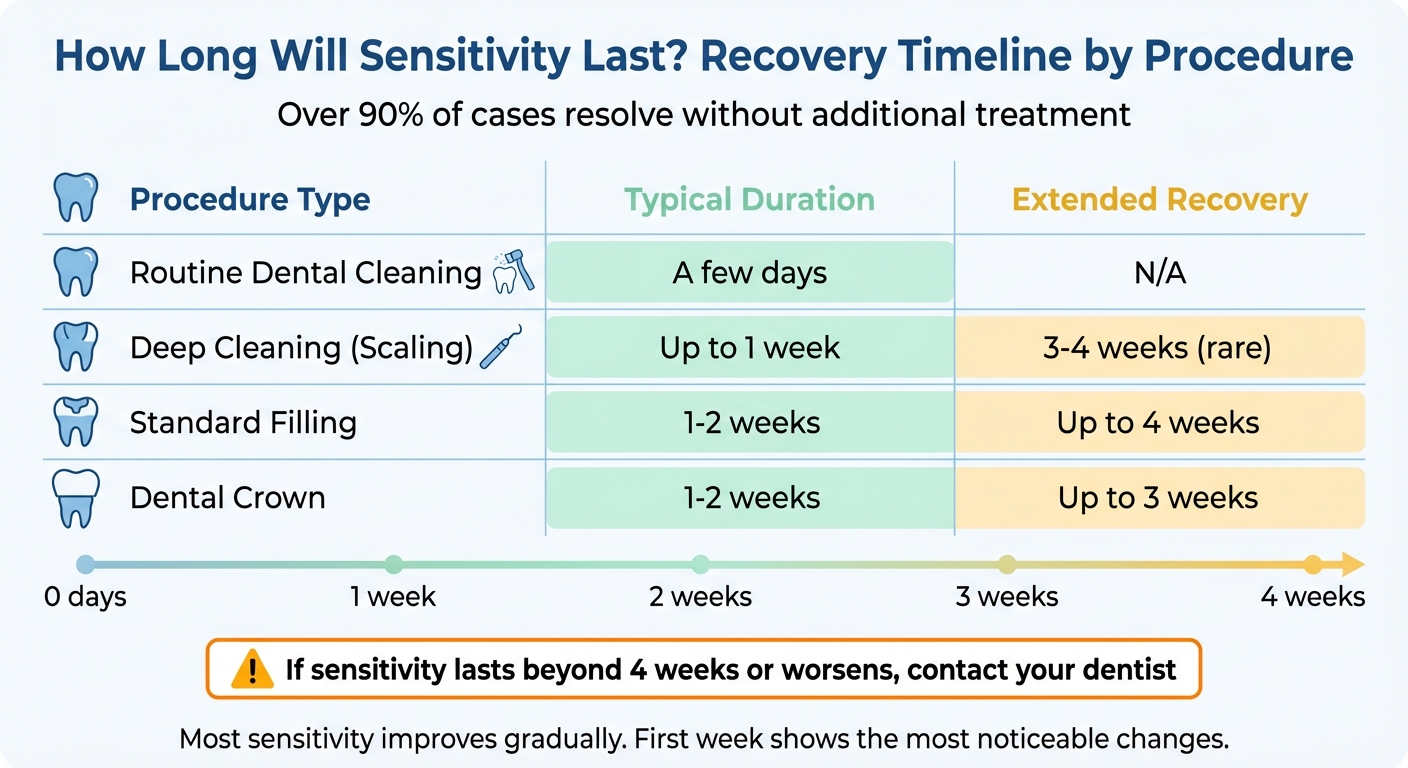
Tooth Sensitivity Duration After Common Dental Procedures
Post-treatment sensitivity usually follows a predictable timeline. For routine dental fillings, any discomfort generally eases within one to two weeks [11]. However, when a cavity is deeper, recovery might take up to four weeks [6][11]. Sensitivity after dental crowns often lasts between one and three weeks, with the first 48 to 72 hours being the most noticeable [12][13]. For deep cleanings, like scaling, sensitivity typically subsides within a week [14].
As the tooth begins to heal, you should notice a gradual reduction in sensitivity. If the discomfort persists or worsens after the first week, it’s a good idea to reach out to your dentist [6]. It’s worth noting that over 90% of post-filling sensitivity cases resolve without requiring further treatment [11]. Recovery times can differ based on the complexity of the procedure and individual healing responses.
Here’s a quick overview of typical sensitivity durations for various procedures:
| Procedure Type | Typical Sensitivity Duration | Extended Recovery (Deep/Complex) |
|---|---|---|
| Routine Dental Cleaning | A few days [16] | N/A |
| Deep Cleaning (Scaling) | Up to 1 week [14] | 3–4 weeks (rare) [14] |
| Standard Filling | 1–2 weeks [11] | Up to 4 weeks [6] |
| Dental Crown | 1–2 weeks [12] | Up to 3 weeks [13] |
If sensitivity lingers beyond four weeks or is accompanied by symptoms like spontaneous pain, night pain, swelling, or a sensation of a "high bite", it’s essential to consult your dentist [6][15].
Additionally, the type of filling material can influence sensitivity. Composite fillings, for instance, may cause prolonged sensitivity because of shrinkage during curing, which can create tiny gaps [11][6]. On the other hand, metal fillings can amplify sensitivity due to their ability to conduct temperature changes more rapidly [11]. Understanding these differences can help you set realistic expectations for recovery. If anything seems unusual, don’t hesitate to check in with your dentist.
How to Manage Sensitivity After Restorative Procedures
Sensitivity after dental restorative procedures is a common experience. While it usually subsides within 2–4 weeks [19][6], there are several ways to ease discomfort during the healing process. Adjusting your oral care routine and being mindful of triggers can make a big difference.
Desensitising Toothpaste
Desensitising toothpaste can help by calming the nerve or forming a protective barrier over exposed dentinal tubules [17][9]. Ingredients like potassium nitrate, arginine, stannous fluoride, and bioactive glass are particularly effective. These ingredients either numb nerve endings or physically block the tubules to prevent sensitivity [17][20].
For best results, apply a pea-sized amount of toothpaste directly to the sensitive area and gently massage it for about a minute [20]. Potassium nitrate, in particular, may take a couple of applications to show its full effect. After brushing, avoid rinsing your mouth immediately to extend the toothpaste’s benefits [10].
| Ingredient | Primary Function | Common Product |
|---|---|---|
| Arginine & Calcium Carbonate | Blocks open dentinal tubules for quick relief | Colgate Sensitive Pro-Relief [17][20] |
| Potassium Nitrate | Soothes and numbs nerve endings | Sensodyne Daily Care [17][20] |
| Bioactive Glass (NovaMin) | Forms a mineral layer on the dentine | Sensodyne Repair and Protect [17][20] |
| Stannous Fluoride | Creates a protective barrier to reduce triggers | Oral‑B Gum and Enamel Repair [17][20] |
Foods and Drinks to Avoid
Certain foods and drinks can trigger sensitivity, especially those that are extremely hot, cold, or acidic. Stick to room-temperature or lukewarm options, like herbal teas, to avoid sudden sharp pain [17][18]. After eating acidic foods, wait at least 30 minutes before brushing your teeth. This allows your saliva to naturally restore enamel softened by acid exposure [18][20].
It’s also wise to avoid whitening toothpastes or gels immediately after restorative work. These products can worsen sensitivity due to their abrasive or acidic nature [18]. If chewing causes discomfort, try using the opposite side of your mouth to give the treated tooth time to settle. During colder months, covering your mouth with a scarf can help shield your teeth from cold air, which might otherwise trigger pain [19].
If these changes don’t provide relief, it may be time to consult your dentist for further evaluation.
Professional Dental Adjustments
When sensitivity persists despite home care, professional intervention may be necessary. Sharp pain when biting could indicate that a filling is too high and needs adjustment [18][19][6]. Even a slight height difference in a filling can cause ongoing irritation. Your dentist might also apply high-concentration fluoride treatments to strengthen enamel and reduce sensitivity more effectively [21].
For additional relief, over-the-counter non-steroidal anti-inflammatory drugs (NSAIDs) like ibuprofen can help with inflammation in the tooth pulp following a procedure [18][19][6]. Switching to a soft-bristled toothbrush and using gentle, circular brushing motions at a 45-degree angle can also protect your enamel and reduce gum irritation [17][18].
These strategies, combined with professional care when needed, can help manage sensitivity and make the healing process more comfortable.
When to See Your Dentist About Ongoing Sensitivity
It’s normal to experience mild sensitivity for a few days after dental work, but certain symptoms should not be ignored. If you’re dealing with severe or throbbing pain that over-the-counter medications can’t ease – or pain that disrupts your sleep at night – it’s time to see your dentist [5][6]. Unlike the usual post-procedure discomfort, these signs suggest that the dental pulp might not be healing as it should. Similarly, if your sensitivity gets worse over time instead of improving, this could point to underlying issues [5][6][1].
Be especially mindful of swelling in your gums, face, or jaw, which may indicate an infection or dental abscess. This requires urgent care [5][22][6]. Look out for additional symptoms like pus, a foul taste in your mouth, or a fever, as these could mean the infection is spreading [5][22]. In Australia, dental infections account for around 37% of adult dental emergency visits to public hospital emergency departments [22], highlighting the importance of prompt treatment if these signs appear.
Sensitivity paired with discomfort while biting could mean a problem with your bite alignment. Sharp pain when biting might suggest that a restoration is too high, requiring adjustment by your dentist [5][3][4]. If the treated tooth feels like it contacts first when you close your mouth, don’t delay in getting it checked. Ignoring this can lead to hairline fractures or ongoing inflammation [5].
Prolonged sensitivity to heat – lasting more than a few seconds – could signal nerve damage [5][3]. Additionally, pain that occurs spontaneously, without any clear trigger, should be assessed immediately [1]. If your sensitivity lasts beyond four weeks or doesn’t improve after 10–14 days, it’s a good idea to schedule a follow-up appointment [3][6][1]. These warning signs, when combined with earlier advice on managing sensitivity, help determine when professional care is necessary. Persistent or worsening symptoms often indicate complications that require additional treatment.
Here’s a quick guide to help you distinguish between normal healing and signs that need a dentist’s attention:
| Symptom | Expected Healing | Warning Signs (See Dentist) |
|---|---|---|
| Pain Intensity | Mild twinges or dull ache | Severe, throbbing, or sharp [5][6] |
| Duration | Lasts seconds after a trigger | Lingers for minutes or is constant [5][3] |
| Progression | Improves daily or weekly | Stays the same or worsens [5][1] |
| Triggers | Cold, sweets, or pressure | Spontaneous or triggered by heat [5][1] |
| Physical Signs | None | Swelling, pus, or redness [5][6] |
| Sleep | Unaffected | Pain wakes you up at night [6] |
Conclusion
As discussed earlier, post-restoration sensitivity is a common experience and typically subsides within 2–4 weeks [3][5]. During this time, you can manage the discomfort at home by using desensitising toothpaste, making dietary adjustments, and practising gentle oral hygiene. For more dental tips on maintaining your smile, explore our latest guides.
However, sensitivity that persists or worsens is not normal. If your symptoms last beyond 4 weeks, become more severe, or are accompanied by throbbing pain, swelling, or sleep disturbances, it’s crucial to contact your dentist [3][5]. These could be signs of complications like nerve damage, infection, or a high filling that needs professional attention.
Dr. Dhrupad Patel emphasises the importance of early intervention:
"Addressing issues early can prevent more significant problems down the track."
FAQs
Why does my tooth hurt more when I bite after a filling or crown?
If you feel pain when biting after getting a filling or crown, it could be because the restoration is sitting too high. This creates extra pressure on the tooth, leading to sensitivity. Another possibility is that the procedure irritated the tooth’s nerve, which can cause temporary discomfort. This kind of sensitivity usually goes away within a few days to a few weeks. However, if the pain doesn’t improve, it’s a good idea to visit your dentist. They can check if the restoration needs adjustment or if there’s another underlying issue.
Can post-treatment sensitivity mean I need a root canal?
Post-treatment sensitivity doesn’t automatically mean you need a root canal. It’s often caused by things like exposed dentin, minor cracks, or temporary irritation to the nerve. These issues usually settle down with proper care. However, if the sensitivity continues or gets worse, it’s important to see your dentist for a closer look.
What’s the fastest way to calm sensitivity at home after dental work?
To ease tooth sensitivity after dental work, try using a desensitising toothpaste to help soothe your teeth. Avoid consuming foods and drinks that are extremely hot, cold, or sugary, as these can trigger discomfort. For added relief, gently press a soft cloth or a cold compress against your cheek to minimise any soreness. These simple measures can make the adjustment period much more manageable.
Related Blog Posts
- Studies on Tooth Sensitivity After Smoking Cessation
- 7 Non-Drug Ways to Ease Root Canal Pain
- Root Canal Retreatment Pain: What to Expect
- Research on Dental Restoration Longevity
Important Notice: Any surgical or invasive procedure carries risks. Before proceeding, you should seek a second opinion from an appropriately qualified health practitioner.
Individual results may vary. The information provided in this article is for educational purposes only and does not constitute medical advice.
Checkout Related Blogs




Get in touch with us
For more information, call us now to start feeling better. Or fill the form below to make appointment
The Latest News from Complete Smiles
How to Clean Clear Plastic Retainers
Checklist for Choosing Wearable Dental Devices
Checklist for Choosing Cloud AI Platforms in Dentistry

Complete Smiles Bella VistaAccepts All Major Health Funds, Including





