




Root Canal Retreatment Pain: What to Expect
Root canal retreatment gives you another chance to save a tooth that didn’t heal properly or developed a new infection. The process involves reopening the tooth, cleaning the canals, and resealing them. While the idea of retreatment may sound daunting, the pain is usually mild and manageable with modern anaesthesia and techniques. Here’s a quick breakdown:
- Pain Levels: Similar to or less than the first root canal; mild soreness for 3–5 days is normal.
- Recovery Timeline: Most discomfort subsides within a week. Severe pain or swelling after 48 hours could signal a problem.
- Pain Relief: Over-the-counter medications like ibuprofen or paracetamol, cold compresses, and soft foods can help.
- When to Call Your Dentist: Worsening pain, swelling, fever, or drainage are warning signs that need attention.
Retreatment is a reliable way to preserve your natural tooth, with over 90% of treated teeth lasting at least a decade. Follow your dentist’s advice, keep the area clean, and avoid chewing on the treated side until a crown is placed. If you notice unusual symptoms, don’t delay seeking professional care.
Tooth Pain After Root Canal Treatment? Retreatment Explained!
Does Retreatment Hurt More Than the First Root Canal?
Root canal retreatment is generally just as comfortable as the initial procedure, largely due to the use of effective anaesthesia that completely numbs the area being treated. Interestingly, patients who’ve had a root canal are six times more likely to describe the experience as painless compared to those who’ve undergone a tooth extraction [9].
While retreatment can be more intricate and time-consuming, this doesn’t mean it’s more painful. The extra steps – like removing previous restorations and fillings to access and clean the canals – are done under full anaesthesia, ensuring you remain comfortable throughout. In fact, this level of care ensures retreatment is no less tolerable than the first procedure [1].
Modern dental tools, like operating microscopes and advanced rotary endodontic files, make it easier to navigate tricky canals, whether they’re narrow or curved. These tools help clear infections thoroughly while preserving as much of the tooth as possible. For those who feel anxious, sedation dentistry is also an option to make the experience even more stress-free.
After the procedure, it’s normal to experience mild discomfort, such as tenderness, a feeling of pressure, or a dull ache. These symptoms typically last for 24–48 hours and are part of the natural healing process. If there was a severe infection or abscess, you might notice slightly more throbbing, but over-the-counter pain relievers like ibuprofen or paracetamol are usually enough to manage it.
The recovery process can also vary depending on the retreatment method. For example, surgical retreatment, which involves a small incision in the gum, may cause more pain and swelling during the first week compared to non-surgical retreatment. Your dentist will carefully assess your situation and recommend the best approach for your needs.
Recovery Timeline: Pain and Discomfort After Retreatment
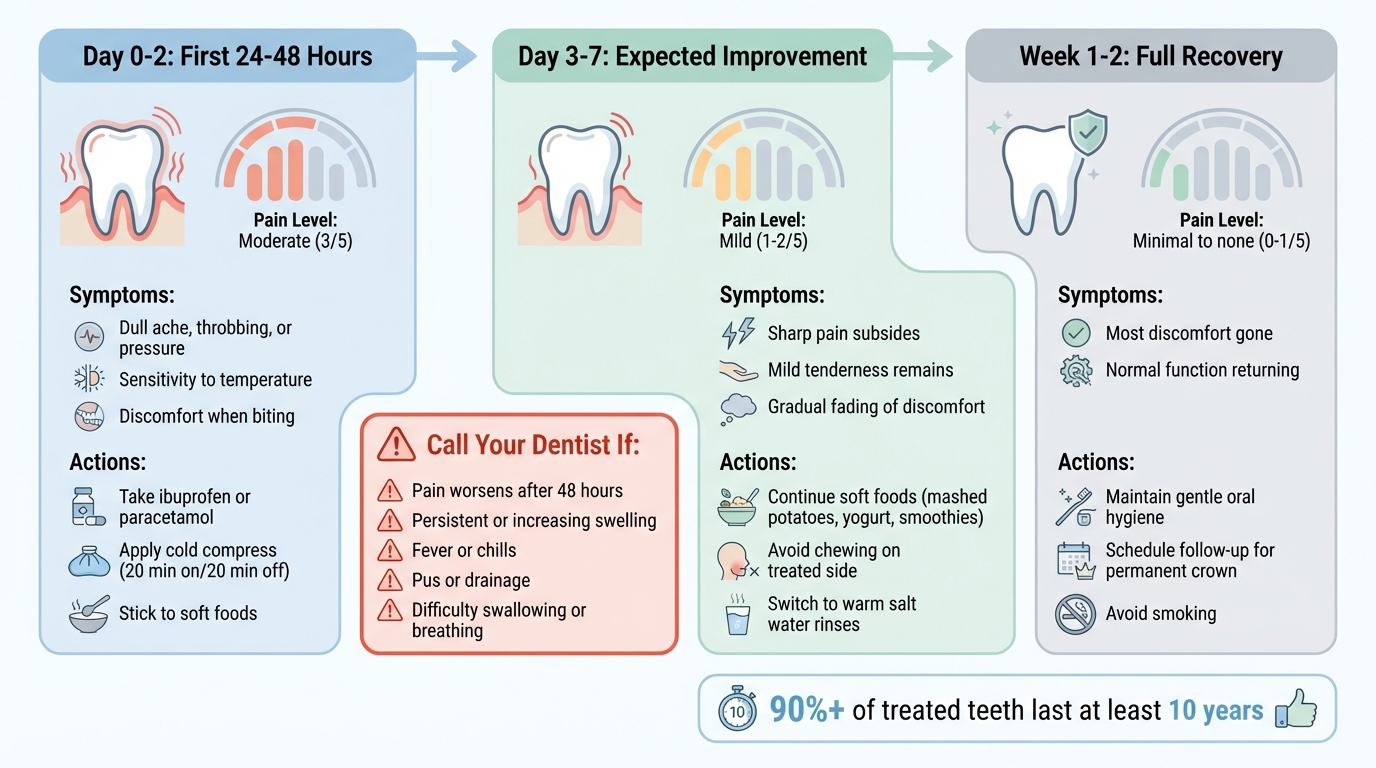
Root Canal Retreatment Recovery Timeline: Pain Levels and Symptoms by Day
First 24-48 Hours After the Procedure
During the first couple of days after the procedure, it’s common to feel some discomfort. You might notice a dull ache, throbbing, or pressure around the treated tooth – this is your body’s natural reaction to the procedure. Removing old filling materials and disinfecting the canals can lead to some inflammation in the surrounding tissues[2][11].
You may also experience sensitivity to temperature or discomfort when biting down or touching the tooth[2][12]. To help manage these symptoms, your dentist will likely recommend over-the-counter pain relief, like ibuprofen or paracetamol. Applying a cold compress to the outside of the affected area can also help reduce pain and swelling[2][11].
Days 3-7: Expected Improvement
By the third day, you should start to feel noticeably better. The sharper pain from the first two days typically subsides, leaving just mild tenderness that gradually fades. Most people feel significant improvement by the end of the week[6][11]. During this time, it’s best to stick to soft foods like mashed potatoes, yoghurt, or smoothies, and avoid chewing on the side of the treated tooth[2][6]. While full recovery can take one to two weeks, the most intense discomfort should be gone by day seven[2].
Signs That Pain Is Not Normal
Although most patients recover without issues, there are certain warning signs you shouldn’t ignore. If your pain gets worse after 48 hours, it’s time to call your dentist[2]. Other red flags include persistent or increasing swelling, fever, or noticing a small bump on your gums[13]. Additionally, seek immediate care if you experience new drainage from the site, a foul taste in your mouth, or difficulty swallowing[13]. If you feel your throat closing or have trouble breathing, this is an emergency, and you should get medical help right away[13].
How to Manage Pain and Swelling at Home
After the initial discomfort eases, you can take steps at home to manage any lingering pain and swelling effectively.
Pain Relief Options
For mild to moderate pain, over-the-counter medications like paracetamol (e.g., Panadol) can be helpful. If inflammation is a concern, ibuprofen (e.g., Nurofen or Advil) may be a better option as it offers anti-inflammatory benefits as well[14][7]. Always check with your healthcare provider to ensure these medications are safe to use alongside any other treatments you may be taking. If these remedies aren’t enough, your dentist might recommend stronger prescription painkillers[14].
Cold and Warm Compress Techniques
Cold compresses work best during the first 24 hours after your procedure. Apply an ice pack to the outside of your cheek near the affected tooth for 20 minutes at a time, then take a 20-minute break to avoid skin irritation[15]. After the first day, you can switch to warm salt water rinses to help ease any remaining discomfort. To make the rinse, dissolve a teaspoon of salt in warm water and swish it gently around your mouth. Keeping your head elevated with extra pillows while resting can also help reduce swelling and throbbing[15][16].
Eating and Oral Hygiene During Recovery
Stick to soft, easy-to-chew foods for the first few days after retreatment[6]. Avoid chewing on the treated side until your dentist places a permanent restoration, and steer clear of hard or crunchy foods to prevent irritation to the sensitive area[6][12]. Maintain your oral hygiene by brushing gently after meals and flossing carefully around the treated site. Using an antibacterial mouthwash can further protect against bacteria during healing. It’s also wise to avoid smoking, as it can significantly slow down the recovery process[6].
These simple steps can help you recover smoothly until your next follow-up appointment.
sbb-itb-2be92ed
When to Contact Your Dentist
Some mild discomfort is to be expected after retreatment, but if symptoms become severe, it’s important to reach out to your dentist. Certain warning signs may indicate complications that require immediate attention.
Warning Signs of Complications
While recovery often includes minor soreness, there are symptoms that shouldn’t be ignored. If you notice facial swelling that spreads to areas like your cheek, jaw, or eye, or if you develop a fever or chills, contact your dentist right away [13][17]. Other signs to watch for include the presence of pus, a gum ‘pimple’, or pain that worsens over time [13][17][6][5].
Mild soreness typically lasts 3–7 days, but severe or worsening throbbing pain is a red flag [13][17][6]. Additionally, if you experience trismus (difficulty opening your mouth), it’s time to seek professional care [13][17]. More urgent symptoms, such as trouble breathing, difficulty swallowing, excessive drooling, or a sensation of your throat closing, require immediate emergency assistance [13][17].
Follow-Up Treatment Options
If complications arise, your dentist will determine the appropriate course of action. For infections that are spreading or causing systemic symptoms, antibiotics may be prescribed alongside direct treatment of the affected tooth [13]. In cases where bacteria persist or the tooth structure is compromised, additional procedures like further cleaning, an apicoectomy, or even extraction might be necessary [13][1][3]. Your dentist will carefully explain the best treatment option for your situation and outline the next steps in your care plan.
What Affects Your Pain Level
Your recovery experience after retreatment isn’t just about following the timeline – it’s also shaped by a mix of personal and procedural factors. Pain levels and how quickly you recover can vary widely from person to person.
Existing Infection and Pain Before Treatment
If you had an active infection or abscess before retreatment, you might notice more discomfort during recovery. Infections can cause inflammation and pressure from pus build-up, which adds to sensitivity that gradually eases over time [6][7]. Symptoms like sharp pain when biting, sensitivity to hot or cold, or gum boils can point to complications that slow down healing [5][8]. Often, these issues stem from bacteria left behind during the initial treatment, which may prolong the recovery process [1]. This makes pre-existing infections a key factor influencing how you heal.
How Complex the Retreatment Is
The complexity of your tooth’s structure can also play a big role in your recovery. Teeth with narrow, curved, or additional canals require more intricate work, which might lead to increased tenderness afterward [3][4]. If you undergo surgical retreatment, such as a root-end resection, you’re more likely to experience pain during the first week compared to non-surgical retreatment. In fact, studies show a risk ratio of 3.34 for post-procedure pain with surgical cases [10].
Personal Pain Tolerance and Healing Speed
Your natural pain tolerance and how quickly your body heals are also important. Everyone reacts differently to dental procedures, and recovery times can vary. While most people feel better within a week [6], some may have lingering sensitivity for a little longer. Factors like your body’s healing response, how you react to anaesthesia, and your personal pain threshold all shape your experience. These variations are entirely normal and don’t necessarily mean something went wrong with your treatment.
Summary: Managing Pain After Root Canal Retreatment
Recovering from root canal retreatment can be straightforward if you stick to your dentist’s advice. Most of the discomfort you might feel comes from inflammation around the treated tooth, and this usually eases within a few days to a week. To stay comfortable, stick to pain relief measures, use cold compresses, and opt for soft foods.
Protecting the tooth for the long haul is just as important as managing pain. Avoid chewing on the treated side until your dentist places a permanent crown or restoration. Research shows that molars left without crowns are far less likely to last, so booking that follow-up appointment for a permanent restoration is essential [8].
Keeping an eye on your recovery is equally vital. While mild tenderness is normal, severe pain that lingers for more than a few days, or signs like swelling or pus, should prompt an immediate call to your dentist [14]. The good news? Over 90% of teeth that are well-treated continue to function for at least a decade [1].
In the meantime, maintain gentle oral hygiene. Brush and floss carefully around the treated area, and steer clear of smoking, as it can slow down the healing process [18]. By following these steps, you’ll give your tooth the best shot at long-term success and be back to your regular routine in no time.
FAQs
What should I do if I have severe pain after a root canal retreatment?
If you’re dealing with severe pain following a root canal retreatment, it’s crucial to reach out to your dentist or endodontist right away. They’ll evaluate your symptoms and guide you on the appropriate next steps.
Make sure to follow any pain management instructions given by your dental professional. Don’t rely entirely on over-the-counter medications, as intense pain could signal a problem that requires further care. Acting quickly can help ensure both your comfort and a smooth recovery.
Will the complexity of my tooth affect pain and recovery after root canal retreatment?
Yes, the structure of your tooth can influence both the level of discomfort and the recovery time following a root canal retreatment. Teeth with multiple or curved canals, or those that have undergone previous treatment, tend to be more complex to work on. This can sometimes lead to a bit more soreness and a longer healing period compared to teeth with a single, straightforward canal.
That said, any pain is generally mild and can be managed with over-the-counter painkillers. Most discomfort should ease within a few days. Your dentist will give you tailored advice to ensure your recovery is as smooth and comfortable as possible.
What are the signs that my root canal retreatment isn’t healing as it should?
If your root canal retreatment isn’t healing as expected, you may notice ongoing or worsening pain, swelling or tenderness in the gums, or even a bad-tasting discharge like pus. Other warning signs could include a persistent feeling of pressure around the treated tooth or the presence of a fever.
Should you experience any of these symptoms, it’s crucial to reach out to your dentist right away. Early intervention can help tackle the problem before it escalates and get your oral health back on the right path.
Related Blog Posts
- 5 Common Root Canal Myths Debunked
- How Pain Is Controlled During Bone Grafting Surgery
- Studies on Pain Management in Dental Extractions
- 7 Non-Drug Ways to Ease Root Canal Pain
Important Notice: Any surgical or invasive procedure carries risks. Before proceeding, you should seek a second opinion from an appropriately qualified health practitioner.
Individual results may vary. The information provided in this article is for educational purposes only and does not constitute medical advice.
Checkout Related Blogs



Get in touch with us
For more information, call us now to start feeling better. Or fill the form below to make appointment
The Latest News from Complete Smiles
How to Clean Clear Plastic Retainers
Checklist for Choosing Wearable Dental Devices
Checklist for Choosing Cloud AI Platforms in Dentistry
Complete Smiles Bella VistaAccepts All Major Health Funds, Including