





Supervision Guidelines for Dental Practice
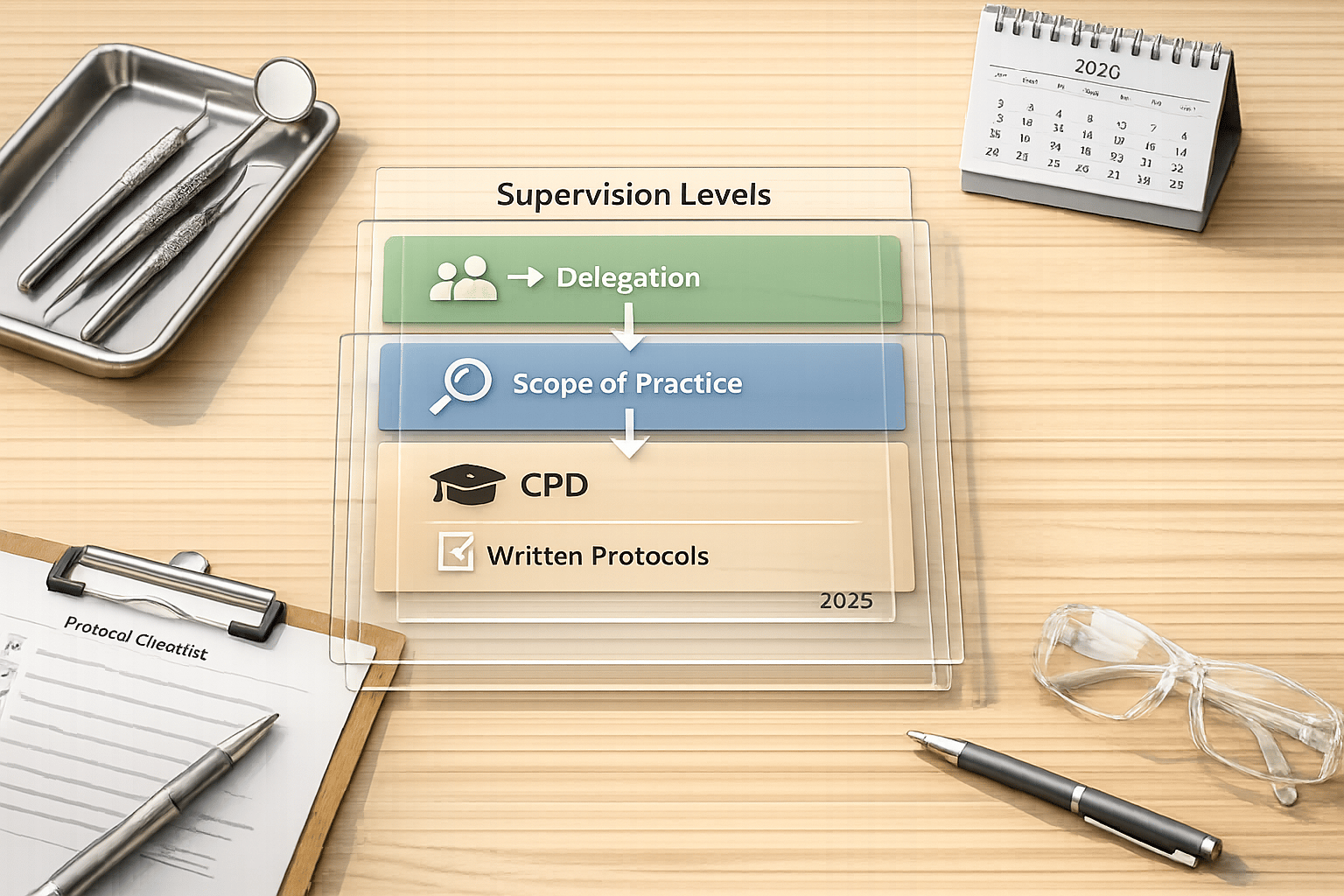
Supervision ensures patient safety and quality care in dental practices. In Australia, the Dental Board of Australia and AHPRA regulate supervision through a structured framework, which was updated in May 2025. Here’s what you need to know:
- Supervision Levels:
- Level 1 (Direct): Supervisor is physically present.
- Level 2 (Indirect): Supervisor is on-site but not in the same room.
- Level 3 (General): Supervisor is off-site but accessible.
- Scope of Practice:
- Dentists have the broadest scope.
- Dental hygienists, therapists, and oral health therapists (OHTs) focus on preventive and restorative care.
- Dental assistants require supervision for all tasks.
- 2026 Changes:
- Dental hygienists, therapists, and OHTs can now practise independently within their scope.
- Best Practices:
- Written supervision protocols are mandatory.
- Continuous professional development (60 CPD hours every three years) is required.
- Clear delegation and handover processes are essential for safety.
These guidelines support safe and efficient dental care while adapting to evolving roles in the profession.
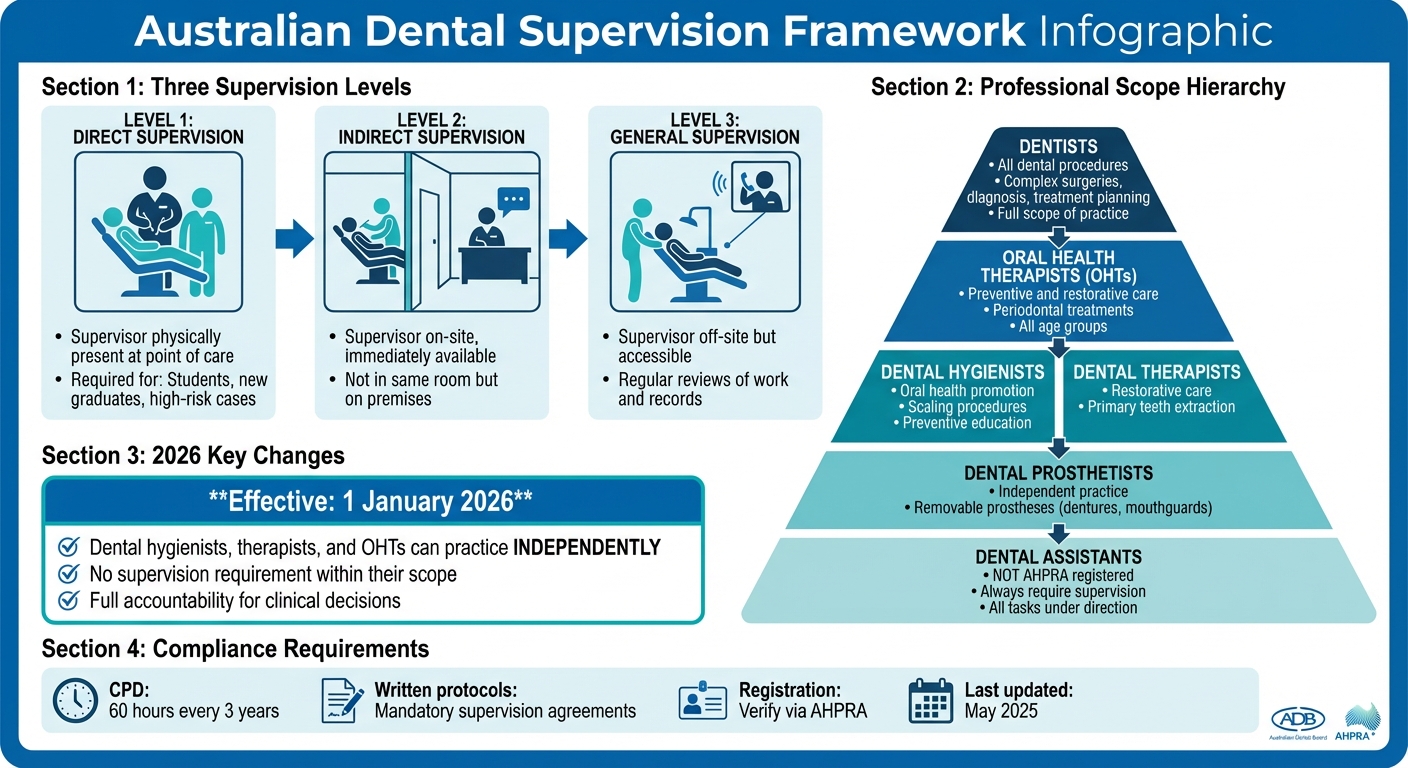
Australian Dental Supervision Levels and Professional Scope Framework
Common Supervision Problems in Dental Practices
Insufficient Oversight of Dental Hygienists, Therapists, and Assistants
Poor oversight in dental practices can directly impact public health, particularly in areas like infection control. Without clear boundaries, dental assistants, hygienists, or therapists might unintentionally take on tasks beyond their legal scope. This not only risks patient safety but may also lead to mandatory notifications and extensive reviews. Adding to this, the 2024/25 updates to non-surgical cosmetic procedure guidelines call for stricter oversight to address growing safety concerns when staff perform these treatments [3]. These gaps in supervision can also disrupt workflows, making dental practices less efficient.
Finding the Right Balance Between Supervision and Workflow
Balancing proper supervision with maintaining an efficient workflow is a tricky but essential task. Many practices rely on direct supervision for tasks that could be managed with indirect oversight, creating unnecessary delays and reduced productivity. This often happens because team roles and responsibilities aren’t clearly defined. The issue becomes even more pronounced when the supervisor is also the primary clinician, as their dual responsibilities can slow down patient care. On top of that, rigid documentation requirements can further pull focus away from clinical care, adding to inefficiencies.
Communication breakdowns during delegation make things worse, leading to either too much or too little oversight. Both scenarios can result in errors that take valuable time to fix. As professional scopes evolve in 2026 – granting dental hygienists and therapists more independence – dental teams will need to embrace more collaborative supervision models. These adjustments will be necessary to maintain compliance with regulations while ensuring patient safety and smooth workflows.
sbb-itb-2be92ed
Understanding Supervision Levels and Professional Scope
Direct Supervision vs Indirect Supervision
In Australia, dental regulations outline three distinct levels of supervision. Direct supervision (Level 1) requires the supervisor to be physically present at the point of care, closely observing the practitioner’s actions. This level is typically applied to students, new graduates managing high-risk cases, or practitioners returning to work after a significant absence [1][3].
Indirect supervision (Level 2) means the supervisor must remain on the premises and be immediately available for consultation, though they don’t have to be in the same room. The supervisor still holds responsibility for the care provided [1]. General supervision (Level 3) allows the supervisor to be off-site but accessible via phone or video, with regular reviews of the practitioner’s work and patient records [1].
The level of supervision depends on factors such as the practitioner’s experience, the complexity of the tasks, and the potential risks involved [3]. As practitioners gain confidence and demonstrate competence, they may progress from direct to indirect supervision, based on thorough assessments. The FDI World Dental Federation underscores this point:
the responsibility for patient’s safety and quality of care remains with the care provider irrespective of any supervision in place [4].
These supervision standards play a key role in shaping the legal scope of practice for each dental professional.
Legal Scope of Practice for Each Dental Professional
Supervision levels directly define the legal boundaries for different roles within the dental team. These boundaries are governed by the Health Practitioner Regulation National Law. Dentists have the broadest scope, covering all dental procedures, including complex surgeries, diagnosis, and treatment planning. Oral Health Therapists (OHTs) blend the roles of dental hygienists and dental therapists, offering preventive and restorative care, periodontal treatments, and services across all age groups, based on their training.
Dental Hygienists focus on promoting oral health, performing scaling, and providing preventive education. Dental Therapists handle restorative care and can extract primary teeth. Dental Prosthetists, on the other hand, work independently with patients to create removable dental prostheses like dentures and mouthguards [3]. Unlike these registered professionals, dental assistants are not registered under AHPRA and must always operate under the supervision and direction of a registered dental practitioner [3].
To clarify these professional boundaries, the Dental Board of Australia updated its "Know your scope" guidance on 20 December 2024 [2]. Practices are encouraged to confirm each team member’s registration and any conditions on their scope using tools like the Practitioner Information Exchange (PIE) or AHPRA’s practitioner search [3].
Solutions for Better Supervision in Dental Practices
Ongoing Training and Professional Development Requirements
To ensure safe delegation in dental practices, continuous professional development plays a critical role. In Australia, all registered dental practitioners are required to complete 60 hours of Continuing Professional Development (CPD) every three years to maintain their registration [6]. This requirement keeps both supervisors and supervisees up to date with the latest clinical standards and regulatory updates, reducing risks and addressing gaps in knowledge or skills.
Supervisors must have the expertise to assess their team members’ performance against established benchmarks [1]. Before assigning tasks, they need to confirm that the supervisee has undergone relevant training and demonstrated the ability to perform the task safely. Maintaining a detailed CPD portfolio, which tracks activities and improvements, is essential for audits and compliance [6].
Creating Written Supervision Protocols and Procedures
In addition to ongoing training, having formalised supervision protocols helps ensure safe delegation. The Australian Health Practitioner Regulation Agency (AHPRA) mandates a written agreement for supervision, which outlines objectives, the level of supervision, and reporting requirements for each supervisee [1]. This Clinical Supervision Plan categorises supervision into levels – Level 1 (Direct), Level 2 (Indirect), Level 3 (Remote), or Level 4 (Consultative) – based on the supervisee’s experience, the complexity of tasks, and the practice setting [1][5].
The plan should clearly define how often progress reports are required, the format they should take, and how feedback will be provided [1]. Both parties must sign the document to confirm their understanding of the agreed scope and responsibilities. Practices should also include contingency measures for when the primary supervisor is unavailable and conduct regular audits of supervision logs and patient records to confirm compliance with the supervision plan.
Safe Delegation and Handover Procedures
A well-structured delegation and handover process is key to maintaining safety and accountability. Even when tasks are delegated, the supervising practitioner retains responsibility for the patient’s overall care. Supervisors must verify training records or directly observe the supervisee’s skills before delegating any task. Using Standard Operating Procedures (SOPs) for routine clinical tasks ensures that delegation follows a consistent and safe process.
For effective handovers, frameworks like ISBAR (Introduction, Situation, Background, Assessment, Recommendation) can help standardise the transfer of clinical information. Regular audits of patient records and supervision logs ensure that delegation practices meet regulatory standards and maintain professional indemnity insurance coverage. These steps create a reliable system for safe and effective task delegation.
2026 Changes to Dental Supervision Requirements
New Independent Practice Rights for Dental Therapists and Hygienists
Starting 1 January 2026, dental therapists, dental hygienists, and oral health therapists (OHTs) in Australia will be able to practise independently within their respective scopes of practice. This reform removes the legal requirement for either direct or indirect supervision by dentists.
In response to workforce shortages, particularly in regional and remote communities, the Dental Board of Australia has streamlined registration processes to expand the available workforce. These changes introduce a fresh approach to professional responsibilities, moving away from traditional supervision models.
How These Changes Affect Supervision and Professional Responsibility
Under the new framework, practitioners will take full accountability for their clinical decisions and patient outcomes. This marks a significant shift from supervised practice to independent operation, aligning with updated regulatory goals that aim to balance professional autonomy with public safety. By doing so, the system places greater trust in practitioners while reinforcing their responsibilities.
The Dental Board of Australia has stressed the importance of maintaining ethical practices and prioritising patient care:
"The Dental Board of Australia expects dental practitioners to practise in a way that maintains and enhances public health and safety." – Dental Board of Australia [3]
Practices should use AHPRA’s official tools to verify current registrations and any scope conditions. Independent practitioners must also fulfil their continuing professional development (CPD) requirements to ensure they remain competent. Additionally, practices should adjust their internal protocols to reflect the shift to independent practice, including establishing clear referral pathways for cases that exceed an individual practitioner’s scope.
Conclusion and Key Takeaways
Summary of Supervision Requirements and Best Practices
Even with the expanded independent practice rights set to take effect in 2026, maintaining strong supervision protocols will remain a cornerstone of safe and effective patient care in dental practices. While these reforms bring changes, the importance of clear oversight and structured collaboration cannot be overstated.
Dental practices should routinely assess their supervision protocols to align with the AHPRA Supervised Practice Framework, which was last updated in May 2025 [1]. This includes verifying that all staff maintain valid registration and comply with mandatory Continuing Professional Development (CPD) requirements [3].
The shift in independent practice rights for dental therapists, hygienists, and oral health therapists has undoubtedly changed traditional oversight models. However, structured collaboration is still necessary. Establishing clear referral pathways is crucial to ensure patients receive proper care when cases go beyond an individual practitioner’s scope.
Additionally, infection control audits and ongoing compliance checks should remain a priority for practice management. The Dental Board of Australia continues to emphasise that dental practitioners must uphold public health and safety [3]. This involves regularly reviewing supervision arrangements, updating professional indemnity insurance to reflect changes in practice scope, and incorporating peer-review sessions to maintain clinical standards across the team.
FAQs
Which supervision level applies to my role?
Your level of supervision in Australia depends on your registration status and the specific circumstances of your practice. Generally, supervision is categorised into frameworks such as direct supervision, where the supervisor is physically present, or other levels that involve different degrees of oversight.
For detailed requirements and responsibilities, it’s essential to consult the relevant guidelines applicable to your profession.
Who is legally responsible when tasks are delegated?
The practitioner assigning a task retains legal responsibility for ensuring it is performed competently and stays within the appropriate scope of practice. This must comply with Australian regulations, particularly the Dental Board of Australia’s standards and the Supervised Practice Framework.
What changes on 1 January 2026 for independent practice?
From 1 January 2026, independent dental practices across Australia will need to meet updated supervision and registration standards introduced by the Dental Board of Australia. These changes will include new frameworks for supervised practice along with tighter compliance obligations. For more information, consult the Dental Board’s official guidelines on supervised practice.
Related Blog Posts
- Scope of Practice for Dental Hygienists in Australia
- Scope of Practice for Dental Therapists in Australia
- Scope of Practice for General Dentists in Australia
- Scope of Practice for Dental Hygienists
Important Notice: Any surgical or invasive procedure carries risks. Before proceeding, you should seek a second opinion from an appropriately qualified health practitioner.
Individual results may vary. The information provided in this article is for educational purposes only and does not constitute medical advice.
Checkout Related Blogs




Get in touch with us
For more information, call us now to start feeling better. Or fill the form below to make appointment
The Latest News from Complete Smiles
How to Clean Clear Plastic Retainers
Checklist for Choosing Wearable Dental Devices
Checklist for Choosing Cloud AI Platforms in Dentistry

Complete Smiles Bella VistaAccepts All Major Health Funds, Including





