





Ultimate Guide to Retainer Hygiene
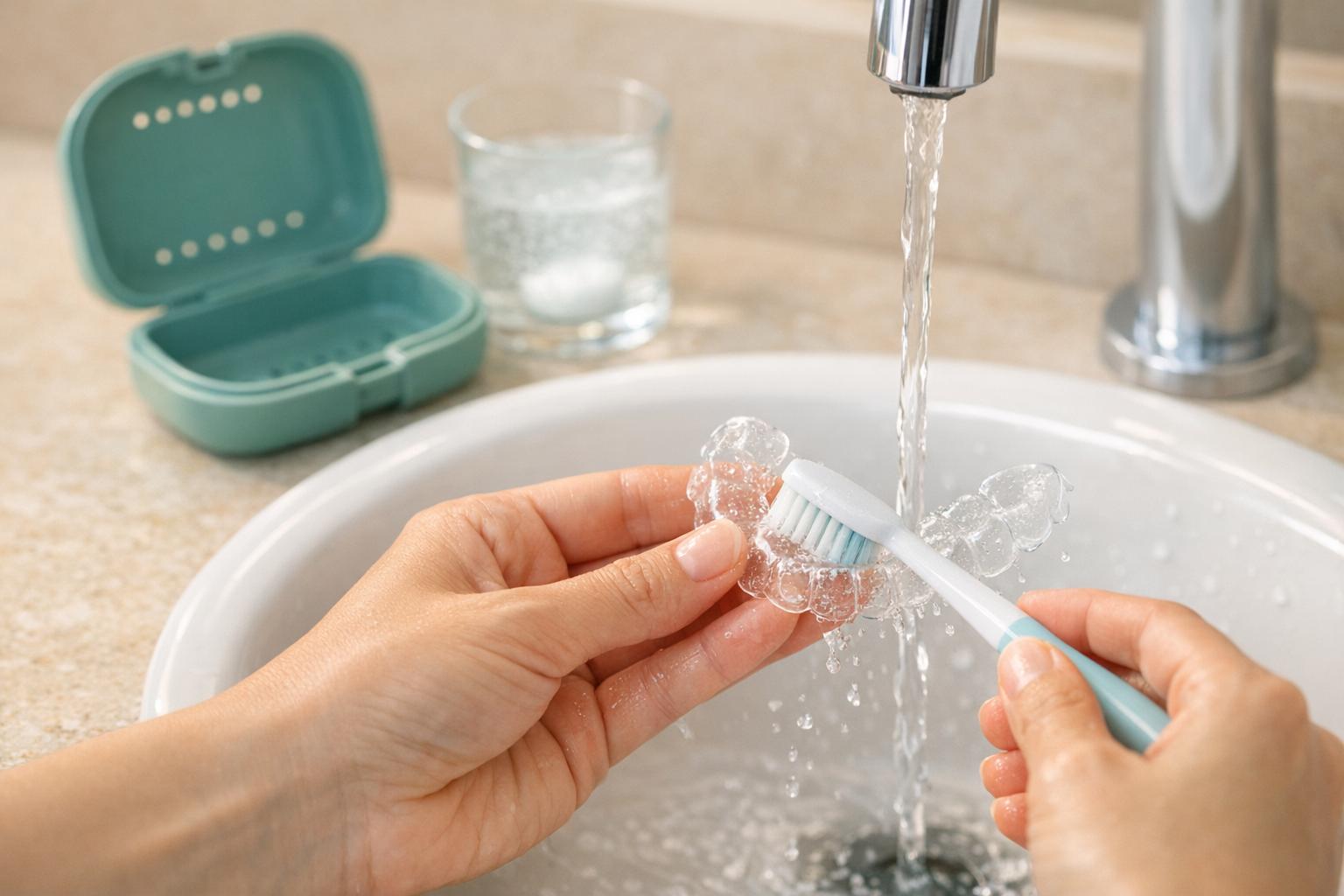
Keeping your retainer clean is vital for your oral health and its longevity. Retainers can accumulate bacteria, plaque, and tartar, leading to bad breath and odors, cavities, and even infections if not properly maintained. Here’s a quick rundown of the key steps to keep your retainer in top shape:
- Daily Cleaning: Rinse under lukewarm water after removal and brush gently with a soft toothbrush and mild soap. Avoid toothpaste as it can scratch the surface.
- Weekly Deep Cleaning: Use cleaning tablets or natural solutions like white vinegar, baking soda, or hydrogen peroxide to tackle stubborn buildup.
- Avoid Common Mistakes: Skip hot water, abrasive toothpaste, bleach, and alcohol-based mouthwash to prevent damage.
- Proper Storage: Always store your retainer in a vented case, away from heat and pets.
How to Clean Retainers (Hawley, Essix, Clear, etc)
sbb-itb-2be92ed
Daily Cleaning Steps for Your Retainer
Taking care of your retainer every day is easy and keeps it in great condition. Two simple habits – rinsing it right after you take it out and brushing it gently – can help remove saliva, food particles, and plaque, preventing unwanted buildup.
Rinsing After Each Removal
When you remove your retainer, rinse it under lukewarm water for about 10 seconds [6]. This quick step helps wash away saliva and debris before they dry and harden into tartar [2].
"Make sure you clean your retainer as soon as you remove it from your mouth, while it’s still wet. This will make it easier to clean off any debris before it hardens." – Healthline [3]
Before putting your retainer back in, rinse your mouth or brush your teeth to keep food particles from transferring.
Gentle Brushing Method
After rinsing, give your retainer a gentle scrub for a deeper clean. Use a soft-bristled toothbrush dedicated to your retainer and a small amount of mild, unscented dish or castile soap. Avoid toothpaste, as its abrasive ingredients (like silica) can scratch the surface, creating tiny grooves that trap bacteria [3].
Brush lightly in circular motions, making sure to clean every surface. For clear plastic retainers, a cotton swab can help you reach tricky spots. This is especially important for maintaining results after orthodontics and Invisalign treatments. Once done, rinse thoroughly under lukewarm water to remove all traces of soap. Remember, stick to lukewarm or cool water – hot or boiling water can warp the plastic or acrylic materials permanently.
If daily cleaning isn’t enough to tackle buildup, check out our guide to retainer cleaning for weekly deep cleaning suggestions.
Weekly Deep Cleaning Methods
Even with daily cleaning, retainers need a deeper clean at least once a week to tackle stubborn plaque, tartar, and bacteria. These weekly methods go beyond routine care, ensuring your retainer stays in top condition.
Cleaning Tablets for Retainers
Effervescent cleaning tablets, like Polident, are a convenient way to disinfect and remove stains from retainers. These tablets are designed to eliminate up to 99.9% of odour-causing bacteria in just a few minutes[8]. Here’s how to use them:
- Fill a container with lukewarm water – enough to fully submerge your retainer.
- Drop in one cleaning tablet and let it dissolve.
- Soak your retainer for the time recommended on the packaging (usually 5–20 minutes[3]).
- Rinse thoroughly with water after soaking.
"These dissolvable tablets are designed with Crystal Clear technology to lift stains and remove 99.9% of odour-causing bacteria in just 3 minutes." – Polident[8]
While effective, be cautious: the persulfate in these tablets can cause allergic reactions for some people, and extended use might discolour clear retainers or damage metal components in Hawley retainers[1][3][5][10].
Homemade Cleaning Solutions
If you prefer a natural approach, several household items can be used to clean your retainer effectively:
- White Vinegar: Mix equal parts white vinegar and lukewarm water. Soak your retainer for 15–20 minutes to remove mineral buildup. Rinse thoroughly afterward, and avoid soaking for longer than 20 minutes to prevent weakening the plastic[9].
- Baking Soda: Create a paste with equal parts baking soda and water, or dissolve baking soda in distilled water. This helps neutralise odours and balance pH. Be gentle, as baking soda can scratch clear plastic retainers if scrubbed too hard[12].
- Hydrogen Peroxide: Combine equal parts 3% hydrogen peroxide and lukewarm water for extra disinfection. Soak your retainer for 15–20 minutes, then rinse well with water[12].
- Mild Soap: Add a small amount of Castile soap or mild dish soap to lukewarm water. This gentle solution breaks down oils and grime without harsh chemicals. Soak your retainer for 2–3 minutes, then rinse thoroughly[11].
These methods provide an effective deep clean while being simple to do at home. Just remember to rinse well after using any cleaning solution to ensure no residue remains on your retainer.
Cleaning Mistakes to Avoid
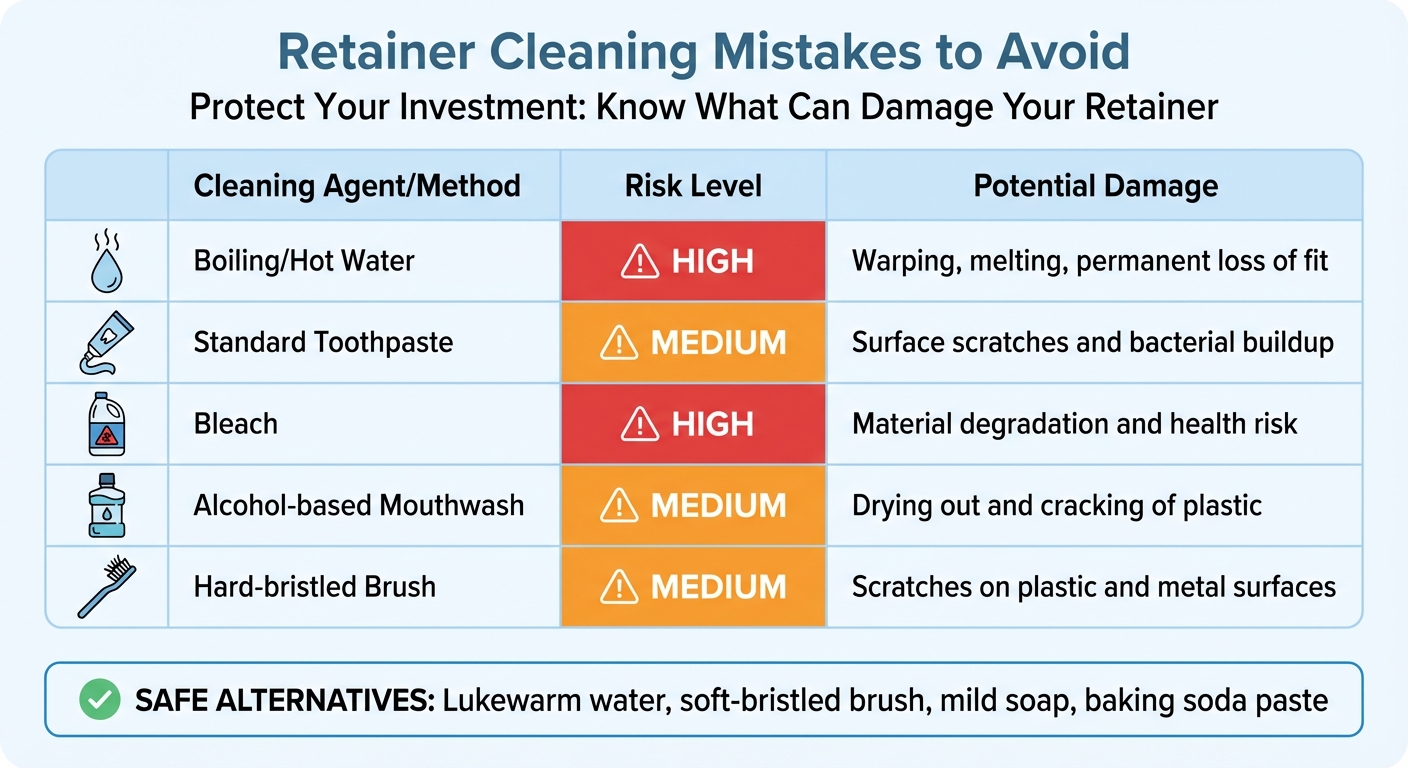
Retainer Cleaning Mistakes: What to Avoid and Why
Keeping your retainer in top condition isn’t just about regular cleaning – it’s also about steering clear of common mistakes. Even with the best intentions, some cleaning methods can cause irreversible damage, affecting your retainer’s fit and durability. Avoiding these errors can save you from costly replacements and ensure your retainer lasts longer.
Hot Water and Abrasive Products
Hot water is a no-go for retainers. High temperatures can warp or shrink the material, leaving your retainer unusable. This includes exposure to dishwashers, microwaves, or even the interior of a hot car on a sunny day.
"Hot temperatures will warp the shape of the retainer and you won’t be able to use it anymore." – Orthodontics Australia [1]
Additionally, standard toothpaste can be too harsh. The abrasive particles in it can create tiny scratches on the surface of your retainer, which not only damage its finish but also provide a breeding ground for bacteria and plaque.
"Regular toothpaste may rub off the surface of your retainer. This may cause bacteria to stick to it." – Austra Health [3]
Instead, opt for a soft-bristled brush and clean your retainer gently using mild soap or a baking soda paste. These alternatives are effective yet gentle, helping to maintain the retainer’s integrity.
Harsh Chemical Products
Avoid using bleach or alcohol-based mouthwashes on your retainer. Bleach can degrade the material, while alcohol can dry out acrylic or plastic parts, making them prone to cracking and brittleness [3][7][13].
"Bleach… is too harsh for your retainer and may damage it." – Sharlene Tan [7]
For retainers with metal components, such as Hawley retainers, be cautious with soaking times. Prolonged exposure to baking soda solutions or cleaning tablets can corrode metal parts. Stick to the recommended soaking duration (usually 3–20 minutes), and always rinse thoroughly with lukewarm water afterward.
Here’s a quick reference table to summarise the key mistakes and their consequences:
| Cleaning Agent | Risk Level | Potential Damage |
|---|---|---|
| Boiling/Hot Water | High | Warping, melting, permanent loss of fit [1][3] |
| Standard Toothpaste | Medium | Surface scratches and bacterial buildup [3][4] |
| Bleach | High | Material degradation and health risk [3][4] |
| Alcohol-based Mouthwash | Medium | Drying out and cracking of plastic [3][7] |
| Hard-bristled Brush | Medium | Scratches on plastic and metal surfaces [8] |
Storage and Long-Term Care
Taking care of your retainer doesn’t stop at cleaning – it also requires proper storage to keep it in good condition. After cleaning, the way you store your retainer plays a big role in preventing damage and maintaining its shape.
Protective Case Storage
Always use a dedicated, vented protective case for your retainer. The ventilation allows airflow, which helps stop mould and mildew from forming inside the case [4]. Before placing your retainer in the case, rinse it with cool or lukewarm water to remove saliva and bacteria.
"The retainer should never be put in a pocket, bag or wrapped in a napkin or tissue when eating, as they’re far more likely to be lost, broken or thrown away." – Orthodontics Australia [1]
Don’t forget about the case itself – it needs cleaning too! Retainer cases can collect more bacteria than the retainer. Wash the case daily with warm, soapy water and scrub it gently with a soft brush. For the retainer itself, you should also use alcohol-free cleaning methods to avoid damaging the material. Let it air dry completely before using it again. Carry the case with you whenever you are travelling to avoid leaving your retainer on surfaces where it could pick up germs.
Keeping Away from Heat and Pets
Aside from using a proper case, it’s important to protect your retainer from environmental hazards. Heat is a major culprit when it comes to warping retainers. Avoid leaving it in hot spots like a car dashboard, near heaters, or in direct sunlight. This is particularly relevant during Australia’s scorching summers, where even a short time in a hot car can ruin your retainer.
"Hot temperatures will warp the shape of the retainer and you won’t be able to use it anymore." – Orthodontics Australia [1]
Pets are another common hazard. The scent of saliva can attract them, and they may chew on the retainer if they get the chance [7]. To prevent this, store your retainer case in a secure, elevated spot where pets can’t reach it.
Conclusion
Taking care of your retainer daily is essential for maintaining both your appliance and your smile. Start by rinsing it immediately after removal, brushing it gently with a soft toothbrush and mild soap every day, and giving it a deep clean once a week to tackle bacteria. These steps help keep your retainer fresh and your oral health on track.
Equally important is proper storage. Always store your retainer in its protective case and steer clear of common mistakes. Avoid hot water, abrasive toothpaste, or harsh chemicals like bleach, as these can damage the material or create tiny scratches where bacteria can hide. And never wrap your retainer in a napkin or tissue – this is an easy way to accidentally lose it.
FAQs
How can I tell if my retainer needs a deep clean?
If your retainer appears cloudy, has an unpleasant odour, or shows visible plaque or stains, it’s probably overdue for a deep clean. These signs suggest a build-up of bacteria or debris that ordinary cleaning methods may not fully address. Checking your retainer regularly is key to keeping it clean and avoiding potential oral health problems.
What should I do if my retainer smells even after cleaning?
If your retainer still has an unpleasant smell after cleaning, try soaking it in a solution made with an effervescent cleaner, white vinegar, or baking soda. Steer clear of abrasive toothpaste or hot water, as these can harm the retainer’s material. Consistently using gentle cleaning methods will help keep your retainer fresh and odour-free.
When should I replace my retainer case?
If your retainer case starts to show signs of damage, warping, or stubborn build-up that’s hard to clean, it’s time for a replacement. Typically, this happens every 6 to 12 months, but always follow the guidance of your orthodontist.
Related Blog Posts
- Why Retainers Smell and How to Fix It
- Natural Retainer Cleaning: Myths vs. Facts
- Ultimate Guide To Retainer Cleaning
- Ultimate Guide to Alcohol-Free Retainer Cleaning
Important Notice: Any surgical or invasive procedure carries risks. Before proceeding, you should seek a second opinion from an appropriately qualified health practitioner.
Individual results may vary. The information provided in this article is for educational purposes only and does not constitute medical advice.
Checkout Related Blogs




Get in touch with us
For more information, call us now to start feeling better. Or fill the form below to make appointment
The Latest News from Complete Smiles
How to Clean Clear Plastic Retainers
Checklist for Choosing Wearable Dental Devices
Checklist for Choosing Cloud AI Platforms in Dentistry

Complete Smiles Bella VistaAccepts All Major Health Funds, Including





