





Predictive Dental Care with AI Nanotechnology
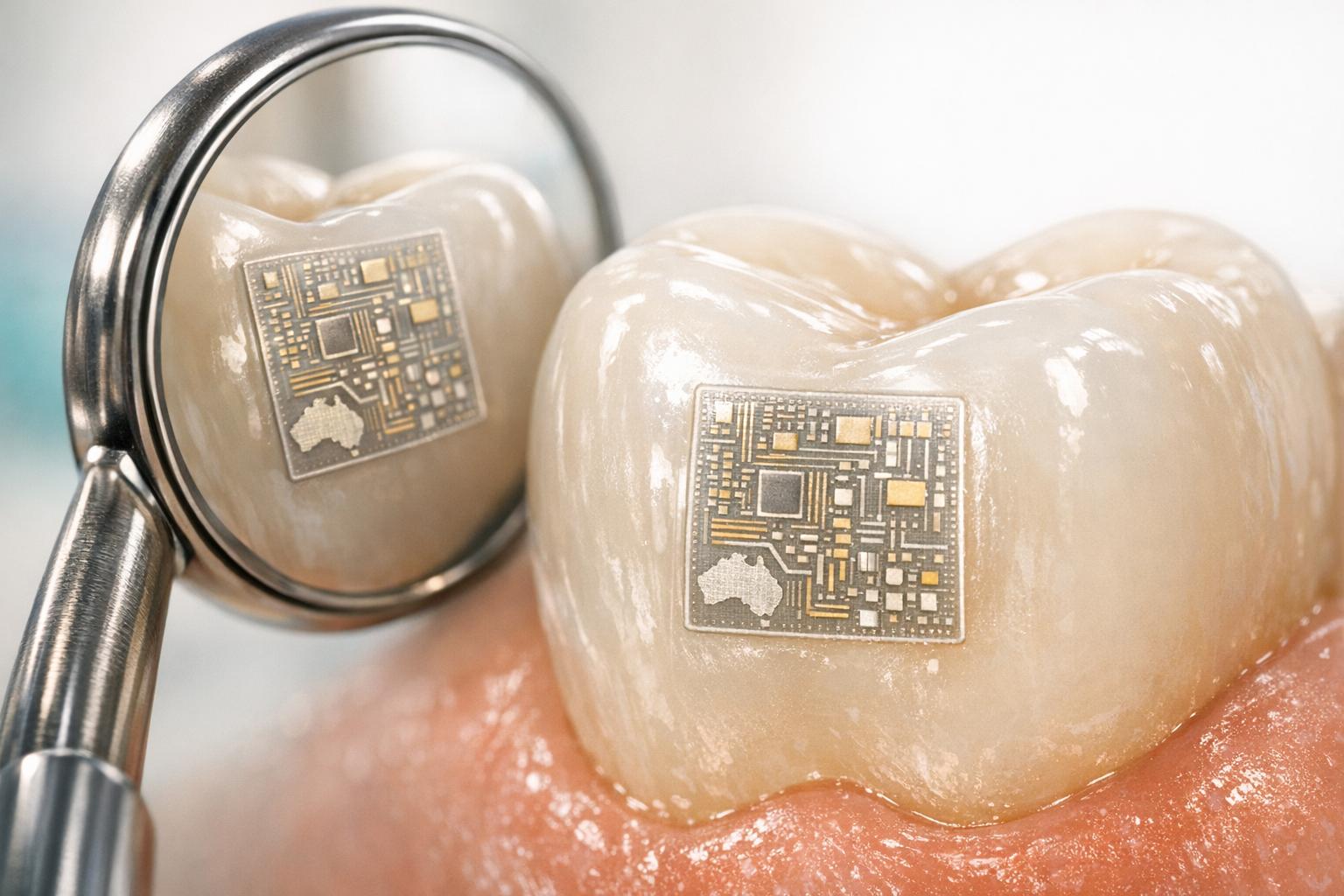
AI and nanotechnology are transforming dental care by shifting the focus from fixing problems to preventing them. These advancements allow dentists to identify issues earlier, improve treatments, and personalise care. Here’s a quick look at what this means for you:
- Early Detection: AI can spot cavities, gum disease, and even oral cancer before symptoms appear. For example, AI models now detect early-stage cavities with 93.1% accuracy and periodontitis with 94.2% AUROC.
- Nanotechnology in Action: Nanorobots and materials like nano-hydroxyapatite repair enamel, clean biofilms, and even deliver painless anaesthesia in seconds.
- Personalised Care: AI analyses patient data to create tailored treatment plans, improving outcomes and reducing unnecessary procedures.
- Australian Innovations: Local research is leading the way, with AI tools that analyse dental X-rays and smartphone apps providing remote dental assessments.
These technologies improve accuracy, reduce treatment times, and offer less invasive solutions. However, challenges like data privacy, high costs, and the need for clinician training remain. Dentists must ensure AI tools are registered and safe, while patients should feel confident their care is guided by professional oversight.
AI and nanotech are reshaping dental care, offering smarter solutions and better outcomes for everyone.
Dental AI: The Artificial Intelligence Revolution in Dentistry
How Nanotechnology Works in Dentistry
Nanotechnology operates on a scale of 0.1–100 nanometres, allowing manipulation of materials at the molecular level. This level of precision enables a shift from broad, reactive treatments to highly targeted, preventive approaches by delivering therapeutic and diagnostic agents directly where they’re needed [7]. This fine-tuned control is transforming dental care into a more proactive field.
Nanomaterials bring notable improvements to dental tools and restorations by enhancing their mechanical strength, reaction kinetics, and durability. Thanks to their high surface-to-core ratio, nanoparticles interact more effectively than traditional materials, leading to stronger and more efficient results [8].
Nano-materials for Oral Health
One standout material is nano-hydroxyapatite (nHAp), which plays a key role in remineralisation therapy. Mimicking the natural properties of tooth enamel, nHAp bonds directly to tooth surfaces, sealing exposed dentinal tubules that cause sensitivity. It also repairs microscopic lesions and helps delay further demineralisation, making it a game-changer in oral care [7][8].
Silver nanoparticles (AgNPs) offer powerful, long-lasting antimicrobial benefits. By disrupting bacterial cell walls and protein synthesis, they help prevent secondary caries, a common issue caused by micro-leakage in dental restorations [10]. Beyond bacteria, AgNPs also combat viruses and fungi, making them especially valuable for patients at higher risk of infections.
Smart biomaterials like nano-glass ionomers and nanocomposites bring both functionality and aesthetics to dental treatments. These materials reduce polymerisation shrinkage and release fluoride or calcium and phosphate ions in response to changes in the oral environment [7][8]. Stimuli-responsive nanozymes, such as iron oxide nanoparticles, further enhance oral health by generating reactive oxygen species in acidic conditions. This reaction kills harmful pathogens while preserving the beneficial oral flora [9][3]. Nanotechnology-enhanced implants are another breakthrough, improving osseointegration by 150%, which speeds up healing and reduces the need for multiple appointments [8].
Nanorobotics in Dentistry
Nanotechnology isn’t just limited to materials – it’s also revolutionising dental procedures through nanorobots. These microscopic devices can perform highly precise clinical tasks that were once thought impossible [12]. For instance, dentifrobots – delivered through mouthwash or toothpaste – can patrol subgingival surfaces, removing organic debris and performing continuous calculus debridement. They even metabolise organic matter into odourless vapours while detecting and addressing harmful bacteria before damage occurs [8].
Nanorobots also shine in hypersensitivity treatments. They can seal dentinal tubules using native materials, providing a permanent solution in minutes – far surpassing the temporary relief offered by traditional desensitising pastes [11][13]. In orthodontics, nanorobots can manipulate periodontal tissues, enabling rapid and painless tooth alignment in just hours instead of months or years [13]. Even anaesthesia is being reimagined; nanorobotic anaesthesia can travel from the tooth surface to the pulp in just 100 seconds, eliminating the need for needles and making the process virtually painless [13].
"Molecular technology is destined to become the core technology underlying all of 21st-century medicine and dentistry." – Patil M, Mehta DS, Guvva S [8]
AI Improvements in Dental Diagnostics
AI is taking dental diagnostics to a whole new level by analysing vast amounts of imaging data and patient records with incredible precision. Unlike traditional visual exams that rely solely on a practitioner’s expertise, AI systems employ Convolutional Neural Networks (CNNs) to dissect dental images into labelled pixels. This allows the software to detect patterns and subtle markers that might otherwise escape notice [15][17]. From standard X-rays to intricate 3D scans, AI can identify even the smallest changes that hint at early disease.
But it’s not just about images. AI can also process structured data, like periodontal probing depths and bone loss measurements, alongside unstructured information such as clinical notes and patient histories [17]. Some advanced models even leverage Atomic Force Microscopy to examine cell properties at the nanoscale, making it possible to detect oral cancer at stages that conventional methods might overlook [1].
AI for Early Detection
One of AI’s standout strengths is its ability to catch diseases early through predictive analysis. A 2025 study by researchers at the University of Otago showed that combining Atomic Force Microscopy with AI could identify nanoscale changes on stem cell surfaces – changes invisible to traditional diagnostic tools [1].
For periodontal disease, AI is proving to be a game-changer. In a 2025 multicentre study, a deep-learning model called HC-Net+, trained on 10,881 orthopantomograms linked to clinical diagnoses, achieved an impressive 94.2% AUROC in detecting periodontitis. This far outperformed the 85.6% accuracy of experienced periodontal specialists [14]. Even more striking, the AI reduced missed diagnoses of Stage II periodontitis to just 20.6%, compared to 44.4% for general dentists and a staggering 88.9% for dental students [14]. When it comes to oral cancer, AI-assisted systems have demonstrated 92% sensitivity and 91.9% specificity in diagnosing oral squamous cell carcinoma [16].
These early detection capabilities are paving the way for more personalised treatment strategies.
Personalised Treatment Planning
AI doesn’t just stop at detection – it’s also reshaping how treatment plans are developed. By identifying issues at a nanoscale level, AI enables precise, patient-specific interventions. Systems like HC-Net+ combine detailed tooth-level analysis with a broader understanding of a patient’s overall condition, mimicking the complex decision-making process of a seasoned dentist [14]. These models rely on clinical ground truth, using actual periodontal measurements rather than just radiographic data, to reveal subtle tissue damage that might be hidden in traditional 2D X-rays [14].
This technology is also helping bridge the gap between less experienced practitioners and specialists. According to the 2025 HC-Net+ study, junior dentists supported by AI achieved diagnostic accuracy comparable to that of seasoned professionals [14]. This ensures that patients receive high-quality care, regardless of their dentist’s level of experience. Additionally, AI can predict future issues like tooth wear or prosthetic degradation by analysing historical patient data, allowing for proactive adjustments to treatment plans [2]. This shift from a reactive to a predictive care model marks a major transformation in dental patient management.
How AI and Nanotechnology Work Together
AI and nanotechnology are reshaping dental care, shifting the focus from reactionary treatments to preventative strategies. AI plays a crucial role in developing dental biomaterials by analysing intricate datasets like atomic weight, lattice symmetry, and binding energy. This analysis predicts material properties, allowing researchers to virtually screen a wide range of nanomaterial candidates. The result? A more efficient process that reduces the need for costly trial-and-error experiments in the lab [19].
The collaboration doesn’t stop there. AI also processes data from nanoscale sensors embedded in the oral cavity. These sensors collect information, which machine learning then translates into bacterial "fingerprints", identifying harmful species in dental biofilms. This integration enables theranostics – a combined approach where a single nanoplatform diagnoses issues (like through imaging or staining) and delivers targeted therapy via controlled drug release [3][21]. Such advancements pave the way for continuous oral health monitoring through advanced sensor systems.
"Combining the two technologies enabled us to detect nanoscale changes on the surface of cancer cells that may not be visible using traditional methods." – Peter Mei, Associate Professor, University of Otago [1]
AI-Guided Nanobiosensors
AI-powered nanobiosensors are transforming oral health monitoring. These devices analyse saliva and gingival crevicular fluid to detect biomarkers associated with periodontitis, cavities, and oral cancer [21][23]. Using nanomaterials like gold nanoparticles, carbon nanotubes, and graphene, these sensors achieve incredible sensitivity. For example, they can identify periodontal biomarkers like Interleukin-1β at concentrations as low as 0.066 pg/mL [21]. Similarly, sensors can detect exhaled hydrogen sulfide – a marker for periodontitis – at levels as low as 10 ppb [21].
Wearable dental patches take this technology a step further. These patches utilise Near-Field Communication (NFC) to draw energy from smartphones and transmit real-time pH data. Weighing just 90 mg and measuring 1.5 mm thick, these compact sensors allow machine learning to identify pathogens early by analysing bacterial "fingerprints" before any damage occurs [22].
Stimuli-Responsive Materials
Smart materials controlled by AI adapt dynamically to changes in the oral environment, offering tailored treatments. These materials respond to triggers like microbial imbalances, acidic pH (below 5.0), oxidative stress, or immune system changes. By detecting these conditions, they can deliver site-specific, time-sensitive, and dose-appropriate medications [20]. The stable temperature range of the oral cavity (36.5–37.5 °C) is particularly suited for thermo-responsive hydrogels, which shift from liquid to gel states to ensure precise delivery of medication [20].
One example is FerIONP, an FDA-approved iron oxide nanoparticle formulation that binds specifically to S. mutans. This binding triggers a colourimetric response to pinpoint cavities while simultaneously eliminating harmful biofilms [3]. Another innovation, STARS (Surface Topography-Adaptive Robotic Superstructures), is a magnetic robot system controlled by a microcontroller. Using iron oxide nanoparticles, these robots mimic toothbrushing motions to mechanically clear biofilms and collect microbial samples for diagnostics [3].
"Smart-responsive nanomaterials offer multiple advantages, including precise targeting, dynamic responsiveness, and controlled release." – Chenying Cui et al., Shanxi Medical University [20]
AI further enhances these systems by analysing sensor data and triggering therapeutic responses automatically. For instance, if a nanobiosensor detects acidic conditions linked to bacterial activity, AI can activate a dental patch to release fluoride immediately. This approach shifts dental care from occasional treatments to ongoing, adaptive protection, creating a framework for real-time, self-regulated therapy.
sbb-itb-2be92ed
Benefits and Limitations of AI-Nanotech in Dentistry
Benefits vs Limitations of AI and Nanotechnology in Dental Care
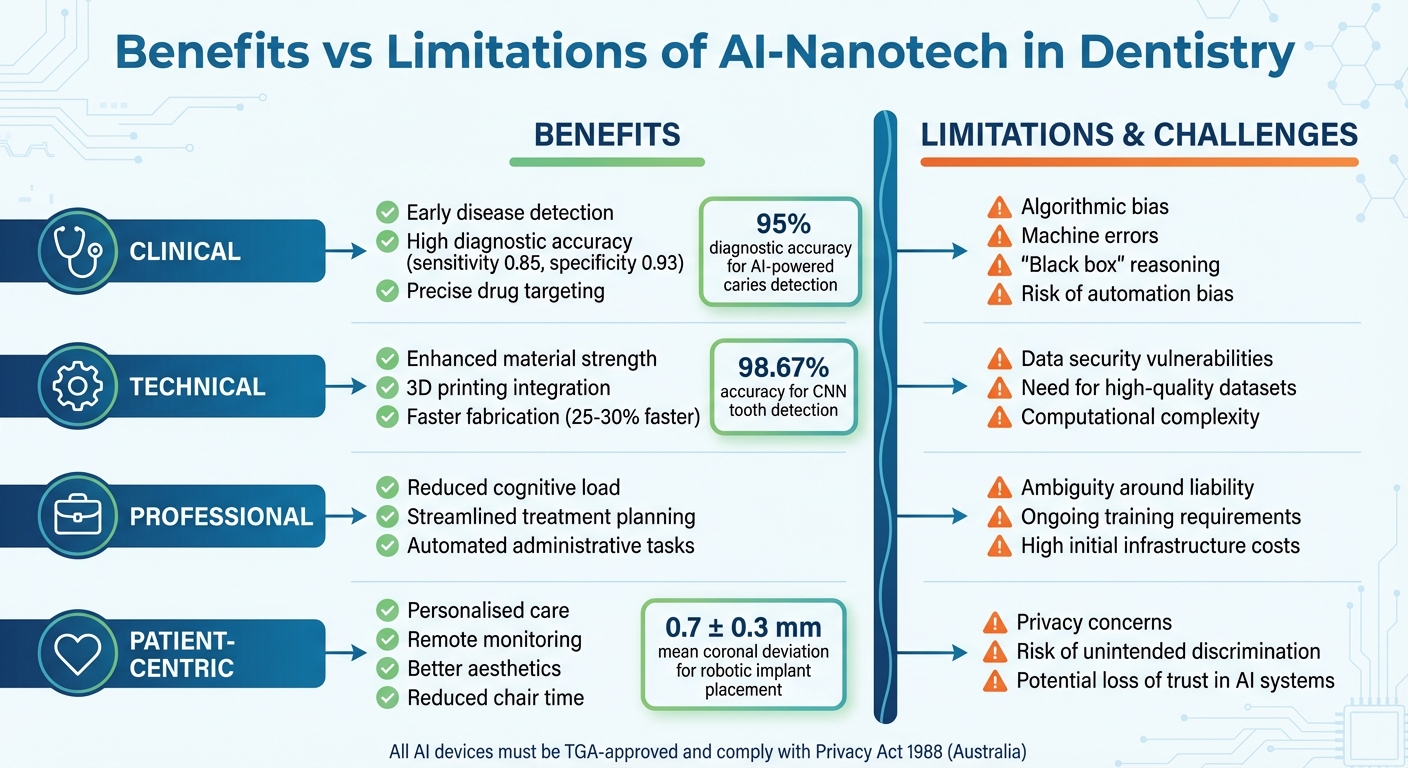
The combination of AI and nanotechnology in dentistry brings measurable advancements, but it also introduces challenges that both clinicians and patients must navigate. For instance, AI-powered caries detection systems boast an impressive 95% diagnostic accuracy [18], while Convolutional Neural Networks (CNNs) have achieved 98.67% accuracy in automating tooth detection and numbering on periapical radiographs [18]. These technologies also improve efficiency, cutting crown fabrication times by 25–30% [2]. Robotic systems for implant placement add precision, with a mean coronal deviation of just 0.7 ± 0.3 mm [2].
However, these benefits come with notable hurdles. Data privacy and security are pressing concerns, as patient data used for training AI models can be vulnerable to unauthorised access, storage issues, and consent violations [4][5]. Additionally, algorithmic bias and lack of transparency – often referred to as "black box" issues – can lead to diagnostic errors, particularly in underrepresented groups [5][2]. The Australian Dental Association underscores that "patient safety must be the primary consideration for any dental AI system" [4], reminding practitioners that they remain legally accountable for all outcomes, even when AI tools are involved [5].
In Australia, these issues are further complicated by stringent Therapeutic Goods Administration (TGA) regulations and the Privacy Act 1988. High implementation costs and the need for specialised clinician training make widespread adoption challenging, especially in rural and regional areas [18][7]. Another concern is the opaque nature of many AI and deep learning models, which makes it difficult for clinicians to understand how diagnostic decisions are made [5][2].
Comparison Table: Benefits vs Limitations
| Category | Benefits | Limitations & Challenges |
|---|---|---|
| Clinical | Early disease detection, high diagnostic accuracy (sensitivity 0.85, specificity 0.93 [6]), precise drug targeting | Algorithmic bias, machine errors, "black box" reasoning, risk of automation bias |
| Technical | Enhanced material strength, 3D printing integration, faster fabrication (25–30% faster [2]) | Data security vulnerabilities, need for high-quality datasets, computational complexity |
| Professional | Reduced cognitive load, streamlined treatment planning, automated administrative tasks | Ambiguity around liability, ongoing training requirements, high initial infrastructure costs |
| Patient-Centric | Personalised care, remote monitoring, better aesthetics, reduced chair time | Privacy concerns, risk of unintended discrimination, potential loss of trust in AI systems |
To comply with Australian regulations, AI devices must be TGA-approved, and clinicians must adhere to the Privacy Act 1988. Ensuring that AI systems are trained on diverse, high-quality datasets can help reduce clinical and technical biases. Additionally, maintaining human oversight of AI-generated outcomes is critical to preserving patient safety and trust [4][5]. Overcoming these challenges will require a balance of research, regulation, and education as the field continues to develop.
Australian Research and Local Developments
Australia is stepping up as a key player in the field of AI-driven dental diagnostics, with CSIRO‘s Data61 at the forefront of efforts to connect research with clinical applications. Back in May 2023, CSIRO joined forces with Eyes of AI, a Sydney-based company, through the Kick-Start initiative. Together, they developed machine learning models capable of analysing dental radiographs like OPG, Bitewings, and Cone Beam CT scans. This collaboration, led by Dr. Sen Le from Eyes of AI and Dr. Dadong Wang from CSIRO, resulted in technology capable of CBCT segmentation, delivering 135 anatomical delineations in under three minutes – far surpassing the usual standard of fewer than 40 delineations [24].
"Our object detection model is able to successfully detect 96.8% of all dental objects of interest, and our segmentation model can achieve a segmentation accuracy of 95%." – Dr. Dadong Wang, Quantitative Imaging Research Team Leader, CSIRO’s Data61 [24]
Beyond imaging advancements, Australian innovators are tackling accessibility issues in dental care. Team RADS (Remote Automated Dental Screening), a project from the University of Western Australia and a graduate of the CSIRO ON Program, created a mobile app that uses AI algorithms to analyse smartphone images of teeth. This app provides instant dental assessments, addressing challenges like affordability and workforce shortages in regional areas [25].
Progress is also being made in paediatric dental care. In January 2026, researchers from the Murdoch Children’s Research Institute (MCRI) and the University of Melbourne trialled AI-supported 3D intraoral scanners with 216 five-year-olds. These digital scans, powered by AI, identified dental decay in 38% of participants and enamel defects in 18%, achieving accuracy comparable to traditional visual examinations [27]. All local developments meet TGA registration requirements and adhere to strict safety standards [26]. Together, these initiatives highlight Australia’s role in advancing predictive dental care through AI and emerging technologies.
Future Developments in Predictive Dental Care
Predictive dental care is on the brink of a transformation, with nanorobotics at the forefront of this shift toward less invasive treatments. Researchers are working on microscopic devices, ranging in size from 0.1 to 10 μm, capable of performing repairs on a molecular level directly within the mouth [13][12]. This cutting-edge work is opening doors to innovations like nanoanaesthesia.
Nanoanaesthesia could eliminate the need for needles. Dentists would apply a colloidal suspension containing millions of nanorobots onto the gums. These tiny devices travel through the dentinal tubules to reach the pulp in about 100 seconds, delivering precise anaesthesia controlled by a handheld device [13]. The same approach could also offer a permanent solution for hypersensitivity by sealing dentinal tubules with local, naturally occurring materials in just minutes [13].
"Nanorobotics in surgery has provided wonderful tools for surgeons with excellent control over precision instruments, which are being useful for minimally invasive surgery." – Shivani Sachdeva et al. [13]
The integration of AI and nanotechnology is also paving the way for advancements in regenerative dental therapies. AI now plays a role in optimising mesenchymal stem cell differentiation into odontoblast-like cells by analysing gene expression and signalling pathways [28]. For example, in 2022, a machine learning algorithm boosted the efficiency of stem cell differentiation by 30% [28]. These developments are complemented by nano-enhanced scaffolds made from materials such as bioactive glass, chitosan, and hydroxyapatite. These scaffolds replicate the natural extracellular matrix, providing the ideal environment for tissue regeneration [29][7].
On the digital front, digital twins are emerging as a game-changing tool in predictive care. These virtual models of individual patients combine data from radiographs, 3D scans, genetic profiles, and multi-omics to simulate treatment responses and predict outcomes before any procedure begins [2]. While these technologies hold immense potential, the Dental Board of Australia underscores the importance of human judgement, reminding practitioners that AI should enhance – not replace – clinical decision-making [5].
Conclusion
The combination of AI and nanotechnology is transforming the way Australian dental professionals manage oral health. Instead of focusing solely on treatment, these advancements allow for predictive and personalised care. For instance, AI paired with atomic force microscopy can identify nanoscale changes on cancer cell surfaces that traditional methods miss. This technology offers earlier detection of oral cancer, a disease that causes over 188,000 deaths worldwide each year [1].
These innovations go beyond diagnostics. They pave the way for antimicrobial dental materials [30], ensure highly accurate implant placements with deviations as minimal as 0.7 mm [2], and develop predictive models to track disease progression [17]. Such progress helps reduce complications, extend the lifespan of dental restorations, and limit the need for invasive treatments.
However, ethical and evidence-based adoption is critical. All AI-enhanced tools must be registered with the TGA and comply with the Privacy Act and Australian Privacy Principles. Ultimately, practitioners bear the responsibility for providing safe, high-quality care and must rely on their professional judgement when interpreting AI-generated insights [5][26].
"Regardless of what technology is used to advance healthcare, the practitioner remains responsible for delivering safe and quality care… Practitioners must apply human judgement to any output of AI" [5].
Patients are encouraged to confirm with their dentist that any AI tools in use are TGA-registered and that their data is protected [26]. While AI serves as a powerful support tool, it should never replace the expertise and oversight of dental professionals [4][5].
FAQs
How can AI and nanotechnology help detect dental diseases earlier?
AI and nanotechnology are transforming dental care by making disease detection faster and more precise. With advanced AI algorithms working hand-in-hand with nanotechnology, it’s now possible to spot microscopic cell changes – like those associated with oral cancer – long before they become visible through traditional diagnostic methods. This early detection paves the way for quicker interventions and improved treatment success.
On top of that, nanotheranostics – a cutting-edge blend of diagnostic and therapeutic tools – can tackle issues like gum disease right at the molecular level. By identifying problems even before symptoms arise, these technologies enable better management and contribute to healthier, brighter smiles.
What privacy concerns should I be aware of when AI is used in dental care?
The integration of AI into dental care raises valid concerns about privacy, particularly regarding the management and protection of personal health information. AI systems depend heavily on large datasets, such as electronic health records and diagnostic images. Without strong security protocols, this data could become vulnerable to breaches or unauthorised access.
In Australia, dental practices are required to adhere to strict privacy laws to ensure patient data is handled securely and transparently. However, questions often arise about how this information is stored, shared, or used – especially when third-party providers or cloud-based platforms are involved. These concerns highlight the importance of clinics prioritising confidentiality and openly explaining how they manage patient data.
If you’re unsure about how your personal information is safeguarded, consider discussing it with your dental care provider. They can clarify their privacy and data security measures, helping to ease any concerns you might have.
How does nanotechnology make dental treatments less invasive?
Nanotechnology is transforming dental treatments by employing ultra-small, precise materials to tackle oral health problems. These nanoscale methods enable focused repairs and restorations, which can limit harm to surrounding tissues and often reduce the need for invasive procedures.
With its ability to improve both biocompatibility and precision, nanotechnology not only speeds up healing but also enhances treatment effectiveness. This advancement makes dental care more efficient and less uncomfortable for patients over time.
Related Blog Posts
- AI in Dentistry: Predicting Periodontal Disease
- AI in Dentistry: Benefits of Personalised Oral Health Insights
- AI in Oral Cancer Detection: How It Works
- AI vs Radiographs: Caries Detection Accuracy
Important Notice: Any surgical or invasive procedure carries risks. Before proceeding, you should seek a second opinion from an appropriately qualified health practitioner.
Individual results may vary. The information provided in this article is for educational purposes only and does not constitute medical advice.
Checkout Related Blogs




Get in touch with us
For more information, call us now to start feeling better. Or fill the form below to make appointment
The Latest News from Complete Smiles
How to Clean Clear Plastic Retainers
Checklist for Choosing Wearable Dental Devices
Checklist for Choosing Cloud AI Platforms in Dentistry

Complete Smiles Bella VistaAccepts All Major Health Funds, Including





