





Low-Emission 3D Printing in Dental Labs
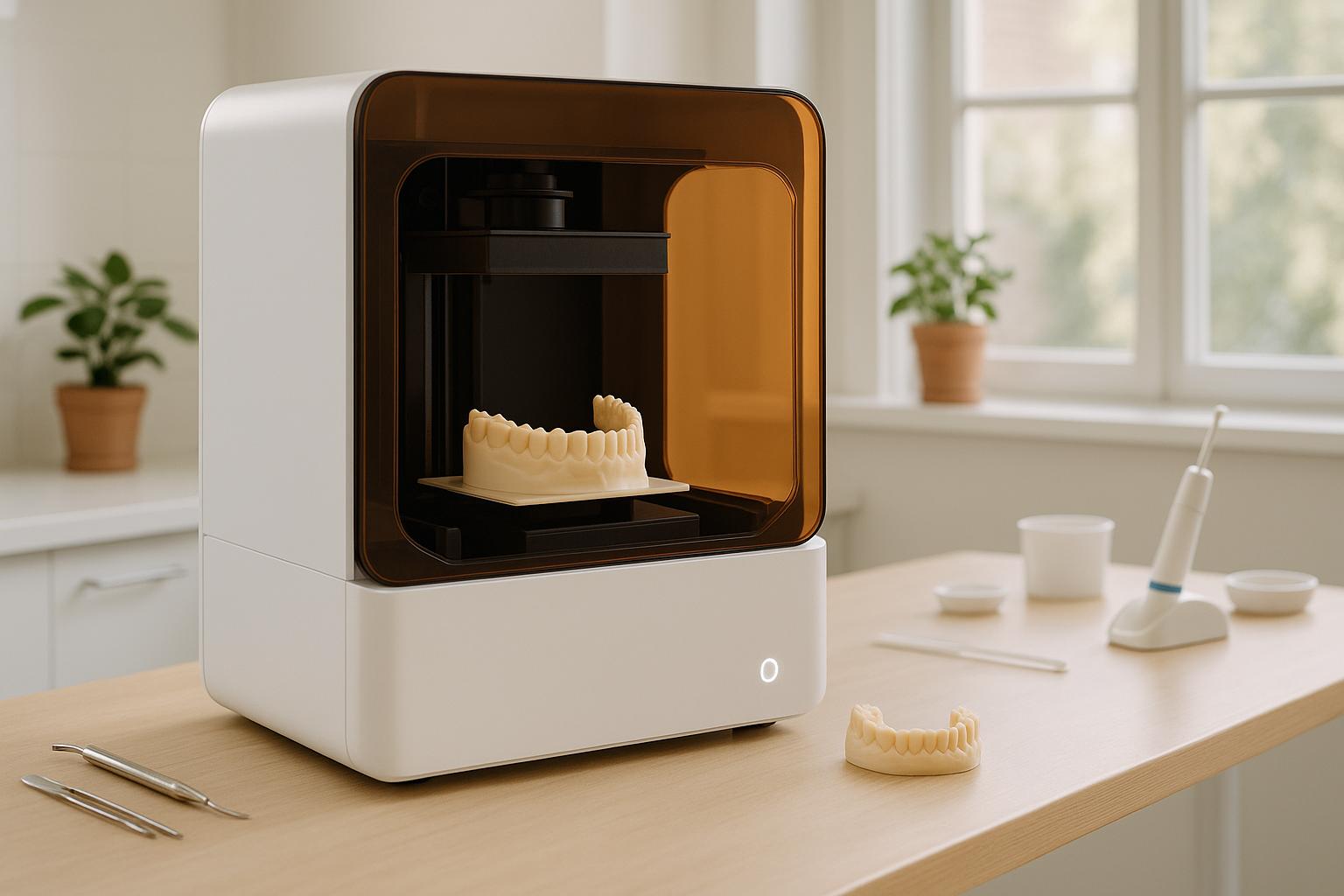
Dental labs in Australia are shifting to low-emission 3D printing to reduce waste, cut emissions, and create precise dental products like aligners and crowns. This approach uses less energy, minimises harmful emissions, and supports eco-friendly materials like biodegradable resins.
Why It Matters:
- Environmental Impact: Traditional methods waste materials and release harmful VOCs. Low-emission 3D printing reduces waste by up to 90% and cuts carbon footprints significantly.
- Health Benefits: Enclosed systems and safer materials improve indoor air quality and protect workers from harmful particles.
- Cost Savings: Labs save up to 80% on overheads with efficient resource use and local production.
- Future Growth: The global dental 3D printing market is expected to grow from $1.9B in 2020 to $8.6B by 2026.
With advancements in energy-efficient systems, sustainable materials, and recycling methods, Australian dental labs are leading the way in sustainable manufacturing while improving patient care.
Eliminating Waste Through Innovation at Giorgio Dental Laboratories
How Low-Emission 3D Printing Helps the Environment
Low-emission 3D printing is reshaping manufacturing processes in Australian dental labs, offering practical solutions to reduce carbon footprints, improve air quality, and optimise resource use. These advancements highlight how technology can cut emissions and minimise waste in the dental industry.
Reducing Carbon Emissions with Additive Manufacturing
Additive manufacturing, or low-emission 3D printing, plays a key role in reducing carbon emissions. By consuming less energy, cutting down on material waste, and enabling localised production, this approach offers a cleaner alternative to traditional manufacturing methods. Unlike subtractive processes, which rely on energy-intensive machinery to cut and shape materials, additive manufacturing builds items layer by layer, using only the required amount of material. In dental labs, digital technologies like CAD/CAM and 3D printing have further reduced energy and water consumption, as well as staff hours [3].
The global healthcare sector was responsible for producing between 1.6 and 2 gigatons of CO₂e in 2019, accounting for 4.4% of worldwide greenhouse gas emissions. Within this, the dental sector contributes roughly 3% [4]. On average, a dental lab generates a carbon footprint of 20,820 kg CO₂e annually, equating to about 2.9 kg CO₂e per appliance sold. Notably, staff travel accounts for 43.6% of these emissions, followed by procurement (27.8%) and energy use (25.0%) [2].
Cutting Down Volatile Organic Compounds (VOCs)
Another advantage of low-emission 3D printing is its ability to reduce the release of volatile organic compounds (VOCs). Traditional dental manufacturing processes often emit harmful compounds, but advancements in resin formulations and enclosed printing systems are helping to mitigate these emissions. Studies reveal that standard 3D printing can release ultrafine particles and over 200 VOCs. For example, during printing, the mean total VOC (TVOC) concentration was measured at 1,052.71 µg/m³, which increased to 1,774.15 µg/m³ during post-processing steps like curing and ethanol washing [9].
Technologies such as titanium dioxide photocatalytic oxidation and activated carbon absorption have been shown to reduce TVOC levels by 44–71% during active printing [9]. Additionally, bio-based resins emit significantly fewer VOCs compared to their non-biological counterparts. For instance, Tough resin emits ten times more VOCs than BioMed or Surgical resins after post-processing. Similarly, ABS materials produce higher VOC levels than PLA [7].
In 2023, Labo-da SARL adopted the Alveo3D solution, which features a custom-built housing and the AlveoPRO air extraction system. This technology not only ensures safer working environments for dental lab staff but also maintains high production standards. Didier Alexandre, a dental technician specialising in orthodontics at Labo-da SARL, commented:
"We strongly recommend the use of Alveo3D technology to our colleagues, to ensure healthy working conditions for dental laboratory staff." [8]
Beyond reducing emissions, low-emission 3D printing prioritises efficient material use.
Recycling and Better Material Use
The layer-by-layer approach of 3D printing aligns closely with circular economy principles, offering an effective way to minimise waste and improve resource efficiency. Unlike traditional subtractive methods, which often generate non-recyclable waste, additive manufacturing allows for precise material usage. This can reduce waste and material costs by up to 90%, with production scrap cut by 70–90% [5][6]. In some cases, such as construction applications, 3D printing has reduced waste by as much as 95%, saving approximately 21.5 kg of waste per square metre.
Australian dental labs are increasingly adopting material recovery systems to repurpose excess or failed prints, support structures, and discarded prototypes. For example, JawsTec previously had to discard 30% of their thermoplastic powder, incurring high storage and disposal costs. By using high packing density printers, they now achieve a 100% utilisation rate of powder, significantly cutting waste. Oscar Klassen, Co-Founder & CEO of JawsTec, shared:
"The QLS 230 printers give us the ability to use end-of-life powder from other SLS and MJF machines to produce high-quality parts while eliminating powder waste. The smaller build volume of the QLS 230 allows for a much shorter build cycle and cooling cycle with zero negative effect on part accuracy or surface quality." [5]
The push towards eco-friendly and recycled materials is also gaining momentum. Labs are experimenting with bio-based polymers, wood-based filaments, and biodegradable plastics like PLA. Techniques like recycling IPA through distillation further enhance environmental performance. These practices demonstrate how low-emission 3D printing is transforming dental manufacturing, making it both efficient and environmentally responsible.
New Technologies in Low-Emission 3D Printing
In 2022, dental 3D printing brought in A$4 billion in revenue, accounting for nearly a third of the additive manufacturing market. Forecasts suggest this figure could climb to A$9.7 billion by 2031[11]. These advancements are driving progress in materials and energy use within dental manufacturing.
Advancements in Resin-Based Printing
The latest resin formulations are transforming the way dental labs approach sustainable manufacturing. Biodegradable resins and plant-based polymers are now replacing traditional materials, offering similar strength and precision while cutting down on environmental harm. These biocompatible materials naturally decompose over time, helping to address long-term waste concerns.
In January 2025, MV Dental Laboratory took a proactive step by adopting biodegradable resins, recyclable packaging, and renewable raw materials. They sourced plant-based polymers specifically for dental applications and introduced recyclable options for packaging and impression trays. To further shrink their carbon footprint, the lab installed solar panels, reducing their reliance on fossil fuels[10].
Polylactic acid (PLA), an organic material derived from renewable sources, is also gaining traction in dental applications. Its low toxicity and reduced emission of harmful volatile compounds during printing and post-processing make it an attractive alternative to conventional resins. This shift toward sustainable materials aligns with the growing preference among patients for eco-conscious dental care options[10].
Energy-Efficient 3D Printing Systems
Energy-saving technologies like SLA (Stereolithography) and DLP (Digital Light Processing) systems are designed to deliver high output while using far less energy than older models. These systems feature optimised light sources, efficient heat management, and smart power distribution to cut electricity usage. For example, double-laser systems can print a build plate with roughly 100 crowns in about three hours, while producing 30 removable partial dentures (RPDs) takes around four hours[12].
In 2023, Formlabs partnered with Henry Schein to provide over 500 Australian dental distributors with access to Form 3B printers and compatible resins. This collaboration has sped up the adoption of energy-efficient printing systems in dental practices across Australia[13]. Additionally, AI-powered software is now being integrated into 3D printing workflows, optimising print settings in real time to reduce failed prints and minimise waste.
These energy efficiencies extend naturally into post-processing improvements, further lessening environmental impact.
Enhanced Post-Processing Techniques
Building on earlier innovations, improved post-processing methods are now making low-emission dental 3D printing even more sustainable. Advanced curing systems equipped with targeted LED arrays and optimised exposure times use less energy by curing multiple parts simultaneously, outperforming traditional UV curing chambers.
Material recovery systems have also seen significant advancements, enabling labs to minimise waste throughout the production cycle. Fully enclosed 3D printing systems with HEPA (High-Efficiency Particulate Air) filters are becoming standard in Australian dental labs, capturing harmful particles and volatile compounds at their source. This not only protects staff but also prevents emissions from entering the environment.
Smileep, a dental lab that specialises in digital workflows, reported substantial gains after adopting the Form 3B system in January 2025. The upgrade improved both precision and productivity compared to older workflows, and the subsequent introduction of the Form 4B further increased efficiency. Alan Alves, Director of Smileep, shared:
"I consider it essential to adopt CAD design and 3D printing technology to maintain a profitable and competitive dental laboratory." [14]
Smart design choices, such as creating objects with minimal support structures, also contribute to reducing material waste and lowering the energy needed for support removal. These practices align with circular economy principles, ensuring a more sustainable approach to manufacturing.
With these technological advancements, Australian dental labs are positioning themselves as leaders in sustainable manufacturing while meeting evolving environmental regulations.
Health and Safety Benefits of Low-Emission Technologies
Switching to low-emission 3D printing systems is transforming health and safety conditions for dental lab workers. Traditional manufacturing methods often expose staff to harmful substances, but newer technologies are making workplaces safer and healthier.
Reduced Exposure to Harmful Substances
Conventional 3D printing systems release hazardous materials that can seriously impact the health of dental lab workers. For example, traditional SLA printing emits high levels of volatile organic compounds (VOCs) – more than FDM printing – with over 100 different VOCs identified during the printing process[15]. These emissions can lead to skin irritation, respiratory issues, allergic reactions, and even long-term risks like cancer. Additionally, ultrafine particles (UFPs) released during printing can penetrate deep into the lungs and accumulate in vital organs[17][18].
Low-emission technologies address these risks by using safer materials, such as biodegradable resins and plant-based polymers. Polylactic acid (PLA), for instance, generates significantly fewer VOCs compared to traditional materials like ABS plastic, making it a healthier option for dental applications[19][21]. These advancements not only reduce exposure to harmful substances but also improve air quality within dental labs.
Improved Indoor Air Quality
One of the most immediate benefits of low-emission 3D printing systems is better indoor air quality. Studies have shown that formaldehyde levels in traditional printing environments often exceed safe limits, highlighting the need for safer alternatives[16].
Modern low-emission systems feature enclosed designs with HEPA filters that capture harmful particles and VOCs at their source, preventing them from contaminating the workspace. Technologies like MJM and SLS produce fewer UFPs compared to other methods, ensuring cleaner air and safer working conditions for dental lab staff[18].
"The transparency about VOC toxicity levels and their effects is crucial for safe 3D printing. The safety of 3D printing, especially regarding emissions and materials, deserves more open discussion." – Alveo3D[15]
Cleaner air not only promotes better health but also helps dental labs comply with workplace safety regulations.
Aligning with Australian Workplace Standards
Beyond health benefits, low-emission systems make it easier for dental labs to meet strict Australian workplace safety standards. The National Institute for Occupational Safety and Health (NIOSH) has noted that while 3D printing poses health risks, these challenges can be effectively managed with proper systems and protocols[20].
Low-emission technologies meet these standards by incorporating ventilation systems, filtration, and safer materials that emit fewer harmful substances. Additional safety measures include restricting equipment access to trained personnel, using enclosures and ventilation, and requiring appropriate personal protective equipment (PPE)[20]. These systems also operate at lower temperatures, reducing the risks of burns and fire hazards.
"It is important to mention that what NIOSH has learned so far is that none of the dangers related to 3D printing are unmanageable, even the chemical and particulate challenges."[20]
sbb-itb-2be92ed
Challenges and Adoption in the Australian Dental Industry
While the earlier discussion focused on efficiency and environmental benefits, the road to implementing advanced technologies in Australian dental labs isn’t without its obstacles. Despite their advantages, low-emission systems come with hurdles that require careful planning and long-term commitment to address.
Cost and Resource Barriers
One of the biggest challenges is the high upfront cost of adopting low-emission 3D printing technologies. The Australian 3D printing market, valued at AUD 692.45 million in 2024, is expected to grow to AUD 3.85 billion by 2034, with an annual growth rate of 18.7% [22]. However, this growth doesn’t immediately ease the financial strain on individual dental practices.
The cost of equipment varies widely depending on the type of technology. Research indicates that 55% of users spent AUD 5,000 or less on their printers [1], but such figures typically apply to basic systems, not the more advanced low-emission options. For instance, while fused deposition modelling (FDM) printers are relatively affordable, polyjet and digital light processing (DLP) systems come with significantly higher price tags [1]. Beyond the printer itself, dental labs must also invest in specialised software, training for staff, materials, maintenance, and often, infrastructure upgrades.
To address these financial challenges, industry stakeholders suggest introducing more cost-effective technology, flexible financing options, or public funding initiatives. For example, the Commonwealth Government’s AUD 58 million investment in the Additive Manufacturing Cooperation Research Centre (AMCRC) is a step in the right direction [22]. However, financial hurdles are just one piece of the puzzle – regulatory requirements add another layer of complexity.
Regulatory and Certification Requirements
Navigating the regulatory landscape is another significant challenge for Australian dental labs adopting low-emission 3D printing. Certification under the ISO 14000 standard for environmental management requires compliance with national and local regulations. These include rules around the storage and disposal of hazardous materials, waste discharge permits, and fire and building safety codes [23]. On top of this, biocompatibility standards – crucial for materials used in patient care – can further slow down the adoption process [22].
These regulatory demands, combined with the need for workforce training, create a steep learning curve for labs aiming to integrate these technologies.
Training and Skill Development
Successfully implementing low-emission 3D printing technologies requires more than just basic equipment knowledge. Comprehensive training programs must cover a wide range of skills, including equipment selection, software operation, troubleshooting, and advanced design techniques [27]. Staff need to be proficient in digital workflows, scanning methods, CAD/CAM design, material handling, and finishing processes [24]. Additionally, understanding implant planning, surgical guide creation, and restorative solutions is crucial [24]. Addressing health and safety concerns related to 3D printing is another key aspect of these training efforts [27].
Several organisations provide structured training programs to help dental professionals bridge these knowledge gaps. For instance, Formlabs Dental Academy offers a mix of free and paid courses, including webinars, online guides, and in-person workshops, tailored for dental technicians, orthodontists, and clinicians [25]. Similarly, Dentsply Sirona’s Lucitone Digital Print Denture Training and Certification Programme provides end-to-end guidance on designing and finishing 3D-printed dentures [26].
The importance of training is evident when considering that Formlabs users alone have produced over 25 million dental parts to date [25]. Mastery of post-processing workflows, such as cleaning and curing, is also essential to ensure that the environmental benefits of low-emission technologies are upheld throughout the production cycle [24].
The Future of Dental Manufacturing
As dental manufacturing evolves, it’s clear that innovation will play a central role in addressing both environmental and economic challenges. One standout development is the rise of low-emission 3D printing. This technology is reshaping the industry, with the global dental 3D printing devices market expected to grow from US$10.50 billion in 2024 to US$50.10 billion by 2033, reflecting an annual growth rate of 18.96% [13].
Shifting to biodegradable and recyclable materials is another game-changer. Beyond meeting regulatory standards, this move cuts material waste, lowers supply chain emissions by 9–10%, and can reduce logistics costs by up to 50% [2]. On-site production further slashes transportation-related pollution, making a significant dent in the carbon footprint of dental manufacturing.
On the economic front, low-emission 3D printing boosts efficiency by 51–61%. This is achieved through smarter material usage, reduced operating temperatures, and lower energy consumption – all of which contribute to stronger profitability [2]. Additionally, future systems are set to improve workplace safety with features like integrated HEPA filtration and automated emission controls, helping Australian labs align with workplace safety standards [1].
When it comes to overcoming existing challenges, advancements in material innovation and AI-powered workflows are paving the way. New high-performance resins and biocompatible materials are simplifying the production of dental restorations, while AI-driven tools are automating complex tasks and selecting the best materials for individual patients [28].
"Dental labs will increasingly adopt high-precision 3D printing to solve longstanding pain points for patients, providing better outcomes and enhanced satisfaction, especially in cosmetic dentistry", says John Kawola, CEO of BMF [28].
Recent breakthroughs highlight the speed of progress. In February 2025, Carbon unveiled FP3D, a resin for flexible, removable partial dentures that uses advanced dual-cure chemistry. Similarly, Stratasys introduced TrueDent-D resin, which can produce over 30 dentures in a single print run, cutting production costs by more than 50% [29][31]. Meanwhile, cloud technology is being integrated to automate part orientation and support placement, reducing human error and enhancing efficiency [30].
"Whether we are looking at medical devices for orthopaedic applications or for the dental market to align, protect, repair, and replace teeth, it is likely the trend to deliver patient-specific solutions will proliferate", explains Jeffrey Graves, CEO of 3D Systems [28].
For Australian dental labs, staying competitive will require strategic investments in both cutting-edge technology and workforce training. With 15% of dental practices in the USA already using 3D printers [30], Australian labs that embrace low-emission technologies can position themselves ahead in this rapidly evolving market. The combination of reducing environmental impact, lowering costs, and improving patient outcomes makes the case for adoption even stronger.
The road ahead for dental manufacturing lies at the intersection of sustainability, efficiency, and technological advancement. Low-emission 3D printing is not only helping labs reduce their environmental footprint but also enhancing profitability and creating safer workplaces. As these technologies become more refined and accessible, early adopters are poised to lead the next wave of transformation in the dental industry.
FAQs
How does low-emission 3D printing benefit dental labs and the environment compared to traditional methods?
Low-Emission 3D Printing in Dental Labs
Low-emission 3D printing is transforming dental labs by offering a cleaner, more efficient way to create dental products. Its ability to apply materials with precision means less waste and a reduced need for raw materials. Compared to traditional methods like milling – which often produces a lot of leftover material – 3D printing is a much leaner process.
Another big advantage is energy efficiency. 3D printing generally uses less energy and allows for on-site production, cutting down the need to transport materials or finished products. This not only helps reduce carbon emissions but also simplifies workflows. For dental practices in Australia, it’s a smart, eco-conscious solution that aligns with modern sustainability goals.
What are the benefits of low-emission 3D printing technologies for dental lab workers’ health and safety?
Low-emission 3D printing technologies bring clear health and safety benefits for dental lab workers. By utilising materials with fewer volatile organic compounds (VOCs), these systems help limit exposure to harmful emissions that can cause skin irritation and respiratory discomfort.
On top of that, improvements in material safety and better ventilation systems contribute to a healthier workspace, lowering the chances of long-term health problems. This makes low-emission 3D printing an excellent option for creating safer, healthier dental labs.
What are the main challenges for Australian dental labs in adopting low-emission 3D printing, and how can they address them?
Australian dental labs are encountering several obstacles when it comes to adopting low-emission 3D printing technologies. These include steep upfront costs, a lack of technical know-how, and the challenge of meeting complex regulatory requirements. For smaller labs, the price of advanced 3D printers can be especially daunting. On top of that, many technicians need specialised training to operate these systems effectively, which can slow the pace of adoption. Regulatory compliance adds another layer of difficulty, as labs must follow strict guidelines concerning materials and procedures.
To overcome these barriers, labs can focus on staff training programs to equip technicians with the skills and confidence to work with these advanced systems. Partnering with technology providers for ongoing support can also ease the transition. Additionally, looking into government grants or incentives designed to encourage sustainable practices in healthcare could help cover the initial investment. By taking these steps, dental labs can adopt low-emission 3D printing more seamlessly and play their part in creating a more sustainable future.
Related Blog Posts
- Wear-Resistant Materials in Dental Restorations
- Advances in Dental Adhesives: What to Know
- Guide to Sustainable Packaging for Dental Clinics
- Energy-Efficient Dental Materials: Overview
Important Notice: Any surgical or invasive procedure carries risks. Before proceeding, you should seek a second opinion from an appropriately qualified health practitioner.
Individual results may vary. The information provided in this article is for educational purposes only and does not constitute medical advice.
Checkout Related Blogs




Get in touch with us
For more information, call us now to start feeling better. Or fill the form below to make appointment
The Latest News from Complete Smiles
How to Clean Clear Plastic Retainers
Checklist for Choosing Wearable Dental Devices
Checklist for Choosing Cloud AI Platforms in Dentistry

Complete Smiles Bella VistaAccepts All Major Health Funds, Including





